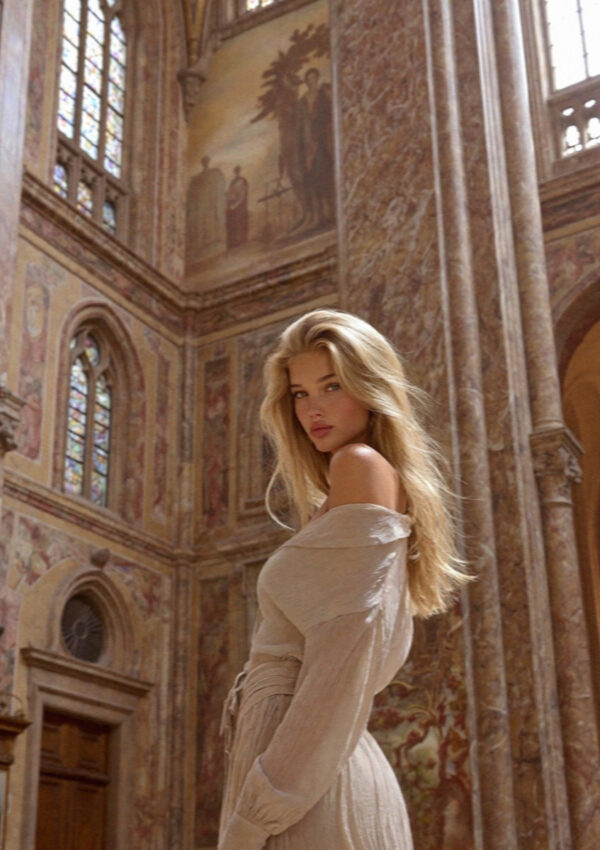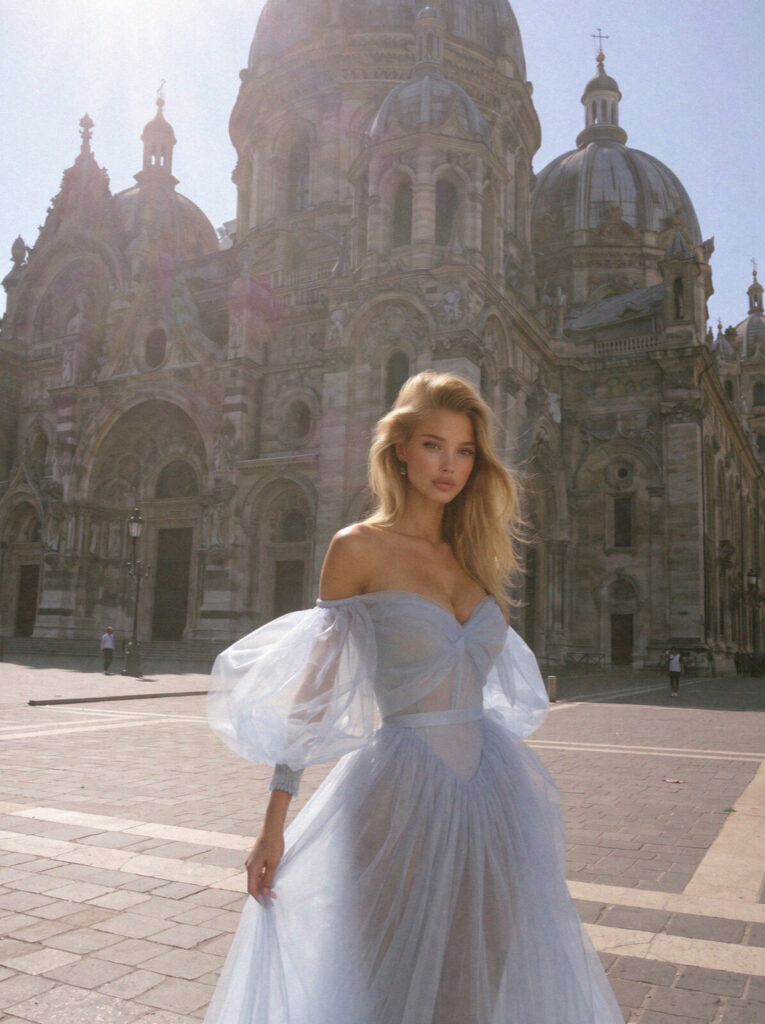
Florence let me go the way the great cities always do, without ceremony, as though it had never really been holding on. One morning I was beneath all that marble and the next I was on a train heading toward the sea, and neither the city nor I made anything of it. That is the mercy of a place that has watched everyone come and go for six hundred years. It does not ask you to stay. It only asks that you were paying attention.
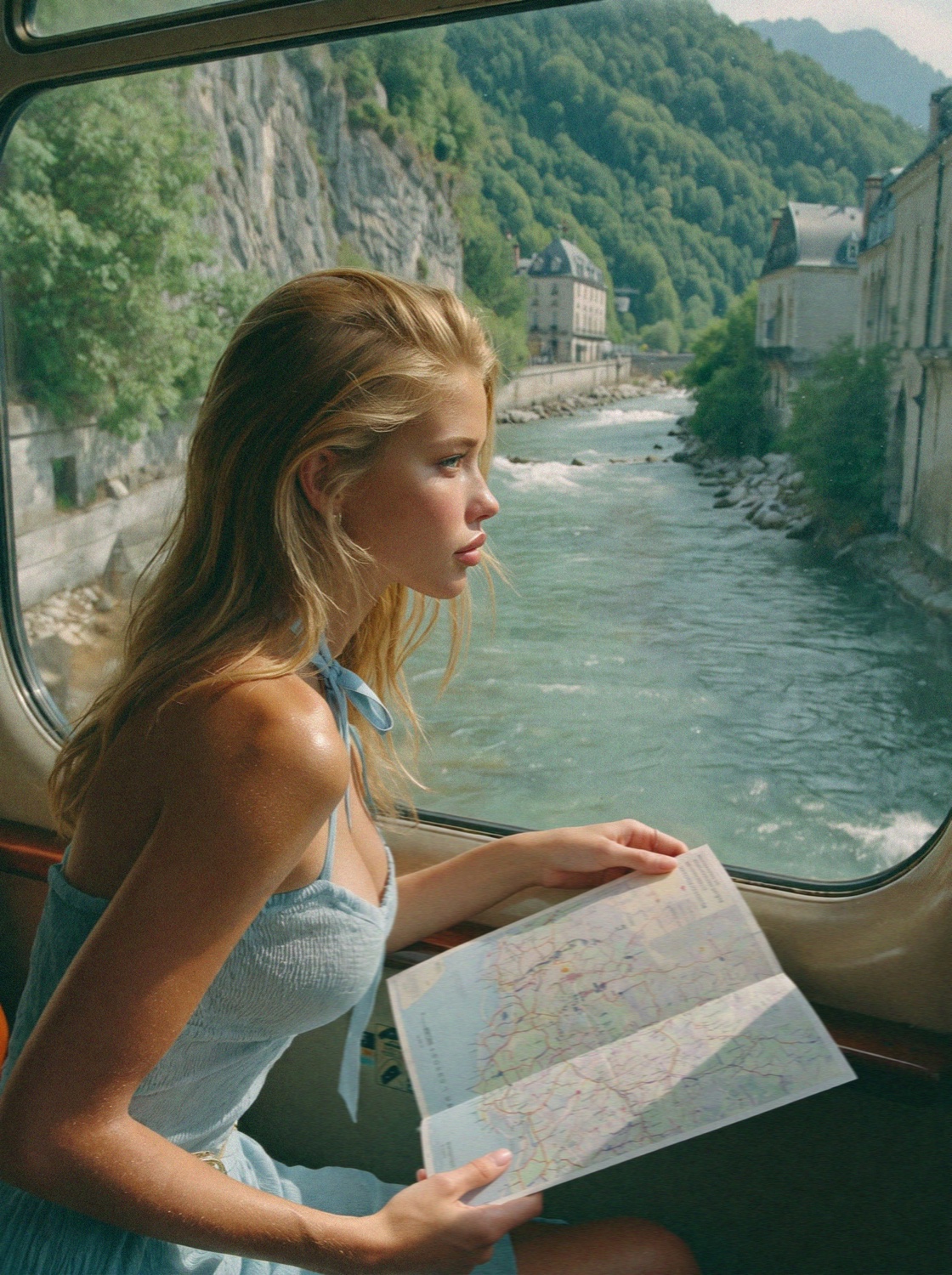
I kept a map open on my lap for most of the journey and did not look at it once. I knew roughly where we were going. I think I wanted something to hold while the land quietly undid itself beyond the glass, the hills folding lower and lower, the stone changing from gold to grey to that particular pink that means you are close to the water in this country. The car would come later, by other roads and other hands. I wanted to arrive the slow way, the way the light does.
You reach these villages by a small train that spends half its life inside the mountain. It bursts out over a bridge, gives you three seconds of sea so impossibly blue it almost looks invented, and then the dark swallows it again. Five villages strung along the cliffs like beads someone dropped and never bothered to collect. Cinque Terre. The five lands. Nobody built a road worth mentioning between them, which is probably why they still feel so completely like themselves.
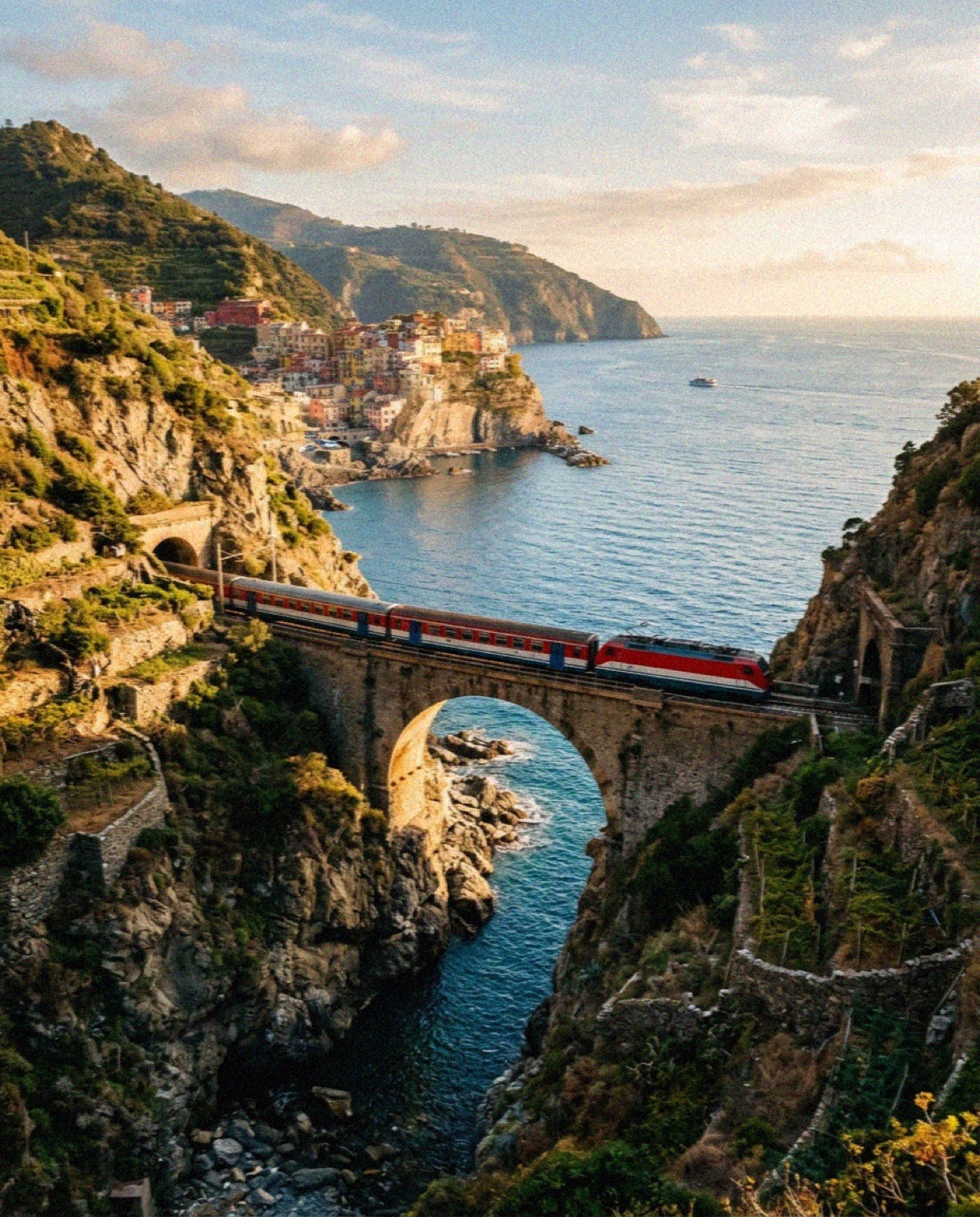
I love a place that is difficult to reach. It keeps out a certain kind of hurry. By the time you have changed trains, waited on a platform no bigger than a handkerchief, and pressed yourself against a wall to let the locals pass, you have already slowed to the speed of the thing you came for. Florence is a cathedral you walk into. This is a village you climb down into, one bright shuttered house at a time.
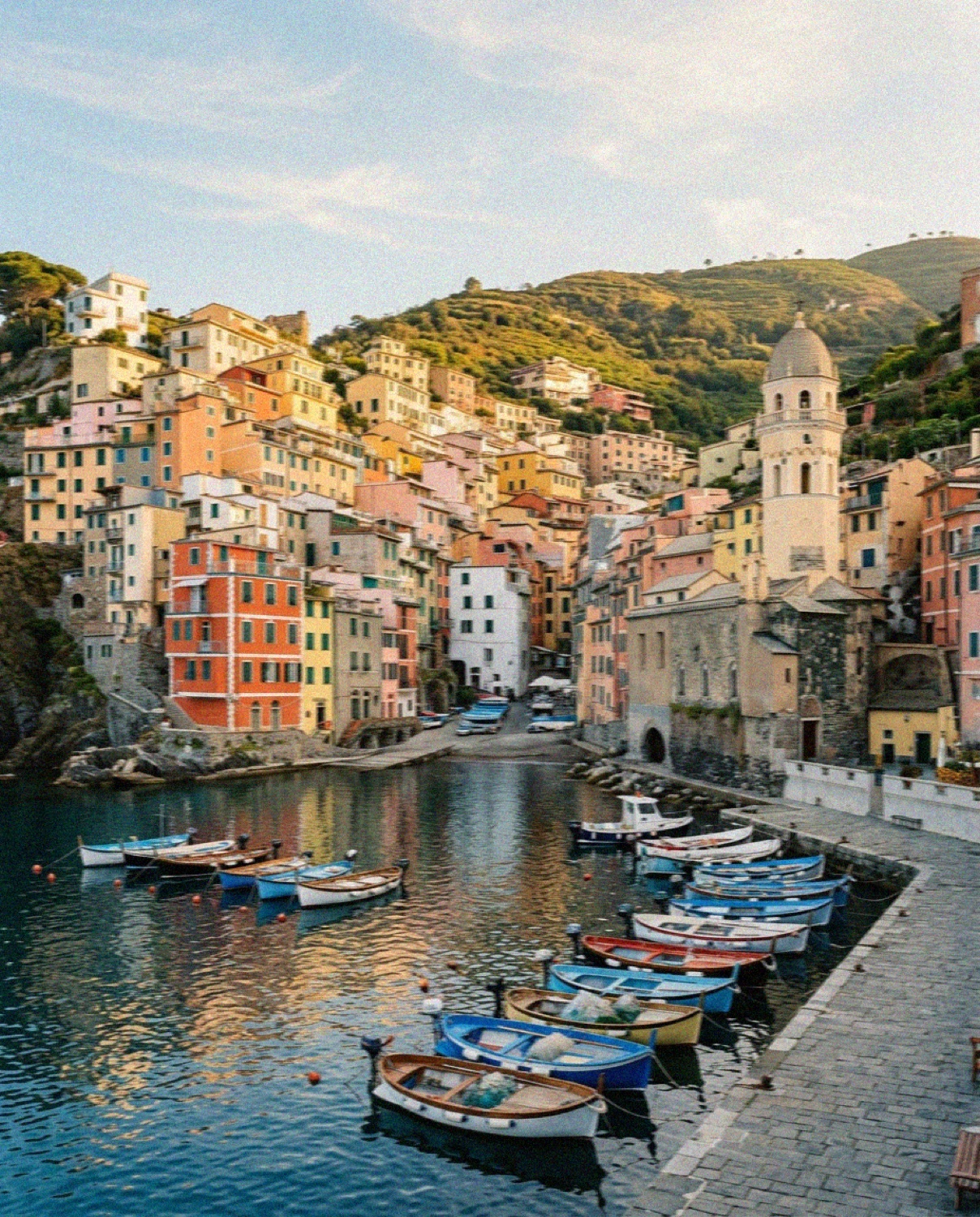
I came down into Vernazza in the late afternoon, when the harbour had gone the colour of a coin left in the sun. It is barely a harbour at all, a scoop of water, a handful of boats tipped up on the stones, a church with its feet almost in the sea. From the top of the last staircase you can see the whole of it at once, which is not something Florence ever allowed. I stood at the top of the staircase and let the others go ahead. Someone behind me was already worrying about the bags. I was counting the boats.
We found the rooms, and then I found the balcony, and that was more or less the end of my usefulness for the next hour. There is a coffee here they make tall and slow, and I carried it out over the water and did nothing with it except hold it and watch the swifts cut through the air above the roofs. Below me the town was doing what it does every evening of its life. Shutters opening. A radio somewhere. Someone calling a name I did not know down a lane I could not see. I have stayed in grander places this summer. I am not sure I have been happier on a balcony.
Later I wandered down into the lanes, which are not really lanes so much as gaps the houses forgot to close. Washing strung overhead like flags for a party nobody announced. Cats that own more of the village than the people do. You cannot really get lost, because every downhill turn eventually delivers you to the sea, and every uphill one to a church, and there is nothing here that is not one of those two things or the way between them.
I bought a gelato and ate it while I walked, which my aunt would certainly have something to say about, and I let her have her say in my head and finished it anyway.

There were boats out on the water, small painted ones, the kind families here have kept for longer than any of us have been alive. My father would have loved them. He loved anything made of wood that could carry you somewhere slowly and beautifully, and he taught me to love the sound of them before I understood there was anything to love. I did not go out on one today. I only watched them, which is its own kind of company.
The light here does not set so much as pour. It comes in low across the water and turns every ordinary pink house the colour of the inside of a shell, and the whole village leans into it the way a room leans toward a fire. This is the hour they invented aperitivo for, and I am not going to pretend I resisted it. A cold glass, something bitter and orange, a small plate of things fried that morning, a table close enough to the edge that the sea does half the talking.
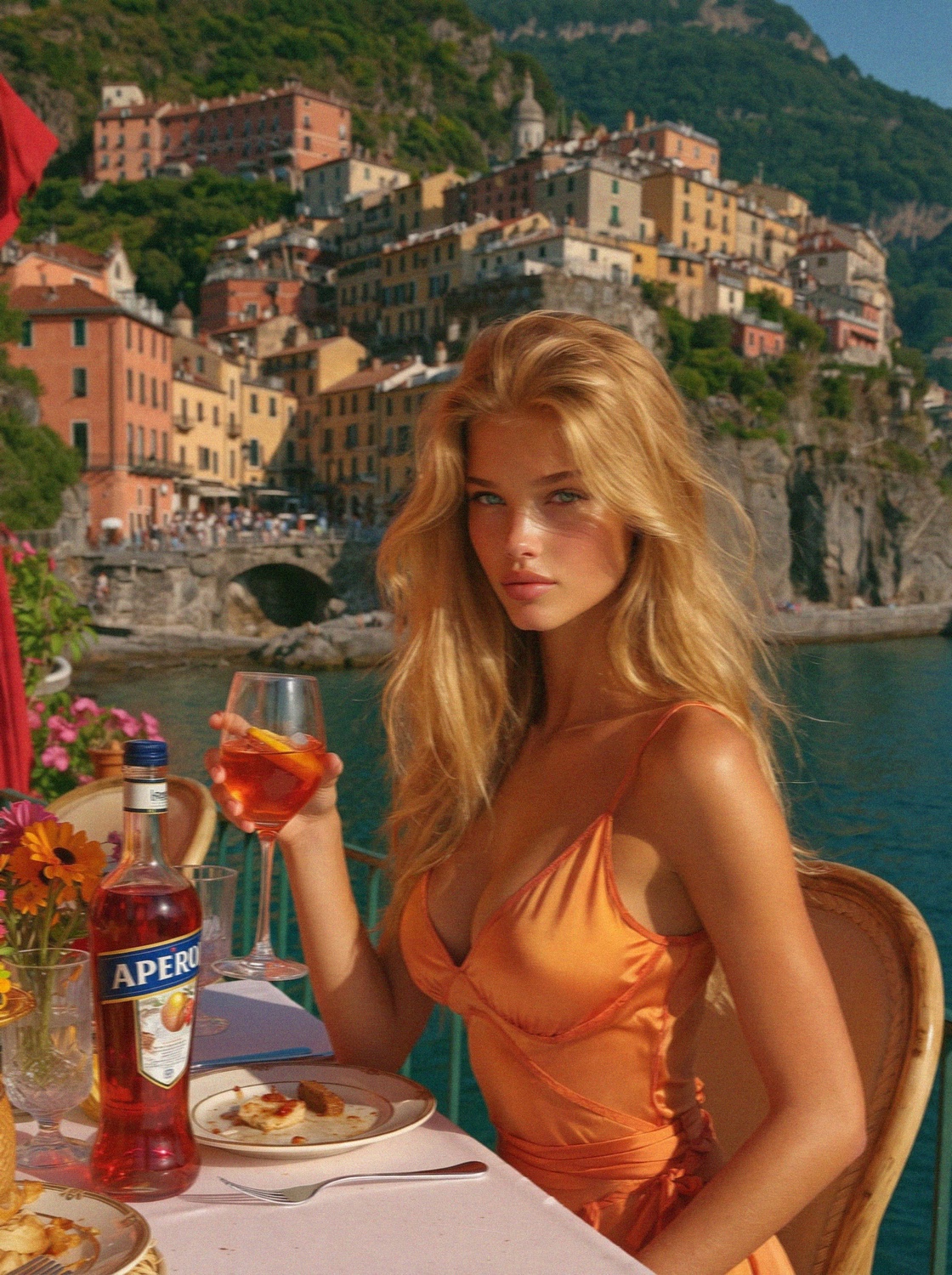
I like a drink the way I like most things here, for the ritual of it more than anything else. The cold of the glass. The ceremony of the first sip. The way it marks the seam between the day and the evening. I grew up around the making of wine, and I have never been able to treat it carelessly. Tonight I did not want to think, which is different from not wanting to feel. I wanted only to sit at the edge of a small bright place and let it be exactly as much as it was.
By the time I climbed back up the stairs the harbour had gone dark, the houses had lit themselves one window at a time, and the sea had become that deep ink it always becomes at night, moving and moving and giving nothing back. I did what I always do last. I sat down with the notebook and tried to keep some of it before it slipped away.

I am not sure I managed. Days like this do not really survive being written down. You reach for the boat and the balcony and the pink hour, and what you end up with is a list. The actual thing, the softness of it, stays behind in the place where it happened. But I write it anyway. It is how I stay honest about being happy, which, for reasons I am not going to explain here, has always been harder for me than being sad.
Four more villages waiting for me this week, starting with the one with a beach wide enough to lie down on, and a path along the cliffs I have wanted to walk for years. Tonight, only this. A small window, a smaller light, and the sea saying the one thing it always says: that it was here long before you and will be here long after, so you may as well stop hurrying and look.
V.
Read also: Let the Sea Keep the Time | The Long Way Between the Villages | The Complete Guide to Cinque Terre