I arrived in Naples on a train so red it looked like a provocation. The Frecciarossa pulled into Napoli Centrale in the middle of the afternoon, and the city hit me the way it always hits people who don’t know what they are walking into, like a wave, like a shout, like something that grabs you by the collar and says, pay attention.
I had been told to prepare. Everyone tells you to prepare for Naples. What they do not tell you is that preparation is entirely useless. The city doesn’t accommodate your expectations. It simply is what it is, and you either fall in love with it or you get back on the train.
I fell in love with it.
This is my complete guide to Naples, not the carefully curated version, not the sanitized highlights reel, but the city as I experienced it: difficult and luminous, exhausting and magnificent, the kind of place that leaves marks on you that don’t fade.
What to book before you come
Naples itself you walk, and the walking is free and better than anything you could pay for. What you book here is everything within an hour of the city, which is an extraordinary amount: a buried Roman town, a live volcano and one of the great coastlines.
- Pompeii and Vesuvius in one day. 4.8 from over eight and a half thousand people. Doing both alone means two trains, a bus up the mountain and a lot of standing about.
- Sorrento, Positano and Amalfi. Nearly eighteen thousand ratings at 4.8. The Amalfi Drive is not a road to drive yourself the first time.
- The street food walk. 4.9 from over five and a half thousand people. The difference between eating well and eating what is nearest the station.
- Naples Underground. Forty metres down into Greek cisterns and wartime shelters, directly beneath the streets you have been walking.
Spaccanapoli, the Lungomare and every church door you push open cost nothing. The Veiled Christ costs a few euros and is worth all of them.
What Naples Actually Is
Before anything practical- the hotels, the restaurants, the churches- it is worth spending a moment with what Naples actually is, because it is unlike anywhere else in Italy and unlike anywhere else on earth.
Naples is the third-largest city in Italy, and the largest in southern Italy, but those numbers tell you nothing useful. What matters is this: Naples has been continuously inhabited for nearly three thousand years. Greeks, Romans, Normans, Spanish Bourbons, the French, the Germans, the Americans, everyone has passed through and left something behind. The city is sedimentary. You feel it in the streets, where one era has been built directly on top of another, and the layers occasionally surface through a crack in the pavement or a gap between buildings.
This history produces a city that is completely comfortable with contradiction. Sacred and profane exist here without tension. A shrine to the Madonna hangs above a scooter repair shop. The finest pizza in the world is sold for two euros from a hole in a wall. A baroque church, blackened by centuries of candle smoke, opens onto a piazza where teenagers play football in the early evening. Naples does not resolve these contradictions. It contains them, and in doing so, it contains something essential about what it means to be human.
I have been to Naples three times. Each time I leave, I feel the pull to return within a week. It is not a comfortable city. It is not an easy city. But it is one of the most alive cities I have ever been in, and that aliveness is worth every difficulty.
Plan Your Visit to Naples
A few things I booked and loved. These help support the blog, at no cost to you.
- Where I stayed: search Naples hotels
- Pompeii, museums and Naples tickets
- Stay connected: get a travel eSIM
This section contains affiliate links. If you book through them I may earn a small commission, at no extra cost to you.
Getting to Naples
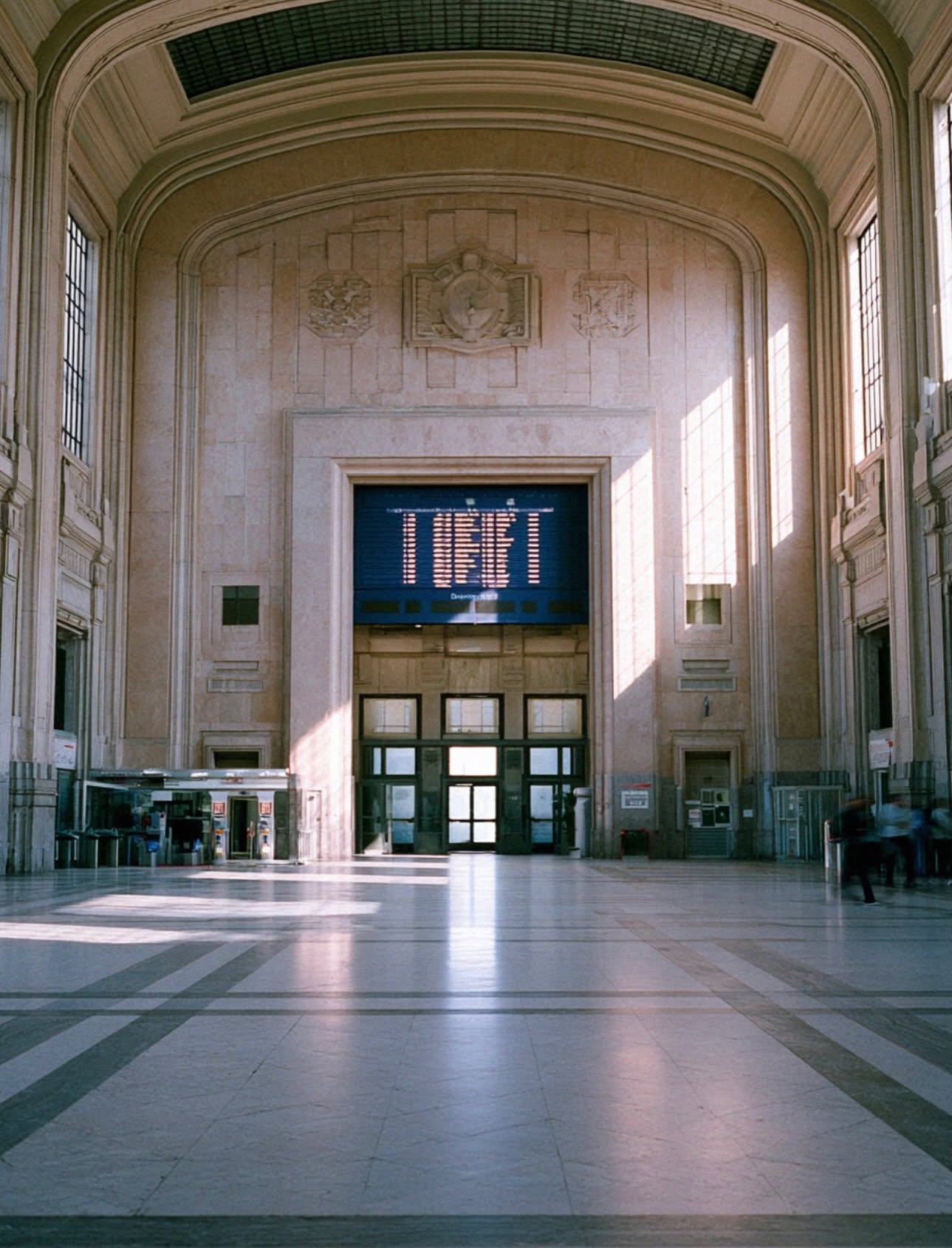
The high-speed train from Rome takes just over an hour. From Florence, allow two and a half hours. From Milan, four. Trenitalia runs the Frecciarossa on all of these routes with regular frequency, and I would take the train every time over the flight. Naples Centrale puts you in the center of the city, and the arrival itself, pulling into the great station with Vesuvius looming to the east, is part of the experience.
Naples International Airport (Capodichino) handles flights from most major European cities. The journey from the airport to the center takes twenty to thirty minutes by taxi. Agree on a fixed price before you get in, or use an app-based service; the fixed rate to the historic center should be around twenty euros.
If you are arriving from the Amalfi Coast or from Sorrento, the Circumvesuviana train runs along the coastline and delivers you to Napoli Garibaldi, adjacent to the main station. It is a slow train, not always punctual, but the route through the volcanic suburbs south of the city has a grim beauty to it that stays with you.
From Rome, I always take the train. The red train. That arrival matters.
Orienting Yourself in Naples
Naples is not a city that yields to a map. You will get lost. This is not a warning; it is a promise, and it is one of the best things about being here. But a loose orientation helps.
The historic center, the centro storico, runs through the middle of the city from east to west. The main axis is the Spaccanapoli, which translates literally as “Naples splitter,” a long straight street that cuts through the old city along the course of the ancient Greek and Roman road. Walking this street from east to west takes about forty minutes if you do not stop. You will stop constantly.
To the north of the center, the neighborhoods climb toward Capodimonte and the museum. To the west, the Chiaia district is where the money shows, wide boulevards, designer boutiques, quieter caffè. Further west still, Posillipo sits on a headland above the sea, residential and beautiful, worth visiting for the views alone.
The waterfront, the Lungomare, stretches along the southern edge of the city from the Castel dell’Ovo westward. It is a wide promenade facing the bay, with Vesuvius to the east and the islands of Capri, Ischia, and Procida visible on clear days to the south and west.
The Vomero district sits on a hill above the center, accessible by funicular, cooler in summer, with a more residential character. The Castel Sant’Elmo and the Certosa di San Martino are up there, and the view from the terrace of the Certosa is one of the best views in Naples.
Learn the funiculars. There are four of them. They are cheap, frequent, and the only sensible way to move between the lower city and the heights. They also give you a moment to breathe.
Best Things to Do in Naples
Naples is a city you experience more than you tick off, but a first visit has its essentials.
Eat a pizza where it was invented, at the marble counter of one of the old pizzerie in the centro storico. Walk Spaccanapoli, the dead straight old street that splits the ancient heart of the city. Stand on the Lungomare at sunset with Vesuvius across the bay and Castel dell’Ovo on the water. See the veiled Christ at the Cappella Sansevero and the treasures of the Archaeological Museum. Ride the funicular up to the Vomero for the view from Castel Sant’Elmo. Drink your coffee standing at the bar the way Naples does, and lose an afternoon under the glass roof of the Galleria Umberto I. Then take the boat or the train out to Pompeii, Capri, or the Amalfi Coast, all an easy day away. Each of these has its own section below.
Where to Stay
I have stayed in the historic center, in Chiaia, and once in a hotel on the waterfront near Mergellina. Each area produces a fundamentally different experience of the city.
The historic center is where Naples is most itself. The streets are narrow, the noise never entirely stops, and the neighborhood life, the shouting from windows, the scooters, the vendors, the morning sounds of a city opening, is overwhelming in the best possible sense. You are in the middle of it. If you sleep lightly, bring earplugs. If you sleep heavily, you will love it.
Chiaia is where you go if you want Naples at a slightly lower volume. The neighborhood is elegant, the restaurants are excellent, and you are still a ten-minute walk from the center. I have found that after a few days of immersion in the old city, a hotel in Chiaia offers the combination of proximity and relief that makes a long trip sustainable.
The waterfront hotels between Piazza Municipio and Mergellina are good for the views and the evening walks, but they place you slightly outside the density of the historic center. Depending on your temperament, this is either a drawback or exactly the point.
Whatever you choose, book early. Naples has become significantly more visited in recent years, and the good properties fill quickly, particularly in May, June, September, and October.
The Food
Everything you have heard about the food in Naples is true, and it is still not enough.
Begin with the pizza. Naples is where pizza was invented, not metaphorically, not approximately, but literally, in this city, in the late nineteenth century. The Neapolitan pizza is a specific thing: a soft, charred, slightly irregular disc with a high, pillowy crust, the cornicione, and a sauce made from San Marzano tomatoes grown in the volcanic soil south of the city. The mozzarella comes from buffalo milk and has a texture and taste that nothing else replicates.
The great pizzerias are institutions. L’Antica Pizzeria da Michele on Via Cesare Sersale has been open since 1870 and serves only two pizzas: the Margherita and the Marinara. The queue stretches down the street at all hours. This is correct. Go. Wait. Order the Margherita. Eat it standing up or at one of the small tables inside. Understand that this is one of the best things you will eat in your life.
Sorbillo on Via dei Tribunali is also essential. The owner, Gino Sorbillo, comes from a family of pizzaioli; his grandparents had twenty-one children, all of whom became pizza makers, and the quality is extraordinary. Arrive at noon when they open, or expect a wait.
Beyond pizza, Naples is the city of fried food. Cuoppo is a paper cone filled with fried seafood, shrimp, squid, small fish, bought from a friggitoria and eaten on the street. Pizza fritta is a folded, fried pizza stuffed with ricotta and salami or ciccioli. Zeppole are fried dough dusted with sugar. The Neapolitans understand that frying, done properly, is a form of alchemy, and they have been doing it properly for a very long time.
The seafood is extraordinary, because the bay is extraordinary. Spaghetti alle vongole, pasta with clams, is made here with a simplicity that reveals how good the ingredients are. Scialatielli ai frutti di mare is a local fresh pasta with mixed seafood that I ate three times in a single week without ever feeling like I had repeated myself.
Finish everything with sfogliatelle, shell-shaped pastries filled with ricotta and semolina, served hot from the oven, or with a babà, the rum-soaked brioche that the Bourbons brought from France and the Neapolitans made their own. Either one, from the right pastry shop in the morning, is close to perfect.
The Coffee
Neapolitan coffee is not the same as coffee anywhere else in Italy, and coffee in Italy is not the same as coffee anywhere else in the world. This is not a hierarchy; it is simply true.
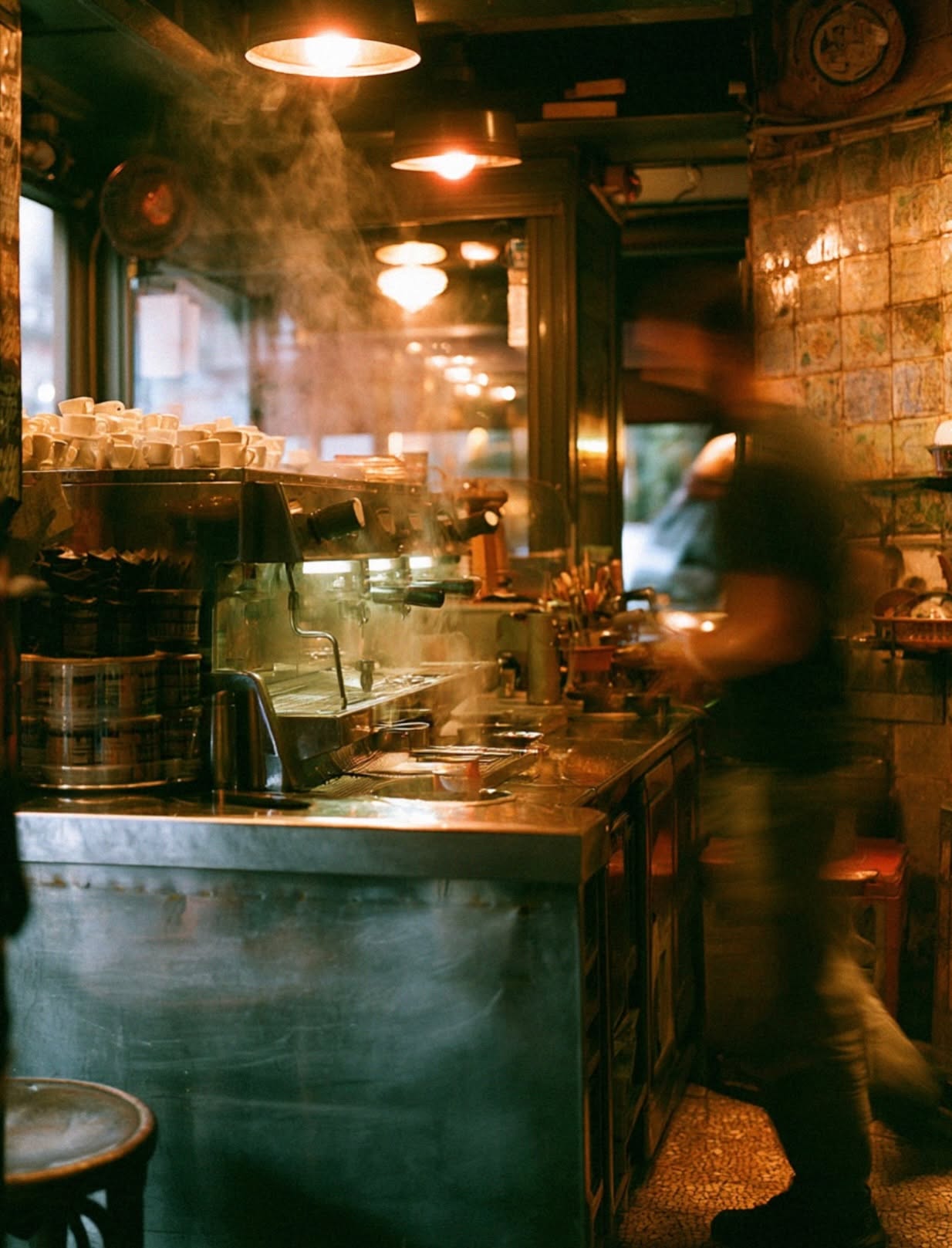
The espresso in Naples is shorter, darker, and more intensely concentrated than anywhere north of Rome. It is served in a small, thick ceramic cup, always warm from the machine, with a glass of water alongside. The coffee is made from a blend with a higher proportion of robusta than is typical in northern Italian roasts, which gives it a stronger, more bitter quality and a thicker crema.
The ritual matters as much as the liquid. Neapolitans drink coffee standing at the bar. The whole transaction takes approximately two minutes. You walk in, you say un caffè, you drink it in three swallows, you leave two euros on the counter (coffee costs between one and one-twenty at most places), and you continue with your morning. There is no lingering at the espresso bar, no laptops, no fifteen-dollar oat milk variations. It is espresso, it is magnificent, and it is over quickly.
If you are feeling slow in the morning, and in Naples, mornings can feel slow, order a caffè macchiato, which is the espresso with a small amount of steamed milk, or a marocchino, which adds a little cocoa. In summer, the granita al caffè con panna is transcendent: an iced coffee granita topped with unsweetened whipped cream, served in a glass, eaten with a small spoon.
There is also the tradition of the caffè sospeso, the suspended coffee. You pay for two coffees and drink one. The second is held in reserve for whoever comes in next and cannot afford one. I find this tradition, which has existed in Naples for over a century, to be one of the most beautiful things I have learned about anywhere.

The Streets
Walking the Spaccanapoli is the best education in Naples that exists.
Start at Piazza del Gesù Nuovo in the morning, before the heat and the crowds build. The piazza opens in front of the Chiesa del Gesù Nuovo, whose strange diamond-rusticated facade catches the early light in a way that looks almost deliberate, almost modern, though it was built in the sixteenth century. The obelisk in the center of the square is baroque excess at its finest, and the nuns of the Clarisse monastery across the piazza will be at their windows if you look up at the right moment.
Walk east. Shops selling presepe, nativity scene figures, spill into the street. The craft of the presepisti is extraordinary: figures made from terracotta and dressed in tiny period costumes, miniature food and furniture, entire villages in glass cases no larger than a shoebox. Via San Gregorio Armeno is the street dedicated entirely to this trade, and it operates year-round, not just at Christmas, because the demand is constant and the craftsmanship is something people travel to see.
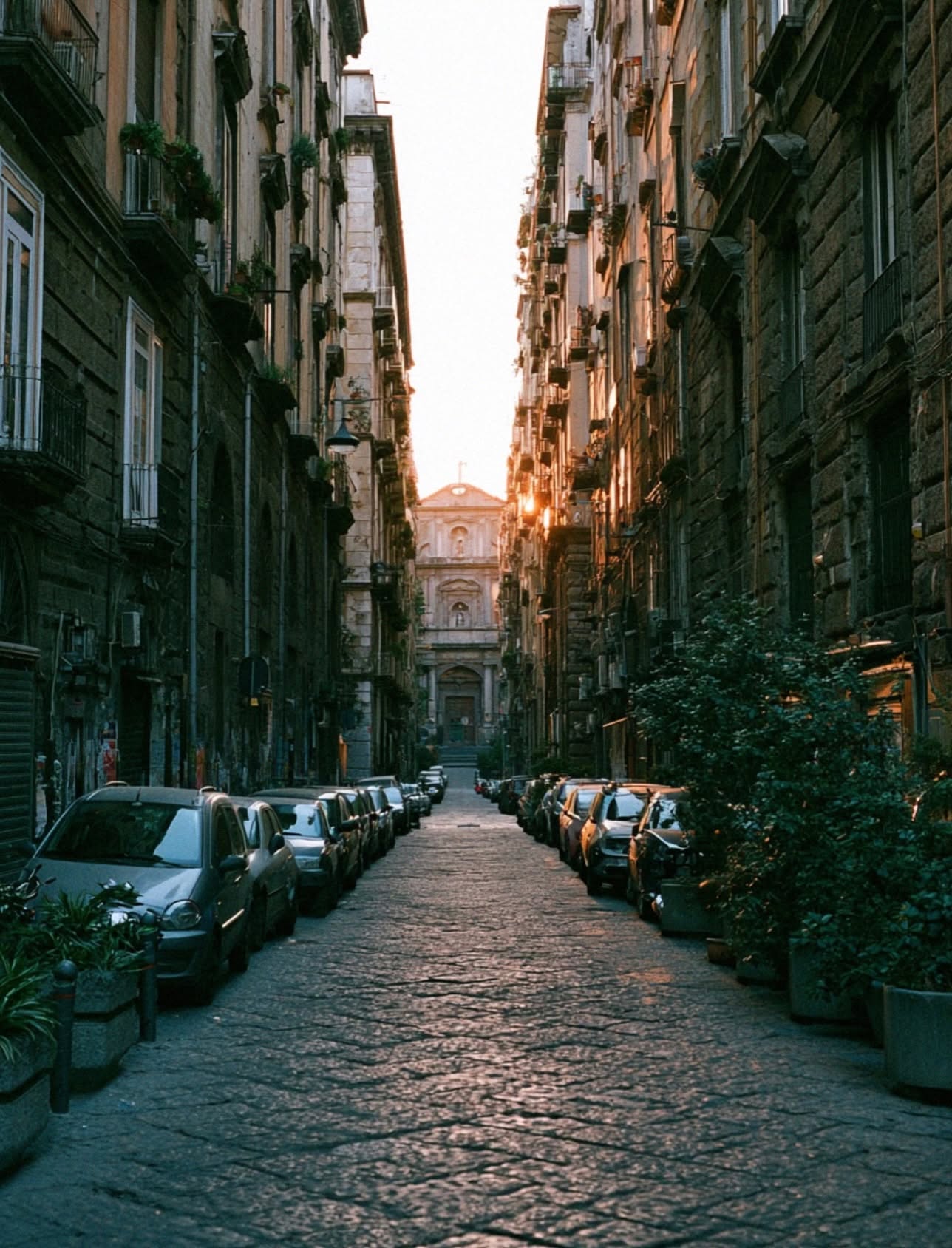
The old city smells of coffee and frying oil and laundry and something older underneath, the damp stone smell of a place that has been inhabited without interruption for millennia. The buildings are tall, the streets are narrow, and the sky above you is a blue stripe framed by ochre walls and the strung lines of washing. This is the Naples of photographs and memory, but it is not a reproduction, it is simply what the place looks like, because it has always looked this way.

In the afternoon, the streets of the Spanish Quarter, the Quartieri Spagnoli, west of Via Toledo, take on a different quality. This neighborhood, built in the sixteenth century to house the Spanish garrison, is a grid of streets even narrower than the Spaccanapoli. It was, for many years, considered dangerous and was avoided by tourists. It is now, like most places that were once considered dangerous, in the process of being discovered: a few good restaurants, a bar or two with aperitivo, but it still has an authenticity and intensity that I find more affecting than any curated destination.
The street life of Naples happens on the street. People talk through windows to neighbors three floors down. Children play football against church walls. Old men sit in chairs outside barbershops and pass judgment on everything that passes. It is the kind of city where private life is conducted in public without embarrassment, and where you, as a visitor, are included in this public without any particular effort on your part. Naples extends this inclusion not as a courtesy but as a basic fact.
The Waterfront and the Castle
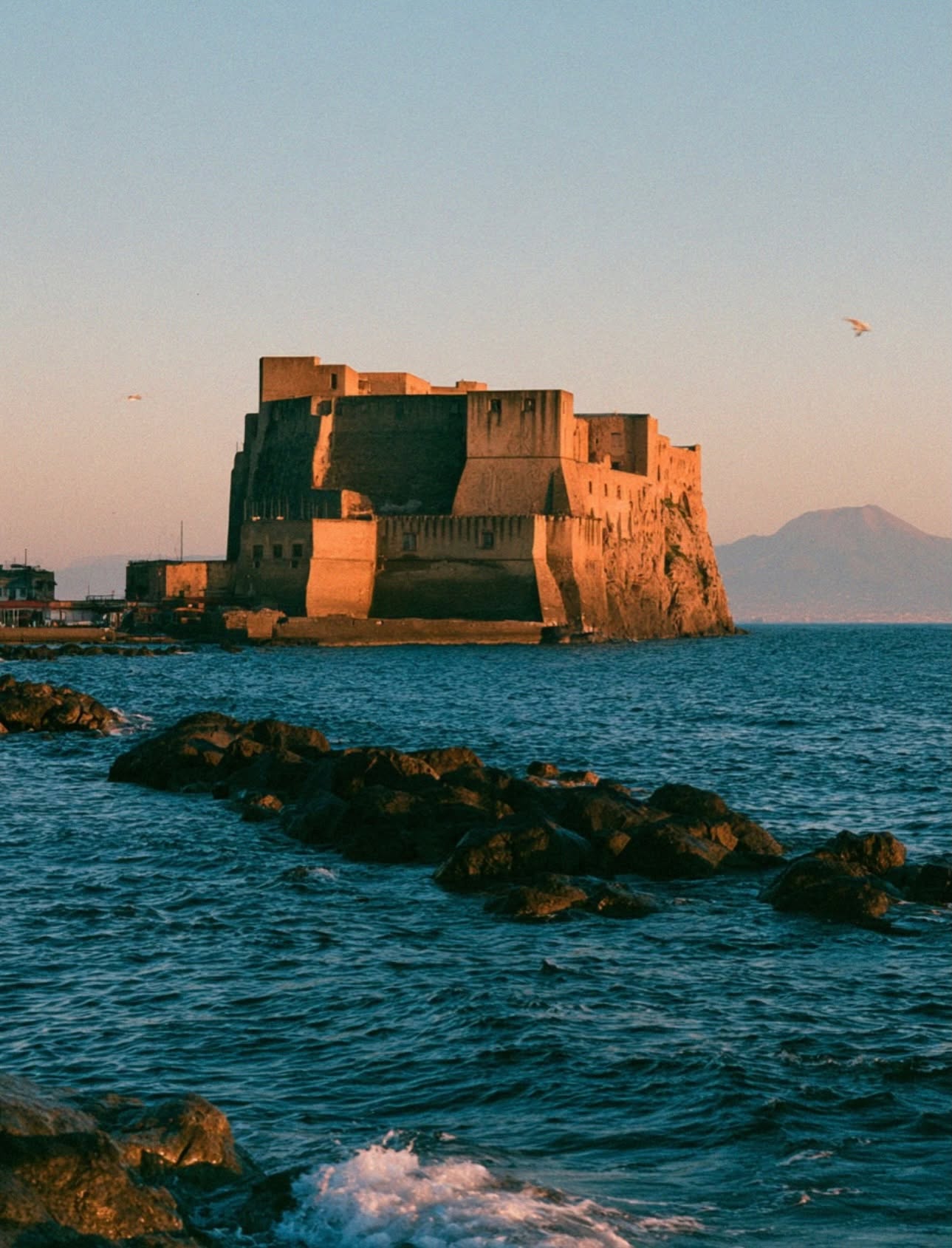
Walk the Lungomare in the evening, when the heat of the day has begun to drop, and the light over the bay has turned the water into something that looks like hammered bronze. The waterfront boulevard runs from Piazza Vittoria, in the Chiaia, westward toward Mergellina, and it is one of the great evening walks in Italy.
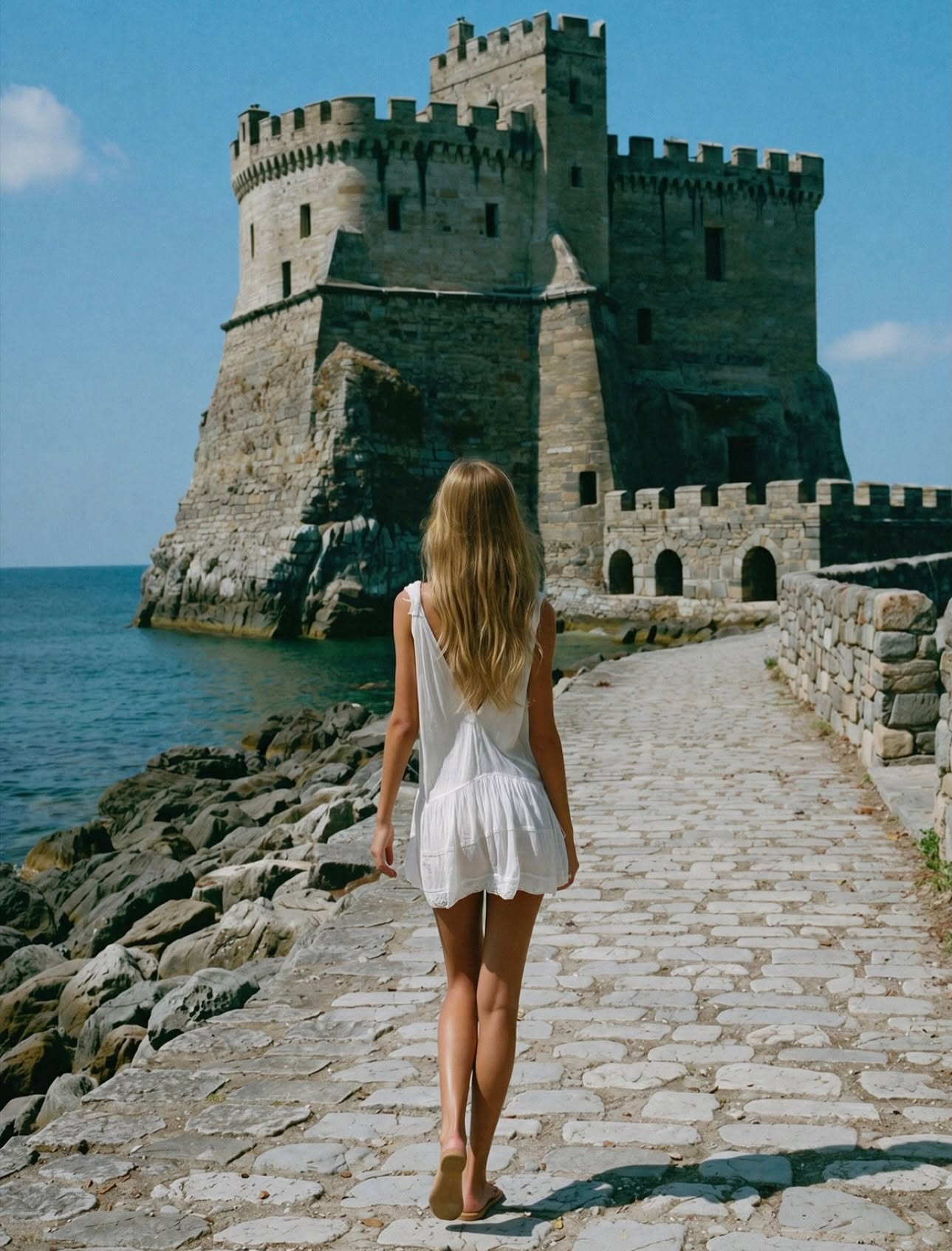
The Castel dell’Ovo sits at the end of a small peninsula at Borgo Marinari, its round towers rising above the water. The name, the Castle of the Egg, comes from a legend about the Roman poet Virgil, who supposedly concealed an egg beneath the castle’s foundations during its construction, with the prediction that when the egg broke, the castle and the city would fall. The egg has never broken. The castle, built by the Normans in the twelfth century, still stands.
Inside the castle, there are exhibition spaces and rooms with views across the bay toward Vesuvius. The volcano is always present in Naples, it is the first thing you see arriving from the east, and it is visible from dozens of points throughout the city. The Neapolitans live with this proximity to a catastrophic force in the way that people who have lived with something for a very long time manage: with a combination of awareness and acceptance that looks, from the outside, like nonchalance.
Vesuvius last erupted in 1944. The next eruption is a matter not of if but of when. The city continues regardless.
The Churches and the Art
Naples has more baroque churches per square kilometer than almost anywhere in Europe. This is not a figure I have verified scientifically, but it feels true in the way that statistics about Naples often are, more extreme than you expect, more layered than you can easily process.
The Cappella Sansevero, just off the Spaccanapoli, contains the Veiled Christ by Giuseppe Sanmartino, a marble sculpture of the dead Christ beneath a transparent veil so realistically rendered that visitors have reached out to touch it, unable to believe it is stone. The sculptor carved both the figure and the veil from a single block of marble. The chapel also contains two anatomical machines, preserved human circulatory systems, rumored to have been created by the eccentric prince who commissioned the Christ, that are among the most unsettling objects I have encountered in any museum anywhere. The Sansevero is small. Book ahead. It is worth any complication.
The Duomo di Napoli is the Cathedral of San Gennaro, the patron saint of Naples. Twice a year, in May and in September, the faithful gather for the Miracle of San Gennaro, in which the dried blood of the saint, kept in two sealed vials, is said to liquefy. If the blood does not liquefy, disaster is predicted. The blood has not liquefied on a handful of occasions in recorded history. Each time, something terrible followed. The city takes this seriously.
The Museo Nazionale di Capodimonte, in a royal palace on the hill north of the center, holds one of the great Italian art collections: Caravaggio, Titian, Raphael, Bellini. The museum is rarely as crowded as comparable collections in Florence or Rome, and it has the slightly melancholy beauty of a great collection that has not yet been fully discovered by the mass tourism circuit. Go on a weekday morning. Take your time.
The Museo Archeologico Nazionale holds the finds from Pompeii and Herculaneum, the mosaics, the bronzes, the frescoes, the objects of daily life that Vesuvius preserved in the act of destroying them. The collection is without equal if you are interested in the Roman world. The Secret Cabinet, which houses the erotic art from Pompeii that was considered too scandalous for general display until the 1970s, is now open to all visitors and is both fascinating and surprisingly moving in its humanity.
Galleria Umberto I
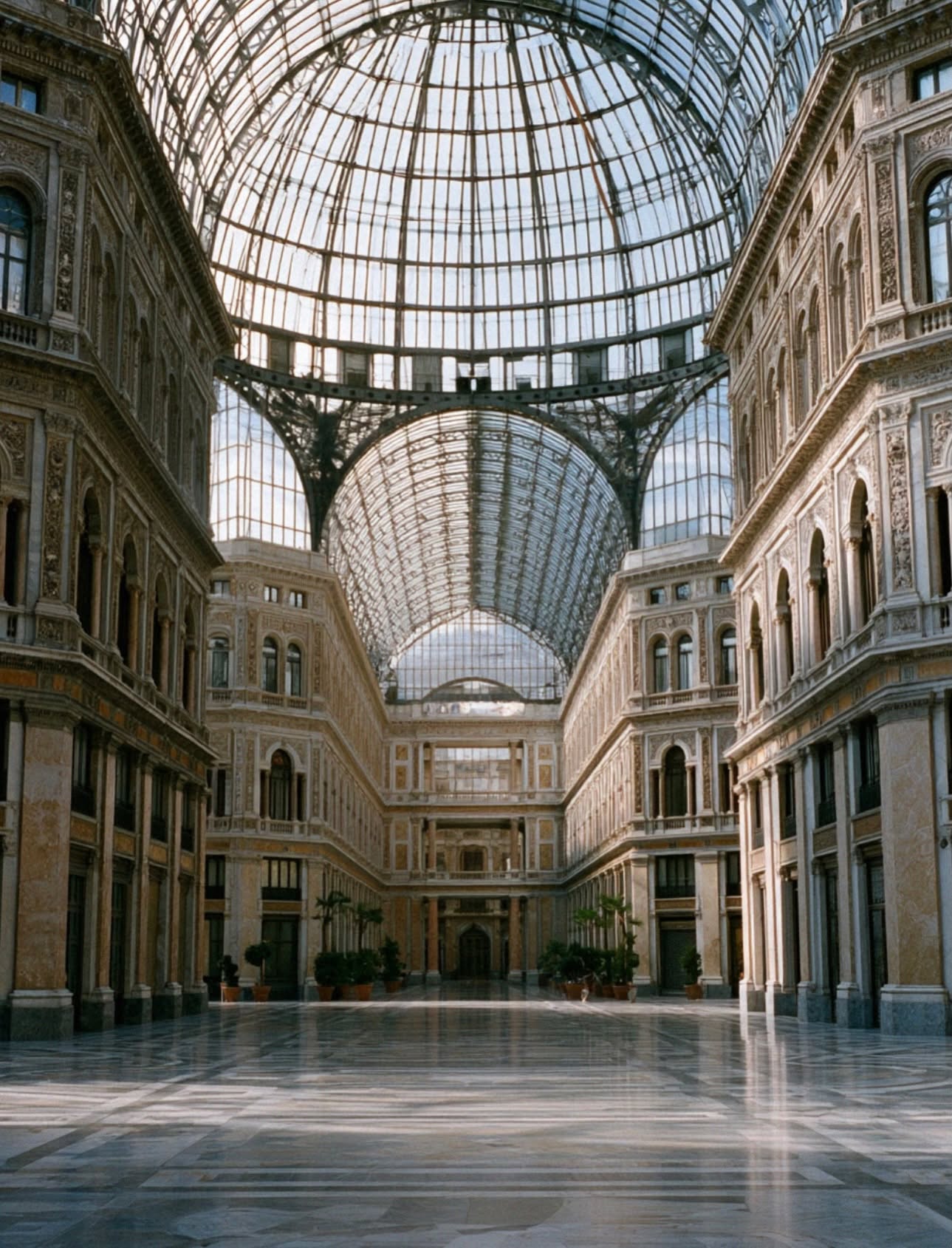
The Galleria Umberto I was built in the late nineteenth century, during the same wave of urban ambition that produced the great covered galleries of Milan and Paris. Its cross-shaped floor plan is covered by a glass and iron dome eighty meters high, through which the light falls in shafts throughout the day, shifting in color from white to gold to the deep amber of late afternoon.
The Galleria opens onto Via San Carlo, across from the Teatro San Carlo, the oldest continuously operating opera house in the world. On certain evenings, if the windows of the theater are open, you can hear the orchestra tuning from across the street.
The Galleria is not the place it once was, many of the original shops have been replaced by tourist-facing boutiques and cafes, but the architecture is spectacular and it remains in daily use by Neapolitans crossing from one side of the block to the other, which gives it a life that preserved buildings often lack. Sit at the bar on the north end in the early evening and watch the city move through.
Day Trips from Naples
Naples is ideally positioned for some of the most significant destinations in southern Italy. Everything I mention here can be done as a day trip, though most of them deserve more time than a single day allows.
Pompeii is forty minutes south of Naples by Circumvesuviana train. The Roman city, buried by Vesuvius in 79 AD and excavated over the past three centuries, stretches across forty-four hectares and contains streets, houses, temples, bakeries, brothels, and gardens preserved to a degree that no other ancient site approaches. Walking the streets of Pompeii is one of the genuinely uncanny experiences available to the modern traveler, the sense of a life interrupted, of time held in suspension, is not diminished by familiarity with the photographs. If you have time for only one day trip from Naples, this is the one.
Herculaneum, on the same rail line as Pompeii but closer to Naples, was buried by the same eruption under a deeper layer of volcanic material, which paradoxically preserved it more completely. The wooden roofs of some structures survived. The walls retain their painted colors. The food found in the thermopolia, the Roman fast-food counters, was carbonized rather than desiccated, and can still be identified. Herculaneum is smaller than Pompeii and far less crowded. If you have seen Pompeii before, or if you prefer depth to scale, Herculaneum will reward you more.
Vesuvius itself is accessible from the Circumvesuviana station at Ercolano. Buses run from the station to a car park near the crater rim. The walk to the summit takes about thirty minutes and is moderately strenuous. The crater is approximately 550 meters across and 300 meters deep, and looking into it, knowing what came out of this hole in the earth and what is still accumulating below, produces a particular feeling that I have not found words for. It is not fear exactly. It is something older than fear.
Capri is forty minutes by fast hydrofoil from Molo Beverello, the ferry terminal at Piazza Municipio. I have written at length elsewhere about Capri, the Blue Grotto, the Faraglioni, the Gardens of Augustus, and will not compress that into a paragraph here. What I will say is that the island is genuinely extraordinary and genuinely overwhelmed in summer, and that the best way to experience it is to arrive on the first boat and leave on the last one, staying long enough to walk to places the day-trippers do not reach.
The Amalfi Coast begins at Vietri sul Mare, an hour south of Naples by car or somewhat longer by train and bus. I have written extensively about the coast, about Ravello, about Amalfi town, about Positano and Praiano and the quiet beaches that require a boat or a long walk to reach. The coast is, by any measure, one of the most beautiful places on earth, and Naples is your best base for exploring it.
What to Wear
Naples is a city with strong opinions about presentation. The Neapolitan tradition of tailoring, the sartoria napoletana, is one of the finest in the world, and the city’s residents dress with a care and intention that is more characteristic of Milan than of a southern Italian city with significant poverty rates. This is not a contradiction. It is an expression of dignity.
You are not expected to be impeccably dressed. You are expected to have made an effort. Shorts are acceptable in summer, but keep them below the knee if you plan to enter churches. Sundresses are fine. Comfortable walking shoes are essential; the streets are cobblestone and uneven, and you will walk several kilometers a day without noticing until your feet remind you in the evening.
The heat in July and August is serious. Carry water. Wear sunscreen. Accept that the afternoons in midsummer are for staying inside or sitting under an umbrella at a waterfront bar with something cold.
In spring and autumn, my preferred times to visit, you will need a light layer for the evenings. October in Naples can be twenty degrees by day and cool enough for a jacket after ten at night.
Getting Around
The historic center is best navigated on foot. The streets are too narrow for efficient taxi travel, and scooters, while the Neapolitan default, are not something I would recommend for visitors unfamiliar with the traffic patterns, which are best described as improvised.
The metro runs on two lines; Line 1, which is the more recent and architecturally interesting of the two, stops at Piazza Municipio, Piazza Dante, and the Museo Archeologico. The stations on Line 1 were designed by different architects and commissioned with art installations; the Toledo station, in particular, with its deep blue mosaic ceiling and filtered light, has been cited as one of the most beautiful metro stations in the world.
Taxis are metered and reasonably priced for the distances involved. Ride-sharing apps operate in Naples and are sometimes easier than hailing a cab on the street. For the waterfront and Chiaia, walking is always the right choice.
To Pompeii, Herculaneum, and Sorrento, the Circumvesuviana is the best option: cheap, regular, and direct. It is not fast and it is not always comfortable, but it runs reliably and puts you exactly where you need to be.
Safety
Naples has a reputation that is worth addressing directly. The city has historically had problems with organized crime and petty theft, and these problems have not entirely disappeared. But Naples has changed considerably in the past two decades, and the historic center in particular is safer than its reputation suggests.
The usual precautions apply: keep your phone in your pocket rather than in your hand on crowded streets, carry your bag in front of you, be aware of your surroundings, and don’t flash expensive equipment. I have walked the Spaccanapoli and the Quartieri Spagnoli alone after dark without incident. I have also had friends who have had bags taken, and I do not want to minimize that possibility.
What I will say is this: do not let the reputation keep you away from the city. The risk, managed intelligently, is not significantly greater than in any other major urban center. And the reward, Naples, experienced fully, without the protective layer of anxiety, is immeasurable.
When to Go
May and June are the finest months. The weather is warm and usually clear, the tourism has not yet reached its summer peak, and the city is in the mood it is always in when the temperature is right: energetic, expansive, generous.
September and October are equally good. The summer crowds thin, the sea is still warm enough to swim, and the light has the particular quality of the Italian autumn, lower, slower, more golden, that makes everything look as though it has been lit for a film.
July and August are hot and busy. The city does not empty the way some Italian cities do; Neapolitans do not abandon Naples for the coast the way Romans flee Rome in August, but the temperatures can be formidable and the tourist traffic heavy around the major sites.
Winter is underrated. Naples in December, with the presepe shops in full operation and the smell of roasting chestnuts from the street vendors and the sea steel-grey and cold and the city going about its daily life without any concession to the season, is one of the most interesting versions of the place.
More images from Naples



Your Naples Guides
- Getting to Naples and Getting Around
- The Best Things to Do in Naples
- Where to Eat in Naples
- The Best Photo Spots in Naples
- Day Trips from Naples
- The Perfect Naples Itinerary
- Where to Stay in Naples
Naples Travel Diaries
Frequently Asked Questions
How many days do you need in Naples?
Two full days is enough for the city itself. Three or four lets you add a day trip to Pompeii, Capri, or the Amalfi Coast without rushing.
Is Naples safe?
Yes, for the ordinary traveller. Naples has a reputation worse than the reality. Keep the usual city wits about you, watch your bag in crowds and on the metro, and you will almost certainly have no trouble.
What is the best time to visit Naples?
Spring and autumn, roughly April to June and September to October, for warm days without the fierce August heat. The city stays lively year round, and winter is quiet and atmospheric.
What food is Naples known for?
Pizza above all, since it was born here, along with fried street food, sfogliatella pastries, and strong espresso taken standing at the bar. Eat where the queues are local.
How do you get from Naples to Pompeii, Capri, or the Amalfi Coast?
The Circumvesuviana train runs to Pompeii and Sorrento, ferries leave the port for Capri and the coast, and buses and trains reach Salerno. All make easy day trips.
Do you need a car in Naples?
No. The city is walkable and well served by metro, funiculars, and buses, and driving in Naples is famously not for the faint hearted. Trains and ferries handle the day trips.
A Few Final Things
There are things I have not covered here, the thermal island of Ischia, which deserves more than a day and more than a paragraph; the Phlegraean Fields, the volcanic caldera west of the city where the earth breathes visibly; the castle at Baia, submerged now by the slow geological subsidence of the coastline; the ruins of Cumae, where the Sibyl held her cave.
Naples has an inexhaustible depth. Every time I return, I find something I have not found before. A church I had not entered. A street I had not walked. A bar that someone mentions in passing that turns out to be the best caffè I have had in months.
This is the quality that distinguishes the great cities from the merely beautiful ones. Beauty can be exhausted; you can see all of it, and leave satisfied, and not feel the pull to return. Depth cannot be exhausted. You come back because the city holds more than you can hold in a single visit, or a second, or a third.
Naples holds more than most cities hold.
I will be back.
If Naples is your gateway to the south, the Amalfi Coast is the next chapter. I have written a complete guide to the coast, from the ferry crossings to the cliff lidos to the towns that most people miss.
V.