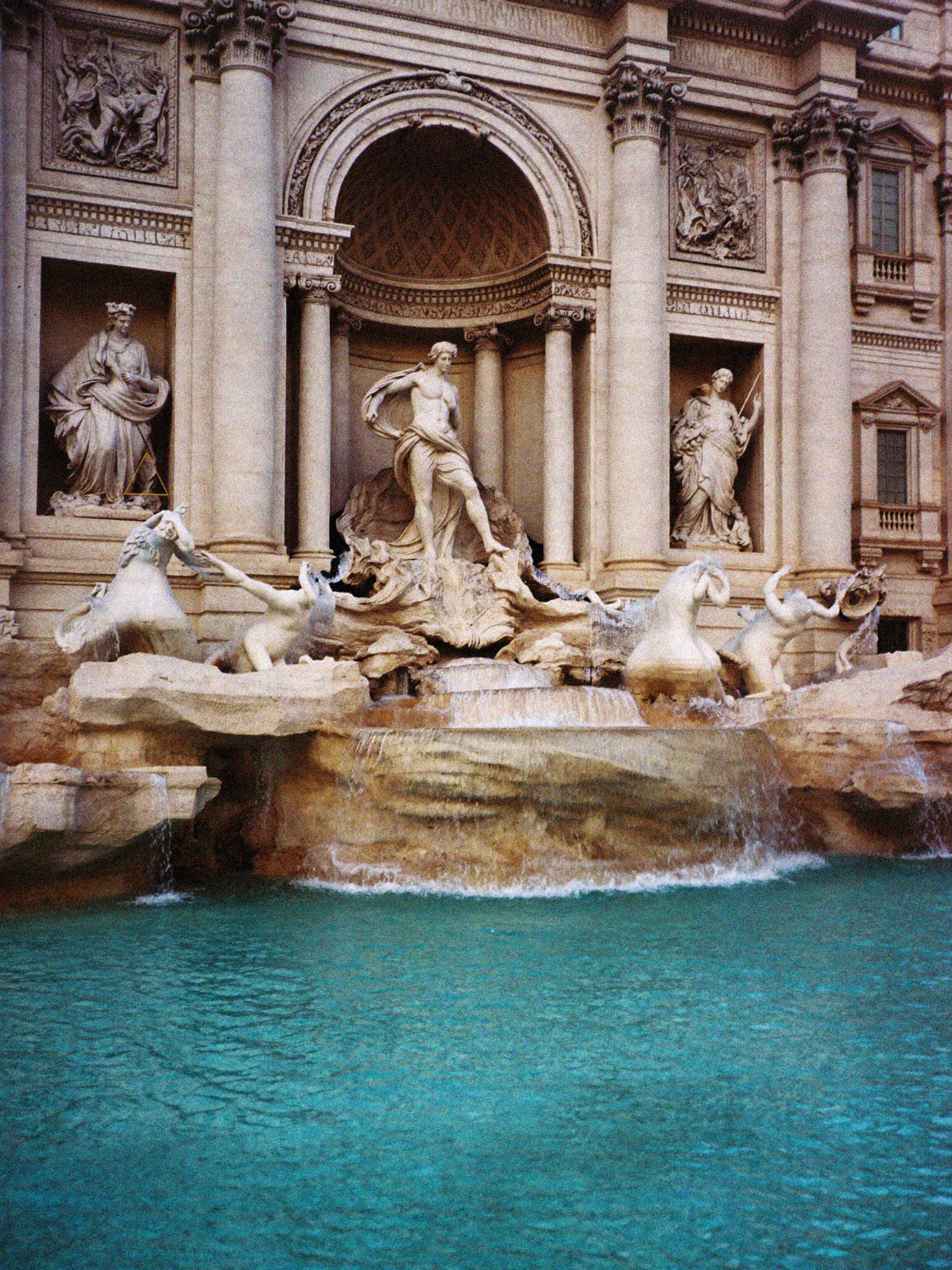
Of all the fountains in a city full of them, the Trevi is the one everyone comes to find. It fills a small square at the end of a tangle of narrow streets, so you hear it before you see it, and then you turn a corner and there it is, a wall of white marble and turquoise water taller than the buildings around it, the sea god Oceanus riding out of the rock on a shell drawn by seahorses. It is the largest baroque fountain in Rome and, coin for coin, the most wished-upon fountain in the world.
You will not have it to yourself. The Trevi is busy from mid morning until late, and the crowd is part of the experience now, cameras up, coins arcing over shoulders. But come at the right hour and it becomes something else entirely. This is how to see it well, throw your coin the right way, and understand what you are looking at.
The Story of the Fountain

The fountain marks the end of the Aqua Virgo, an aqueduct built in 19 BC that still carries water into the centre of Rome after two thousand years. The name Trevi is thought to come from tre vie, the three roads that once met at this spot. For centuries there was only a modest basin here, until the popes decided that Rome’s great aqueduct deserved a great ending.
Nicola Salvi won the commission in 1732 and spent the rest of his life on it. He did not live to see it finished; it was completed by Giuseppe Pannini and unveiled in 1762, thirty years after it began. At its centre stands Oceanus in his shell chariot, flanked by tritons taming two seahorses, one wild and one calm, the two moods of the sea. Behind it all rises the facade of the Palazzo Poli, so the fountain is really a palace wall turned into theatre.

The Coin Tradition
The custom is famous and worth doing properly. Stand with your back to the fountain, take a coin in your right hand, and throw it over your left shoulder into the water. One coin means you will return to Rome. Two, according to the legend Hollywood gave it, means you will fall in love. Three means you will marry. Around three thousand euros are thrown in every day, quietly collected each night and given to a Catholic charity that feeds the city’s poor, so your wish does a little good on its way to coming true.
The Rules and the New Basin Ticket
A few practical things have changed recently. Since February 2026, non residents pay a small ticket of about two euros to step down into the basin area right at the water’s edge, between 9am and 9pm, with numbers capped at around four hundred people at a time to ease the crush. You can still admire and photograph the fountain for free from the steps above at any hour. And between 10pm and 8am the barrier comes down and the fountain is completely free and open, which is also, not by coincidence, the most beautiful time to see it. Do not climb into the water or sit on the marble; both bring a fine and a sharp word from the police who watch it constantly.
The Best Time to Visit
Come early or come late. At seven in the morning the square is nearly empty, the light is soft, and you can hear the water instead of the crowd. Late at night, after the day trippers have gone, the fountain is floodlit and glowing and the square takes on the film-set quality it has in every movie that has ever used it. The hours to avoid are late morning through early evening, when tour groups fill the steps shoulder to shoulder. If you can only come once, make it the last thing you do at night.
What to See Nearby
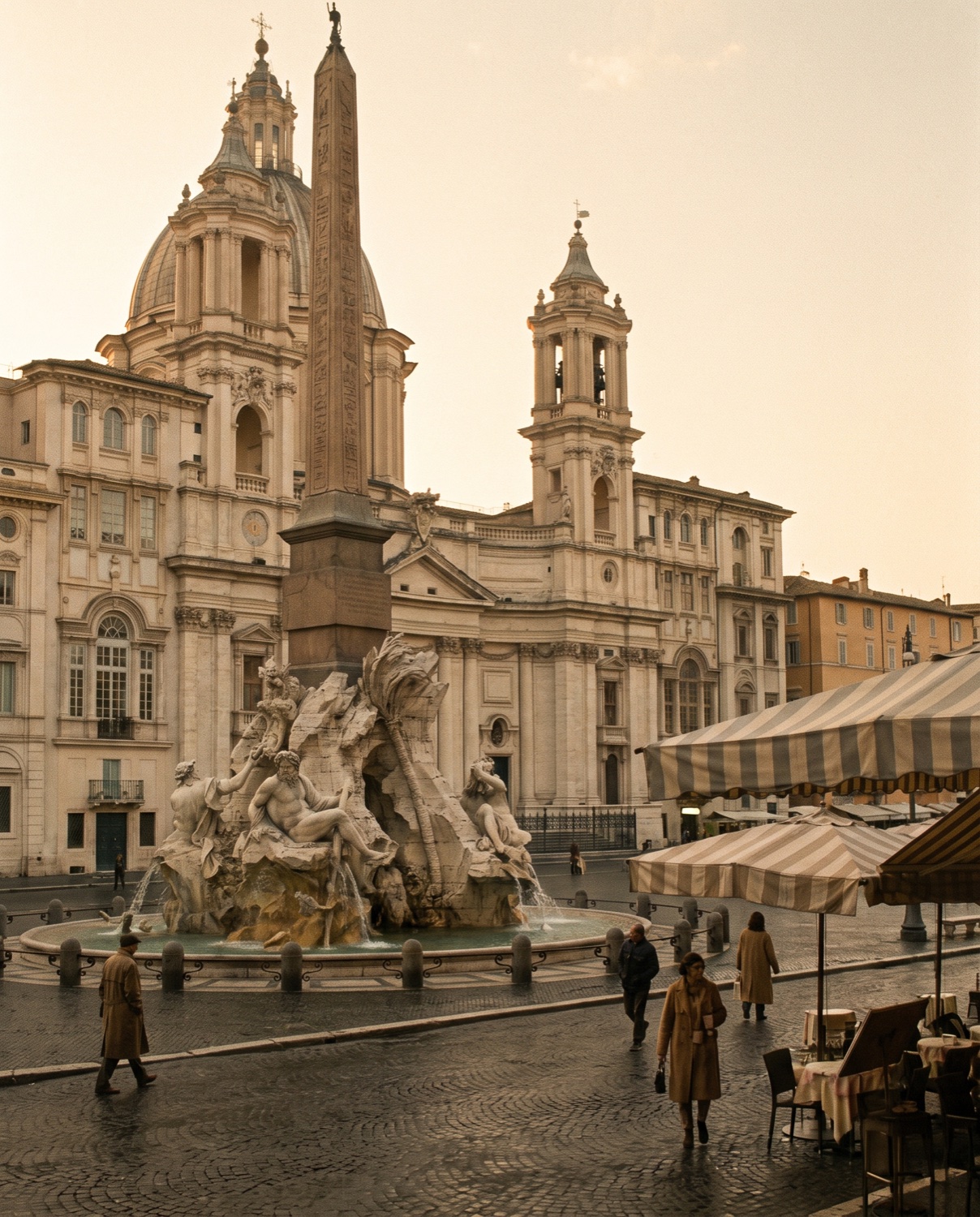
The Trevi sits in the heart of Rome’s old centre, minutes on foot from most of its other set pieces. The Pantheon, the single most astonishing room in the city, is a ten minute walk west. The Spanish Steps are a similar walk north. Piazza Navona, with its Bernini fountains and baroque facades, is just beyond the Pantheon. You can string all four together in an easy evening, ending at the Trevi as the lamps come on. My three day Rome itinerary maps the whole route.
Photographing the Trevi Fountain
The fountain photographs beautifully or badly depending entirely on when you come. For the shot without a wall of strangers in it, arrive at dawn. For the glowing, floodlit version, come after ten at night. From the top of the steps you get the classic head-on view; from the far right, lower down, you catch Oceanus in profile with the water falling toward you. A slow shutter turns the water to silk if your hands are steady or you have something to rest the camera on. More on the city’s best vantage points is in my guide to the best photo spots in Rome.
Frequently Asked Questions
Do you have to pay to see the Trevi Fountain?
Since February 2026, non residents pay about two euros to step into the basin area between 9am and 9pm. You can still see and photograph the fountain for free from the steps above at any time, and it is completely free with no ticket between 10pm and 8am.
How do you throw a coin in the Trevi Fountain?
Stand with your back to the fountain and throw the coin over your left shoulder with your right hand. One coin for a return to Rome, two for romance, three for marriage.
What is the best time to visit the Trevi Fountain?
Early morning, around seven, for quiet and soft light, or late at night after ten, when it is floodlit and the crowds have gone. Avoid late morning to early evening, when it is busiest.
Can you touch or swim in the Trevi Fountain?
No. Entering the water or sitting on the marble is forbidden and fined, and the police watch the fountain closely. Admire it from the steps.
Who built the Trevi Fountain?
It was designed by Nicola Salvi, begun in 1732, and completed by Giuseppe Pannini in 1762. The central figure is the sea god Oceanus.
How long do you need at the Trevi Fountain?
Fifteen to thirty minutes is plenty to see it, throw a coin, and take your photos. It is easily combined with the Pantheon and the Spanish Steps nearby.
Make Your Wish
The Trevi is small, and famous, and worth the fuss, if you meet it at the right hour. Throw your coin, make your wish, and let the water carry the promise that you will come back.
For the rest of the city, see my complete guide to Rome, browse the best things to do in Rome, or plan it all with the three day Rome itinerary.