Naples does not ease you in.
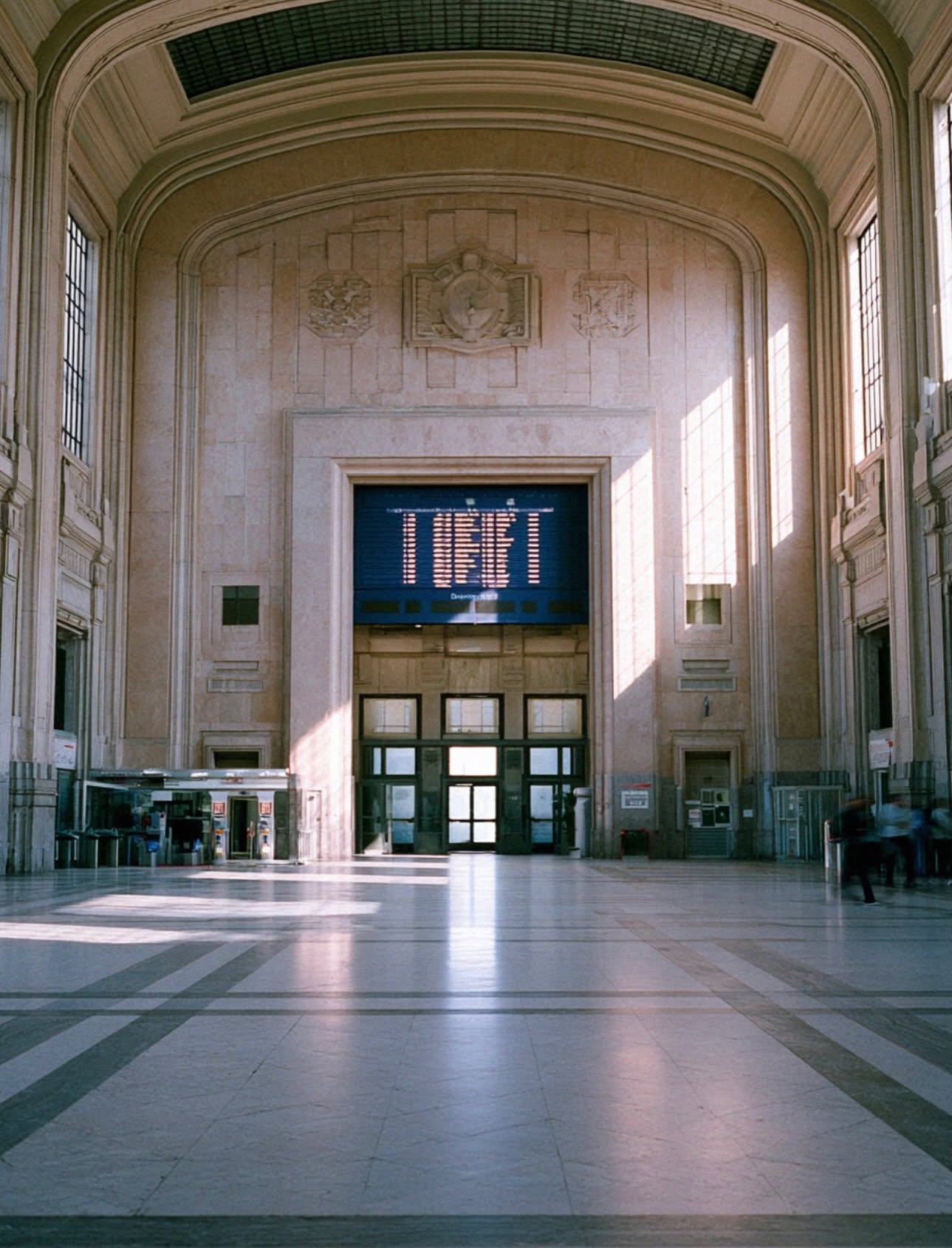
I came in by train, and the city started before I had even left the platform. The carriage doors opened onto heat and noise and a river of people already moving, and I stepped down into the middle of it with my bag over one shoulder and no clear sense of which way was out. The hall of the station was vast and full of motion, the departures board clattering through its changes high on the wall, travellers streaming past in every direction, all of them seeming to know something I did not yet know. I stood beneath it for a moment and let the crowd break around me. Then I found the light at the far end and walked toward it, and the city was waiting on the other side of the doors, all at once, exactly as loud as I had been promised.

Everyone who had warned me about Naples had warned me in the same tone, half caution and half envy. Careful there. But watch, you’ll love it. They were right on the second count. It took about an hour.
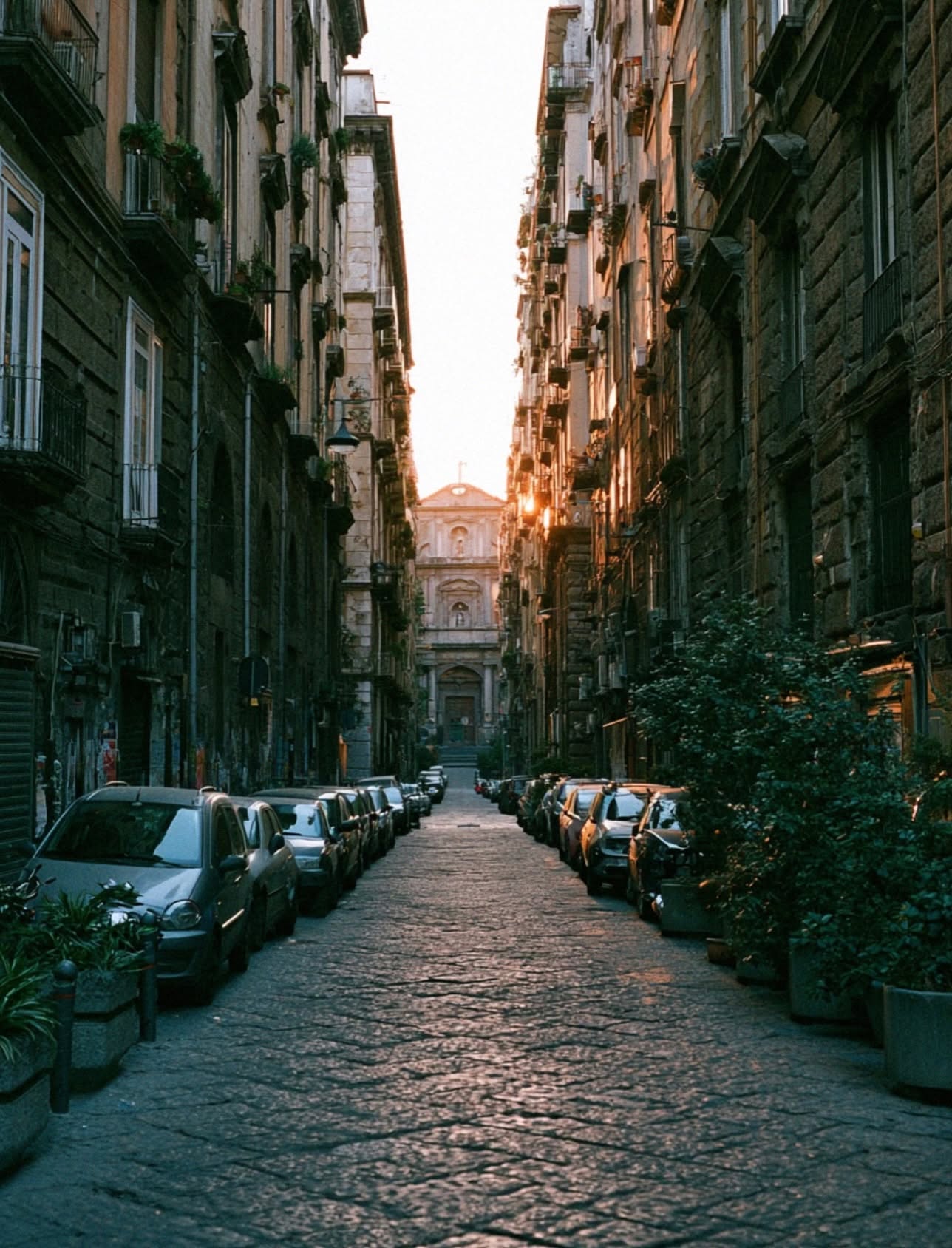
The city begins the moment you leave the station. There is no polite distance between arrival and surrender. I walked up into the Quartieri Spagnoli, the old Spanish quarter, where the streets narrow and rise and the buildings lean toward each other until the sky is only a strip of blue far overhead. Laundry crossed between the balconies, white and pale and moving slightly in air I could not feel at street level. A shaft of midday light came down between the buildings and lay across the cobblestones in a single bright band, and everything on either side of it stayed in shadow.
There were Vespas. There are always Vespas. They came through the narrow lanes faster than seemed possible, and the people on foot simply moved without looking, the way you move around furniture in your own house. I learned to do it within a few streets. You cannot walk slowly here. The city will not let you, and after a while you stop wanting to. Naples does not ask for grace. It teaches you rhythm instead.
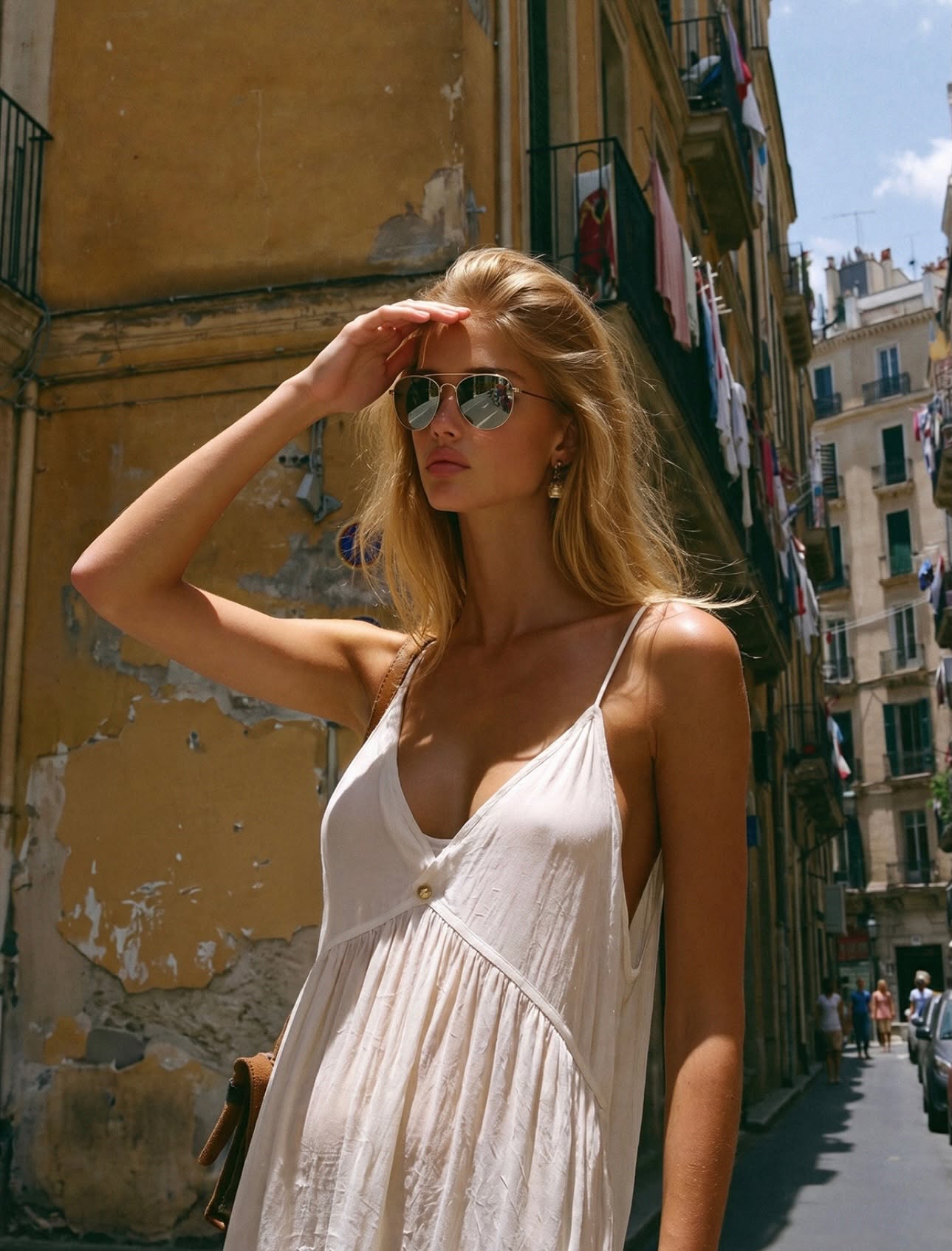
I stopped once, at a corner, to look up at a mural of Maradona on a crumbling ochre wall. Flowers had been left at the base of it. Candles. A scarf, faded almost to nothing by the sun. In Naples the man is not a memory. He is a presence, painted on the walls, printed on the flags strung above the lanes, watching over the quarter from every gable end. I raised a hand to shade my eyes and stood there a while. Nobody hurried me. In a city that hurries everything, the shrines are the one place time is allowed to stop.
Spaccanapoli runs straight through the old heart of the city like a knife cut, which is what the name means. You can stand at one end and see almost to the other, the ancient street stretching away dead straight between the tall stone buildings, a church facade rising pale in the distance where the line finally bends out of sight.
I walked the length of it slowly, or as slowly as Naples permits. The street is barely wide enough for the light to reach the ground. Shops opened directly onto it, their goods spilling out across the stone, and the sound never stopped. Somewhere a radio. Somewhere an argument, or what sounded like one and was probably a conversation about lunch. Somewhere the smell of frying oil and basil and old stone warmed by the sun. The city did not unfold in front of me. It pressed itself against me. It gave everything at once and left me to sort through it afterward.
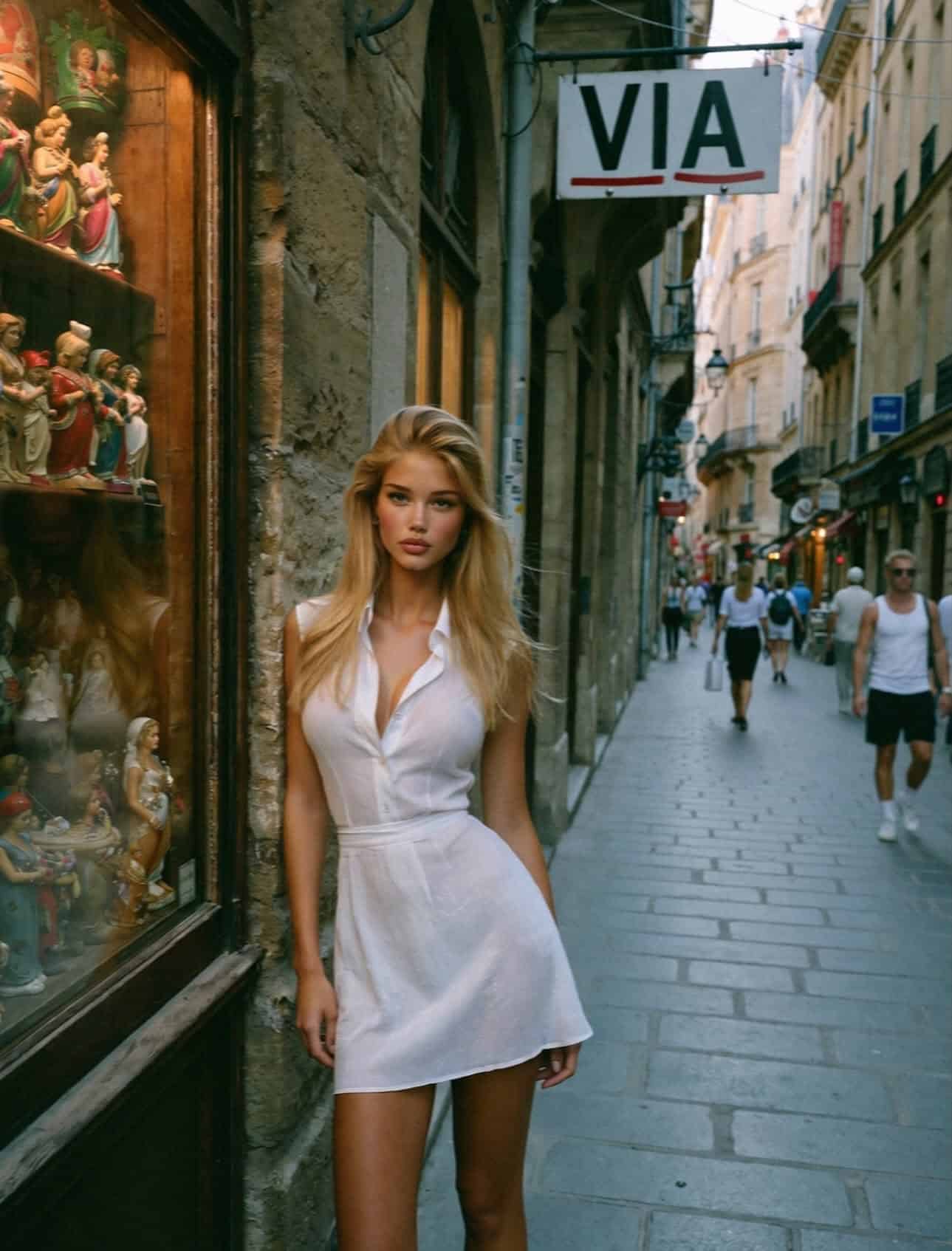
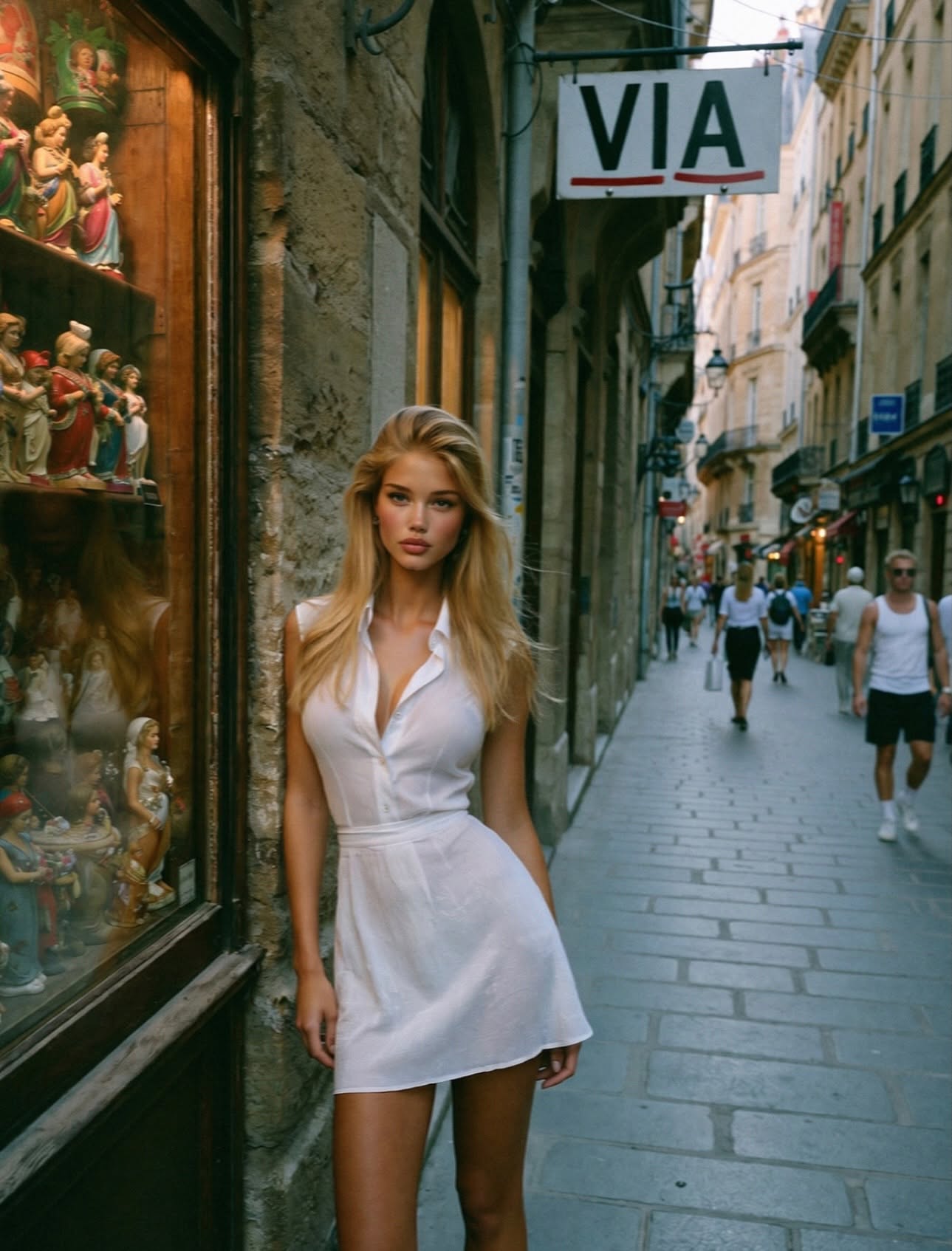
I turned down Via San Gregorio Armeno, the lane of the nativity makers, where they carve the little terracotta figures all year round for a Christmas that is always eleven months away. The shops were full of them, saints and shepherds and kings and, beside the kings, footballers and politicians and whoever else the year had produced. Painted faces in every open doorway, staring out. I did not buy anything. I only wanted to stand in the lane and look, the craftsmen working in the backs of the shops with the same unbothered concentration their grandfathers must have had, the whole tradition carrying on exactly as it always has because no one has told it to stop.
There is something touching about that kind of persistence. The small figures. The painted saints. The ridiculous kings. The city making its own theatre in miniature, year after year, as if to say that history is not behind us. It is still sitting in the window, drying in the afternoon heat.
I drank my coffee standing up, the way you are supposed to.
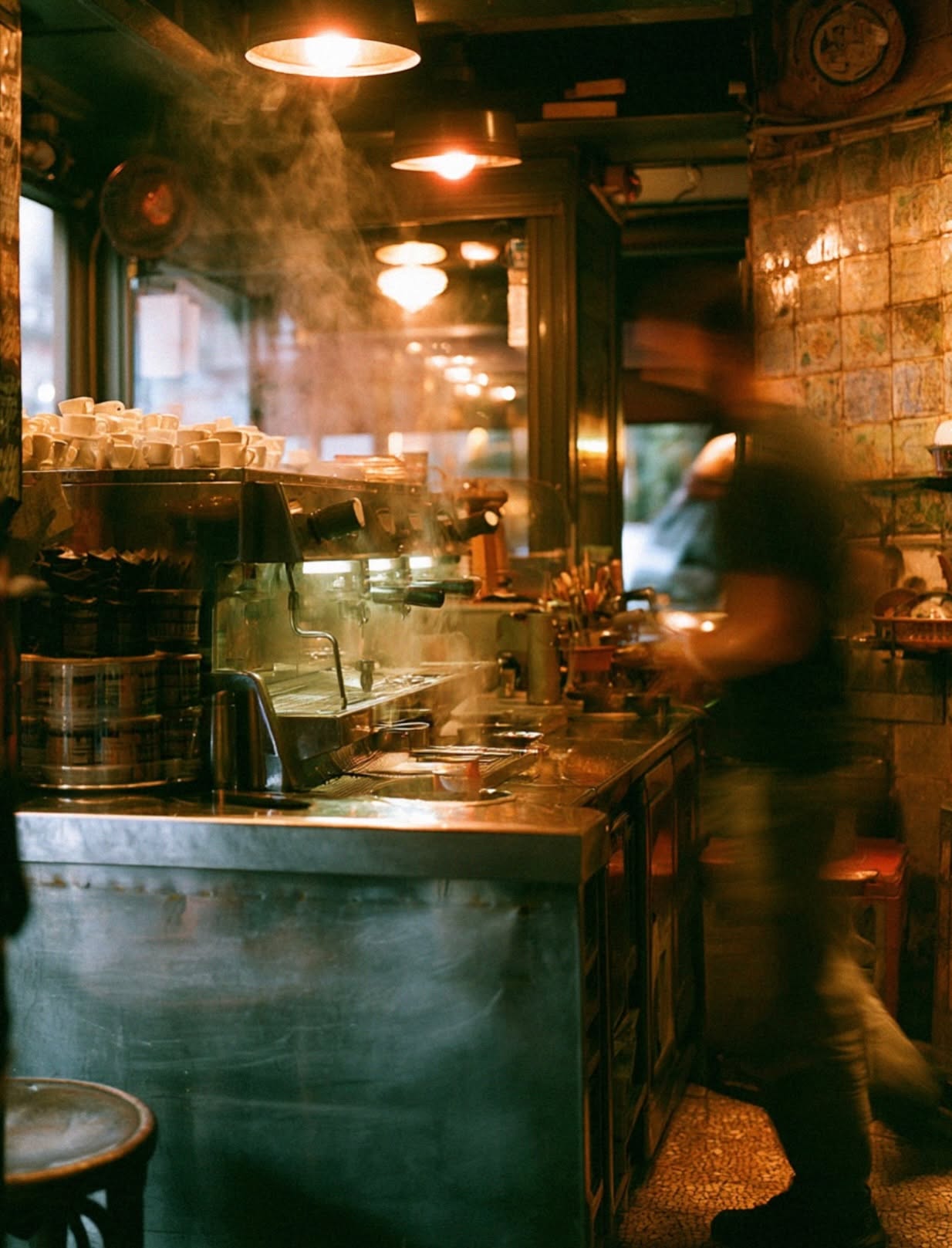
The bar was small and crowded and loud, a zinc counter and a machine that never went quiet, cups stacked to the ceiling and steam rising into the low warm light. I ordered an espresso, and it came in a cup barely larger than a thimble, already sweetened, the way they do it here unless you tell them otherwise. I did not tell them otherwise. It was thick and dark and better than any coffee I have had anywhere, and it was gone in three seconds, and that is the whole ritual. You do not sit with it. You do not photograph it. You drink it at the counter in the noise, put the cup down, and go back out into the day.
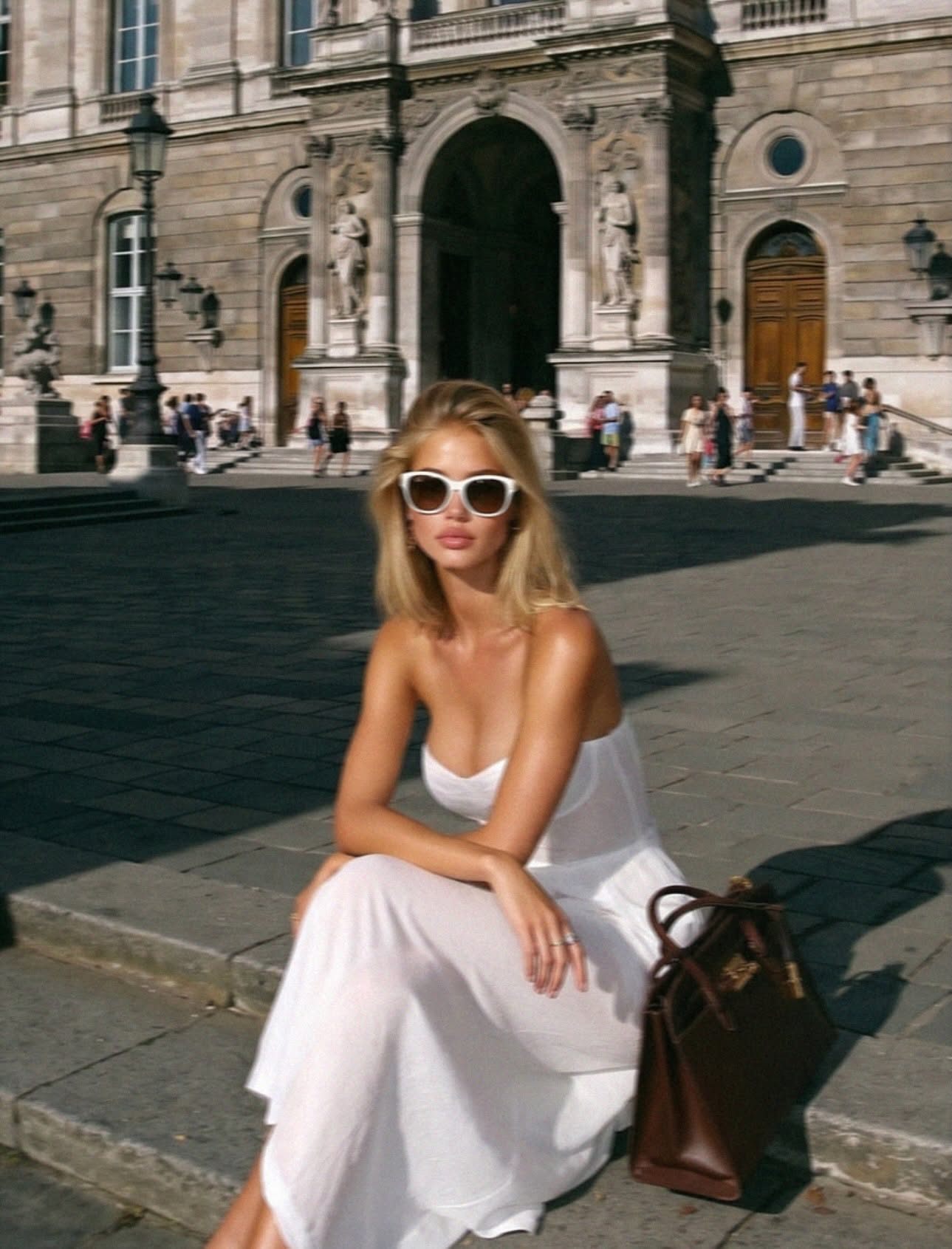
Later, on a quieter side street, I sat at a small table outside with a second one and let myself break the rule. Sunglasses pushed up into my hair, the cup in front of me, the street going about its business. A woman leaned out of a window three floors up and lowered a basket on a rope to the shop below, and the shopkeeper filled it, and she drew it back up. I watched the whole transaction from beginning to end. Nobody found it remarkable but me.

That is often how travel works. You cross a border, or a sea, or a platform in a crowded station, and suddenly the ordinary lives of other people become almost unbearable in their beauty. A basket on a rope. A hand at a window. A shopkeeper looking up once and then going back inside. Nothing happens, and because nothing happens, you remember it.
Galleria Umberto I is the city catching its breath.
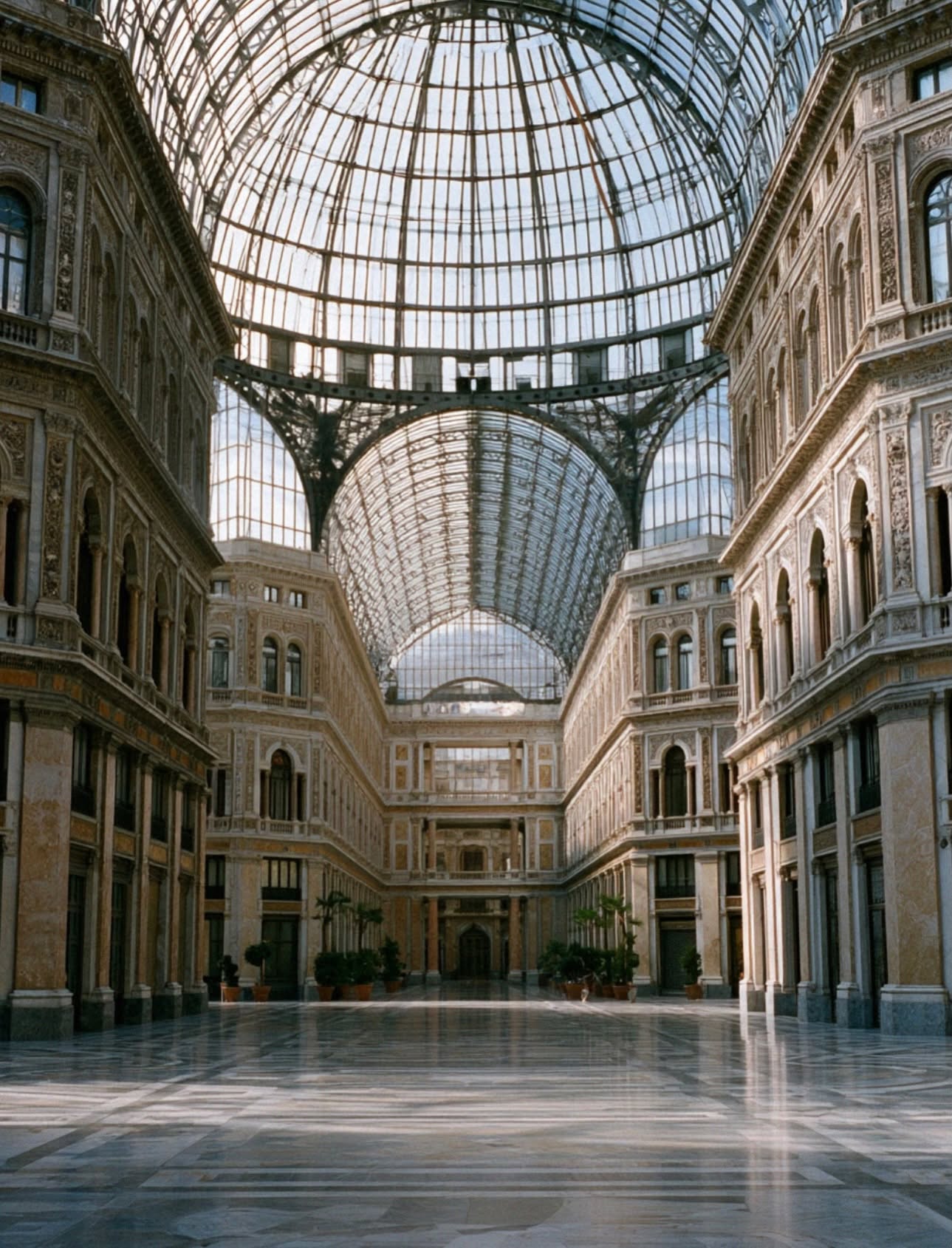
You come in off the noise, and the heat of the street and the space simply opens above you, an iron and glass dome curving up into the light, the marble floor stretching out pale and polished beneath it. I stood in the centre, directly under the dome, and looked straight up, and the morning came down through the glass in long shafts and lay across the stone in wide bright columns. It was almost empty at that hour. My own reflection moved across the floor as I walked, the arcade running ahead of me, the shopfronts dark behind their old glass. A city that shouts everywhere else had built itself, once, a room in which to be quiet.
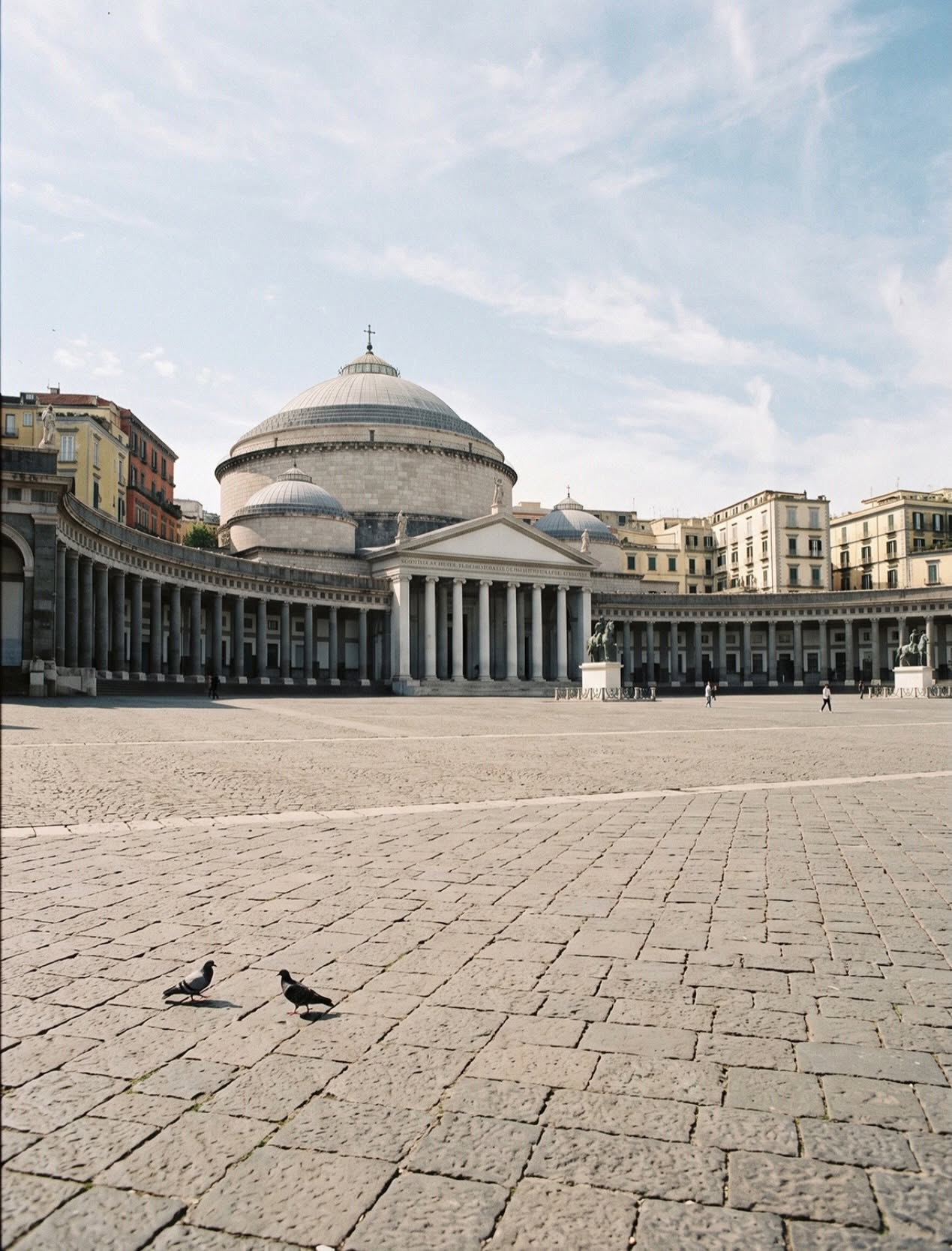
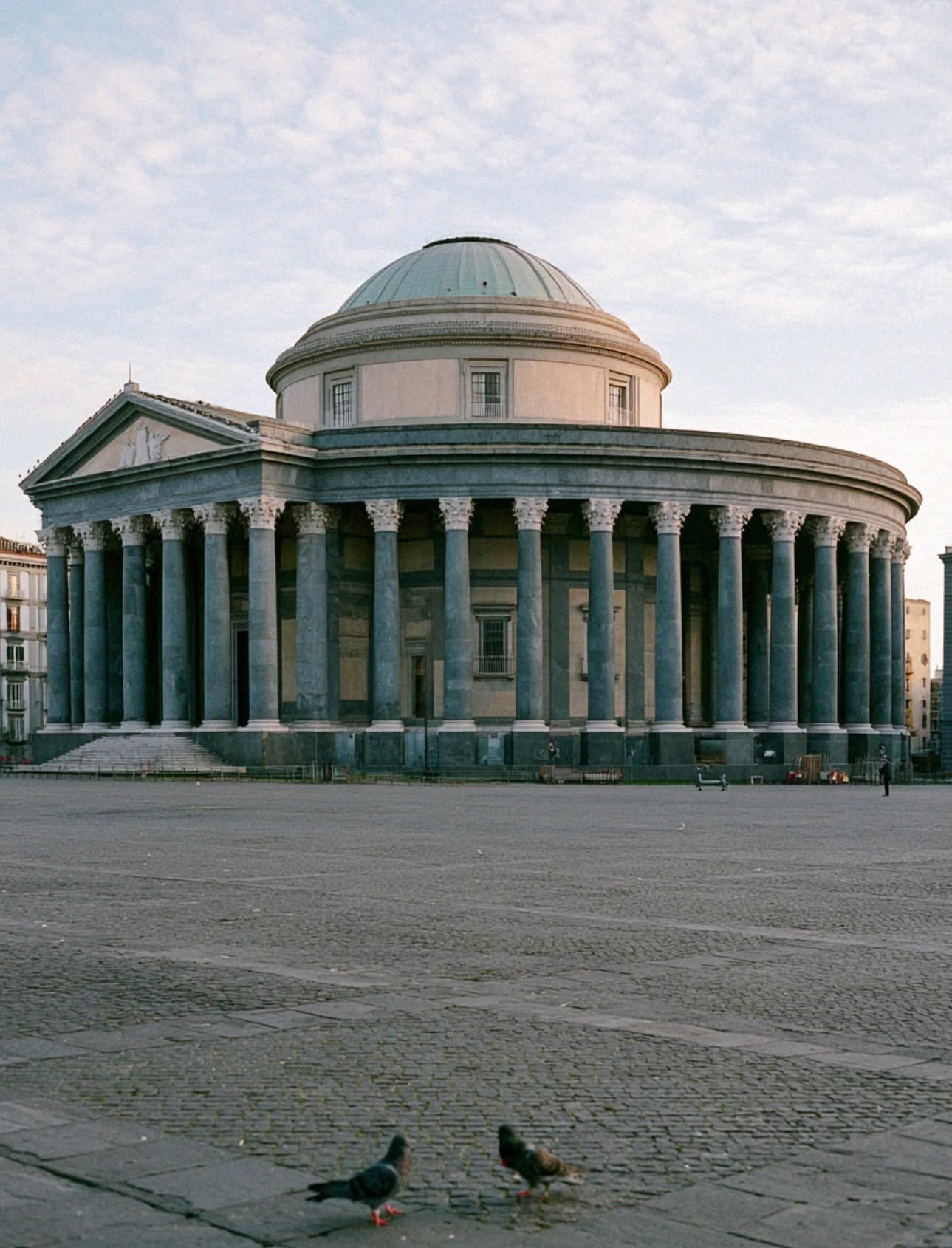
Across the street, Piazza del Plebiscito. After the tangle of the old town, the square is almost shocking in its openness, a great paved expanse with the semicircular colonnade of San Francesco di Paola curving wide on one side and the Royal Palace facing it across the emptiness. Pigeons. A few figures crossing the stone, made small by the scale of it. I sat on the steps at the edge with my bag beside me and looked across at the palace and did not move for a long time. There was room, finally, to be still.

It was not silence exactly. Naples never quite gives you silence. It gives you a pause with voices inside it. A motorbike far away. Shoes crossing stone. The wings of pigeons lifting and settling again. Even in the square, even in all that space, the city remained alive around me, breathing under the marble and the palace walls.
In the late afternoon I walked down to the Lungomare, the long sea road along Via Caracciolo, the bay on my right and Vesuvius across the water going soft and blue in the haze. The breeze came in off the sea, and it was the first cool thing I had felt all day.
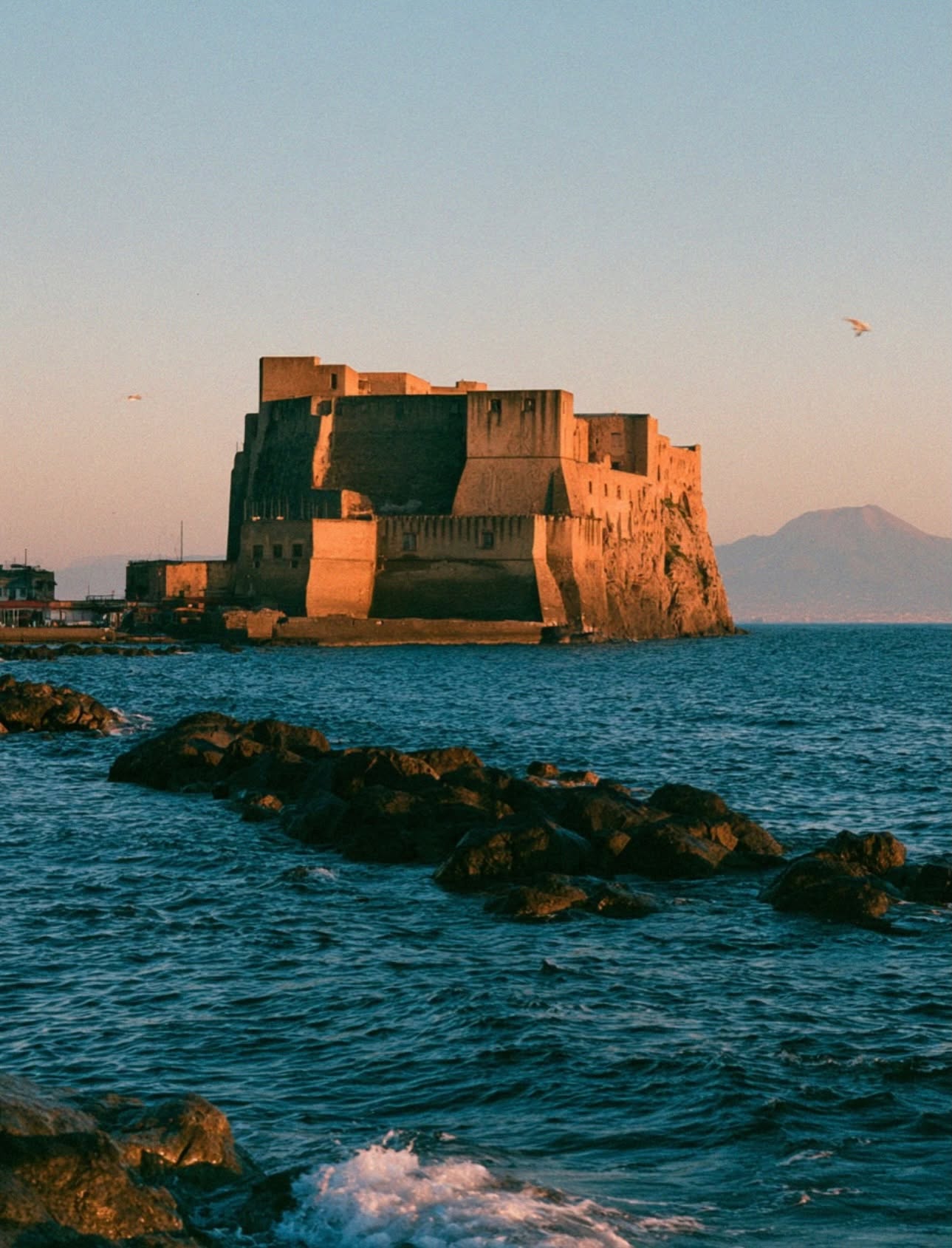
Castel dell’Ovo sat out on its rocky spur, the ancient walls beginning to turn amber as the light dropped, the water between the shore and the castle gone to silver. I walked out along the stone causeway toward it, the sea on both sides now, the city behind me and the castle rising ahead, and I understood that this was the other Naples, the one that has been standing here watching the same bay for a thousand years while the streets behind it changed and shouted and carried on.
A legend says a poet buried an egg in the foundations and that the whole city will stand only as long as the egg stays whole. I liked that. It is a very Neapolitan way to build something. On faith, and a little superstition, and a refusal to think too hard about the ending.
I stayed until the sun was almost down. The walls had gone fully gold by then, and Vesuvius was a dark shape across a pink and silver bay, and a single gull turned over the rocks below me. The city behind me was still going, still loud, still entirely itself. But out here at the edge of the water everything had slowed to the pace of the light. I stood at the railing and watched it drop, and it held for a while, and then it went, all at once, the way it does over water.
I walked back into the city in the blue hour with the lamps coming on, and made my way to the hotel through streets that had not quietened at all. I did not want the day to be over, so I did not treat it as over. I only went back to my room and opened the shutters and let the sound of Naples come up from the street below, and lay there listening to it for a long time.
It was not restful. That is not the word. Naples did not soothe me. It woke something up. Some cities ask you to admire them from a safe distance. Naples does not. Naples comes close. It speaks too loudly. It touches your arm. It makes you cross the street before you are ready. It gives you coffee like a dare and beauty like an accident. It leaves salt on your skin and noise in your hair and a strange happiness in your chest that does not arrive politely, but arrives anyway.
You will not like Naples if you need to be eased into things. It arrives all at once, loud and warm and unbothered by what you think of it, and it does not soften itself for anyone. Somewhere you are reading this and deciding whether that sounds like too much.
It is not too much.
Go, and let it have you. Let it frighten you a little. Let it feed you. Let it pull you through its narrow streets and out to the water at sunset. Let it be exactly what it is, and somewhere between the noise and the sea, between the first espresso and the last blue light over Vesuvius, you may find that the city has not overwhelmed you at all.
It has made room for you.
V.
For Victoria’s Complete Guide to Naples, click here.
More images from my trip to Naples:



Read also: Naples – The City That Lets You Stay.
Plan Your Visit to Naples
A few things I booked and loved. These help support the blog, at no cost to you.
- Where I stayed: search Naples hotels
- Pompeii, museums and Naples tickets
- Stay connected: get a travel eSIM
This section contains affiliate links. If you book through them I may earn a small commission, at no extra cost to you.