The Amalfi Coast’s beaches are small, dramatic, and mostly pebble, tucked at the foot of the cliffs and often reached down a long flight of steps or by boat. They are not the wide golden sands of a resort, but they are among the most beautiful places to swim in Italy. Here is an honest guide to the best of them, the free ones, the beach clubs and the hidden coves, and which suits your kind of day.
Spiaggia Grande, Positano
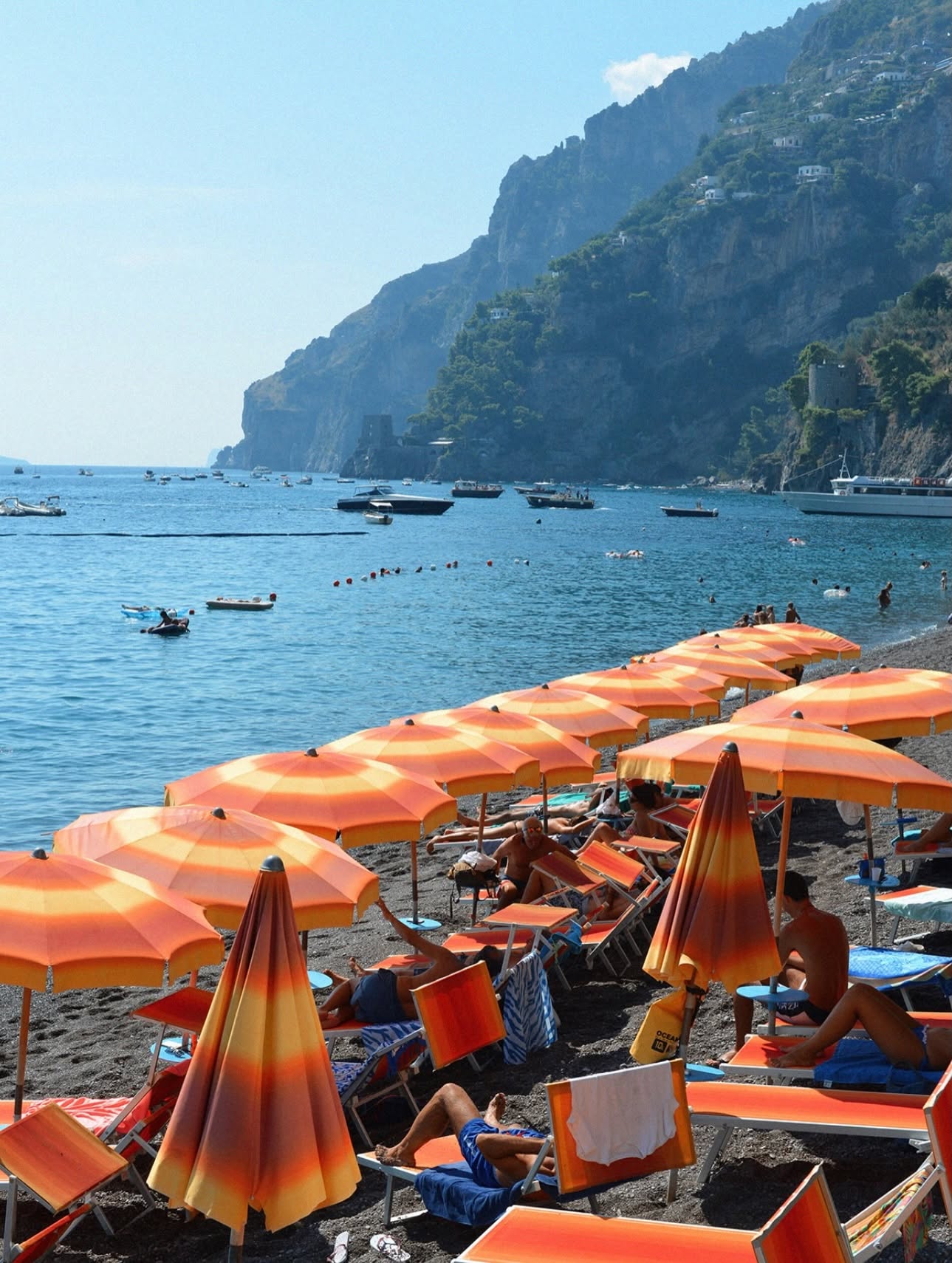
The postcard. A three-hundred-metre arc of dark sand and pebble below Positano’s tumble of pastel houses, with the Li Galli islands out to sea. It is the most photographed beach on the coast and the busiest, lined with beach clubs where two loungers and an umbrella can run to serious money. Come for the view and the scene; there is a free public stretch if you arrive early.
Plan Your Visit to the Amalfi Coast
A few things I booked and loved. These help support the blog, at no cost to you.
- Where I stayed: search Amalfi Coast hotels
- Boat tours and Amalfi Coast tickets
- Stay connected: get a travel eSIM
This section contains affiliate links. If you book through them I may earn a small commission, at no extra cost to you.
Fornillo, Positano
A ten-minute cliff path west from Marina Grande brings you to Fornillo, Positano’s quieter beach, with more of a local feel, calmer swimming and a couple of relaxed clubs. It suits anyone who wants the Positano water without the full Positano crowd.
Marina Grande, Amalfi
Amalfi town’s own beach, a mix of pebble and coarse sand right in front of the harbour, three minutes from the cathedral and steps from the ferry pier. It is central, lively and convenient rather than secluded, which makes it the easy choice if you are based in Amalfi and want a swim between sights.
Atrani
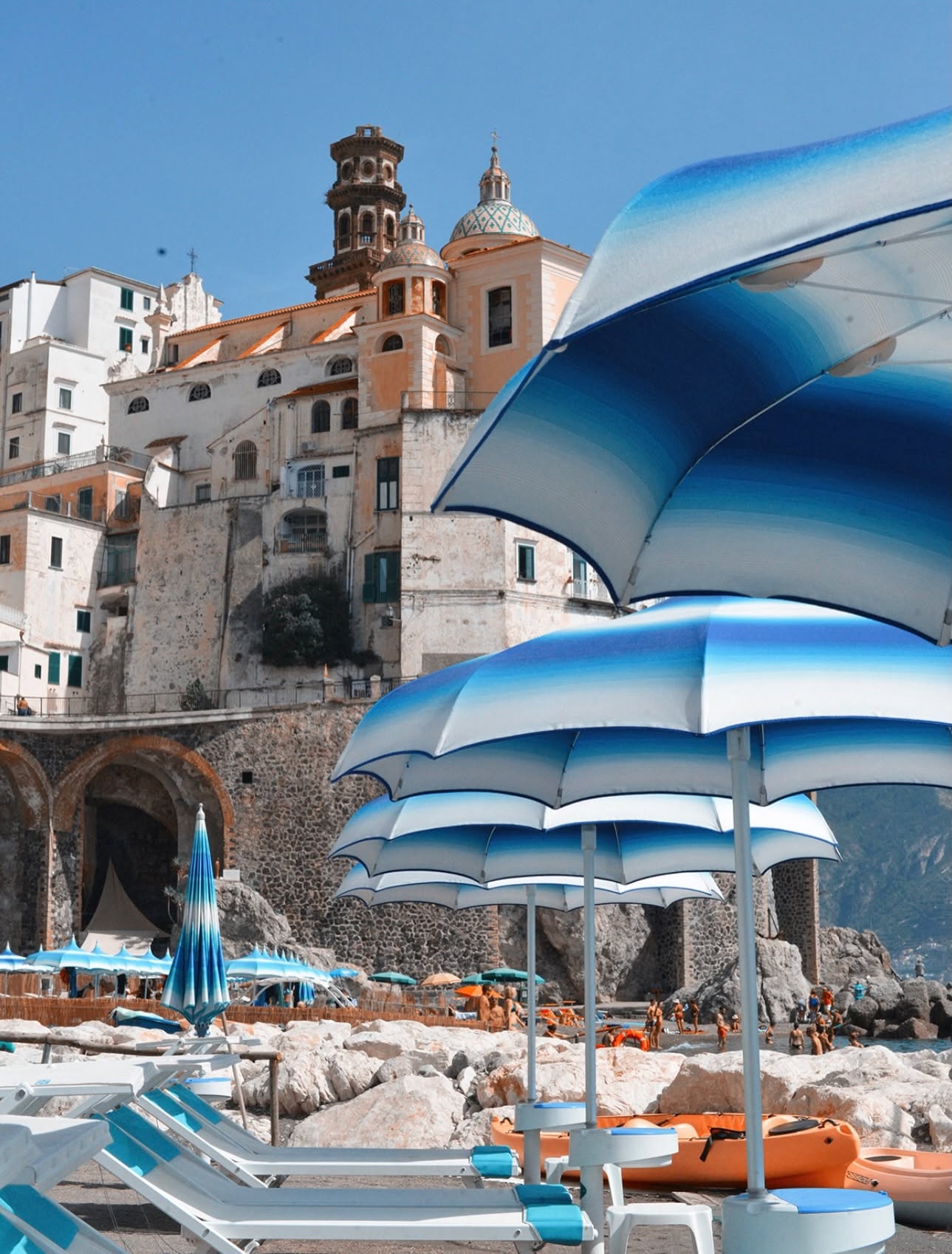
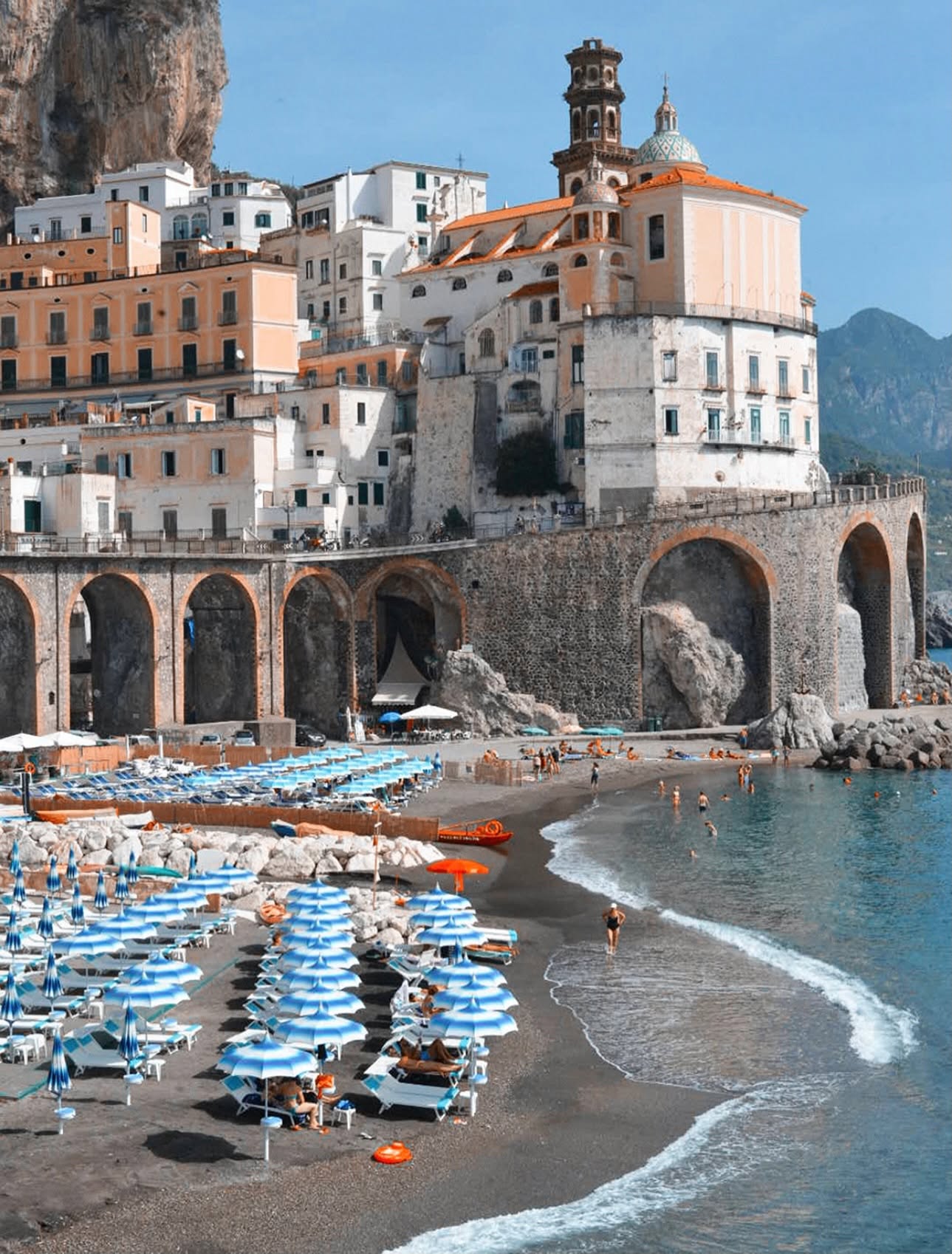
A five-minute walk from Amalfi, tiny Atrani has one of the coast’s loveliest beaches, free, framed by the amphitheatre of the village and split by the mouth of the Dragone stream. The seabed slopes gently and access is effortless, straight off the piazzetta, which makes it a favourite for families and for anyone who wants charm without a beach-club bill.
Furore and Praiano
For drama, the Fiordo di Furore is a narrow fjord cut into the rock, spanned by a high stone bridge, sheltering a beach barely twenty-five metres wide. It is one of the most striking sights on the coast. Nearby Praiano keeps a handful of quiet swimming coves, Marina di Praia among them, with far fewer people than Positano.
Maiori and Minori
East of Amalfi, Maiori has the longest beach on the coast, nearly a kilometre of sand with genuinely flat, step-free access, rare here and a relief if steps are a problem. Neighbouring Minori is smaller, sweeter and more local, a good base for a slower, better-value stay.
The Hidden Coves You Reach by Boat
Some of the finest swimming has no road to it at all. Duoglio, just east of Amalfi, has clearer water than the town beach and is reached by steps or a short water taxi. Santa Croce is boat-only, with no staircase and no facilities but exceptional water. Water taxis from Amalfi harbour run to these coves for around five to fifteen euros, and hiring a small boat for a morning is one of the great coast indulgences.
A Few Practical Notes
Most beaches are pebble, so pack water shoes and a mat. Beach clubs run roughly May to October and charge for the day; free public sections exist beside most of them if you come early. Late May to mid-June and September give the warmest sea with the smallest crowds. To reach the smaller beaches, plan the ferries and buses in advance, because the coast road is slow in high season.
Beach Clubs, Free Beaches and How It Works
Most Amalfi beaches are a mix of two things side by side: a private beach club, or lido, where you pay for a sunbed and umbrella, and a free public stretch, the spiaggia libera, where you lay your own towel. At the clubs you pay for two loungers and a parasol for the day, with the smartest Positano clubs charging a small fortune in peak season and quieter spots like Atrani or Maiori costing a fraction of that. The fee usually buys you the sunbed, a shower and often a bar and restaurant, and it is worth booking ahead for the popular clubs in July and August.
The free sections are perfectly pleasant and often right beside the paid ones, so if you are happy on a towel you can swim in the same water for nothing, especially if you arrive early before the day-trippers. A few practical things make a beach day here easier: the beaches are pebble, so water shoes and a mat save your feet, and the sun is fierce by midday, so an umbrella is less a luxury than a necessity. Facilities are limited at the smaller and boat-only beaches, so carry water and snacks. And remember the whole rhythm of the coast runs late, so the beaches are quietest in the early morning and again after four, once the tour groups have moved on.
Frequently Asked Questions
Are the Amalfi Coast beaches sandy?
Mostly they are pebble or dark volcanic sand, so bring water shoes. Maiori has the longest and sandiest stretch, with the easiest, step-free access.
Which is the best free beach on the Amalfi Coast?
Atrani’s town beach is the best free option, charming and easy to reach. Most other beaches, including Fornillo and the Positano and Amalfi marinas, also keep a free public section beside the paid clubs.
What is the best beach for families?
Atrani and Maiori, for their gentle slopes, calm water and flat, easy access. Both are far less of a scramble than Positano’s stepped beaches.
Plan how to reach each one in getting around the Amalfi Coast, see how the towns compare in the best towns on the Amalfi Coast, and read my complete guide to the Amalfi Coast.