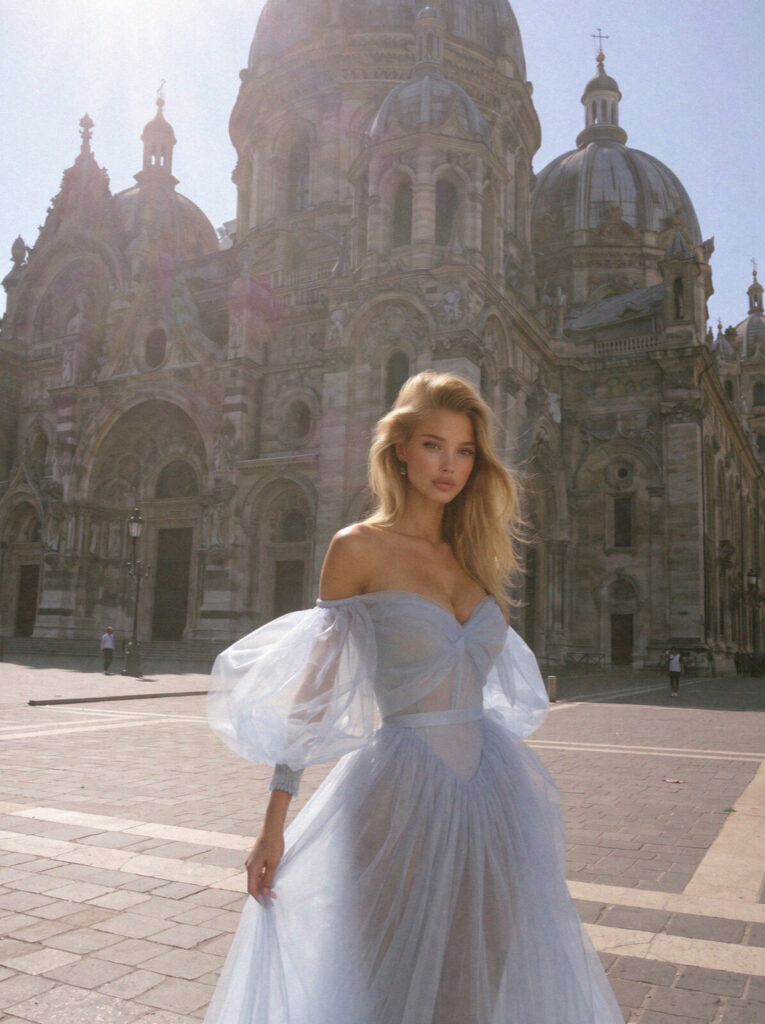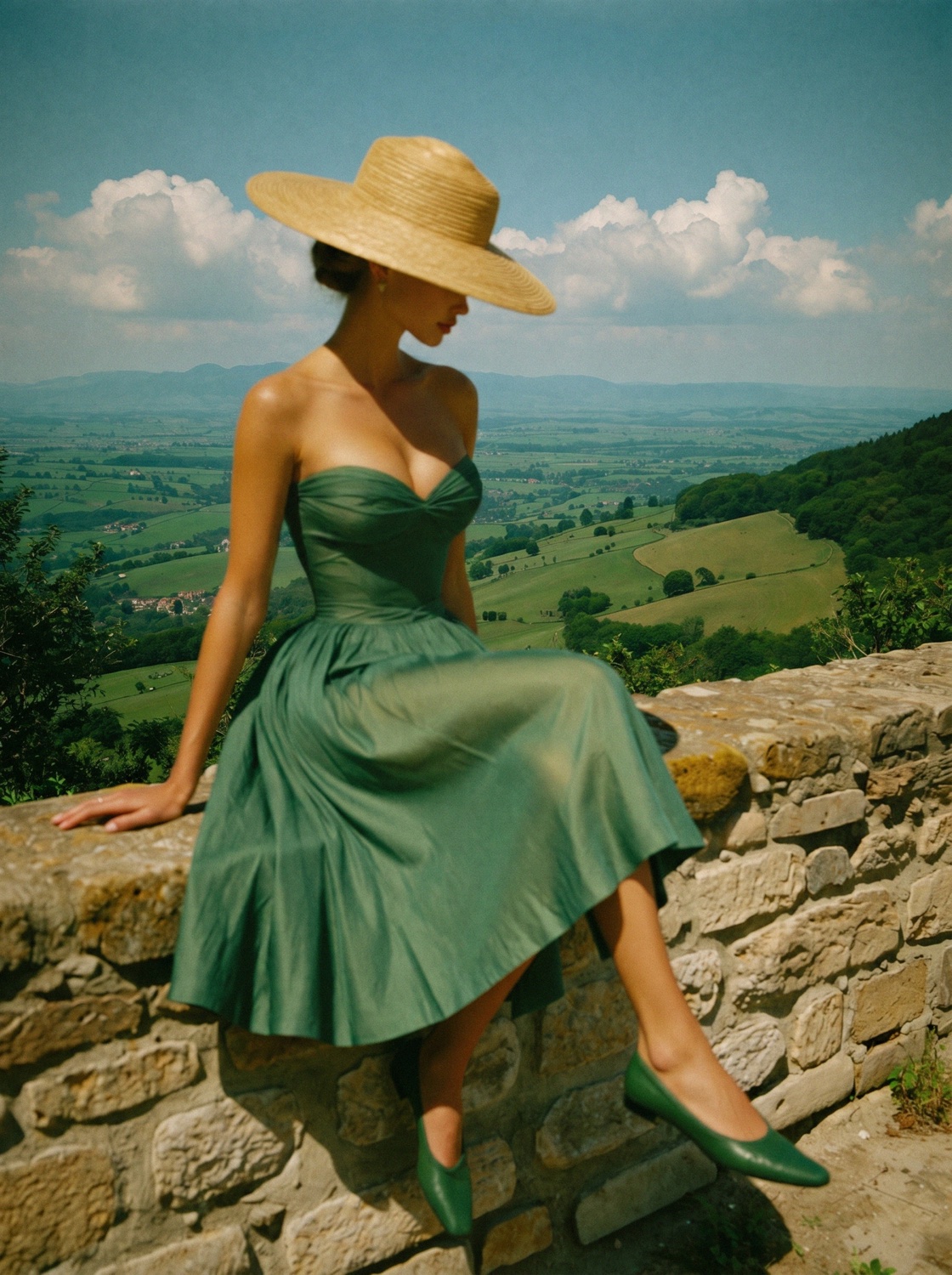
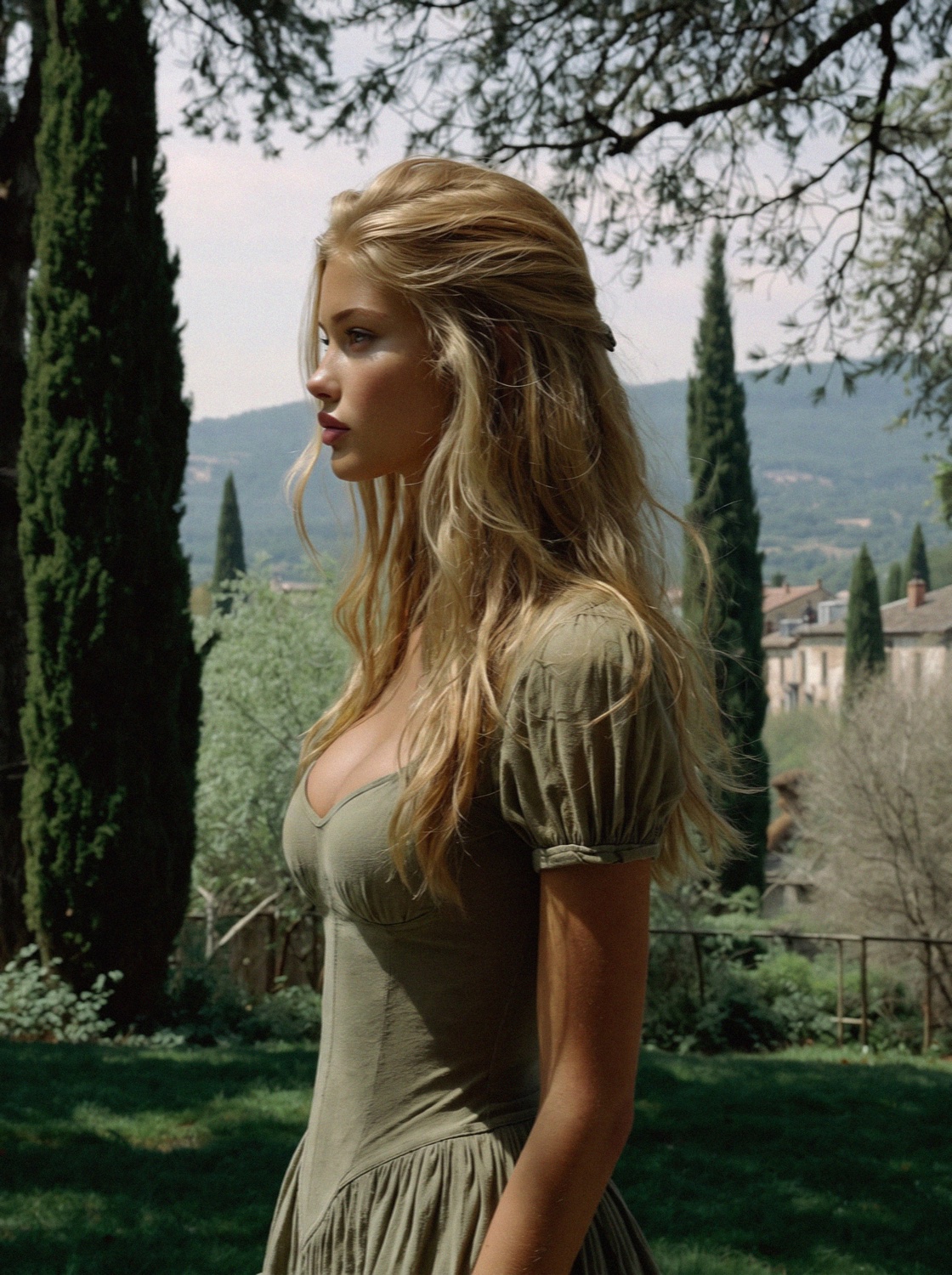
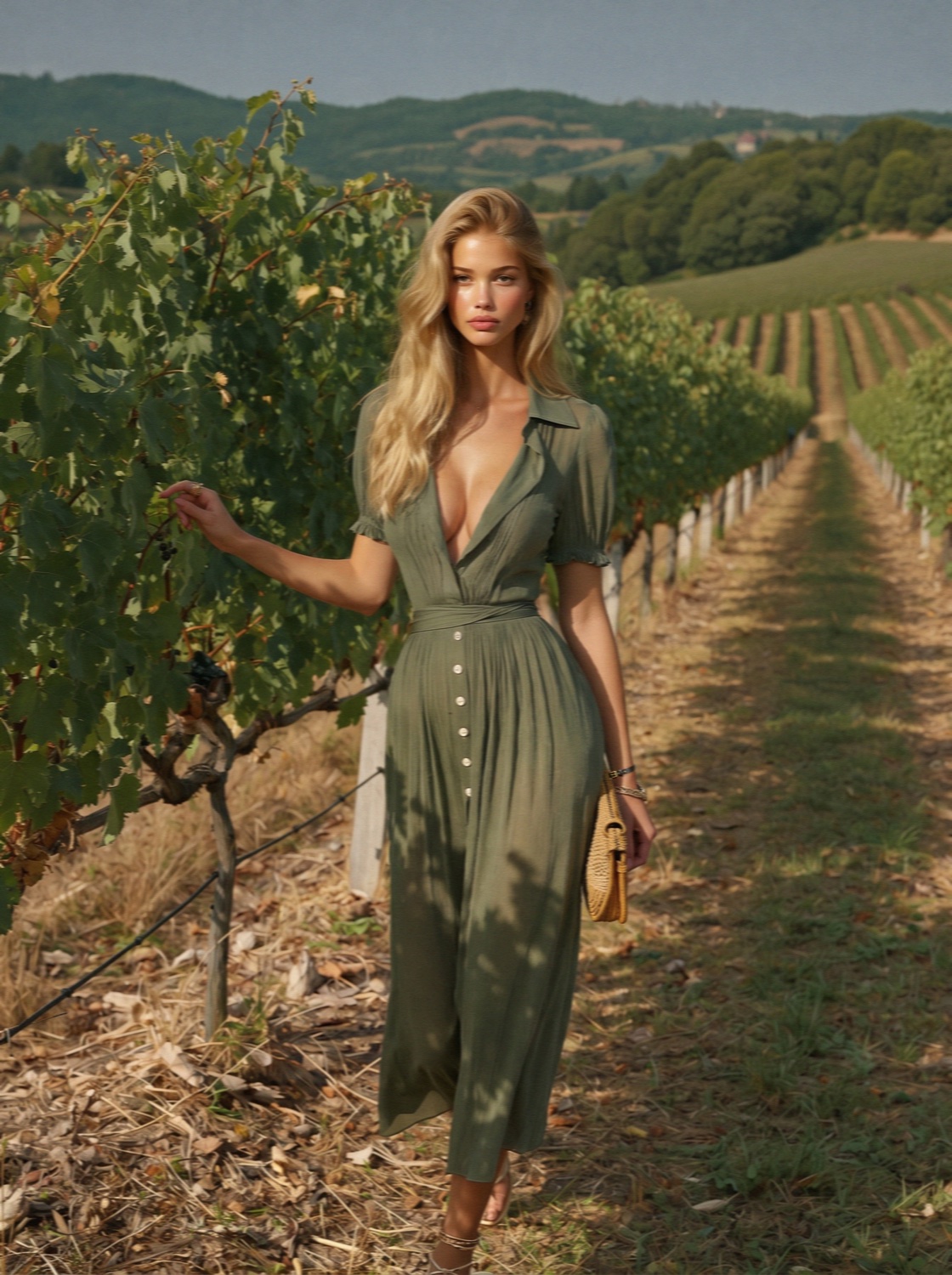
I woke before the alarm, although I suspect I would have even if I had forgotten to set one. There are some mornings when the light seems to wake you before the world has the chance. I dressed quietly in the half-dark, finding the sage linen by touch more than sight, slipping on my oldest shoes and reaching for the straw hat waiting by the door. The villa still belonged to the night. The wooden floors held the coolness they always seem to gather before dawn, and somewhere deeper in the house I heard the faint settling of old beams, as though the building itself had not quite decided whether another day should begin.
The hills beyond the windows had not yet become hills. They were only soft shapes beneath a sky still deciding on its colour, their vineyards hidden inside the last of the darkness. The cypresses stood motionless against the horizon, darker than everything around them, and the valley below was filled with a silence that only exists for a few brief moments before morning begins to collect itself.
The evening before, I had told my aunt that I wanted to spend the entire day driving the back roads of the Val d’Orcia. I had no itinerary beyond the roads themselves. No reservation waiting for me, no village I absolutely had to reach by a certain hour. I only wanted to follow whatever seemed beautiful enough to deserve another mile.
She had looked at me over the rim of her glass with that familiar expression that always makes me feel she already knows the answer to questions I have not yet asked.
“The good light doesn’t wait,” she had said. “Take the flask from the kitchen.”
That was all.
She never gives advice that needs explaining.
So I filled the old metal flask with coffee before I left, slipped it into my bag beside the folded paper that still travelled with me everywhere, and eased the front door closed behind me without making enough noise to wake anyone. The cream sheet remained tied with its faded ribbon, exactly as it had been when my aunt had quietly slipped it from between the pages of the violin music. My father’s pencil marks were still hidden inside. I had carried it through Florence without opening it, and now it would travel with me into the Tuscan countryside. Somehow it felt less like a mystery now than a companion. It asked nothing of me except patience.
The air outside carried that faint scent of damp earth and rosemary that lingers before the sun has warmed the hills. Somewhere a bird called once and then thought better of it. Even the breeze seemed reluctant to disturb the morning.
I started the car and drove out to meet the country before it had become fully awake, before the photographers and cyclists and tour buses had scattered themselves across roads that, for a little while longer, still belonged to the people who rose with the light.
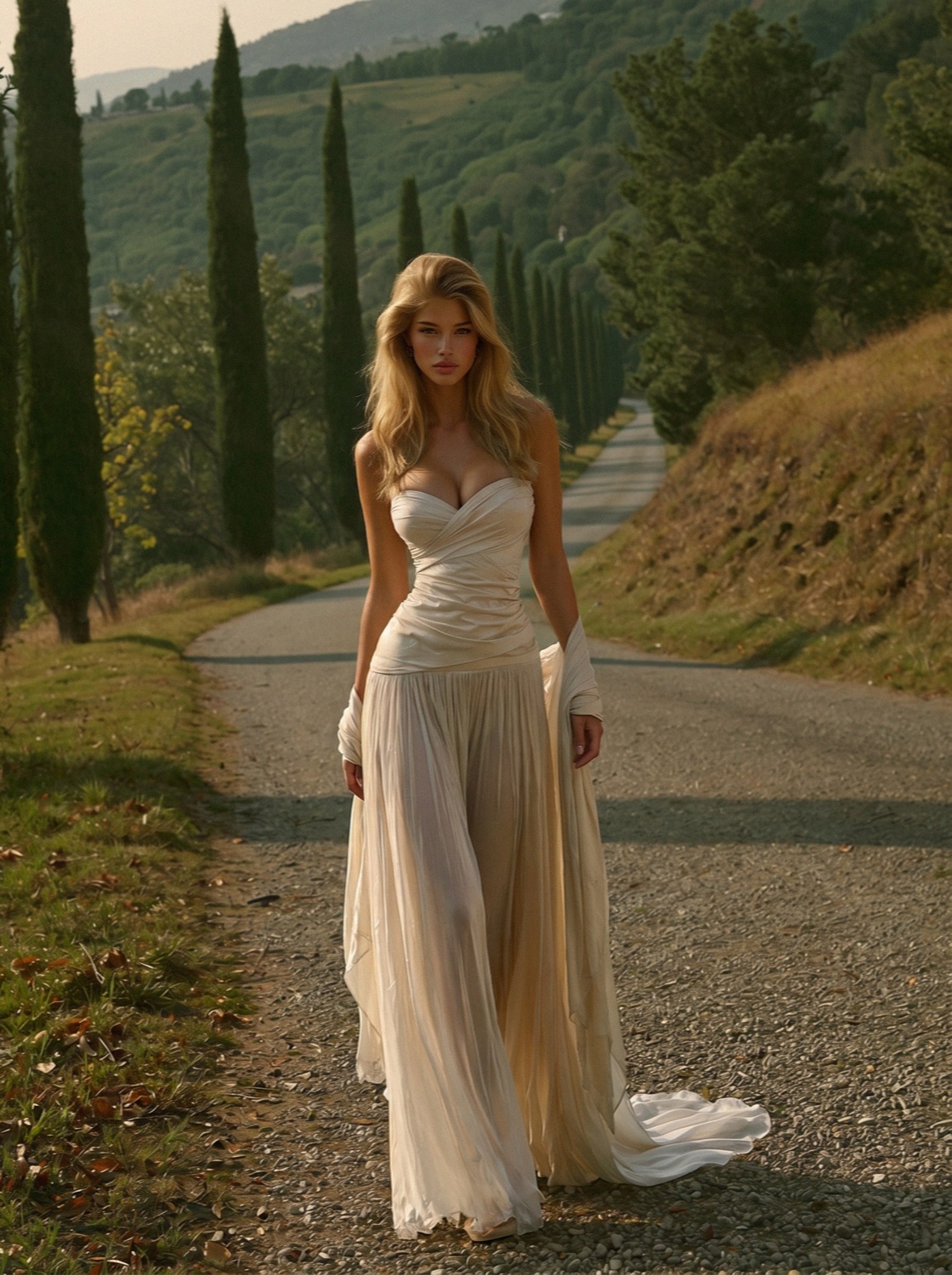
Not far from the villa there is a road that has become almost mythical. People fly across oceans to stand beside it for a photograph. It is little more than a pale ribbon of gravel climbing a hill in one slow, graceful curve between rows of cypress trees, yet somehow it has become one of the images that lives in everyone’s imagination when they think of Tuscany.
I had promised myself I would arrive before anyone else.
When I reached the top of the rise, the valley below was still holding its mist. It lay across the fields like water, soft and unmoving, while the cypresses rose from it like the masts of ships waiting for a wind that had not yet arrived. I stepped out with the coffee warming my hands and stood there for several minutes without lifting my camera.
Some places deserve to be witnessed before they are photographed.
The silence felt complete enough that even the click of a shutter would have seemed like an interruption.
Then, almost without warning, the first sunlight reached across the opposite ridge. It moved slowly down the hillside until it found the road, and in the space of a few moments everything changed. The pale gravel seemed almost to glow. The mist began dissolving into the valleys. Long shadows stretched from every cypress until the entire curve looked as though someone had painted it only seconds before I arrived.
I understood then why people wait for this.
Why they leave hotels before dawn.
Why they stand in the cold with cameras around their necks hoping the weather will be kind.
It is never only the road.
It is what the light decides to do with it.
And the quiet understanding that tomorrow morning, even if you stood in exactly the same place, it would never quite be the same again.
I drove on without much ambition beyond allowing the day to surprise me, and Tuscany proved once again that it is very good at surprises. Around one bend stood a solitary stone farmhouse on its own hill, surrounded by a small circle of cypress trees that looked less planted than carefully introduced over generations. It was exactly where you would place it if someone had asked you to paint the perfect Tuscan landscape, which made it all the more astonishing that it had simply grown into the world that way.
A little farther on I came to a tiny chapel standing entirely alone among the fields, accompanied only by two cypress trees that seemed to have been keeping it company for centuries. There was nothing dramatic about it. No crowds. No grand entrance. Only pale stone, weathered walls, and a narrow path leading through wet grass that sparkled beneath the morning sun.
I walked out to it slowly, my shoes gathering dew with every step.
The door was locked, exactly as I expected.
Still, I sat for a while on the worn stone step and let the warmth of the morning gradually replace the coolness left by the night.
People often say this part of Tuscany is beautiful.
It is.
But I think that misses the point.
Beauty alone would eventually become ordinary.
What stays with you is how composed everything feels, as though the landscape has spent centuries learning where every tree should stand, where every vineyard should begin, where every farmhouse should catch the evening light. Nothing appears accidental. The countryside feels edited, not by architects or planners, but by generations of patient hands who understood that the land was something to work with rather than overcome.
Perhaps that is why it feels so peaceful.
Nothing here seems to be in a hurry.
Not the roads.
Not the vineyards.
Not even the light itself.
By the middle of the morning I found myself turning through the gates of a Brunello estate just outside Montalcino. A long avenue of cypress trees led towards the old stone buildings, their branches whispering softly in the breeze that had finally begun to move across the valley. The estate carried the quiet confidence of somewhere that had been making wine long before anyone thought to market the experience of drinking it. Nothing felt arranged for visitors. The beauty had simply accumulated over time.
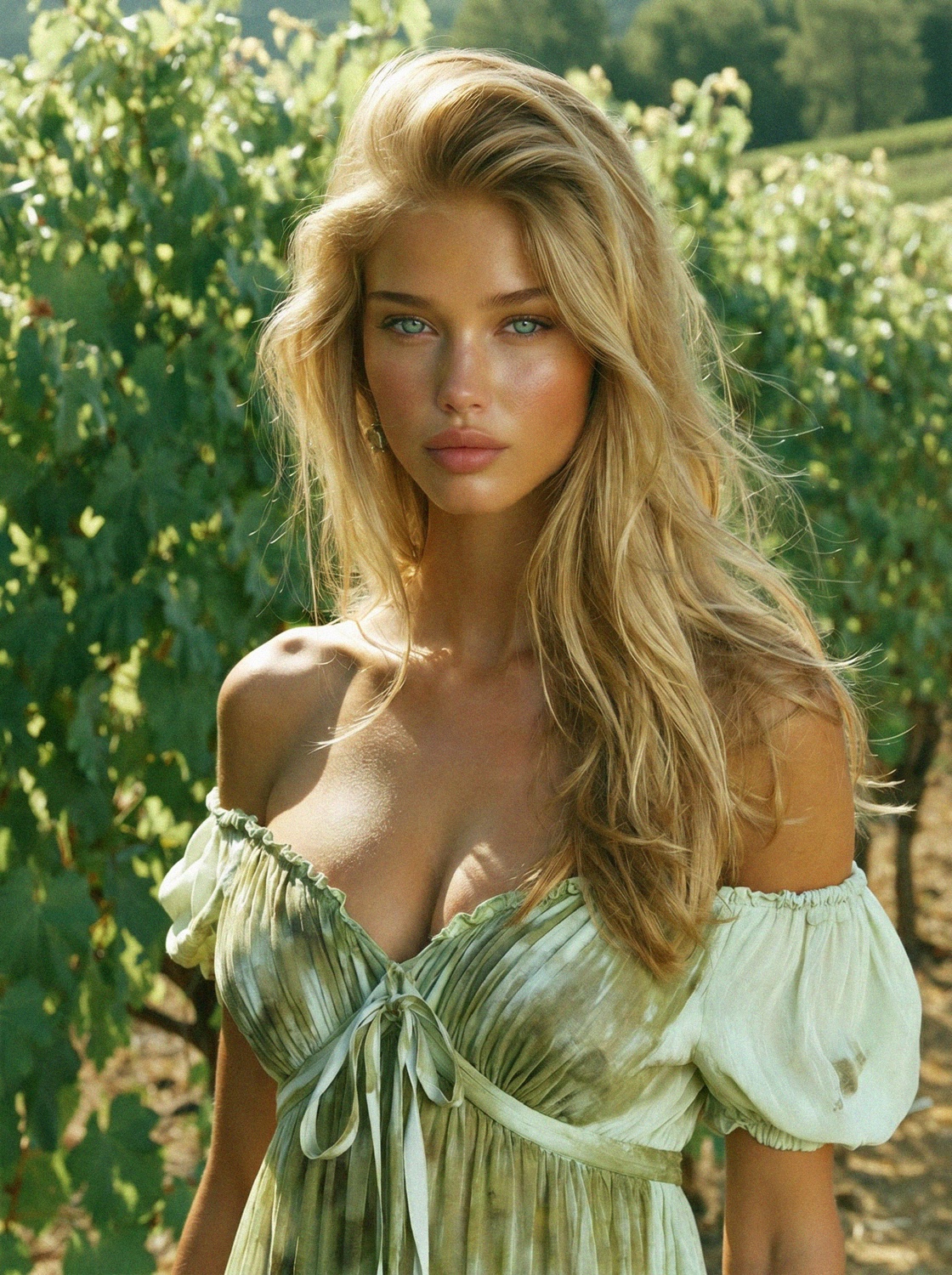
I wandered for a while between the rows of vines before anyone noticed I had arrived. The leaves brushed lightly against my hand as I walked, cool despite the growing warmth of the day, carrying that faint dusty scent that vineyards seem to keep even in summer. Bees drifted lazily between the wildflowers growing at the ends of the rows, and swallows skimmed low across the vines before disappearing towards the hills.
There is something reassuring about vineyards.
They ask for patience in a world that rarely rewards it.
Every bottle begins years before anyone opens it. Every harvest belongs to seasons that cannot be hurried. Walking there, I found myself thinking that perhaps people are not so different. We spend so much of life believing we should already have become whoever we are meant to be, forgetting that the finest things often arrive only after time has quietly done its work.
When I returned towards the terrace, someone appeared carrying a single glass of Brunello as though it were the most ordinary thing in the world. It was still early, certainly earlier than I would normally think to drink red wine, yet refusing somehow felt equally wrong. I carried the glass out onto the stone terrace overlooking the valley and sat beneath the shade of an old umbrella while the vineyards rolled away below me in every direction.
The wine was deep and generous without asking for attention. I drank it slowly, more interested in the view than the tasting notes, watching the breeze move across the vines in long invisible waves.
For a little while I felt as though I had wandered into a much older story than my own.
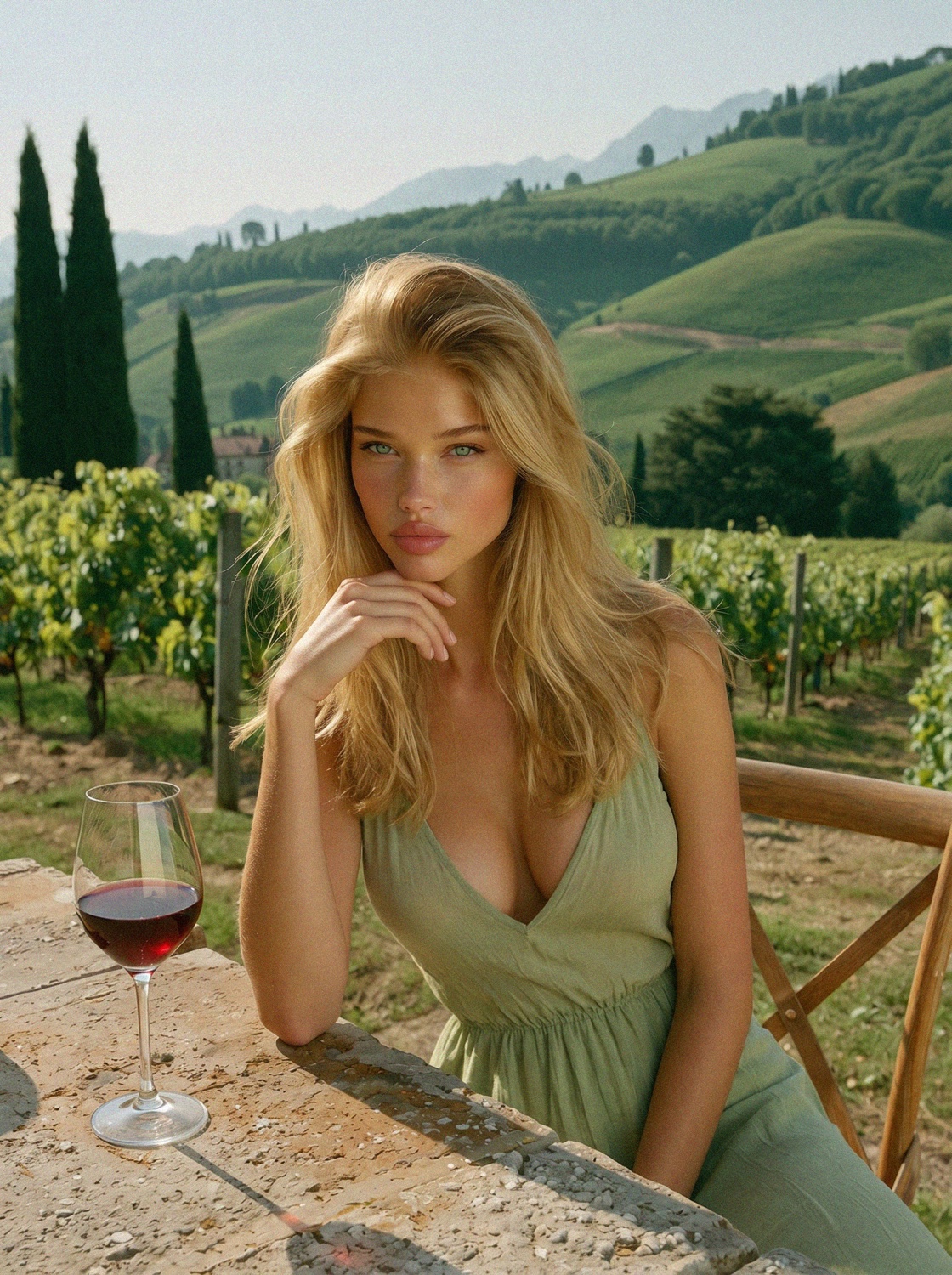
I ordered a small plate of pecorino, fresh bread and olive oil, though I found myself eating very little. Days like this create a different sort of appetite. The landscape fills you long before lunch has the chance. I have noticed it before while travelling. There are places where you arrive hungry for food, and there are places where you arrive hungry simply to look. Tuscany has always belonged firmly to the second kind.
Eventually I thanked everyone, returned my empty glass, and climbed back into the car with no particular destination beyond continuing south until something persuaded me to stop.
That has become one of my favourite ways to travel.
The best discoveries almost never appear on an itinerary.
They wait quietly beside roads you nearly drive past.
The afternoon belonged to the hill towns.
Pienza appeared first, rising gently above the surrounding countryside in warm honey-coloured stone. From a distance it seemed almost too perfect, perched on its ridge as though someone had imagined an ideal Renaissance town and then quietly built it. Inside, the streets were narrow enough that patches of shade lingered long after the sun had crossed overhead. Window boxes overflowed with flowers. Laundry moved gently between old buildings. Small shops displayed handmade paper, leather journals and cheeses whose scent escaped through open doorways before you ever reached them.
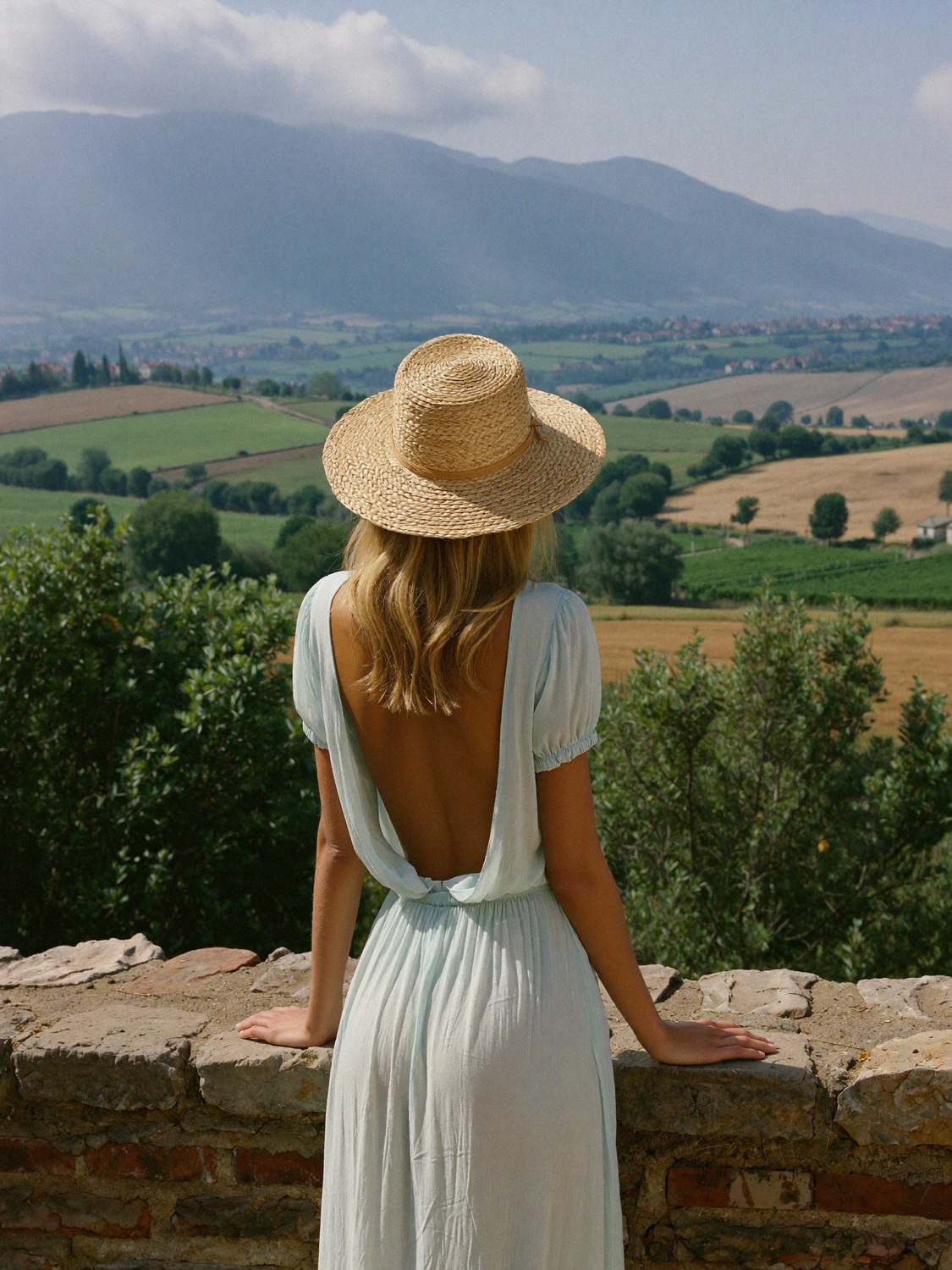
I wandered without purpose until I reached the old panoramic wall overlooking the Val d’Orcia.
The countryside unfolded below me in great soft waves of green, fading slowly into blue where the horizon finally gathered them together. The breeze carried the scent of dry grass and distant cypress, and for a long while I leaned against the warm stone without taking a photograph.
Not because there was nothing worth photographing.
Because there was.
Sometimes the camera becomes a small barrier between yourself and a place. Sometimes the kindest thing you can do for a memory is trust it to remain with you unaided.
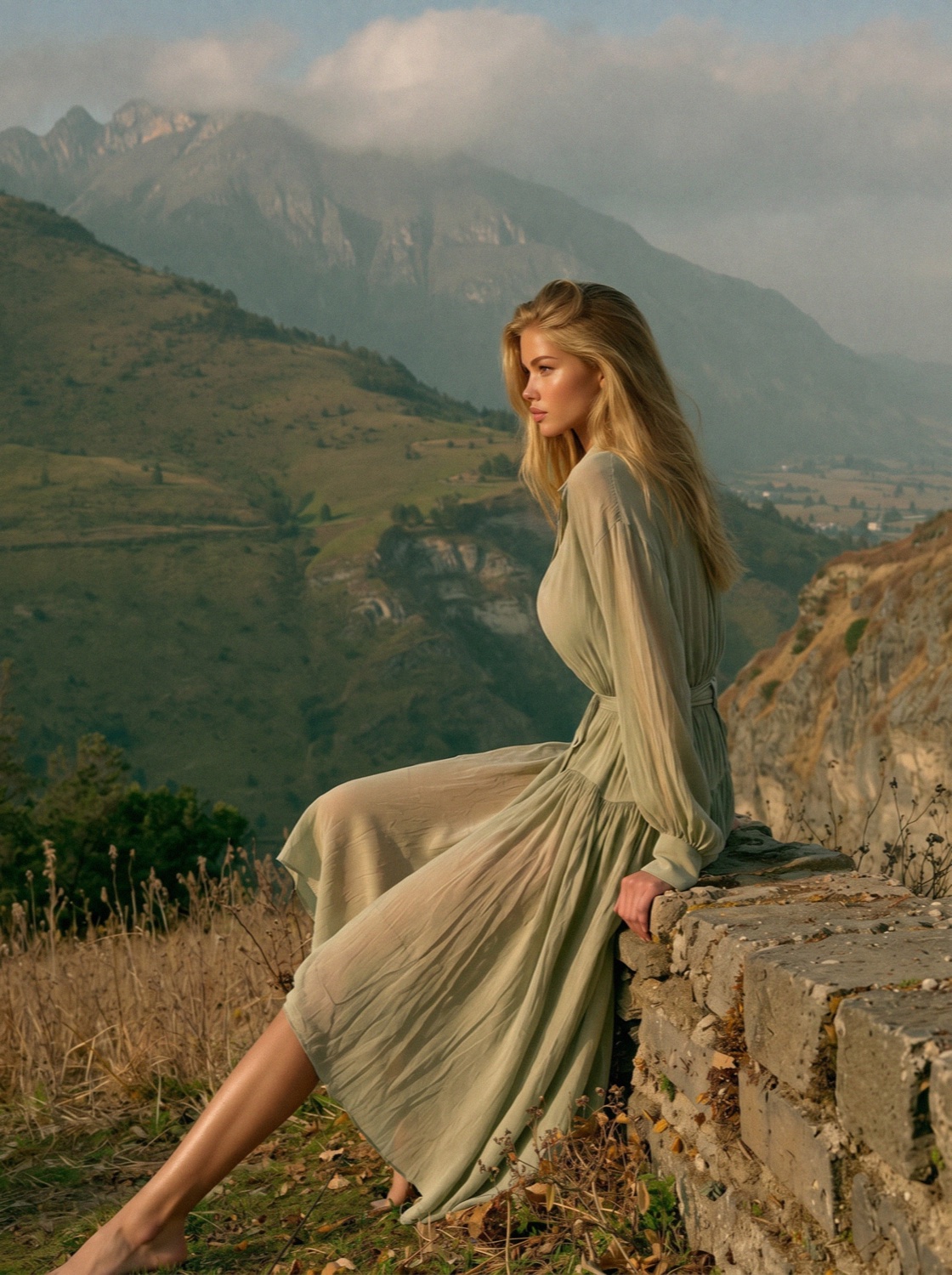
Eventually I lifted the camera anyway.
Some promises are made to memory.
Others are made to readers.
Leaving Pienza felt almost reluctant, though Tuscany has a remarkable way of persuading you that another beautiful place is always waiting just around the next bend. Twenty minutes later I was winding my way into Montalcino, where steep lanes climbed between old stone buildings softened by centuries of weather and afternoon light.
I became happily lost almost immediately.
The streets seemed determined to fold back upon themselves. Tiny cafés spilled onto quiet squares. Geraniums tumbled from windowsills in impossible shades of crimson and pink. Elderly residents paused outside their front doors to exchange conversations that appeared to have been continuing for decades. Cats slept wherever the sunlight happened to find them, utterly unconcerned by the steady procession of visitors stepping carefully around them.
I came away with nothing but the afternoon.
I photographed almost everything.
Not because I wished to possess it, but because I knew I would one day want to remember the exact angle of a doorway, the colour of a shutter, the way afternoon light rested on old stone before slowly drifting away.
Travel has taught me that memories are often built from the smallest details.
Rarely the famous monument.
Almost always the street beside it.
The old man watering flowers.
The smell of warm bread escaping through an open window.
The church bell that interrupted an ordinary conversation.
Those are the things that return unexpectedly months later.
As I was leaving the town, someone from the vineyard had suggested one final stop before evening.
“You should see Sant’Antimo,” they had said. “Don’t rush.”
It was excellent advice.
The abbey appeared almost without warning, standing alone among olive groves and cypress trees as though the surrounding hills had quietly agreed to leave it in peace. Romanesque stone has a way of absorbing light differently from anything built today. By the time I arrived, the afternoon sun had softened into gold, giving the ancient walls a warmth that made them seem almost alive.
I stood before the abbey for a very long time.
Not because there was anything in particular to do.
Only because it seemed to ask for stillness.
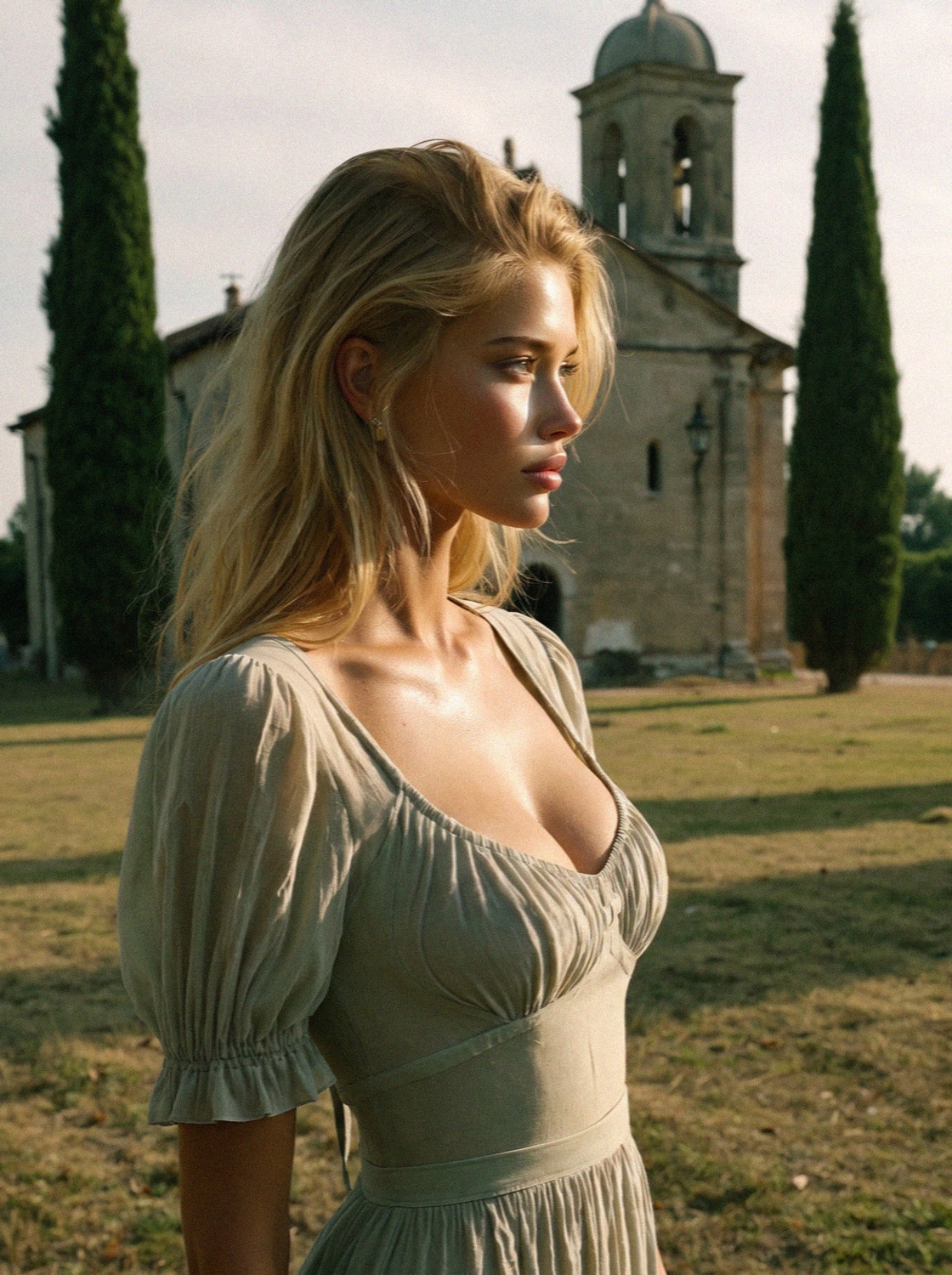
Generations had walked this same path before me, carrying worries entirely different from my own, yet arriving for reasons that were perhaps exactly the same. Sometimes we travel not because we expect to find answers, but because certain places make the questions quieter.
I stepped inside for a few moments.
The cool air carried the faint scent of old stone and candle wax.
No one spoke above a whisper.
The silence inside the abbey felt different from the silence of the countryside. Outside, silence belonged to distance. Here it belonged to time.
When I finally returned to the car, the light had already begun its slow journey towards evening.
There was still one place I wanted to see before the day was done.
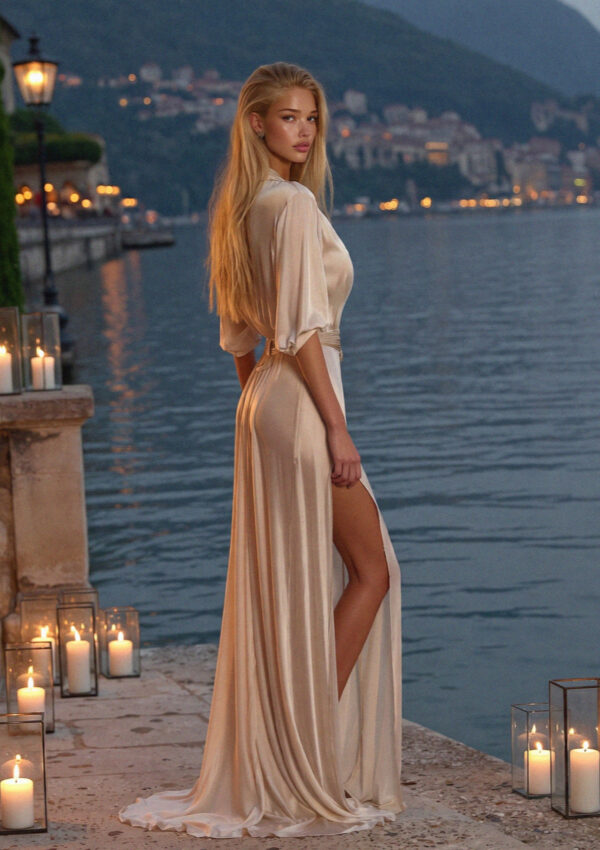
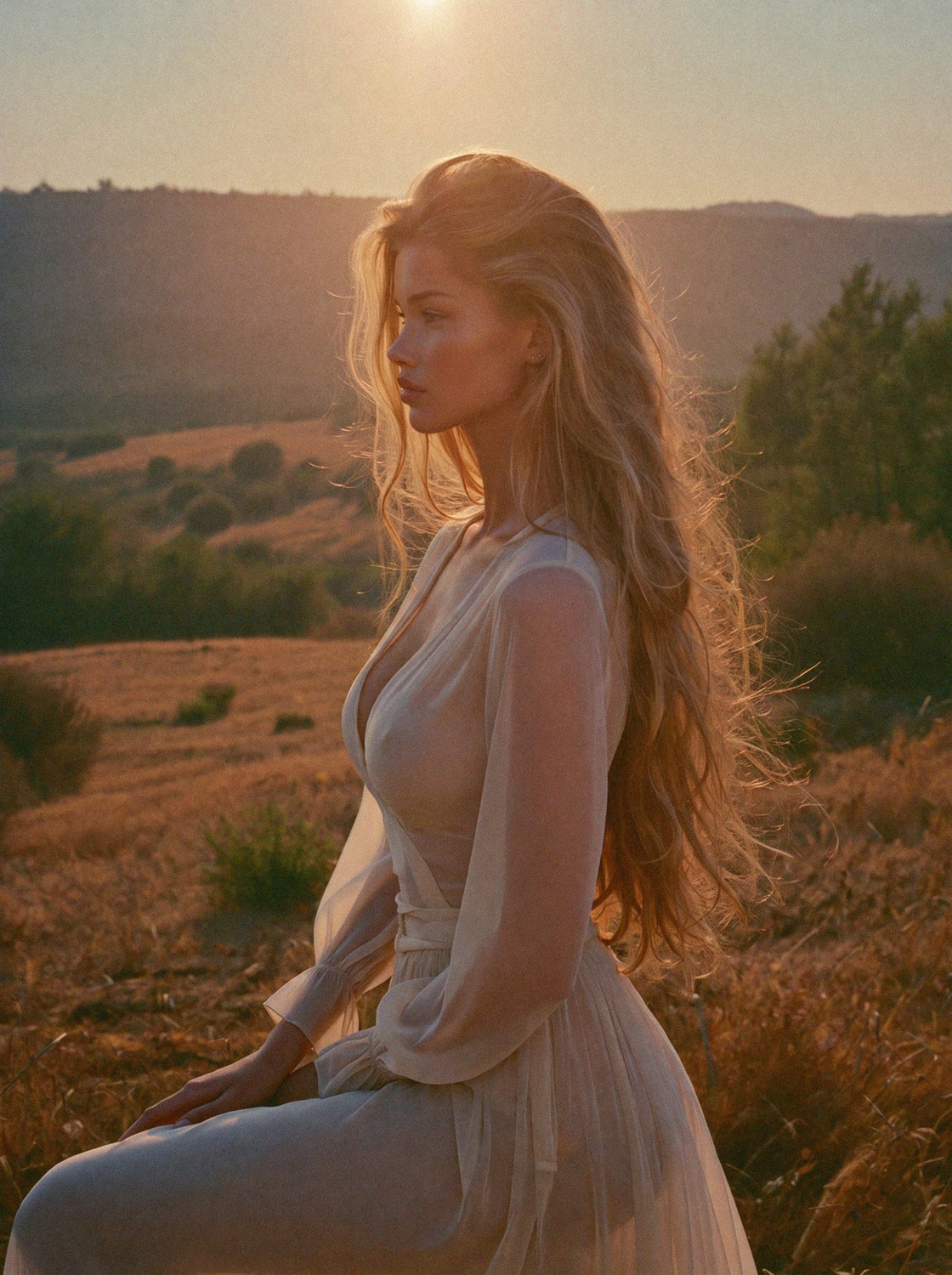
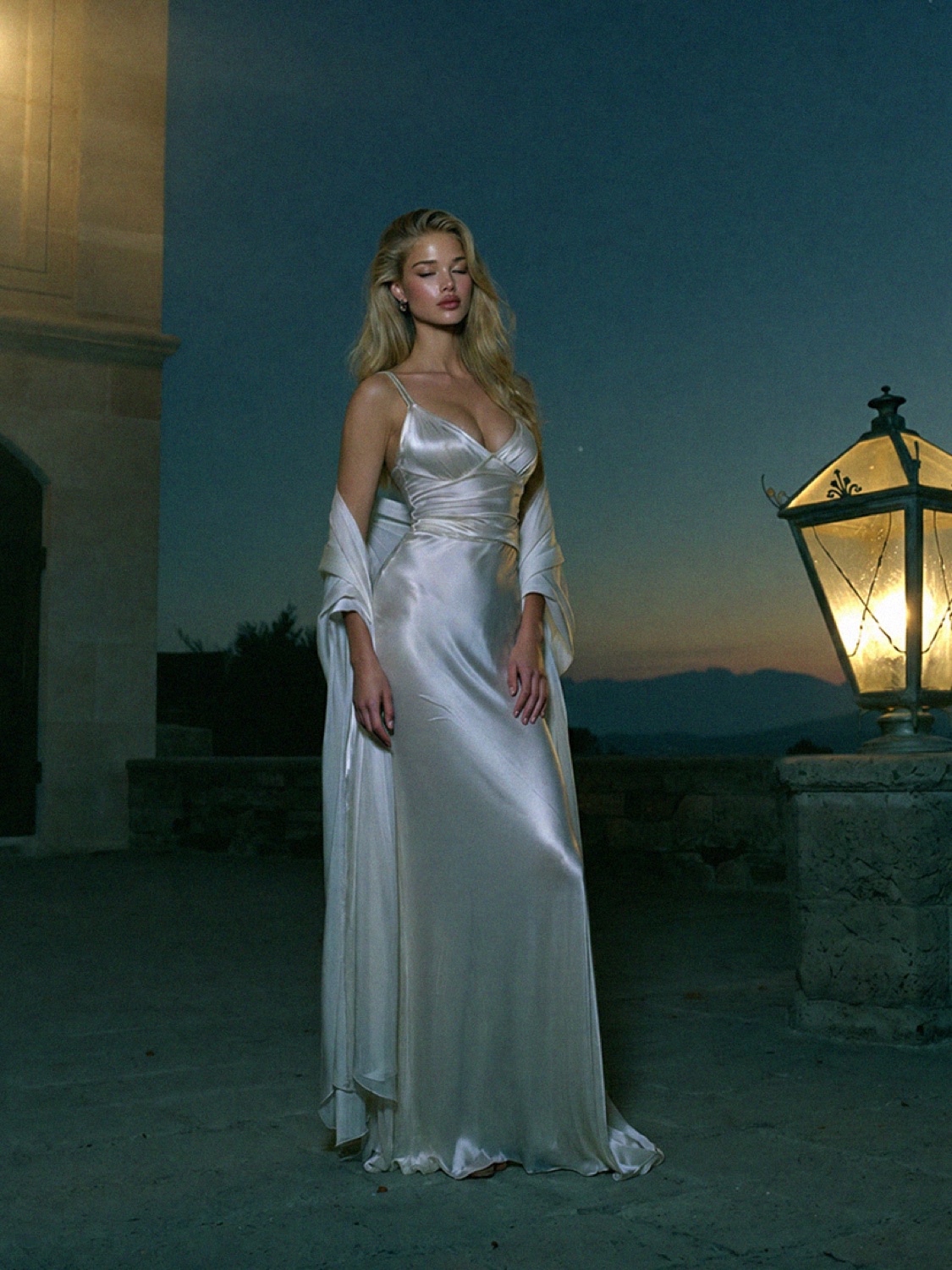
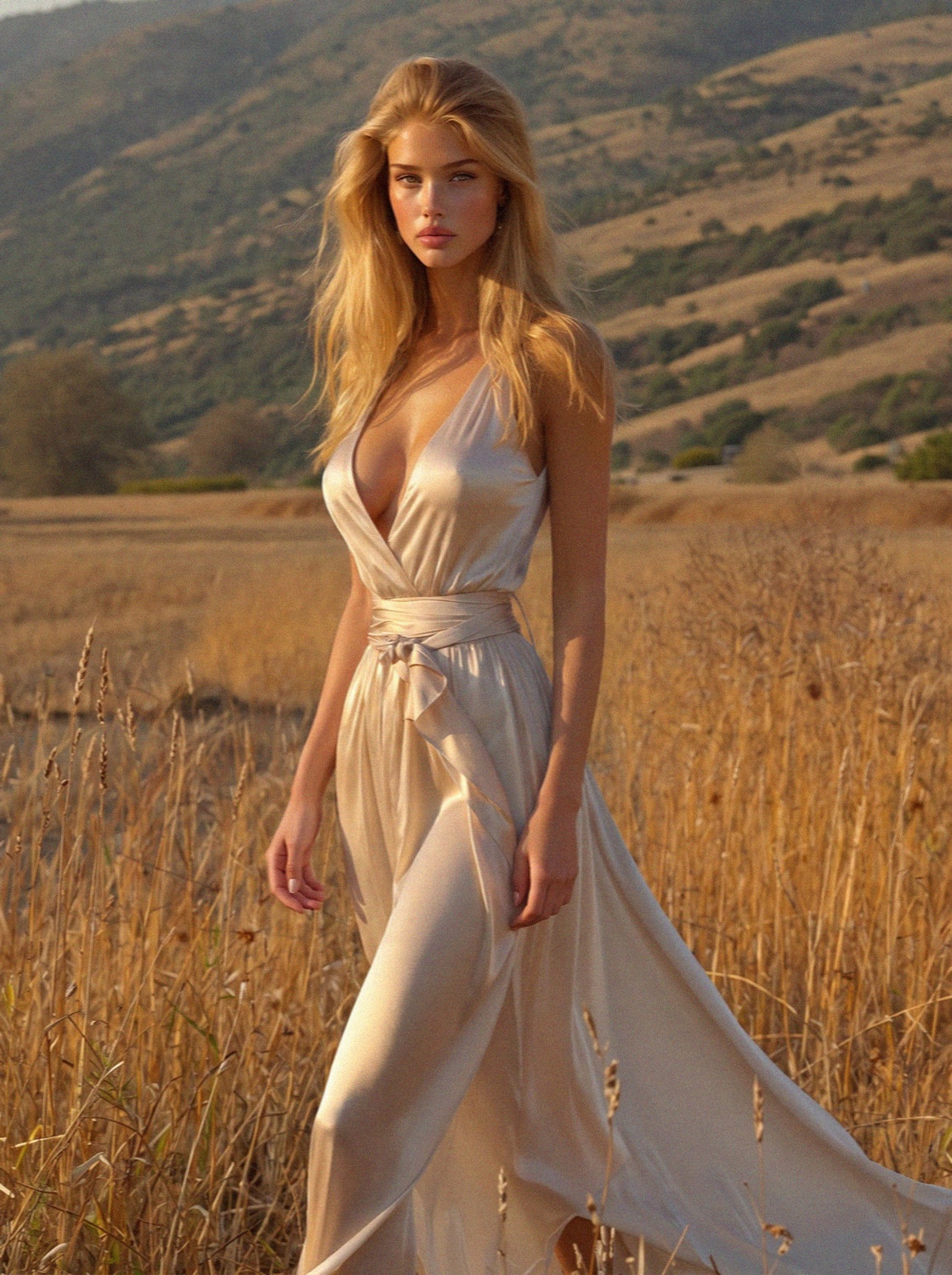
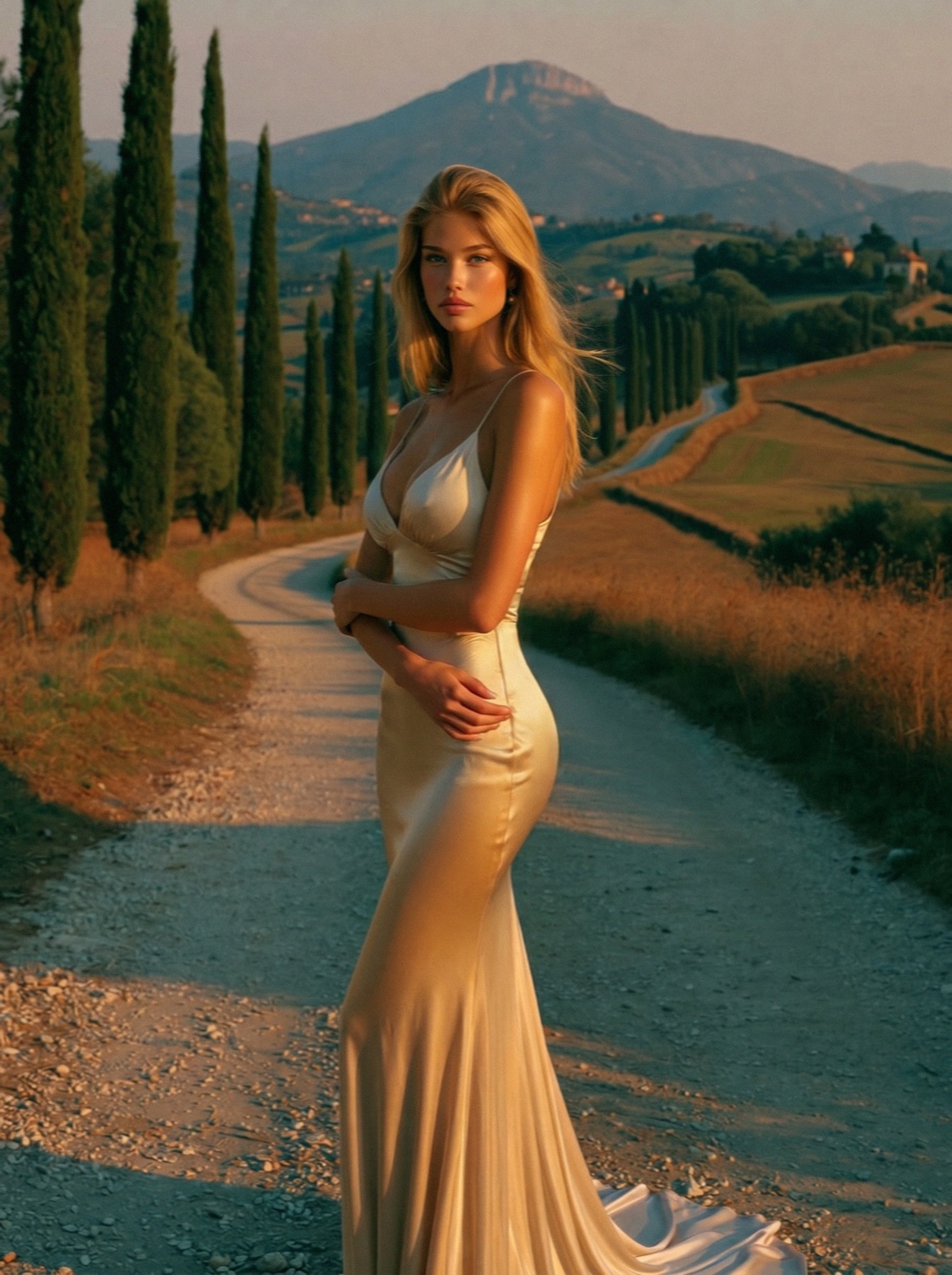
I drove back to the villa first, because the day had earned its ending and I wanted to meet it properly. I changed out of the sage linen, dusty now from a whole day of gravel and warm stone, and put on the ivory silk that moves at the slightest suggestion of wind. It is not a practical dress. It is not a dress for locked chapels and steep lanes. It is a dress for standing still in an open field while the whole world turns to gold, which was exactly what I intended to do with the last of the light.
I drove back out into the hills with the sun already low and the Val d’Orcia beginning to burn.
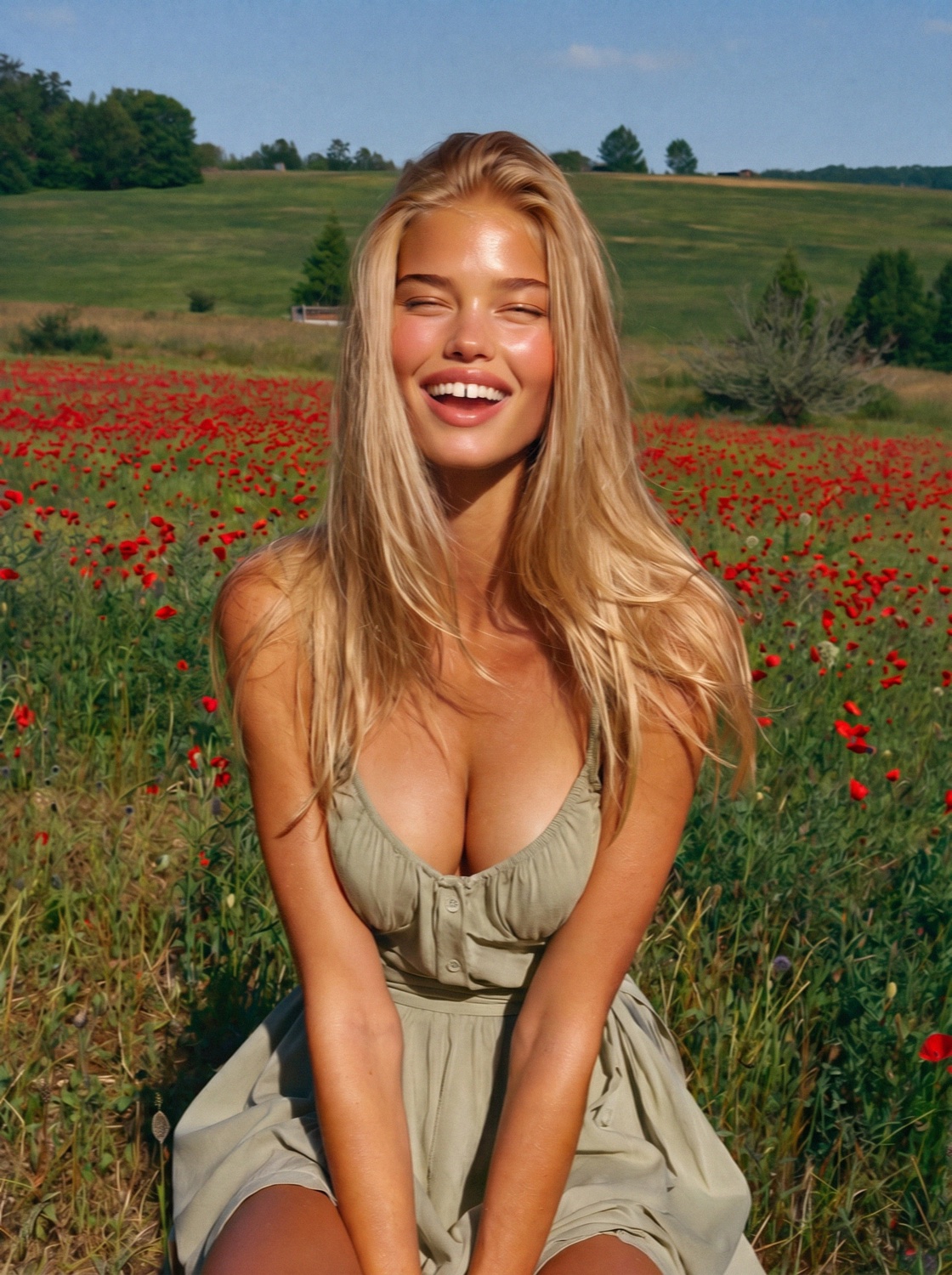
There is a ridge I had noticed that morning, a line of cypresses standing along the crest of a hill with nothing behind them but sky, and I climbed up to it and simply let the evening arrive. The wind came up the valley the way it does at that hour, and the silk lifted and settled and lifted again, and my hair went wherever it wanted, and I did not try to hold any of it in place. The hills went from green to gold, and then to a deep and almost impossible rose, and far below me the famous road emptied of its last photographers until there was only the trees, and the long slow fire of the sun going down, and me.
I did not want anything.
I have written that before about this country, and I will keep writing it, because it is the truest thing I know about the place.
It teaches you to want nothing, which is the rarest and most expensive luxury there is.
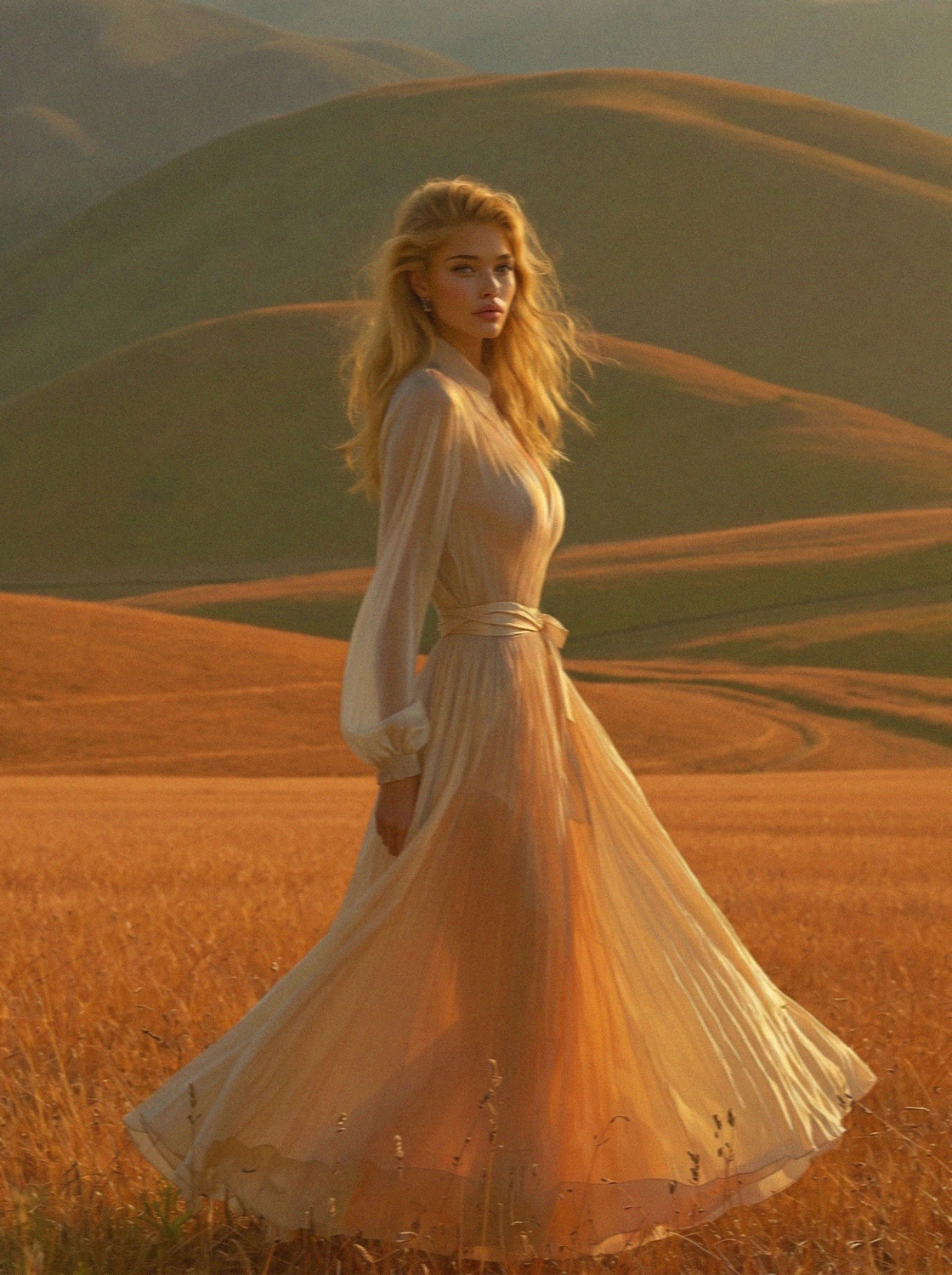
I stayed until the colour had almost gone, until the cypresses had become nothing but dark shapes against a sky the colour of a bruise beginning to heal, and then I drove back through the blue dusk with the windows down and the smell of cut grass and warm earth pouring in.
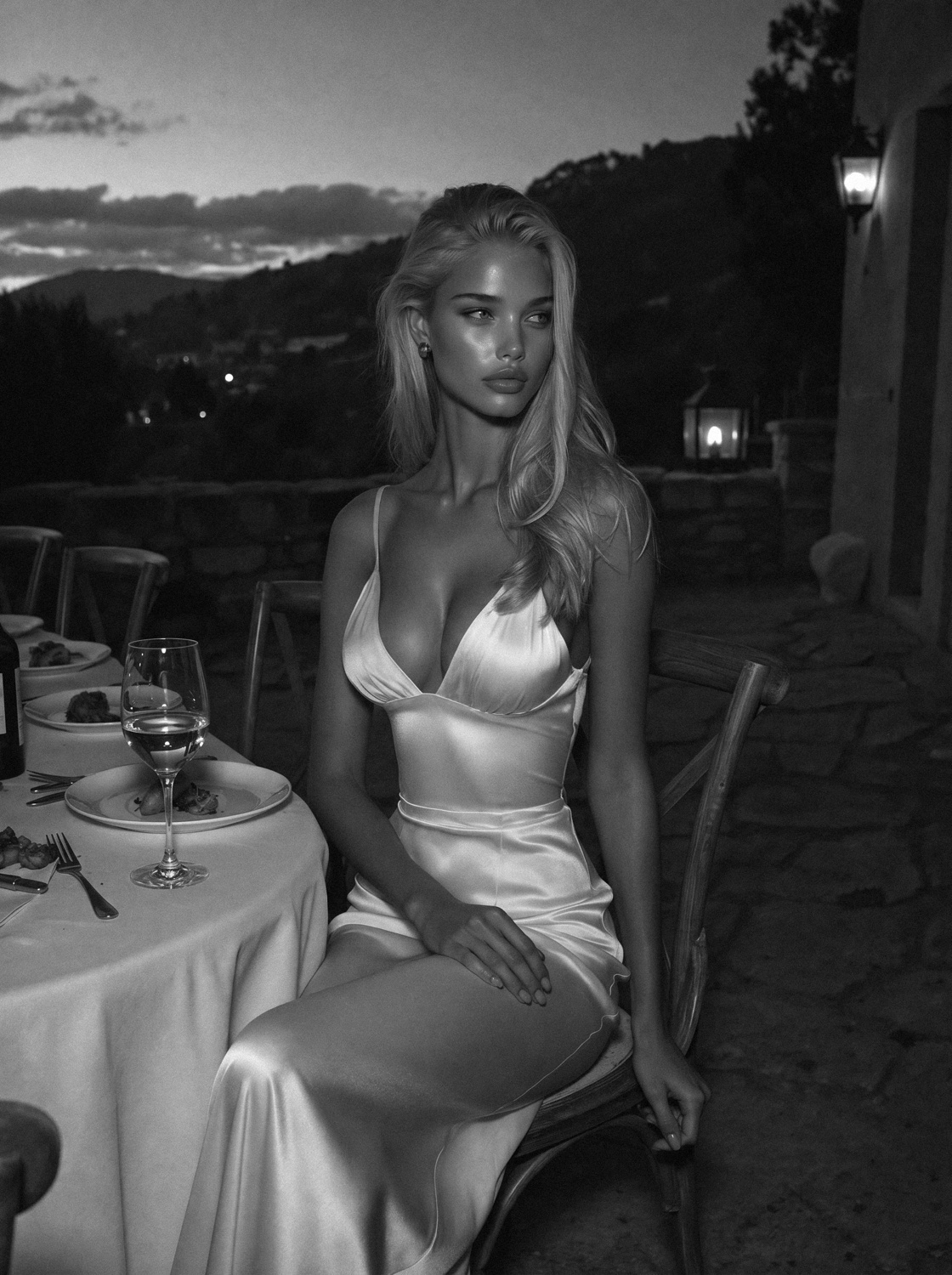
I ate late, out on the farmhouse terrace, with a single candle burning in a jar and the hills falling away into darkness below me.
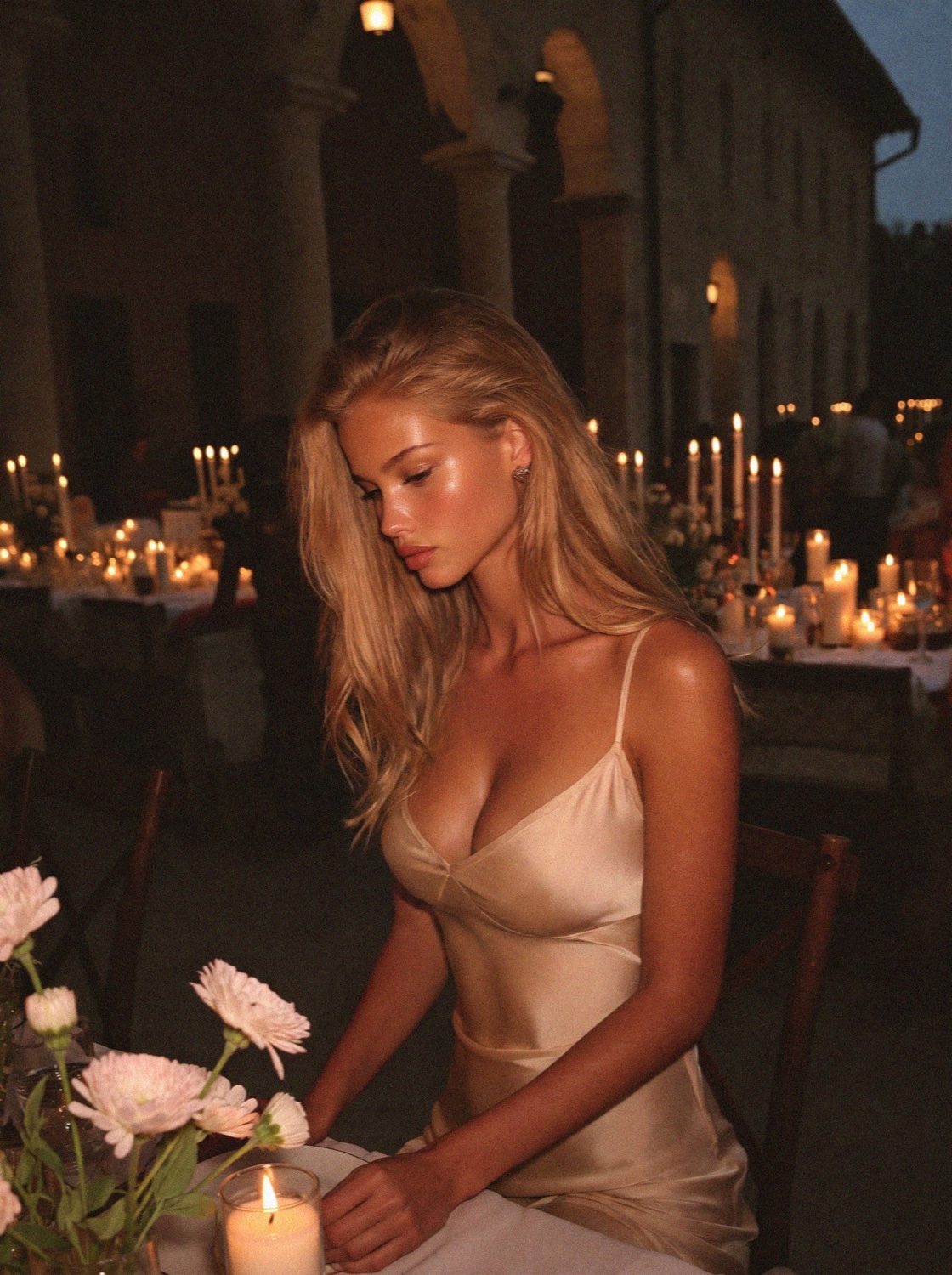
There was a plate of something simple and a glass of something local, and for a while my aunt came and sat with me and we did not say very much at all, which is the highest form of company I know. She has a gift for silence. She lets a quiet sit in the middle of a table without ever feeling the need to tidy it away.
When she went in, I stayed.
The stars came out over the Val d’Orcia the way they never can above a city, thick and low and almost careless about it, and the cypresses turned to black paper cut against them, and somewhere a long way off a dog was seeing to its own quiet business. The folded paper was still in my bag. My father’s pencil line, my aunt’s silence wrapped around it, all of it still there, still unopened, still allowed to be.
I had carried it up and down the most beautiful roads in the world all day and had not once been tempted to read it.
I understood, sitting there with the candle guttering and the whole valley breathing in the dark, that this too was a kind of answer.
Some questions are better for being kept a while.
Walked with.
Driven the long way round.
I went inside when the candle finally gave out. The hills would still be there in the morning, composed and patient and impossibly lovely, waiting for the light to come and make them mean something all over again.
V.

Planning a Tuscan trip of your own? See Victoria’s Complete Guide to Tuscany.
Read also: Where the Hills Begin and Fields of Gold.
Read also: The City to Myself and The House Above Florence.