The boats were already out when I got down to the water.
Not fishing, not yet, just sitting there in the pink light with their ropes slack, Carpielene and Coilaboha and the others, names painted on hulls that had clearly been repainted many times. The church dome above the harbor was catching the first color of the morning before the rest of the town had. Mist sat on the cliffs the way it does before the heat arrives and burns it off entirely. I had come down early, before I had a reason to, and stood at the edge of the dock with the nets and the wooden crates and the quiet of a place that has not yet decided to become a beach town for the day.
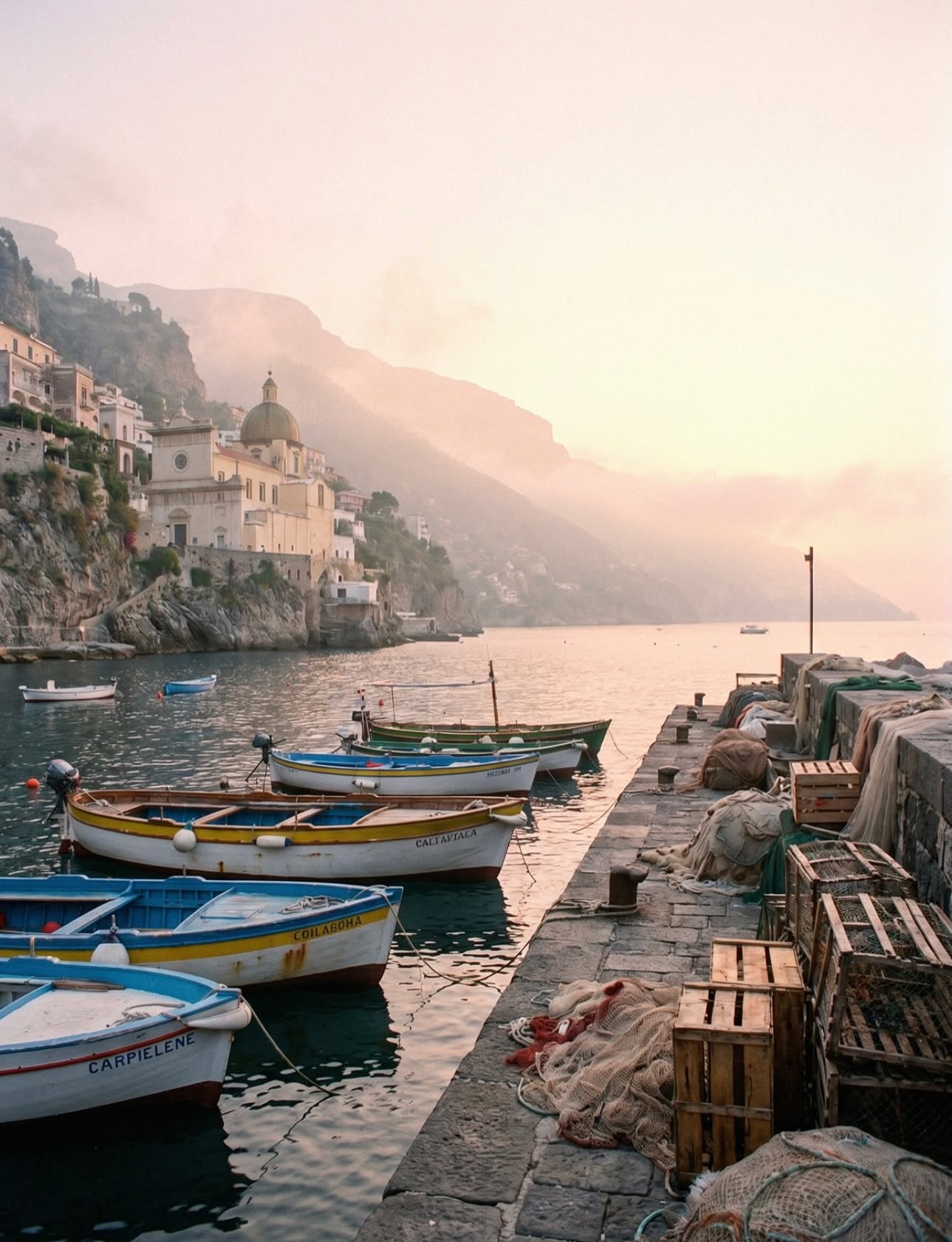
Positano at six in the morning is a different town than the one you see in photographs. It is not performing yet.
I had heard, before I came, that this was a place built for looking at. Streets stacked on streets, houses in ochre and coral and pale yellow climbing the cliff in a way that shouldn’t hold together and does anyway. What I had not expected was how much of it happens below the surface of that view. The dock. The nets drying over the stone wall. A man loading crates into a boat that would be gone by the time I came back down in the afternoon.
The staircase found me on the second day, the way these things do here.
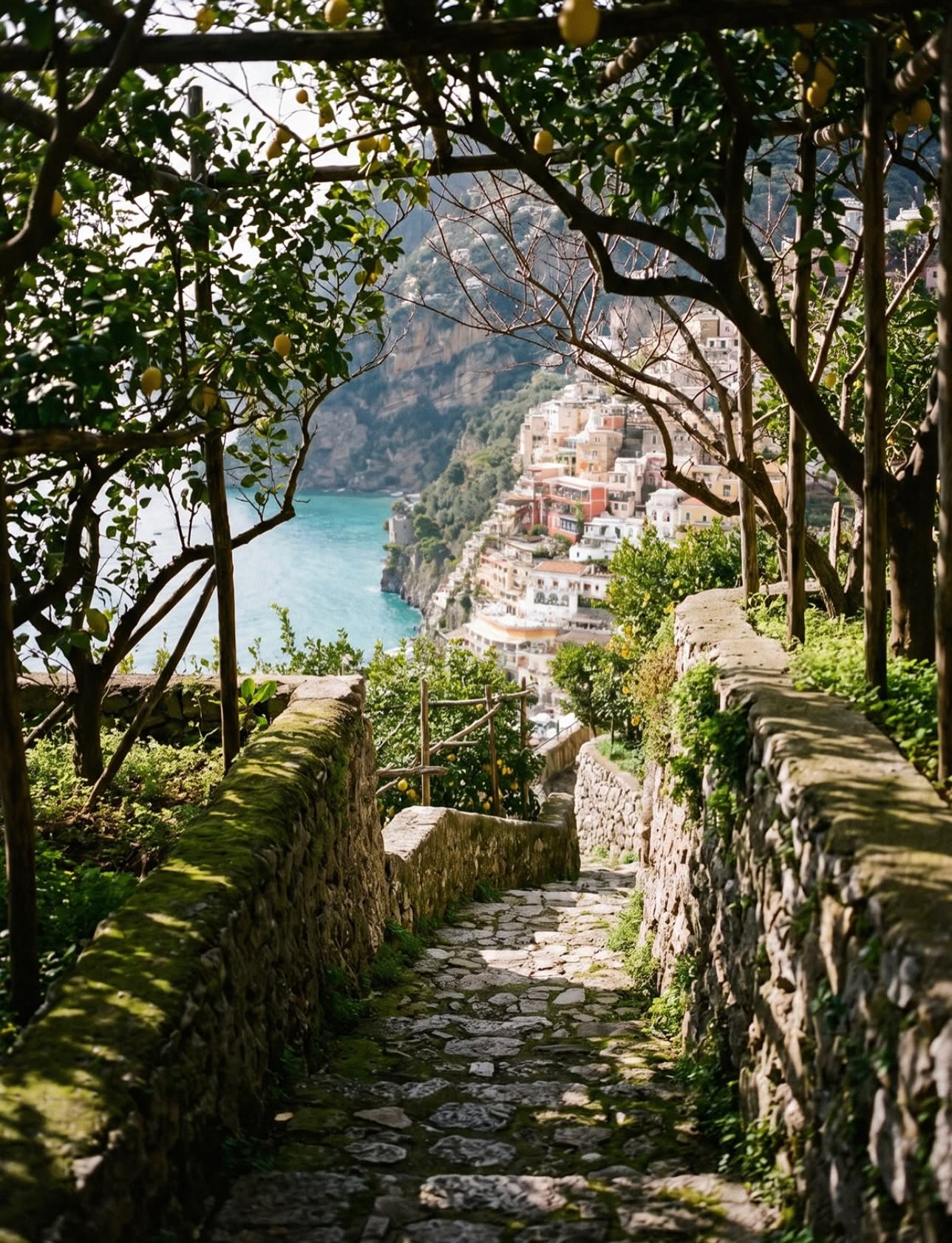
I had turned off the main path looking for shade and there it was, tiled riser after riser, lemons and suns and a pair of dolphins repeating themselves down toward a landing I couldn’t yet see. Bougainvillea came over the wall above it, so heavy with pink that it had bent the branch holding it, and through the gap in the leaves the sea sat flat and pale blue, waiting at the bottom like a reward you hadn’t earned yet. I sat on one of the middle steps for longer than the shade lasted. A woman came down past me with two grocery bags, said nothing, moved like she’d done this ten thousand times. She probably had.
There is a version of Positano made entirely of these staircases, connecting the version of the town that photographs well to the version that actually functions. I liked being in both at once.
By the time I reached the piazza the town had fully woken up.
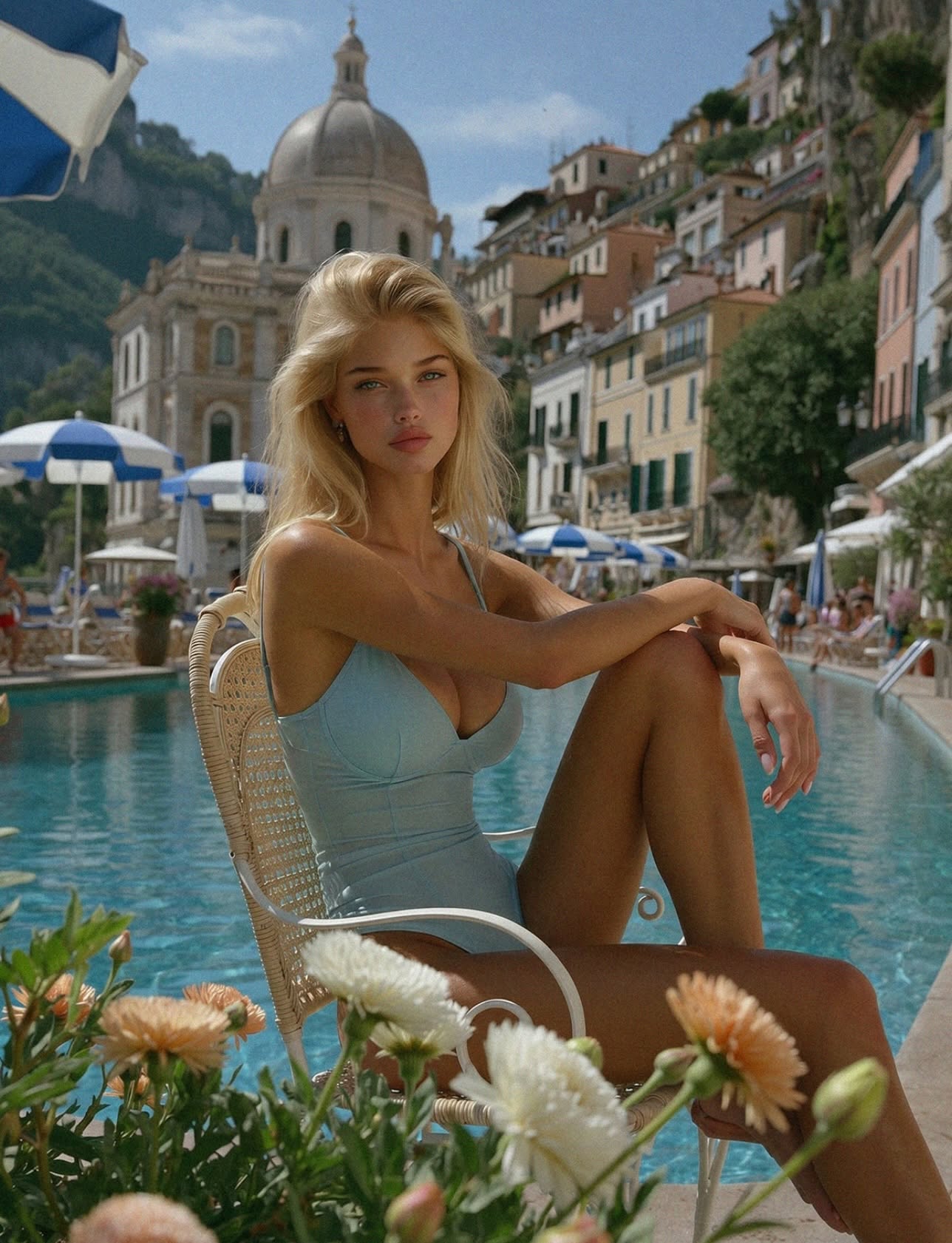
The same church I’d watched from the dock at dawn, quiet and grey then, was gold now, the tiled dome catching full sun and throwing it back over the square. Café awnings in navy and orange stripe leaned out over checked tablecloths. Someone’s espresso cup sat half finished at every second table. A waiter moved between them without seeming to hurry, and still nothing waited long. I sat at the edge of it with a glass of something cold and watched the square do what squares like this do at midday, which is absorb an enormous number of people without ever looking crowded.
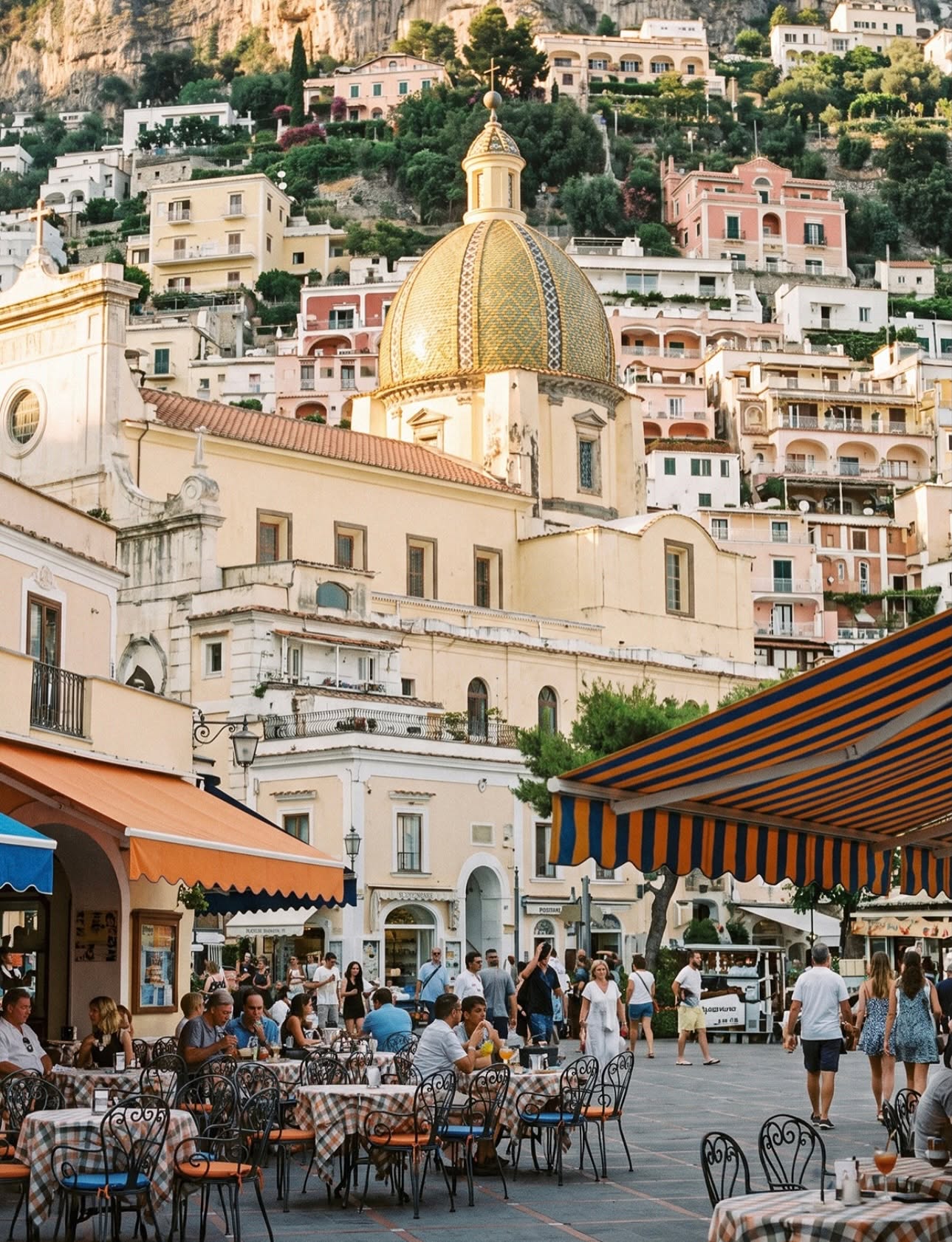
It is strange to stand somewhere you saw empty only hours before. The dome hadn’t changed. Everything around it had.
I ordered lunch mostly so I’d have a reason to stay. A woman two tables over was arguing pleasantly with a man about which ferry to catch. A dog slept under a third table, entirely unbothered by feet. Somewhere behind me a scooter went past too fast for the street it was on, the way they always do here, and no one looked up. This is the version of Positano that ends up in fewer photographs and more memories. Not the dome, exactly. The half hour underneath it, doing nothing in particular.
Further along, a passage.
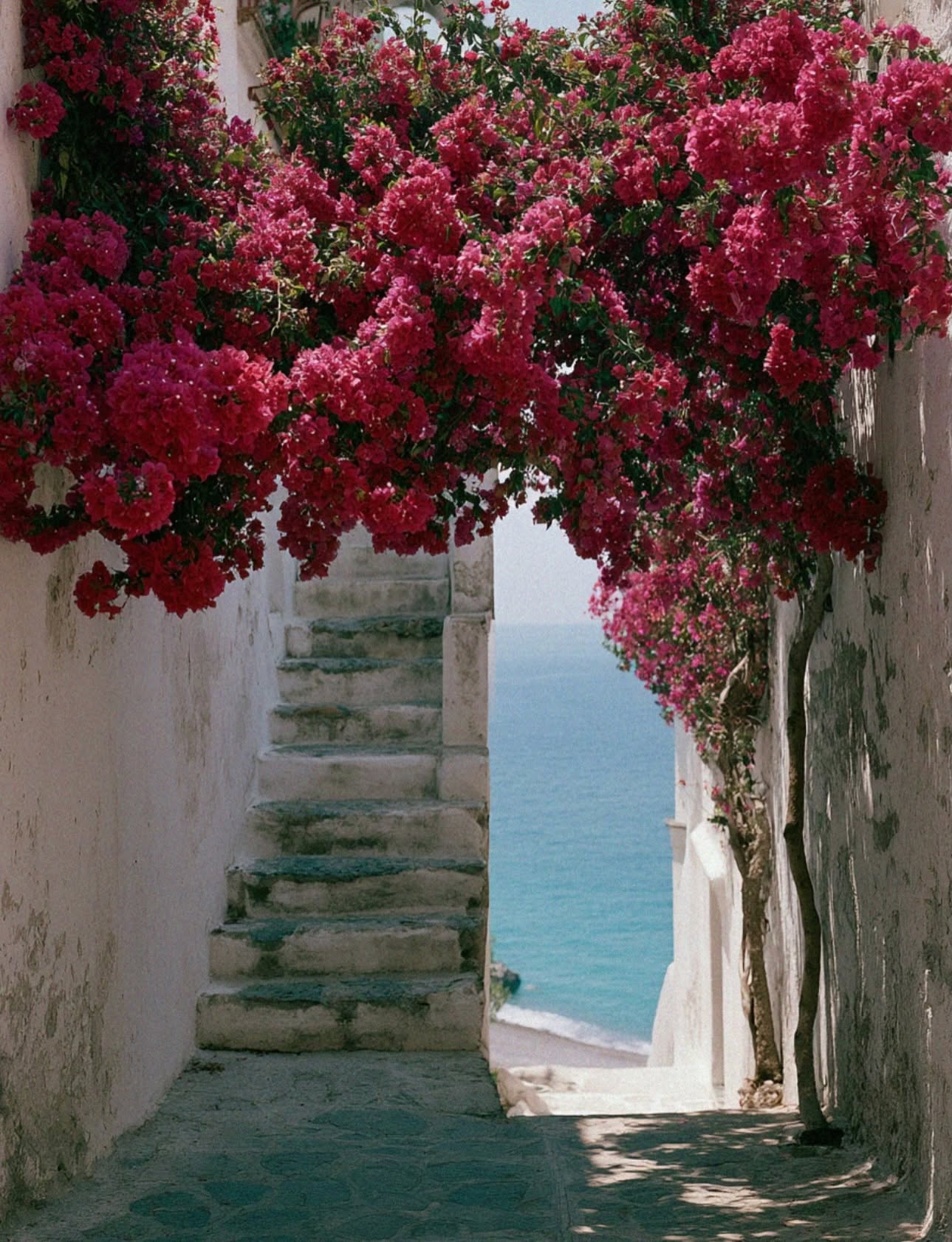
Whitewashed on both sides, narrow enough that I could touch either wall without fully extending my arms, and bougainvillea arched clean over the top of it like something built on purpose, though I don’t think anyone built it. It simply grew there, and no one had the heart to cut it back. At the end of the passage the sea appeared, framed and correct, a rectangle of blue with a strip of pale beach at the bottom. I stood in the shade of it for a while before walking through, the way you do when you know the next thing you see is going to be better than where you’re standing, and you want to hold that anticipation a moment longer.
You come around a corner in this town and the Mediterranean is simply there, offered to you without ceremony, as if it had been waiting the whole time and only just remembered to mention it.
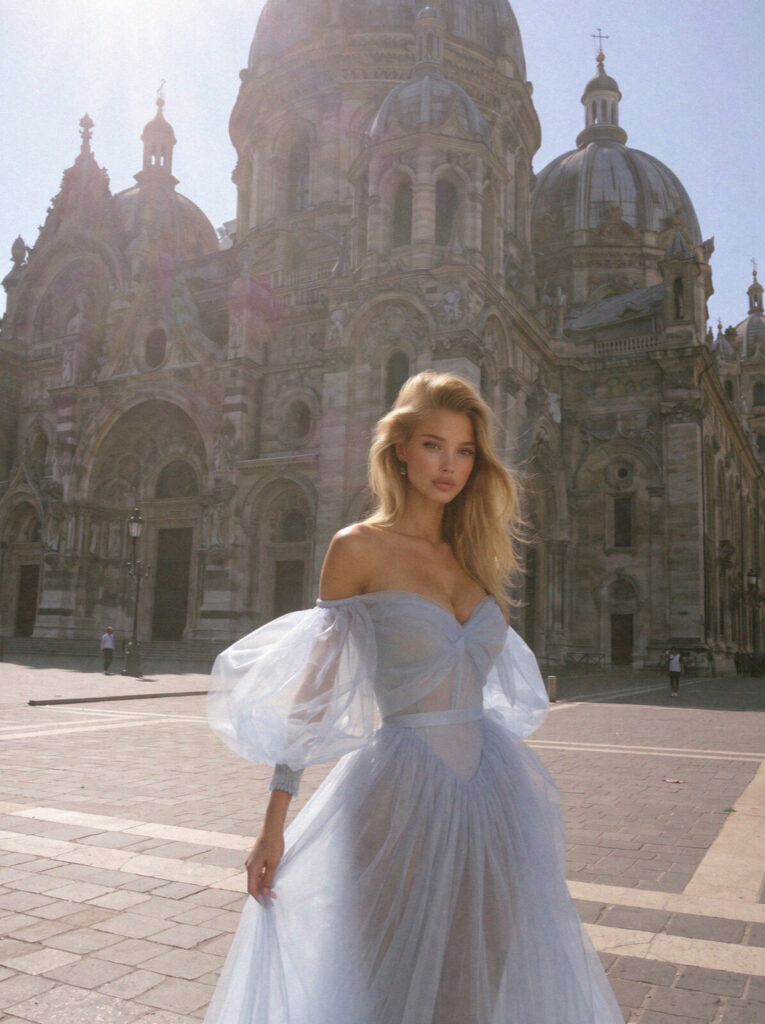
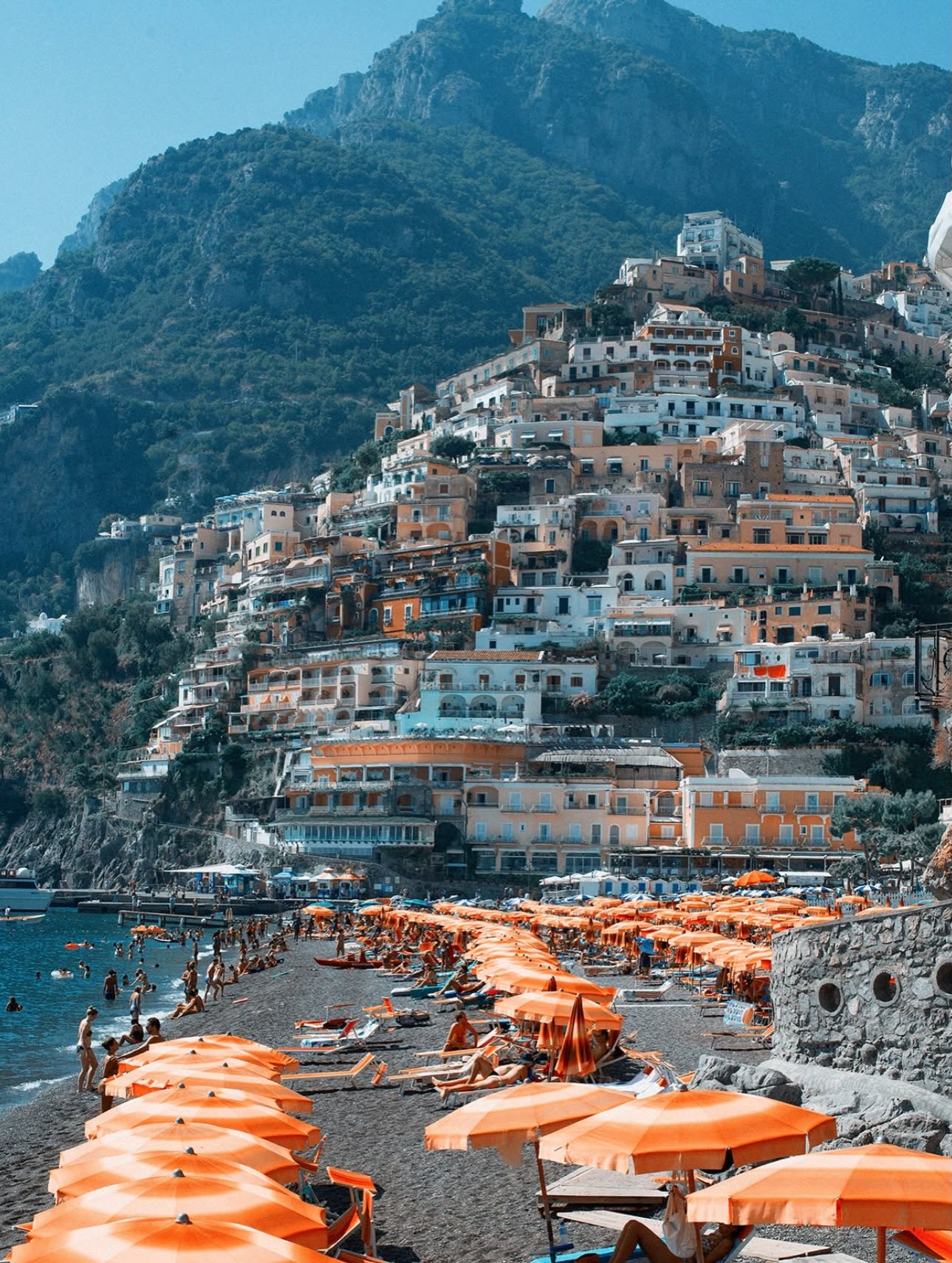
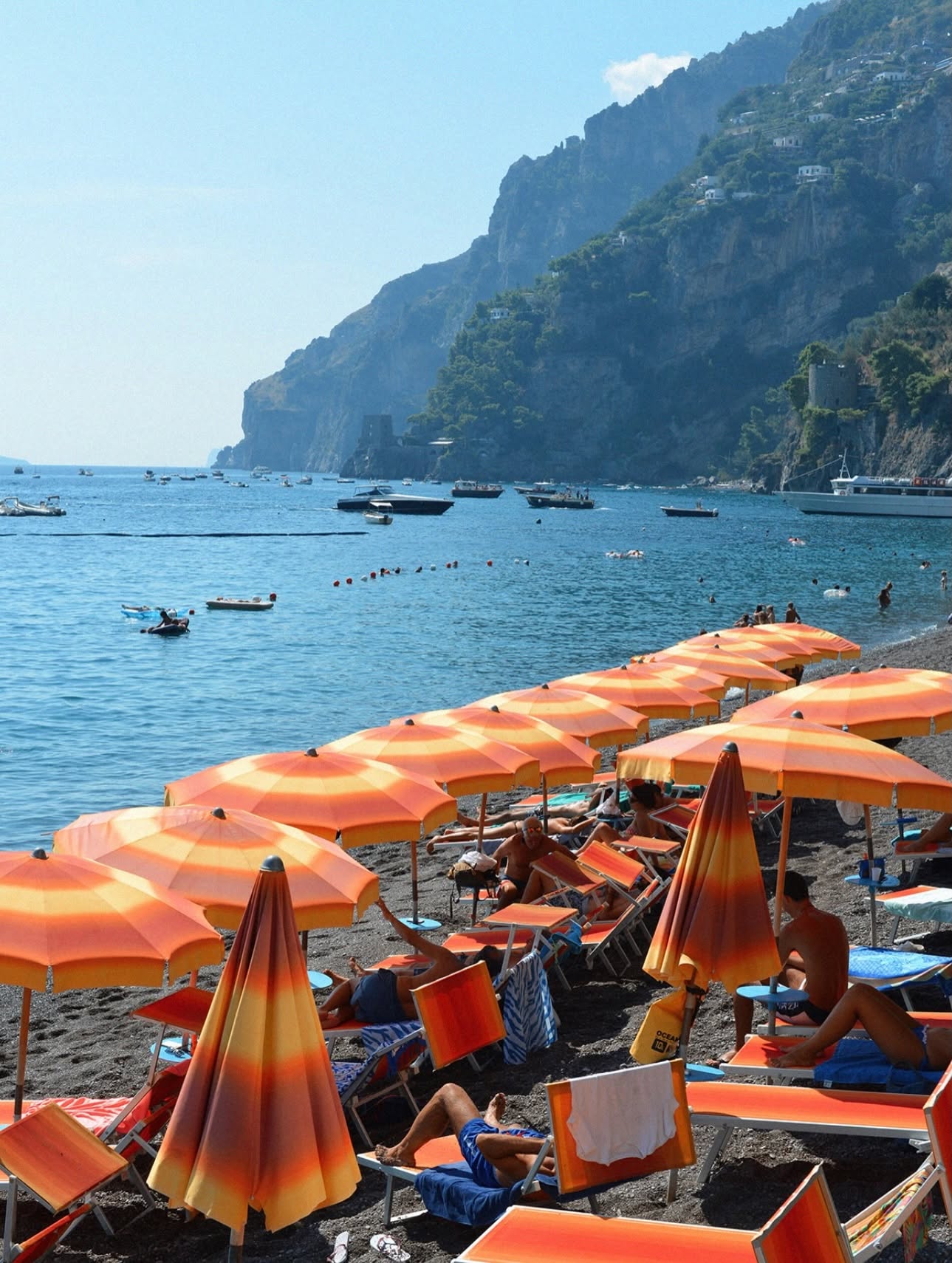
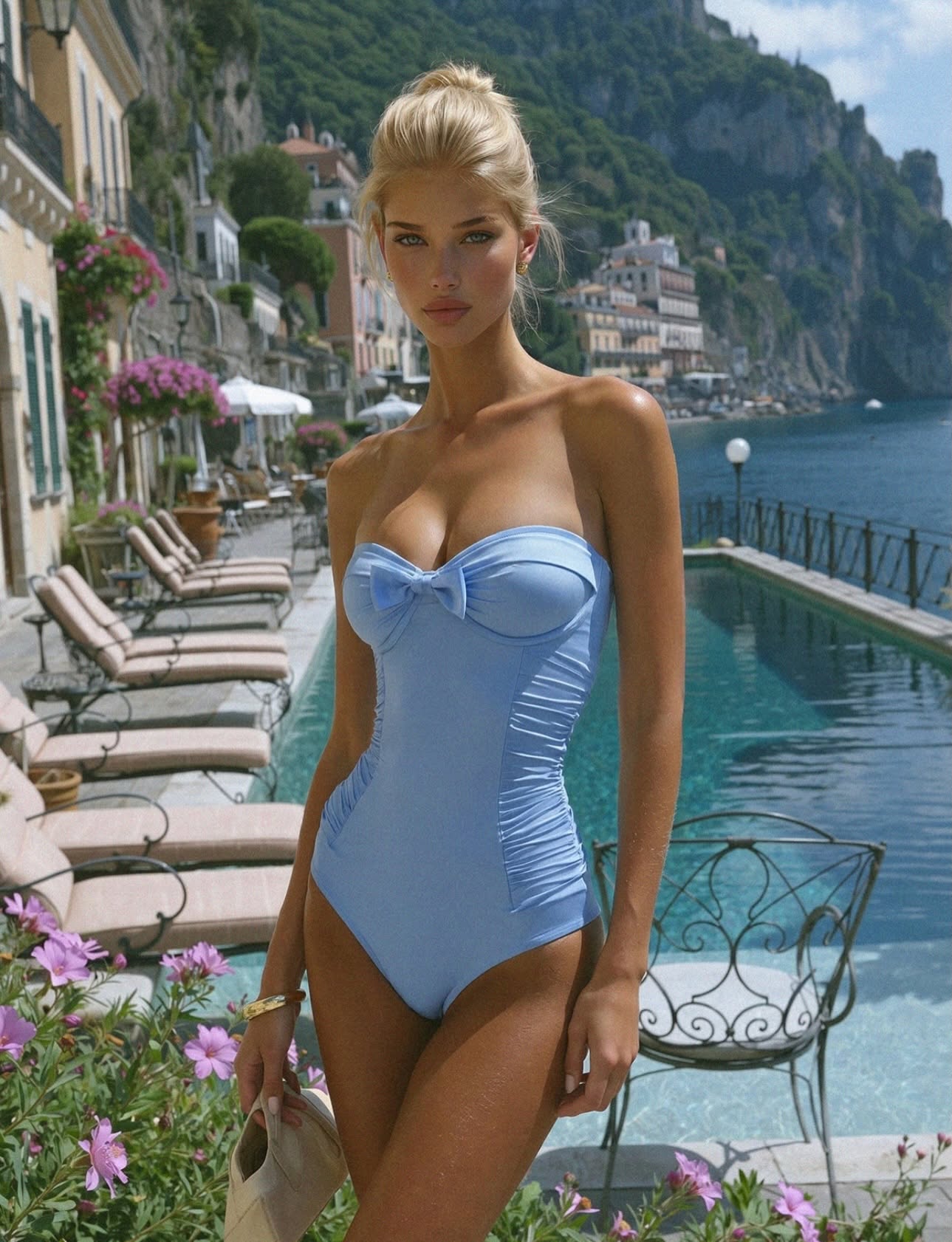
I spent the afternoon on the beach in the lace, which was a mistake in the practical sense and exactly right in every other sense.
The pebbles were hot enough to notice through a towel. Down the shoreline, groups of women in bikinis stood at the waterline with the particular unhurried posture of people who have nowhere else to be until dinner. The cliffs behind the town were green going grey where the light hit them straight on, and the water came in without much force, more of a suggestion than a wave. I stood at the edge of it with the sea wind pulling my hair loose from wherever I’d tried to put it, salt already drying on my shoulders, and let a stranger’s afternoon photograph include me in the background of it, the way mine included them.
There is a kind of vanity in this town that isn’t really vanity. Everyone dresses like they might be seen, and then no one looks, because everyone else is doing the same thing, and the sea doesn’t care either way.
By evening the harbor had changed its mind entirely.
I came back down to the water as the sky went the color it only goes here, orange folding into a bruised violet, the church dome and the hillside houses lighting up window by window faster than I could track them. The same boats from the morning sat lower in the water now, or maybe it was just the light making them look that way. A couple stood at the shoreline not talking, the way people do when a view has made conversation unnecessary. I sat on the sea wall and watched the color drain out of the sky in stages, the mountain going black first, then the water, until only the town itself was lit, glowing against the dark the way it must have for a hundred years before anyone thought to photograph it.
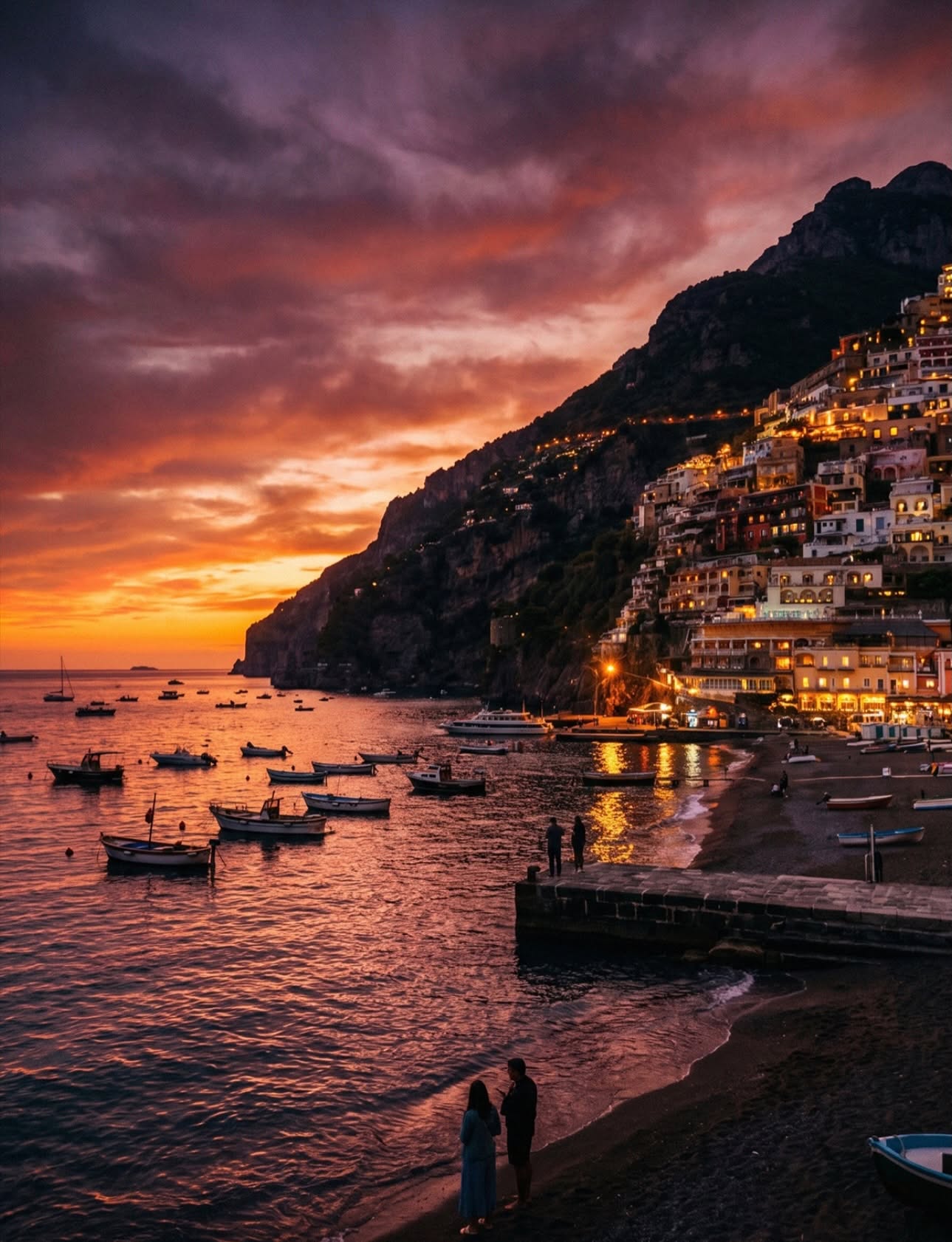
I don’t know exactly what I expected from Positano before I came. Something more posed, maybe. Something that existed mainly for the picture.
It isn’t that. Or it is that, and also a fishing dock at dawn, and a staircase a woman climbs with grocery bags, and a passage grown over with flowers nobody planted on purpose. The postcard version is real. It just isn’t the only version, and I don’t think I understood the difference until I’d stood in both.
Somewhere you are deciding whether this town is worth the narrow roads and the crowded ferries and the hour spent finding a place to sit on a beach that fills up by nine. I can’t make that decision easier. I can only tell you what was true for me, sitting on that sea wall with the last of the color going out of the sky.
Go before it’s crowded. Stay past when you meant to leave.
V.
You can read my complete guide to Positano here.
More images from my trip to Positano:







Read also: A Day on Spiaggia Grande