On the third morning, I crossed the river before the heat.
Rome was not awake yet, or not entirely. The shutters were still closed along the streets, and the light on the Tiber was pale, almost without colour. A few buses passed. A woman walked quickly with a paper bag held against her chest. On the other side of the water, beyond the bridges and the stone embankments, another country waited.
It is strange that a country can be so small. Stranger still that it can contain something so immense.
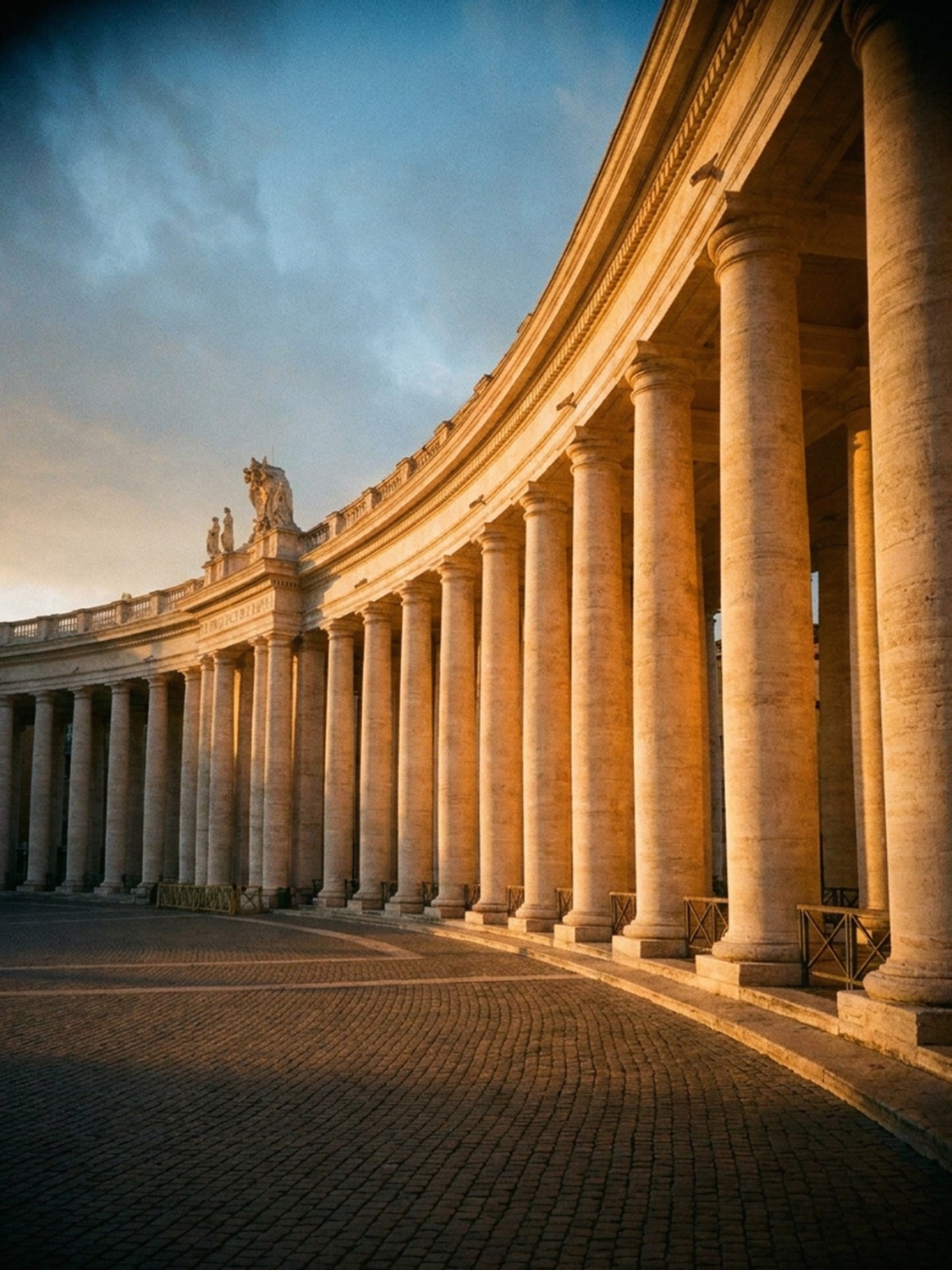
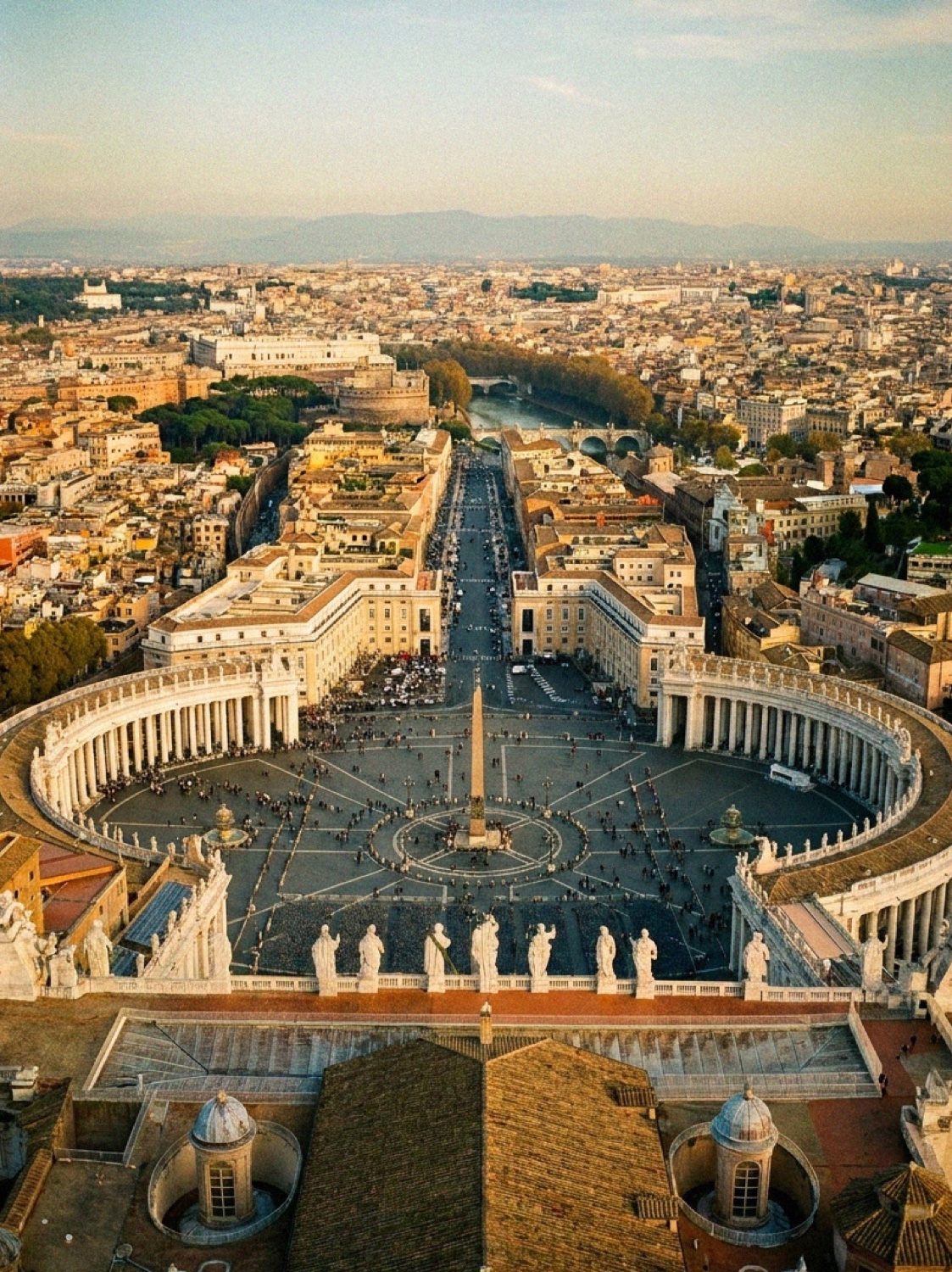
I arrived at St Peter’s Square while there was still room between people. It is not really a square. It opens around you in a great oval, the columns curving outward and then inward again, as though the place has already decided to receive you. I found the round stone in the pavement from which the four rows of columns become one. I stepped onto it and moved away and stepped onto it again. The illusion was perfect each time. Four centuries old and still waiting for someone to be surprised.
At the centre, the obelisk stood in the white morning. It had been there before the church, before the colonnade, before almost everything that now appeared permanent around it. Pilgrims crossed the stones in pairs. A priest stopped to look at his telephone. A nun moved past me with the brisk, untroubled step of someone walking through a place to which she belonged.
I did not belong there.
The square did not seem to require it.
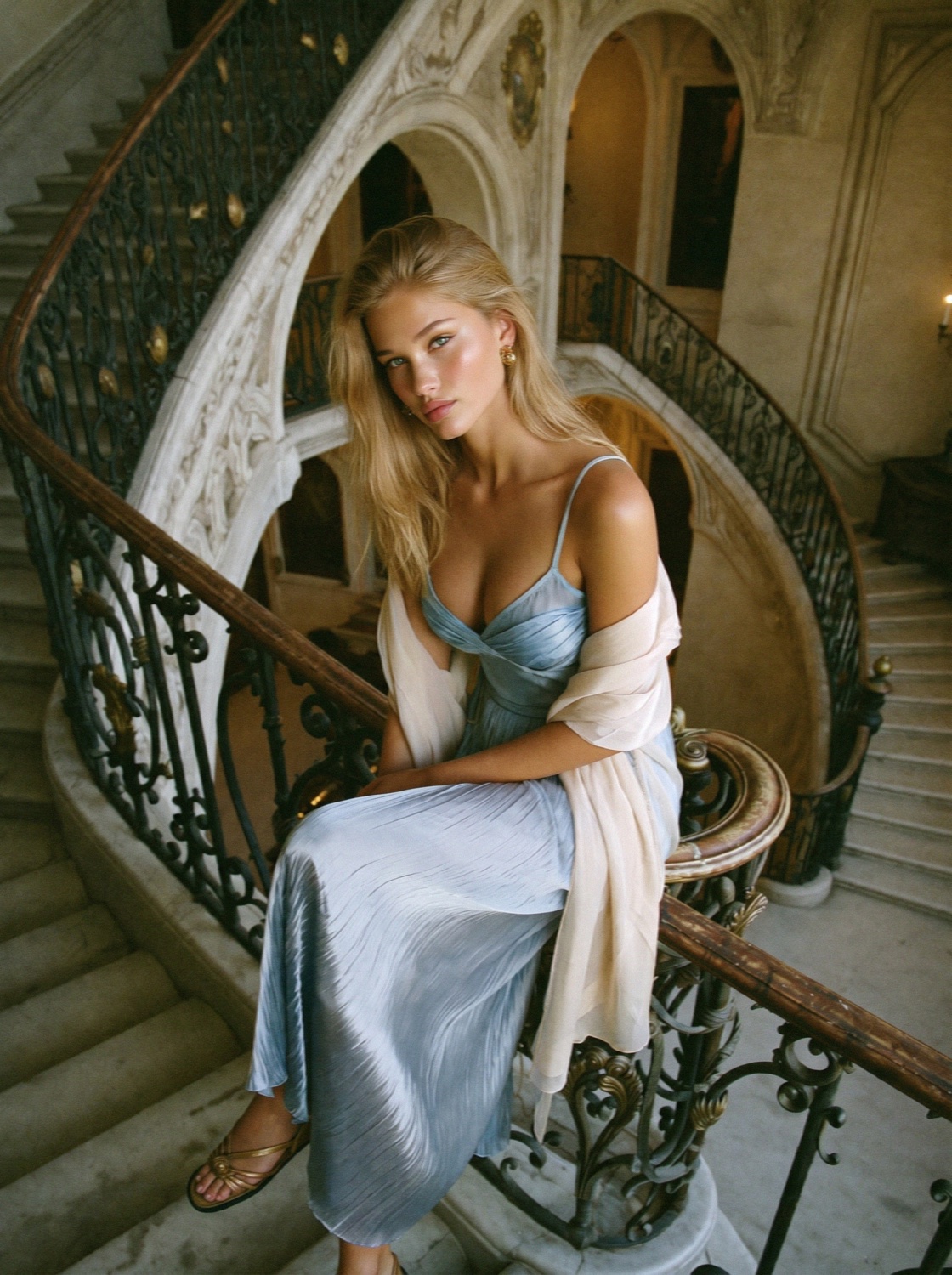
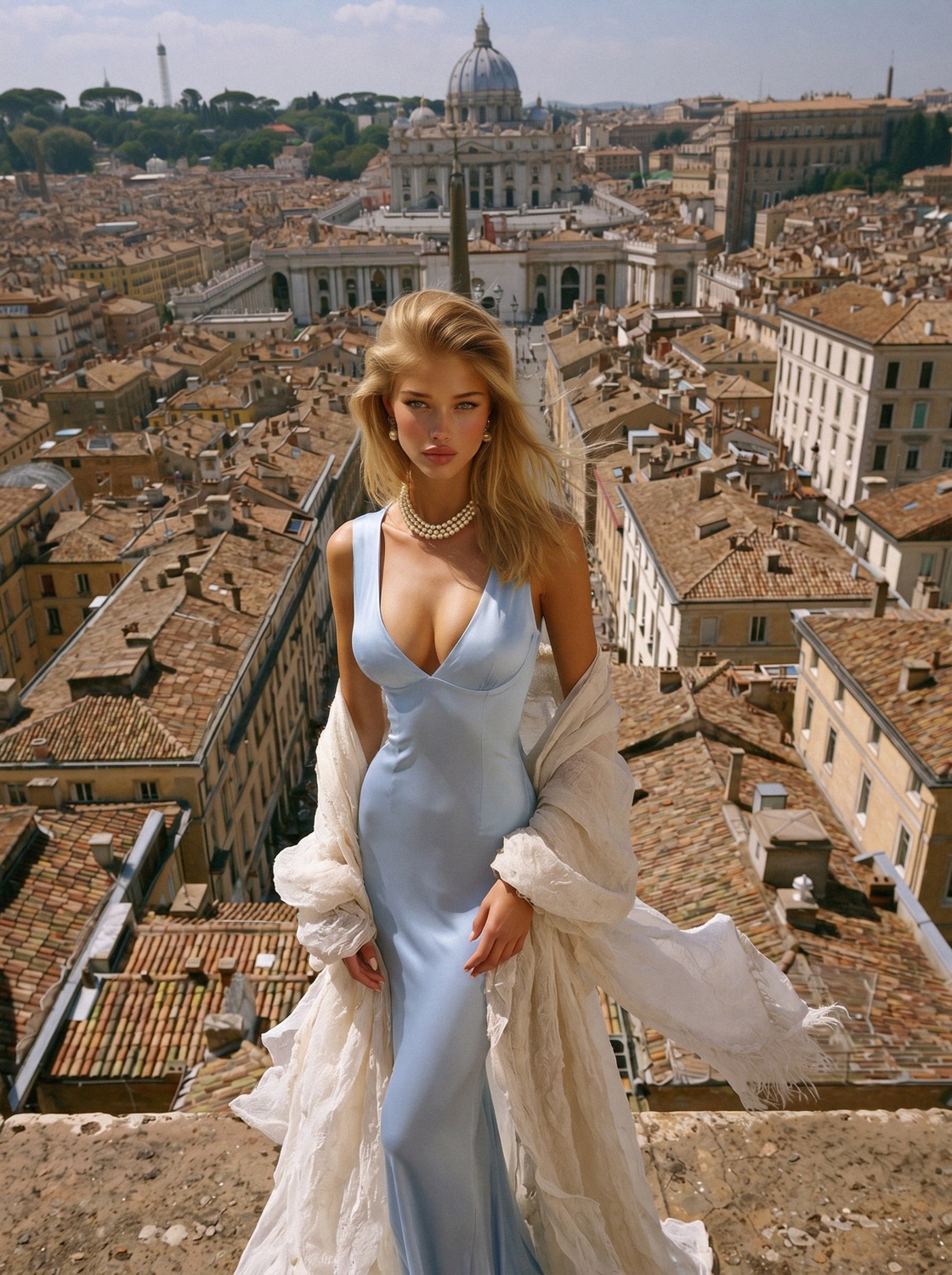
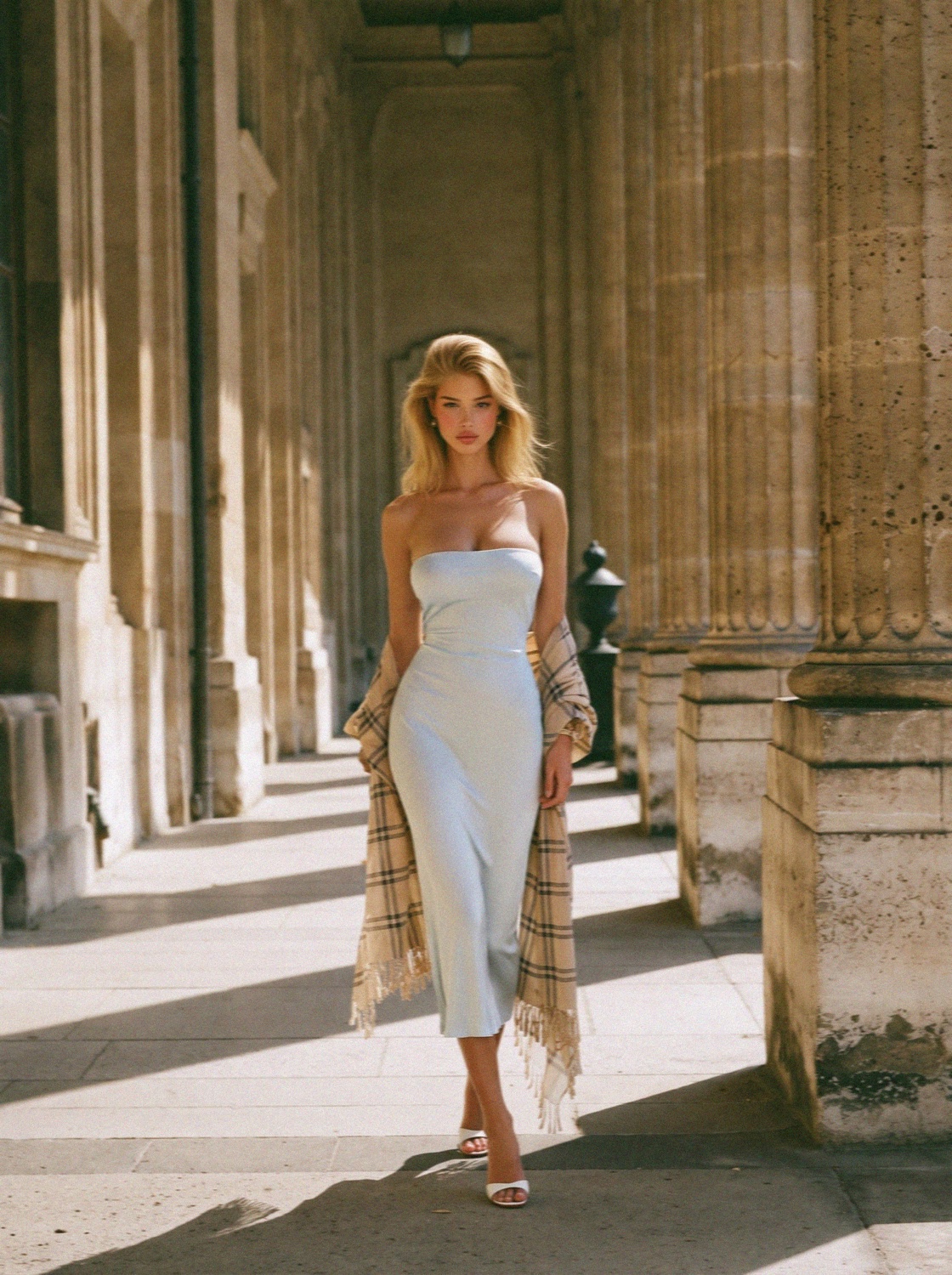
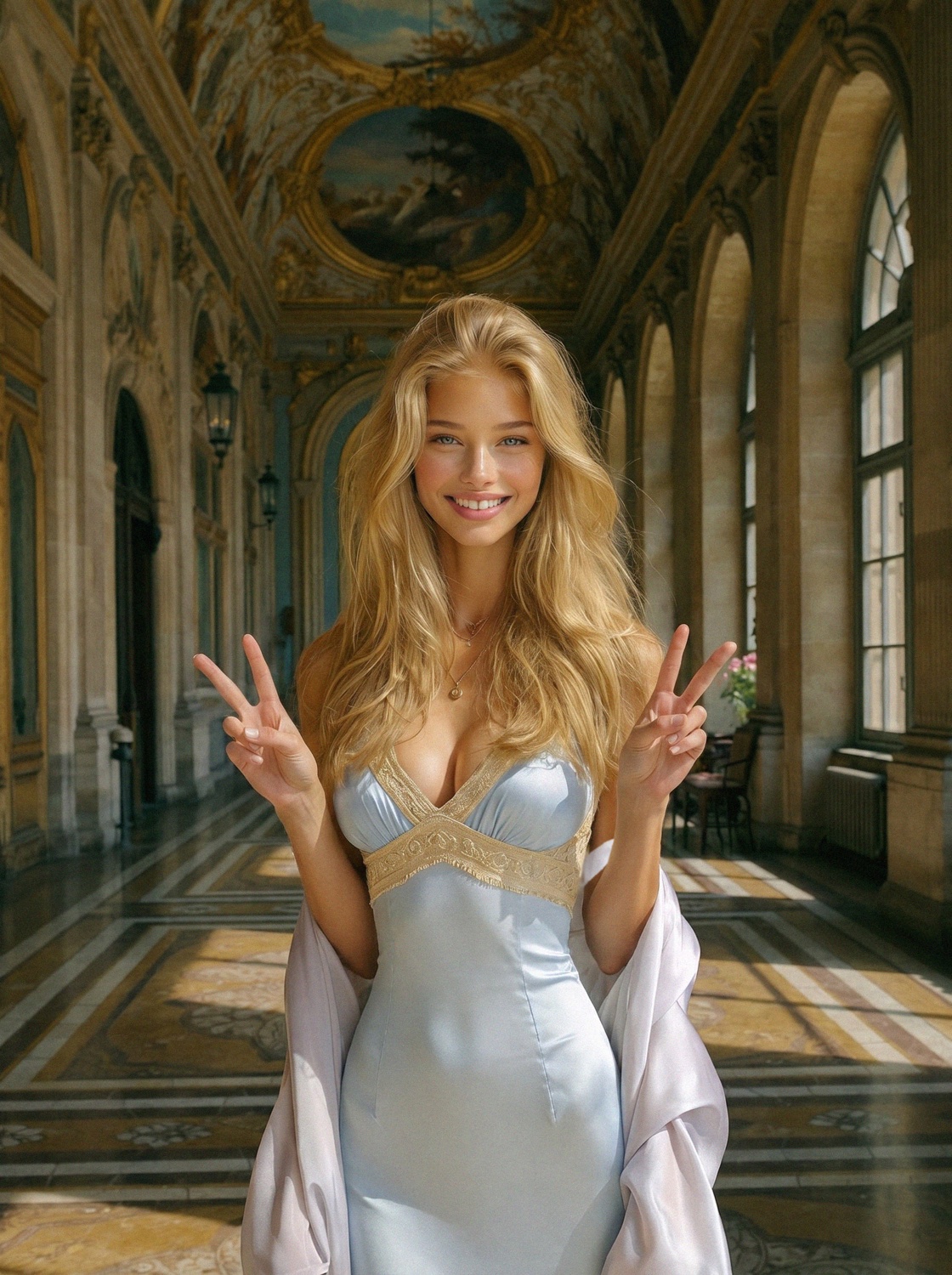
Before entering, I drew the cream shawl over my shoulders. I had brought it because shoulders must be covered, but once it was around me the gesture felt less like obedience than agreement. I became conscious of the blue silk beneath it, of my hands, of the sound of my shoes on the stone. I moved more carefully. Certain places do this. They do not ask you to become someone else. They ask you to notice the person you have brought inside.
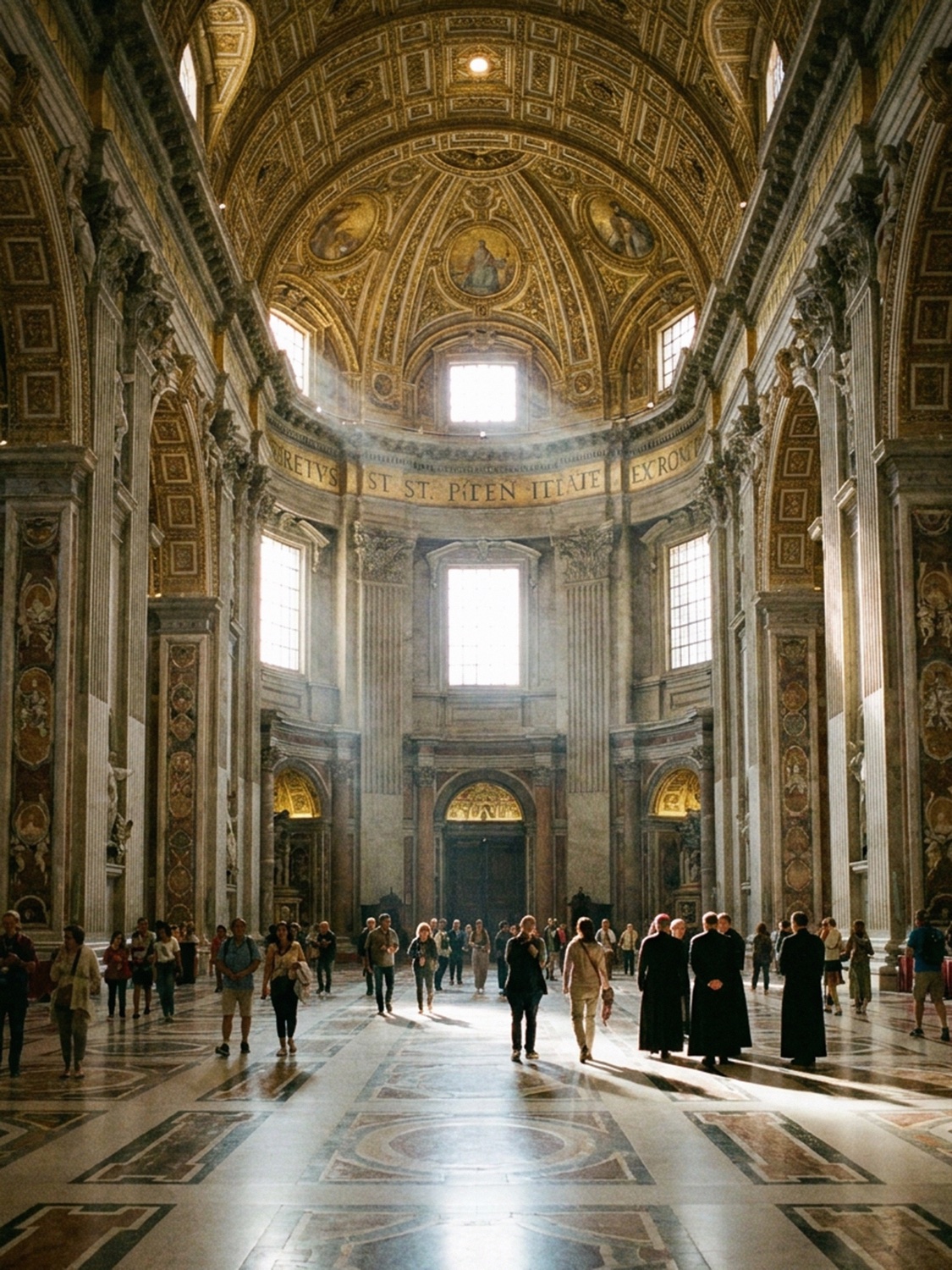
The basilica was too large to understand at first.
People became small there, then smaller still. They drifted across the marble like dark weather. Their voices rose a little and disappeared. I looked upward, but the height would not settle into anything I could measure. The dome held the morning light far above us and returned it softened, as though it had travelled a great distance to reach the floor.
I found the Pietà behind glass.
I knew the image, of course. Everyone knows it before seeing it. But knowing an image is not the same as standing before the stone. The Virgin Mary is young. Too young, perhaps, to have lived long enough to arrive at that grief. Her son lies across her knees with one arm fallen, his body already beyond pain. There is no accusation in her face. That was what undid me. Not the death. Not even the beauty. The absence of accusation.
Michelangelo was twenty-four when he carved it.
I thought of this and then tried not to think of it. I stayed rooted where I was. Around me, people arrived, looked, lifted their phones, and went away. I remained. Sometimes tenderness is more difficult to look at than suffering. Suffering allows you to defend yourself. Tenderness does not.
The Vatican Museums seemed to continue without end. Rooms opened into other rooms. Marble bodies stood beneath painted ceilings. Gold appeared everywhere, even in passages whose only purpose was to lead elsewhere. I stopped trying to understand the collection as a whole. Five hundred years of possession is too much for one morning. I let individual things find me and released the rest.
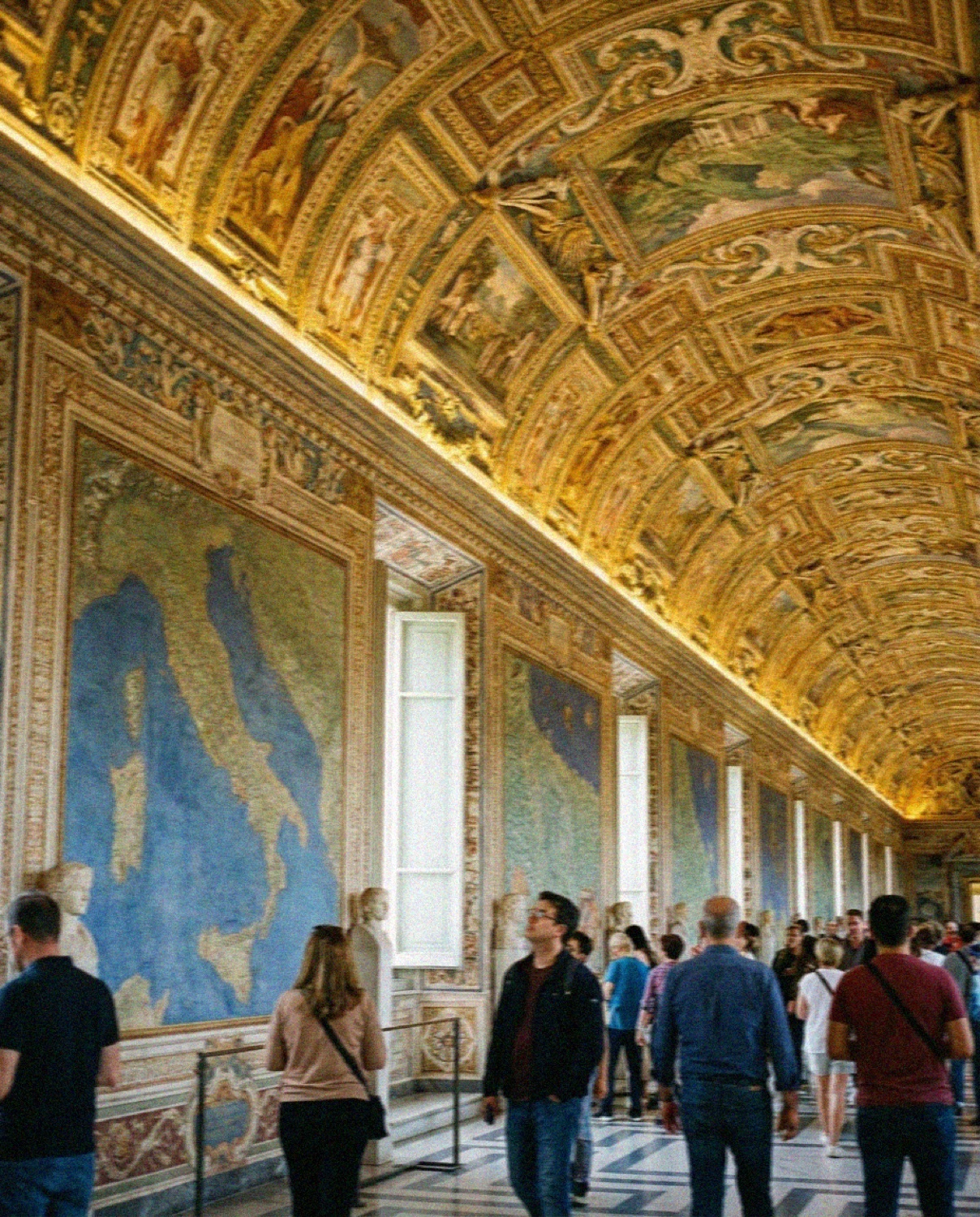
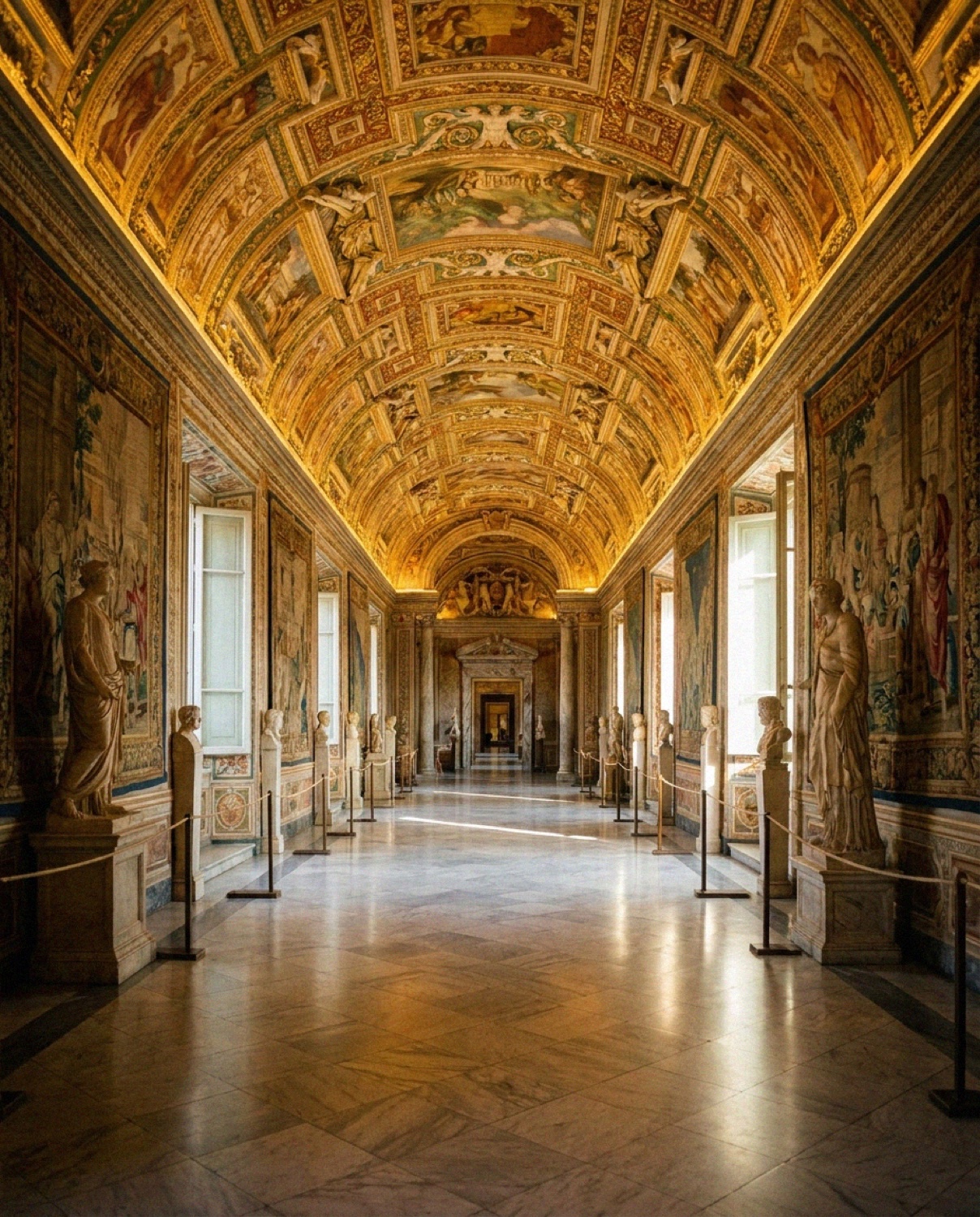
The Gallery of Maps found me.
Italy covered the walls in green and blue, coastlines and mountains painted with the confidence of a world that believed everything could be named. Above it, the ceiling burned with gold. I stood in the middle of the corridor and thought of the country outside. Amalfi, Naples, Rome. The stations, the water, the heat. The actual distances between places. Here they had all been brought close together and made still.
For a moment I forgot that it was a corridor.
Then came the Sistine Chapel.
It was smaller than I had imagined and more crowded. The guards asked for silence, again and again, but the room could not quite give it. Silence descended in fragments, broken by a whisper, a shoe against the floor, another warning. I found a place on the bench along the wall and leaned my head back.
The crowd slowly left my attention.
There was only the ceiling, then. The beginning of the world painted by a man lying beneath it for four years. Bodies reaching, falling, turning toward one another. The narrow space between two hands. I had seen that space reproduced so often that I had stopped seeing it. There, it became distance again. Almost nothing. Everything.
I do not know how long I sat beneath it. Long enough for a guard to look at me, and later to look again.
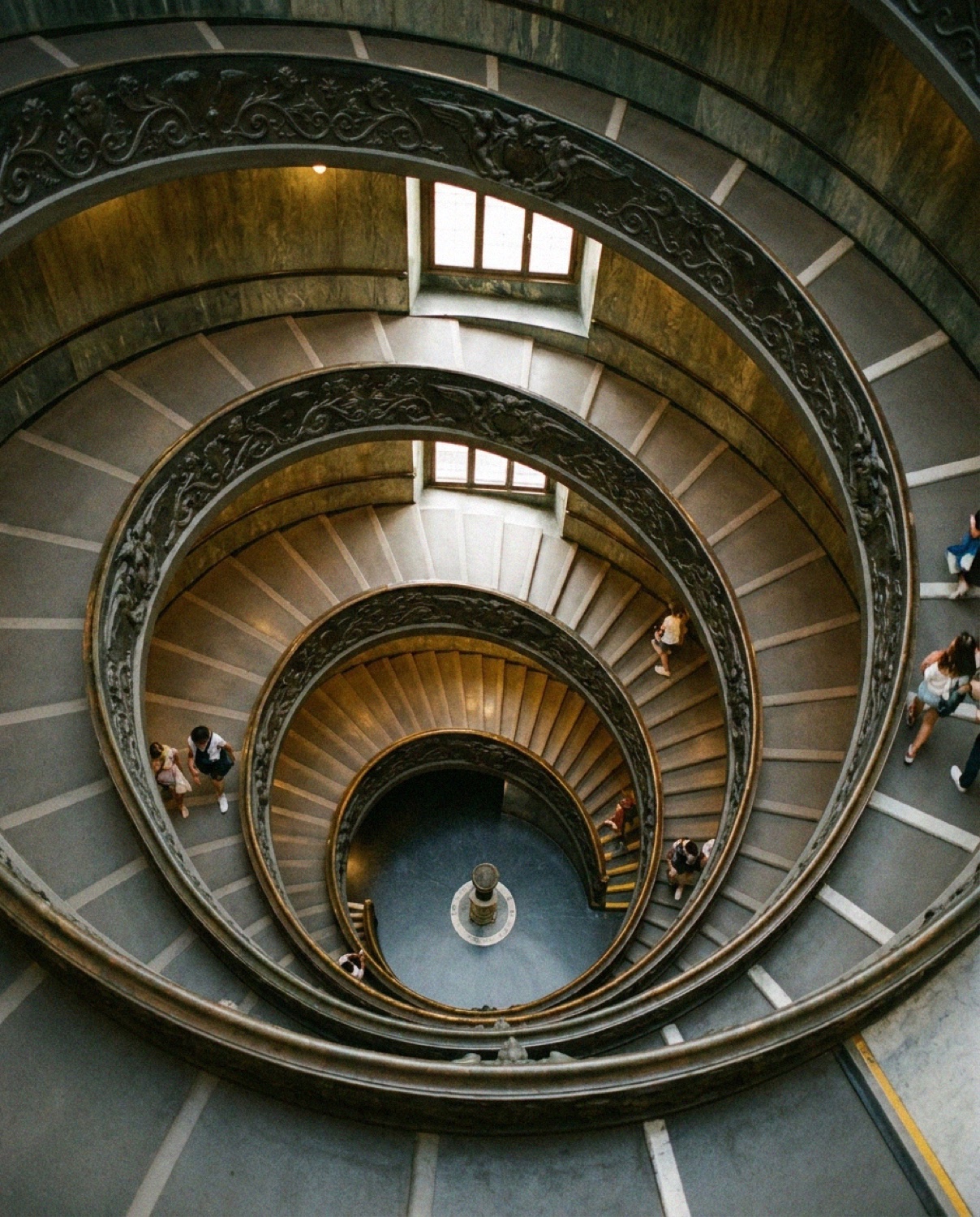
On the way out, the spiral staircase carried everyone downward in its two separate coils. Those leaving curved beside those arriving, close enough to see and never close enough to meet. It felt less like an exit than a small piece of theatre. Then the doors released me into the hard white light of noon.
I did not return to the centre.
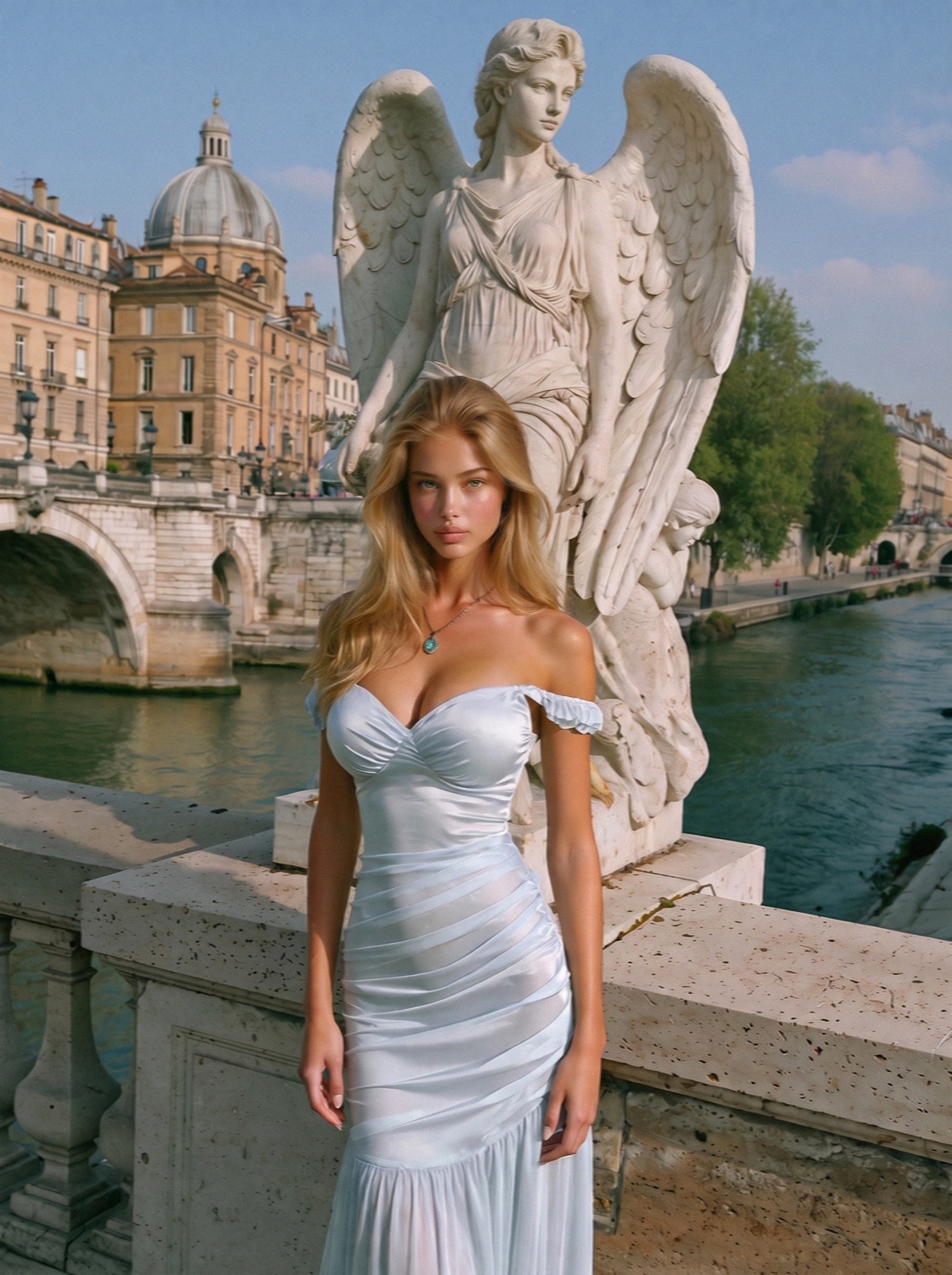
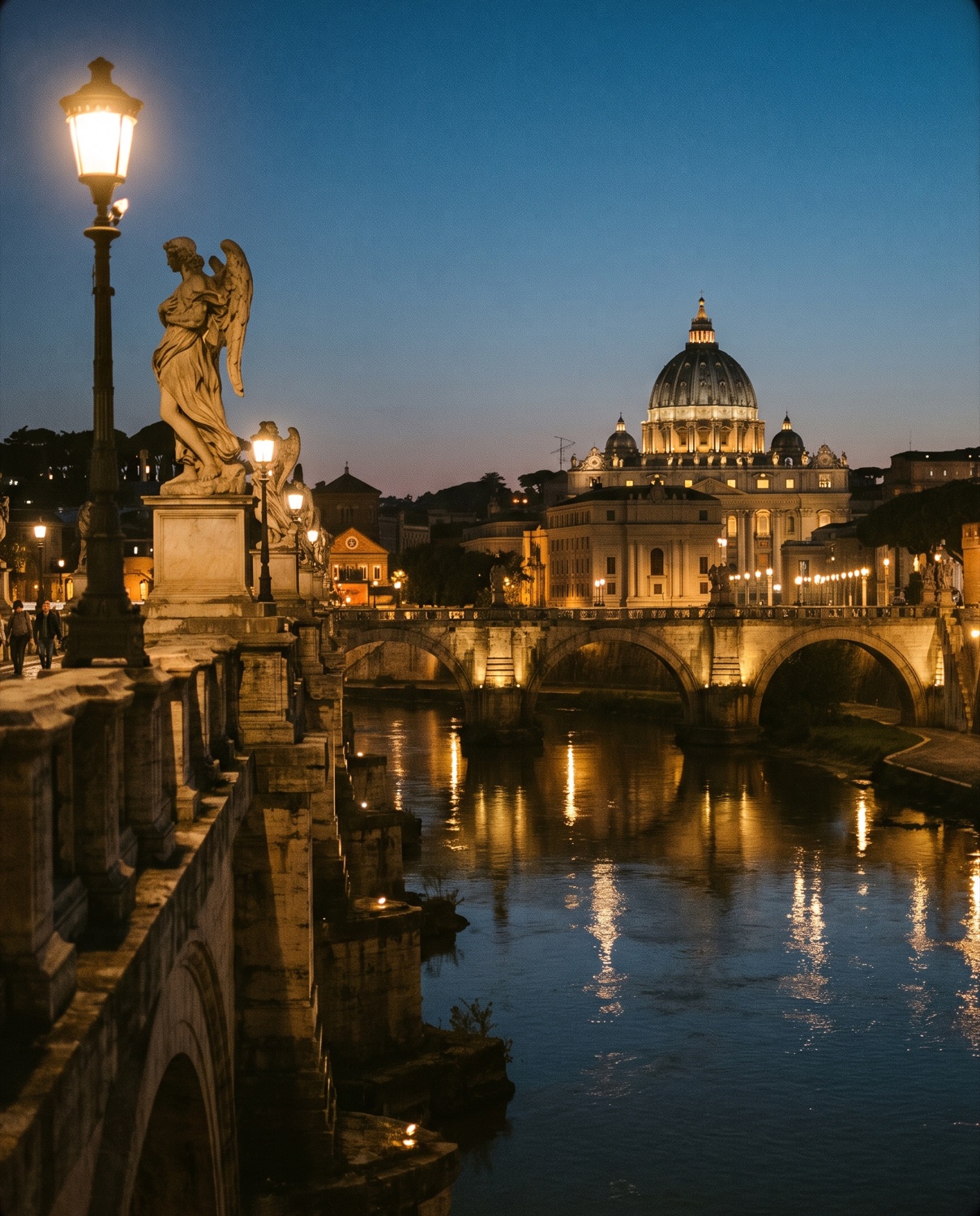
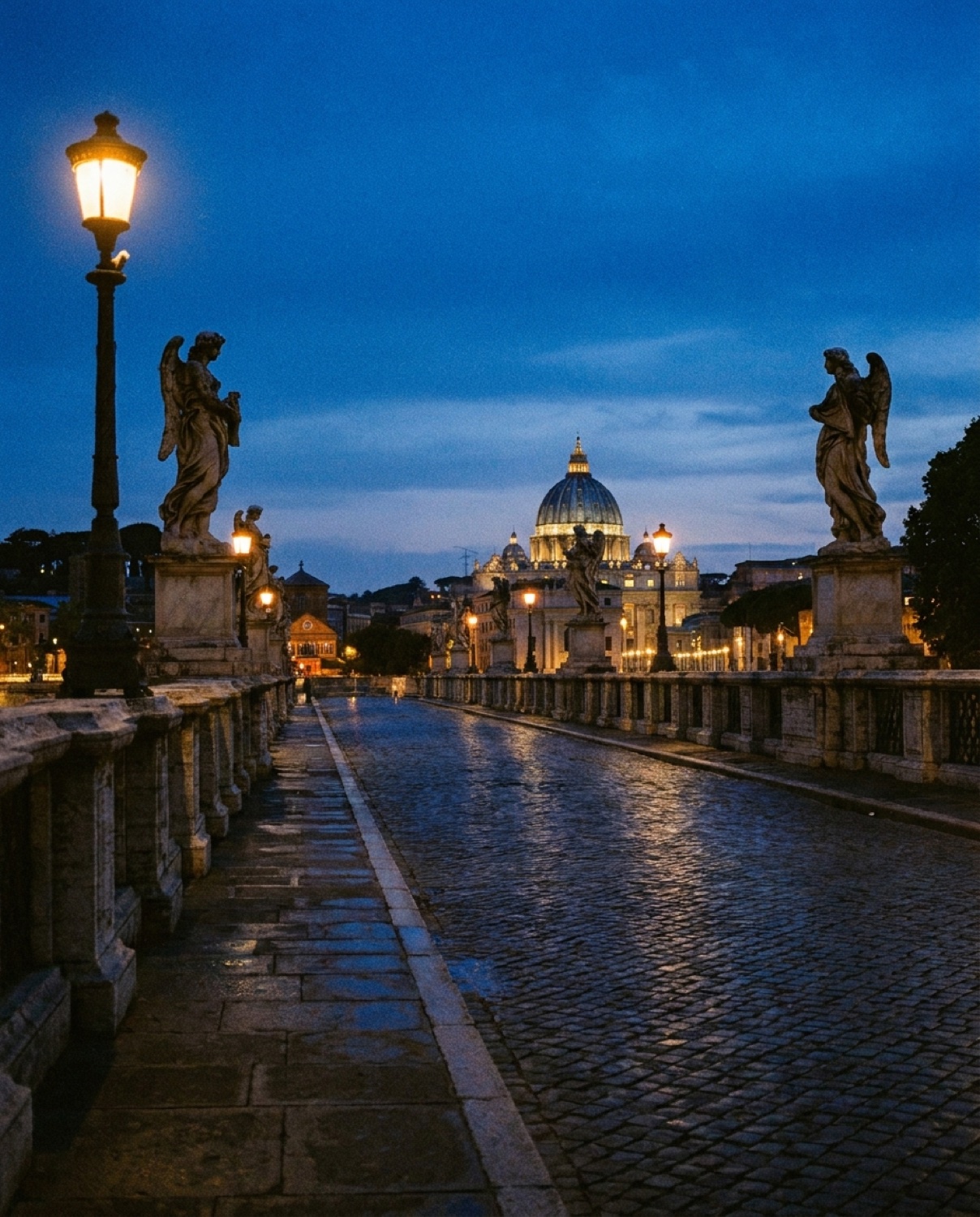
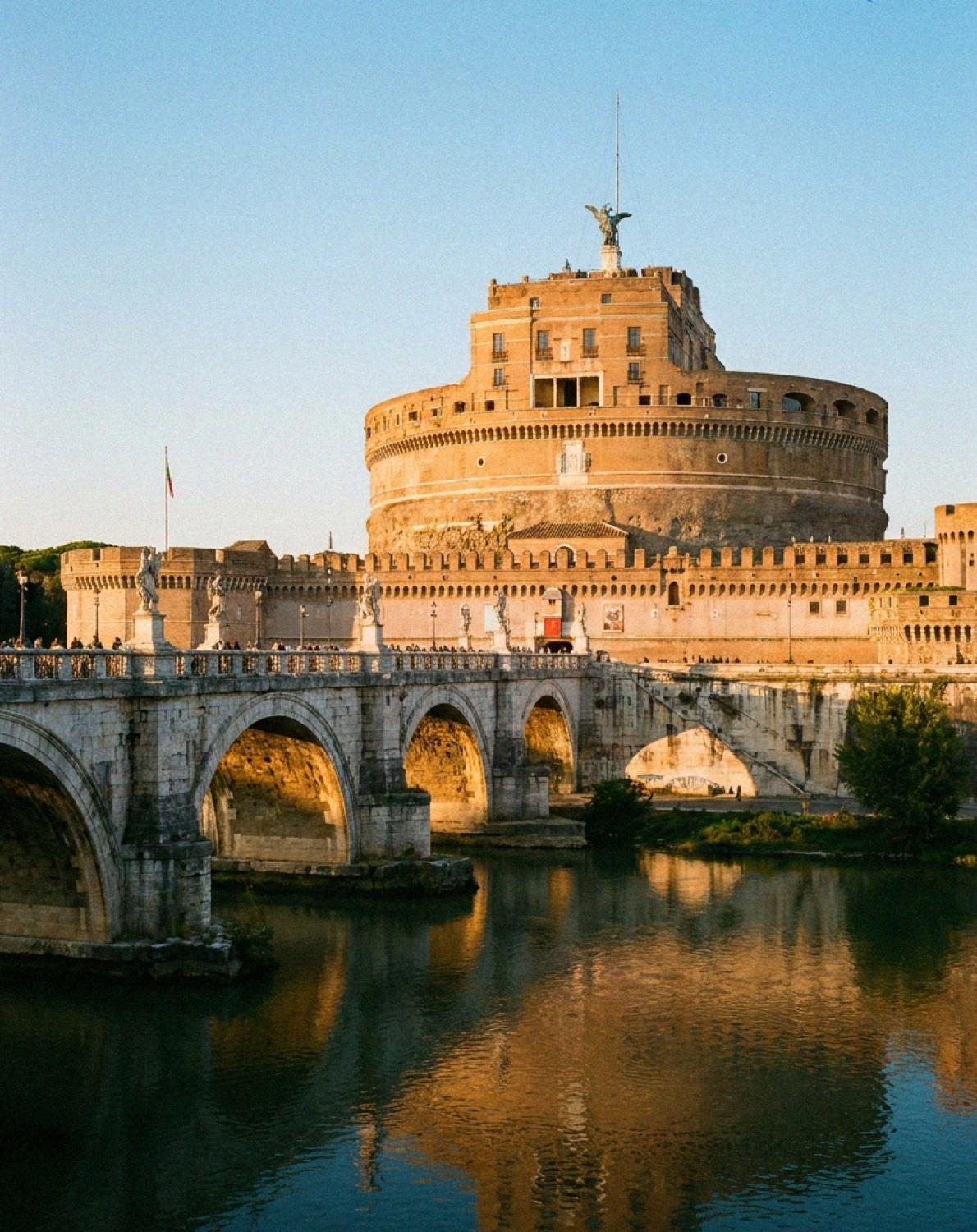
I walked to the river and crossed the bridge where the marble angels stand in a row, each holding an object from an old sorrow. Their wings were white against the blue sky. Beyond them rose the round mass of Castel Sant’Angelo, first an emperor’s tomb, later a fortress, then something else, because Rome rarely allows a building to remain only what it was made to be.
The Tiber moved beneath me, green and slow.
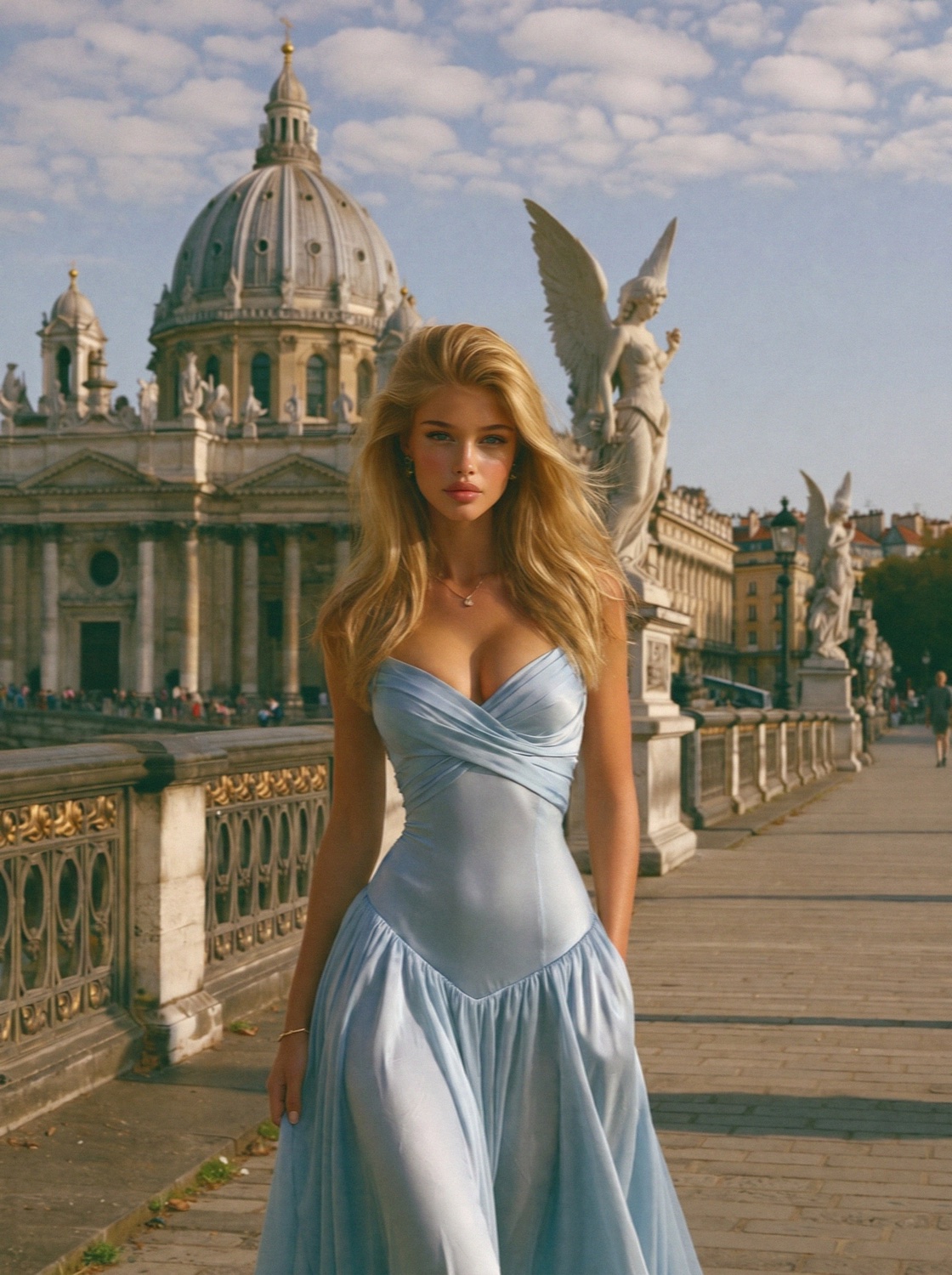
When I turned, the dome of St Peter’s had become small. It belonged to the skyline again, one shape among many. I preferred it that way. Perhaps we sometimes love things more easily after they have overwhelmed us and then moved away.
I crossed once more into Trastevere.
The change was immediate. The holy city receded, and the living city began. The lanes narrowed. Ivy fell from ochre walls. Washing moved above the street in the faint air. The cobbles shifted under my feet. A cat slept in a doorway with the deep assurance of an animal that had never once doubted its right to be there.
Someone was cooking with garlic in an upstairs room.
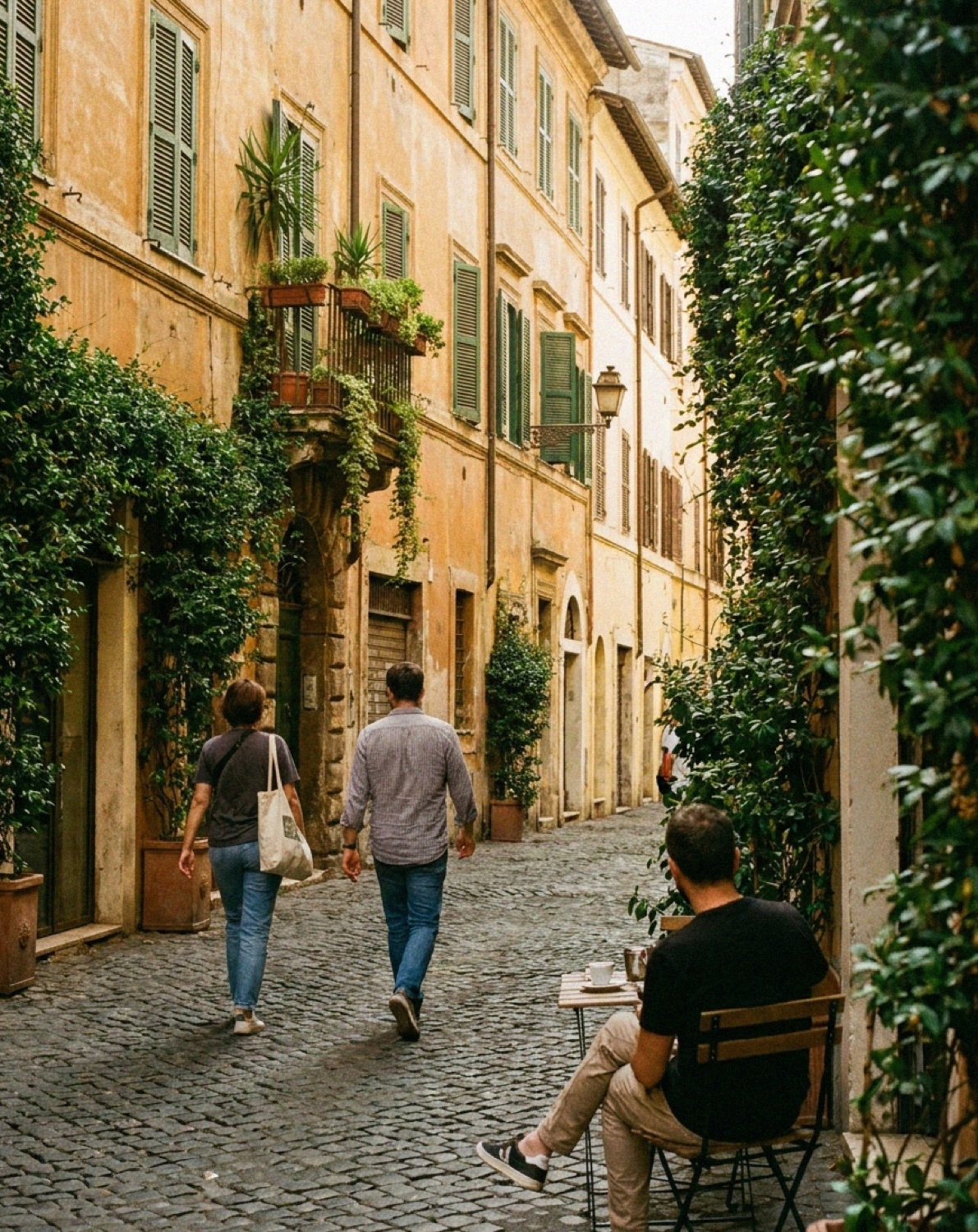
I sat at a small table in a corner and ordered an espresso. For a while I did nothing. After the marble, the gold, the painted heavens, doing nothing felt precise and necessary. A man called to another man across the street. They argued briefly about something I could not understand and forgot it almost at once. Children passed in a noisy group. Plates struck tables inside the café. The afternoon rested against the buildings and turned them gold.
No one lowered a voice.
I was grateful.
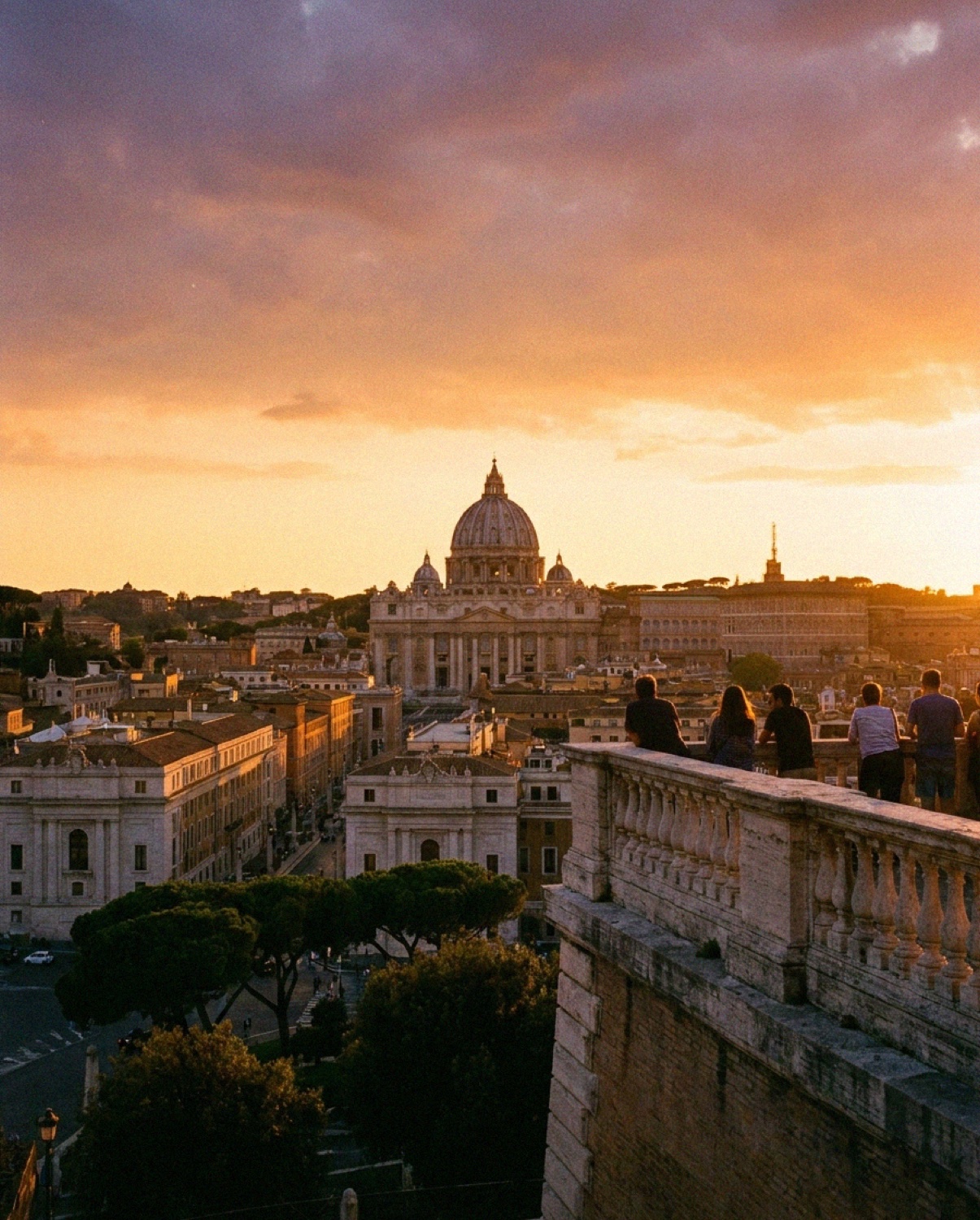
Near sunset I climbed the Gianicolo above the neighbourhood. I had changed for the evening into green silk, dark as the leaves when the light has nearly left them. At the wall, all of Rome opened below me. The roofs had become bronze. The umbrella pines stood black at their edges. Domes rose from the city in every direction, and far across them was the dome I had stood beneath that morning, receiving the same last light as everything else.
No more than everything else.
No less.
A man played guitar somewhere behind me. Couples leaned against the wall without speaking. The sun lowered slowly, with the familiar reluctance Rome seems to give it, as though even the light had found reasons to remain.
I watched until the colour went out of the sky.
By the time I returned to Trastevere, the lamps were coming on. One window, then another. The lanes deepened into blue while the tables along the cobbles glowed amber. I found a place outside with a candle already burning and ordered pasta. Around me, the neighbourhood had given itself over to dinner. Cutlery, voices, chairs moving over stone. A bell rang once in the distance and did not ring again.
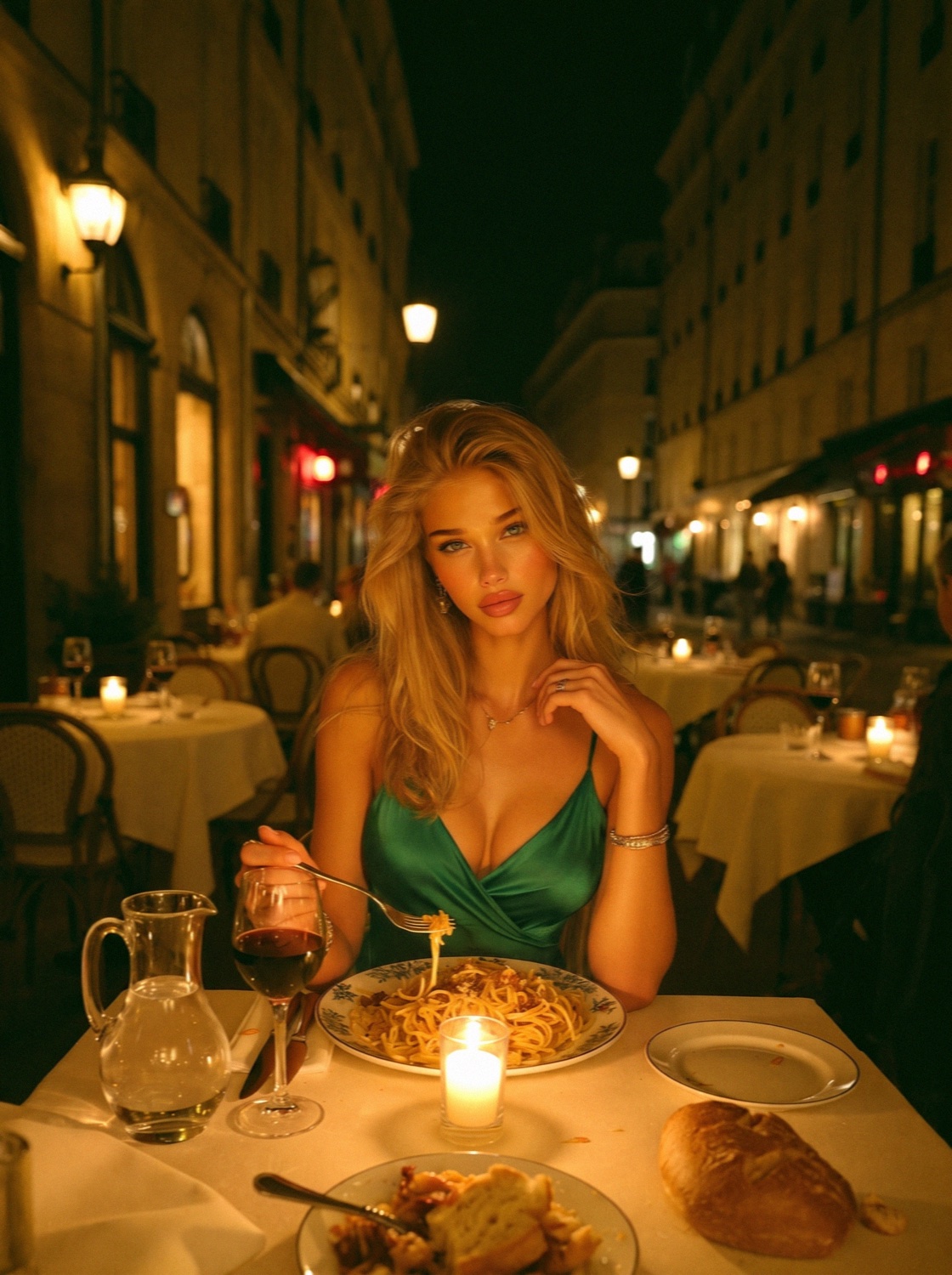
I thought of the morning. The immense rooms. The cold marble. The mother holding the body of her son. Then this small table, still warm from the day, and the voices of people whose names I would never know.
Rome had placed them beside each other without explanation.
Perhaps that is why the city can feel so complete. It does not choose between the sacred and the ordinary. It keeps the gold ceiling and the washing above the street. The silence that cannot be held and the argument called from one window to another. The dead emperor’s tomb and the cat asleep in the doorway. It asks only that you cross the river and accept that both are true.
The night gathered slowly around the table.
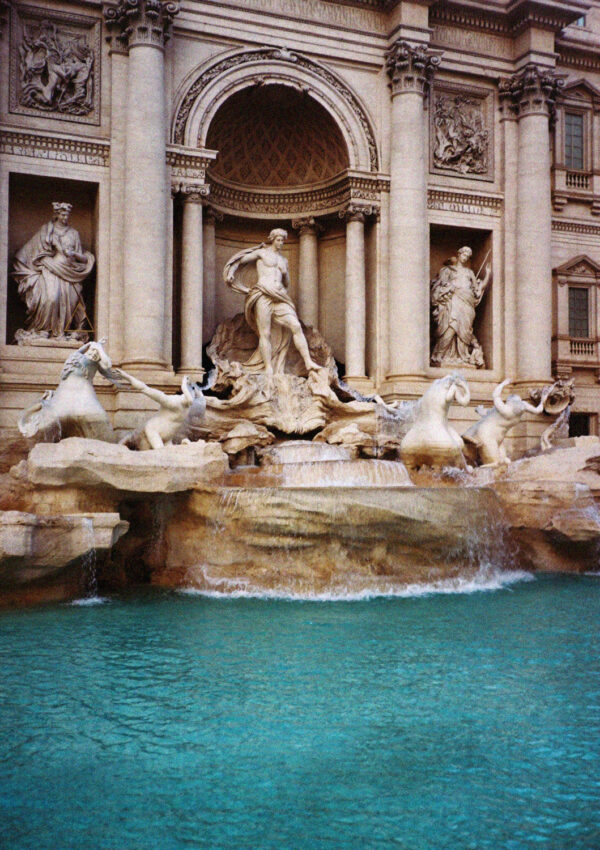
They say that if you throw a coin into the Trevi Fountain, you will return to Rome.
I had thrown no coin.
By then, it no longer seemed necessary.
V.
For Victoria’s Complete Guide to Rome, click here.
Read also my other Rome diaries, The Long Way In and Under the Roman Sun. And if the Vatican drew you in, see my full guide to visiting the Vatican.
More from my day across Rome: