The porter took my bag without being asked. That was the first sign that this would be a different kind of travel.
Venice resists departure. It has no logic for leaving. The streets fold back on themselves, the water catches everything and returns it twice, and somewhere between the Rialto and Santa Lucia station I turned the wrong way three times. The city seemed to be making a point.
I arrived at the platform with twenty minutes to spare.
The Venice Simplon-Orient-Express sits at the platform the way a very old, very beautiful thing tends to sit. Still. Certain of itself. The carriages are lacquered in deep blue and gold, and they look less like a train and more like something from a different century, which is exactly what they are. I stood on the platform and did not board straight away. I wanted to see it before I was inside it.
A steward in a white jacket showed me to my suite. The wood was inlaid in geometric patterns, the reading lamp cast a warm amber light, and there were fresh flowers in a small glass on the fold-down table. I put my coat over the seat and sat for a moment with my hands in my lap and thought: this is what people meant when they said it.

The train left Venice without announcement. One moment the platform was still there, and then it was not. The lagoon opened to the left, silver in the afternoon light, and for a few minutes the city floated beside us before it disappeared entirely. Departures like this are hard to prepare for. They happen while you are still thinking about them.
Through the Veneto, the land flattened and then slowly began to rise. Small towns passed between fields, each with a campanile marking its center, and the light had that particular quality it carries in the north of Italy in the afternoon, hazy and directionless, the kind of light that makes everything look like a painting of itself.
I found a small magazine in the seat pocket and read about the train without meaning to. The Orient Express made its first journey in 1883. A Belgian engineer named Georges Nagelmackers decided that Europe needed a luxury rail service connecting Paris to Constantinople. The original passengers wore top hats. They carried trunks. They dined on silver and drank Champagne while the continent moved past the window at what must have seemed, then, like extraordinary speed. Spies crossed half of Europe in the sleeping compartments. A great many improbable things are said to have begun and ended on this train.
I folded the magazine and set it down. Some history is better held lightly.
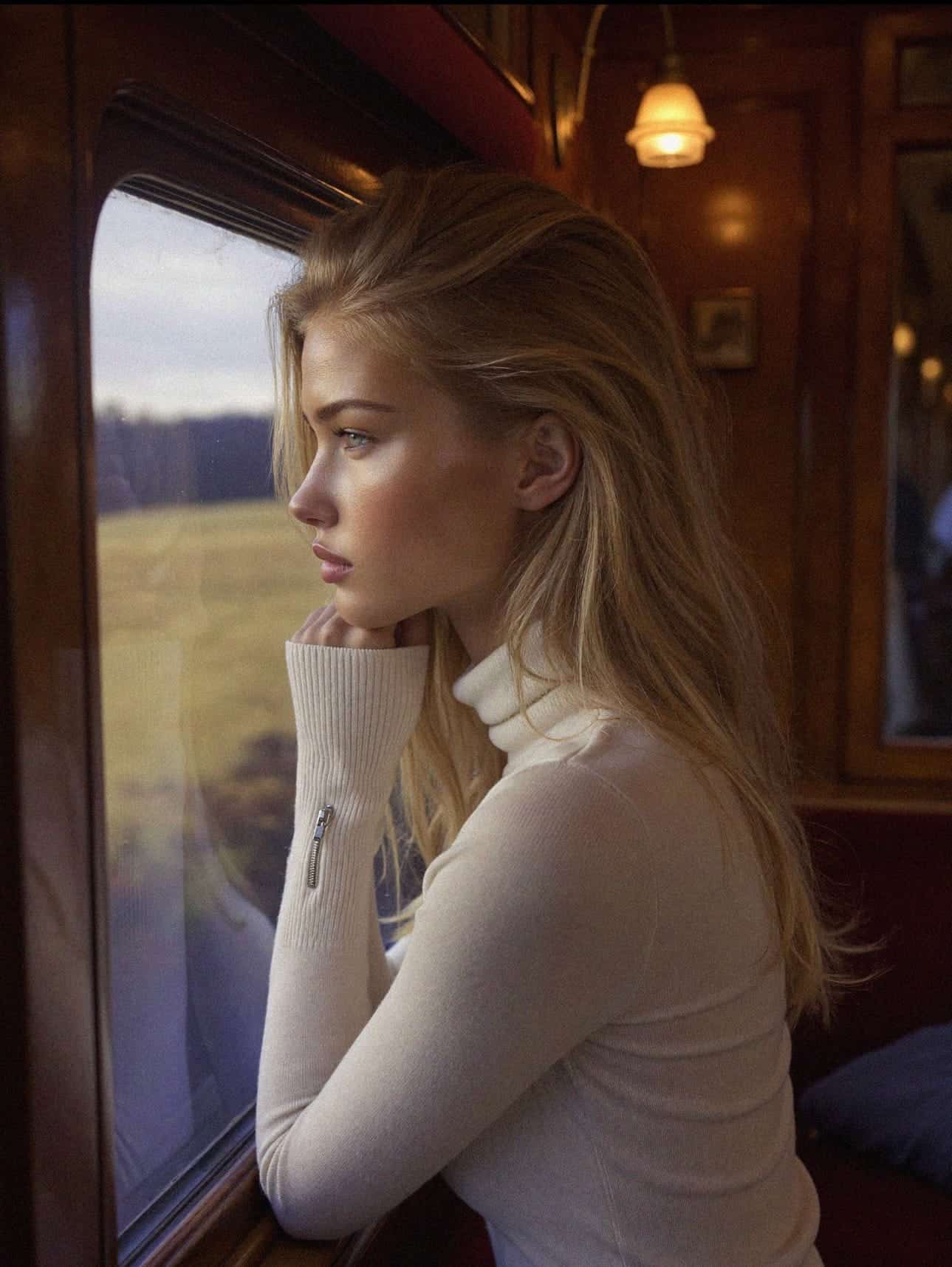
By late afternoon the Alps had arrived. There is no gradual about it. The mountains appear the way serious things always appear, suddenly and all at once, and then they are simply there. The train moved through valleys that narrowed and opened, past rivers running cold and fast below us, past forests of pine that climbed almost vertically up slopes too steep to seem reasonable. The snow began somewhere above the treeline and did not stop.
I pressed my hand against the glass. The window was cold. Outside, a village sat at the edge of a frozen lake, the church at its center, smoke rising from two chimneys. We passed it in thirty seconds. I thought about the people in those houses and whether they watched the train and what it meant to them when they did, and then the village was gone, and there was only the mountain again.
A steward knocked softly and asked if I would like anything. I said tea, and he brought it without delay, along with a small plate of something I did not expect and ate entirely. This is another thing the Orient Express does. It anticipates you.
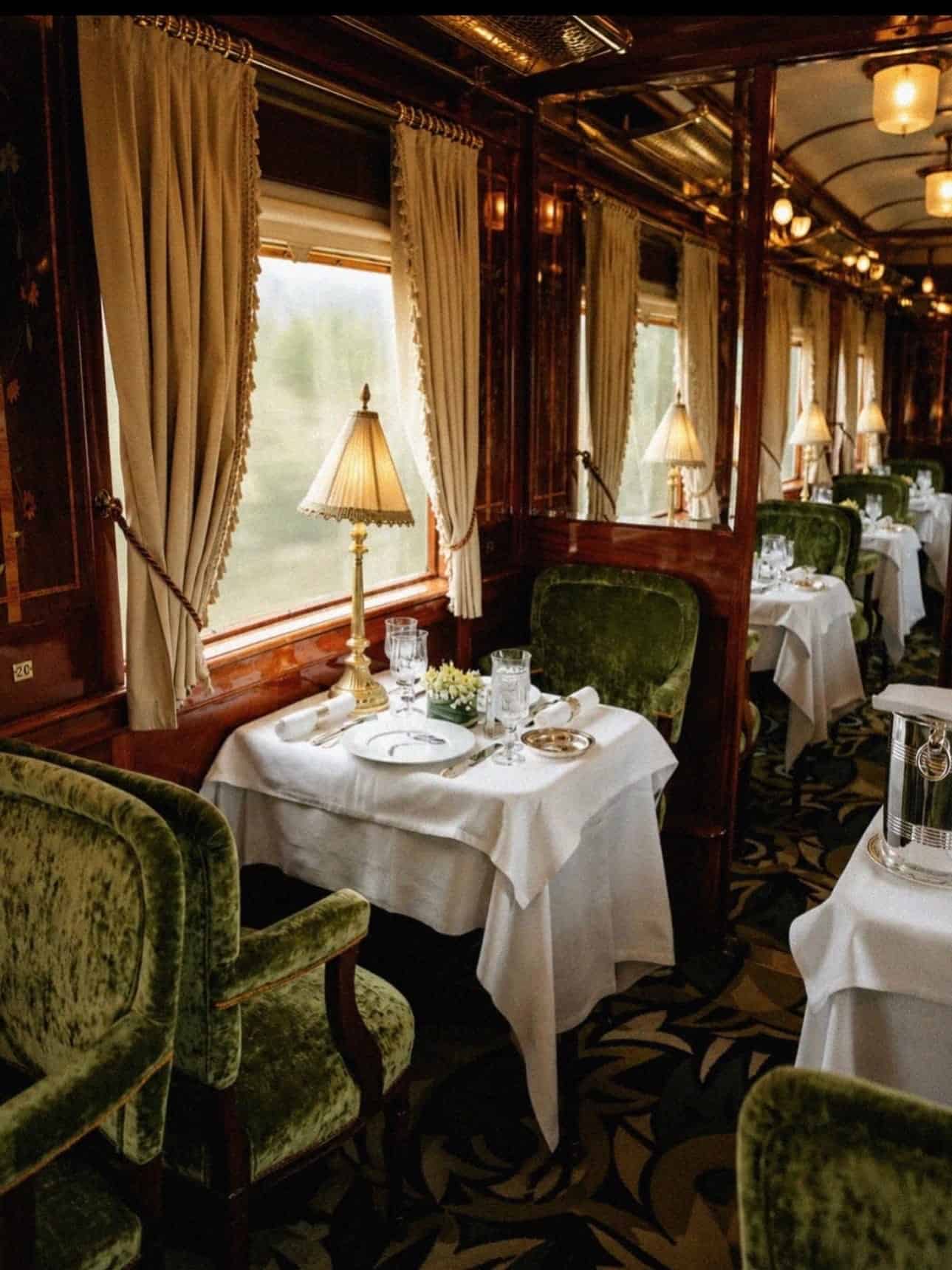
The dining car filled slowly that evening. Candles on every table, white linens, the curved brass of the wall fixtures catching the light and throwing it back warm. I was seated across from a man who had been taking this train for nearly thirty years. He ordered the same thing every time, he told me. He named the dish, and I have since forgotten it. What I remember is what he said next: that the train had changed very little, and that this was the only reason he still came back.
I understood that.
The wine was French. The mountains outside had gone dark and only their shapes remained, black against a sky that had not quite decided to be night yet. A woman at a nearby table laughed at something and the sound was absorbed immediately into the general quiet of the car. The Orient Express has that quality. It absorbs things. It does not amplify them.
I ate slowly and watched the other passengers. A couple who did not speak but seemed content not to. Two women traveling together who shared everything on both plates. A man reading the same page of a book for a long time. In ordinary life I would not have noticed any of them. Here I noticed everything. The train does something to your attention. It slows it down and sharpens it at the same time.
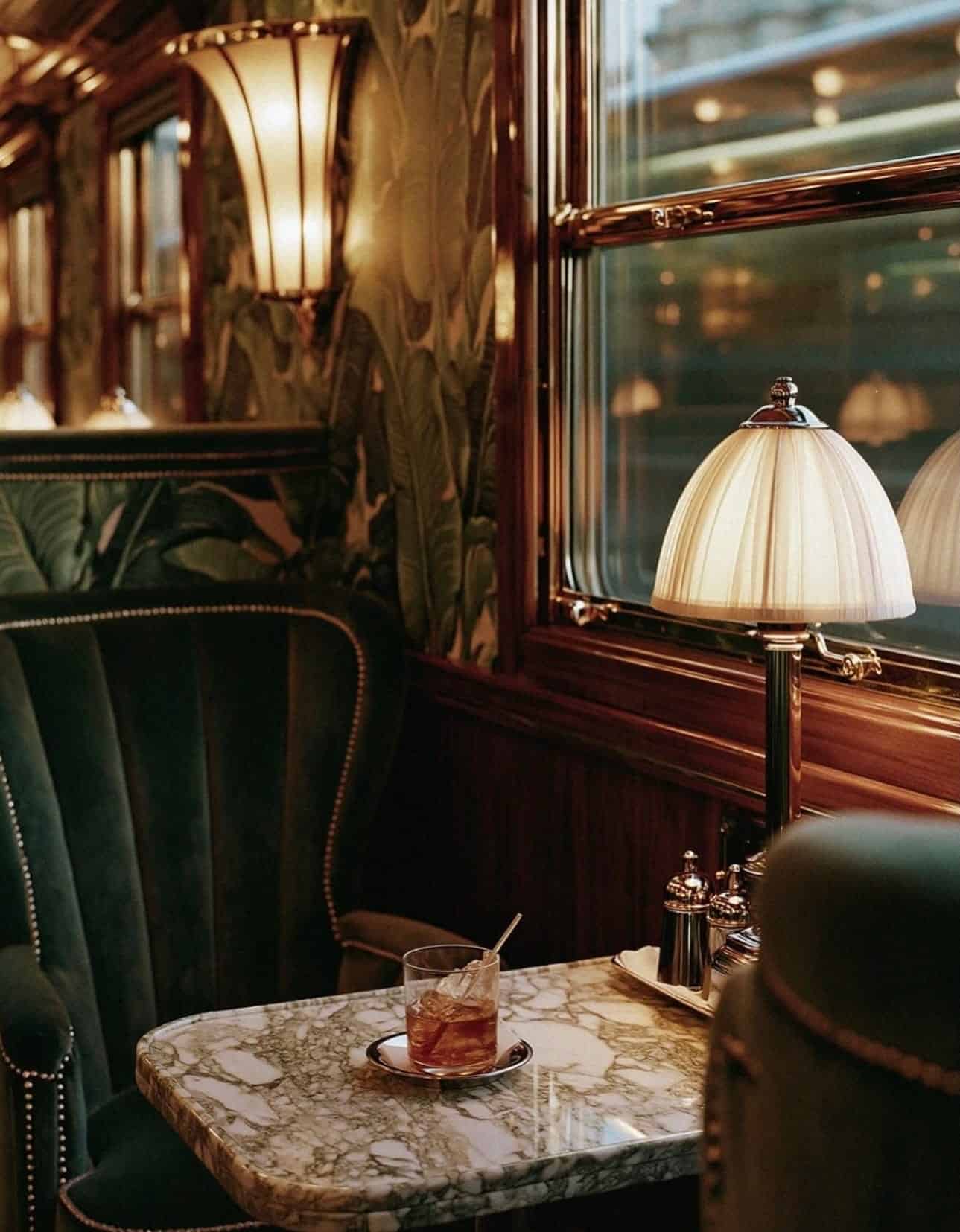
Back in my cabin, the bed had been made and the curtains drawn, and I lay in the dark listening to the sound of the train against the tracks. It is a rhythm that changes constantly and stays the same. I thought of all the people who had lain in similar narrow beds in this same train, crossing the same passes, listening to the same sound, thinking whatever they were thinking in 1934 or 1951 or 1978.
Somewhere in the night we crossed a border I did not see. I was nearly asleep, and then I was asleep, and the train continued through the dark without me.
In the morning the light was different. The hills were smaller now, and the sky was wider, and the land rolled green in the pale early light in the way land does in France, which is somehow both wilder and more composed than anywhere else. I lay in the narrow bed for a while before getting up, watching the fields and farmhouses pass.
There is no better window than a train window in the early morning. It gives you the world at a speed you can actually absorb.
The coffee came. It arrived the way everything arrives on this train: quietly, correctly, without needing to be asked twice. I held the cup and looked out at the fields and thought about what the man in the dining car had said. The train had changed very little.
I thought that was probably the kindest thing you could say about anything.
The fields continued. The light continued. Somewhere ahead, Paris.
V.