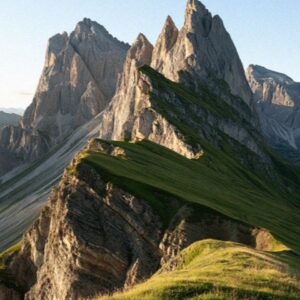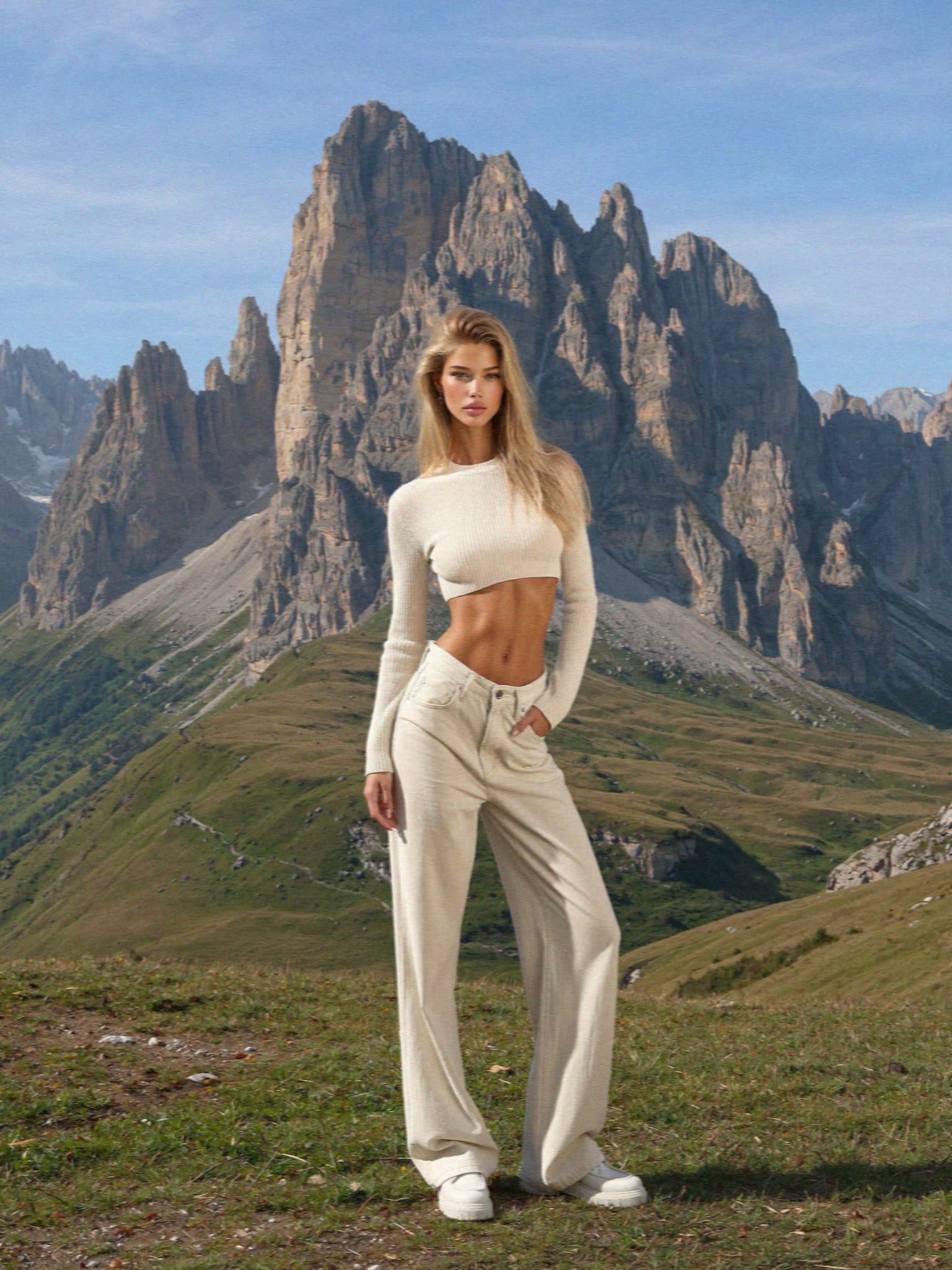
There is a moment, most evenings in the Dolomites, when the grey rock catches fire. The peaks that stood pale and severe all afternoon turn rose, then coral, then a deep burning red, and for a few minutes the whole range looks lit from within. The Ladin people who have lived beneath these mountains for centuries call it enrosadira, and I have watched grown travellers fall silent at the sight of it. You come to the Dolomites for the walking, or the skiing, or the food, and you stay for that light.
I want to be honest at the start about what this place is, because the photographs do it a particular disservice. They make it look like one perfect lake with a wooden boathouse, or one jagged trio of towers, and they flatten the rest. The Dolomites are not a single view. They are a vast region of eighteen mountain groups spread across three Italian provinces, stitched together by high passes and cable cars and a culture that is Italian and Austrian and something older than both. This guide is the map I wish I had been handed the first time, the one that tells you where to base yourself, when to come, how the new access rules actually work, and which of the famous sights deserve the effort. The deeper detail lives in the guides that branch off this one, and I will point you to each as we go.
What to book before you come
This depends entirely on whether you are staying up here or coming for a day. If you are staying, hire a car and book nothing. If you are coming from Venice or Garda for one day, do not attempt it alone: it is four hours of mountain road each way and Lake Braies turns cars around at a summer barrier.
- The Venice day trip, Cortina and two lakes. 4.9 from over a thousand people, and the highest rated of them. Very long, but it puts you at Misurina without you driving a pass on no sleep.
- Venice to Lake Braies by minivan. 4.9. Smaller vehicle, and it handles the Braies access permit, which in August is the whole problem.
- The best of the Dolomites from Venice. The broadest itinerary if you want range rather than lakes.
- From Lake Garda, a full day. The one to take if you are based on Garda instead.
Every trail, every viewpoint and every walk on this site is free. The cable cars are not, and you pay at the bottom station on the day.
What the Dolomites actually are
The Dolomites sit in the north-east of Italy, straddling the provinces of South Tyrol, Trentino and Belluno. They take their name from the pale, brittle rock, dolomite, a fossilised coral limestone that weathers into the sheer walls and needle towers you see everywhere here. In 2009 UNESCO listed them as a World Heritage Site, not for one peak but for the whole geological drama of them, and it is the right way to think about the region: not a mountain, but a world.
The cultural line matters more than most guides admit. In South Tyrol, the northern and western heart of the range, the first language is German, the villages have two names, and the food leans to speck, dumplings and strudel. Cross into the Ladin valleys, Val Gardena and Alta Badia and Val di Fassa, and you find a third language older than either Italian or German, spoken by perhaps thirty thousand people and fiercely kept. Drop south and east into the Veneto around Cortina, and it feels Italian again, all espresso and evening passeggiata. You can cross all three worlds in a single day’s drive, and the shifting of it, the way the church spires change shape and the menus change language, is part of what makes the place feel so much larger than its size.
Plan Your Visit to the Dolomites
A few things I booked and loved. These help support the blog, at no cost to you.
- Where I stayed: search Dolomites hotels
- Rent a car to explore the area
- Stay connected: get a travel eSIM
This section contains affiliate links. If you book through them I may earn a small commission, at no extra cost to you.
Where to base yourself
You cannot see the Dolomites from one hotel. The region is too spread out and the passes, beautiful as they are, are slow. The single most important decision you will make is where to sleep, because it determines which corner of the range is easy and which is a two-hour drive. I have set out the full case for each base, with hotels and price bands, in where to stay in the Dolomites, but here is the shape of it.

Val Gardena is where I send most first-timers. This Ladin valley holds three linked villages, Ortisei, Santa Cristina and Selva, each connected to the lifts and to one another, and it puts you within reach of Seceda, the Alpe di Siusi and the Sellaronda circuit without ever moving the car. Ortisei is the prettiest of the three, a woodcarving town of painted houses with a pedestrian centre, and it is the base I return to. The full picture is in my guide to Val Gardena and Ortisei.
Cortina d’Ampezzo, over in the Veneto, is the glamorous one, the self-styled Queen of the Dolomites, fresh from co-hosting the 2026 Winter Olympics. It is more expensive and more Italian in feel, and it is the right base for the eastern Dolomites: the Tofane, Cinque Torri, Lagazuoi and, a little further, the Tre Cime. If your trip centres on those, stay here. I have written it up in full in my guide to Cortina d’Ampezzo.
Alta Badia, around Corvara and San Cassiano, is the quieter, more gastronomic neighbour of Val Gardena, sitting on the other side of the Sellaronda and studded with an improbable number of good restaurants. Val di Funes, with its storybook church below the Odle peaks, is for people who want scenery and stillness over lifts and nightlife. And you can sleep up on the Alpe di Siusi itself, on the meadow, though the daytime car ban there needs planning. Choose your base for the part of the range you most want to see, not for a name you recognise.
The best things to do
The Dolomites reward a slow, walking kind of travel, but there are a handful of sights that earn their fame, and a first visit sensibly builds around a few of them. I have gathered the fuller list, with the practical detail, in the best things to do in the Dolomites, and the walking specifically in the best hikes and via ferrata. These are the ones I would not miss.
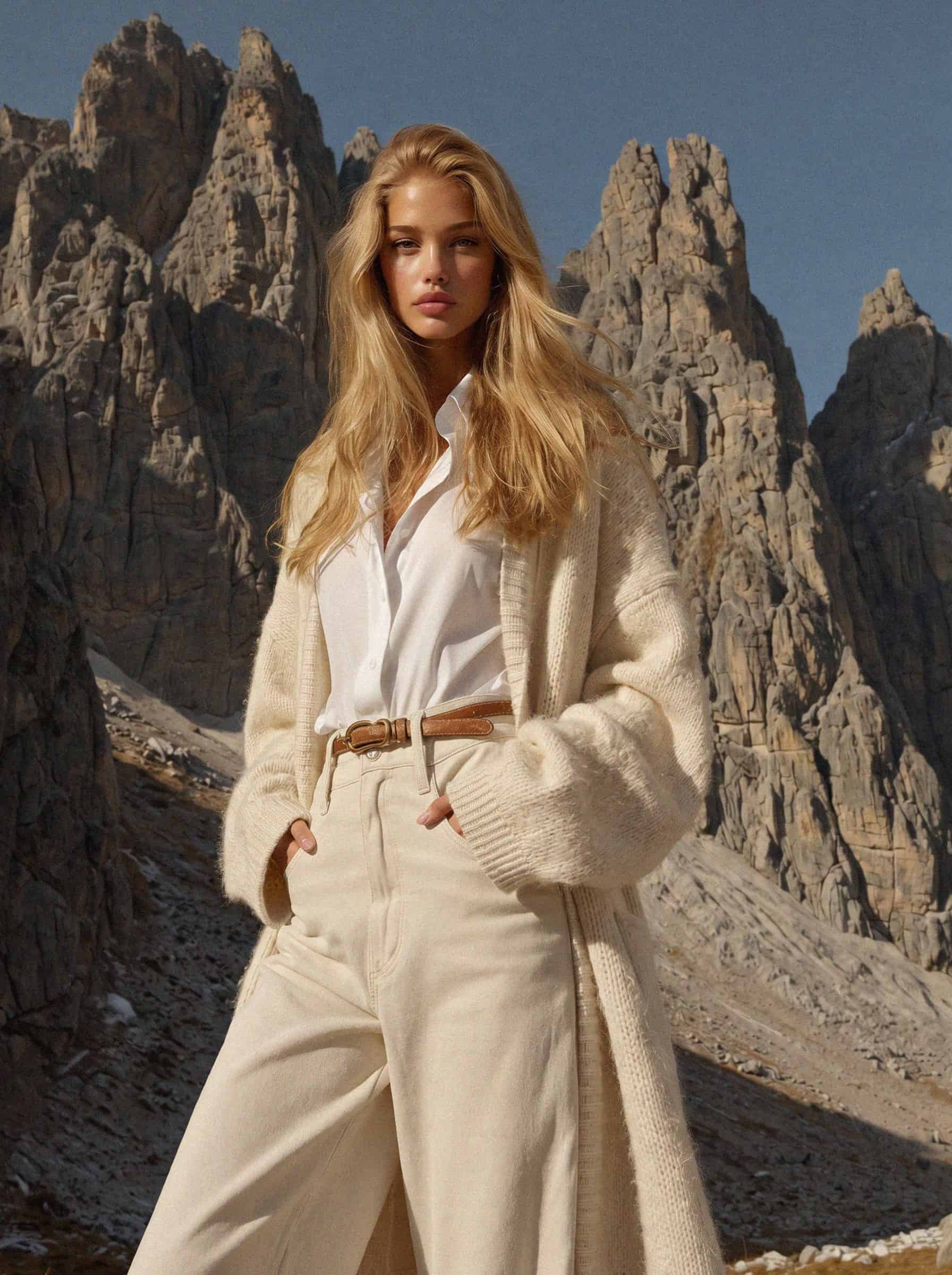
The Tre Cime di Lavaredo are the postcard the whole range is sold on, three vast rock towers standing alone above the scree. The classic loop around them is about ten kilometres, three to four hours at an easy pace, and it is genuinely one of the great walks of the Alps, passing mountain huts the whole way so you are never far from a coffee or a bowl of barley soup. The catch is access, which I come to below.
Lago di Braies, the Pragser Wildsee, is the emerald lake with the wooden boathouse and the rowing boats, and yes, it is as lovely as the photographs and, at midday in August, as crowded. Come at first light or in the last hour before dusk and it becomes the still, glassy thing you hoped for.
Seceda, above Ortisei, gives you the single most dramatic ridgeline in the Dolomites, a great tilted blade of grass falling away to the sawtooth Odle peaks. You reach it by cable car and gondola, and the view from the top needs no walking at all, though the ridge walks beyond it are superb.
The Alpe di Siusi, the Seiser Alm, is the largest high-altitude meadow in Europe, a vast rolling pasture of hay barns and wildflowers with the Sassolungo and the Sciliar rising behind. It is gentle, beautiful walking, and a complete change of register from the vertical drama elsewhere.
And then there is the Sellaronda, the loop of four mountain passes, Gardena, Sella, Pordoi and Campolongo, that circles the Sella massif. In winter you ski it; in summer you can drive or cycle it, stopping at Passo Giau and Passo Falzarego for the views and riding the Lagazuoi cable car up to the open-air First World War tunnels near Cortina. The Cinque Torri, five rock towers that were a front line a century ago, sit just below, threaded with restored trenches you can walk. For where all of this looks its best through a lens, see the best photo spots in the Dolomites.
The huts, and the food
Half the pleasure of the Dolomites arrives at lunchtime. The mountains are threaded with rifugi, the mountain huts, and they are nothing like the spartan bothies the word might suggest. Most serve proper hot food on a sunny terrace with a view worth the walk, and many let rooms too, so that a serious trek can be strung hut to hut on half board, dinner and a bunk and breakfast, without ever carrying a tent. The huts run on their own short season, roughly late June to late September, and the good ones fill for overnight stays on summer weekends, so book ahead. A few have become destinations in themselves: Rifugio Lagazuoi for the highest terrace and the panorama over half the range, Rifugio Nuvolau perched alone on its pinnacle since 1883, Rifugio Scotoni for the grilled meats hikers plan their day around, and Rifugio Locatelli looking straight at the north faces of the Tre Cime.
The food is its own reason to come, and it changes with the language. In the German-speaking valleys you eat speck, the cold-smoked ham, and canederli, the great bread dumplings the Austrians call Knödel, in a soup or beside a goulash. The Ladin valleys give you casunziei, the beetroot ravioli of the Ampezzo, and schlutzkrapfen, the spinach and ricotta half-moons of the South Tyrol. Everywhere there is barley soup for a cold day and, for pudding, warm apple strudel or kaiserschmarrn, a shredded, caramelised pancake with fruit compote. It is heartier than most Italian food and made for a day on your feet. Alta Badia, remarkably for a scatter of mountain villages, holds several Michelin stars, so you can climb from a hut lunch of dumplings to a tasting menu by nightfall, which is a very Dolomite kind of contrast. The local wines are worth ordering too, the crisp whites and the dark, plummy Lagrein of Alto Adige.
A landscape marked by the Great War
The eastern Dolomites carry a history that surprises people, because the peaks around Cortina were a front line. From 1915 to 1917 the border between Italy and Austria-Hungary ran straight through these mountains, and the two armies fought a brutal high-altitude war of tunnels, trenches and mines, much of it in snow, that the Italians remember as the Guerra Bianca, the White War. You can still walk the evidence. At the Cinque Torri, an open-air museum has restored the Italian trenches and gun positions among the towers, and up at the Lagazuoi, reached by that same cable car, you can descend through the tunnels the soldiers bored into the living rock, a torch and a helmet in hand, coming out at galleries blasted into the cliff face. It is sobering to stand in a place so beautiful and feel what it cost, and it gives the walking here a weight that the western meadows, for all their loveliness, do not carry.
Getting there
The Dolomites have no airport of their own, so you fly to a city on the edge and come in by road. The nearest gateways are Venice Marco Polo, about two hours from Cortina, and Treviso, a little under two; Verona and Innsbruck are each a bit over two hours from Val Gardena; and Bolzano, right at the foot of the range, is barely an hour from Ortisei. Munich and Milan are four to five hours out but often cheaper to reach.
By train, you aim for Bolzano, reached directly from Verona in about an hour and a half, from Innsbruck in two hours, or from Venice via Verona in under three. From Bolzano, SAD buses run up into Val Gardena and the other South Tyrolean valleys, and the regional transit is genuinely good. For Cortina there is no train, but direct coaches run from Venice airport, the Cortina Express and the ATVO service both taking around two hours with several departures a day and a reservation required.
I will say plainly that a car makes the Dolomites far easier, and it is what I would hire, because the whole pleasure of the place is the freedom to chase good weather across a pass. But it is not essential if you base yourself in a lift-linked valley like Val Gardena and lean on the summer bus network. The full breakdown of routes, transfer times and the bus passes is in how to get to the Dolomites.
Getting around, and the 2026 access rules
This is the section that has changed most, and getting it wrong can cost you a morning, so read it before you go. To protect the most-loved sites from their own popularity, several now restrict cars in summer, and a few of the cable cars have moved to timed, pre-booked tickets.

At Lago di Braies, from 1 July to 15 September, private cars cannot reach the lake between roughly nine in the morning and four in the afternoon without a reservation or permit; outside the ban you can still drive up, and at any time you can park at the valley entrance and take the paid shuttle bus. The little boathouse rentals book out well ahead.
The Alpe di Siusi closes its access road to private traffic between about nine and five daily, all season. The simple answer is to leave the car below and take the cable car up from Seis, which runs from roughly half past eight; if you do drive up early, the meadow-top car parks cost around thirty euros a day at Compatsch and fifteen at Spitzbühl.
For the Tre Cime di Lavaredo, the toll road up to Rifugio Auronzo, where the loop begins, now needs a mandatory online reservation and costs about forty euros for a car; it is open from roughly late May to late October, around the clock in high summer. Book your slot in advance and go early, because it does fill.
Seceda has moved its cable car to pre-booked time slots, with a return ticket around seventy-four euros, and there is now a small turnstile fee on the ridgeline path itself. Val di Funes has barriered the famous Santa Maddalena viewpoint to non-resident cars, so you park in the village and walk twenty to thirty minutes, or take the hourly bus. And note that the Passo Gardena closes to motor traffic from 1 September. None of this should put you off; it simply rewards the traveller who plans a day ahead rather than turning up on spec.
When to come
The Dolomites have two seasons worth travelling for and two that catch people out. High summer, from late June to early September, is when the lifts and mountain huts are all open and the walking is at its best; it is also when the famous sights are busiest, so you trade solitude for reliability. My own favourite window is September, when the days are still warm, the crowds thin after the Italian holidays, and the light turns long and golden. By late September and into October the larch forests turn a blazing gold before they drop, which is, to my eye, the most beautiful the range ever looks.
Winter is the other great season. From early December to mid-April the Dolomiti Superski network opens twelve linked ski areas and some twelve hundred kilometres of piste, and you can ski the entire Sellaronda circuit in a day, hut lunch included. What to avoid, unless you are a local with a particular plan, are the shoulder weeks of late autumn and spring, roughly November and again April into May, when many lifts and rifugios close entirely and a lot of the region simply shutters. I have set out the month-by-month detail, with what is open and what is not, in the best time to visit the Dolomites.
Where to stay, in short
If I had to reduce it to a sentence: base in Val Gardena for your first visit and the central range, in Cortina for the eastern peaks and a touch of glamour, in Alta Badia for quiet and good food, and in Val di Funes for scenery over everything else. Mountain huts, the rifugi, are their own kind of stay, and a night high up in one, watching the enrosadira from a wooden balcony with dinner coming, is an experience I would urge on anyone fit enough for the walk in. The hotels, the areas and the price bands are all in where to stay in the Dolomites.
What I would do with a first week
Give the first couple of days to Val Gardena, riding up to Seceda on a clear morning and spending an afternoon strolling the Alpe di Siusi. Take a day for the drive over the Sellaronda passes, stopping at Passo Giau and going up Lagazuoi for the tunnels and the view. Devote a full, early day to the Tre Cime loop, booking the toll road the night before. Fold in Lago di Braies at first light on the way, and keep one day with no plan at all, for the pass that looks good from your window or the hut lunch that turns into an afternoon. If you would like to read the range through my own eyes rather than a map, my Dolomites journal is the diary of those days.
More images from the Dolomites
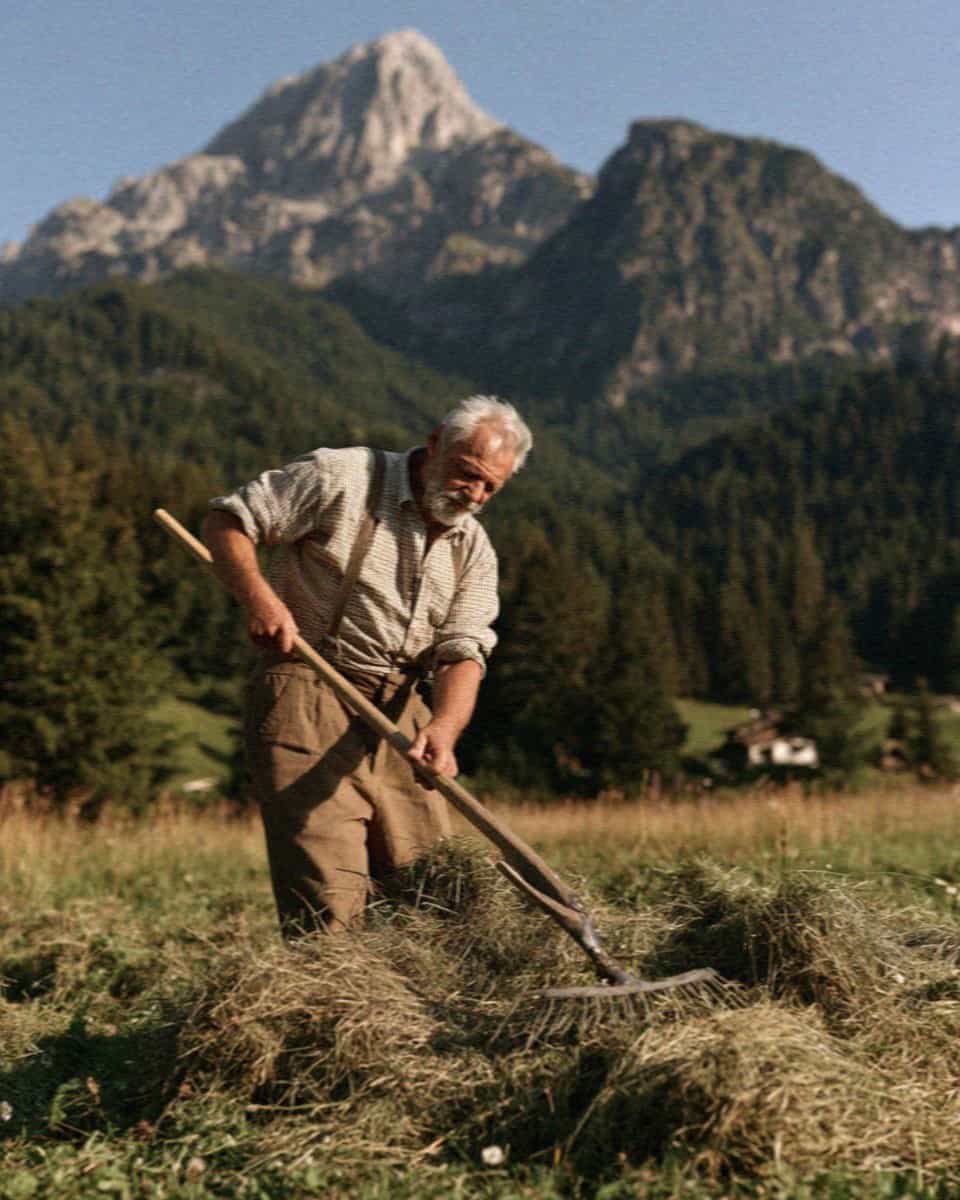
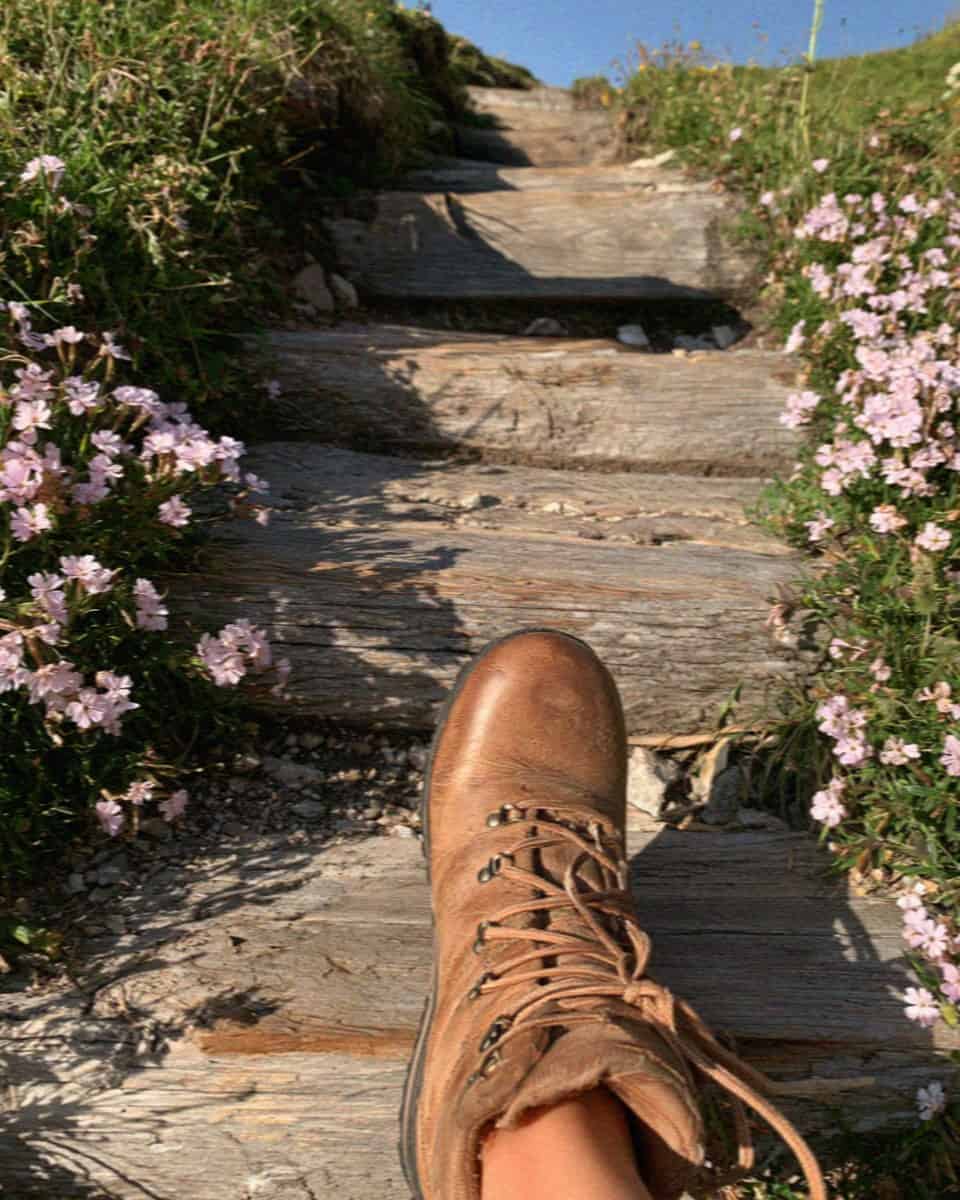
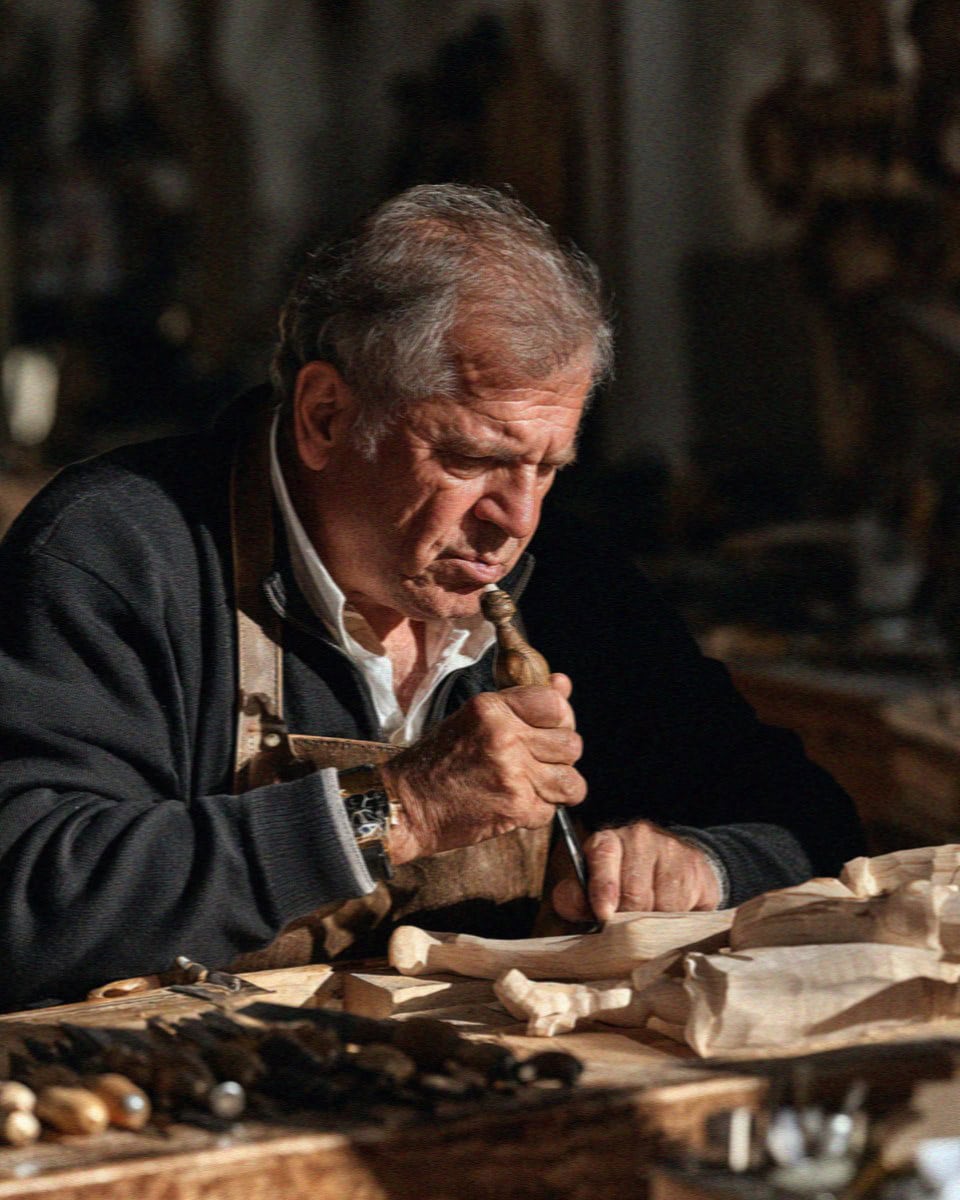
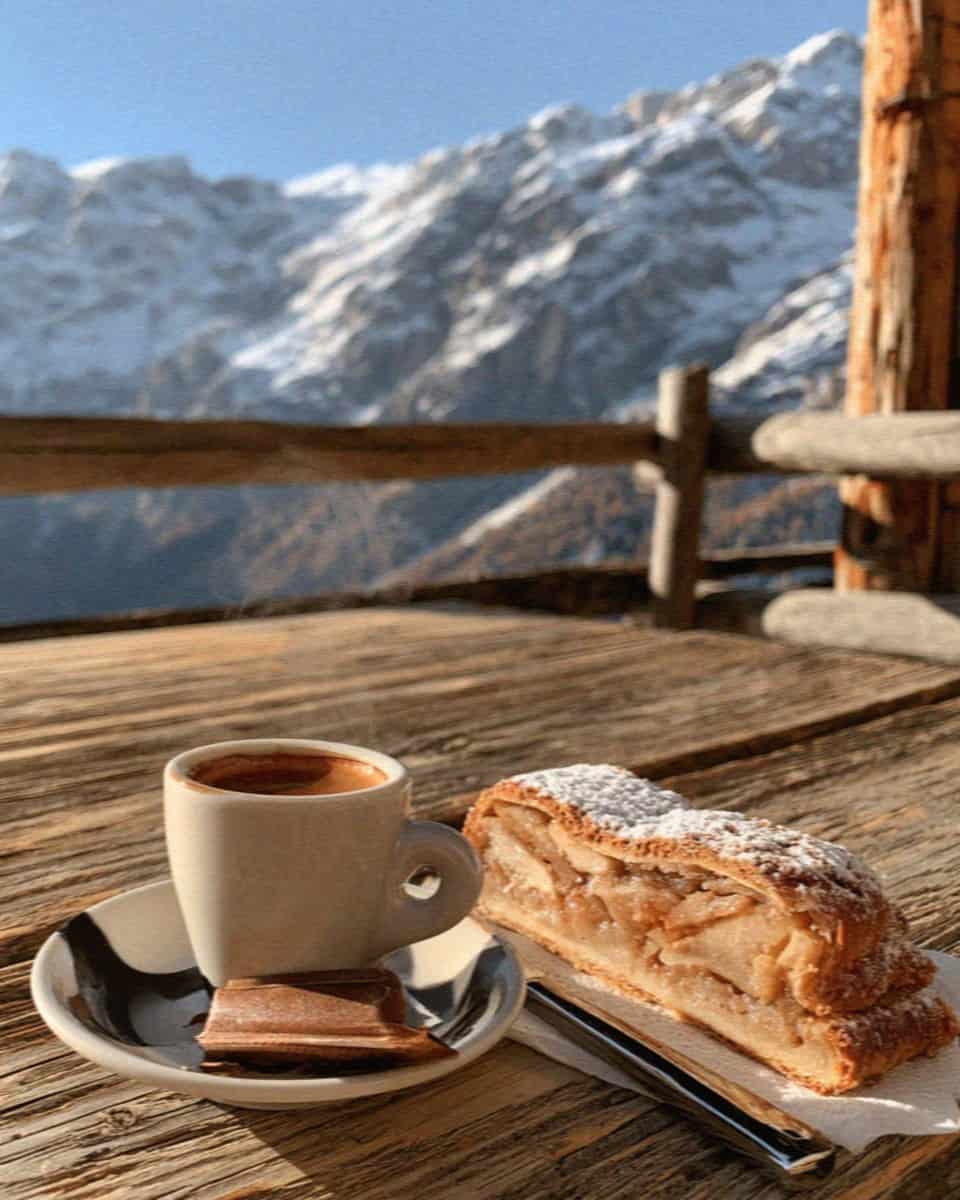
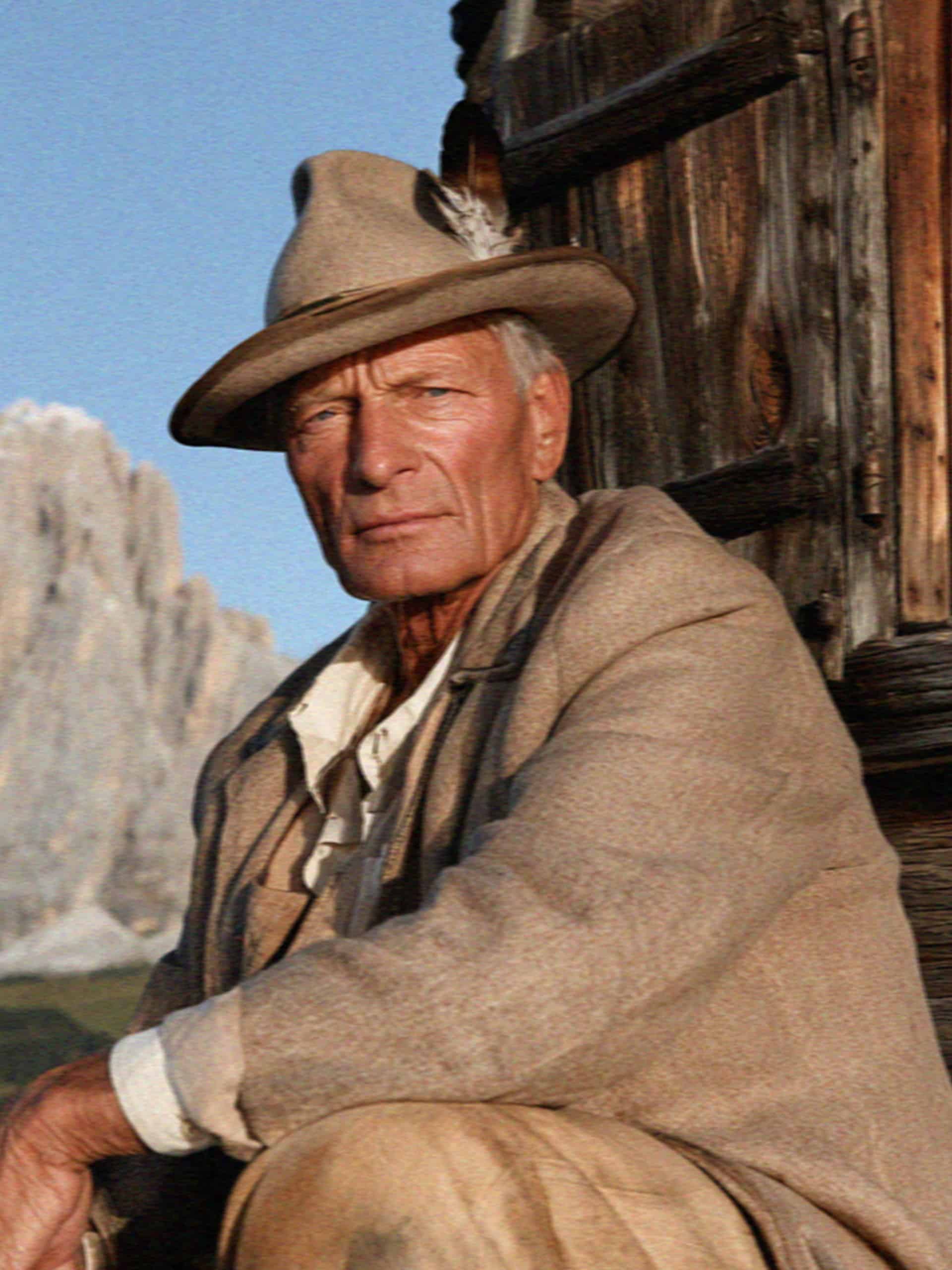
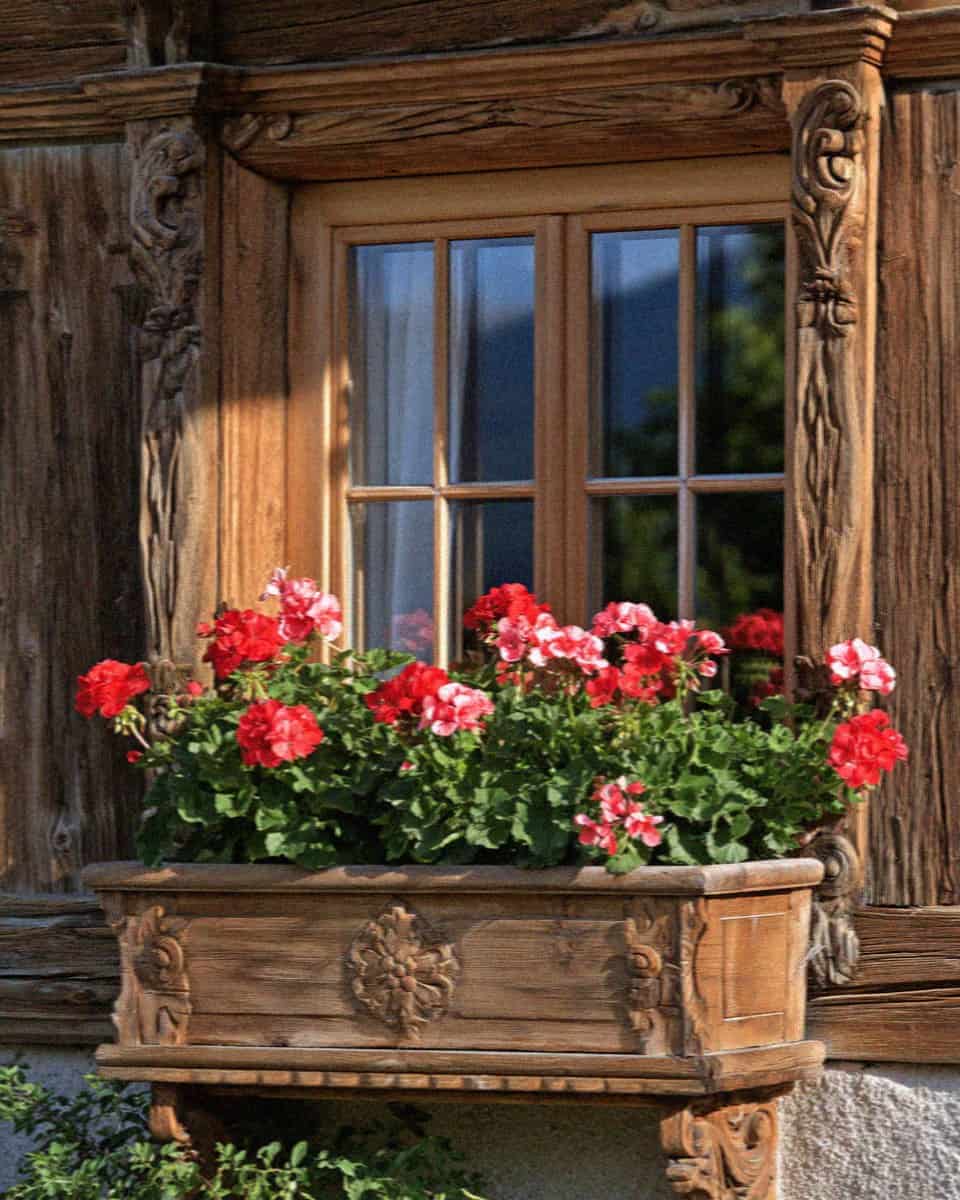
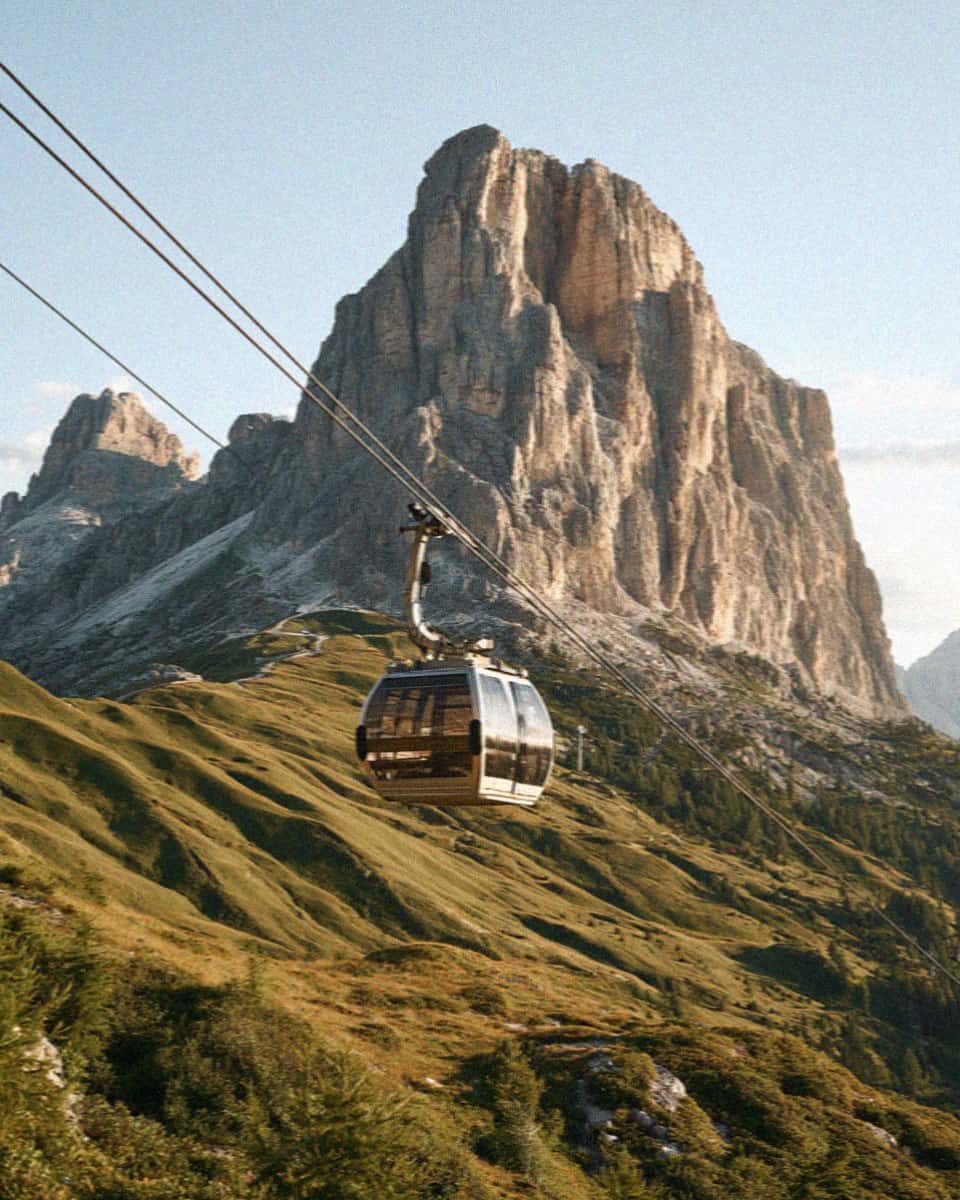
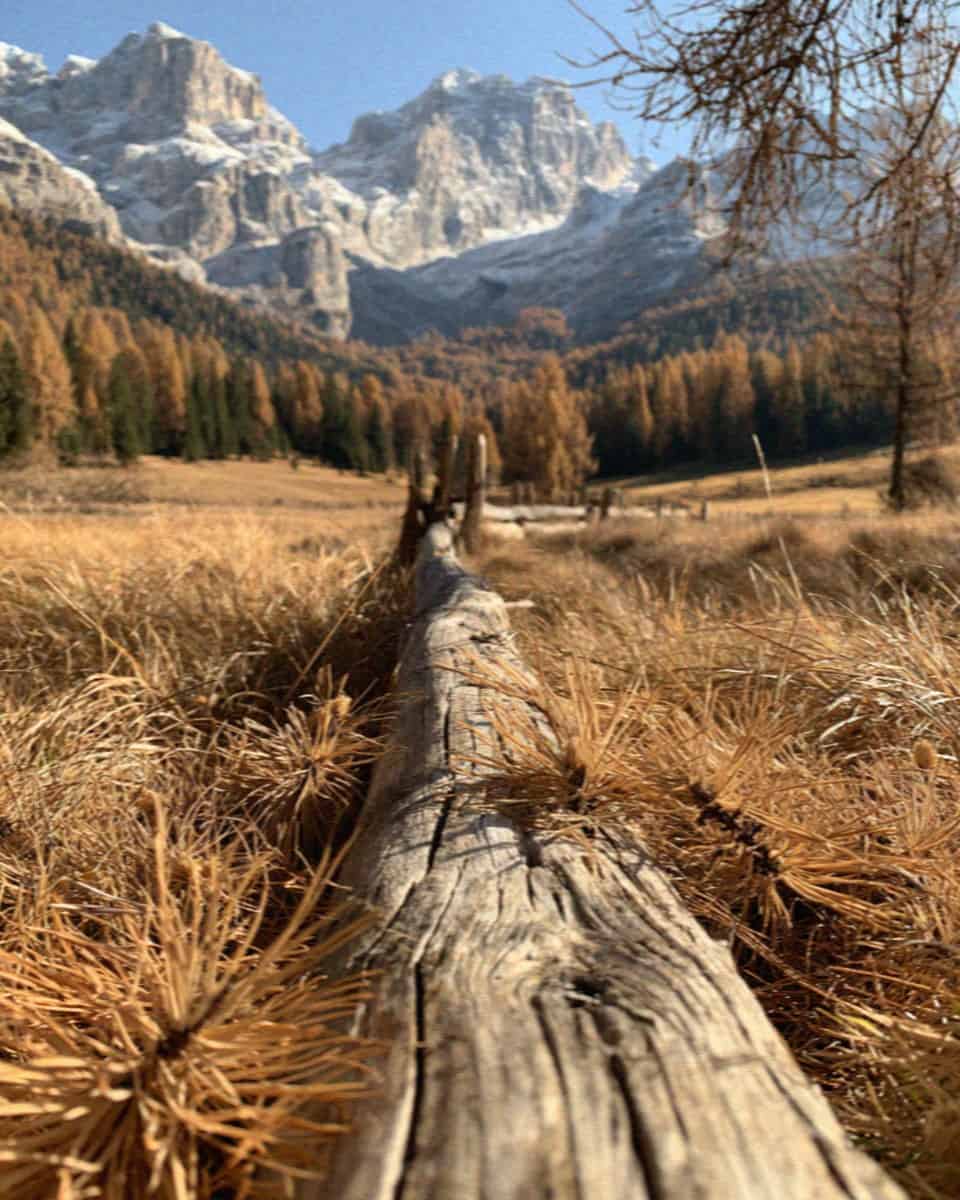
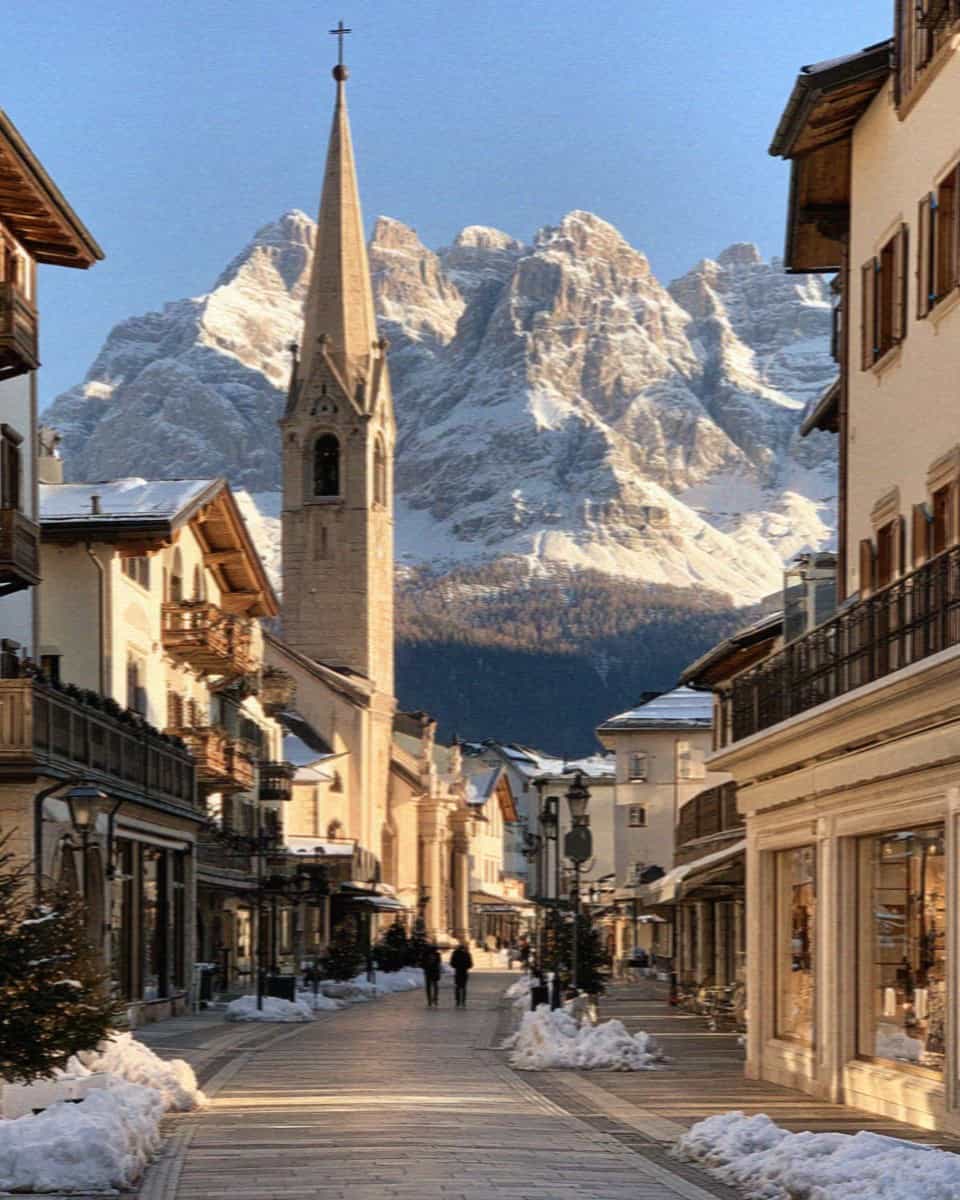
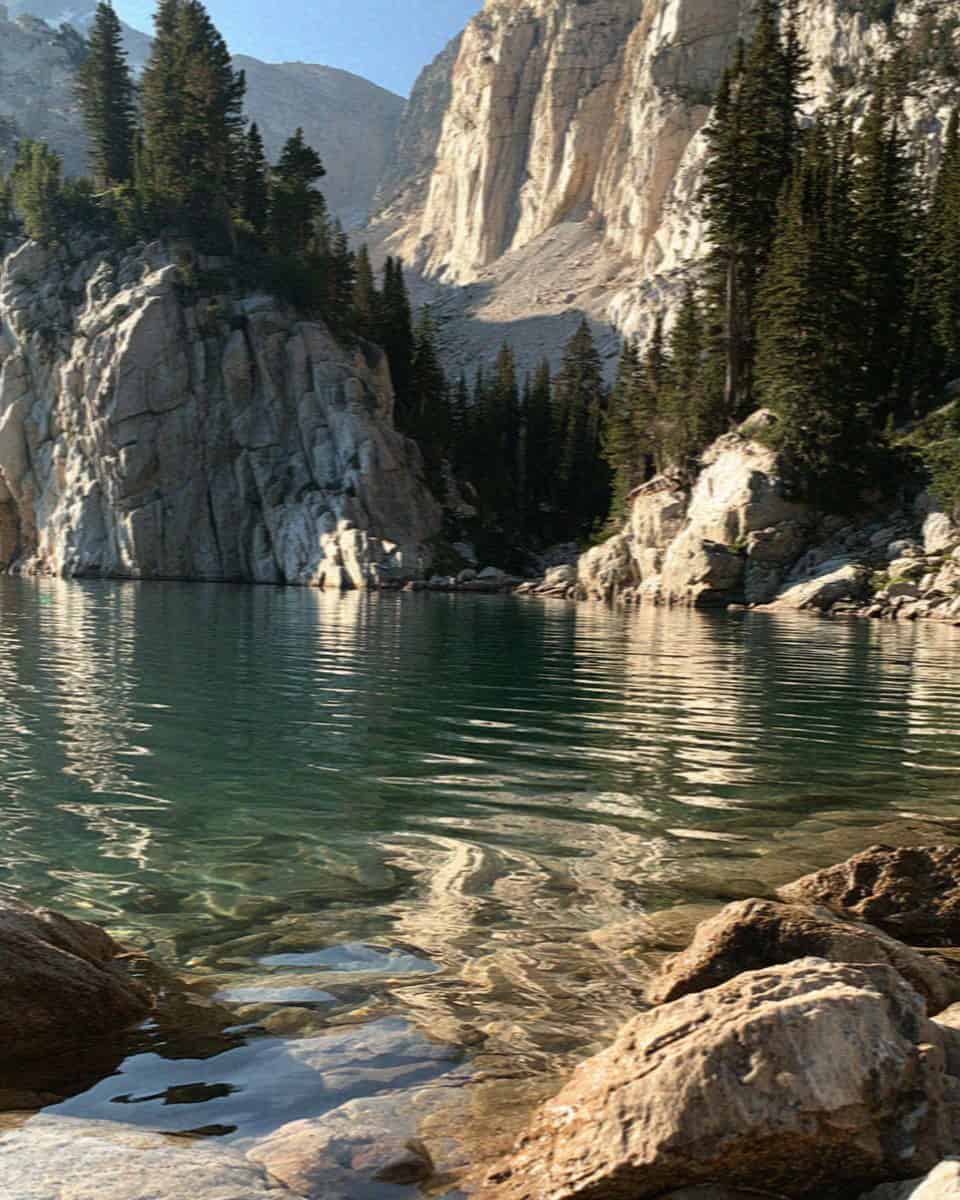
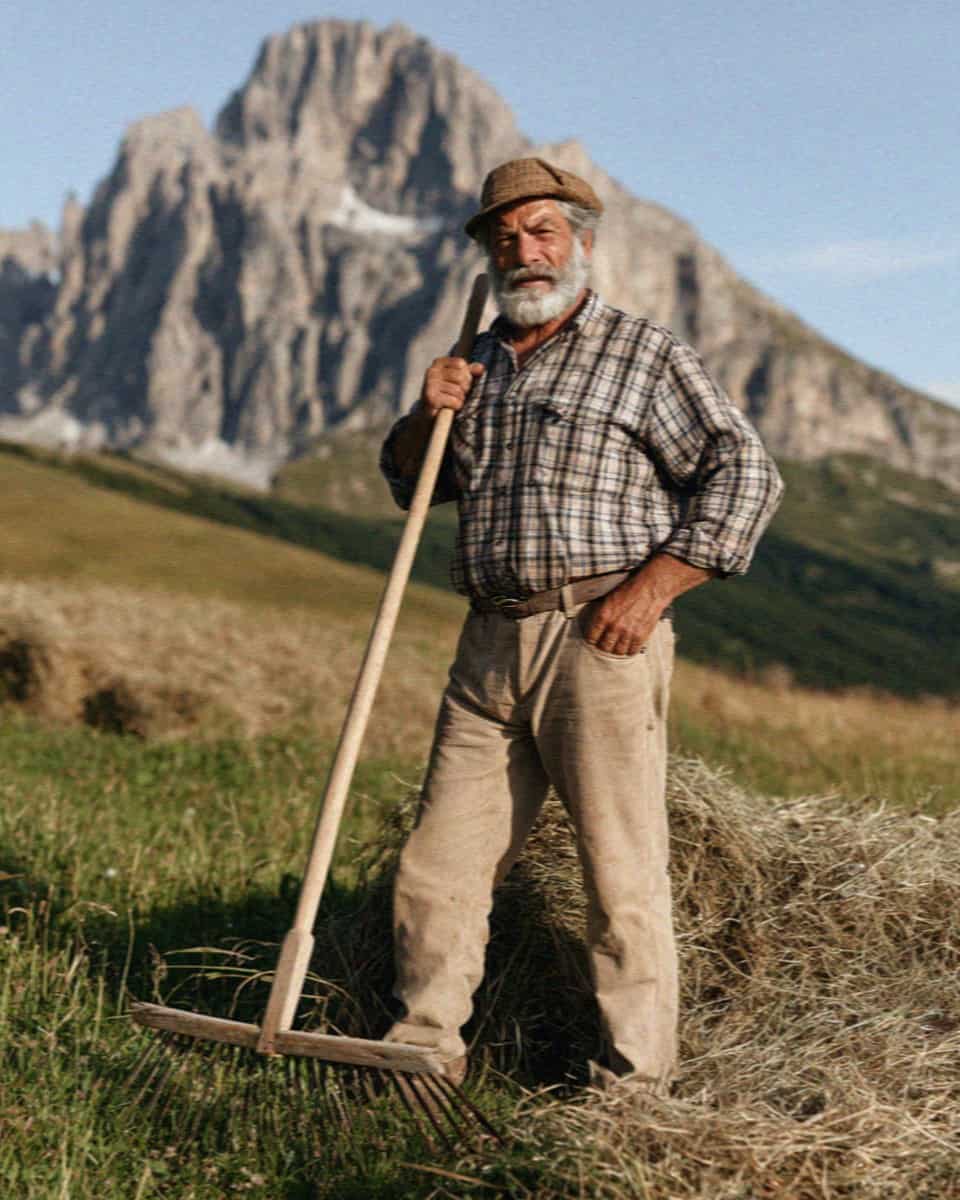
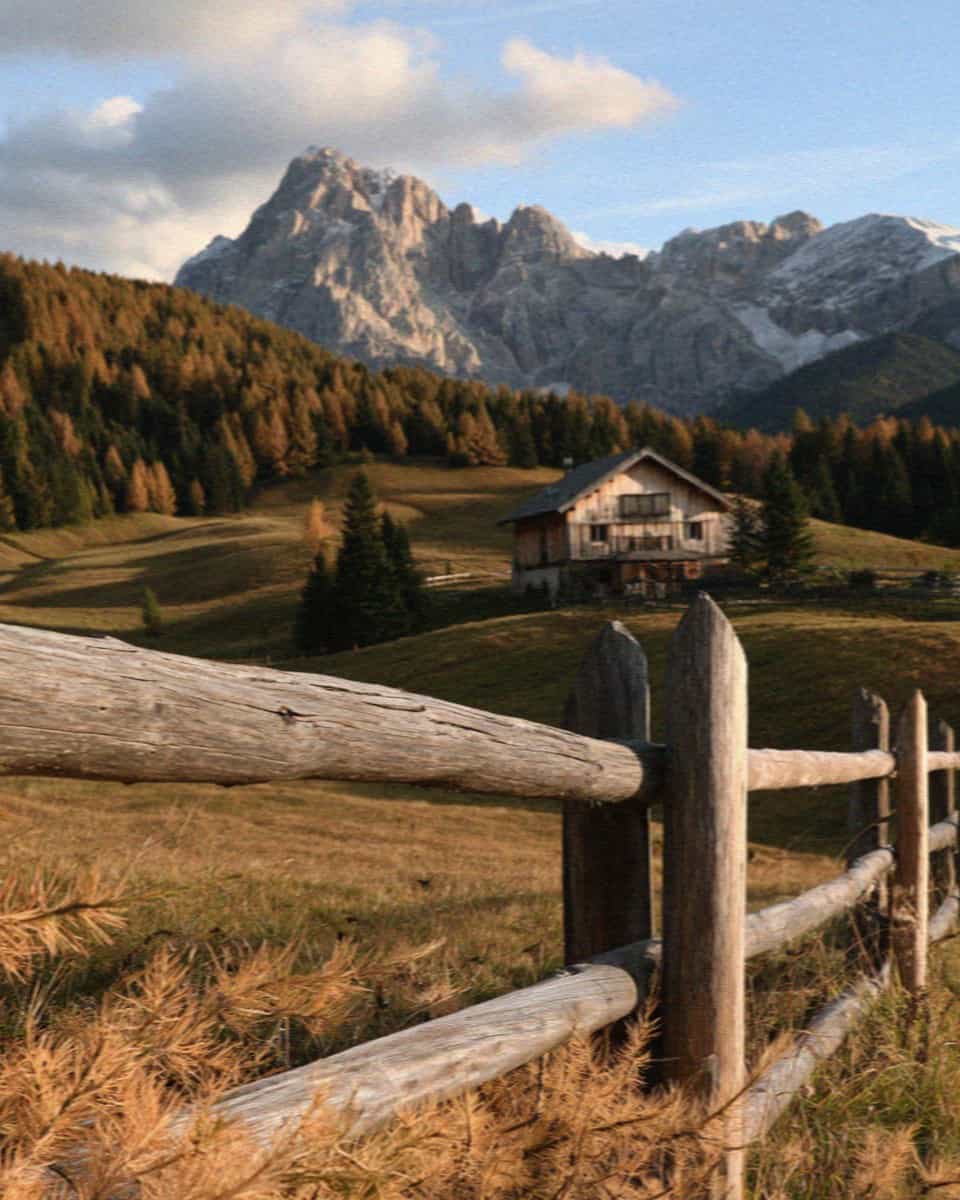
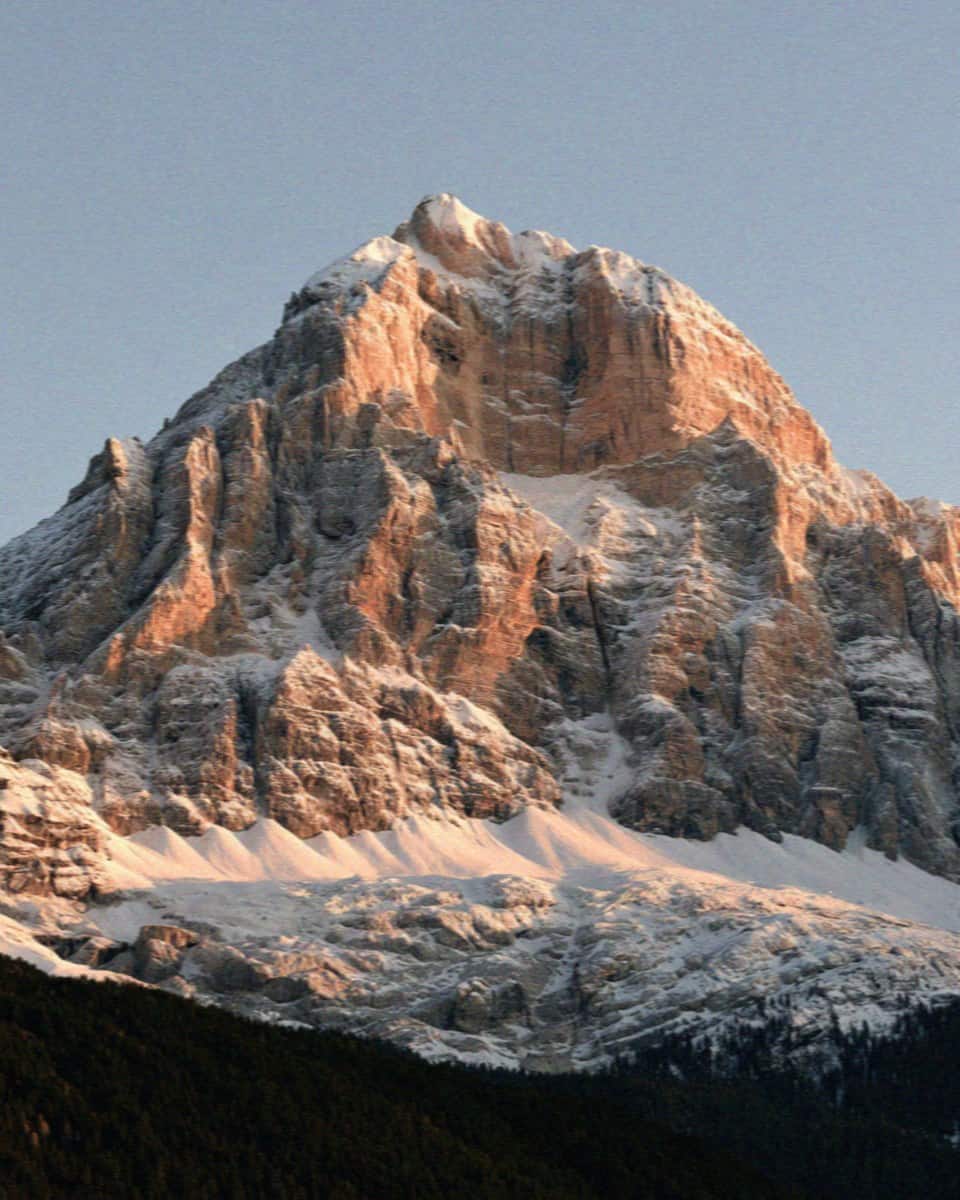
A wander through the valleys: the people who make these mountains theirs, a rifugio table, boots on the trail, and the light coming and going on the peaks.






Your Dolomites Guides
Everything here in detail, guide by guide.
- The Best Things to Do in the Dolomites
- Where to Stay in the Dolomites
- The Best Hikes and Via Ferrata in the Dolomites
- How to Get to the Dolomites
- The Best Time to Visit the Dolomites
- The Best Photo Spots in the Dolomites
- Victoria’s Guide to Cortina d’Ampezzo
- Victoria’s Guide to Val Gardena and Ortisei
Dolomites Travel Diaries
And the days themselves, told as they happened.
- A Warmth in the Stone
- The Warm Lake Under the Sciliar
- The House Under the Mountain
- The Day We Went Up
- The Last Day in Cortina
Frequently Asked Questions
How many days do you need in the Dolomites?
Five to seven days is the honest amount for a first visit, enough to base in one valley, take in the headline sights without rushing, and still keep a day free for weather. Three or four days will show you one corner well, most sensibly Val Gardena and the central peaks, but you will leave knowing you saw a fraction.
Do you need a car in the Dolomites?
Not strictly, but it helps enormously. Based in a lift-linked valley like Val Gardena you can manage on the summer buses and cable cars, but a car gives you the freedom to chase clear skies across the passes, which is the great pleasure of the region. If you do drive, read the 2026 access rules above, because several sights now restrict cars in summer.
What is the best time of year to visit the Dolomites?
Late June to early September for the full run of open lifts and huts, September for the sweet spot of warm days and thinner crowds, and late September into October for the golden larches. Winter, from December to April, is the other great season for skiing. Avoid November and the April-May shoulder, when much of the region closes.
Are the Dolomites safe to hike, and how do I prepare?
The trails are well marked and busy in summer, but this is high alpine country and the weather can turn in minutes. Carry layers and a rain shell even on a bright morning, wear proper boots, start early so you are off the exposed ground before afternoon storms, and check the forecast and trail status at your rifugio or the tourist office. Tell someone your route. The via ferrata climbs need a proper harness kit and a head for heights, or a guide.
What should I pack for the Dolomites, even in summer?
Layers are everything. A warm mid-layer and a waterproof shell go in the daypack every day, because a sunny valley at 1,500 metres can be cold and wet on a 2,500-metre ridge an hour later. Add sturdy shoes or boots, sun cream and sunglasses for the strong high-altitude light, a hat, and a water bottle. A little cash is handy at the smaller huts.
How high are the Dolomites, and will altitude be a problem?
Most valleys sit around 1,000 to 1,500 metres, and the cable-car tops and passes reach 2,000 to 3,000, so serious altitude sickness is rare. You may notice the thinner air and stronger sun at the highest viewpoints and feel a little breathless on a climb. Take the first day gently, drink plenty of water, and you will be fine.
Do I need to book the mountain huts (rifugi) in advance?
Yes, if you want to sleep in one. The popular rifugi fill weeks ahead in July and August, usually on a half-board basis, so book as soon as your dates are set. For a daytime stop you can simply walk in for lunch or a coffee, no booking needed.
Are the Dolomites good for families and non-hikers?
Very much so. Cable cars lift you to the big views with no effort, the meadow paths on the Alpe di Siusi and around the lakes are gentle, and the villages are easy and pretty to potter around. You do not have to be a hiker for these mountains to open up in front of you.