There is a number that explains this coast better than any photograph of it, and almost nobody quotes it.
Less than four per cent of the land is built on.
That is not an accident of geography or a happy consequence of the place being remote. It is a rule, written down in 1962 by a committee of architects, and enforced ever since by a consortium that owns the right to say no. Everything people find beautiful here, and everything they find infuriating, comes out of that one decision.
I came expecting to dislike it. I have spent enough summers on Mediterranean coasts that were built for money to know what that usually looks like: a wall of concrete balconies, a strip of identical bars, a beach you cannot see from the road because somebody put a hotel in front of it. The Costa Smeralda is the most expensive stretch of coastline in Italy and I assumed it would be the worst example of all of them.
It is not. It is the best-preserved coast I have driven in Italy, and it is preserved for reasons that have nothing to do with virtue.
What to book before you come
This is the most expensive coastline in Italy and the sea is the part of it that has not been priced. A day boat into the Maddalena archipelago costs a fraction of a sunbed at one of the beach clubs and is incomparably better.
- The Maddalena archipelago, full day. 4.6 from nearly six thousand people. Granite islands, water the colour of a swimming pool, and a national park that limits where boats may land, which is why it still looks like this.
- Caprera and the archipelago. 4.7. Caprera is where Garibaldi retired, and the beaches on its eastern side are the best in the group.
- A wooden boat to the archipelago. Rated 4.9. Smaller, slower and much the nicest way to do it.
- The comfort boat from Palau, with stops. 4.5 from over two thousand people. The straightforward option if you are travelling with people who want shade and a proper lunch.
The public beaches are free and legally must remain so, including the ones the hotels behave as though they own. Capriccioli, Liscia Ruja and the walk out to the point at Romazzino cost nothing.
What the Costa Smeralda actually is
The name covers about 55 kilometres of the north-east Sardinian coast, between Olbia and Arzachena, in a region called Gallura. Roughly 3,100 hectares of it were bought up in the early 1960s and placed under a single consortium, which is why it behaves less like a coastline and more like an estate.
It is not a town. There is no Costa Smeralda you can walk around. It is a scatter of bays, each with a beach at the bottom of it, joined by a road that climbs and drops between granite outcrops, with hotels and villas set back in the scrub where you mostly cannot see them. Porto Cervo is the closest thing to a centre, and Porto Cervo is a purpose-built village younger than most of the people shopping in it.
This matters more than it sounds, because it dictates the whole shape of a trip. You do not base yourself somewhere and wander. You drive, park, swim, drive again. Everything below follows from that.
Plan Your Visit to the Costa Smeralda
A few things I booked and loved. These help support the blog, at no cost to you.
- Where I stayed: search Costa Smeralda hotels
- Boat days and Costa Smeralda tickets
- Stay connected: get a travel eSIM
This section contains affiliate links. If you book through them I may earn a small commission, at no extra cost to you.
Why the water is that colour

The colour is real and it is not a filter, and there is a plain physical reason for it.
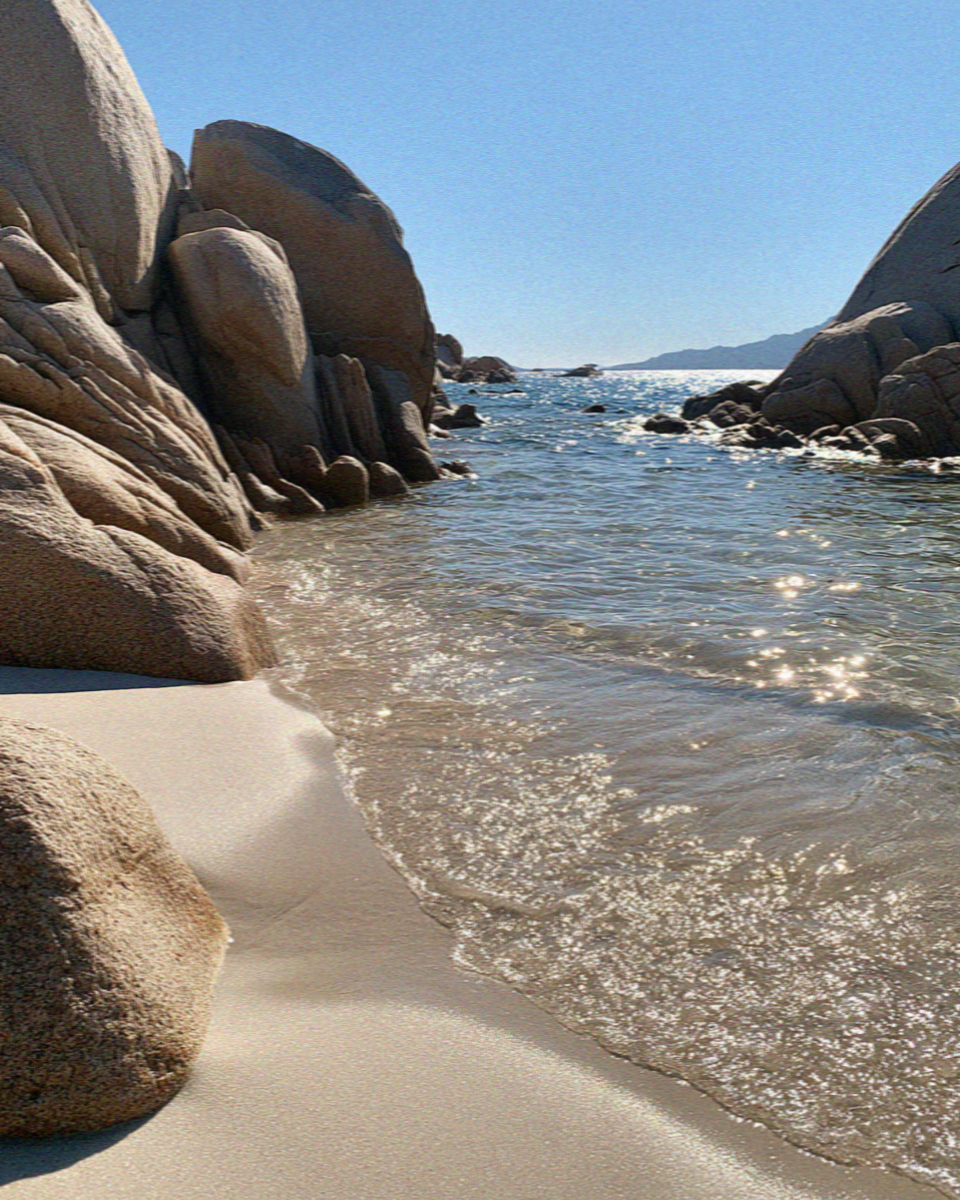
The rock here is granite, and where granite erodes, it produces a very pale, coarse, almost white sand rather than the darker volcanic or muddy sediment you get on much of the Italian coast. That pale seabed sits under shallow, exceptionally clear water with very little river silt entering it, because Gallura has almost no rivers to speak of. Pale floor plus clear water plus strong sun equals that specific green, which shifts through white and jade and into deep blue as the bottom drops away.
Stand in it up to your knees on a bright day, and you can read the writing on your own toes.
The granite does something else, too. It weathers into enormous rounded boulders, stacked and balanced, and those boulders are what break the coast into dozens of separate small bays instead of one long beach. That is why every beach here feels private even when it is not, and it is also why so many of them hold only forty or fifty people before they are visibly full.
The whole of this is in my guide to the best beaches on the Costa Smeralda, including which ones are worth the drive and what you will pay to leave the car.
The rules that built it
On 14 March 1962, Prince Karim Aga Khan and five partners founded a consortium to develop this coast. The names of the partners are the sort of names you would expect, and none of them matter to a visitor. What matters is what they did next, which was to appoint an architectural committee and give it real power.
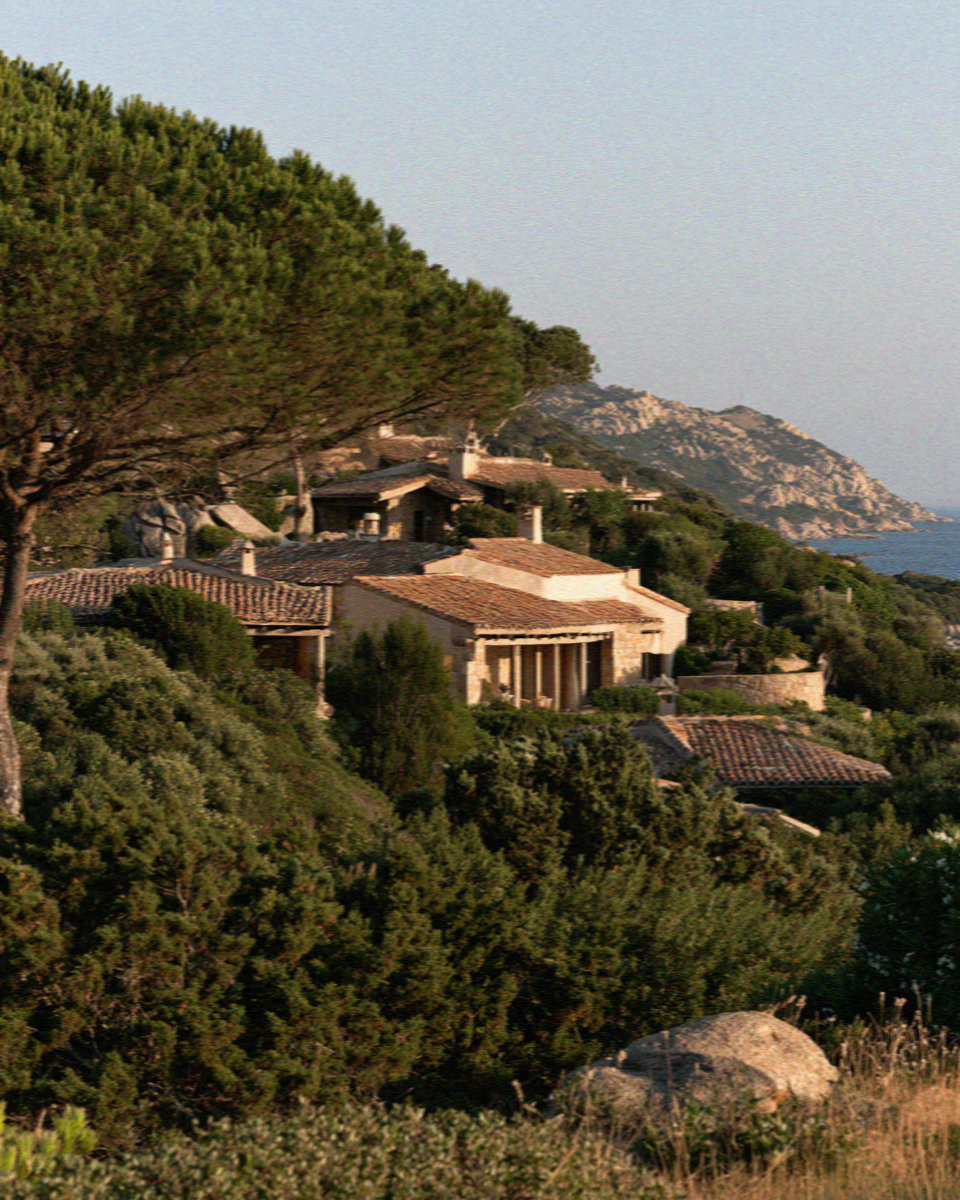
The committee included Jacques Couëlle, Luigi Vietti, and Michele and Giancarlo Busiri Vici, and the rules they wrote are the reason the drive here does not look like the drive along a hundred other stretches of southern European coast. Nothing was to break the treeline. Nothing was to be built in a straight line if a curve would do. Materials had to be local: granite, juniper, terracotta, rough render in the colours the hillside already was. For every tree cut down, two had to be planted.
And under four per cent of the land could be built on at all.
The effect, sixty years on, is genuinely strange. You drive a coast road knowing perfectly well that some of the most expensive property in Europe is on either side of you, and you can hardly see any of it. Roofs sit below the scrubline. Walls are the colour of the rock behind them. Buildings curve and settle into slopes rather than being cut into them. It was a commercial decision dressed as an aesthetic one, and the commercial logic was sound: what is being sold here is the view, so nothing is allowed to spoil the view.
There is a fair criticism of all this, and it is worth stating. This coast was made exclusive on purpose and the rules are part of the machinery of that, not an accident of good taste. Sardinians will tell you, correctly, that the Costa Smeralda is a place their island has rather than a place their island is. Both things are true at once. You can admire the planning and still notice who it was planned for.
The Aga Khan himself died in February 2025. His interests here had in fact been sold off some years before, in 2020, and the holding company that runs the four historic hotels is now Qatari-owned. The founding story is still told at every reception desk on the coast. The ownership moved on a while ago.
Porto Cervo, and what it is for

Porto Cervo was built from nothing, starting in 1962, as the coast’s harbour and its shopfront. Everything you see was designed: the stepped square, the arcades of shops, the whitewashed church up on its rise above the water, the sequence of small piazzas that give the place the shape of a village that grew slowly. It did not grow slowly. It was drawn.
Whether that bothers you is a matter of temperament. It did not bother me as much as I expected, because the design is genuinely good. The arcades are cool at four in the afternoon when the rest of the coast is unbearable. The scale is small and human. Nothing is taller than three storeys and almost nothing is straight.
What Porto Cervo is for is the marina, and the marina is a spectacle whether or not boats interest you. In high season the largest private yachts in the Mediterranean are berthed stern-to along the quay with their passerelles down, and anyone can walk the full length of them. Nobody stops you. It is the single most reliable free entertainment on this coast. For two weeks each September it becomes a serious sporting venue as well, when the yacht club runs back-to-back Rolex regattas, and the harbour fills with sail instead of engine.
Do not plan more than an evening or two for the village itself. It is small, and the shopping is the same shopping as Milan at a slightly higher price. I have written what there is to do, and how long it honestly holds you, in my guide to Porto Cervo.
The boat everybody takes
The single best day out from this coast is not on this coast. It is north of it, in the La Maddalena archipelago: a scatter of low bare granite islands in a channel between Sardinia and Corsica, with water even paler than the water down here.
Most departures are from Palau, three quarters of an hour north, though Cannigione, Baja Sardinia and Porto Cervo all send boats out as well. Budget a little over sixty euros each for the ordinary shared version and rather more for a catamaran that feeds you. Carry cash on the day too: the national park charges its own landing fee per head, it rises in high summer, and a good many operators do not mention it until you are aboard.
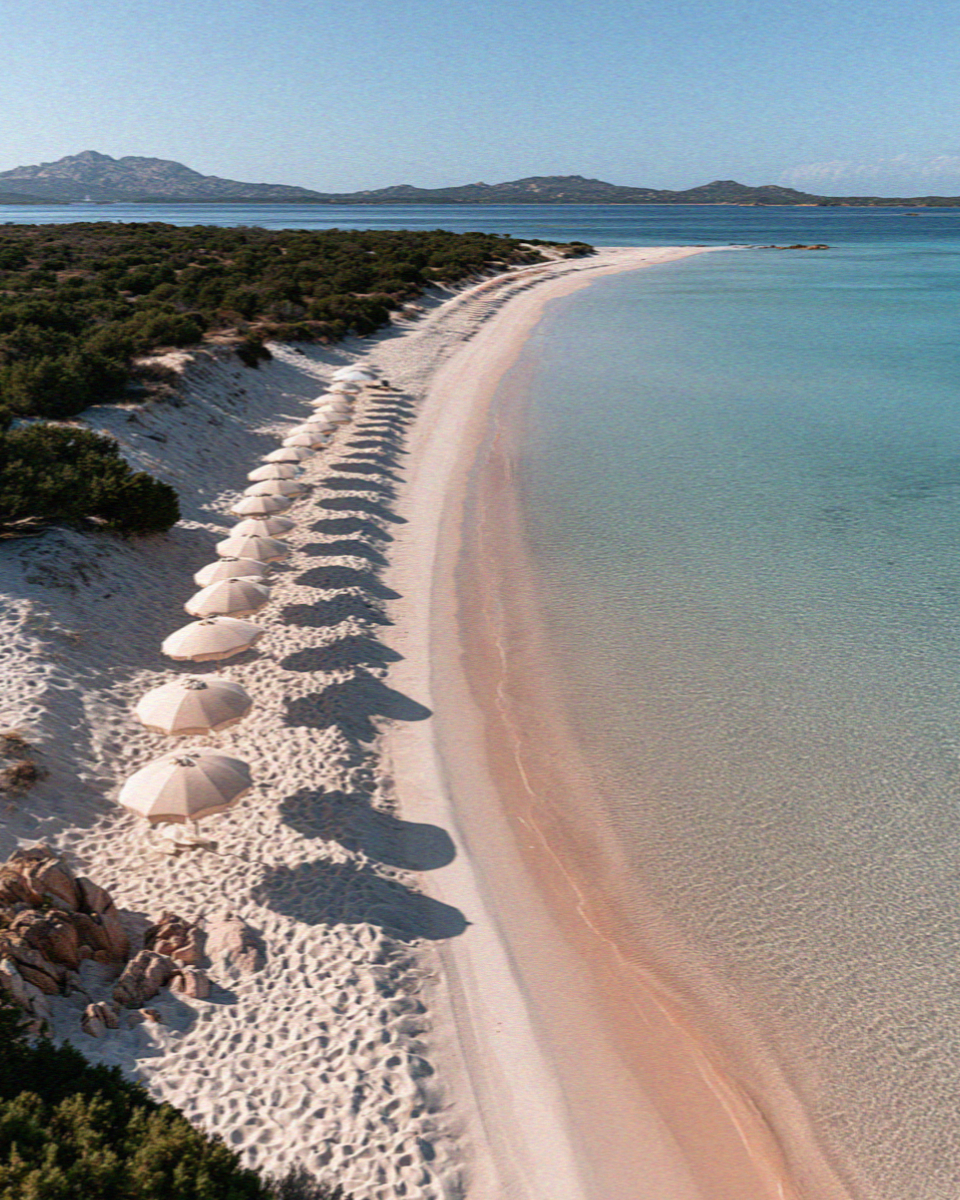
The thing to know before you go, because every operator’s photography implies otherwise, is that the famous pink beach on Budelli cannot be landed on. It is protected. Boats pause offshore, everybody takes the same photograph from the same distance, and you swim somewhere else. Knowing that in advance changes the day from a disappointment into a very good one.
All of it, including which departure port suits which base, is in the La Maddalena boat trip guide.
Ten minutes inland, and 3,500 years back
This is the part of the coast almost nobody bothers with, and it is the part I would go back for.
Drive inland from Porto Cervo for about ten minutes, and the granite stops being scenery and starts being building material. Around Arzachena there are seven Bronze Age sites: nuraghi, which are massive dry-stone towers built without mortar, and tombs of the giants, which are long communal burial chambers fronted by a curved forecourt with a great carved slab standing at the centre of it. They were old when Rome was a village.
There is a ticket ladder rather than a single price, so a morning of them costs very little. Most days I had entire sites to myself while the beach three miles away could not take another car.
The full practical version, what each site is and how to string them together, is in the guide to the nuraghi and tombs of the giants at Arzachena. It is also where the journal at the bottom of this page comes from.
The rest of the inland half of Gallura is worth a morning too, particularly the Thursday market at San Pantaleo, and I have gathered all of it in the best day trips from the Costa Smeralda.
Where to stay, honestly
The four famous hotels are Cala di Volpe, Pitrizza, Romazzino and Cervo, all built in the sixties by the same architects who wrote the rules. In August they run into the thousands a night, and one of them, Pitrizza, has moved to LVMH’s hotel arm and is closed for a rebuild ahead of a relaunch under the Cheval Blanc name, currently pointed at 2027. Check before you plan around it.
If that is your budget, you already know what you are buying and you do not need me.
If it is not, the useful thing to understand is that nothing about the beaches is private. The famous hotels sit on bays that anyone may swim in. So the practical move is to sleep somewhere sensible and drive to the same water: Baja Sardinia for a bit of life in the evening, Cannigione for a working town with families in it, Porto Rotondo for something smaller and smarter, San Pantaleo inland for the best value on the whole list, or Olbia if you want the trip to cost what a normal Italian holiday costs.
I have set out what each of those actually feels like, and the drive from each to the good beaches, in where to stay on the Costa Smeralda.
Eating, and the ten-minute rule
The restaurants on the water at Porto Cervo are good, and they are expensive, and a few of them are genuinely excellent rather than merely costly. There is a Michelin-starred kitchen in the village and a couple of long-standing seafood tables on the quay that people come back to for decades.
But the food I would drive back to Sardinia for is inland, in the granite hills, at the farmhouse restaurants they call stazzi. Long tables under a pergola, a set menu you do not order from, suckling pig done properly, and seadas at the end, which is the one Sardinian pudding worth crossing a room for.
The wine is worth taking seriously as well. Vermentino di Gallura is the region’s only DOCG, the one appellation on the whole island at that level, and it is grown in these hills rather than shipped in.
The comparison of the two kinds of dinner, and what each costs, is in where to eat on the Costa Smeralda.
Nights
The nightlife here has a reputation that runs ahead of it and mostly deserves it. The good version of it is not the famous clubs but the bars built into the rocks above the sea, where you go at seven, watch the light go, and leave before the part you would have to pay a great deal for begins.
After dark, the model is table minimums and bottle service, and the numbers are set high enough that if you have to ask, the answer is that it is not for you tonight. There is no shame in that and no reason to pretend otherwise. What that evening costs, and how to have the good half of it for the price of two drinks, is in the nightlife guide.
The evening

The best hour on this coast is free, and almost nobody plans for it.
Between about half past seven and half past eight in September, the light comes in flat off the sea, and the granite goes from grey to a pale rose and holds it for twenty minutes. The road between the bays is empty because everyone is either still on a beach or already at dinner. If you stop at a bend and get out, the rock under your hand is still warm from the whole day.
I did this more or less every evening, and it was the thing I thought about afterwards, rather than any of the expensive parts.
When to come
September, if you can.
The sea is at its warmest in September, around 24 degrees, having spent the whole summer absorbing heat. The days run to about 27, which is a temperature you can actually do things in, rather than August, when the middle of the day is only good for lying still. The car parks are findable. The prices come down from their peak. And the two regatta weeks put a very good atmosphere in Porto Cervo without filling the beaches.
June is the other answer, warm and open and quieter, though the sea is still coming up to temperature.
Avoid the first three weeks of August unless you have no choice, and understand that the season is short at both ends. This is not a coast that ticks over quietly out of season. It closes. By late October, a great many of the beach clubs, restaurants and hotels are shuttered until spring, and by November there is very little here at all.
The month-by-month version is the best time to visit the Costa Smeralda.
Getting here, and the car
You fly to Olbia, which is closer to the coast than most island airports are to anything, or you arrive by sea at Olbia or Golfo Aranci on an overnight crossing from the Tuscan and Ligurian ports.
Then you hire a car, and this is not optional advice.
Nothing runs from the terminal to the resort coast. What public transport exists starts in Olbia town, goes a few times a day, and stops nowhere near a beach. Nobody ever built an alternative here because nobody was expected to need one, and sixty years on that has not changed. Taxis and pre-booked transfers both exist, and both cost roughly what you would guess.
Without a car, you will see one bay, repeatedly. With one, you will see fifteen. The full breakdown, including the ferry routes and rough fares, is in how to get to the Costa Smeralda.
Is it worth it
The honest answer is that it depends entirely on what you spend money on.
If you want the hotels and the clubs and the shopping, this is one of the most expensive weeks available in Europe, and it will feel like it. If you want the water and the granite and the light, the water and the granite and the light are free, and the coast’s own planning rules have protected them for sixty years better than any conservation body would have managed.
A week here on a hire car, a rented flat inland, supermarket lunches on the beach and one good dinner out costs roughly what a week on the Amalfi Coast costs, and you get better beaches and far fewer people. That version of the trip is entirely real, and it is the one most people I saw were actually having.
I have broken the numbers down properly, because nobody else seems to, in what the Costa Smeralda actually costs. And if you want the days planned rather than costed, the itinerary sets out three days, with a fourth and fifth if you have them.
More images from the Costa Smeralda







Your Costa Smeralda Guides
Everything here in detail, guide by guide.
- The Best Beaches on the Costa Smeralda
- Porto Cervo: What to Do in a Village Built in 1962
- The La Maddalena Boat Trip from the Costa Smeralda
- Where to Stay on the Costa Smeralda
- Where to Eat on the Costa Smeralda
- How to Get to the Costa Smeralda
- The Best Time to Visit the Costa Smeralda
- Costa Smeralda Nightlife, and What It Really Costs
- The Best Day Trips from the Costa Smeralda
- The Nuraghi and Tombs of the Giants at Arzachena
- What the Costa Smeralda Actually Costs
- A Costa Smeralda Itinerary: 3 to 5 Days
Costa Smeralda Travel Diaries
Frequently Asked Questions
Do you need a car on the Costa Smeralda?
Yes. There is no bus from Olbia airport to Porto Cervo; the public bus that runs near the coast is infrequent and does not serve the hotel zone or the beaches, and the bays are spread over 55 kilometres of road. The coast was developed on the assumption that visitors arrive by car or by boat. Without one, you will be stuck with whichever beach you can walk to.
Are the beaches on the Costa Smeralda free?
Yes. The beaches themselves are free, and none of them require a booking. What you pay for is parking, usually €5 to €8 for a day in a dusty, unsurfaced car park, and a lounger if you want one. Sardinia does have beaches with paid entry and daily visitor caps, but those are elsewhere on the island, at La Pelosa near Stintino and Cala Brandinchi at San Teodoro, and not on this coast.
How many days do you need on the Costa Smeralda?
Three is the minimum that works: one for the beaches near your base, one for a boat day out to the archipelago, and one that goes inland. Five lets you add a second boat day and reach further up the coast without rushing. It is not a place that needs a week unless you intend to spend the week lying still, which is a respectable plan.
When is the best time to visit the Costa Smeralda?
September, for one reason above all the others: the Mediterranean peaks about two months after the air does, so the water is warmer then than at any point in the actual summer, and by that stage the August crowd has gone home. June is the other good month. Note that this is a short season at both ends and much of the coast shuts from late October.
Can you visit the Costa Smeralda on a normal budget?
Yes, and most people there are doing exactly that. Sleep inland or in Cannigione or Olbia rather than on the coast itself, hire a car, shop in a supermarket for beach lunches, and spend your money on one good dinner and one boat day. Every beach the famous hotels sit on is open to anybody who parks and walks down to it.
Is the pink beach at Budelli open to visitors?
No. It is protected and cannot be landed on. Day boats to the La Maddalena archipelago pause offshore so that everybody can photograph it from the water, and then swim elsewhere in the archipelago. Any tour implying you will walk on the pink sand is misleading you.
What food is the Costa Smeralda known for?
The coast itself serves seafood at coastal prices, but the food that belongs to this region is inland Gallura cooking: porceddu, which is suckling pig roasted slowly, and seadas, a fried pastry parcel of fresh cheese with honey poured over it. The wine to order is Vermentino di Gallura, the only DOCG on the island, grown in the hills just behind the coast.
Why is the Costa Smeralda so expensive?
Because scarcity was designed into it. The consortium that developed the coast from 1962 restricted building to under four per cent of the land it owned and controls what can be put up on the rest, so supply of everything here is deliberately limited while demand is not. The beaches and the water, which are the actual attraction, are free and public.