Olbia is the airport, forty minutes of granite hills is the drive, and a hire car is not a preference here. It is the infrastructure.
That last point is the one that catches people, so it gets a section of its own further down rather than a footnote. Everything else is straightforward.
Flying in
Olbia Costa Smeralda (OLB) is the airport, and it is close: about thirty kilometres to Porto Cervo, thirty-five to forty-five minutes by road on the SP73, which climbs through granite outcrops and low scrub and is a genuinely pleasant introduction to the island.
It is a summer airport in the truest sense. Between May and September it takes direct flights from across Europe and the terminal is heaving; out of season the route map collapses to a handful of Italian domestic connections. If you are coming from outside Italy in October, expect to connect through Rome or Milan.
The two alternatives are Alghero and Cagliari, both a long way off. Alghero is about two and a half hours’ drive, Cagliari nearer three and a half. They are worth checking only if the fare difference is dramatic, and generally it is not once you add the driving.
Getting from the airport to the coast
Hire car. The right answer, and the desks are in the terminal. Book in advance, particularly for August, when both price and availability get ugly. Off-season quotes start around €20 to €40 a day; a summer week is a different order of number entirely, and last-minute August hire on Sardinia is one of the more painful things you can do to a holiday budget.
Taxi. €60 to €80 to Porto Cervo. The catch is the rank, which in July can leave you standing for half an hour to an hour after a full flight lands.
Private transfer, booked ahead. €90 to €120, forty-five to fifty-five minutes, and someone is holding a sign when you walk out. If you are arriving late with children and luggage, this is money well spent.
Bus. There is a public bus network, run by ARST, and it does exist, and I want to be careful here rather than dismissive. Lines run from Olbia town toward the coast, take well over an hour, and cost only a few euros. What they do not do is leave from the airport terminal, run more than a handful of times a day, or go anywhere near the beaches or the hotel zone. As a way of getting from Olbia to Arzachena on a specific morning, fine. As a way of having a holiday here, no.
Why you need a car, plainly

This coast was developed from 1962 as a resort estate, and the people planning it assumed that everybody arriving would come by car or by boat. So nothing was built to contradict that assumption. There is no coastal train, no local bus threading the bays, no shuttle between the beaches.
The bays themselves are spread along fifty-odd kilometres of road, each down its own turning, and they do not connect to each other on foot because the granite headlands between them go straight into the sea.
The practical consequence: without a car you will see one beach, the one you can walk to, over and over. With a car you will see fifteen, and you will be able to move when the wind gets up or a car park fills, which is the single most useful thing a car does here.
Two notes on driving. The roads are good, the surfaces are fine, and the granite bends are slower than the map suggests, so allow more time than a distance calculation gives you. And beach parking is a real cost: reckon €5 to €8 a day per beach, cash, in dusty unsurfaced car parks that fill by mid-morning. More on that in the best beaches guide.
Coming by sea instead
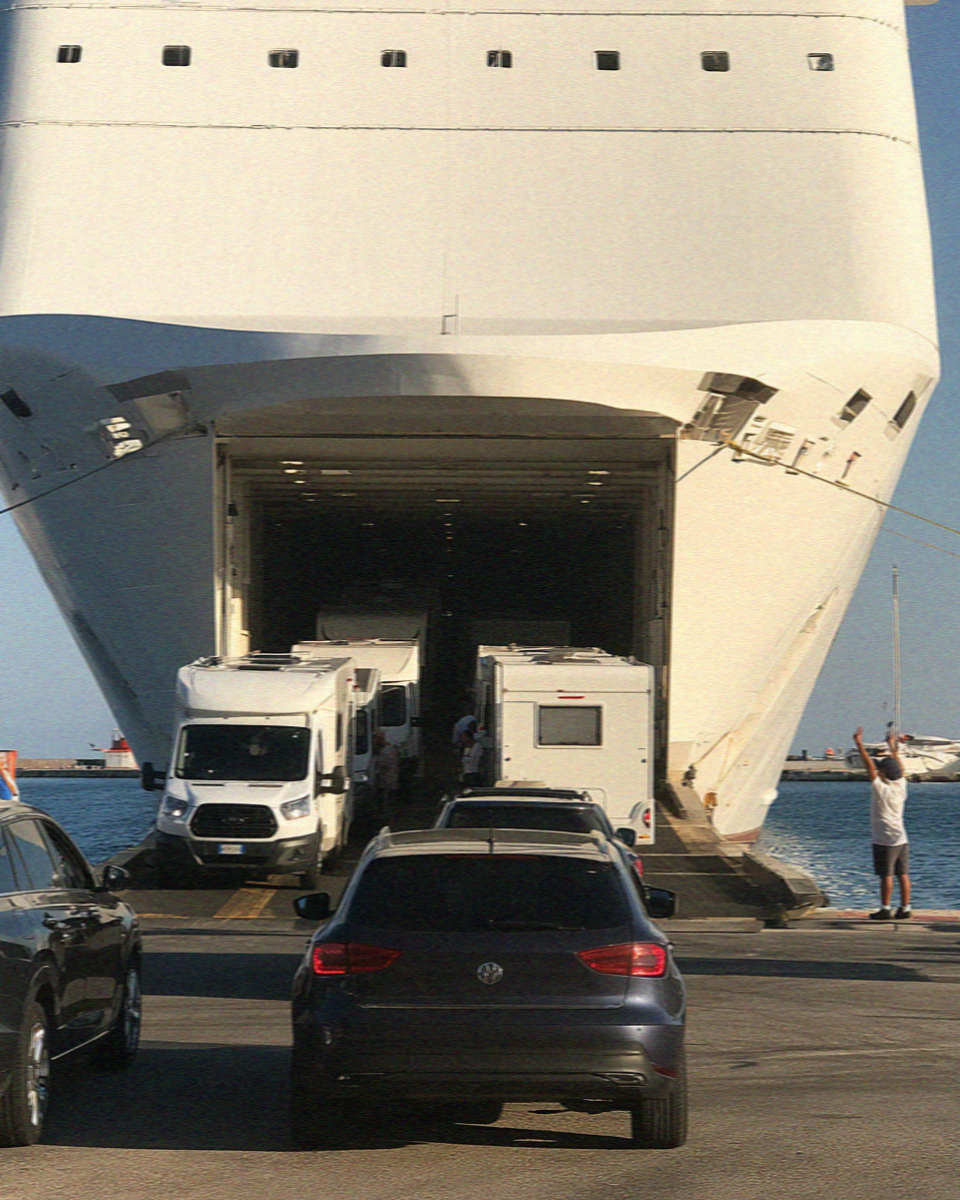
If you want your own car on the island, or you simply prefer arriving by water, the ferries are good and the overnight crossings are a civilised way to do it.
Two ports serve this coast. Olbia, at Isola Bianca, is the main one and sits right by the town. Golfo Aranci is twenty-five to thirty minutes further round and also well placed for the Costa Smeralda.
Rough foot-passenger fares, before you add a car or a cabin:
- Livorno to Olbia, from around €25, seven to ten hours
- Livorno to Golfo Aranci, from around €20, seven to nine hours
- Genoa to Olbia, from around €28, nine to thirteen hours, mostly overnight
Civitavecchia, for Rome, also runs to Olbia. The operators are Grimaldi Lines, GNV, Tirrenia, Moby and Corsica Ferries, and sailings multiply substantially in summer and thin right out in winter.
Take the overnight with a cabin rather than the daytime crossing if you have the choice. You sleep, you wake up in Sardinia, and you have your own car on the quay.
Book cars on ferries early for August. This is the crossing every Italian family with a car is also trying to make.
When the routes run
The practical season here runs from roughly late May to early October, and the transport thins at both ends along with everything else.
Direct European flights largely stop. Ferry frequency drops. And, more to the point, the coast itself shuts: hotels, restaurants and beach clubs close from late October and much of the area is genuinely quiet until spring. How quickly that happens is set out in the best time to visit the Costa Smeralda.
Frequently Asked Questions
Which airport do you fly into for the Costa Smeralda?
Olbia Costa Smeralda (OLB), about thirty kilometres and thirty-five to forty-five minutes from Porto Cervo. It has wide direct European connections from May to September and very few outside those months, when you will likely connect through Rome or Milan. Alghero and Cagliari are two and a half to three and a half hours away by road.
Do you need a car on the Costa Smeralda?
Yes. There is no bus from the airport to Porto Cervo, no coastal train, and no local service linking the beaches, because the coast was developed on the assumption that visitors arrive by car or boat. The bays are spread over fifty kilometres and cannot be reached from one another on foot.
How do you get from Olbia airport to Porto Cervo?
Hire car is the sensible answer, with desks in the terminal. A taxi runs €60 to €80 with a potentially long wait at the rank in July, and a pre-booked private transfer is €90 to €120 for a forty-five to fifty-five minute drive. The public bus does not leave from the terminal and does not serve the hotel zone.
How much is the ferry to Sardinia?
Foot passenger fares start around €25 from Livorno to Olbia (seven to ten hours), about €20 from Livorno to Golfo Aranci, and around €28 from Genoa to Olbia, which is mostly an overnight crossing of nine to thirteen hours. Adding a car and a cabin raises that considerably, and August car space books out early.
Is there public transport on the Costa Smeralda?
Effectively not for a holiday. ARST runs buses between Olbia and towns such as Arzachena, a few times a day and taking over an hour, but they do not serve the beaches or the resort zone and they do not start at the airport terminal. Plan on driving.
Read also: Where to Stay on the Costa Smeralda | The Best Time to Visit the Costa Smeralda | The Complete Guide to the Costa Smeralda