White cliffs. Blue water. The most photographed island in Italy and somehow still worth every photograph.
What to book before you come
Capri is an island whose coastline is the whole point of it, and you cannot see that coastline from the town. Everything worth spending money on here happens on the water. Book the boat first, and book it for the morning.
- Around the island, with the Blue Grotto. The Faraglioni, the arches and the caves the ferries never go near. If you do one thing on Capri it is this.
- A three hour private boat. You stop where you want and swim when you want. On an island this expensive it is a smaller premium than you expect.
- A small group grotto cruise, with swimming. 4.7 from over eight hundred people. The good middle option.
- Capri and Anacapri on land. Anacapri is a different place from the Piazzetta, quieter and steeper, and most day trippers never get up there.
The walk to the Arco Naturale, the Via Krupp when open, and the whole of Anacapri on foot are as close to free as this island gets.
What Capri Actually Is
Capri is a small limestone island at the southern end of the Gulf of Naples, roughly six kilometres long and two and a half kilometres wide. It takes about twenty minutes to drive from one end to the other, which is academic information because private cars are restricted and the roads are narrow enough that the point is largely moot. The island rises steeply from the sea, the terrain dramatic in the way that only limestone can be dramatic, all vertical faces and sudden drop-offs and water that turns colours you don’t have names for.
There are two towns. Capri town sits in the centre of the island at about 142 metres above sea level; this is where the Piazzetta is, where the luxury boutiques are, where most visitors spend most of their time. Anacapri sits higher on the western side of the island, quieter and more residential, connected to Capri town by a road that climbs in switchbacks and by a long argument between the two communities that has been running since the nineteenth century.
Two main harbours: Marina Grande on the north coast, where ferries arrive, and Marina Piccola on the south coast, tucked beneath the cliffs near the Faraglioni. Between them, the island organises itself around these two orientations: arriving from the north, swimming in the south.
People have been coming here for a long time. Emperor Augustus first visited in 29 BC and liked it enough to acquire it from the city of Naples in exchange for the island of Ischia. Emperor Tiberius retreated here and spent the last decade of his reign governing the Roman Empire from a villa on the eastern cliff. The island has been attracting people who want to be somewhere beautiful and somewhat removed from the ordinary world ever since.
This continues to be a reasonable impulse.
Plan Your Visit to Capri
A few things I booked and loved. These help support the blog, at no cost to you.
- Where I stayed: search Capri hotels
- Blue Grotto and Capri boat tickets
- Stay connected: get a travel eSIM
This section contains affiliate links. If you book through them I may earn a small commission, at no extra cost to you.
Getting to Capri
From Naples
Naples is the primary gateway. Ferries and hydrofoils depart from two points: Molo Beverello in the city centre, and Calata di Massa at the commercial port nearby. Both are reachable from Naples Centrale by taxi, the metro (Mergellina or Piazza Municipio), or on foot from the historic centre.
The regular ferry takes approximately eighty minutes. The hydrofoil, the faster option and the one most people choose in summer, takes about fifty minutes. Multiple companies operate the route: Caremar, SNAV, Navigazione Libera del Golfo, with departures throughout the day from early morning until late evening. In summer the first departures are before 7 am. Book tickets in advance during July and August; the boats fill.
From Sorrento
Sorrento is the fastest and arguably most practical connection. Hydrofoils run frequently throughout the day, taking approximately twenty-five minutes. The crossing is short enough that Capri works easily as a day trip from Sorrento, which is itself well-connected by the Circumvesuviana train from Naples.
The ferry terminal in Sorrento is at Marina Piccola, reached by a lift or staircase from the town above.
From the Amalfi Coast
Seasonal ferry service connects Capri with Positano, Amalfi, and Salerno from roughly April through October, with schedules intensifying in summer. The crossing from Positano takes approximately fifty minutes. From Amalfi, approximately one hour. Check seasonal schedules carefully as sailings are weather-dependent and do not operate year-round.
By Private Boat
The definitive way to arrive. A chartered private boat from Positano or Amalfi gives you the island from the water first, which is the correct introduction. You see the white cliffs before the crowds. You can stop at the Faraglioni on the way in. You arrive at Marina Grande on your own terms, or at Marina Piccola, or not at the marina at all if there’s a cove worth anchoring in.
Reputable boat charter companies operate from Positano, Amalfi, and Sorrento. Charter a gozzo, the traditional wooden boats of the region, rather than a modern craft if the option exists. The difference in experience is significant.
Private boat tours around the island, departing from Marina Grande once you’ve arrived, are also available for those who want to see the coastline without the logistics of a full charter.
Arriving: Marina Grande
Most visitors arrive at Marina Grande, the main harbour on the north coast. It is bustling, colourful, and perpetually full of ferries, water taxis, private boats, and the particular energy of a place where everyone is arriving somewhere good.
From Marina Grande, your options are the funicular, the bus, or a taxi. The funicular is the obvious choice and worth riding simply for the ascent, four minutes of watching Capri arrange itself below you as the town rises into view.
There are also small rowboats available from Marina Grande for the Blue Grotto excursion, which departs directly from the harbour. If the Blue Grotto is on your agenda, morning is the right time.
Getting Around
The Funicular
The funicular runs from Marina Grande directly up to Capri town, arriving near the Piazzetta. It operates continuously throughout the day, takes four minutes, and costs a few euros each way. In high summer the queue can be long; the alternative is a taxi or the bus that also climbs from the port.
Buses
Capri’s buses are minibuses, necessarily small given the width of the roads. They connect the main points: Marina Grande to Capri town, Capri town to Anacapri, Anacapri to Faro di Punta Carena, and various stops along the way. They run regularly, every fifteen to twenty minutes in standard season, more frequently in summer. An unlimited day pass is available and represents good value if you plan to move around.
The buses are not air-conditioned, and in July and August they are crowded. Board at the first stop rather than along the route if possible.
Taxis
Capri’s taxis are open-top vehicles, white with convertible roofs, that fit the aesthetic of the island better than any taxi has a right to. They are expensive relative to mainland Italian taxis and worth it for the experience. Shared taxis are available from Marina Grande to the town and are more economical.
Scooters
Available to rent, requiring a license. The roads are narrow, steep, and shared with buses. Not recommended for the inexperienced, but exhilarating for those who know what they’re doing. Gives access to parts of the island that buses don’t reach efficiently.
Boats
Water taxis operate between Marina Grande and Marina Piccola and various points around the coast. Private boat tours run from Marina Grande, typically lasting two hours, circumnavigating the island with stops at the sea caves and Faraglioni. Booking in advance is advisable in summer.
On Foot
Capri rewards walking in a way that few small islands do. The network of footpaths connecting the two towns, the viewpoints, and the coast is extensive and often remarkable. The path from Capri town down to Marina Piccola via the Gardens of Augustus takes perhaps thirty minutes and passes through some of the best scenery on the island. Via Krupp, the famous zigzag path cut into the cliff face, connects the Gardens of Augustus to Marina Piccola when it is open, check before assuming it is.
The Pizzalungo path runs along the western coast above the Faraglioni and takes approximately two hours to walk at a relaxed pace. The views are significant.
What to See and Do
The Piazzetta
Piazza Umberto I, the Piazzetta, has been called the living room of the world, which sounds like hyperbole until you sit in it at six in the evening with an aperitivo while the day’s heat lifts and the crowd that has gathered around you includes approximately every nationality on earth. It is small, it is beautiful, and it operates as the social centre of the island from morning coffee to late night.
The four cafés that ring the square: Bar Tiberio, Gran Caffè, Piccolo Bar, Verginiell, compete for tables and custom. They all charge the Piazzetta premium. This is not the place to economise on coffee. It is the place to sit and watch Capri conduct itself, which is the main activity the Piazzetta offers and arguably sufficient on its own.
Morning is quieter. Evening is theatrical. Both are worth experiencing.
The Blue Grotto (Grotta Azzurra)
The Blue Grotto is on the northwest coast of the island, reachable by boat from Marina Grande or by bus from Anacapri followed by a boat from the grotto’s own small landing. It is a sea cave approximately sixty metres long whose waters glow an extraordinary luminous blue, the effect produced by sunlight entering through an underwater opening, refracted through the water before it reaches the cave interior.
The entrance is extremely low: you lie flat in a small rowboat while the boatman pulls the craft through by gripping an iron chain attached to the rock. This takes approximately one second and removes any lingering claustrophobia concerns before they can properly form. Inside, the effect is unlike anything the photographs prepare you for.
Go in the morning. The light is best before noon. In the afternoon, it diminishes. The wait in summer can be substantial; arrive early or accept that some queuing is part of the experience.
The Blue Grotto has been known since antiquity. The Romans used it as a private swimming area for the imperial court. A bronze statue of Neptune was found in its waters in 1964.
The Faraglioni
Three limestone sea stacks rising from the water on the southeastern coast of the island. The first is connected to the mainland. The second, Faraglione di Mezzo, has a natural arch at water level large enough for a boat to pass through. The third stands independently and is home to a blue lizard, Lacerta caerulea, found nowhere else in the world.
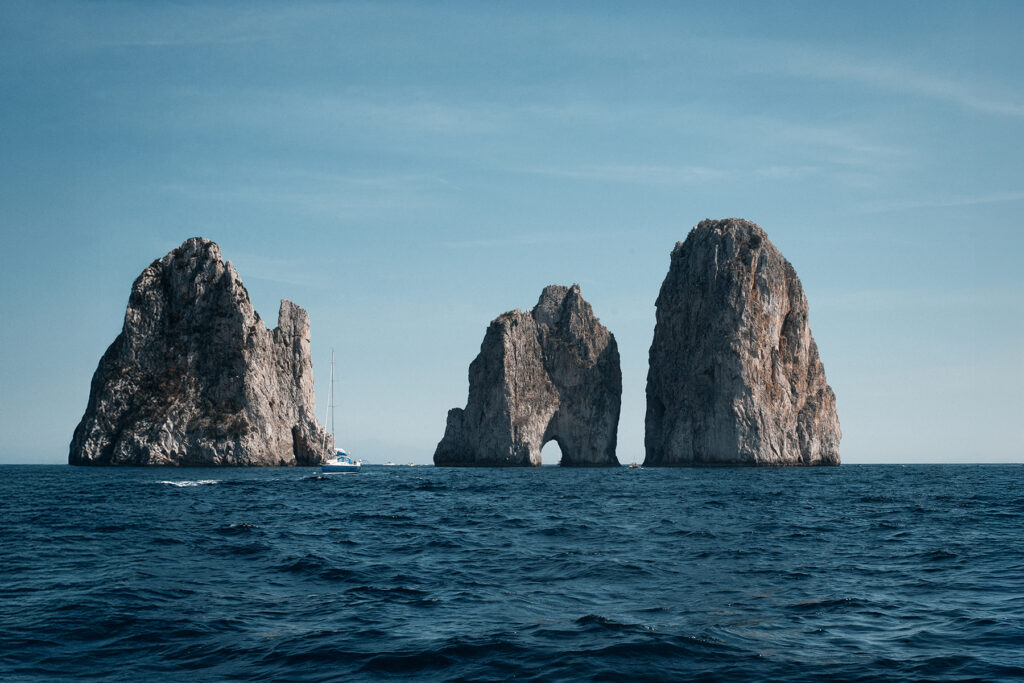
The Faraglioni are visible from many points on the island, most famously from the Tragara viewpoint at the end of Via Tragara in Capri town, and from Marina Piccola below. They are best experienced from the water, passing through the arch of the second stack, where the light changes in a way that is difficult to prepare for even when you have been there before.
Every time the Faraglioni appear, whether from the boat or from the cliff or from the water looking back at them, they manage to look as though you have never seen them before. This is not a small achievement for something made of rock.
Villa Jovis
The largest and best-preserved of Emperor Tiberius’s twelve villas on Capri, Villa Jovis sits on the eastern tip of the island at Monte Tiberio, 354 metres above the sea. Tiberius governed the Roman Empire from here for the last decade of his reign, from 27 to 37 AD. The complex included living quarters, baths, cisterns, a lighthouse, and the infamous Salto di Tiberio, the cliff from which, according to historical tradition, the emperor had unwanted guests thrown into the sea.
The walk from Capri town takes approximately forty-five minutes and climbs steadily. The ruins themselves are atmospheric rather than spectacular, enough survives to understand the scale of what was built here, not enough to reconstruct it fully in the imagination without some effort. The views from the top, across the Gulf of Naples toward the mainland and Vesuvius, are among the best on the island.
Allow two hours round trip from Capri town.
Gardens of Augustus and Via Krupp
The Gardens of Augustus (Giardini di Augusto) are terraced public gardens on the southern edge of Capri town, planted with flowers and offering direct views down to the Faraglioni and Marina Piccola. They were created in the early twentieth century by Friedrich Alfred Krupp, the German industrialist who spent time on Capri at the turn of the century, and later donated to the municipality.
Via Krupp, the celebrated switchback path visible from the gardens, was also commissioned by Krupp, cut into the cliff face connecting the gardens to Marina Piccola below. When it is open (it closes periodically due to rockfall risk), it provides one of the island’s more dramatic walks. The path descends in a series of sharp zigzags directly down the cliff, with the Faraglioni ahead and the sea below. Fifteen minutes down, considerably more back up.
Anacapri and Monte Solaro
Anacapri sits at approximately 275 metres above sea level on the western part of the island. It is quieter than Capri town, more local in character, with whitewashed houses, narrower streets, and fewer luxury boutiques. Worth half a day.
The chairlift to Monte Solaro departs from Piazza Vittoria in Anacapri and takes twelve minutes to reach the island’s highest point at 589 metres. The views from the summit are the most comprehensive on the island: the Faraglioni to the east, the Gulf of Naples to the north, the Sorrentine Peninsula, the Gulf of Salerno stretching south, and on clear days the silhouette of Ischia to the west. The chairlift is a single-seat open-air ski-lift style installation, and the sensation of ascending slowly above the Mediterranean with nothing between you and the view is one of those experiences the island provides, and that photographs cannot adequately convey.
The Villa San Michele in Anacapri, built by the Swedish physician and writer Axel Munthe at the turn of the twentieth century and described in his memoir The Story of San Michele, is one of the finest gardens on the island and contains a collection of Roman antiquities. The loggia at the end of the garden hangs directly over the cliff. Worth the entrance fee.
Marina Piccola and Da Gioia
Marina Piccola on the southern coast is Capri’s main beach, reached by bus from Capri town or Anacapri, or on foot down via the Gardens of Augustus. The water is turquoise, the beach is pebble and rock, and the Faraglioni are visible to the east in a view that has appeared in approximately every piece of visual material ever produced about the island.
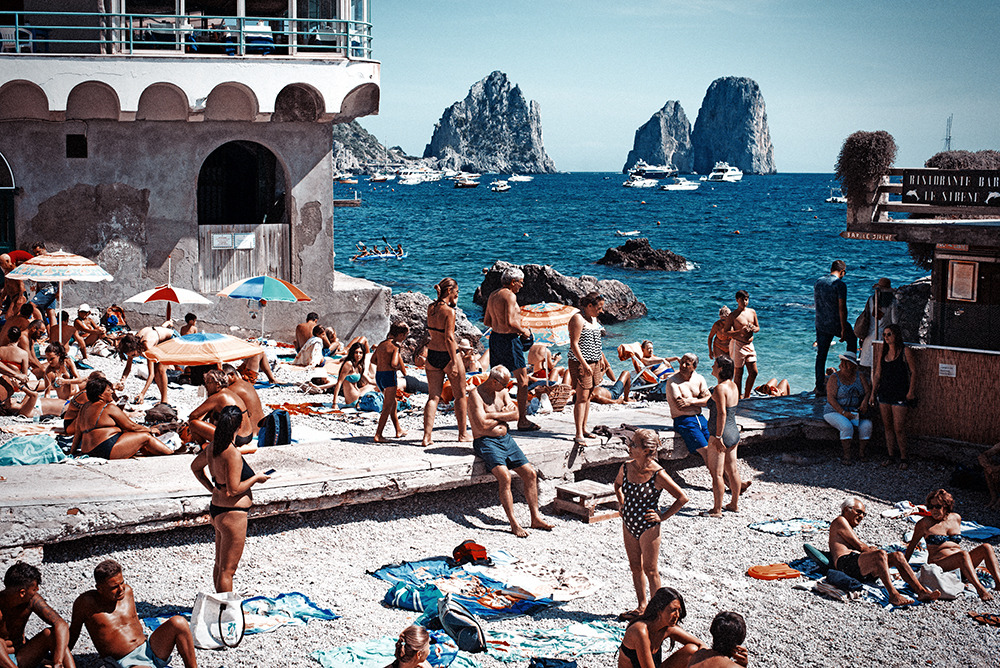
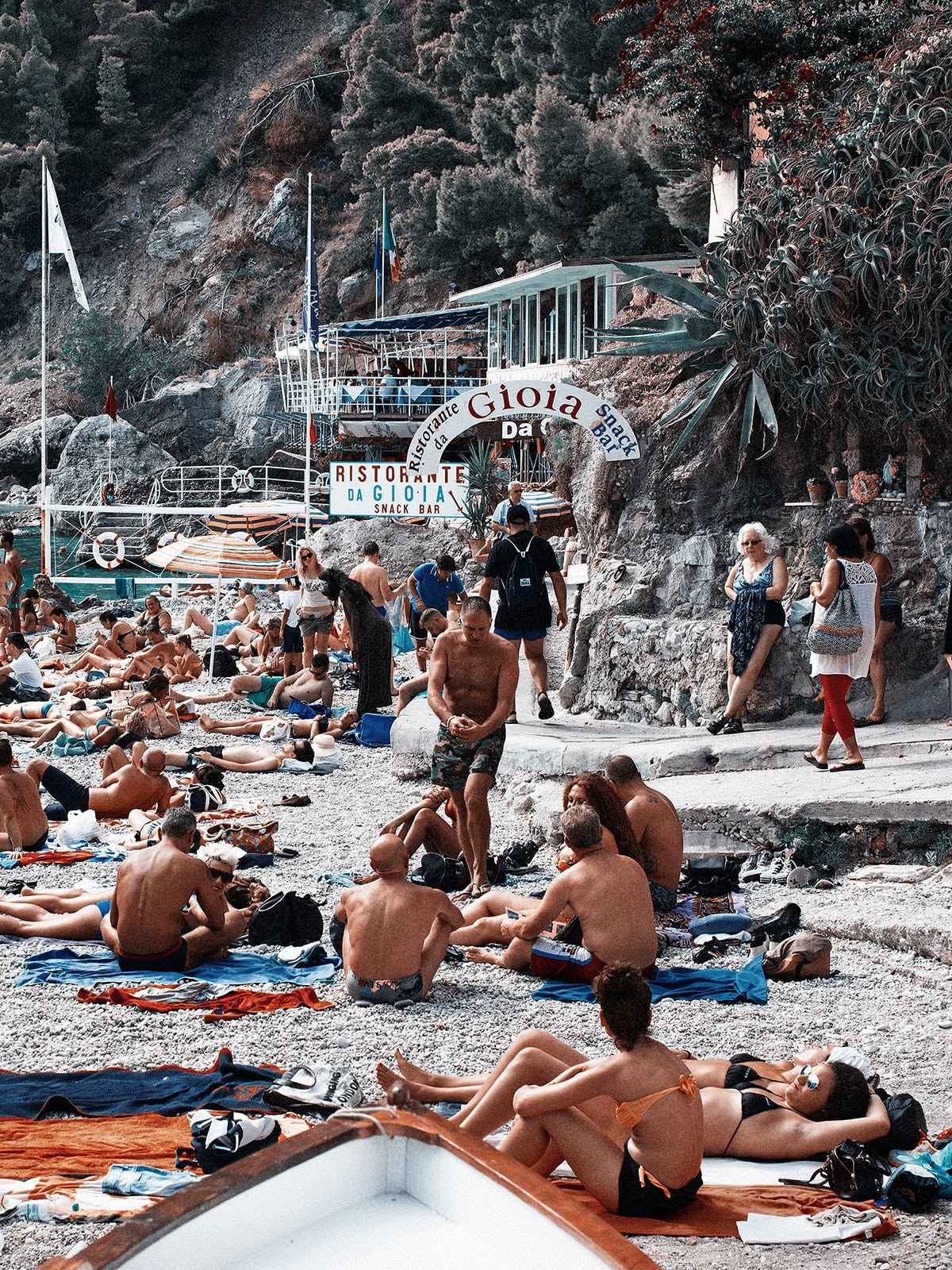
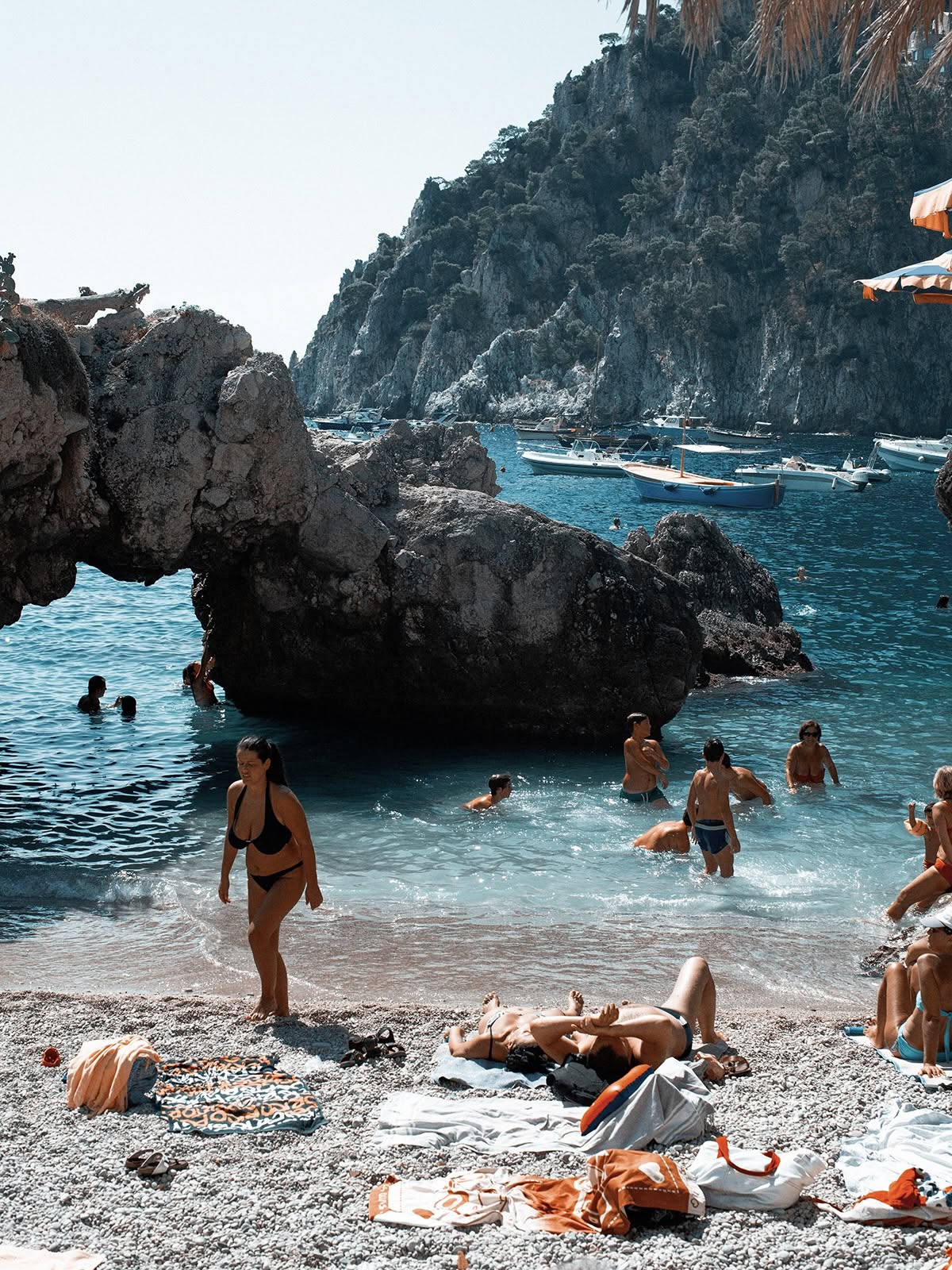
Several beach clubs operate at Marina Piccola. Da Gioia, Ristorante da Gioia, is at the water’s edge, the sign sun-faded and unpretentious, the beach in front of it reliably full in summer with the particular mix of Italian families, boats arriving from offshore, and people who have found the shade and have no intention of leaving it. Eat lunch here, swim, and stay longer than you planned.
Swimming and the Sea Caves
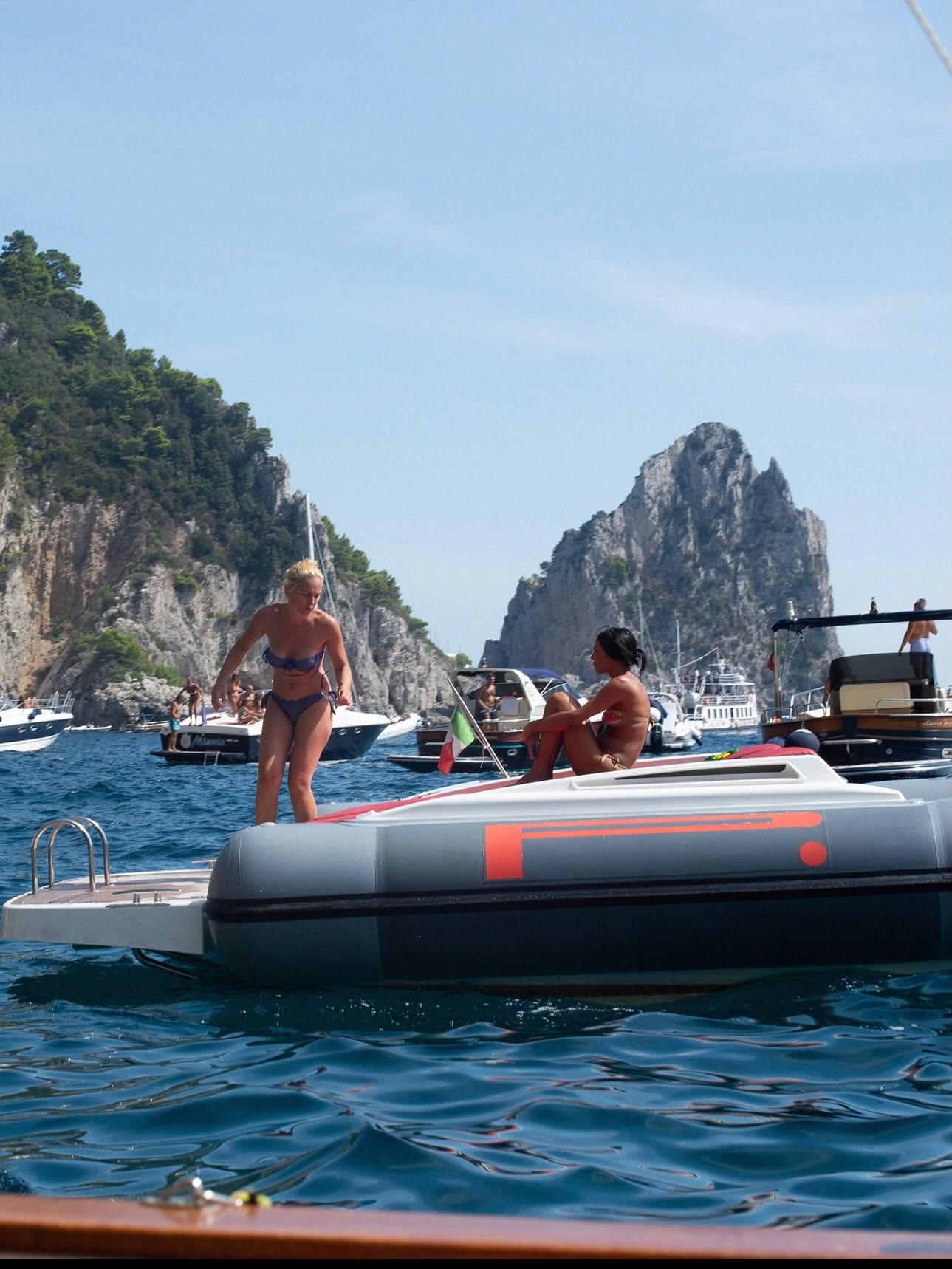
The coastline of Capri is studded with coves, inlets, and sea caves accessible only by water. A boat tour from Marina Grande covers the main ones: the Grotta Verde (Green Grotto), the Grotta Bianca (White Grotto), and others. For private coves away from the main tourist circuits, a chartered boat with a captain who knows the island will find places where the only sounds are water and whatever you brought to listen to.
Boat Trips Around the Island
You can spend a whole day on Capri and never see it. The ferry lands you at Marina Grande, the funicular takes you up to the Piazzetta, and from there the island is lanes and viewpoints. Lovely, and about a fifth of the place.
The reason anyone has come here since Tiberius is a coastline of limestone falling straight into the water, with no road along it and almost no path. The arch through the middle Faraglione is wide enough for a small boat and nothing else.
I have put the operators I would actually book, what each costs and which ones get into the caves, in my guide to Capri boat tours and the Blue Grotto.
Shopping
Shopping in Capri is divided between two quite different registers that coexist without apparent tension.
Via Camerelle is the luxury register. Running parallel to the main street in Capri town, it is lined with Chanel, Dolce & Gabbana, Prada, Moncler, Loro Piana, and the full roster of Italian and international fashion houses. The street is beautiful regardless of whether you intend to spend money on it. The window displays are well-curated, the buildings are right, and the crowd on Via Camerelle in July looks like a casting agency assignment.
Via Le Botteghe is the local register. A narrow alley with handmade crafts, ceramics, jewellery, and, most importantly, sandals. Capri is famous for its handmade sandals. The tradition dates to the 1950s when the island became a fashionable destination and local cobblers began making sandals to order for visitors including Sophia Loren and Jacqueline Kennedy. Several shops on Via Le Botteghe still make sandals to measure while you wait. This is one of the more worthwhile things you can buy on the island and one of the few things that justifies the word authentic without irony.

Carthusia is the island’s historic perfumery, founded in 1948 after a bouquet left at the Certosa di San Giacomo monastery was found to have produced an extraordinary fragrance from the island’s wildflowers. The brand remains Capri-based. The perfumes are very good and very specific to the island. A bottle is a more considered souvenir than a bottle of limoncello, though limoncello also works.
Limoncello is produced across the Amalfi Coast and Capri from the region’s IGP-protected sfusato amalfitano lemons, the large knobby yellow kind that appear in every garden and restaurant decoration on the coast. Buy it cold and drink it as a digestivo. The quality varies significantly; a bottle from a local producer or a specialty shop is worth more than a supermarket purchase.
Where to Stay
Capri Town
Grand Hotel Quisisana is the island’s grande dame. Built in 1845 (originally as a sanatorium; qui si sana means ‘here one heals’), it became a hotel in 1861 and has since hosted Oscar Wilde, Ernest Hemingway, and several decades of people who understood where to stay on Capri. The pool terrace and the public spaces have the grandeur of a place that has been receiving guests for over 150 years and knows how. 148 rooms, many with balconies over the gardens or sea. The most central luxury option on the island.
La Scalinatella is smaller, more intimate, and owned by the same family as the Quisisana. Thirty rooms in a former private villa, terraced down the hillside with views of the Faraglioni. Majolica tile floors, arched doorways, two pools. The kind of hotel that operates on the assumption that its guests know what they are doing and requires little explanation.
Hotel Villa Brunella sits at the end of Via Tragara with direct views of the Faraglioni from its terrace restaurant. Family-run, with twenty rooms, a pool, and the particular quality of a place that has been in the same hands long enough to have developed a genuine character rather than a designed one.
Hotel Canasta is a four-star boutique option on Via Campo di Teste, parallel to Via Camerelle. Family-run since 1964, with the classic Caprese majolica tile aesthetic and a position that makes the central shopping streets immediately accessible. Better value than the grand hotels, with a character of its own.
Anacapri
Capri Palace Jumeirah is the contemporary luxury proposition. In Anacapri, slightly removed from the high-season intensity of Capri town, with ninety rooms, most of which have sea views, private suites with pools, an impressive spa, and L’Olivo, the island’s only two-Michelin-star restaurant. The Il Riccio beach club below is one of the better places to spend a day on the island. The property has a design sensibility that is white-on-white Mediterranean modern rather than historic grandeur.
Staying Overnight
Capri as a day trip is what most visitors do. Capri as an overnight stay is a different island. After the last ferry, something settles. The Piazzetta empties to a fraction of its daytime population. The streets are quiet. The light in the evenings has a quality it does not have during the day, and the island is briefly and genuinely itself.
If you are staying more than one night, Anacapri is worth considering as a base. Quieter, slightly cooler in summer, with the chairlift and Monte Solaro on your doorstep. The fifteen-minute bus ride to Capri town is straightforward.
Where to Eat
Da Paolino
The most romantic restaurant on the island, and possibly in the region. A family-run trattoria on Via Palazzo a Mare where dinner is served under a canopy of lemon trees in a garden that has been producing this specific experience since 1960. The lemons grow directly above the tables, and their fragrance is present in the food and in the air simultaneously. The menu is traditional Campanian: seafood, pasta, local vegetables, and the setting makes everything taste correct. Book well in advance. The garden fills every night.
L’Olivo
The two-Michelin-star restaurant at Capri Palace Jumeirah in Anacapri, run by chef Andrea Migliaccio. The menu is sophisticated Mediterranean with an emphasis on local ingredients and technical precision: sea asparagus, scarlet shrimp, the island’s famous lemon in various forms. The wine cellar is serious. This is the island’s fine dining option for those who want cooking at this level. The terrace has views across the Gulf of Naples.
Il Riccio
The Michelin-starred beach club restaurant operated by Capri Palace, located near the Blue Grotto on the northwestern coast. Lunch-focused, with a terrace at the water’s edge, stairs down to the sea, and a menu built around the freshest seafood the Tyrrhenian offers: sea urchins, octopus, bream, whatever arrived that morning. Less formal than L’Olivo, more expensive than the atmosphere might suggest, worth every cent of it.
La Capannina
A Capri institution since 1936, on Via Le Botteghe near the Piazzetta. Traditional, reliable, and in the best possible sense completely unchanged. The kind of restaurant that exists because the island has always needed exactly this kind of restaurant. Good pasta, good seafood, a wine list that takes the local production seriously.
Aurora
On Via Fuorlovado, one of the most consistent restaurants on the island for decades, serving updated Campanian cooking with good ingredients and without the tourist-trap pricing that inflects some of the more visible establishments near the Piazzetta.
Fontelina Beach Club
At the base of the cliffs near the Faraglioni, accessible by boat from Marina Piccola or via a long staircase. A beach club and restaurant combined, with the water directly in front and the sea stacks directly behind. Lunch here (something cold, something with lemon) and then the water and then the walk back up. The classic Capri day compressed into one location.
Bars and Aperitivo
Bar Tiberio on the Piazzetta is the right place for an Aperol spritz at sunset if you accept that the Piazzetta premium applies and the experience is worth it. And it is.
The terrace at Grand Hotel Quisisana is for those who want the same hour with slightly more space and a different view.
The general approach to aperitivo on Capri follows the Italian template: something bitter, something cold, something served around six or seven in the evening while the worst of the heat has passed and the light has turned to the gold that makes everything look like it was designed to be photographed.
When to Go
June and September are the best months. The water is warm, the weather is reliable, the island is busy but not overwhelmed. The light in September is particularly good; the summer haze lifts and the distances become clear.
July and August are high season in full. The island is crowded in a way that requires acceptance rather than resistance. Arrive early, move early, and understand that the Piazzetta at noon in August is a different proposition from the Piazzetta at 8 am. The water is warmest in August.
May and October offer good weather, warm enough for swimming in May and into October, and considerably reduced crowds. Prices drop. Some restaurants and hotels close after October.
November through March: most tourist infrastructure is closed or reduced. What remains is the actual island, populated by its actual residents, operating on its actual rhythms. Some people find this the best version of Capri. It requires flexibility and acceptance that several things will simply not be available.
Practical Notes
No private cars. Private vehicles are prohibited on Capri for non-residents. This is not a problem. The island is navigable without one, and the restriction is part of what keeps it as it is.
Dress code. Capri town enforces a dress code on the main streets and piazza: cover up when not on the beach. Swimwear alone is not appropriate for walking through town. This is a local ordinance enforced with fines. A light cover-up resolves the issue immediately.
Reservations. At the better restaurants in July and August, reservations are non-negotiable. Da Paolino in particular. Book before you arrive on the island.
The Blue Grotto. Can close when the sea is rough, or the wind is from a particular direction. It also closes when the tide is too high for the boat to pass the entrance. There is no point in being annoyed by this. Check conditions and have an alternative.
Day trip logistics. If coming as a day trip in summer, the first ferry is the right ferry. The island is a different place at 8 am and at 11 am. The difference between these two hours on a July day is the difference between enjoyment and endurance.
Water. Bring it. The climb from Marina Grande to Capri town on foot, the walk to Villa Jovis, the path to the Faraglioni viewpoint, all of these are best conducted with water.
The funicular queue. In August, take the bus from Marina Grande to the town instead. The queue for the funicular can be forty minutes. The bus is faster at those moments and leaves from the same general area.
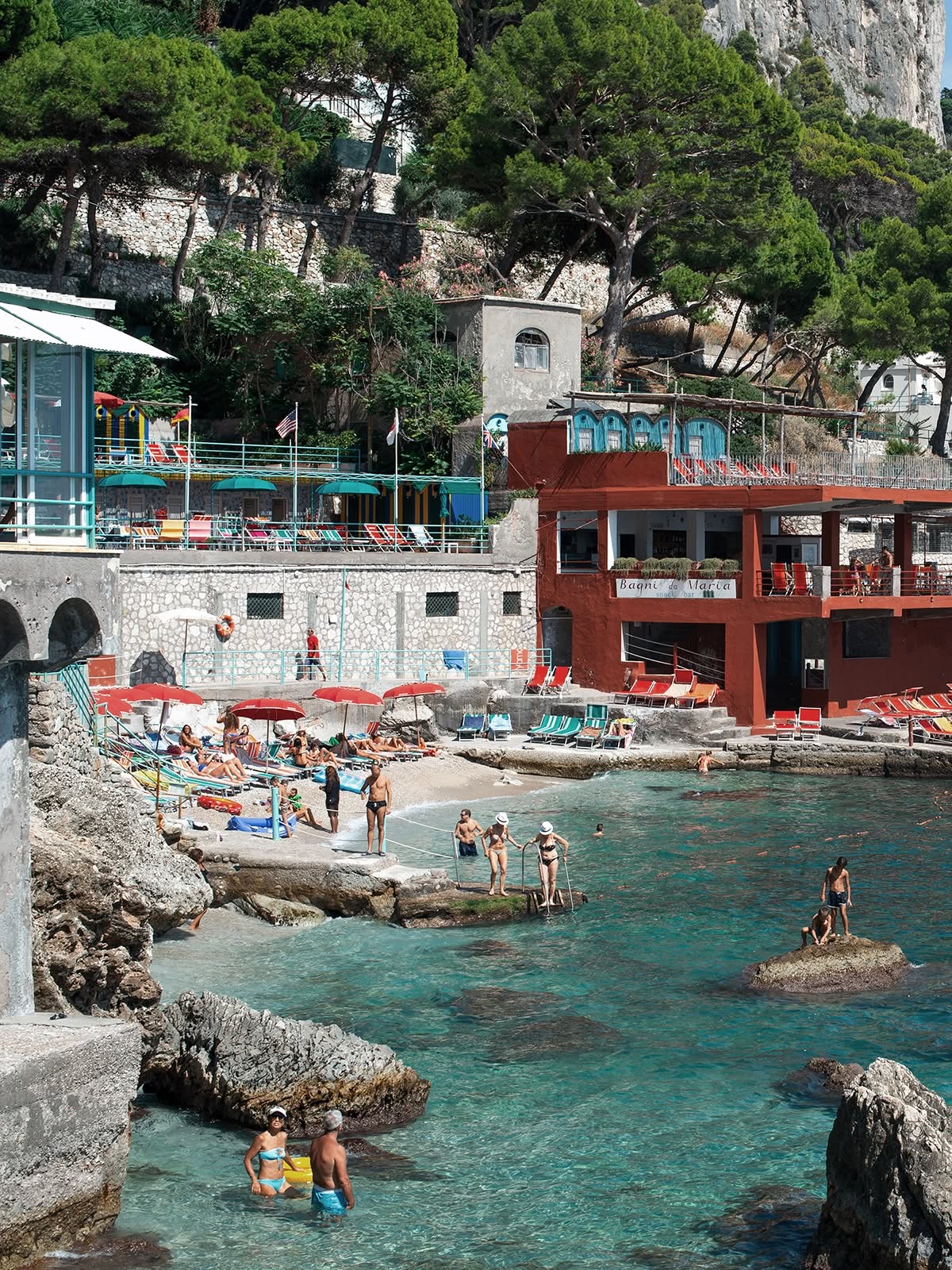
More images from Capri









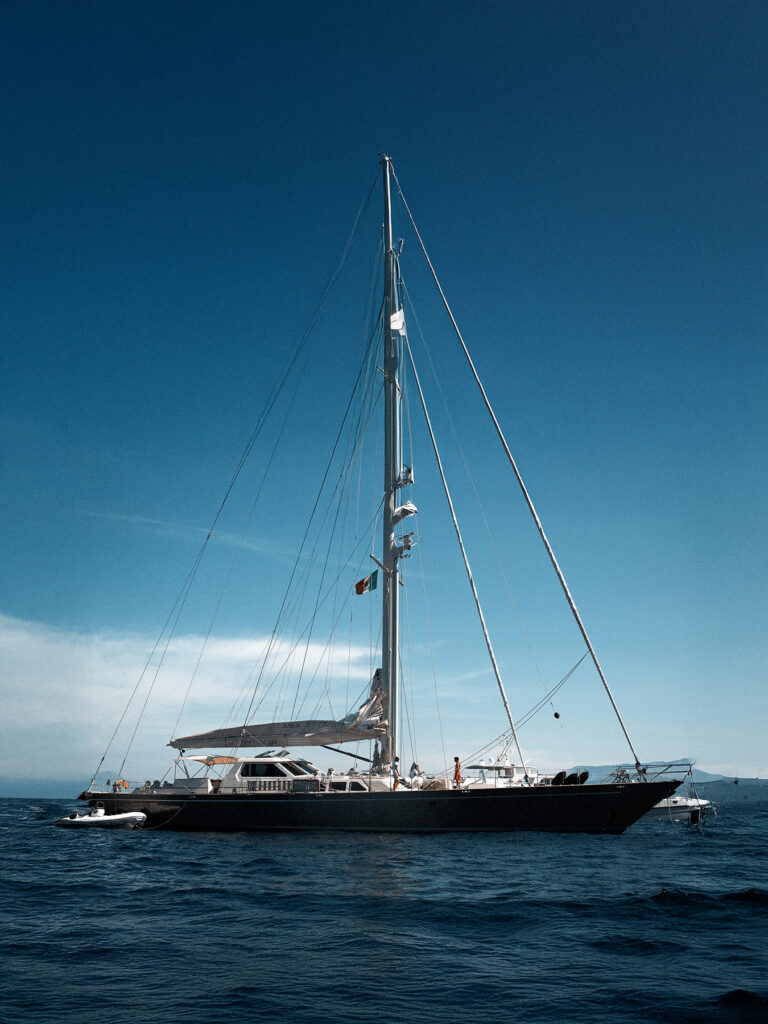
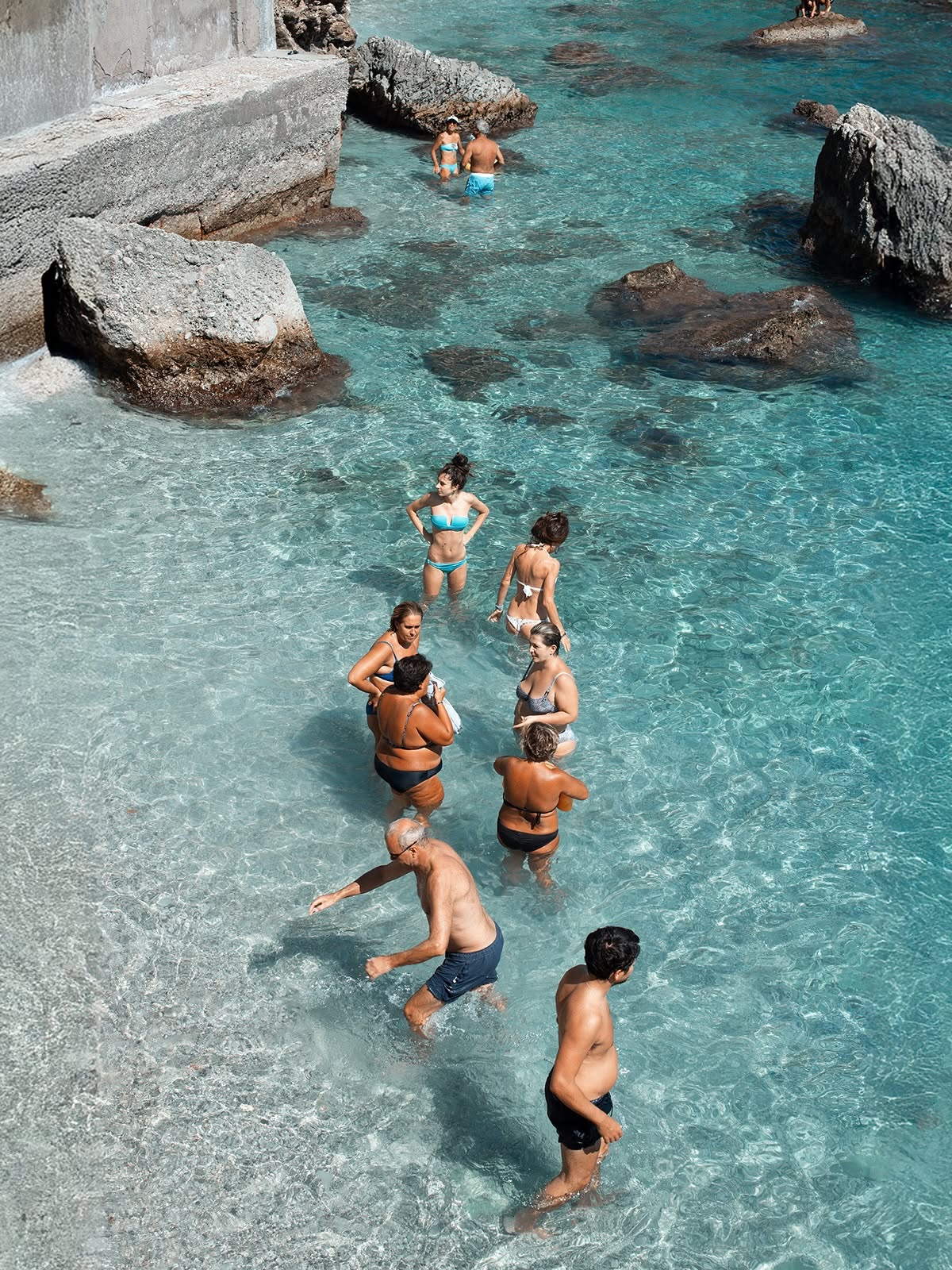
Your Complete Capri Guides
For the detail behind everything above, here are my in-depth Capri guides:
- How to Get to Capri: Ferries, Times and Prices
- The Best Things to Do in Capri
- Visiting the Blue Grotto in Capri
- Anacapri and Monte Solaro: The Quieter Side
- The Best Beaches and Swimming Spots in Capri
- The Best Photo Spots in Capri
- Where to Stay in Capri
- The Perfect Capri Itinerary: One or Two Days
- The Best Capri Boat Tours: Around the Island and Into the Blue Grotto
Capri Travel Diaries
Frequently Asked Questions
How many days do you need in Capri?
A day trip shows you the essentials, but Capri changes entirely once the day boats leave. Stay one or two nights to have the island quiet in the evening and early morning.
Is Capri worth visiting?
Yes. Beyond the crowds and the prices, the island keeps genuinely beautiful things, from the Faraglioni and the Blue Grotto to the walk up Monte Solaro and the gardens above the sea.
How do you get to Capri?
By ferry or hydrofoil from Naples, Sorrento, or the Amalfi Coast in the warmer months. There are no cars for visitors, so you arrive at Marina Grande and travel on by funicular, bus, or boat.
What is the best time to visit Capri?
Late spring and early autumn, for warm sea and thinner crowds than the July and August peak. Many places close in winter, when the island returns to its few hundred residents.
Is Capri expensive?
Yes, among the most expensive spots in Italy, especially in the Piazzetta. Costs ease a little in Anacapri, and a day can be built around the cheap pleasures of walking, swimming, and the view.
What is there to do in Capri besides the Blue Grotto?
A great deal, from the Piazzetta and the Gardens of Augustus to Villa Jovis, the chairlift up Monte Solaro from Anacapri, and a boat around the island past the Faraglioni.
A Final Note
Capri is famous enough that people arrive with fully formed expectations. These expectations are, in the main, accurate. The island is beautiful in the way the photographs suggest. The water is that colour. The Faraglioni are that imposing. The lemon trees at Da Paolino are that fragrant.
What the photographs don’t convey is the quality of the morning before the day-trippers arrive, the Piazzetta at nine with a coffee and no particular agenda, the Faraglioni from the water when the light comes through the arch. These things exist alongside the crowds and are available to anyone who gets up early enough or stays late enough or simply pays attention.
Capri rewards attention the way all genuinely beautiful things do: not by revealing itself immediately, but by offering more the longer you stay.
V.
You can read a journal entry from a trip to Capri here.
Capri is reached by ferry or hydrofoil from Naples (50-80 minutes), Sorrento (25 minutes), Positano (50 minutes), and Amalfi (60 minutes). Private boat charters are available from all Amalfi Coast ports. The funicular from Marina Grande to Capri town takes four minutes. The chairlift from Anacapri to Monte Solaro takes twelve minutes. Visitors are advised to book restaurants and ferries in advance during July and August.
Read also: Capri Is For Lovers – A Private Boat Tour | The Blue of Capri