Cinque Terre means “the five lands,” and that is exactly what it is: five small villages strung along a stretch of the Ligurian coast so steep and so folded that for most of their history the easiest way between them was by boat. No grand road was ever built here. The villages grew straight up out of the rock in stacks of pink and ochre and terracotta, terraced with vines and lemons on slopes that have no business holding anything, and they have stayed almost defiantly themselves because getting to them has always been just difficult enough to keep a certain kind of hurry out.
Today the five are a UNESCO World Heritage Site and one of the most photographed corners of Italy, which means they are no longer a secret and, in high summer, no longer quiet. But the thing that made them special is intact. You still arrive by a little train that spends half its life inside the mountain. You still climb down into each village one shuttered house at a time. And you can still, if you time it even slightly well, find the version of this coast that people fell in love with in the first place. This is everything I learned staying among them, arranged so you can plan your own days without unlearning it the hard way.
What to book before you come
The five villages are joined by a train that runs every twenty minutes and costs very little, and the walking paths between them are the reason to come. Almost nothing here needs booking. The exception is the water, because the coast seen from a boat is a different place entirely from the coast seen from a train tunnel.
- The five villages by boat, morning or sunset. 4.9 from over six hundred people. The villages only make sense from offshore: you finally see that they are stacked into ravines rather than sitting on a coast.
- A small group private boat from Monterosso. For a swim off the boat in water you cannot reach from any of the paths.
- From Florence, the day trip. 4.9 from nearly six thousand people. A long day, and how most people manage the Cinque Terre at all without staying.
The Cinque Terre Card for the trains and paths costs a few euros a day and is the single best value in Liguria. Every village, every harbour and the swimming are free.
The five villages, north to south
The villages run in a line along the coast, and the train connects them in the order you should probably learn them. From north to south: Monterosso al Mare, Vernazza, Corniglia, Manarola, Riomaggiore. Each is small enough to walk in twenty minutes and distinct enough that people develop fierce loyalties. Here is how they actually differ.
Monterosso al Mare is the largest, the flattest, and the only one with a proper sandy beach. It is split into two halves, the old town and the newer Fegina district, joined by a short tunnel, and it is the most practical base by a distance: the most hotels, the best restaurants, the easiest walking, and the one village where you can arrive without climbing a single stair. Purists find it slightly less charming than the others. Anyone travelling with children, with luggage, or with a preference for lying by the sea will find it a relief. It is also the anchovy capital of the coast, of which more below. Do not miss Il Gigante, the enormous statue of Neptune carved into the rock at the end of Fegina beach, holding up what was once the terrace of a grand seaside villa; battered by storms and war, he is half a giant now, and all the more striking for it.
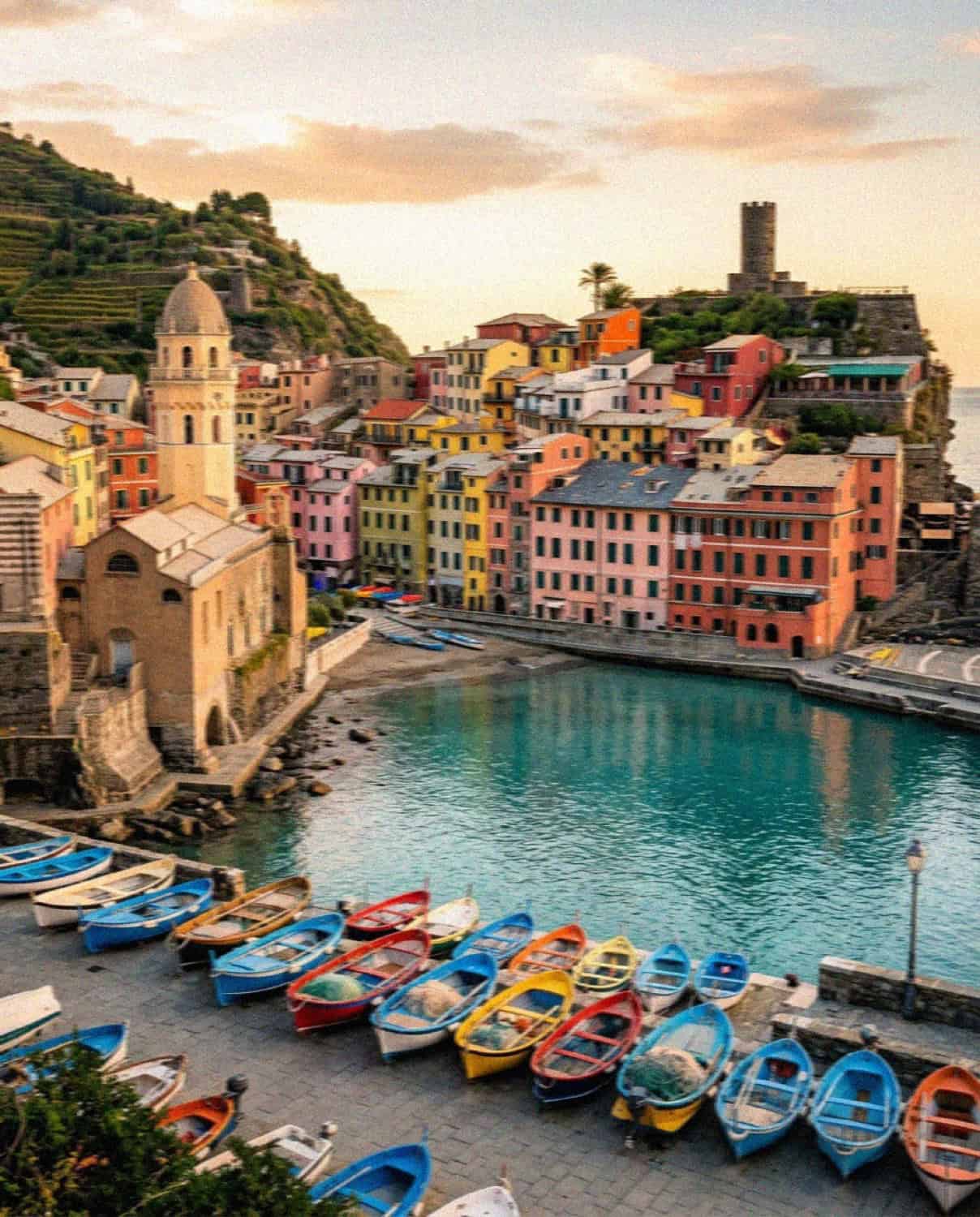
Vernazza is the one on the postcards. A tiny natural harbour, a scoop of water ringed by tipped-up fishing boats, a church with its feet nearly in the sea, and pastel houses climbing the rock behind. It is widely considered the most beautiful of the five and it books out fastest because of it. It is also the best-connected for walkers, the only village with an easy trail to a neighbour on each side, which makes it the smart choice if you want to hike the Blue Trail before the day-trippers arrive. The heart of it is Piazza Marconi, the little harbourfront square where the restaurant tables spill almost to the waterline, and above it stands the medieval Doria Castle watchtower, worth the short climb for the view straight down onto the boats and the bell tower. This is the composition every photograph of Cinque Terre is chasing, and Vernazza owns it.
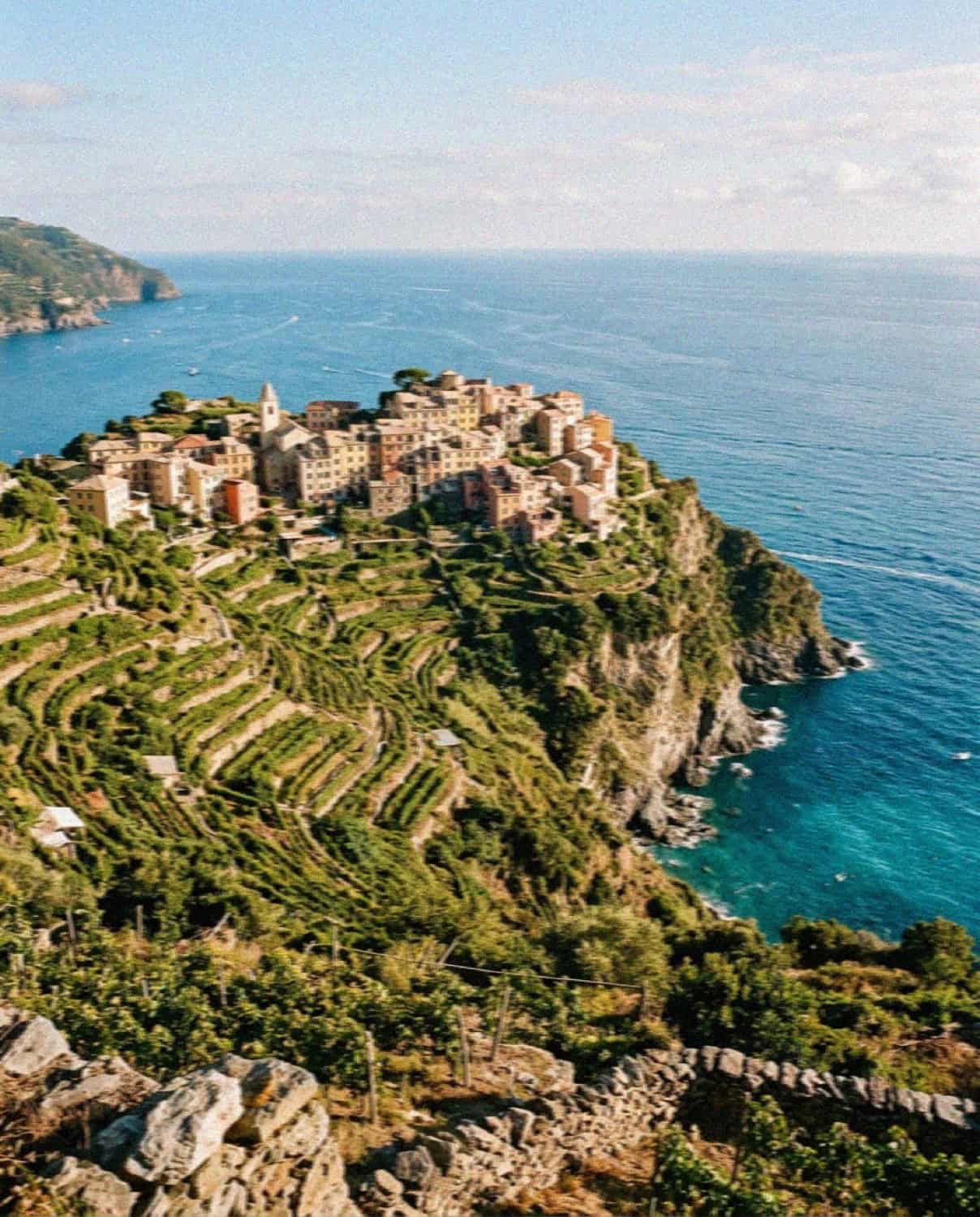
Corniglia is the odd one out, the only village not at sea level. It sits on a headland about a hundred metres up, and to reach it from the station you either climb the Lardarina, a brick staircase of thirty-three flights and around 380 steps, or take the shuttle bus that meets most trains. That climb keeps the crowds thinner and the atmosphere quieter. There is no harbour and no easy beach, but there is a village that feels genuinely lived-in, and some of the best views on the coast for the least company. Walk out to the Santa Maria terrace at the far end of the village for the long view back along the coast, and know that the most famous view of Corniglia itself, the town stacked on its green headland high above the sea, is the one you get from the Blue Trail as you approach on foot from Vernazza.
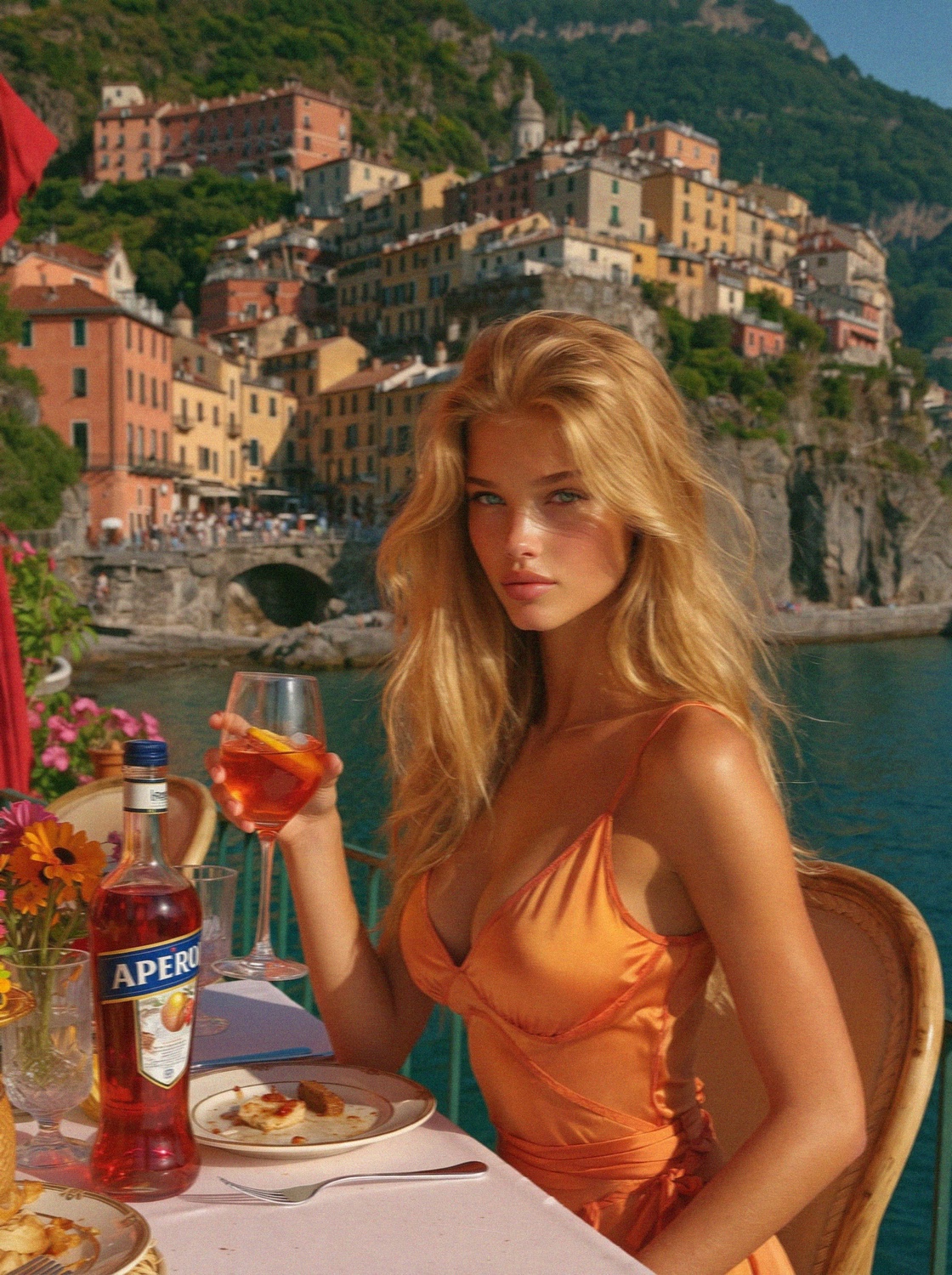
Manarola is, to my eye, the most photogenic after Vernazza, a cascade of coloured houses tumbling down to a rocky inlet where people sunbathe on the flat rocks and jump into deep clear water. It has no beach to speak of but arguably the best swimming, and at dusk the view back at the village from the walkway toward the cemetery is one of the loveliest things on this coast. It is also at the heart of the local wine country. Two things to plan around here: Nessun Dorma, the aperitivo bar on the point above the harbour, where people queue for a table to drink a spritz and make their own pesto with a mortar and pestle while the sun goes down, and the walk out to the Punta Bonfiglio viewpoint by the cemetery, which frames the single most photographed image of the whole coast, the village tumbling to the water, and is unbeatable in the last light of the day. Arrive early or late; the middle of the day belongs to the tour groups.
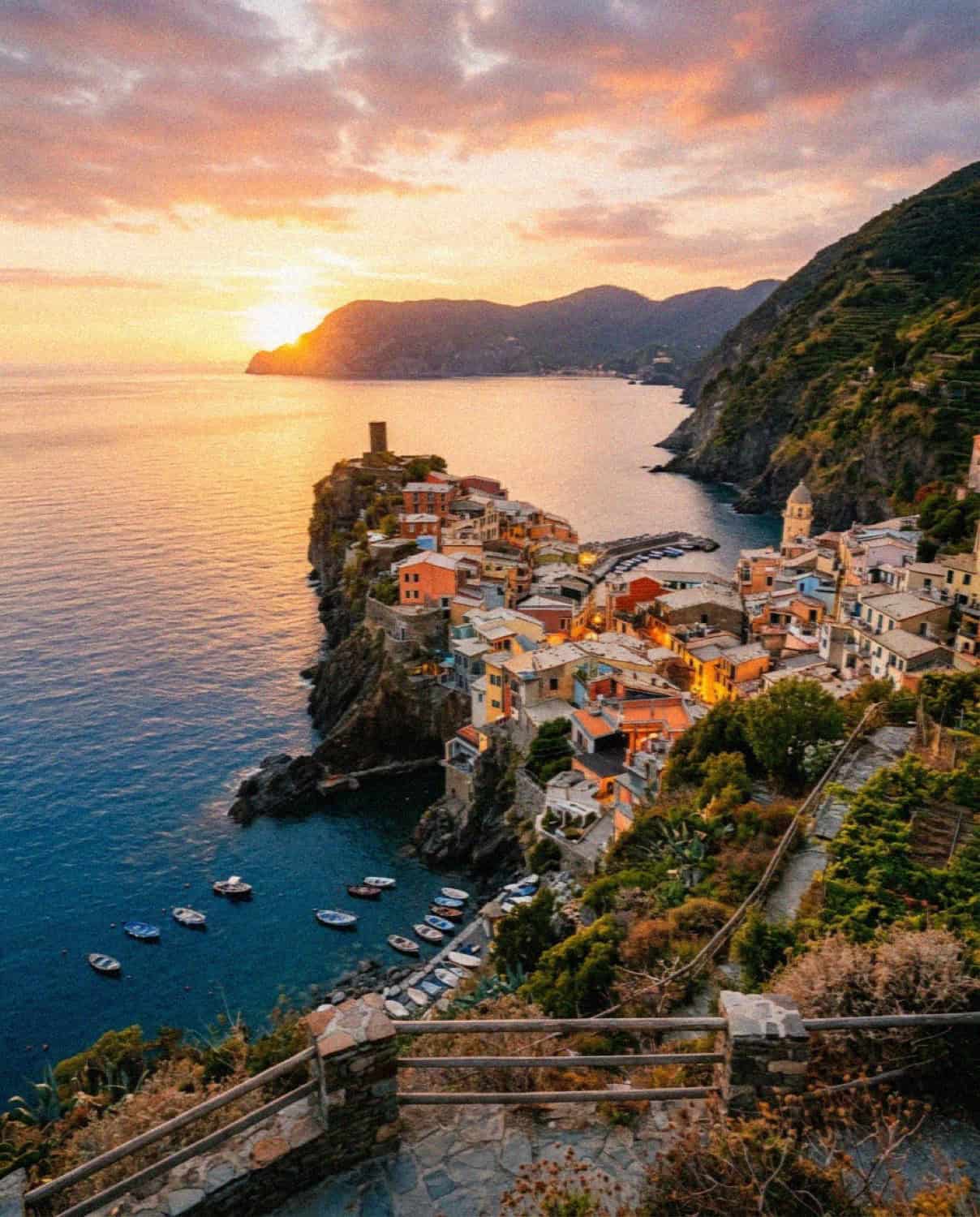
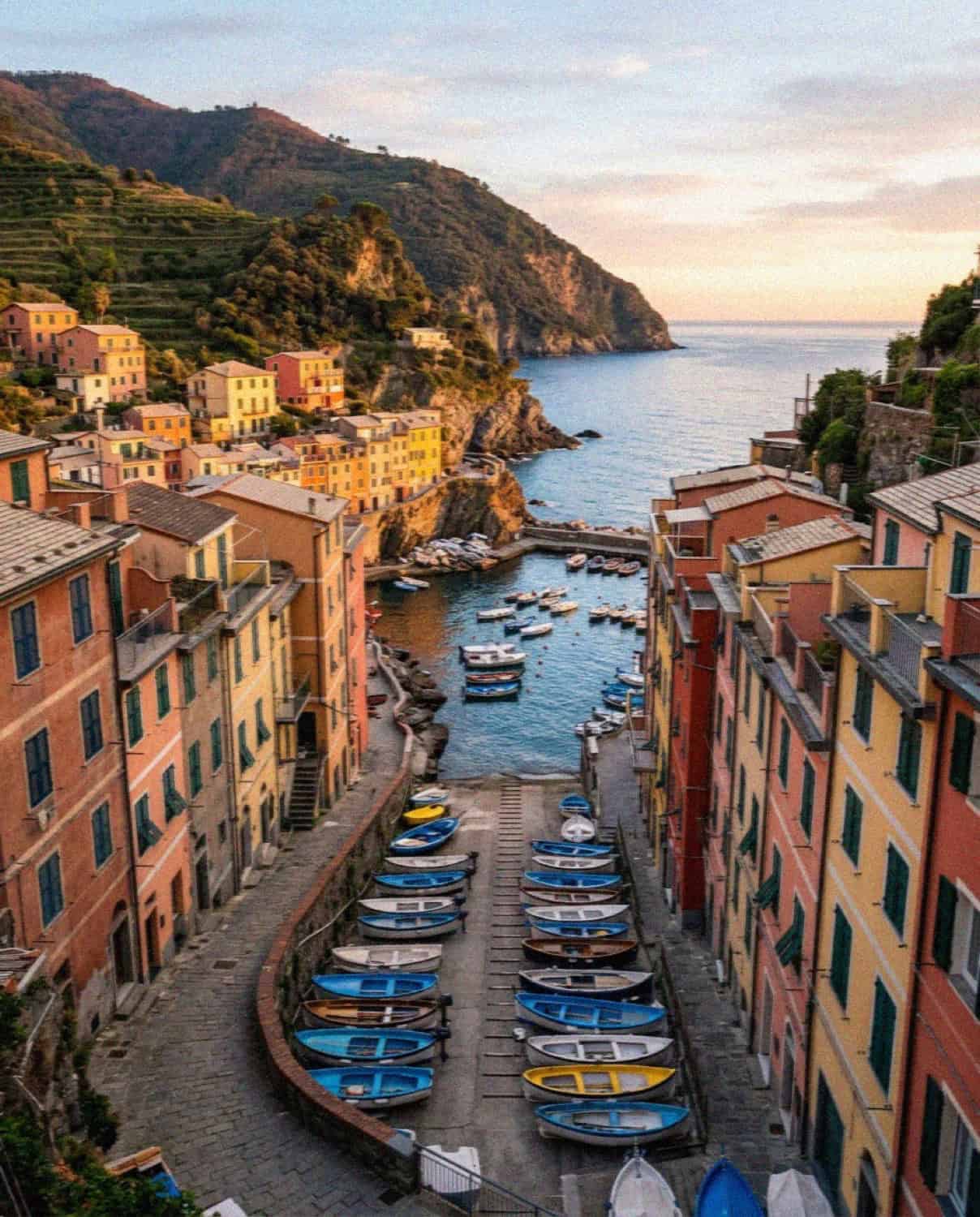
Riomaggiore is the southernmost, the closest to La Spezia, and the most workaday in the best sense, a steep main street running down to a small harbour where the boats are hauled up the ramp and the evening light turns everything gold. It suits budget travellers and solo visitors, and it is one end of the famous Via dell’Amore, the short cliff path to Manarola that reopened in 2024 after twelve years closed. Walk down to the end of the breakwater at the harbour mouth toward evening: the whole steep street of houses lines up behind the boats and turns amber as the sun drops, and it is the quietest of the five great sunset views because most day-trippers have already caught their train.
Plan Your Visit to the Cinque Terre
A few things I booked and loved. These help support the blog, at no cost to you.
- Where I stayed: search Cinque Terre hotels
- Boat trips and Cinque Terre tickets
- Stay connected: get a travel eSIM
This section contains affiliate links. If you book through them I may earn a small commission, at no extra cost to you.
Getting there and getting around
Almost everyone arrives by train. The nearest major hub is La Spezia to the south; from the north you change at Levanto. Both sit at the ends of the local line that threads all five villages, and once you are on that line, the train is how you will get everywhere.
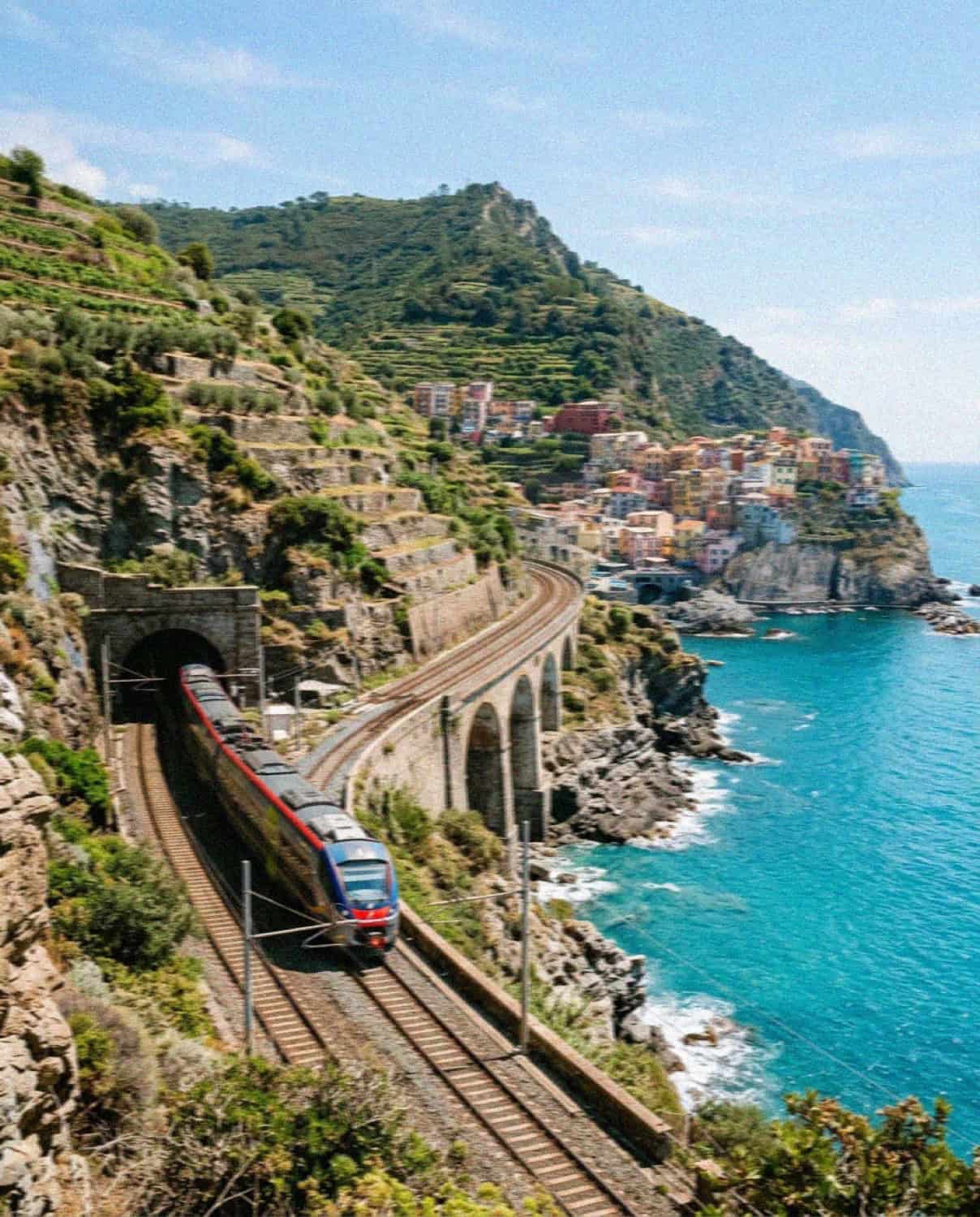
The service is the Cinque Terre Express, a regional train running between Levanto and La Spezia and stopping at all five villages. In high season, roughly mid-March to early November, it runs very frequently, around every fifteen to twenty minutes across the day, so you rarely wait long. Journeys between neighbouring villages take only two to four minutes, most of it in tunnel. Off-season it drops to once or twice an hour. It is worth remembering that the timetable in your hand is only valid for a set period, currently through late April 2026, and is reissued regularly, so check the day’s board rather than trusting an old screenshot.
For most visitors the sensible ticket is the Cinque Terre Card, which comes in two forms. The Trekking Card covers all the paid hiking trails plus the local village buses, and in 2026 runs about €7.50 for one day, €14.50 for two and €21 for three at standard rates, rising to roughly €15, €29 and €42 on designated high-demand “red” days. The Train Card adds unlimited travel on the Cinque Terre Express on top of the trail access, and is priced in demand bands from around €19.50 for a one-day low-season card up to about €32.50 on the busiest days, with two- and three-day versions scaling up from there. If you plan to hop between villages more than twice in a day, the Train Card usually pays for itself. A genuinely useful 2026 change: the Via dell’Amore is now included in the card.
The prettier alternative is the ferry. From roughly late March to early November, boats run along the coast connecting Monterosso, Vernazza, Manarola and Riomaggiore, plus Levanto, Portovenere and La Spezia. Corniglia is the exception, up on its headland with no sea access, so it is the one village the ferry cannot reach. A full-day hop-on hop-off pass runs about €42 for adults in 2026, with an afternoon pass around €28 and single legs from about €15. It is slower and weather-dependent, but seeing the villages rise out of the water the way sailors first saw them is worth giving up an afternoon for at least once.
A word on cars: do not. The villages are effectively closed to outside traffic, parking is scarce and expensive, and the roads are slow and high above the coast. If you drive in, leave the car in La Spezia or Levanto and take the train.
Hiking the trails
The walking is half the reason to come. The famous route is the Sentiero Azzurro, the Blue Trail, the low coastal path that historically linked all five villages just above the sea. Parts of it have been closed for years after landslides, and the status genuinely changes from season to season, so this is the one thing you should verify against the national park’s own site the week you travel rather than trusting any guide, including this one.
As of 2026 the general picture is good. The two northern legs, Monterosso to Vernazza and Vernazza to Corniglia, are the classic Blue Trail walk and are open; they are also the most scenic and the most demanding, roughly ninety minutes to two hours each, with real climbing and steps, proper shoes required. On the busiest days the park now reintroduces a one-way rule on the Monterosso–Vernazza section, mandatory downhill from Monterosso toward Vernazza between about 9am and 2pm, to manage the crush, so walk that leg early or check the direction of travel before you set off.
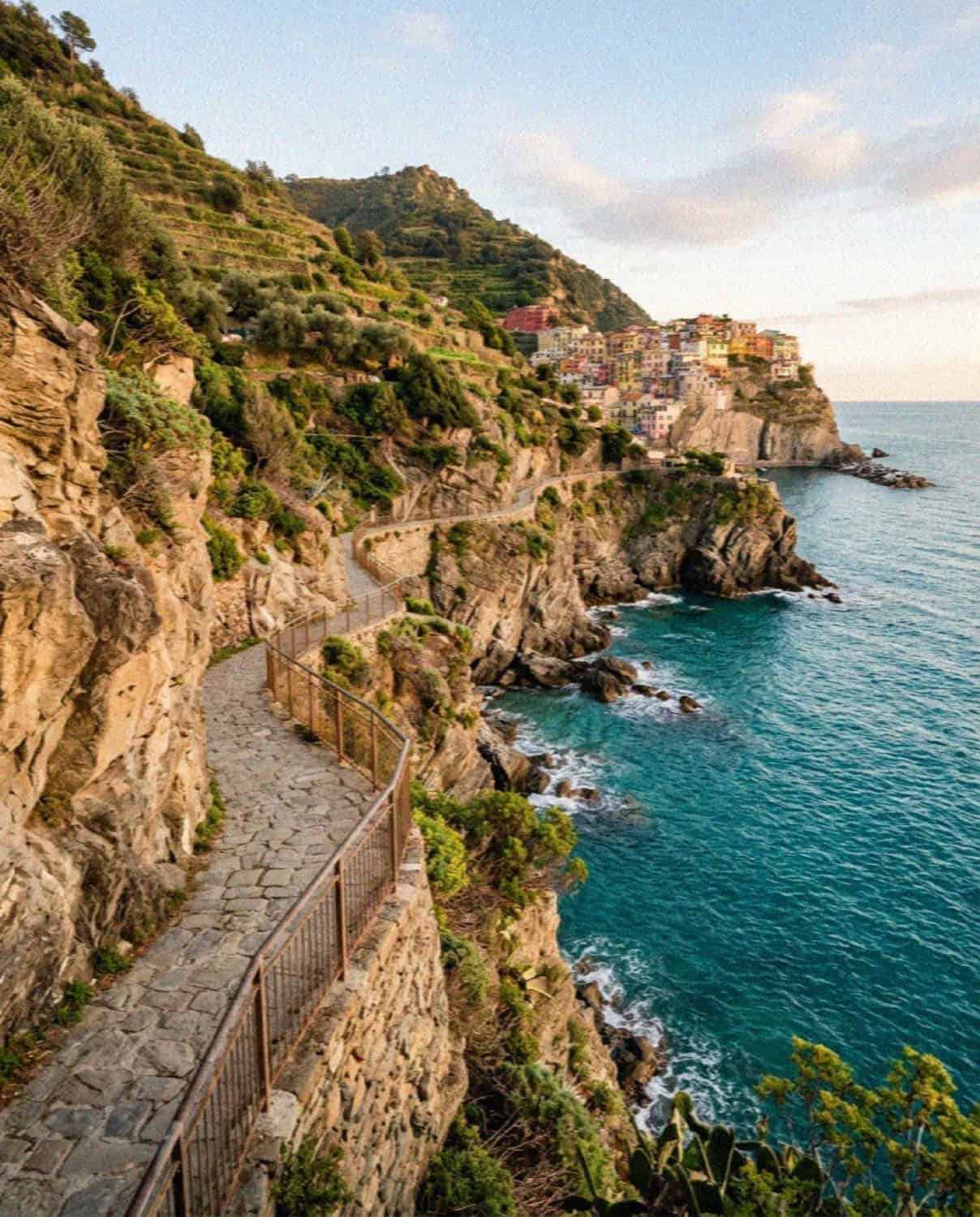
At the southern end, the Via dell’Amore between Riomaggiore and Manarola reopened in August 2024 after more than a decade closed. It is a paved, almost flat cliff path of just over a kilometre, the easiest famous walk on the coast, and it now runs on a timed-entry system: you book a slot, and access is capped at around a hundred people every fifteen minutes. In the warmer months it stays open late, often to around 9pm, which makes it a lovely thing to walk at golden hour. Book ahead in high season, up to seventy-two hours in advance, because slots do sell out.
If the low coastal path is closed on the leg you want, there are almost always higher trails through the vineyards and the sanctuaries above the villages that connect the same two points. They are harder and less crowded, and the views from up there are, if anything, better.
The beaches
This is not really a beach destination in the sun-lounger sense, with one clear exception. Monterosso has the only proper sand: the long Fegina beach in the new town, umbrellas in coloured rows right by the station, part free public beach and part paid clubs, and a smaller pebble beach under the old town with the classic view of umbrellas against pastel houses. Renting at one of the clubs in 2026 runs roughly €20 for a single sunbed up to around €25–40 for two loungers and an umbrella for the day, more at the smarter clubs. It is the one village built for a proper beach day, which is exactly what I spent there; that afternoon is written up in full here.
Elsewhere, swimming means rocks rather than sand. Manarola has the best of it, deep clear water off flat rocks with ladders down; Vernazza has a tiny beach behind the harbour and a rocky one you scramble to; Riomaggiore has a small pebble cove. All of them are lovely for a dip between villages. None of them are places to spread out for the day. If lying by the sea is the point of your trip, base yourself in Monterosso and treat the other four as walks.
The villages by boat
The train spends most of its journey in a tunnel. That is the geography rather than a complaint, and it works beautifully as transport, but it shows you nothing.
From the water you finally understand what these places are. Not coastal towns, but buildings stacked into the crack of a ravine, painted so a fisherman could pick out his own house, with terraced vineyards climbing behind them. Corniglia sits a hundred metres up on a headland with no landing at all, which you cannot see from the platform and cannot miss from a boat.
I have put the operators I would actually book, what each costs and which ones get into the caves, in my guide to Cinque Terre boat tours.
Where to stay
The honest answer is that it depends on what you want your evenings to feel like. Staying in the villages means you get the magic hour, the time after the day-trippers leave and the place becomes itself, and that alone is worth a lot. Monterosso is the easiest village base, flat and well-served, best for beach days and anyone with luggage or children. Vernazza is the most atmospheric and the first to sell out. Manarola and Riomaggiore are lovely and slightly better value; Corniglia is the quietest and cheapest of the five but you pay for it in stairs.
If the village prices make you wince, two towns just outside make excellent bases. Levanto, one stop north of Monterosso, has a real sandy beach, a proper town with its own life, lower prices, and a four-minute train into the park. La Spezia, just south, is a working city rather than a pretty one, but it is the cheapest option by a distance, often 40 to 60 percent below the village rates, with far more availability, and the train reaches Riomaggiore in about ten minutes and Monterosso in around twenty-three. For July and August, book the villages three to four months out; Levanto and La Spezia stay bookable much later.
What to eat and drink
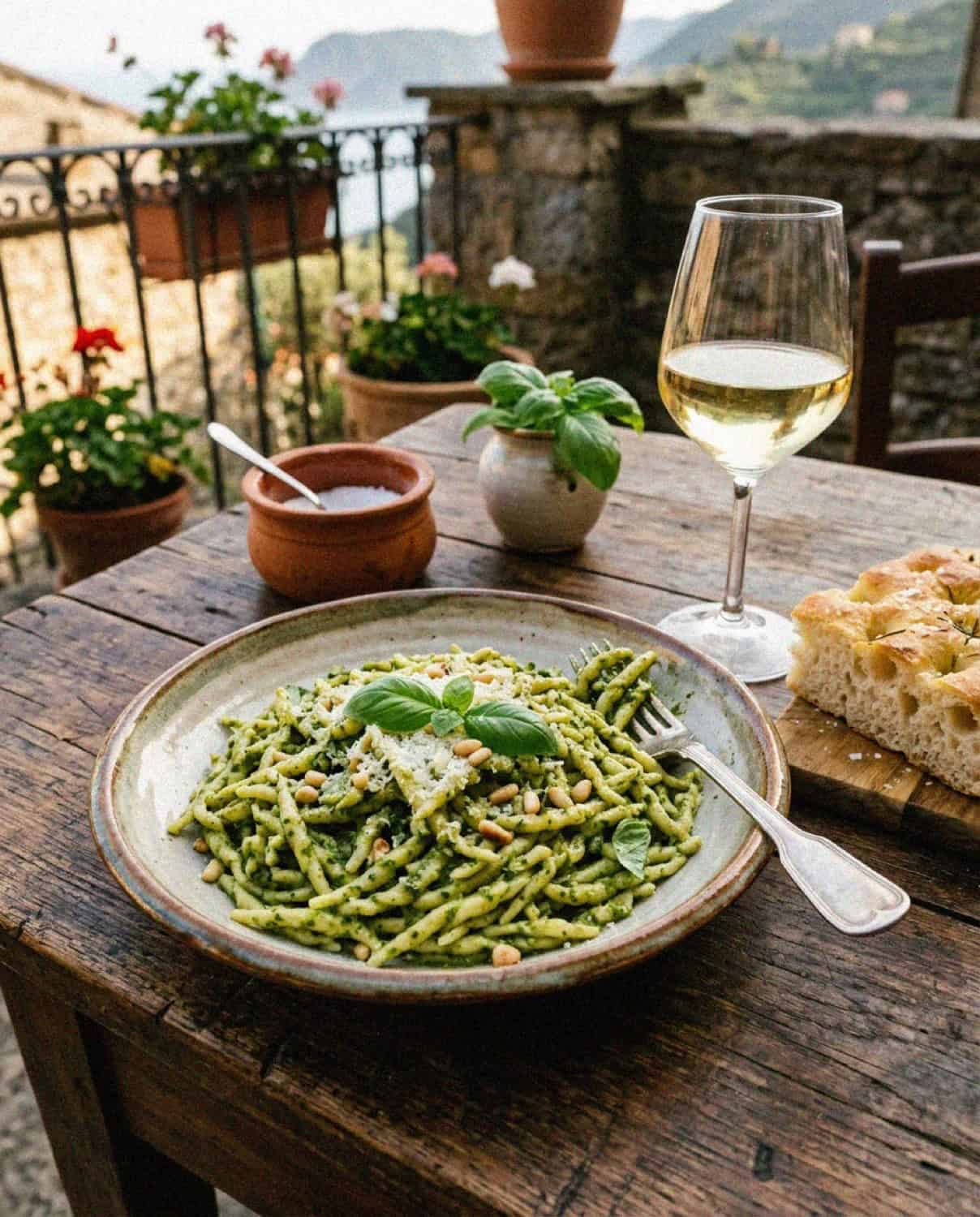
The food here is Ligurian and it is very good. Pesto was more or less invented in this region, basil, pine nuts, garlic, Parmesan and local olive oil pounded together, and it is served over trofie, the short twisted pasta whose grooves were made to hold it, or over trenette. Do not leave without a plate.
Monterosso is famous across Italy for its anchovies, fished at night by lamplight and served every way imaginable, salted, marinated in lemon, stuffed, fried, laid over crostini. If you think you dislike anchovies, this is the place to be proven wrong. Everywhere you will find focaccia, the fluffy oil-rich Ligurian flatbread, and near the coast fritto misto, a paper cone of fried seafood eaten walking. Finish with sciacchetrà, the local sweet passito wine made from grapes dried on the terraces, poured in small glasses at the end of a meal, and drink the crisp local white, Cinque Terre DOC, with everything else. And eat the lemons in every form you find them, granita especially, because they grow on the same terraces as the vines and taste of this exact place.
When to visit
The sweet spot is the shoulder season. May, June, September and early October give you warm days, swimmable sea, open trails and manageable crowds. Of these, September is the one I would pick if I could pick only one: the summer crush thins after the first week, the water is still warm from a whole summer of sun, and the light turns gold and long.
July and August are hot, gloriously so, but they are also the most crowded, the trails and harbours packed and the accommodation at its most expensive and hardest to find. It is still worth doing if it is the only window you have, as it was mine, but go early to the trails and the beaches and treat the middle of the day as a time to be horizontal in the shade. Spring, April into May, is green and flowering and quiet. Winter, November to February, is cool and some things close, but the villages go still and dramatic and briefly feel like they belong to the people who actually live in them.
A few things worth knowing
A handful of practicalities will save you real trouble. Wear proper shoes if you plan to walk; the Blue Trail is a mountain path, not a promenade, with uneven steps and drops, and sandals are turned back at some trailheads in high season. Travel light. There are no porters and a great many stairs, and the charming apartment you booked is very often three flights up a lane no car can reach; a wheeled case is a liability here, a soft bag on your back is a friend.
Book your timed things ahead. The Via dell’Amore runs on slots that sell out, and the most popular restaurants in Vernazza and Manarola want a reservation in season. Carry some cash. Cards are widely taken now, but the granita stand, the focaccia counter and the beach-club sunbed man often are not set up for them. Time your days against the crowds, which arrive by mid-morning train and thin out after about 5pm; the villages are at their best early and late, so if you are staying over, those are the hours to be out. And if you are only here for a day, come as early as you can and leave as late as you dare.
Respect that people live here. These are working villages, not a theme park; the lanes are someone’s front step and the quiet after dark is theirs. Cinque Terre gives a great deal to anyone willing to slow to its pace. It asks only that you do.
A simple plan
If you have three days, this is a version that works. Day one, base yourself and walk the northern Blue Trail from Monterosso to Vernazza to Corniglia while your legs are fresh, taking the train back. Day two, a beach day in Monterosso, exactly the kind I spent, with a spritz and a swim and no ambitions at all. Day three, the south: the Via dell’Amore at golden hour, Manarola for the sunset view, and a last dinner with the sea doing the talking. Two days will do it at a push; five will let you slow to the speed the place actually runs at, which is the whole point of coming.
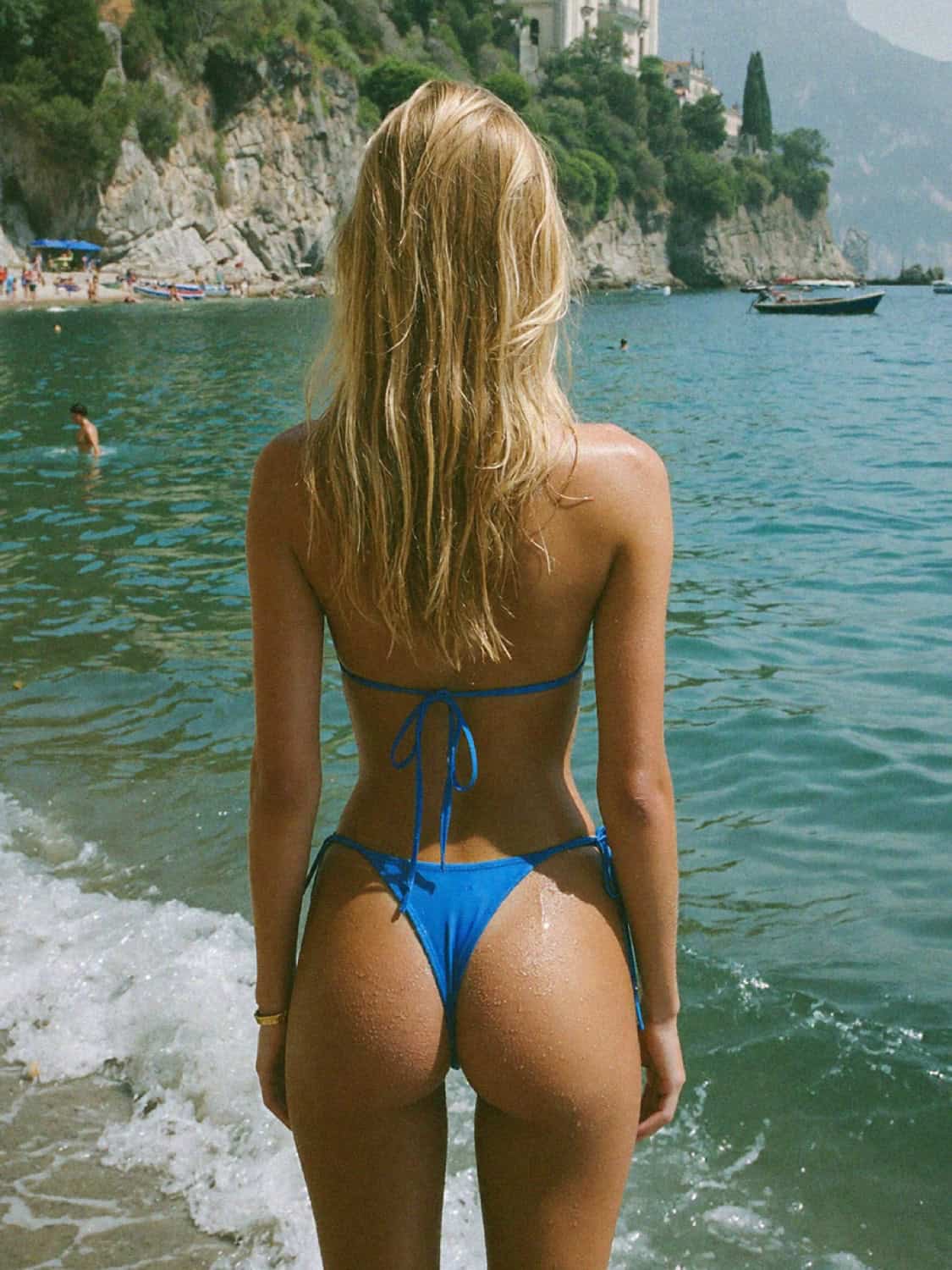
More images from Cinque Terre


Your Cinque Terre Guides
- The Perfect Cinque Terre Itinerary: 2 to 3 Days
- How to Get to Cinque Terre and Get Around
- Where to Stay in Cinque Terre
- Hiking Cinque Terre: The Blue Trail and Via dell’Amore
- The Best Beaches in Cinque Terre
- The Best Photo Spots in Cinque Terre
- When to Visit Cinque Terre
- The Best Cinque Terre Boat Tours: Seeing the Five Villages From Below
Cinque Terre Travel Diaries
- Somewhere Smaller
- Let the Sea Keep the Time
- The Long Way Between the Villages
- The Morning the Sea Said Goodbye
Frequently Asked Questions
How many days do you need in Cinque Terre?
Two days at a push, three is ideal, and five lets you slow to the pace the place actually runs at. A good three-day plan is the northern Blue Trail one day, a Monterosso beach day the next, and the southern villages and the Via dell’Amore at golden hour on the third.
What is the Cinque Terre Card and is it worth it?
It comes in two forms. The Trekking Card, about 7.50 euro for one day up to 21 euro for three at standard rates, covers the paid trails and the village buses. The Train Card, from around 19.50 euro a day and priced in demand bands, adds unlimited travel on the Cinque Terre Express. If you plan to hop between villages more than twice in a day the Train Card usually pays for itself, and in 2026 the Via dell’Amore is included.
Do you need to book the Via dell’Amore?
Yes. The cliff path between Riomaggiore and Manarola reopened in 2024 and now runs on timed entry, capped at about 100 people every fifteen minutes. Book ahead in high season, up to 72 hours in advance. In the warmer months it stays open late, often to around 9pm, which makes it lovely to walk at golden hour.
Which village should I stay in?
Monterosso is the easiest base, flat and well served with the only real beach. Vernazza is the most atmospheric and books out fastest. Manarola and Riomaggiore are lovely and slightly better value, and Corniglia is the quietest. If village prices are steep, Levanto one stop north and La Spezia just south, often 40 to 60 percent cheaper, make excellent bases with quick trains in.
Does Cinque Terre have beaches?
Only Monterosso has proper sand, at the long Fegina beach and a smaller pebble beach beneath the old town. Elsewhere swimming means rocks. Manarola has the best of it, with deep clear water off flat rocks, and Vernazza and Riomaggiore have small coves.
What is the best time to visit Cinque Terre?
May, June, September and early October give warm days, swimmable sea and manageable crowds, and September is the pick of them. July and August are hot and the most crowded, so go early to the trails and beaches and rest through the middle of the day.
How do you get around Cinque Terre?
By the Cinque Terre Express train, which links all five villages every fifteen to twenty minutes in high season with journeys of just two to four minutes. Ferries run from about late March to early November between every village except Corniglia. Cars are best left in La Spezia or Levanto.
What food is Cinque Terre known for?
Pesto over trofie pasta, Monterosso’s famous anchovies, oil-rich focaccia, and the sweet sciacchetra dessert wine, all washed down with the crisp local Cinque Terre DOC white.
I came down into these villages the slow way, by train from Florence, and wrote about that first evening here. Everything else, the beaches and the trains and the anchovies, is above, so that your version of this coast costs you nothing but the time it deserves.
V.