Taormina is a small town on a shelf of rock two hundred metres above the Ionian sea, with an active volcano along the coast and a Greek theatre on its edge that frames both.
Almost everything that confuses people here comes from that height. The town is up. The beaches are down. The railway station is down and is not really in Taormina at all. The connection between the two halves is a cable car, and once you understand that, every other decision on this page gets easier.
This is everything I learned across a week, arranged in the order you will actually need it.
What to book before you come
Taormina is expensive to sit down in and free to walk through. These are the three I would book before arriving, and the first one sells out.
- The Greek theatre. Timed entry, and the reason the town exists. Etna framed in the broken stage wall is not something anyone had to invent.
- The bay by boat, with snorkelling. The coast under the town, the grottoes and Isola Bella. Best in the morning, before the swell gets up.
- A sunset cruise. The one evening on this coast worth spending on the water rather than at a table.
The Corso, the public gardens and the view from Piazza IX Aprile cost nothing. More in my guide to the best things to do in Taormina.
The shape of the place

Taormina sits on a terrace of Monte Tauro, honey-coloured buildings stacked along a ledge with the sea on one side and the mountain behind. It is small. You can walk the length of the old town in fifteen minutes, and you will, several times a day.
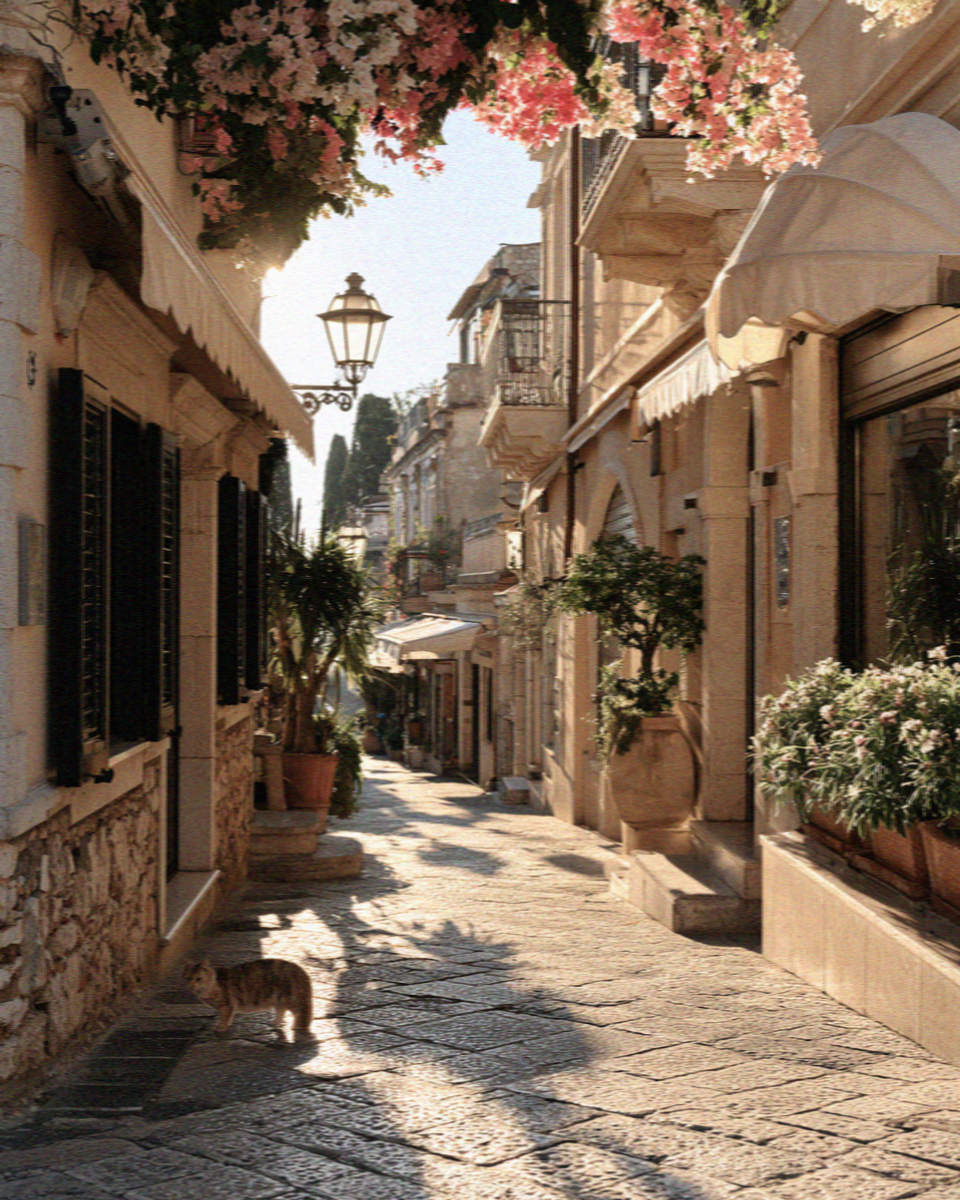
The main street runs the spine of it, pedestrian, lined with shops and cafes, opening now and then onto a piazza with a view that stops people mid-sentence. Off it, on both sides, narrow lanes drop away in steps.
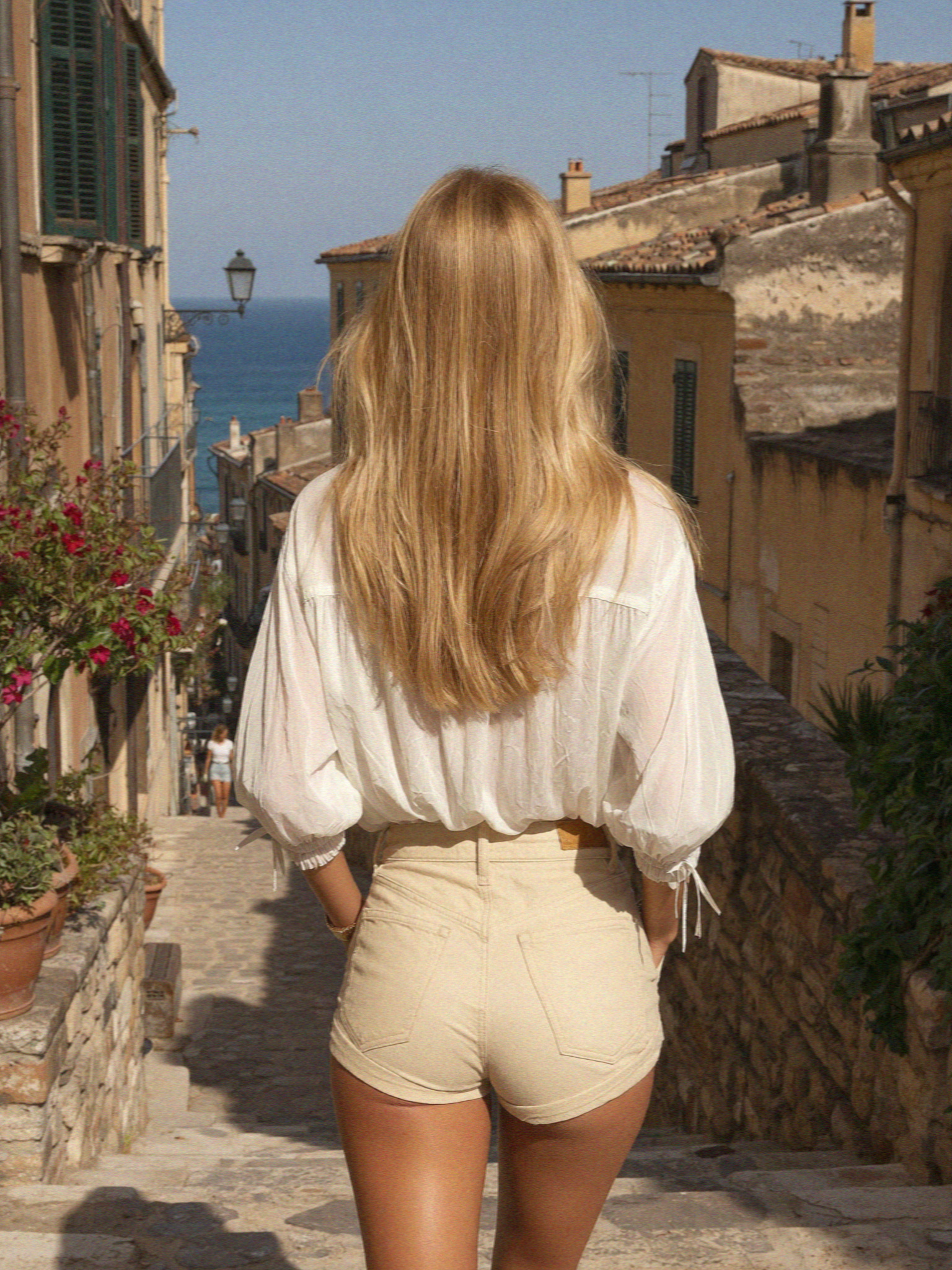
That word matters. Steps. Taormina is built on a slope and moves vertically. It is a beautiful town to walk and a difficult one to walk with a suitcase, a pushchair or a bad knee.
Below the cliff there is a second Taormina entirely: the bays, the beaches, the seafront hotels, the little green islet everybody photographs. It is a five minute cable car ride and a different holiday.
Plan Your Visit to Taormina
A few things I booked and loved. These help support the blog, at no cost to you.
- Where I stayed: search Taormina hotels
- Etna trips and Taormina tickets
- Stay connected: get a travel eSIM
This section contains affiliate links. If you book through them I may earn a small commission, at no extra cost to you.
The theatre, and the view through it

The ancient theatre is the reason the town is famous, and it is not really about the ruin.
It was cut into the hillside by the Greeks and rebuilt substantially by the Romans, so what you walk through is layered. Curved tiers of worn stone, a tall stage wall of red brick standing in broken arches, columns left where they fell or were re-erected.
But the thing that makes people stop is the gap. The stage wall is ruined, and through the gap where it used to be solid you see the sea on one side and the volcano on the other, held in the same frame. Whoever chose this hillside two thousand years ago chose it for that.
Ten euros full price, five for EU citizens aged eighteen to twenty-five, free under eighteen. Roughly nine to seven in summer and nine to five in winter, with last entry half an hour before. Buy at the gate; the resellers charging twelve to fourteen are bundling an audioguide you do not need.
Go early or go late. In the middle of a July day it is a stone bowl with no shade and several hundred people in it. On selected evenings it opens late, to midnight, and it is a completely different place. It is also still a working venue, so in summer there are concerts, and the seats you are standing on are the seats.
The full detail is in my guide to the Greek theatre.
Up and down, which is the whole problem

The cable car is the single most useful thing in Taormina and the first thing to understand.
It runs from the edge of the old town down to the bay at Mazzarò in about three minutes, every fifteen minutes or so. Six euros one way, ten return, twenty for an all-day pass. In summer it runs from eight in the morning until about half past one at night. In winter it stops around eight in the evening.
Read that summer closing time again, because it is what makes the town work. You can swim in the afternoon, come up for dinner, walk the lanes at midnight and still get back down to a seafront hotel. Or the reverse.
The alternative is a bus down the hairpins, or a taxi at ten to fifteen euros, or a walk that is fine downhill and punishing back up.
Why it looks like this
Taormina is older than it appears and its architecture is a stack of occupations.
The Greeks were here from the fourth century BC and cut the theatre. The Romans rebuilt it. Then Sicily went through Byzantine rule, then two centuries of Arab rule, then the Normans, and each of them left something in the fabric. You see it most clearly in the windows: black lava stone inlaid into pale limestone in geometric patterns, pointed arches sitting in buildings that are otherwise medieval Italian. That decorative banding is Norman-Arab and it is everywhere once you start looking.
Then there is the last layer, which is the one that made the town what it is now. From the late nineteenth century Taormina became a place northern Europeans came to and did not leave: German photographers, English aristocrats, writers, painters. One of them built the follies in the public gardens. They came for the climate and the light and the ruins, and they turned a hill town into a resort, and the grand hotels date from exactly that moment.
So when people say Taormina feels less Sicilian than the rest of the island, they are not wrong, and the reason is a hundred and fifty years old rather than recent.
The rhythm of a day here
This is the most useful practical thing I can tell you, and no guidebook puts it plainly.
Taormina has a tide, and it runs on cruise ships and coaches.
Before nine the town is empty and belongs to deliveries and residents. This is the best hour of the day and almost nobody uses it.
Nine to eleven the coaches arrive at the top and the tenders start landing at the port below. It fills quickly.
Eleven to five is the flood. The main street is shoulder to shoulder, the theatre is full, the cable car queue builds, and in July the heat sits on the stone with no shade to escape into. This is not the time to see anything.
Five to seven it thins. The groups go back down the hill to their ships and their hotels along the coast.
After seven the town belongs to the people staying in it, and it is a completely different and much better place: shops still open, the passeggiata going in both directions, dinner from nine.
Plan around that tide and Taormina is wonderful. Ignore it and you will spend your visit in a queue.
Where to stay, and the one real decision
The choice is not which hotel. It is up or down, and they are different holidays.
The old town gives you the theatre, the lanes, the passeggiata, dinner at nine and the view. It does not give you a beach, and it gives you a great many steps.
Down at the water, in Mazzarò or Isola Bella or further along at Giardini Naxos, you swim off your doorstep and take the cable car up for the evening. Less atmosphere at breakfast, far more of it at four in the afternoon in August.
The famous rooms are up top: a fourteenth-century convent that is now a Four Seasons, and a grand hotel from 1873 sitting right beside the theatre with a terrace people have been drinking on for a hundred and fifty years. Both are expensive and both book out six to nine months ahead for July and August, largely because a television series was filmed at one of them.
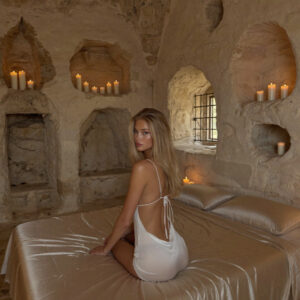
The honest advice on which side to pick, and what a cave-cool convent room is really like, is in where to stay in Taormina.
The beaches, and a warning about sand
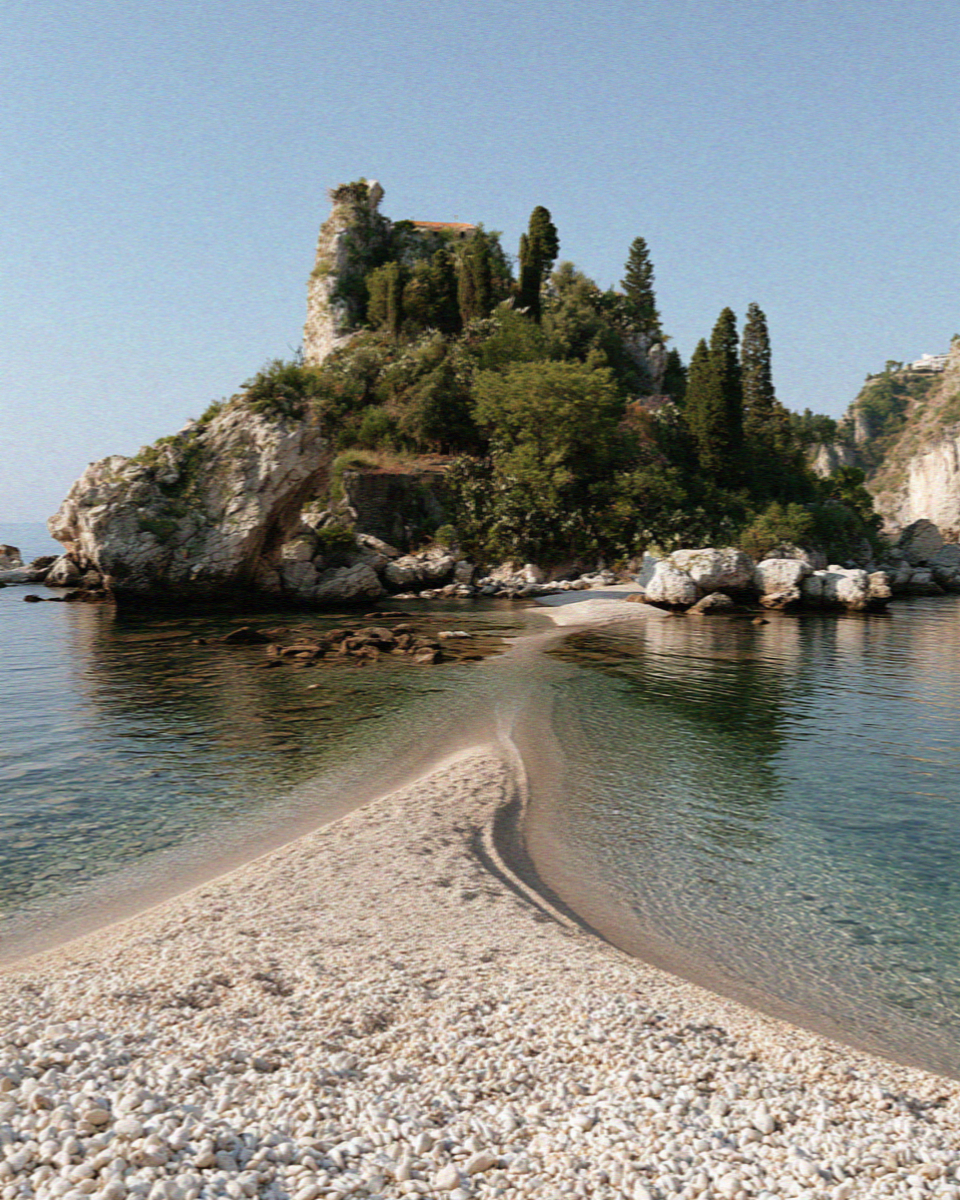
Taormina’s own beaches are pebble, not sand. Smooth grey stones, very clear water, steep cliffs behind. They are beautiful and they are not what most people picture.
Isola Bella is the postcard: a tiny green islet joined to the shore by a thin shingle spit, inside a protected marine reserve. Best snorkelling on this coast, smallest and busiest beach.
Mazzarò is the bay directly under the cable car. Deep, calm, easy, stylish.
Spisone is a little north, with stone islets offshore and a mix of paid lidos and free stretches.
For actual sand you go along the coast. Giardini Naxos has the long golden beach with the volcano visible down the shoreline, and Letojanni to the north is quieter and softer underfoot. Neither is a downgrade. If you want to swim lengths and lie on sand, go there and take the bus back up.
All five are compared in the best beaches near Taormina.
Boat trips, and the grottoes under the town
The town sits two hundred metres above the sea and spends all day looking at it. Almost nobody goes down and gets in.
The cable car takes three minutes to Mazzaro, and from there the coast opens out in both directions: Isola Bella from the seaward side, which nobody photographs, and a run of caves along the cliff face that are reachable only from the water.
I have put the operators I would actually book, what each costs and which ones get into the caves, in my guide to boat tours in Taormina.
The volcano
Etna is visible from most of Taormina and it is the biggest day trip in Sicily.
The usual route is the south side, from a mountain refuge at around 1,900 metres. A cable car runs from there to about 2,500 metres for thirty euros return. To go higher you need the cable car plus a four-wheel-drive bus plus a compulsory authorised guide, and that combination runs about fifty-five euros to roughly 2,900 metres.
Organised half-days from Taormina cost sixty-nine to ninety-five euros, and here is the catch that catches everybody: the cable car is usually not included in a half-day price. Full-day tours generally do include it. Read the inclusions before you book, not after.
Etna is an active volcano. Summit access depends on weather and on what the mountain is doing, and no honest operator will promise you the top.
Everything about doing it well is in Mount Etna from Taormina.
What to eat
Sicilian food here sits between two pantries: the volcanic soil on Etna’s slopes and the Ionian in front of you.
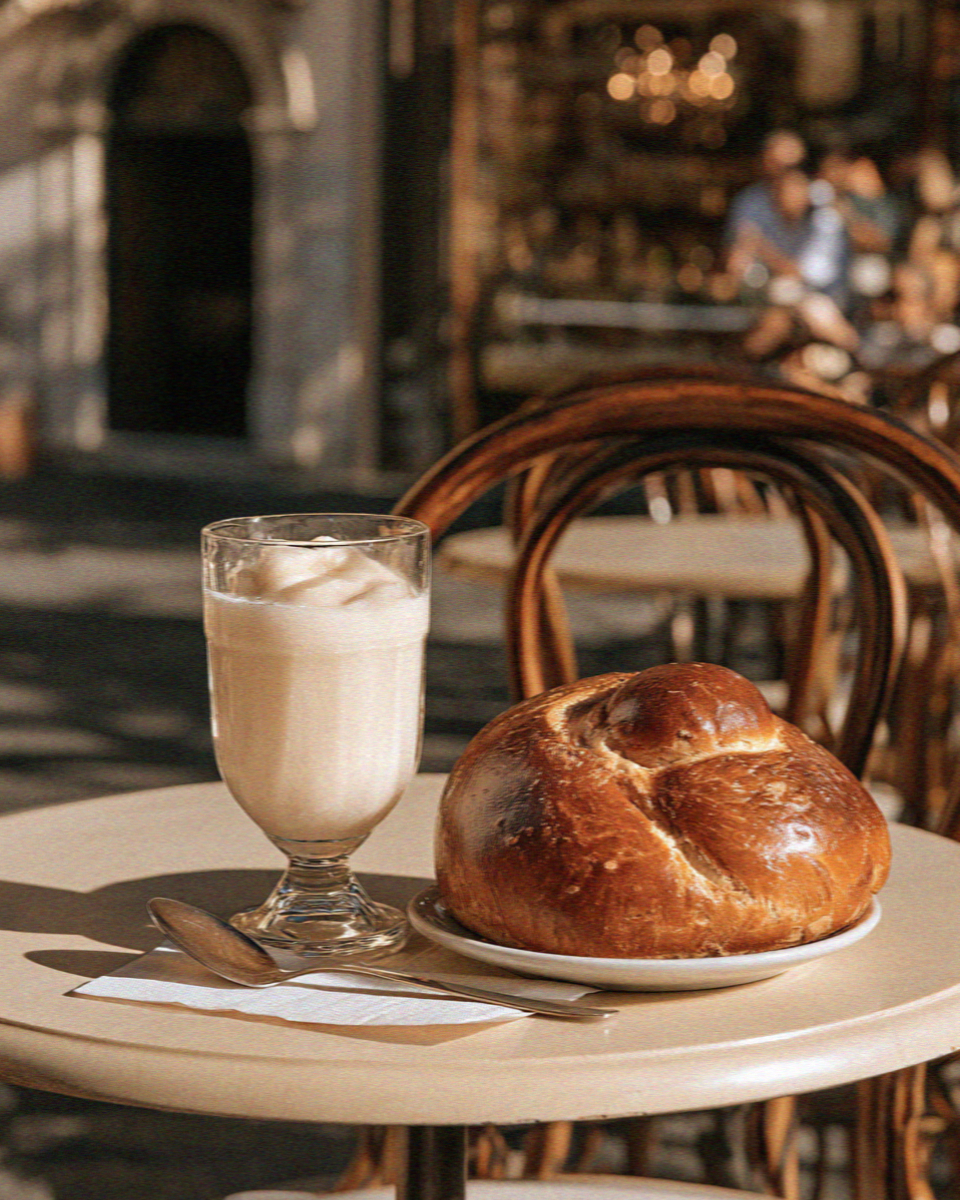
Breakfast is granita with a brioche col tuppo, and it is not a dessert. You get a glass of almond or lemon or pistachio granita and a warm round brioche with a topknot, and you tear the brioche and dip it. Doing this at eight in the morning is the single most Sicilian thing available to a visitor.
After that: arancini, fried rice balls with ragù and peas. Pasta alla Norma, fried aubergine and tomato under a heavy grating of salted ricotta. Cannoli, filled to order or not at all. Seafood down at the water, and wines grown in black soil on the volcano.
The one piece of advice that matters: the good eating is off the main street. The Corso is the promenade. The kitchens are in the side lanes running off it. Full detail in where to eat in Taormina.
Getting here, and the trap in the name
Catania airport is the arrival point, about an hour away.
A direct bus runs from the airport for seven to eight euros in about an hour and twenty-five. A train from the airport station takes about an hour and six for five to nine euros.
And here is the trap. The train station is called Taormina-Giardini, and it is at sea level, not in Taormina. It is a fine station in a nice spot and it is two hundred vertical metres below the town you booked. From there you still need a bus or a taxi up. People arrive with luggage expecting to be in the old town and are not.
The whole thing, including whether to hire a car and where it can possibly go, is in getting to Taormina.
Taormina after dark

The town changes at about seven.
The day visitors leave, the cruise groups go back down, and the main street fills instead with people walking slowly in both directions for no reason at all. The passeggiata here is genuine rather than performed. Shops stay open late. The light goes orange and then blue, and the lamps come on along the lanes.
If you are only here one night, spend it walking the Corso from end to end, then get off it into the side streets and eat late.
What it costs
Taormina is not a cheap town. It is the most visited place in this part of Sicily and it prices accordingly, though it is still well below the Amalfi Coast.
The fixed costs are small and predictable. The theatre is ten euros. The cable car is ten return or twenty for an all-day pass. A granita and brioche is a few euros and is breakfast. A taxi to the beaches or the station is ten to fifteen.
The variable costs are where it moves. A trattoria dinner with wine in a side lane sits in a comfortable middle band. The same food on a terrace with the view roughly doubles, because you are buying the view and should know it. Beach lidos charge a day rate for a sunbed and umbrella that rises steeply in August.
Etna is the real expense and the one to budget deliberately: sixty-nine to ninety-five euros for a half day, thirty more if the cable car is not included, and around fifty-five in total if you want the summit zone with the compulsory guide.
Where you save real money is by staying along the coast rather than on the cliff, and by eating one street back from the Corso. Both of those cost you nothing you actually wanted.
The thing that changed the prices
Worth knowing before you look at hotel rates and assume there has been a mistake.
The convent hotel at the top of the town was the setting for the second season of a very successful television series, and demand has not come back down since. Rooms that were merely expensive became difficult to get at all, and the effect spread outward through the town’s other hotels the way it always does.
Two practical consequences. Book far earlier than you would for a comparable Italian town, six to nine months for July and August at the well-known places. And be aware that some of the “as seen in” pricing has attached itself to things that were never in it, so compare what you are actually getting.
None of this makes Taormina bad value. It makes it a place where the gap between booking early and booking late is unusually punishing.
Is Taormina good for families
Yes and no, and the honest answer depends entirely on where you sleep.
The old town is difficult with small children. It is stairs, cobbles and narrow lanes with scooters in them, and a pushchair is close to unusable. The beaches below it are pebble and reached by cable car.
Giardini Naxos along the bay is the opposite: flat, sandy, wide, with room to run and cheaper food and shorter distances. Families who stay there and come up to Taormina for an evening or two generally have a better week than families who do the reverse.
Older children do well anywhere here. A volcano, a Greek theatre and a cable car is a strong offer at eleven years old.
When to come
May, June and September are the answer. Roughly twenty-two to twenty-eight degrees, comfortable walking, everything open, and hotel rates twenty to forty per cent below the July and August peak.
July and August are hot, extremely crowded and the most expensive weeks of the year. The town is on bare stone with little shade and the main street becomes shoulder to shoulder by eleven.
Winter is quiet, mild and clear, with the volcano often snow-capped and sharp. Some beach clubs and a few hotels close, but the town itself does not.
More in the best time to visit Taormina.
How long you need
Two nights is the honest minimum: one for the town and the theatre, one for the sea.
Three or four lets you add Etna without wrecking a day, and gives you a morning for the village higher up the hill or the film villages inland.
A day trip from Catania shows you the theatre and the main street and nothing of what makes the place worth staying in, which is the evening.
The day-by-day version is in a Taormina itinerary.
The bit nobody mentions: it is a town of stairs
I want to be plain about this because it changes trips and it is almost never said in advance.
Taormina is built on a slope and moves vertically. The main street is level and pleasant. Almost everything off it is not: lanes turn into staircases without warning, hotels sit at the top or bottom of flights with no lift, and vehicle access to most of the old town is restricted, so the last stretch to your door is on foot whatever you booked.
For most people that is simply part of the character and a reason the calves ache pleasantly by Thursday. For anyone with a knee, a hip, a pushchair or a large hard suitcase, it is the single most important practical fact about the town, and it is worth choosing a hotel around rather than discovering on arrival.
Two questions solve it. Where can a taxi actually stop, and how many steps from there. Ask them before you book, in writing. Properties that answer plainly are telling you the truth, and several will send someone to carry bags.
The same applies to the beaches. The cable car is easy. The walk down to the water in some places is not.
The things worth booking ahead
Not much, but these matter.
Hotels for July and August, six to nine months out for the well-known ones.
Etna tours in high season, and check whether the cable car is included.
Dinner with a view at the handful of terrace restaurants, days ahead in summer.
The theatre needs no booking. Turn up.
Who Taormina is for
It suits people who want a town rather than a resort, who like walking and eating late and looking at things, and who are happy that the swimming involves a cable car.
It suits photographers enormously. There is a good frame every forty metres.
It suits families less well than Giardini Naxos does, because of the steps and the pebbles, though staying down at the water solves most of that.
And it does not suit anyone hoping for an undiscovered Sicilian village. Taormina has been a destination since the nineteenth century and knows exactly what it is.
More images from Taormina








Your Taormina Guides
Everything here in detail, guide by guide.
- The Greek Theatre in Taormina
- The Best Things to Do in Taormina
- A Taormina Itinerary: 2 to 4 Days
- Where to Stay in Taormina
- Where to Eat and Drink in Taormina
- The Best Beaches Near Taormina
- The Best Photo Spots in Taormina
- The Best Time to Visit Taormina
- Mount Etna from Taormina
- The Best Day Trips from Taormina
- Getting to Taormina and Around
- The Best Taormina Boat Tours: Isola Bella, the Grottoes and the Coast Below the Town
Taormina Travel Diaries
Frequently Asked Questions
Is Taormina worth visiting?
Yes, particularly if you want a town rather than a beach resort. It has an ancient theatre with one of the great views in the Mediterranean, a walkable old town on a cliff, and a volcano an hour away. The caveat is that it is busy and not cheap, and its own beaches are pebble rather than sand.
How many days do you need in Taormina?
Two nights minimum, one for the town and one for the sea. Three or four lets you add Mount Etna and a morning in the hill villages without rushing. A day trip from Catania misses the evening, which is the best part of the day here.
Is the train station in Taormina?
No, and this catches people out. The station is called Taormina-Giardini and it sits at sea level, roughly two hundred metres below the old town. From there you need a bus or a taxi up the hill, which costs about ten to fifteen euros.
How much is the Taormina cable car?
Six euros one way, ten euros return and twenty euros for an all-day pass. It runs about every fifteen minutes and takes three minutes to reach the bay at Mazzarò. In summer it runs until roughly half past one in the morning, which is what lets you stay down at the beach and still come up for dinner.
Does Taormina have sandy beaches?
Not its own. Isola Bella, Mazzarò and Spisone are pebble beaches with very clear water and steep cliffs behind them. For sand you go along the coast to Giardini Naxos, which is long and golden with the volcano visible down the shore, or to Letojanni, which is quieter.
How much does the Greek theatre cost?
Ten euros full price, five for EU citizens aged eighteen to twenty-five, and free for under eighteens. It opens roughly nine to seven in summer and nine to five in winter. Third-party sellers charge twelve to fourteen because they include an audioguide.
Can you visit Mount Etna from Taormina?
Yes, and it is the region’s biggest day trip. Half-day tours run sixty-nine to ninety-five euros, but they often exclude the cable car, which is thirty euros return to about 2,500 metres. Reaching roughly 2,900 metres needs the cable car plus a four-wheel-drive and a compulsory guide, at around fifty-five euros.
When is the best time to visit Taormina?
May, June and September. Temperatures sit around twenty-two to twenty-eight degrees, everything is open, and hotel rates run twenty to forty per cent below the July and August peak. Winter is quiet and often clear with a snow-capped volcano, though some beach clubs close.