Taormina is an unusually good base, because it sits halfway up the east coast of Sicily with a volcano behind it, Greek ruins in both directions, and a railway line running along the shore.
The catch is geography. The trips go inland, north or south, and trying to combine two of them means spending the day in a vehicle looking at the inside of it. Pick one per day.
Here they are in the order I would do them. The wider planning is in my complete guide to Taormina.
The village directly above
Castelmola is barely a day trip. It is a morning, and it is the easiest thing on this list.
The village sits on a rock summit above Taormina, higher again, tiny and largely medieval. The point is the view back down: the whole town on its shelf, the coast running in both directions, the volcano along the shore. There is an almond wine the village is known for and it is sold in more or less every second doorway.
Local bus or taxi up from the centre. The walk up takes about an hour and a half and is steep; the walk down is the good version, and takes about forty minutes on a stepped path.
The film villages

Savoca and Forza d’Agrò sit fifteen to twenty kilometres inland, thirty to forty minutes by road, and this is the half day I would recommend to almost anyone.
They are where the Sicilian scenes of The Godfather were filmed, and the trilogy used Forza d’Agrò across all three films. In Savoca, the bar where Michael asks Apollonia’s father for her hand is still there, still a bar, with a small museum attached, and the church used for the wedding is a short walk up.
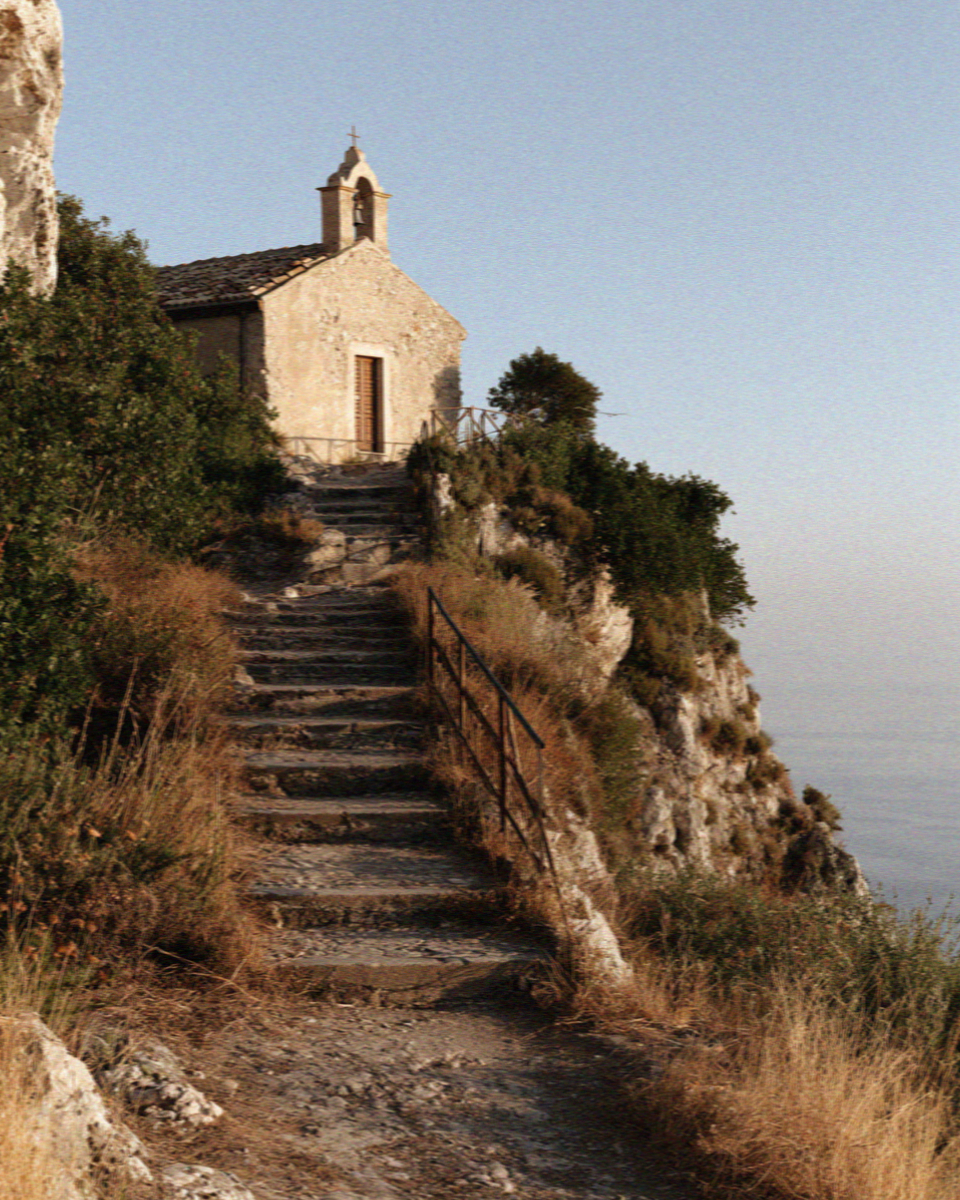
But the real reason to go is not the films. It is that these are hill villages tourism has barely altered: stone lanes, a church on a ridge, dry country falling away to a distant sea, and about four people out on the street at any given time. After the density of Taormina it is a very effective contrast.
Half-day tours run from Taormina, or drive it yourself in well under an hour.
Mount Etna
The biggest day out in Sicily, and it needs its own guide rather than a paragraph.
The short version: half-day tours from Taormina cost sixty-nine to ninety-five euros and usually exclude the mountain cable car, which is thirty euros return. Full days generally include it and get you to around 2,900 metres with a compulsory guide.
Give it most of a day, take warm layers even in August, and accept that the summit zone opens or closes on the day depending on the mountain.
Everything else is in Mount Etna from Taormina.
South, to the Greek ruins
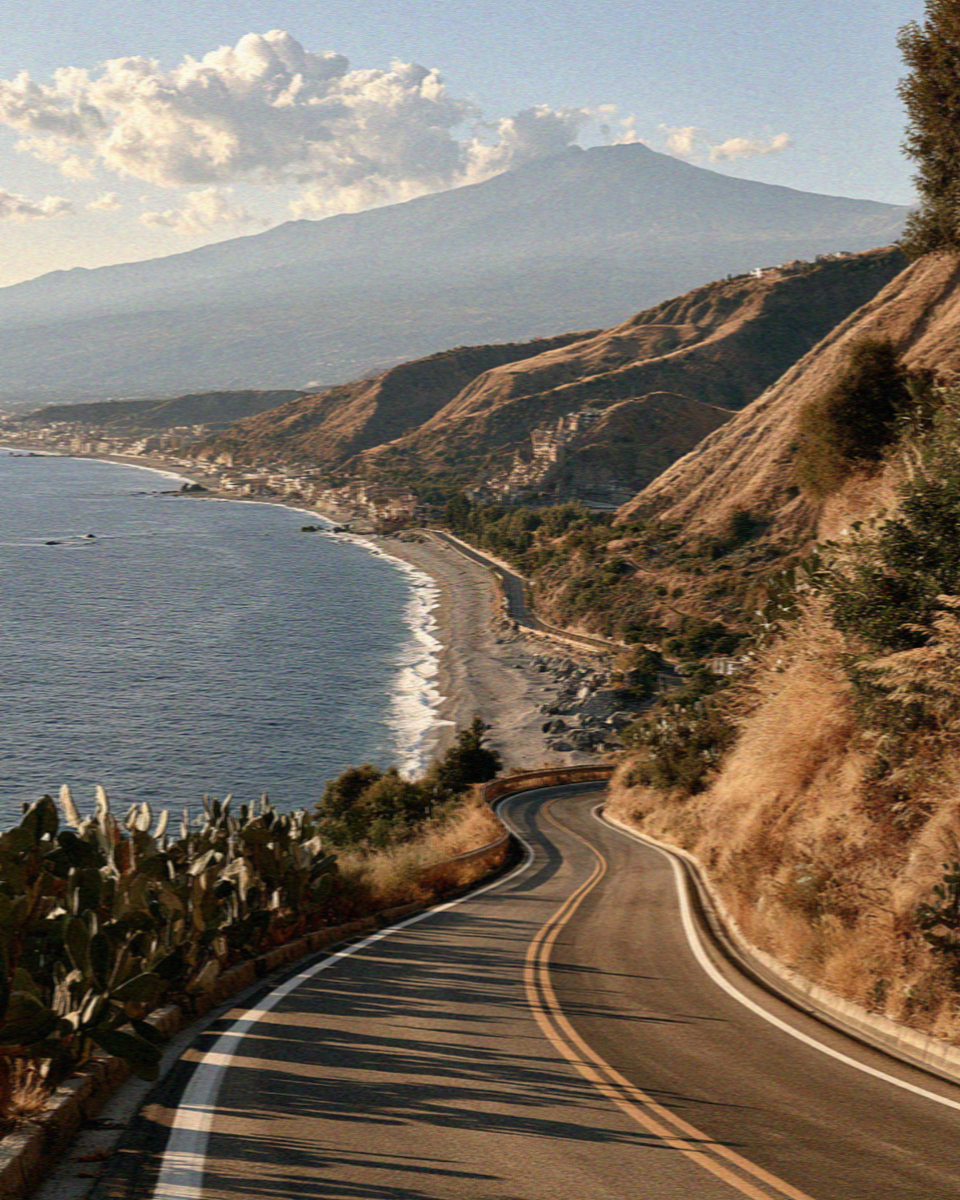
Two very different options in the same direction.
Giardini Naxos is fifteen minutes away and holds the archaeological site of the first Greek colony in Sicily, founded in the eighth century BC. It is modest, mostly foundations and a small museum, and it is worth an hour if you are already down there for the beach.
Syracuse and Ortigia is the serious one, about two hours south by road or train. Ortigia is the island heart of the old city, and it is arguably the loveliest urban centre in Sicily: a cathedral built inside a standing Greek temple, a sea-facing promenade, a morning market. There is also a large archaeological park with a Greek theatre bigger than Taormina’s.
It is a long day and it is worth it, though it is genuinely a full one. Take the train if you can, because the coastal line does the driving for you.
North, to Messina and the strait
Messina is about an hour north by train and it is the least touristed thing on this list.
It is a working port city rebuilt after the 1908 earthquake, so it does not have the picture-postcard density of Taormina. What it has is an astronomical clock on the cathedral bell tower that performs at noon, a genuinely good archaeological museum, and the strait itself, with Calabria close enough on the far side to feel like you could swim it.
Half a day, and better as a rail trip than a drive.
Catania
Forty-five minutes to an hour south, and the counterweight to Taormina in every way.
Catania is big, loud, black with volcanic stone, and built almost entirely in baroque after Etna and an earthquake flattened it in the 1690s. The fish market in the morning is one of the great markets in Italy, chaotic and completely unstaged.
Go for a morning, eat well, come back. It is also where your flight leaves from, so it works as a last-day stop if the timing suits.
What to skip, and what to combine
Do not try Etna and the film villages on the same day. Opposite directions.
Do not try Syracuse as a half day. Two hours each way makes it a full day or nothing.
Do combine Castelmola with a lazy afternoon in Taormina, and Giardini Naxos ruins with a beach day, because both are twenty minutes away.
How to choose, if you only get one
Most people have room for one real day trip, so here is the short version of the decision.
Take Etna if you want the thing you cannot get anywhere else. It is the biggest, most expensive and most weather-dependent day, and it is the one people talk about afterwards.
Take the film villages if you have had enough of crowds. It is half a day, it costs a fraction, and the contrast with Taormina is the point.
Take Syracuse if you care more about Greek history than about landscape. Ortigia is the most beautiful town centre in Sicily and the archaeological park is bigger and more complete than anything in Taormina.
Take Catania if you like cities and markets and want to eat well for very little.
And if the weather turns, invert the plan. Etna in cloud shows you nothing, but Ortigia and the fish market in Catania are both fine in rain.
Read also: the best things to do in Taormina, getting to Taormina and around, and my complete guide to Taormina.
Frequently Asked Questions
What are the Godfather villages near Taormina?
Savoca and Forza d’Agrò, fifteen to twenty kilometres inland and thirty to forty minutes by road. Savoca has the bar where Michael asks for Apollonia’s hand, still trading with a small museum attached, and the church used for the wedding. Forza d’Agrò appears across all three films.
Can you do a day trip to Syracuse from Taormina?
Yes, but treat it as a full day. Syracuse is about two hours south by road or train. Ortigia, the island old town, is the highlight, along with the archaeological park. The coastal train is the easier way to do it since it removes the driving.
Is Castelmola worth visiting?
Yes, and it only takes a morning. It sits on a rock summit above Taormina with a view back down over the town, the coast and the volcano, and it is known for an almond wine sold all over the village. Bus or taxi up, and walk the stepped path back down in about forty minutes.
Do you need a car for day trips from Taormina?
Not for most of them. Messina, Catania, Syracuse and Giardini Naxos are all on the coastal railway. A car helps for the hill villages and for the north side of Etna, though organised half-day tours cover both without one.
What is the best day trip from Taormina?
Mount Etna if you want the big one, and it deserves most of a day. Savoca and Forza d’Agrò if you want the quiet one, which is a half day and a complete change of pace from Taormina’s crowds.