Some links in this guide are affiliate links. If you book through one, this site may earn a small commission, at no extra cost to you. How this works.
Taormina is small enough that you can see the headline sights in a day and good enough that you should not.
The list below is in the order I would actually do them, which is not the order of importance. It starts with the thing that explains the town, ends with the thing you will remember, and puts the interiors in the middle where the heat is.
The wider planning is in my complete guide to Taormina.
What to book before you come
Taormina is small and most of it is walking. Four things are worth arranging in advance, and the first one is the difference between a good morning and a queue.
- The ancient theatre, skip the line. The reason everybody comes, and the queue builds from mid-morning. A timed ticket lets you be there at opening, which is when the light is behind you and Etna is doing its trick through the broken arch. 4.5 across nearly three thousand reviews.
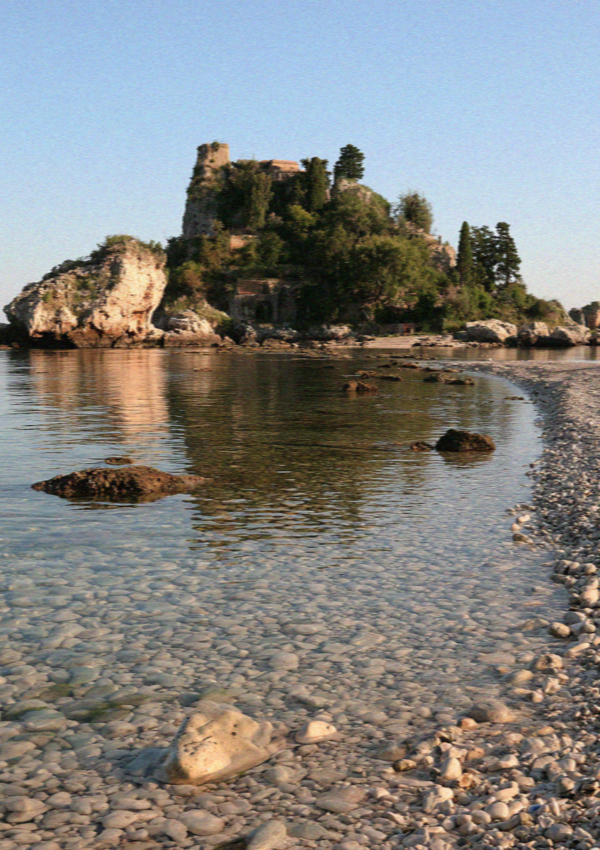
- A boat morning below the town, with snorkelling. The coast under Taormina is caves and small coves, and almost none of it is reachable on foot. This is the way to see Isola Bella from the water rather than from above with everyone else.
- The sunset cruise from Giardini Naxos. Later, slower, and the better version if you have already swum. Rated 4.9, though on a smaller number of reviews.
- A Sicilian cooking class, with the market first. Three hours and you leave understanding what you have been eating all week. The market visit is the half that matters.
Etna is its own day and has its own guide, further down. Everything else here is a walk and a granita.
1. The ancient theatre, early
Ten euros, an hour, and the reason the town exists on the tourist map.
Go at opening. The theatre is a stone bowl with no shade, and by midday in summer it holds several hundred people and a great deal of reflected heat. At nine in the morning it holds about twelve.
What you are there for is the ruined stage wall, and specifically the gap in it, which frames the sea on one side and the volcano on the other. It is one of the genuinely great views in the Mediterranean and it was engineered on purpose.
Full detail in my guide to the Greek theatre.
2. The gardens on the cliff

Free, and the best hour in Taormina that costs nothing.
The public gardens run along the cliff below the main street: subtropical planting, gravel paths, benches, and a series of very strange ornamental brick pavilions like small follies or dovecotes, built by an English aristocrat who settled here in the nineteenth century.
It is where you go when the Corso gets to be too much. There is shade, there are almost no coach groups, and the sea is two hundred metres straight down through the trees.
3. Walk the main street, twice
Once in the morning, when the shops are opening and the delivery vans are still wedged in impossible places, and once after seven, when the day visitors have gone and the town comes out to walk.
It is pedestrian, it runs the spine of the old town, and it opens onto piazzas with views that stop people mid-sentence. It is also the most commercial part of Taormina, which is fine as long as you know that the eating is off it rather than on it.
The evening walk is the better one. The Sicilian passeggiata here is genuine rather than staged.
4. Take the cable car down and swim
Six euros one way, ten return, three minutes.
Even if you are not a beach person, ride it. It drops from the clifftop to the bay at Mazzarò, and the descent gives you the shape of the whole coast in one go: the town above, the little islet below, the water going from navy to turquoise as you come down.
Then swim. The water is very clear and the beaches are pebble, which keeps it clear.
More in the best beaches near Taormina.
5. The village higher up

Castelmola sits above Taormina on a rock summit, higher again, and it is a half morning.
It is tiny, largely medieval, and the point is the view back down: Taormina laid out on its shelf, the coast running both ways, the volcano along the shoreline. There is an almond wine the village is known for, sold in every second doorway and worth trying once.
Get there by local bus or taxi from the centre. Walking up is possible and steep and takes about an hour and a half. Walking back down is the good version.
6. Mount Etna
The biggest day out in Sicily, and it eats a day, so decide early.
Half-day tours run sixty-nine to ninety-five euros from Taormina, and the cable car up the mountain is usually not included in that price. Full days generally include it. You can also drive yourself to the refuge on the south side and buy the cable car there for thirty euros return.
It is worth doing properly rather than cheaply. The full breakdown is in Mount Etna from Taormina.
7. The film villages inland
Half a day, and better than it sounds even if you have never seen the films.
Savoca and Forza d’Agrò sit fifteen to twenty kilometres inland in the hills, thirty to forty minutes by road, and they are where the Sicilian scenes of The Godfather were shot. The bar in Savoca where Michael asks for Apollonia’s hand is still there and still a bar, with a small museum attached.
The real reason to go is that they are hill villages that tourism has barely altered, with dry country and long views and about four people on the street.
Covered in the best day trips from Taormina.
8. Granita for breakfast
Not a thing to do so much as a thing to do correctly.
Sicilian granita with a brioche col tuppo is breakfast, not pudding. You get a glass of almond or lemon or pistachio ice, the texture somewhere between sorbet and snow, and a warm round brioche with a topknot. You tear the brioche and dip it.
Do it at eight in the morning at least once, sitting outside, before the town wakes up.
What to skip
The cable car queue at four in the afternoon in August. Everyone comes up at once. Go earlier or later.
Paying for a terrace table purely for the view at every meal. Do it once, properly, then eat in the lanes where the food is better and half the price.
Trying to do Etna and the film villages on the same day. They are in opposite directions and you will spend the day in a vehicle.
Read also: a Taormina itinerary, the best photo spots in Taormina, and my complete guide to Taormina.
Frequently Asked Questions
What is the one thing you should do in Taormina?
Go into the ancient theatre at opening time, around nine in the morning. It costs ten euros and takes an hour, and the ruined stage wall frames the sea on one side and Mount Etna on the other. Going early avoids both the coach groups and the heat in a bowl with no shade.
What is there to do in Taormina for free?
Walk the clifftop public gardens, which have shade, follies and a two hundred metre drop to the sea. Walk the main street in the evening for the passeggiata. And the terrace viewpoints just outside the theatre entrance cost nothing and are nearly as good as the paid view.
Is one day enough in Taormina?
You can see the theatre and the main street in a day, but you will miss the evening, which is the best part. Two nights lets you give one day to the town and one to the sea. Three or four adds Mount Etna or the hill villages without rushing.
Can you visit Mount Etna and Taormina in the same trip?
Yes, and most people do. Etna is roughly an hour away and half-day tours run sixty-nine to ninety-five euros from Taormina, though the mountain cable car is often excluded from that price. Give it most of a day rather than trying to squeeze it around other plans.
How do you get from Taormina to the beach?
The cable car, which runs from the edge of the old town down to Mazzarò in about three minutes for six euros one way or ten return. In summer it runs until roughly half past one in the morning, so you can swim in the afternoon and still come up for dinner.