The most useful thing I can tell you about Taormina’s beaches is that they are pebble, not sand.
Smooth grey stones, steep cliffs behind, and water so clear you can count the stones four metres down. The clarity is a direct consequence of the pebbles: nothing gets stirred up. But if the picture in your head involves walking barefoot across warm sand, that picture belongs to a different part of this coast, and it is twenty minutes away.
Here is each beach, what it is actually like, and who should go where. The wider planning is in my complete guide to Taormina.
The little islet
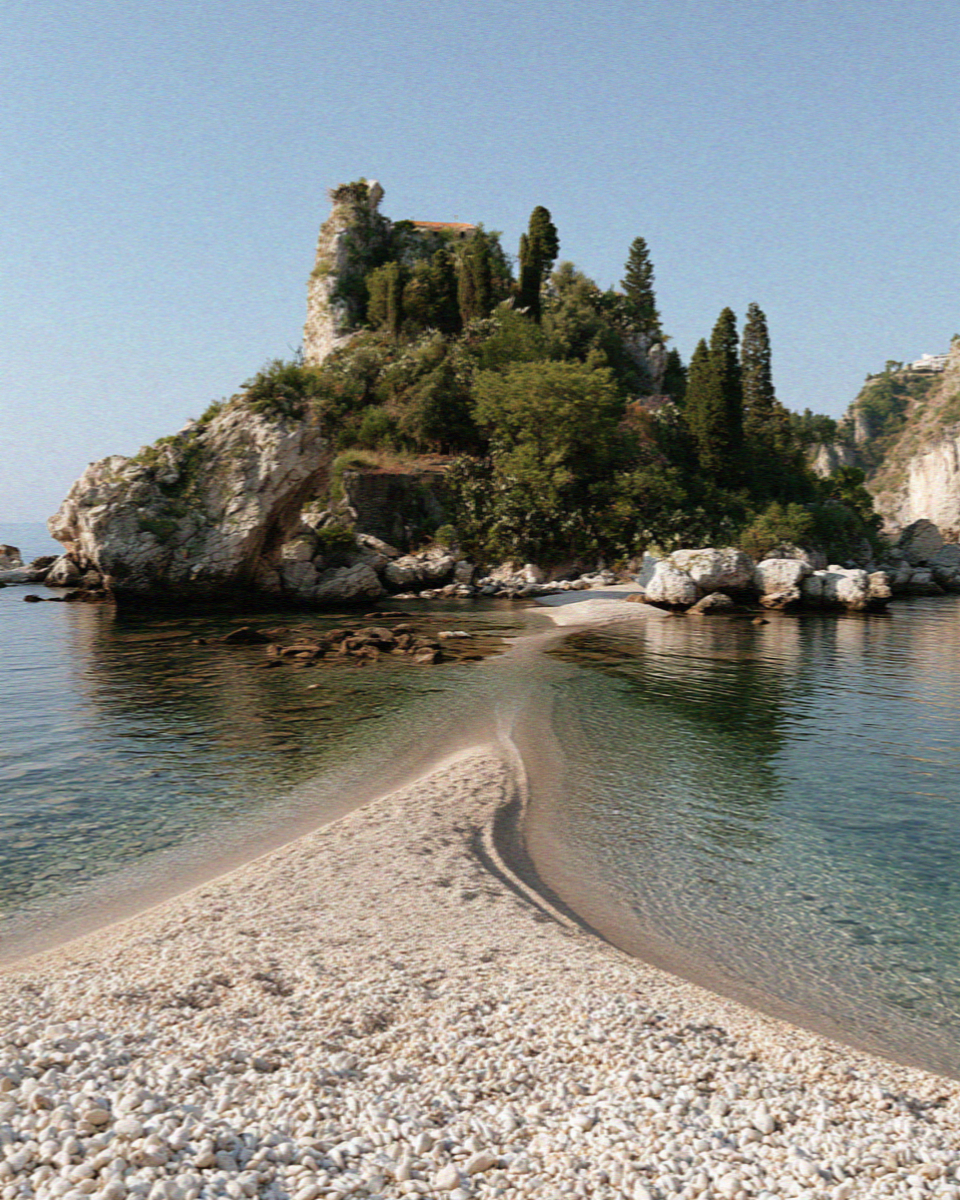
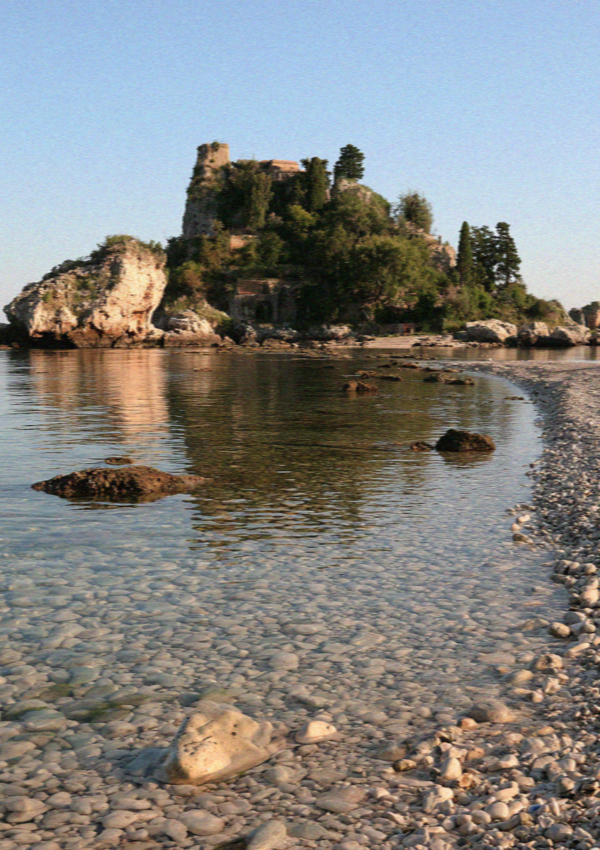
Isola Bella is the one on every postcard: a small green islet dense with vegetation, joined to the shore by a thin pale spit of shingle you can walk across when the sea is calm.
It is a protected nature reserve, which is why it still looks like that. The snorkelling is the best on this stretch of coast, the water is exceptionally clear, and the whole cove is small enough to take in from one spot.
It is also the busiest and least comfortable place to spend a whole day. The beach is narrow, the stones are large, and by eleven in high summer the spit has a queue on it.
Go early. Eight or nine in the morning, before the cable car brings everybody down. Take something on your feet. Treat it as an hour of swimming and looking rather than a day on a lounger.
The bay under the cable car

Mazzarò is where the cable car lands, and it is the practical swimming choice.
A deeper bay, calm and sheltered, with fishing boats pulled up at one end and a mix of paid lidos and free stretches. The water goes deep quickly, which makes it better for actually swimming than for paddling with small children.
It is stylish and it is easy, and being able to step off the cable car and be in the sea eight minutes after leaving the old town is the thing that makes Taormina work as a base.
The quieter one just north
Spisone is a short way up the coast and it is where you go when Isola Bella is full.
Stone islets sit just offshore, which gives it more character than a plain strip, and there is a decent balance of equipped lidos and free beach. Same pebbles, same clear water, noticeably fewer people.
You can walk to it from Mazzarò along the shore in good weather, or take the bus.
Where the sand is

Giardini Naxos, along the bay, is the answer to the sand question.
It is a long, wide beach of dark golden sand and fine shingle running the length of a separate town, with gentle surf and the volcano visible down the shoreline on a clear day. There is free beach and there are equipped lidos, and there is room, which is the thing Taormina’s coves do not have.
This is where you go if the beach is the point of the holiday rather than an afternoon in it. It is fifteen to twenty minutes from Taormina by bus or taxi.
Letojanni, north of Taormina, is the same idea with fewer people: softer sand, clear water, quieter, and the choice of local families rather than visitors.
Neither is a downgrade from Taormina’s own beaches. They are simply a different kind of day, and for swimming lengths and lying flat they are better.
Lidos and free beaches
Most of these beaches have both. A lido gives you a sunbed, an umbrella, a shower and usually a bar, charged as a day rate that varies a lot by beach and by season and rises steeply in August. The free stretches sit between and beside them and are perfectly good, though at Isola Bella in high summer the free portion is small and goes early.
Two practical points. Take beach shoes for anywhere except Giardini Naxos and Letojanni; the pebbles are large and hot. And take shade if you are on a free stretch, because there is almost none naturally.
Getting down, and the mistake everyone makes
The cable car runs from the old town to Mazzarò in about three minutes, every fifteen minutes. Six euros one way, ten return, twenty for an all-day pass. A taxi to any of these beaches runs about ten to fifteen euros.
The mistake is coming back up at four in the afternoon, when everybody else does, and standing in a long queue in the heat. Either come up at two or stay until six or seven, which is the better beach hour anyway and, in summer, the point at which the cliffs go golden.
In summer the cable car runs until roughly half past one in the morning. In winter it stops around eight.
The marine reserve, and why the water is like that
The cove around the little islet is a protected nature reserve, and that status is doing more work than it gets credit for.
It means no development on the islet itself, which is why it is still dense green scrub rather than a hotel. It means restrictions on boats and anchoring in the cove. And it means the seagrass beds offshore have been left alone, which is the actual reason the water is so clear and why there are fish in it worth putting a mask on for.
There is a small charge to walk onto the islet itself in season, separate from the beach, and a path around it that takes about twenty minutes.
The practical upshot for a swimmer is that this is the one place on this coast where snorkelling is genuinely worth the effort rather than a nice idea. Bring a mask.
Read also: where to stay in Taormina, the best time to visit Taormina, and my complete guide to Taormina.
Frequently Asked Questions
Does Taormina have sandy beaches?
Not its own. Isola Bella, Mazzarò and Spisone are pebble beaches with very clear water and steep cliffs behind them. For sand, go along the coast to Giardini Naxos, which is long and golden with the volcano visible down the shore, or north to Letojanni, which is quieter.
Which is the best beach in Taormina?
For snorkelling and the view, Isola Bella, though it is small and crowded and best visited early. For actually swimming, Mazzarò, the deeper bay directly under the cable car. For space and sand, Giardini Naxos along the bay.
How do you get to the beach from Taormina?
The cable car, which drops from the old town to Mazzarò in about three minutes for six euros one way or ten return. A taxi to any of the beaches costs roughly ten to fifteen euros. Buses run along the coast to Giardini Naxos and Letojanni.
Do you need beach shoes in Taormina?
Yes, for Isola Bella, Mazzarò and Spisone. The stones are large and get hot, and getting in and out of the water over them is uncomfortable barefoot. Giardini Naxos and Letojanni are sand and do not need them.
Is Isola Bella worth visiting?
Yes, but as an hour rather than a day. It is a protected nature reserve with the clearest water and the best snorkelling on this coast, joined to the shore by a shingle spit. It is also small, stony and extremely busy after about eleven in high summer, so go early.