Sicilian cooking in Taormina sits between two pantries, and once you notice that, the menus stop looking random.
On one side is the Ionian, so there is seafood. On the other are the slopes of an active volcano, so there is black-soil wine, pistachio, almond, citrus and the vegetables that grow absurdly well in volcanic ground. Taormina eats from both, and the town has been feeding visitors since the nineteenth century, which cuts both ways.
Here is what to order, when to order it, and the one rule that decides whether you eat well. The wider planning is in my complete guide to Taormina.
The rule: get off the main street
The Corso is the promenade. It is where you walk, shop, have a drink and watch people. It is not, mostly, where you eat.
The kitchens worth your evening are in the lanes running off it, one or two turns from the crowd, on streets like Via Calapitrone and Via Strabone. Half the price, twice the cooking, and often four tables put out on the stone.
There is one exception worth paying for: a terrace table with the view, once, deliberately. You are buying the view and you should know that going in.
What to order

Pasta alla Norma is the dish of eastern Sicily. Fried aubergine, tomato, basil, and a heavy grating of ricotta salata, the hard salted kind, over the top. It is named after the opera and it is better than any description of it.
Arancini are the other essential. Fried rice balls, usually with ragù and peas, sometimes with butter and ham. Eat them standing up from a fry shop rather than sitting down at a restaurant.
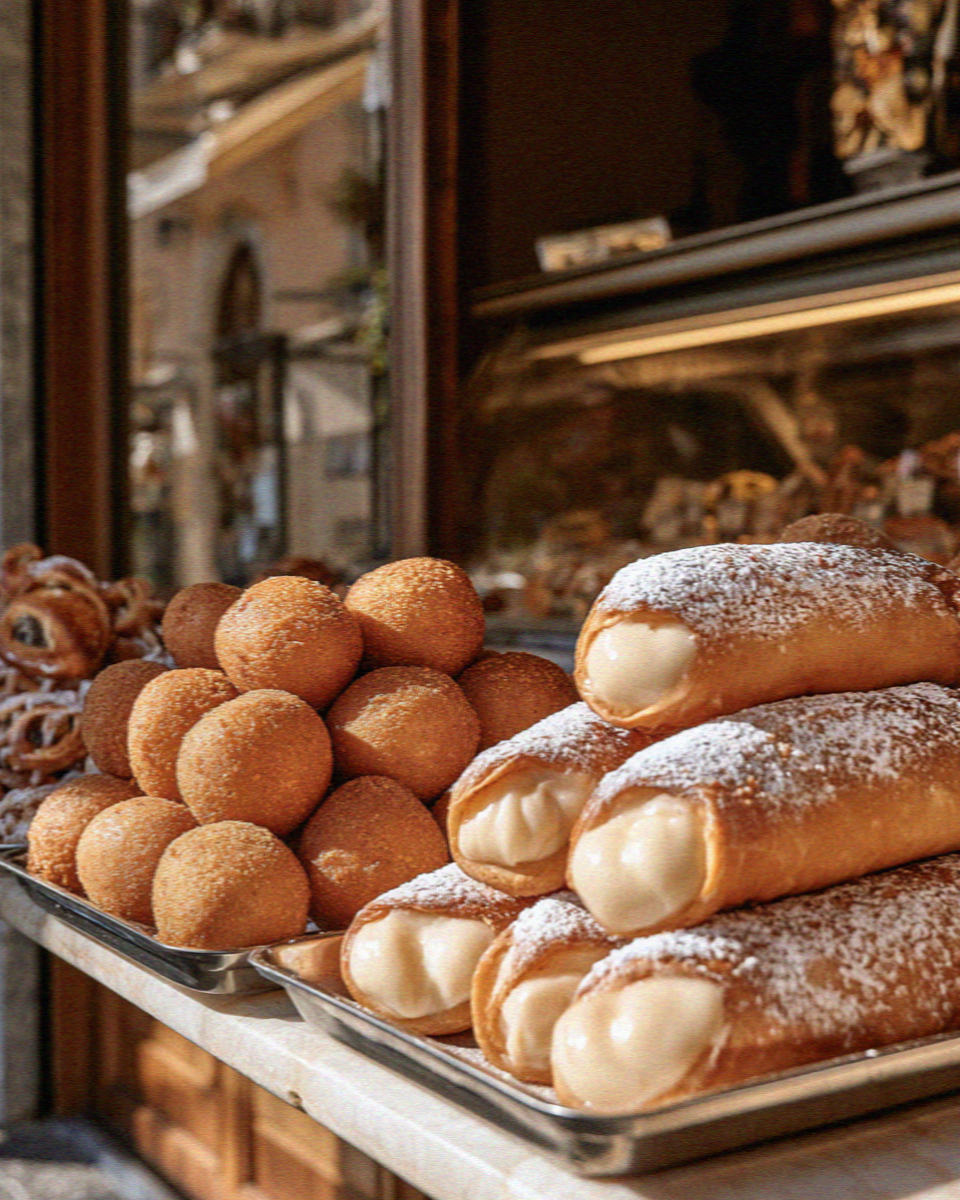
Cannoli should be filled when you order them, never before. A shell sitting pre-filled in a case has gone soft and is not worth the calories. Ask.
Seafood is better down at the water than up in the town, which is not snobbery but logistics.
Caponata, the sweet and sour aubergine dish, and pesce spada, swordfish, in almost any preparation.
And the wine from the volcano. Etna Rosso, made largely from nerello mascalese on black soil at altitude, is lighter and more mineral than most people expect from the south, and it is the most interesting thing on any wine list here.
Breakfast is granita, and there is a correct way
This is the single most Sicilian thing available to a visitor and most people get it wrong by treating it as a dessert.
Granita with a brioche col tuppo is breakfast. You order a glass of granita, almond or lemon or coffee or pistachio or mulberry, and it arrives with a warm round brioche with a little topknot on top. You tear pieces off the brioche and dip them into the ice.
Almond is the traditional one and the one to start with. Coffee granita with a brioche at eight in the morning, outside, is worth setting an alarm for.
Off the main street

Taormina divides into roughly three tiers and it helps to know which you are booking.
The trattorias in the lanes. Paper on the tables, a short handwritten menu, the family in the kitchen. This is where the Norma is best and where a full dinner with wine sits in a comfortable middle band. Book for eight thirty or arrive at seven and take what is free.
The terrace restaurants. Positioned for the view over the bay and the volcano, priced accordingly. Worth exactly one evening. Book days ahead in summer and ask specifically for a table on the rail, because the difference between the front row and the second row is the entire reason you are paying.
The serious end. There is Michelin cooking in Taormina, attached to the grand hotels, doing refined Sicilian with the local produce taken properly seriously. It needs booking well in advance and it is a whole evening rather than a meal.
When to eat, and the pace of it
Sicily eats late. Kitchens open around half past seven and fill from nine.
Book for eight thirty if you want a room with atmosphere in it. Turn up at seven if you want a table without booking, which works but means eating alongside other visitors rather than locals.
Lunch runs one to half past two, and in July and August it is also the sensible way to get indoors and out of the worst heat.
The aperitivo hour, roughly six thirty to eight, is when the town is at its best. A spritz or an almond wine somewhere with a view, then dinner two hours later.
One thing to be sceptical about
Taormina has fed tourists for a very long time and there are places on the main drag with laminated menus in six languages and a man outside encouraging you in.
The test that has never failed me here: look at what time the room fills and who is in it. A restaurant full of Italians at nine is a restaurant. A restaurant full of visitors at seven is a service.
Where the pistachio comes from
You will see pistachio in everything here, and it is not a gimmick.
The pistachios come from Bronte, on the western slopes of Etna, where they grow in lava soil at altitude and are harvested only every other year. They are smaller, greener and far more intense than the ones most people know, and they carry protected status.
You will find them in granita, in gelato, in pastry, ground into pesto for pasta, and pressed into a paste sold in jars in every second shop. Some of what is sold to visitors is padded out with cheaper nuts from elsewhere, so if you are buying a jar to take home, look for Bronte named on the label and expect to pay for it.
The same logic applies to the almonds behind the granita and the almond wine from the hill village above the town. This is agricultural country pretending to be a resort.
Read also: the best things to do in Taormina, a Taormina itinerary, and my complete guide to Taormina.
Frequently Asked Questions
What food is Taormina known for?
Eastern Sicilian cooking: pasta alla Norma with fried aubergine and salted ricotta, arancini, caponata, swordfish, and cannoli filled to order. Breakfast is granita with a brioche col tuppo, and the local wine is Etna Rosso, grown in black volcanic soil on the mountain.
What is granita with brioche?
The Sicilian breakfast. A glass of granita, most traditionally almond but also lemon, coffee, pistachio or mulberry, served with a warm round brioche with a topknot. You tear the brioche into pieces and dip them into the ice. It is breakfast rather than dessert.
Where should you eat in Taormina?
In the lanes running off the main street rather than on it. Corso Umberto is the promenade and the restaurants on it are priced for footfall. One or two turns off it the cooking is better and roughly half the price. The exception is a terrace restaurant with the view, worth doing once.
What time do people eat dinner in Taormina?
Kitchens open around half past seven and the rooms fill from nine. Book for eight thirty if you want atmosphere, or arrive at seven and take whatever is free. Lunch runs from about one to half past two and is a good way to be indoors during the summer heat.
What wine should you drink in Taormina?
Etna Rosso, made mainly from nerello mascalese on the volcano’s black soil at altitude. It is lighter, more mineral and more structured than most people expect from southern Italy, and it is the most distinctive thing on the local wine lists.