The hydrofoil from Naples takes about fifty minutes, and what it puts you down on does not behave like a resort. Ischia has traffic. It has a bus station, a hospital, a market on the seafront, schoolchildren spilling out into the street at one o’clock, and just over sixty thousand people who live here whether or not the boat brings anyone.
That is the difference between this island and the one everybody has heard of. Capri is a stage set, beautifully maintained, and by eleven in the morning in August the funicular queue tells you exactly what it is for. Ischia is roughly five times its size, forty six square kilometres with thirty four kilometres of coastline and six separate towns, and the people who fill it in summer are mostly Italians on a fortnight’s holiday, not day trippers with four hours.
It is also a volcano. Not a scenic backdrop but a live geothermal system pushing hot water out of the ground in a hundred places, which is why the island has been a cure destination since the Romans and why almost every hotel, down to modest three stars, has thermal pools of its own.
They call it l’isola verde, the green island, partly for the greenish tuff the whole place is built from and partly because it genuinely is green: pine, chestnut, vines on terraces, lemon trees behind walls, and a mountain in the middle at 789 metres with farms on its flanks.
I came for three days and stayed a week, and I still left with a list.
What to book before you come
Ischia is a big island with a bus system that works, so most of a stay costs very little. Two things are worth buying: the way round the coast, and an afternoon in the water the island is actually famous for.
- Around the island by boat. Ischia is far bigger than Capri and the far side of it, the beaches and the green cave, is unreachable any other way in a day.
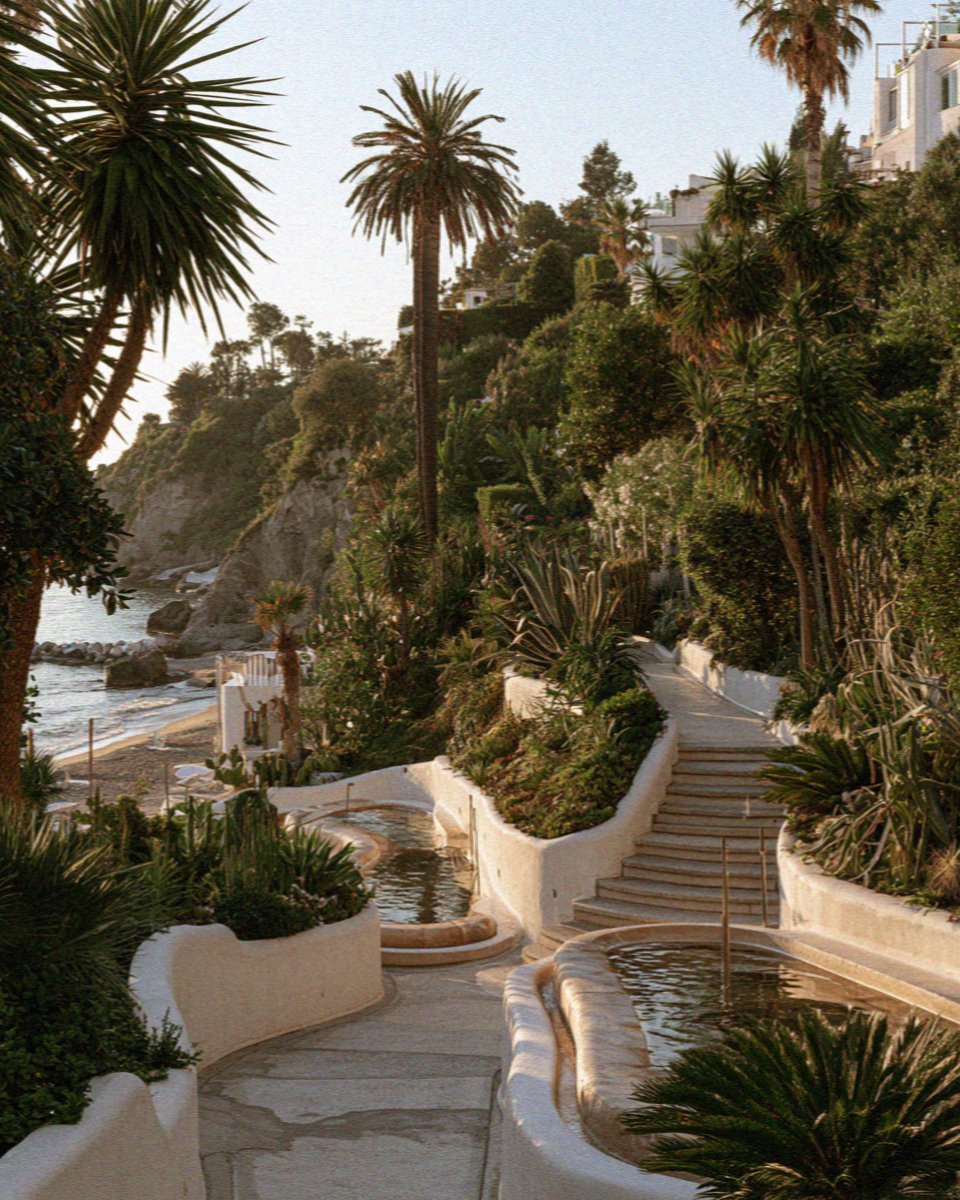
- The Poseidon thermal gardens. Twenty pools at different temperatures cut into the hillside above Citara. It sounds like a spa and it is really a hillside, which is why it works.
- A guided day on the island. For the interior, which almost nobody sees, and the vineyards on the shoulder of Epomeo.
The free thermal sea at Sorgeto, where hot springs rise through the seabed, costs nothing but the walk down. So do the beaches and the whole of the Aragonese causeway.
The Six Comuni, and Which Side You Want
Ischia is administratively six separate towns, and they do not blur into each other. Choosing between them is the single most consequential decision of the trip, more than the hotel, because the island is big enough that the wrong base means a week of bus timetables.
Ischia, the comune, is the busiest, around twenty thousand people, and it splits into two halves with very different characters. Ischia Porto is where the ferries land, in a harbour so perfectly round because it is a flooded volcanic crater, opened to the sea in the 1850s on the orders of Ferdinand II of Bourbon. Behind it, Corso Vittoria Colonna runs with shops and gelaterie and noise until late. Ischia Ponte, twenty minutes east along the water, is the old fishing quarter, quieter and far prettier, and it ends at the causeway to the Castello Aragonese. If it is your first visit and you want to arrive without organising a transfer, this is the comune to pick.
Casamicciola Terme is where the island’s spa history properly begins, and it is the least photogenic of the northern towns and therefore the best value. The whole town sits on hot springs. It is also the town that has paid for the geology: an earthquake levelled it in 1883 with more than two thousand dead, another shook it in 2017, and a landslide came down off the hillside in November 2022 and killed twelve people. Rebuilding is still going on in places, and you will see it. Down at sea level it is a working port and the island’s second ferry terminal; above it the town climbs the hill, and that is where the views and the quiet are.
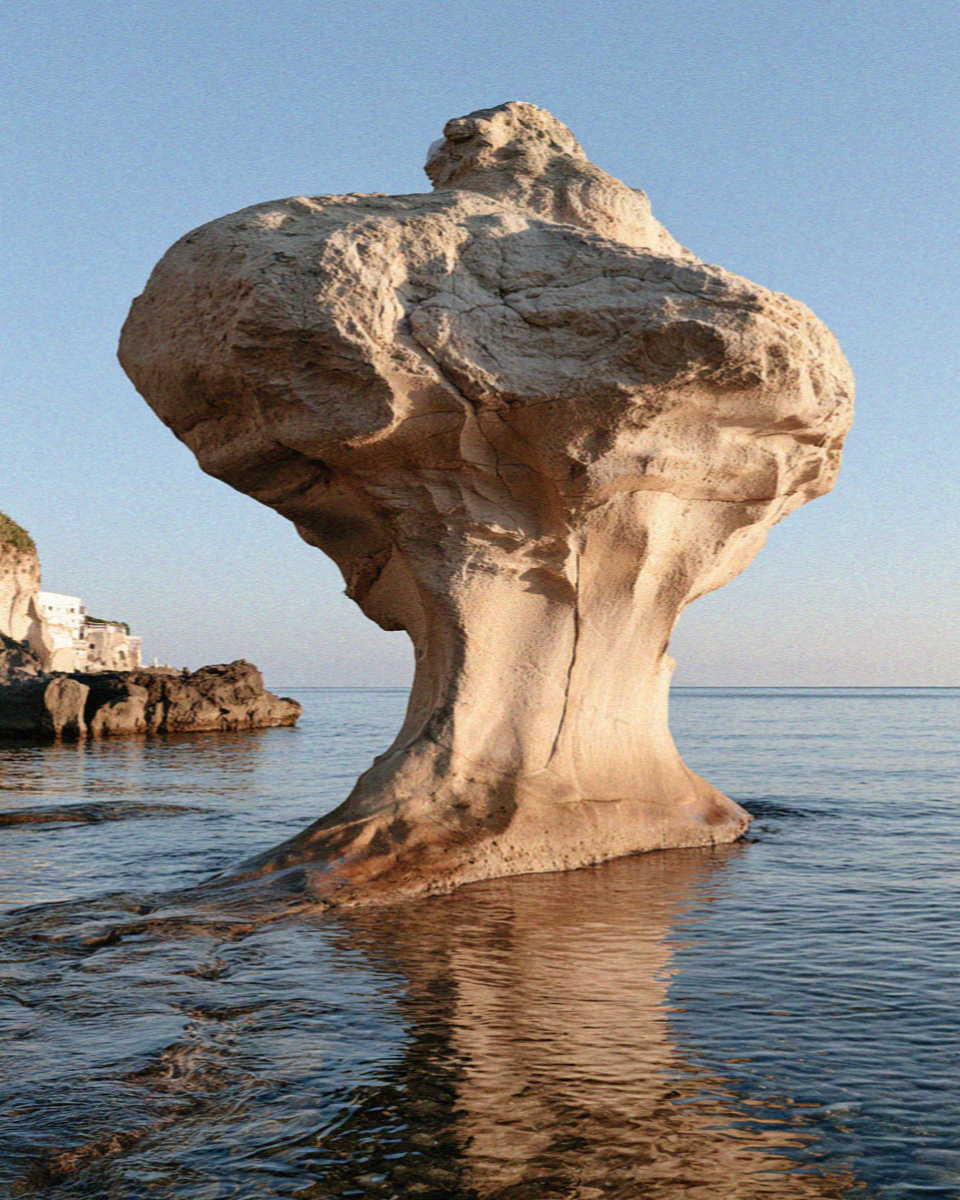
Lacco Ameno is small, tidy and rather pleased with itself, about five thousand people, and it is where the island’s postwar glamour settled. Its emblem is the Fungo, a lump of green tuff about ten metres high standing in the shallows off the promenade, worn by the sea into something so like a mushroom that the name was inevitable. Two serious things sit here: Negombo, the loveliest of the thermal parks, and Villa Arbusto, which holds the archaeology of the Greek town.
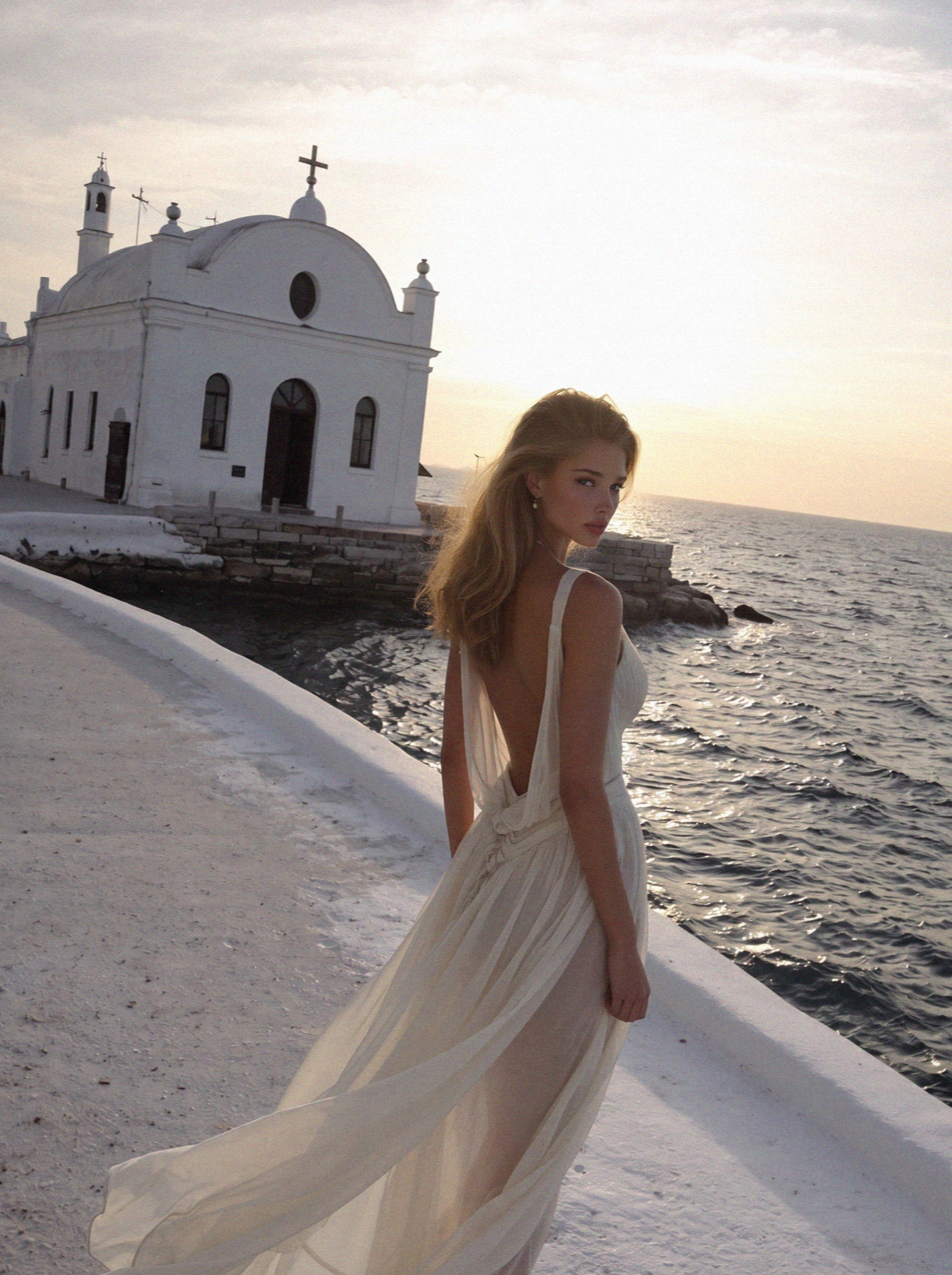
Forio is the west coast and the biggest town after Ischia itself, around seventeen thousand people, scruffier and more workaday than the north, with a proper market and a real high street. West coast means sunsets, and Ischia treats them as an event: people gather on the spur below the little white church of Santa Maria del Soccorso the way an audience gathers. Below the town is the bay of Citara and the biggest thermal park on the island; above it is La Mortella, the garden William Walton and his wife made in an old quarry. The trade off is forty minutes on the bus from the port.
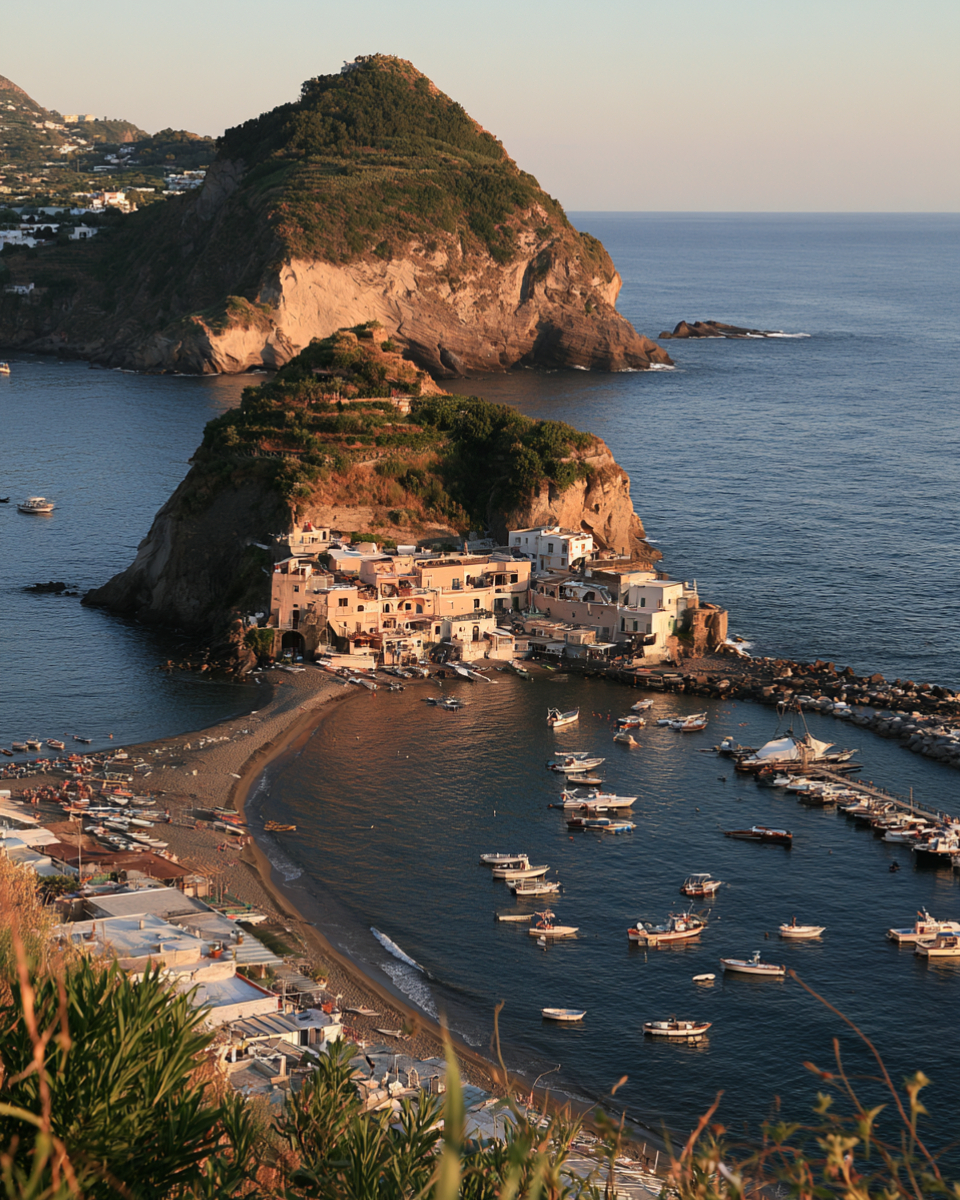
Serrara Fontana is the mountain comune, only about three thousand people, and it holds two places you will want. Fontana, up at height, is where the path to the summit of Epomeo starts. Sant’Angelo, on the southern tip, is the prettiest thing on Ischia: a fishing village against a rock promontory joined to the shore by a thin sandy isthmus, closed to cars, so the last stretch is on foot. Downhill going in, which is charming, uphill coming out with a suitcase, which is not.
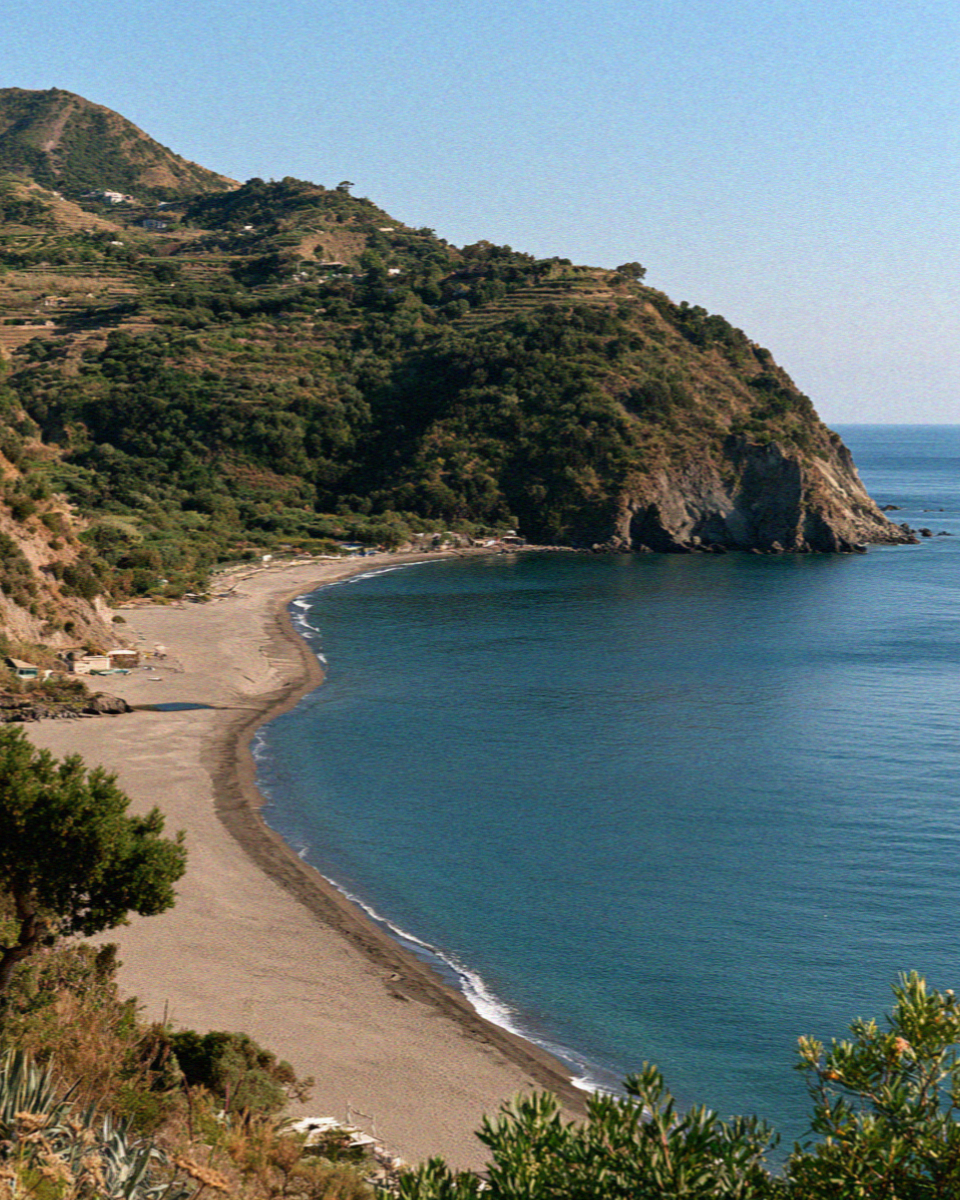
Barano d’Ischia is farmland and hill villages, around ten thousand people, and it owns the south coast: Maronti, close to three kilometres of dark sand. The beach-first choice, and the quietest by a distance.
Simplest version: north for thermal parks and calm water, west for sunsets and space, south for beaches and the prettiest village, the port for convenience. If you would rather have it arranged into days, with the boat hops worked out, I have set out how I would spend four of them in the perfect Ischia itinerary.
Plan Your Visit to Ischia
A few things I booked and loved. These help support the blog, at no cost to you.
- Where I stayed: search Ischia hotels
- Boat trips and Ischia tickets
- Stay connected: get a travel eSIM
This section contains affiliate links. If you book through them I may earn a small commission, at no extra cost to you.
Getting There
Ischia sits about thirty three kilometres from Naples, at the northwestern mouth of the bay, and there is no bridge and no airport. Everybody arrives by sea.
From Naples you have two ports and two speeds. Hydrofoils and fast catamarans leave from Molo Beverello, in front of the Maschio Angioino, and take around fifty minutes for roughly twenty to twenty two euros a person. Conventional car ferries leave from Calata Porta di Massa, about a fifteen minute walk further along the waterfront, and take about an hour and twenty minutes for about fourteen euros as a foot passenger. The slow boat is cheaper, calmer in a swell, and has a deck you can stand on, which on a clear morning is worth the extra half hour.
Pozzuoli, half an hour west of Naples, is the shorter and cheaper crossing and the one most Neapolitans use, and it runs year round along with Procida. In season, roughly April to October, there are also direct hydrofoils from Sorrento, Capri and the Amalfi Coast, which makes Ischia easy to fold into a longer trip. Those island to island routes stop in winter.
Two things people get wrong. Boats land at different places on the island (Ischia Porto mostly, some at Casamicciola, some at Forio), so check which port your ticket says before booking a hotel at the far end. And in high season the fast boats sell out, particularly on Friday and Sunday afternoons. The full breakdown of ports, operators and what happens when the sea gets up is in my guide to how to get to Ischia.
The Water That Comes Out Hot
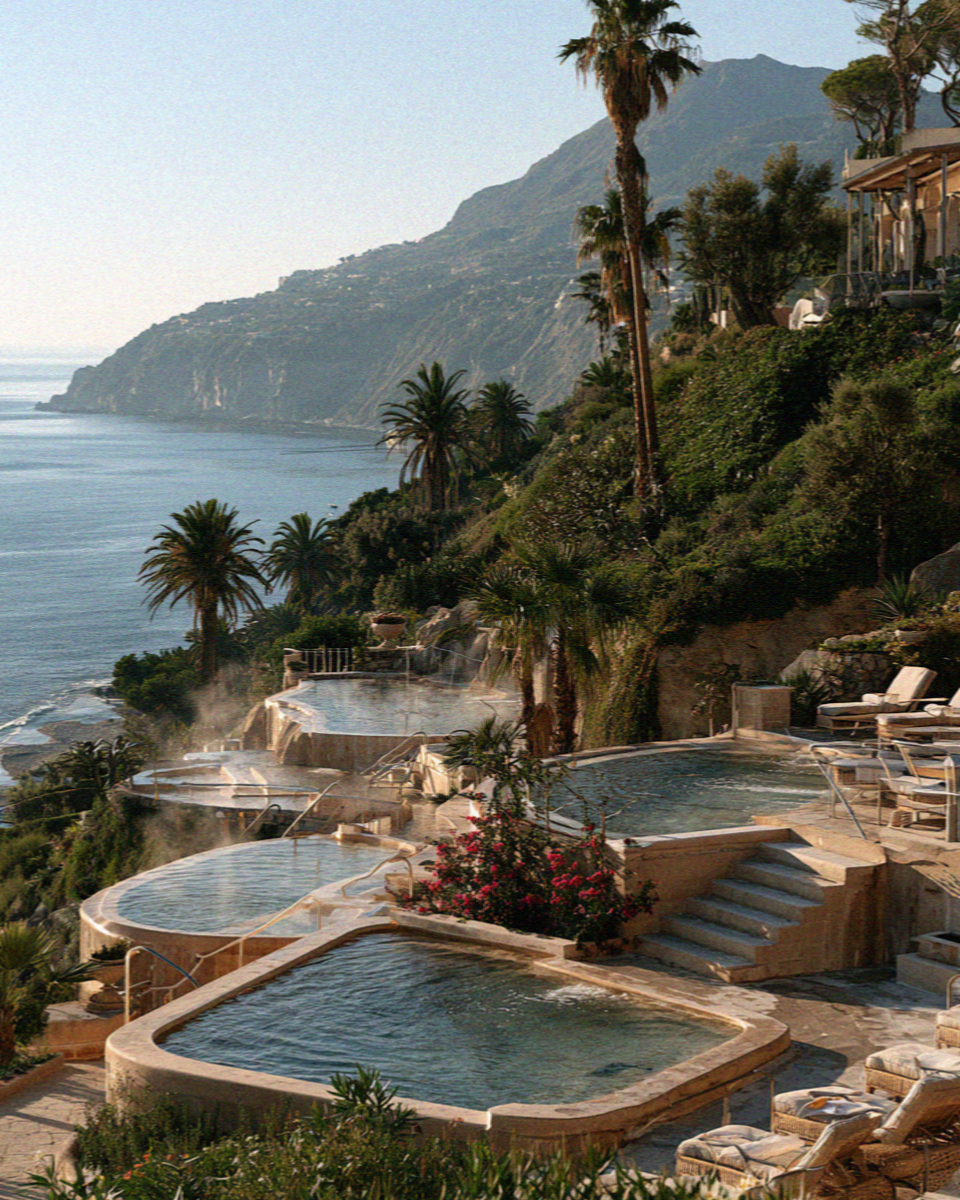
This is the thing that makes Ischia unlike anywhere else in the bay, and it is worth understanding rather than just soaking in.
Monte Epomeo is not a cone. It is a block of green tuff that has been shoved upward from below by a shallow body of magma, a resurgent block, and the shoving cracked the ground all around its edges. Rain sinks into that porous stone, is heated at depth, picks up minerals on the way, and comes back to the surface through the cracks. The island has something like twenty nine spring groups feeding a hundred or so individual springs, plus dozens of fumarole fields, and they surface everywhere: on beaches, under the sea, in hotel basements, in the middle of a lemon grove.
The waters are not one thing. They run from gently mineral to strongly sulphurous, and the traditional cure here is fango, volcanic mud matured in thermal water and applied hot, which is why so many hotels advertise a medical spa rather than a beauty one.
For visitors it comes down to a handful of places. Giardini Poseidon at Citara in Forio is the biggest, more than twenty pools terraced up a hillside above the sea, roughly forty one to forty eight euros depending on the month. Negombo at San Montano is the beautiful one, a botanical garden laid out from 1947 with about fourteen pools threaded through it and a real sand beach at the bottom, and the most expensive, though the afternoon ticket is a good deal. Castiglione at Casamicciola is where Italian families go and costs roughly half of Negombo.
Then the free water, which is the best of it. Sorgeto, a stony cove below Panza, where a hot stream meets the sea and people build rough pools out of the boulders. It costs nothing, never closes, and sits at the bottom of a couple of hundred steps. Go in October, or in February if you are brave, when sitting in water at bath temperature with a cold sea slapping over the rim is strange and wonderful. And the Fumarole at the eastern end of Maronti, where the sand is hot enough that beach restaurants cook chicken buried in it.
Which park is worth its ticket, which one to skip, and how to do the free springs without ruining your feet is all in my guide to the thermal parks and hot springs of Ischia.
The Castle, and Three Thousand Years of Being Useful
Ischia was Greek before Naples was. In the early eighth century BC, settlers from Euboea, from Chalcis and Eretria, established a town they called Pithecusae on the northern shore, near what is now Lacco Ameno. It is the earliest Greek settlement in the western Mediterranean that anyone has found, and it was there for trade: iron came in, worked goods went out, and Greeks, Etruscans, Phoenicians and locals lived in the same town.
The proof sits in a case at Villa Arbusto in Lacco Ameno, and hardly anyone climbs the hill to see it. Nestor’s Cup is a small clay drinking cup from the late eighth century BC, found in a grave in the San Montano necropolis in 1954, scratched with three lines of verse that joke at the expense of Homer’s Nestor. It is one of the oldest surviving pieces of writing in the Greek alphabet, and it sits in a quiet room on a spa island for about eight euros. Go in the morning; the hours are short.
The Romans came next and built a port called Aenaria on the east side, which went under the water after volcanic movement in the second century. Two local divers found the first lead ingots down there in 1973, and you can go out over the site now in a glass bottomed boat from Cartaromana and see foundations, a Roman wall and columns of carbon dioxide rising off the seabed.
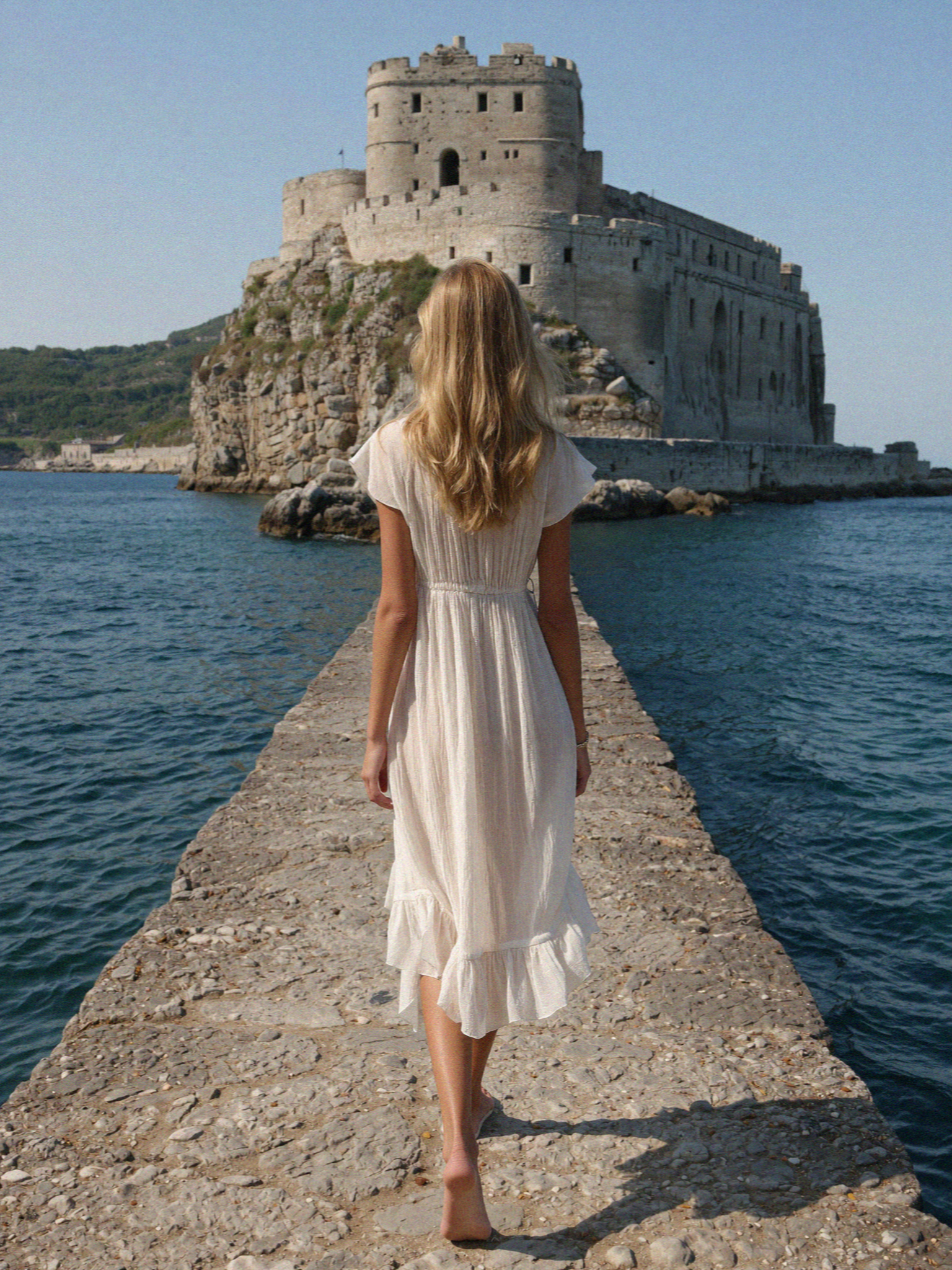
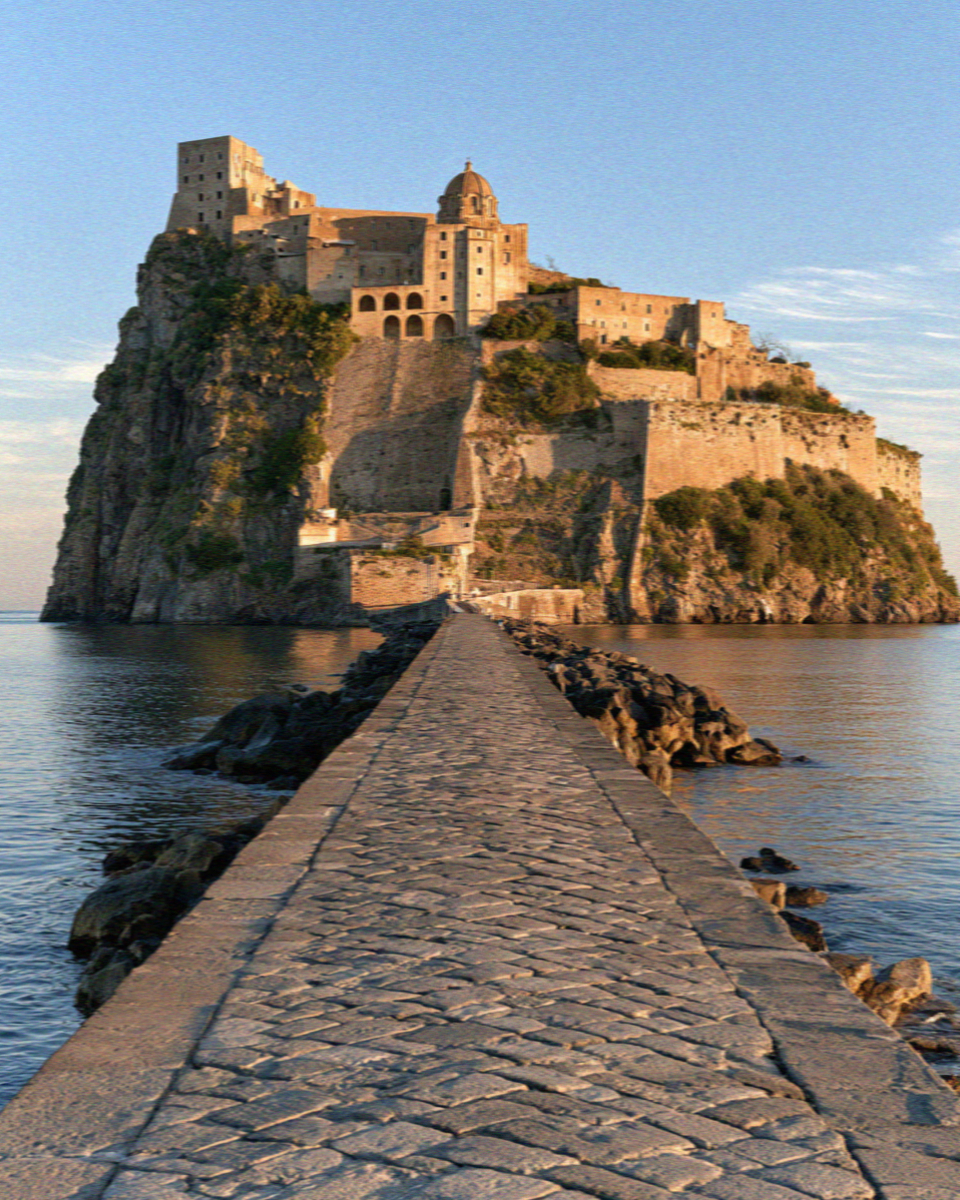
And then the castle. The Castello Aragonese stands on its own volcanic islet off Ischia Ponte, joined to the island by a stone causeway. Hiero I of Syracuse fortified the rock in 474 BC. Alfonso of Aragon took it in 1423 and built the causeway you walk across in 1441, which is when the whole town moved onto the rock for safety. At its height nearly two thousand people lived up there with a cathedral, monasteries and a convent.
Vittoria Colonna, the poet, married Ferrante d’Avalos in the castle’s cathedral in 1509 and spent most of her adult life on the rock, holding one of the great literary circles of the Italian Renaissance on a lump of stone in the sea.
What is left is not a castle so much as an abandoned town open to the sky: churches, terraces, a vineyard, a cemetery, and the Poor Clares’ room of stone seats where the dead nuns were left to decompose in front of the living. A ticket runs around fifteen euros and includes the lift through the rock. Allow two to three hours, not the ninety minutes they suggest.
The castle is the one thing on Ischia I would not let anyone skip, and there is far more than a day can hold. I have put it all in the order I would actually do it in my guide to the best things to do in Ischia.
Beaches, and Actual Sand
People who arrive expecting a bigger Capri are surprised by this: Ischia has real beaches. Long, sandy, lie-down-all-day beaches, not a shelf of rock with a ladder bolted to it. The sand is volcanic, so it runs from pale gold to near black, and in one or two places it is hot from below.
Maronti at Barano is the big one, close to three kilometres along the south coast, and it absorbs a crowd better than anywhere else on the island. San Montano at Lacco Ameno is the postcard, a shell shaped bay of pale sand with headlands closing in and water an improbable green, small and busy by eleven. Citara below Forio faces west and is glorious at six in the evening and choppy whenever the wind is up. Cartaromana, on the east side of Ischia town, is modest sand and stones whose whole point is that you lie down and look up at the castle. Spiaggia dei Pescatori at Ischia Ponte still has fishing boats hauled up on it and is two minutes from dinner.
Money, briefly. Almost every beach splits into a free stretch and private lidos, and two loungers with an umbrella run roughly twenty to thirty euros a day outside high summer, thirty to forty in July and August. The free stretches really are free, and really are taken by mid morning.
For swimming rather than sunbathing, the rocks at Punta Caruso on the northwestern tip have the clearest water on Ischia. Which beach suits which kind of day, and which ones I would not bother with, is set out in my guide to the best beaches in Ischia.
The Mountain and the Green Middle
Most visitors never leave the ring road, which is a shame, because the interior is where the island stops performing.
Monte Epomeo is 789 metres, and the climb is well within the reach of most people who walk a little at home. Take the bus to the little piazza at Fontana, find the signed path, and climb about four hundred metres of ascent over roughly three kilometres, an hour at a steady pace on a track that turns to soft pale tuff underfoot. The last stretch narrows into a channel cut through the rock. At the top, carved into the stone, sit a hermitage, a fifteenth century church and a small restaurant, and the view takes in the whole island, Procida and Vivara to the north, Vesuvius across the water and Capri low on the southern horizon. Go early. By eleven in summer the haze has eaten it.
The other walk to know is Piano Liguori, which starts at Campagnano above Ischia Ponte and runs along the eastern flank for two and a half to three hours through vines and terraces, with Capri ahead of you almost the whole way and, for long stretches, nobody else on the path.
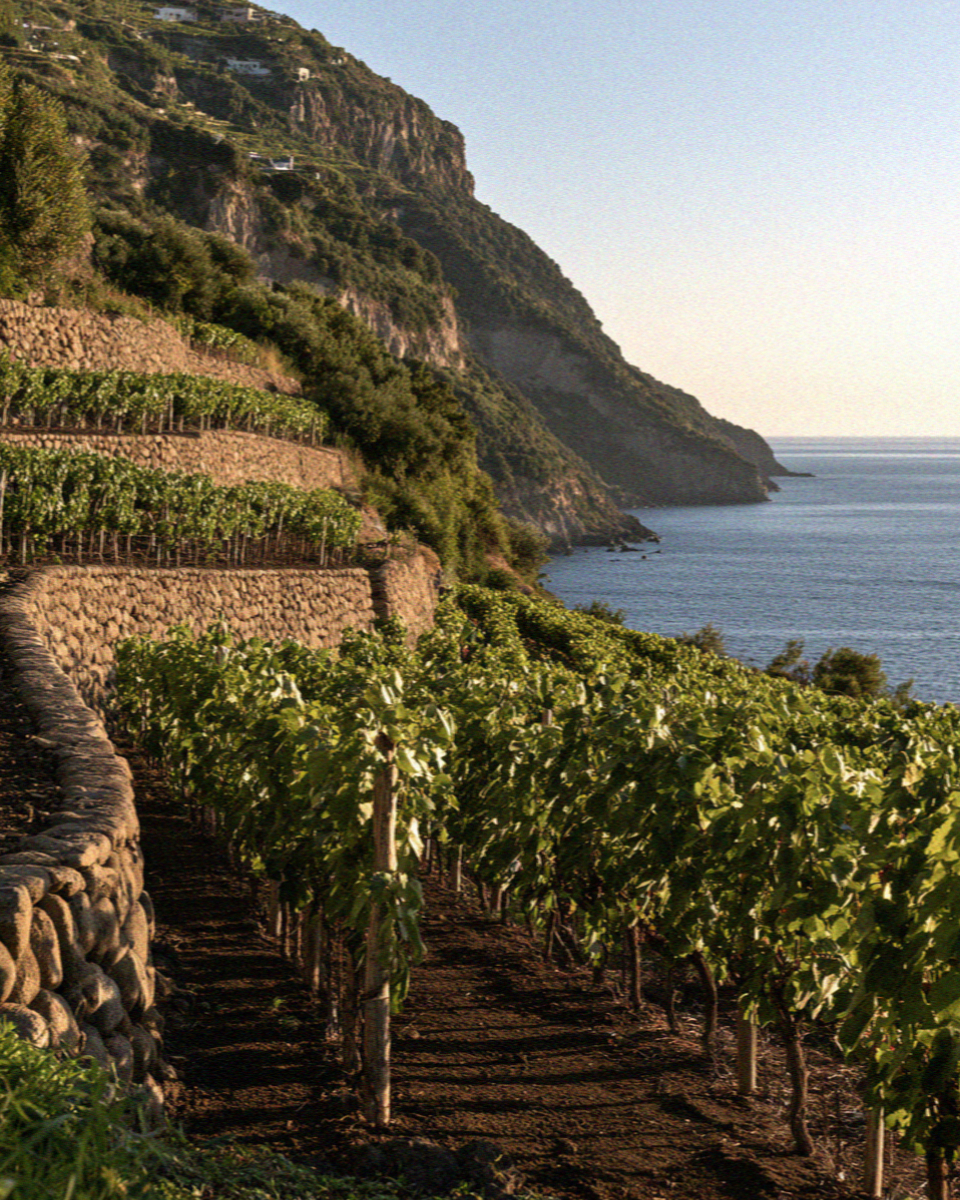
Between the two you get the island’s other economy. Dry stone walls of green tuff step up the slopes holding pockets of soil at angles no machine could work, some served by little monorails because there is no other way to bring the fruit down. Chestnut woods higher up, broom, cane, lemons.
For photographs, the mountain at dawn and the Soccorso church at dusk are the two ends of the same day. I have mapped where to stand and at what hour in my guide to the best photo spots in Ischia.
What Ischia Eats and Drinks
The island dish is rabbit, not fish, which tells you how much of Ischia’s history happened inland. Coniglio all’ischitana is the island dish: rabbit braised slowly in a terracotta pot until the sauce turns dark and clings, scented with more wild herb than you would expect. Traditionally the sauce arrives first, over bucatini, and the meat comes afterwards as a second course, so order carefully or you will be given twice the dinner you meant to have.
The rabbits were raised in fosse ischitane, pits dug into the soft tuff where they burrowed and ate vine leaves and bean pods, and the cave raised version is now a Slow Food Presidium. That diet is why the meat tastes of the hillside.
The best of this cooking is not on the harbour front. It is up in the hills at places like Il Focolare at Cretaio, Il Bracconiere above Serrara Fontana at around 480 metres, and Da Peppina di Renato at Montecorvo, where you eat under a vine shoot roof with the bay of Citara going dark below you. Reckon on thirty to fifty euros a head with wine, and telephone the day before if you want the rabbit.
The wine is white and it is grown on those terraces. Biancolella is lean and saline with a bitter green almond finish, Forastera rounder and softer. Both go into DOC Ischia, a denomination created in 1966, which makes it one of the older ones in the country. Ordered by the carafe inland, either one costs almost nothing and carries more of the place in it than anything else on the table.
Where I would eat every night, where the fish is actually worth the price, and which stretch of waterfront to walk straight past is in my guide to where to eat in Ischia.
Where to Sleep
Pick a coast, then a village, then a hotel. In that order, because on Ischia the town decides the holiday.
Ischia Ponte is my answer for a first visit: the ferry lands almost where you are sleeping, the old quarter is lovely in the evening, and both bus routes start at the harbour. Sant’Angelo is for a second visit and for couples, extremely pretty, car free, quiet by ten, and expensive for what it is. Lacco Ameno is the one if the water is the point, with Negombo and San Montano on your doorstep and only two or three restaurants to your name. Forio gives you sunsets, space and the biggest thermal park, at the cost of the bus ride. Casamicciola is where the value is. Maronti is where the beach is, and where nothing happens after dark.
Three things to know before booking. Almost every hotel here has thermal pools of its own, which is not the case anywhere else in the bay. Half board is normal here and usually worth taking, a habit inherited from the days when people came for weeks of treatment rather than a week of holiday. And a great many hotels close entirely from November until March.
The hotels I would actually book in each town, from the five star landmark on Roman foundations to the thirteen rooms inside the castle itself, are in my guide to where to stay in Ischia.
When to Come
The season runs from around Easter to the middle of October and then most of the island closes.
May and early June are the best weeks, in my opinion and by some distance. Everything is open, the hills are still green rather than burnt, the light is clean, and the prices have not gone up yet. The sea is cool for swimming but perfectly usable by June.
July and August are hot, full and Italian. The island is at its most alive and its most expensive, restaurants need booking days ahead and the buses are standing room only. It is also when the Festa di Sant’Anna happens, on the twenty sixth of July, when illuminated allegorical boats parade in the bay of Cartaromana and the Castello Aragonese is lit red as though it were burning. Nothing else in the bay looks like it.
September and early October are the connoisseur’s window: warm sea, thinning crowds, the vendemmia on the terraces, and thermal pools that feel like a treat rather than an ordeal.
November to March is a different island. The parks shut, most hotels shut, and what remains is Sorgeto steaming in the cold, an empty castle and a working town. I liked it enormously. I would not send a first timer.
Month by month, with sea temperatures, what is open and what the crowds actually do, it is all in my guide to the best time to visit Ischia.
The Practical Part
Do not hire a car. The roads are narrow, the parking is genuinely awful in Forio and Ischia Ponte in August, and Sant’Angelo will not let you in anyway. The EAV buses run two circular routes, the CS anticlockwise and the CD clockwise, touching every town, beach and thermal park roughly once an hour, more often in summer. A single is around 1.50 euros, a hundred minute ticket from a bar around 1.80, the same bought from the driver about 2.00, and a day pass around 4.50. They get packed in August. They work.
Taxi boats are the island’s best small pleasure. Cooperatives run from Sant’Angelo and Ischia Ponte, roughly April to October, and a short hop to the far end of Maronti, or the Fumarole, or Cavascura, costs a few euros a head. A whole boat for a group around the island runs into the low hundreds. Take one at least once, because the coast keeps things back from the bus route.
Land taxis exist and are not cheap: port to Sant’Angelo lands around forty euros. Many hotels run their own shuttles, so ask first.
Budget. Two people can do Ischia well on a mid range hotel plus twenty to thirty euros a day of buses and beach chairs and fifty to eighty on dinner, more if you are doing a thermal park daily at forty euros a head.
Pack water shoes, which are not optional for Sorgeto or the Fumarole, proper shoes for Epomeo, a light layer for evenings even in July, and something to swim in that you do not mind sulphur getting into. Bring your own towel to the thermal parks. None of them include one.
Two or three days is enough to see it. A week is what it deserves. Ischia rewards the second and third day, because the first is spent recalibrating from whatever you expected an island in this bay to be.
More images from Ischia

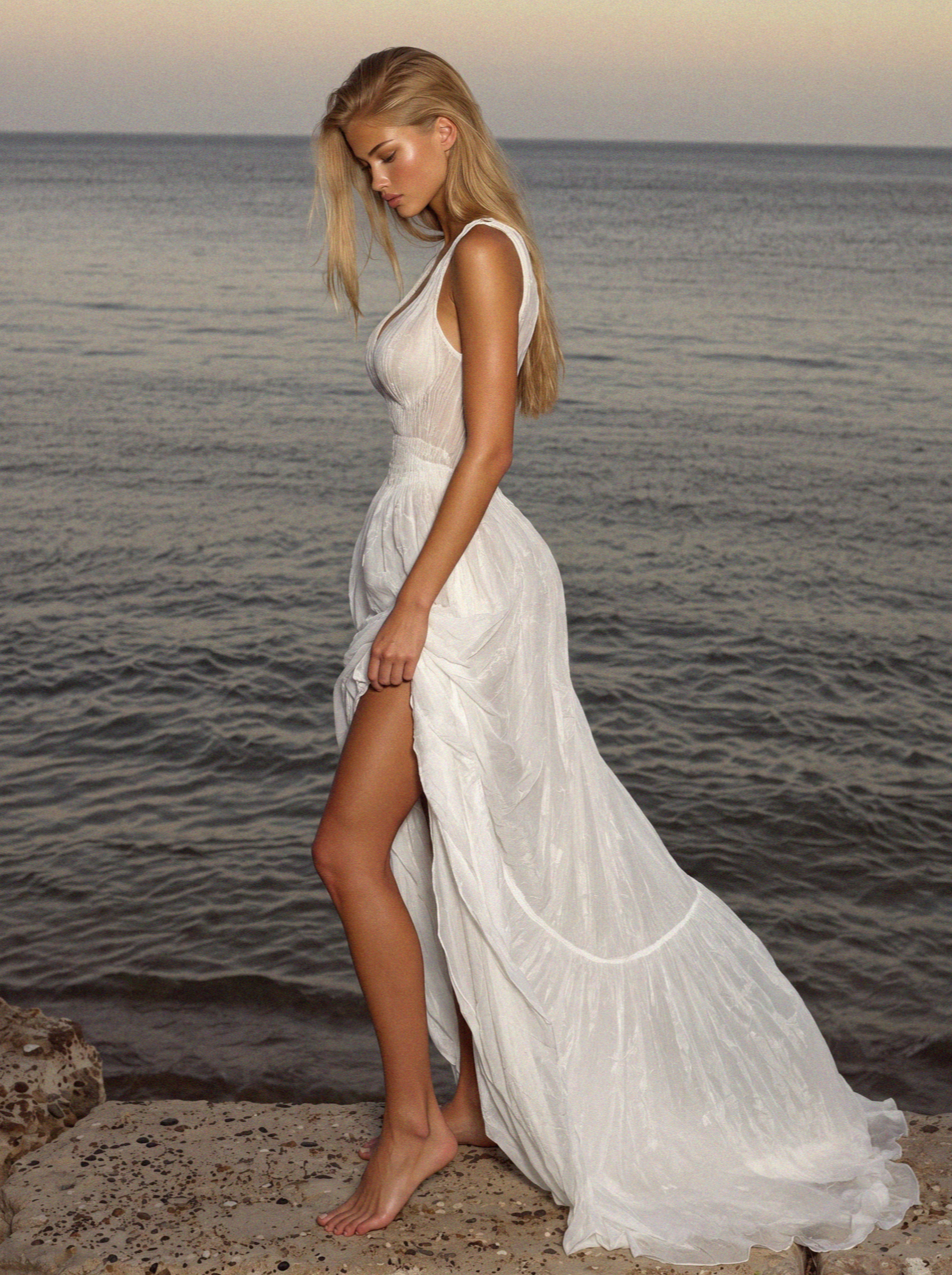
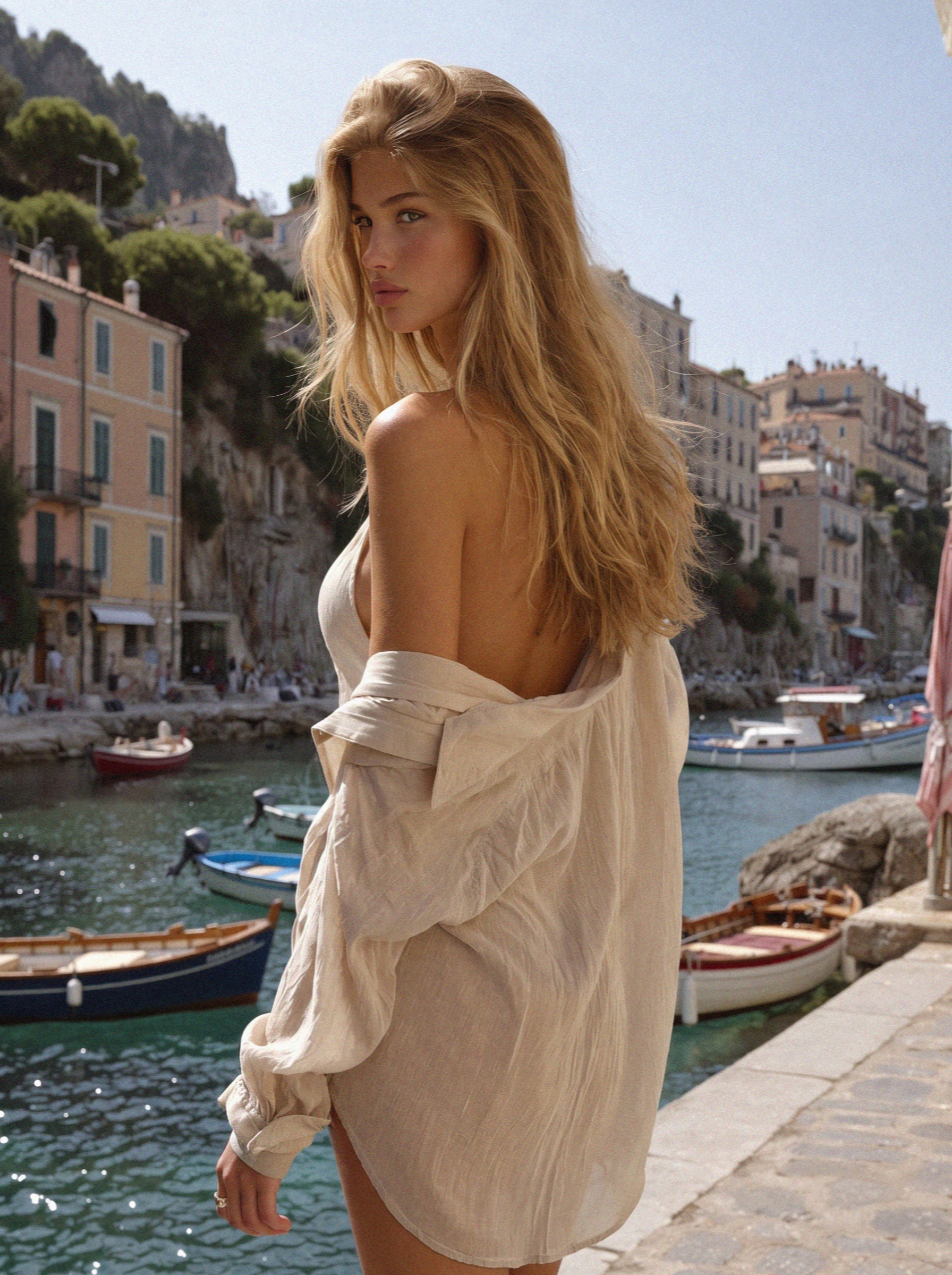
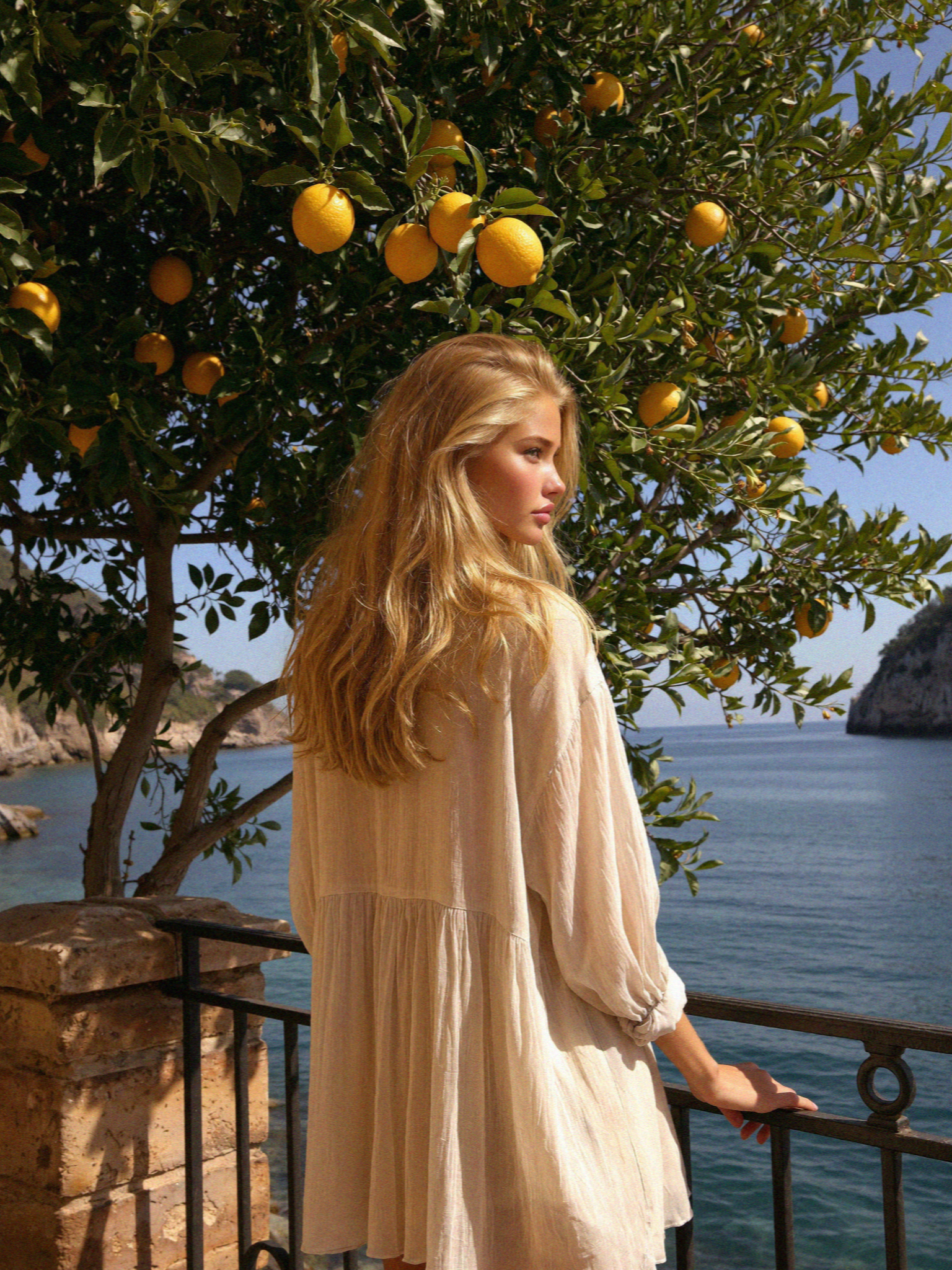
Your Ischia Guides
Everything here in detail, guide by guide.
- The Best Things to Do in Ischia
- The Best Beaches in Ischia
- The Best Thermal Parks and Hot Springs in Ischia
- Where to Stay in Ischia
- Where to Eat in Ischia
- How to Get to Ischia
- The Best Time to Visit Ischia
- The Perfect Ischia Itinerary
- The Best Photo Spots in Ischia
Ischia Travel Diaries
Frequently Asked Questions
Is Ischia better than Capri?
They are different holidays. Capri is smaller, glossier and built around day visitors, and in high summer it feels it. Ischia is about five times the size, has just over sixty thousand residents, six working towns, real sandy beaches, a mountain and thermal water everywhere. If you want shopping and the Faraglioni, go to Capri. If you want to swim, walk, eat well and slow down, Ischia is the better island.
How many days do you need in Ischia?
Three days covers the essentials: the Castello Aragonese, one thermal park, one long beach day and an evening in Sant’Angelo. Five to seven days is what the island deserves, because it lets you add Monte Epomeo, a hill trattoria for the rabbit, a boat trip round the coast and the Villa Arbusto museum without spending your holiday on the bus.
How do you get to Ischia from Naples?
By sea only, since the island has no bridge and no airport. Hydrofoils from Molo Beverello take about fifty minutes for roughly twenty to twenty two euros, and car ferries from Calata Porta di Massa take about an hour and twenty minutes for about fourteen euros as a foot passenger. Pozzuoli, half an hour west of Naples, is the shorter and cheaper crossing, and in season there are direct boats from Sorrento, Capri and the Amalfi Coast.
Do you need a car on Ischia?
No, and I would advise against it. Two EAV bus routes ring the island, the CS one way and the CD the other, and between them they stop at everything you will want. A single is around 1.50 euros and a day pass around 4.50. Parking is difficult, the roads are narrow, and Sant’Angelo is closed to traffic altogether. Taxi boats fill in the gaps along the south coast for a few euros a hop.
Where should you stay in Ischia?
Ischia Ponte for a first visit, because the ferry lands you there and the old quarter is the prettiest part of the main town. Sant’Angelo for a quiet, car-free, couples-focused stay. Lacco Ameno if the thermal water and swimming are the point. Forio for sunsets and the biggest thermal park. Casamicciola Terme for value, and Maronti if you want to walk out of your hotel onto three kilometres of sand.
What are Ischia’s thermal parks and are they worth it?
They are day-long garden complexes built where the hot springs already surface, with pools at different temperatures, and at least one is worth doing. Negombo at San Montano is the most beautiful, Giardini Poseidon at Citara the biggest with more than twenty pools, and Castiglione at Casamicciola the best value. Entry runs from roughly twenty five euros to seventy depending on the park and the month, towels are never included, and all of them close for the winter.
Are there free hot springs on Ischia?
Yes, two that anyone can use. Sorgeto, a stony cove below Panza, has natural pools where a hot spring meets the sea, costs nothing and never closes, though it sits at the bottom of a couple of hundred steps. The Fumarole at the eastern end of Maronti beach are volcanic steam vents that heat the sand from below, hot enough that beach restaurants cook in it. Wear water shoes at both.
What is Ischia famous for?
Thermal water, above all: around twenty nine spring groups feed a hundred or so springs, and the island has been a cure destination since Roman times. Beyond that, the Castello Aragonese on its islet at Ischia Ponte, Monte Epomeo at 789 metres, long volcanic sand beaches like Maronti, coniglio all’ischitana, the white wines Biancolella and Forastera, and the fact that the Greeks settled here at Pithecusae in the eighth century BC, earlier than anywhere else in the west.