Some links in this guide are affiliate links. If you book through one, this site may earn a small commission, at no extra cost to you. How this works.
Ischia is big. That is the thing nobody tells you before the ferry docks. Six separate towns, a mountain in the middle, and a circular bus that takes the better part of an hour to cross the island. Try to do it all in a day and you will spend most of that day on the CS with your bag on your knees.
So I stopped trying. I gave each of the things below a half day, roughly in this order, and the island made sense.
What to book before you come
Ischia rewards doing very little, and most of what follows costs a bus ticket. Three things are worth booking, and the first is the one that changes how you understand the island.
- A day around the island by boat, with lunch. Ischia is a volcano and you cannot see that from the bus. Seven hours round the coast shows you the cliffs, the caves and the green side nobody visits, and it swims at stops you would never find. 4.9 across more than a thousand reviews, which for a full day is unusual.
- Entry to the Poseidon thermal gardens. The big one at Forio, twenty-odd pools stepped down a hillside at different temperatures. Book the ticket rather than queueing, and go early: by noon in August the good pools are full and the point of the place is lost.
- The Green Cave, by clear-bottomed boat. Ninety minutes, and mildly silly, and the water genuinely is that colour. Worth it if you are travelling with anyone under about fifteen, or over about fifty.
Sorgeto costs nothing and always will. The castle you pay for at the gate.
The Castello Aragonese at Ischia Ponte
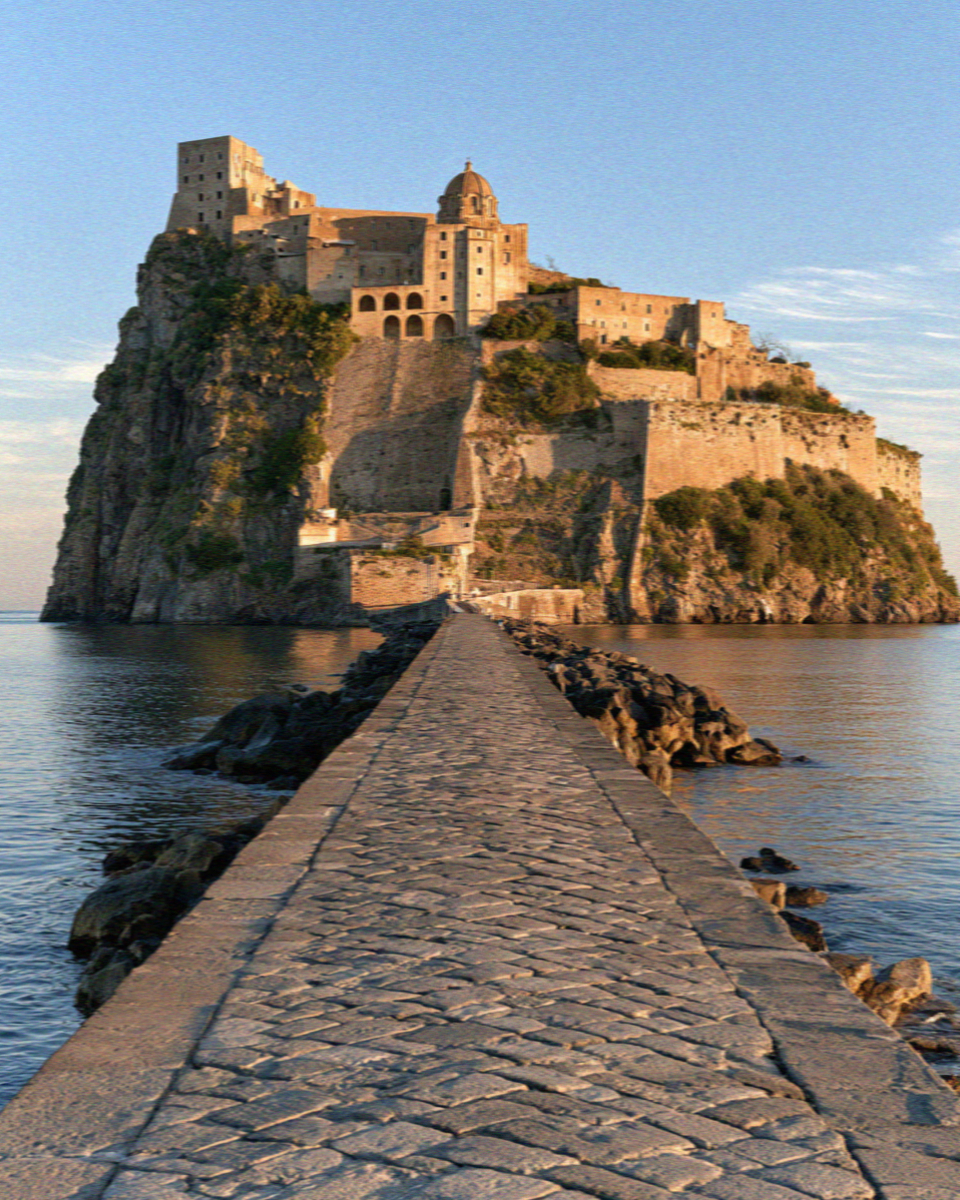
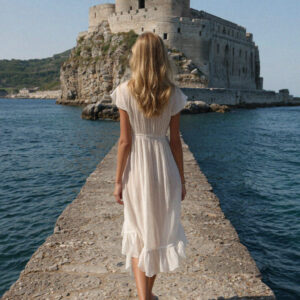
This is the one thing on Ischia I would not let you skip. The castle stands on its own volcanic islet off Ischia Ponte, reached by a stone causeway, and it is less a castle than an abandoned town stacked up a rock: churches, a convent, terraces, vineyards, a cemetery, half ruined and open to the sky.
A full ticket was around fifteen euros when I went, and it includes the lift: you buy at the base, walk into a long tunnel cut through the rock, and ride up inside the cliff. The old stepped ramp is still there if you would rather climb.
Budget more time than you think. The route is close to two kilometres with a great many steps, and the official hour and a half is honest only if you never stop. I was up there nearly three. The Convent of the Poor Clares has a room of stone seats where the dead nuns were left to decompose, exactly as grim as it sounds and worth seeing. Break at the Caffetteria del Monastero, under bougainvillea above the Bay of Sant’Anna.
Open seven days a week, nine until sunset, last ticket an hour and a half before, closed for maintenance from January into March. The 177 bus runs from Ischia Porto, though I would walk the seafront instead, twenty to thirty minutes.
Monte Epomeo, on foot from Fontana
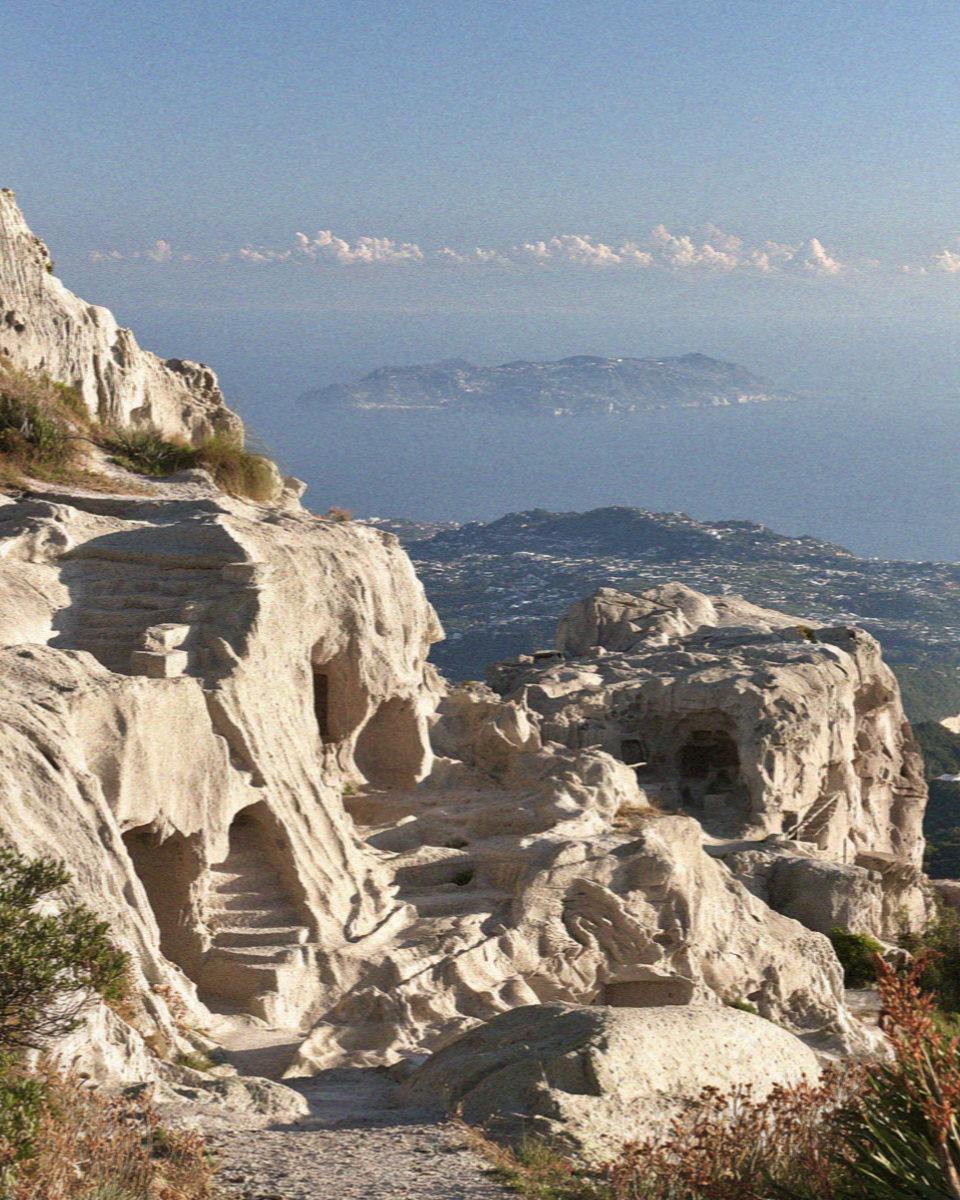
Epomeo is 789 metres, the reason the island exists at all, and the walk up is manageable for anyone reasonably fit. Take the CS or CD to the little piazza in Fontana; the path starts there, signed, climbing through chestnut and broom on a track that turns to soft pale tuff underfoot. Roughly 400 metres of ascent, about an hour at a steady pace. Only the last stretch gets steep, with a short scramble through a channel cut into the stone.
At the summit, carved into the tuff, sit a hermitage and the fifteenth century church of San Nicola di Bari, and a small restaurant in the same rock, open for lunch most of the year. The view is the payoff: the island below you, Procida and Vivara to the north, Vesuvius across the bay, Capri low on the horizon.
Go early. By eleven in summer the haze eats the view and the path bakes.
La Mortella, in Forio
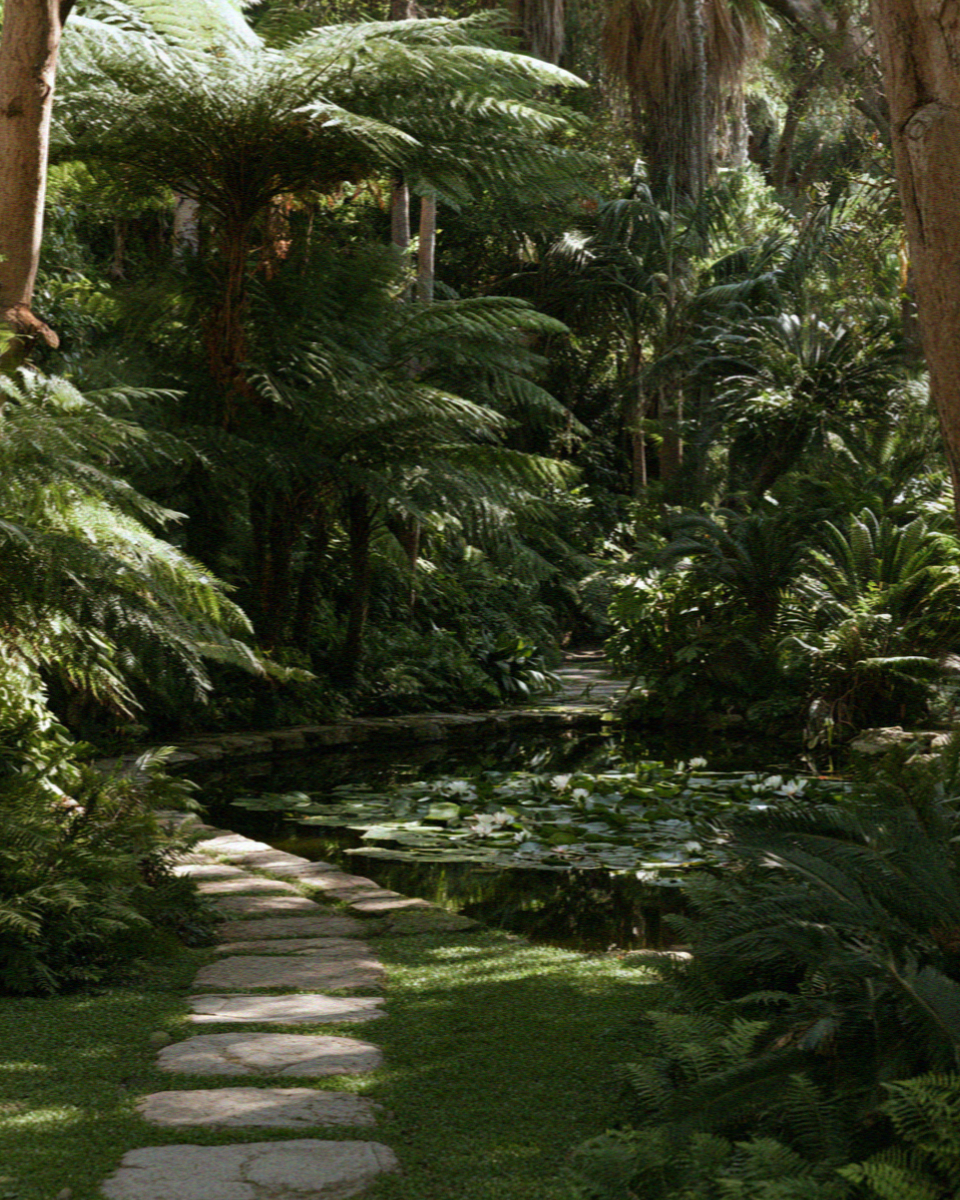
La Mortella is the garden the composer William Walton and his wife Susana made in an old quarry above Forio, laid out from 1956 by Russell Page. A serious garden, not a photo stop, and it deserves the full two hours.
The lower valley garden is the tropical one, dense and dripping and cooler than the road outside, with tree ferns and a glasshouse of giant water lilies. Then you climb, and the hill garden opens into terraces of aloes, a nymphaeum, a Thai pavilion above a pool, and a small Greek theatre cut into the slope with the sea behind it.
Fifteen euros full price, twelve concession. The thing to know, because people turn up and find the gate shut: it opens only Tuesday, Thursday, Saturday and Sunday, nine to seven, from early April to the start of November. Free parking at the Via Zaro entrance.
Time it for a concert if you can. Chamber recitals run in the museum on weekend afternoons in spring and autumn, and youth orchestras play the Greek theatre on Thursday evenings from mid June through July, around twenty euros with garden entry included.
Sant’Angelo
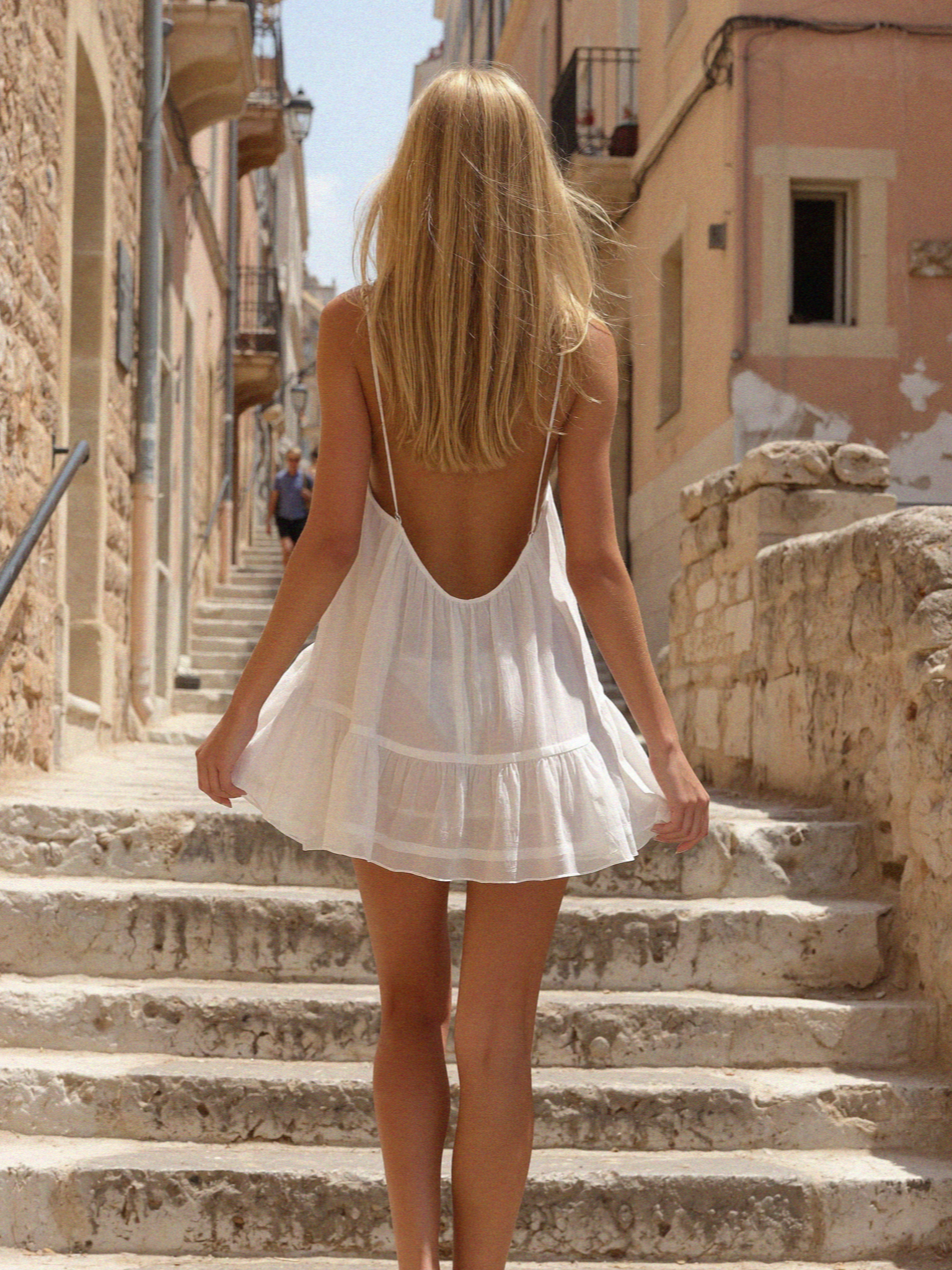
Sant’Angelo is the prettiest place on Ischia and it knows it, but the traffic ban saves it. Cars, buses and taxis stop in a yard above the village and you walk down. That one rule is why the piazzetta still feels like a fishing village at seven in the evening instead of a car park with a view.
The village is tiny. Pastel houses, a strip of harbour, one square with a few places to sit, and behind it the islet joined by a low sandy isthmus. You will see all of it in twenty minutes, which is not the point. Be there in the late afternoon when the light comes round, drink something slowly, then take the cliff path up for the view back over the roofs. Taxi boats leave the harbour all day, three euros or so a head to the Fumarole beach or Cavascura, more to Maronti.
Sorgeto, the cove that boils
Below Panza, hot volcanic water comes out of the ground and runs straight into the sea, so the rock pools sit somewhere between warm bath and uncomfortably hot. It is free. It is also at the bottom of a couple of hundred steps, and those steps are the whole catch, because you climb them again afterwards on soft legs.
Get off at Piazza San Leonardo in Panza and walk down, or arrive by taxi boat from Sant’Angelo for around five euros, which I would take back. Bring water shoes: the stones are sharp and in places too hot to stand on. Go early or at dusk, and ideally in the cooler months, when a scalding pool with the sea slapping over the edge is a pleasure rather than an ordeal.
Lacco Ameno, the Fungo and the museum people walk past
Lacco Ameno is the smallest of the six towns and its emblem is a lump of green tuff about ten metres high standing in the water off the seafront, worn by the sea into something so like a mushroom that it is called the Fungo. Lovely at sunset, five minutes of your life, no ticket.
The reason to stay is up the hill at Villa Arbusto, which holds the archaeological museum of Pithecusae. Ischia was the first Greek colony in the west, older than Naples, and the museum’s famous object is Nestor’s Cup: a small clay cup from the eighth century BC, found in a child’s grave in 1954, scratched with three lines of verse that joke about Homer. One of the earliest pieces of written Greek anyone has, in a case on a hill on a spa island, largely unvisited. Eight euros, hours short and mostly mornings, so check before you climb. Beneath the church in Piazza Santa Restituta there is more, excavated kilns and workshops from the Greek town.
A boat around the island
Worth doing once, because the coast keeps things back from the bus route: the Grotta Verde, the cliffs under Sant’Angelo, the steaming sand at Maronti, Cartaromana bay with the castle behind it.
Group day trips run roughly sixty to ninety euros a head depending on lunch, leaving Forio or Ischia Porto mid morning and back late afternoon with two or three swimming stops. The shorter three hour runs cost much less and feel rushed. Go on a calm morning; the south west side chops up once the wind gets going.
The terraced vineyards
Look up almost anywhere on the west of the island and you will see dry stone walls of green tuff stepping up the mountain, holding pockets of soil at angles no tractor could manage. That is where Ischia’s white wine comes from, Biancolella and Forastera, on terraces sometimes worked with a little monorail because there is no other way down with the fruit.
Casa d’Ambra in Forio is the family that made the case for these grapes, and their Frassitelli vineyard sits at around 600 metres on the flank of Epomeo, four hectares of Biancolella above the sea. The tour runs Tuesday, Thursday and Friday, a quarter to ten until one, around sixty euros without transfers, ending in four wines and a board of cheese and salumi. Book a day ahead.
Not cheap for a morning, and still the clearest explanation of the island you will get. More on the wine and how to string the towns together in my complete guide to Ischia.
What I would leave out
The tourist train at the port, the minibus island tours that stop eleven minutes at each viewpoint, and the boat day trips to Capri, which give you three hours there, enough to be jostled and not enough to see. You came to the bigger, greener, slower island.
Read also: The Best Beaches in Ischia | The Best Thermal Parks and Hot Springs in Ischia | The Complete Guide to Ischia
Frequently Asked Questions
How much does the Castello Aragonese cost and how long does it take?
A full adult ticket was around fifteen euros when I visited, and the lift up through the rock is included. The route is close to two kilometres with a lot of steps. The castle suggests an hour and a half; allow two to three hours with the cafés. Open daily from nine until sunset, last ticket an hour and a half before closing.
Is the walk up Monte Epomeo difficult?
Not especially. From the piazza in Fontana it is about an hour to the 789 metre summit, roughly 400 metres of ascent on a clear path, with one short rocky section near the top. Go early, before the heat and the haze.
Which days is La Mortella open?
Tuesday, Thursday, Saturday and Sunday only, nine to seven, from early April to the start of November, ticket office closing an hour before. Full entry is around fifteen euros and you should allow two hours. Check the concert calendar too, since recital tickets include garden entry.
Is Sorgeto free, and how do you get down to it?
Yes, the thermal cove is free. You reach it down a couple of hundred steps from above Panza, a short walk from the Piazza San Leonardo bus stop, or by taxi boat from Sant’Angelo for around five euros. Wear water shoes, as the stones are sharp and some pools are extremely hot.
Do you need a car to see all of this?
No. The CS and CD buses circle the island in both directions and reach every town here, with a ninety minute ticket costing around 1.50 euros from a bar and a day pass around 4.50. Sant’Angelo is closed to traffic anyway, and a car is a liability in Forio and Ischia Ponte in August.