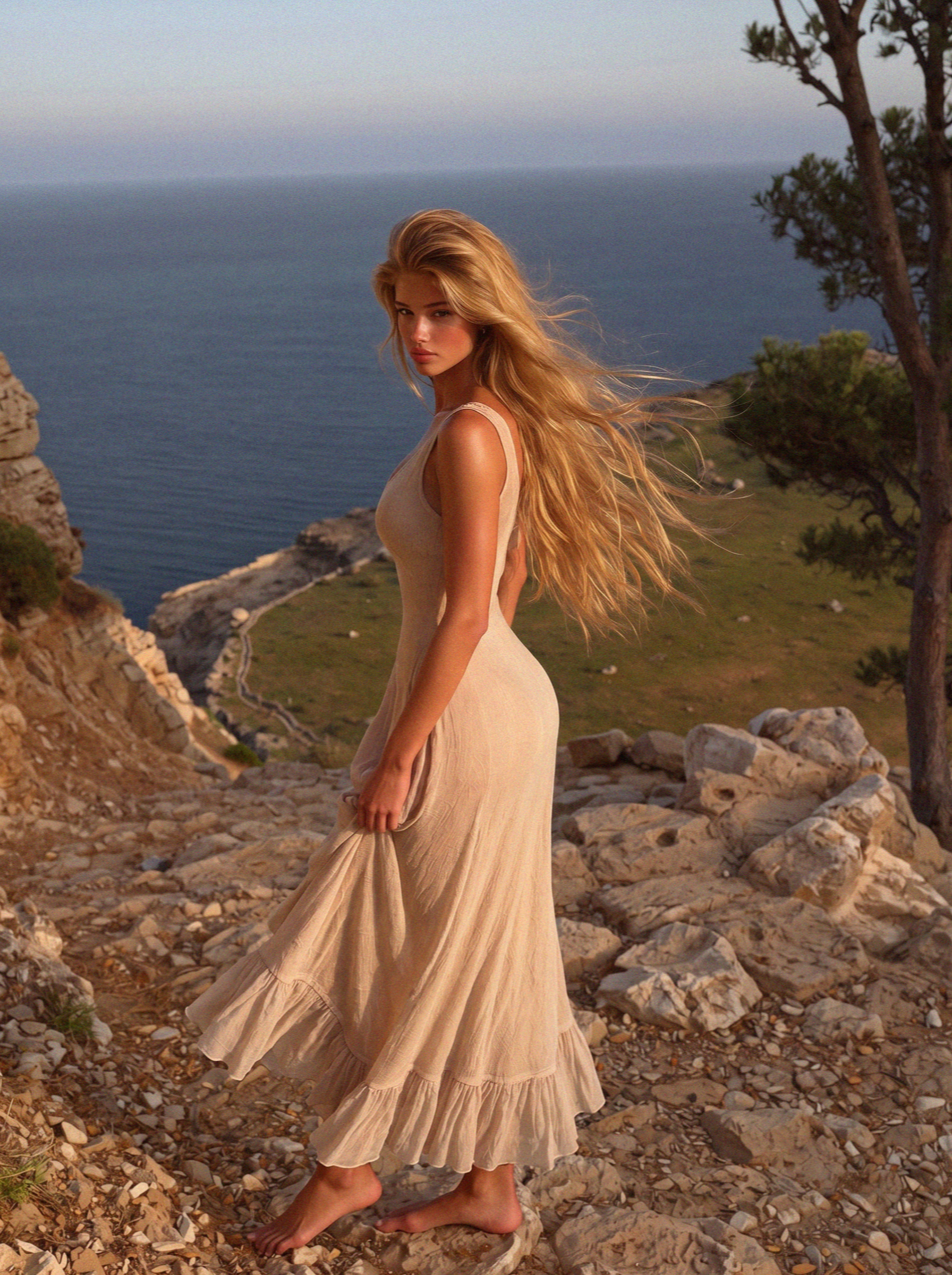
They call it l’isola verde and I assumed, before I came, that this was the kind of thing tourist boards decide in a meeting.
It is not. The island really is green, and the green is the strange part, because everything under it is volcano.
I went inland on the second morning, away from the water, which is not what anybody does here.
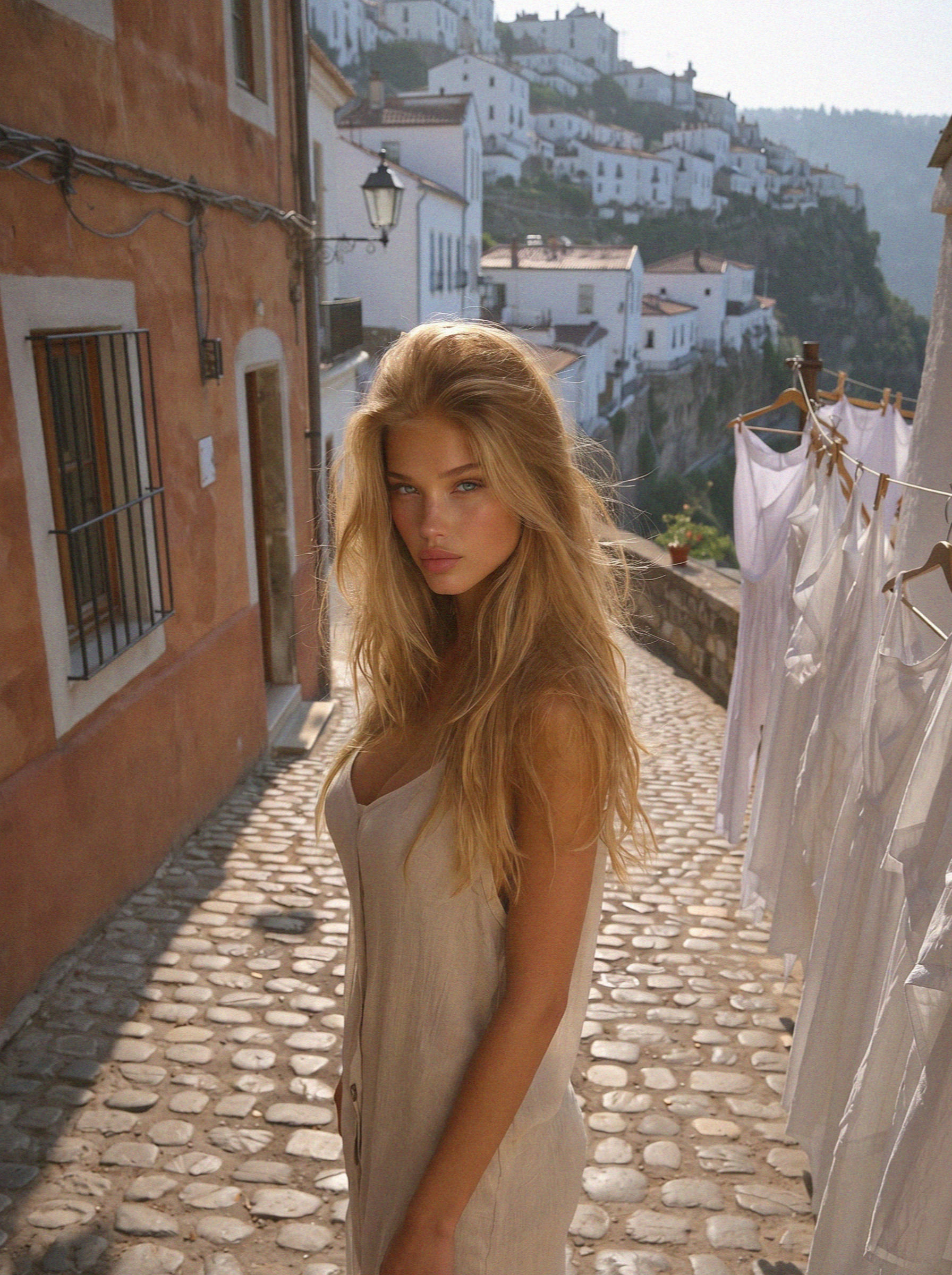
The lanes above the coast road are narrow and walled and full of cats. Washing on lines. A three-wheeled van squeezing past with its mirrors folded in. Somebody’s grandmother watching me from a doorway with the flat, unbothered curiosity of a woman who has watched a great many people walk up this hill and does not expect me to be the interesting one.
The road climbs quickly. Within ten minutes the sea is below and behind, and the air changes, and it smells of pine and hot dust and something faintly sulphurous underneath, the way the whole island does if you stop and pay attention.
Then the terraces begin.
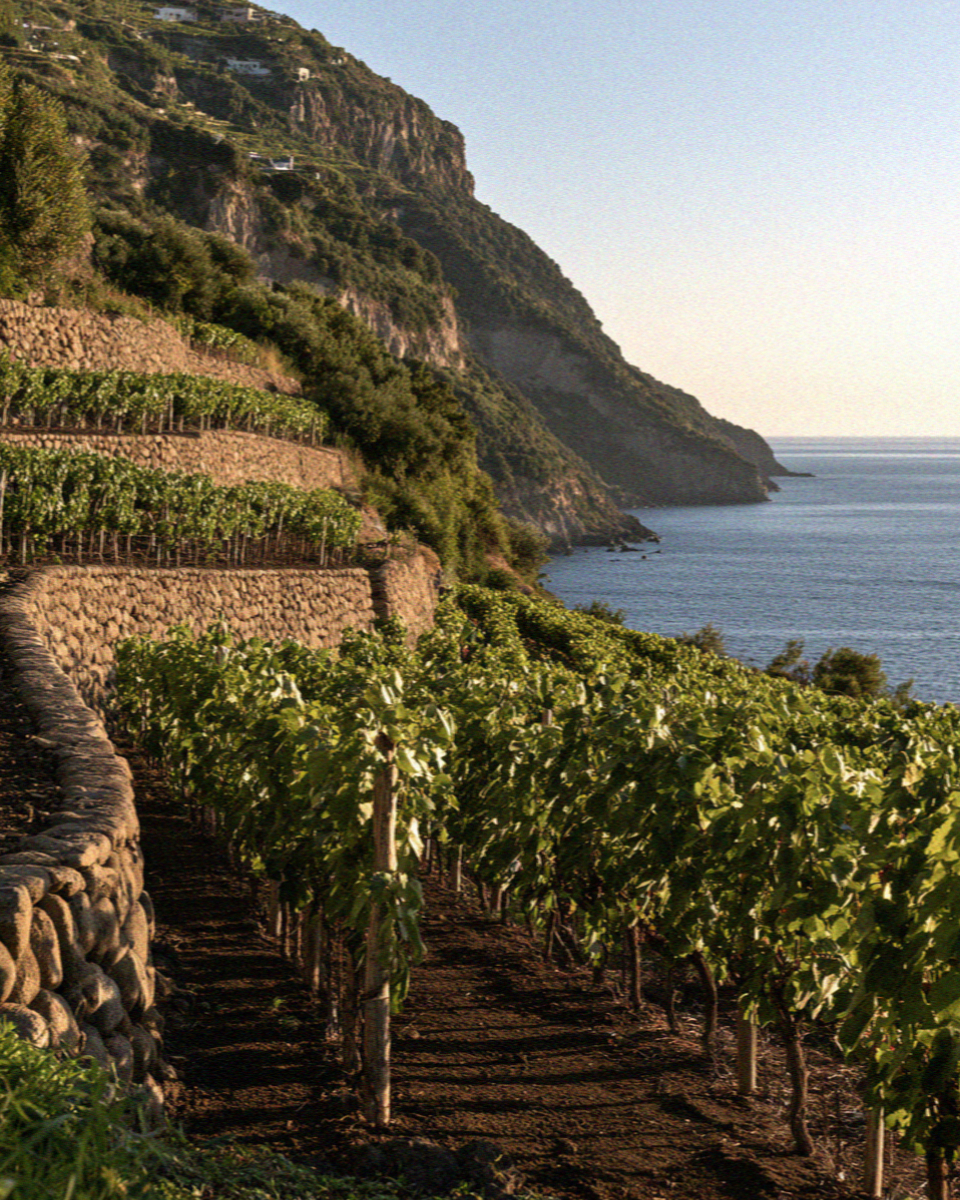
They are everywhere once you see them. Whole hillsides cut into steps and held up by dry stone walls, no mortar, the stones simply fitted. They call them parracine here. Some of them are so old nobody knows who built them, and they are still standing, still holding up soil that would otherwise have gone into the sea centuries ago.
And on the steps, vines.
I stood on the path for a long time working out what I was looking at.
Nobody could farm this with a machine. The steps are too narrow and the ground is too steep, so it is done the way it has always been done, by hand, by people carrying things up and down. In some places there are little rails, a sort of miniature funicular, to bring the grapes down. Mostly there is not.
Somebody decided, a very long time ago, that this rock was worth the trouble.
I passed a man working one of the higher rows. Older than my grandmother is now. He had a plastic crate and a curved knife and he was moving along the vines at a pace that looked unhurried and was not, and he had clearly been doing it since before I was born.
He did not look up. I did not say anything. It seemed like an intrusion to make him perform being picturesque for a woman in a linen dress who had walked up here for the view.
Further along, the wall had come apart in one place and been rebuilt, and you could see exactly where: the new stones sat slightly differently, a shade paler, fitted by somebody who had learned the trick from somebody else.
My father would have understood the arithmetic of it immediately and would have found it ridiculous, and would have loved it anyway. He knew about vineyards, properly knew, in the way of a man whose work involved land and who had chosen wine as the thing he cared about beyond his work. He would have wanted to know the yield per hectare. He would have wanted to know what it cost to farm a slope like this and whether anybody was making any money.
Then he would have tasted it and stopped asking.
The wine here is Biancolella, mostly, and Forastera. Neither of them is famous, and neither is trying to be. They are white, dry, a little saline, and they taste unmistakably of the ground they come from, which is not a poetic claim. The soil is volcanic. You can taste it. It is not subtle.
I had a glass with lunch at a place with six tables and a view down the whole southern coast, and it cost about as much as a coffee in Milan.
Lunch was whatever they had.
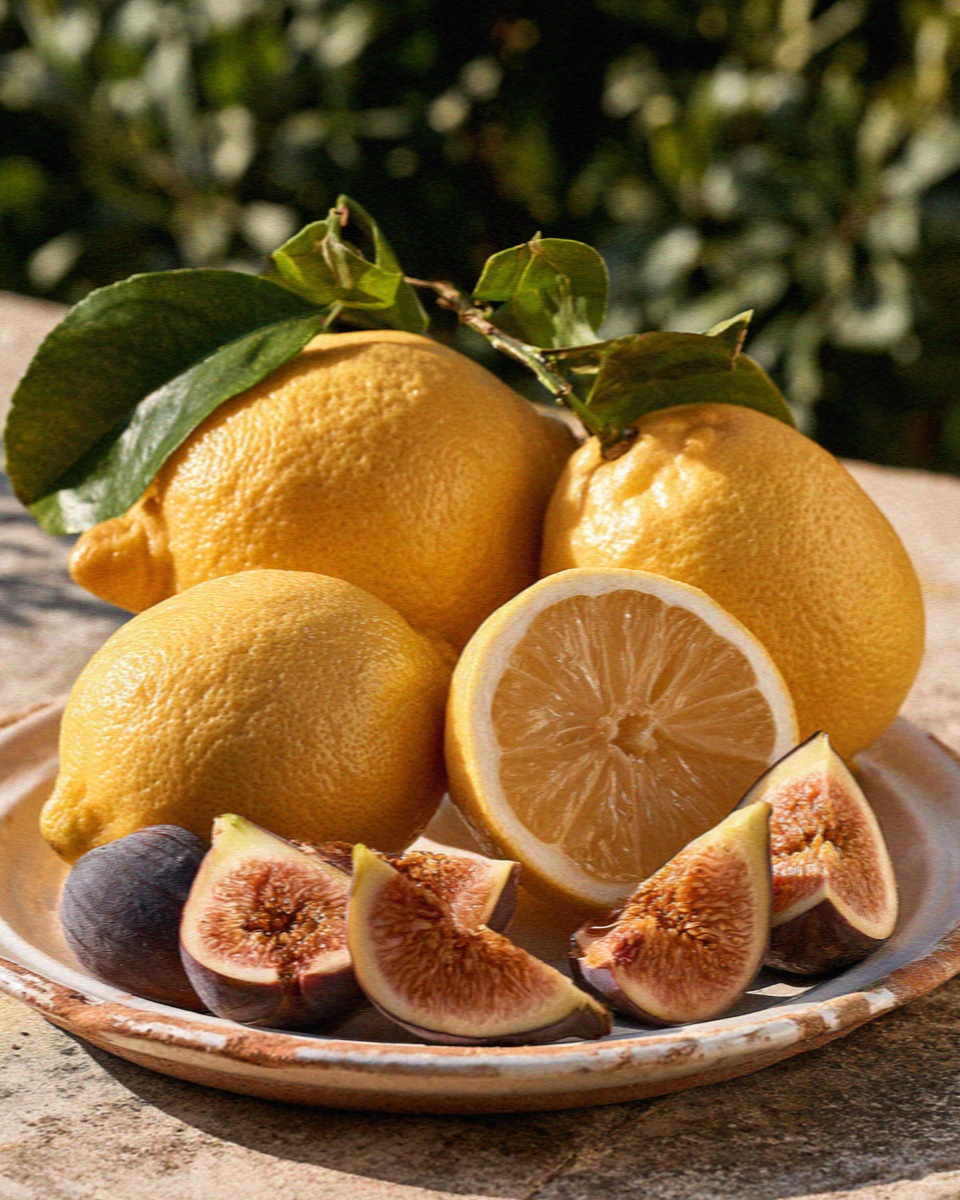
Figs, split open. Lemons the size of my hand, which are not a decoration here, they are simply what grows. Bread and oil. A rabbit dish they make on this island and nowhere else, braised in a terracotta pot with tomato and garlic and an amount of wild herb that would be an error anywhere except in the exact place where those herbs grow on the hill outside the window.
The woman who brought it out did not explain any of it and did not ask how it was. She refilled the carafe once without being asked and otherwise left me completely alone, which is its own form of hospitality and the one I like best.
I sat there for nearly two hours.
Below me, the sea was doing the thing the Mediterranean does in the middle of the afternoon, going flat and white and hard to look at.
Above me, more terraces, going up and up until they gave out into bare rock.
There is a thing I keep circling on this island and I have not entirely resolved it.
Ischia sits on hot ground. That is the whole story of the place. The water comes out of it steaming, the sand at one beach is too hot to stand on barefoot, and the reason people have come here for three thousand years is that the earth here is unquiet and gives off heat. The Greeks came, then the Romans, then everybody else, all of them to sit in water that the volcano warmed.
It is not a safe island. It has never been a safe island.
And yet what people did with it was plant things.
They cut steps into the side of a volcano and built walls out of loose stone and put vines on them and lemons and figs, and they went on doing it, generation after generation, on ground that has shaken and burned and slid within living memory.
I find that a much braver kind of beauty than the postcard sort.

I came down late, on purpose, so that the descent would happen in the good light.
It did. The whole west side of the island turns gold in the last hour and the little white church out on its rock at Forio fills up with people who have come specifically to watch this, and they are right to. It is the best sunset in the Bay of Naples and everybody on Ischia knows it.
I stood at the back, slightly apart, the way I usually do.
There was a warm stone wall at the edge of the terrace and I put my hand flat on it without thinking, the way you do, and it was still holding the whole day’s heat.
I stayed there until the light went.
Ischia does not perform. There is no single view here that the world has agreed on, no queue for a photograph, no sense that the island is aware of being looked at. It gets on with growing things on impossible ground and boiling water out of the earth and making a white wine that almost nobody outside Campania has heard of.
The green island. It turns out they meant it literally.
V.