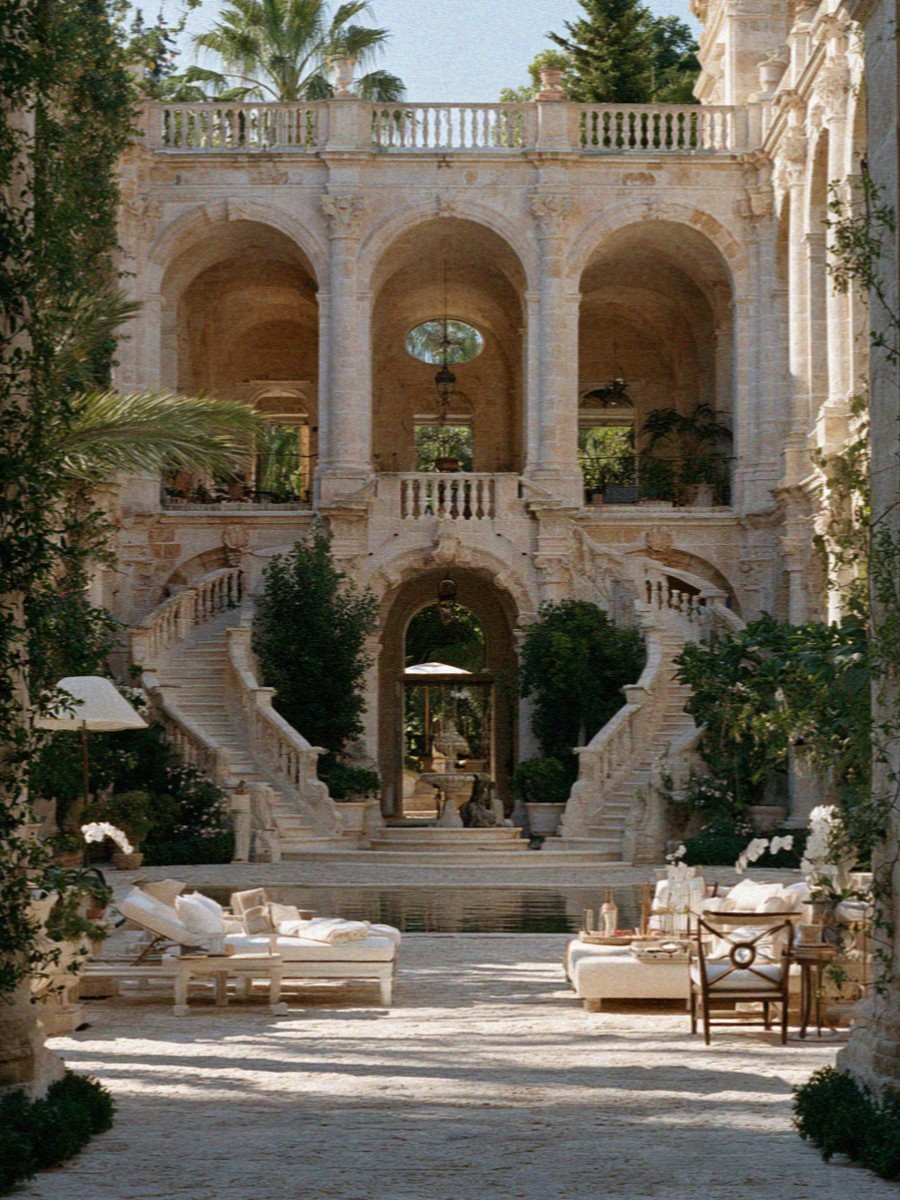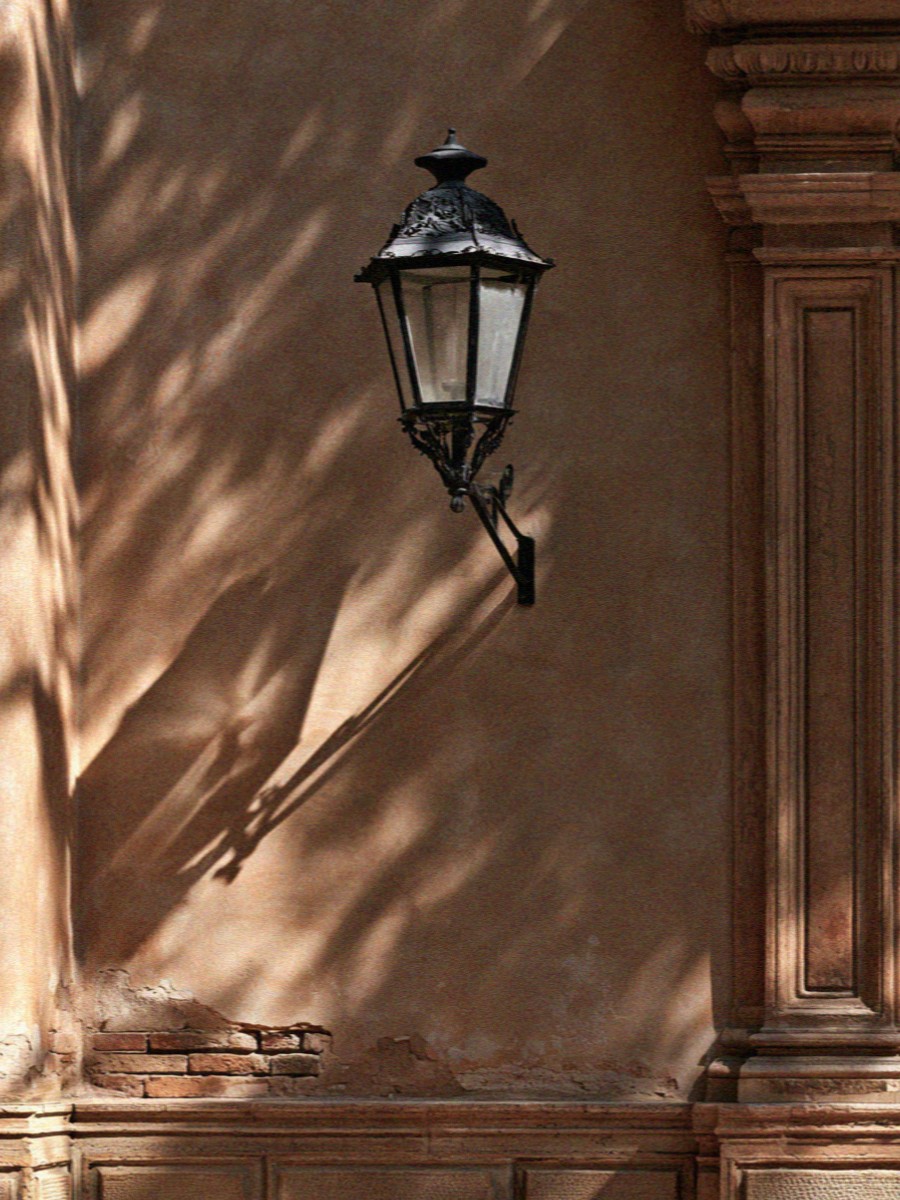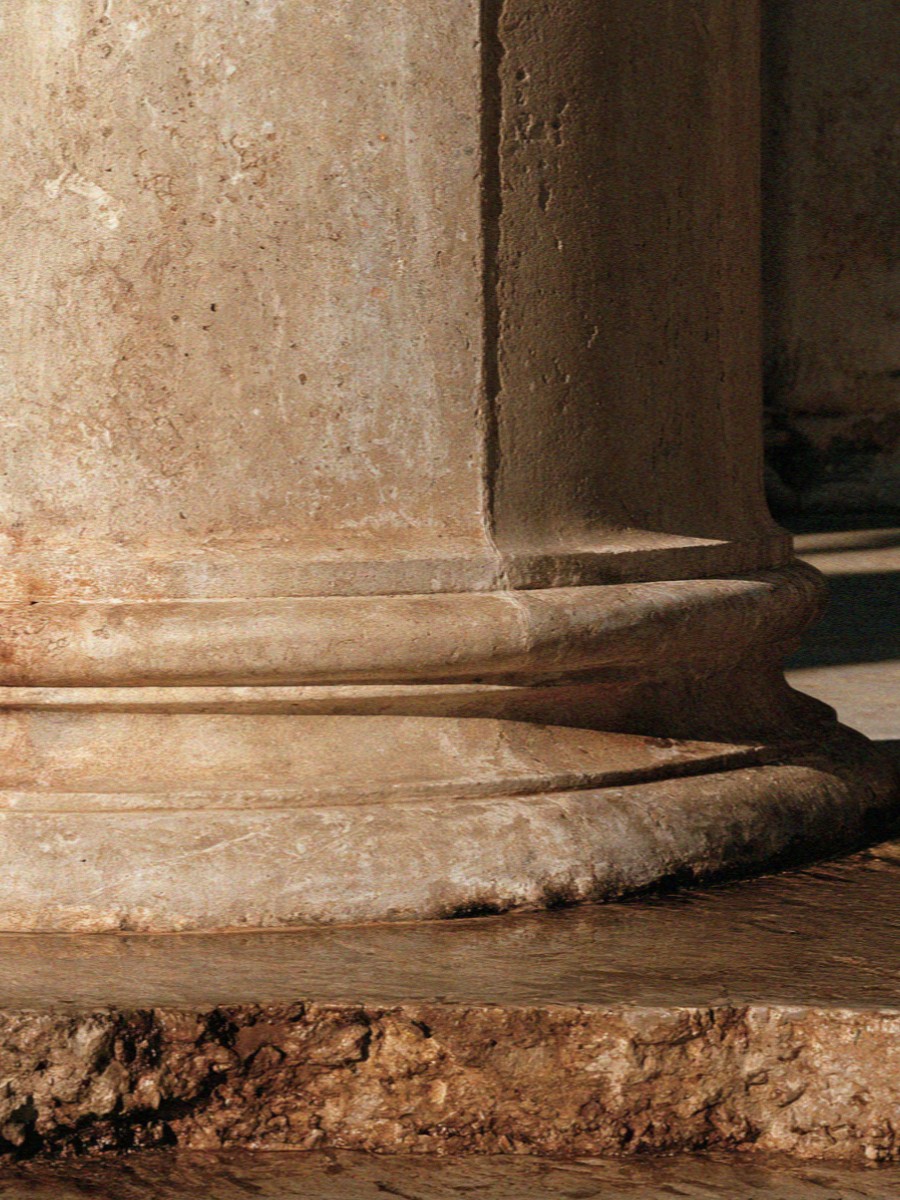
I went out early on the last morning, before the heat, when the porticoes still held the cool of the night in them like a cellar.
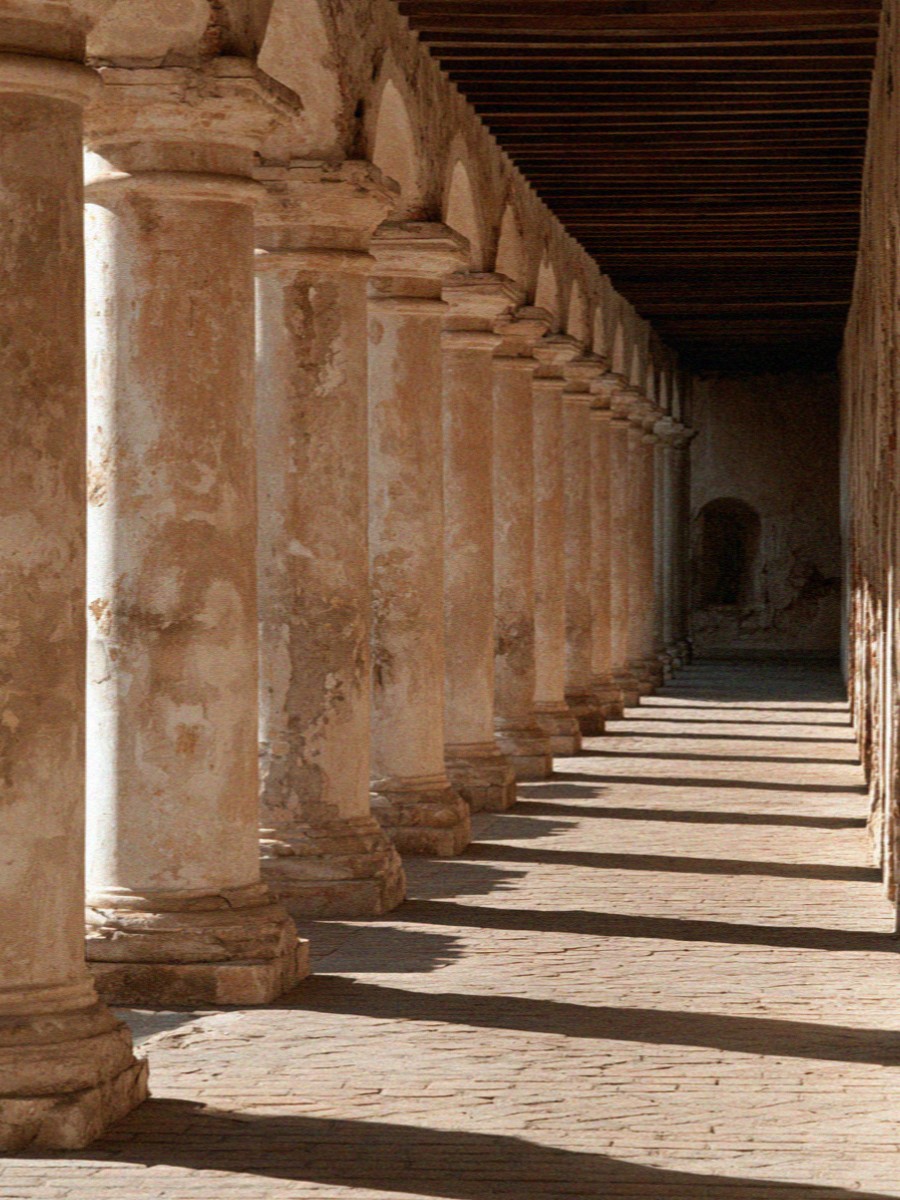
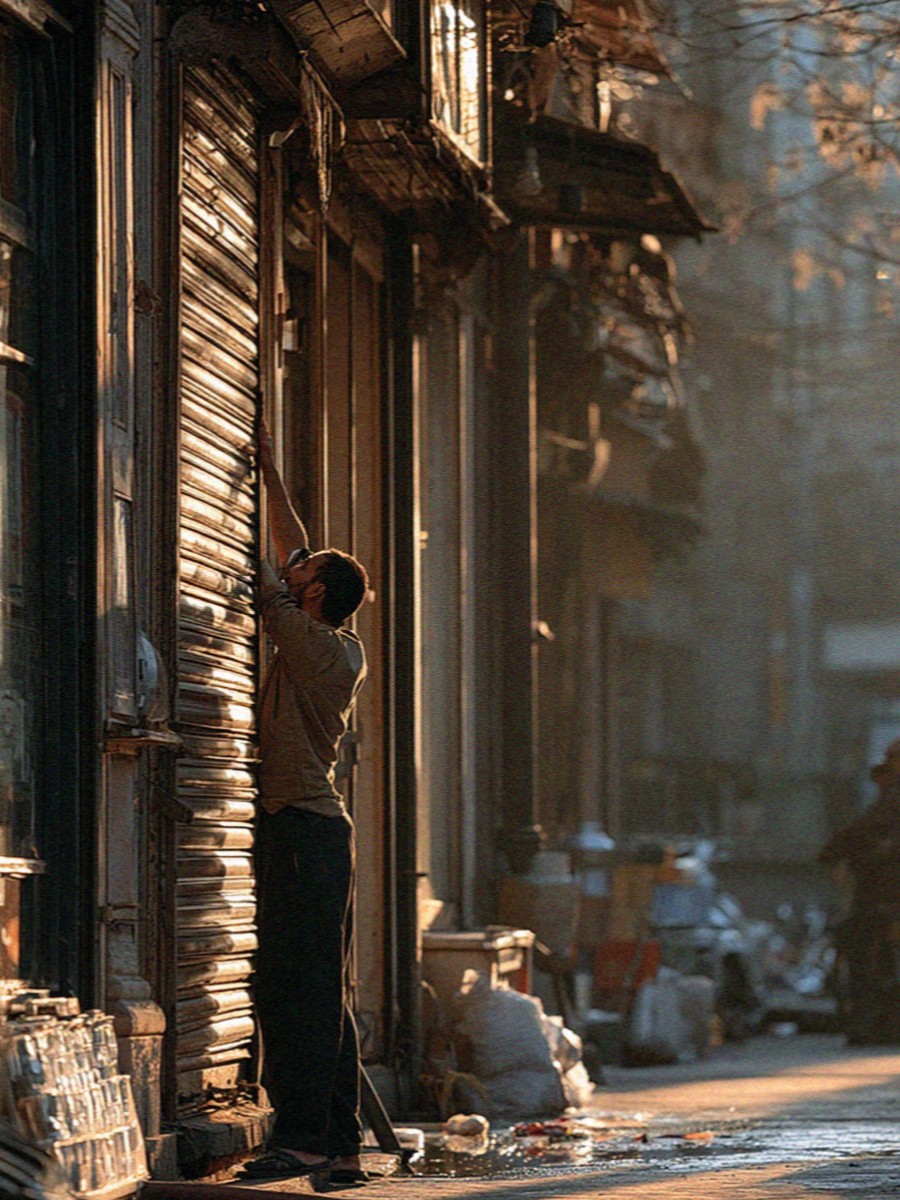
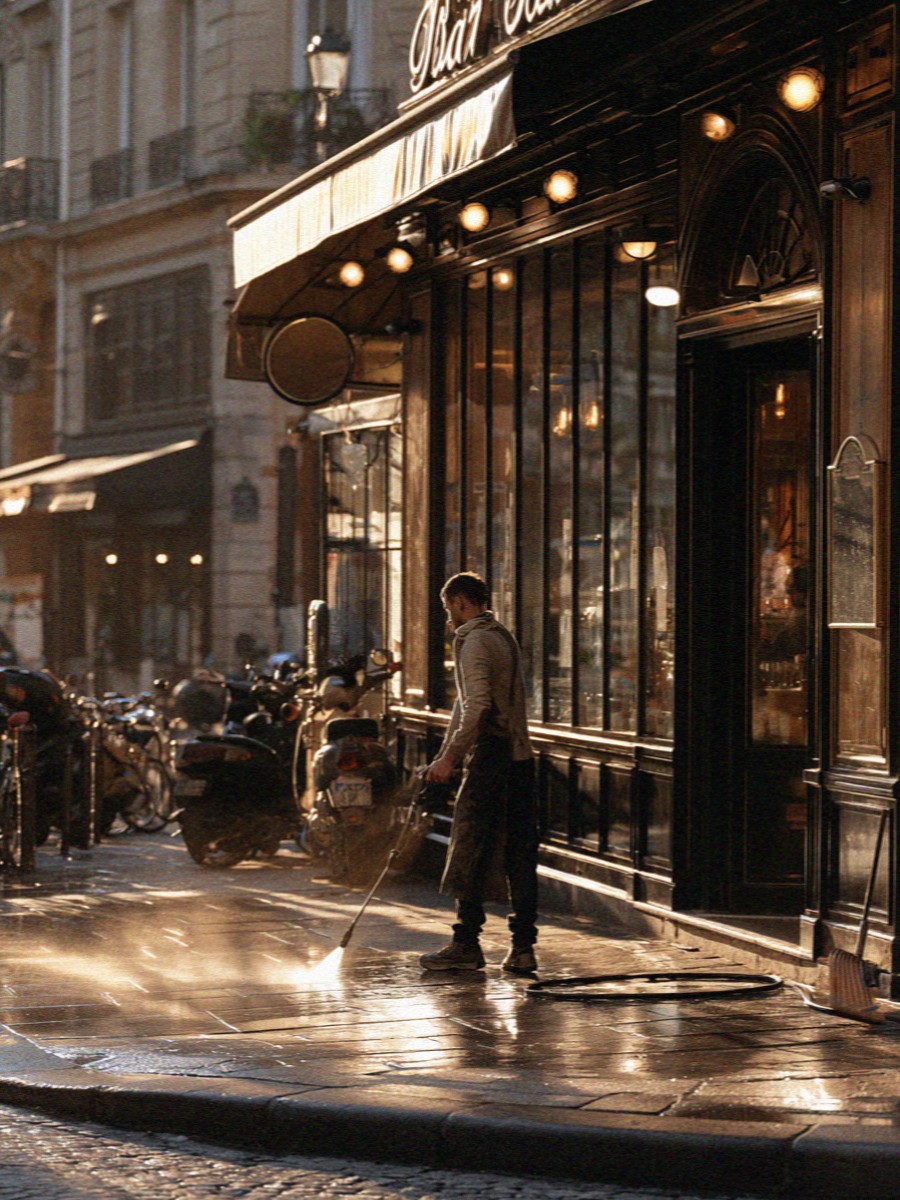
There was almost nobody under the arches at that hour. A man hosing down the stones in front of a shuttered bar. A delivery bicycle. Somewhere out of sight, a metal shutter going up with that enormous sound they make in an empty street. The light came in sideways at the ends of the arcades and did not quite reach the middle, so I walked from brightness into shade and back into brightness, over and over, the whole length of the street.
It is the closest thing I know to walking through a piece of music.
I had one thing left that I wanted to see, and I had been saving it.

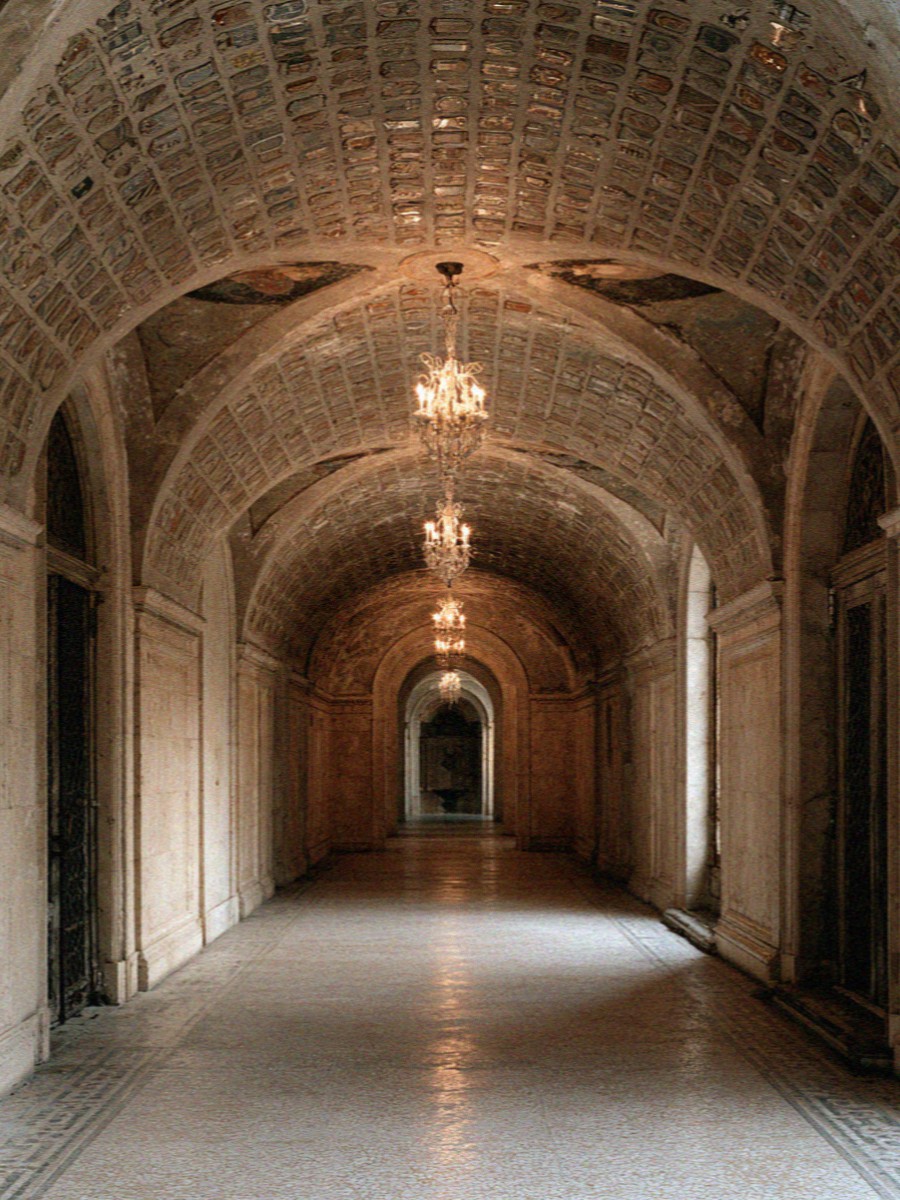
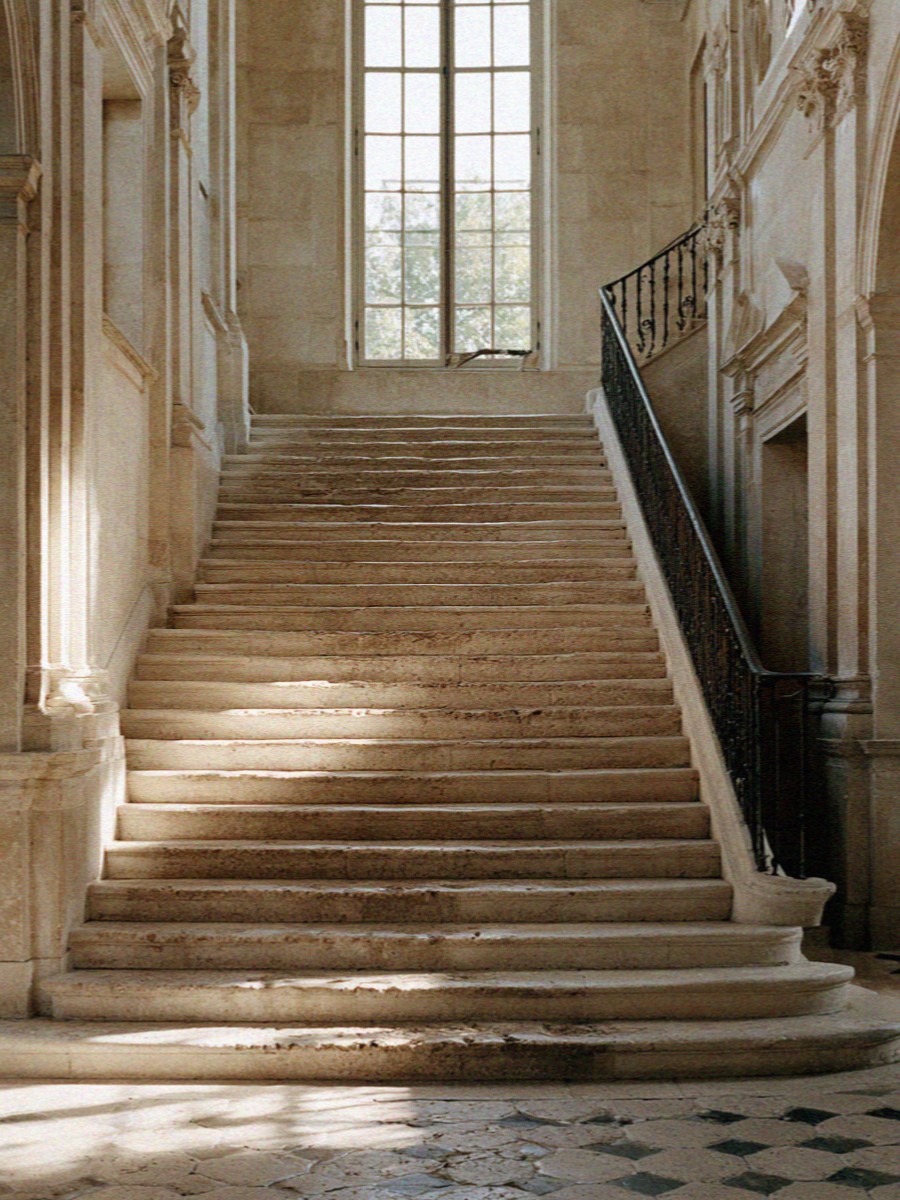
The old university sits behind a plain enough front, and you come in off the street into a courtyard of arches and stairs, and then you begin to notice the walls.
They are covered.
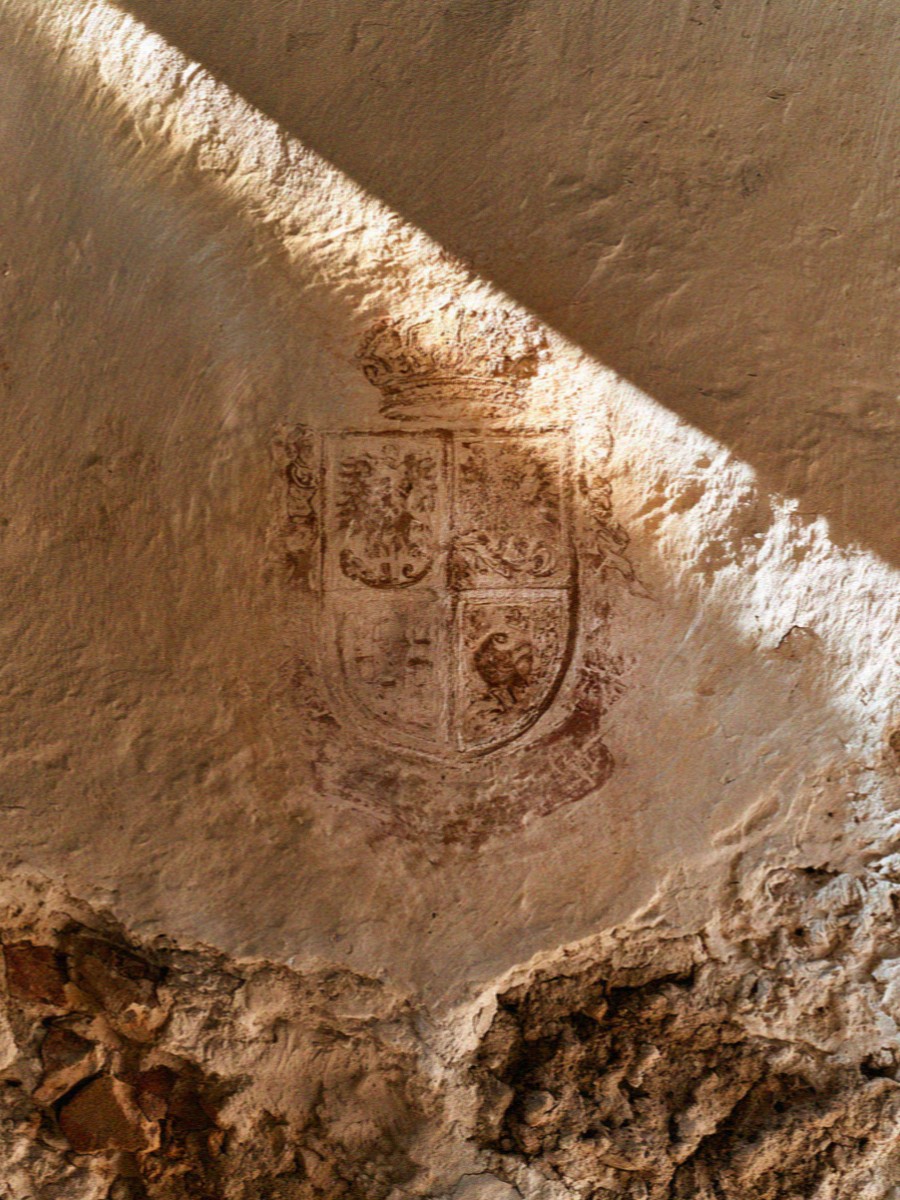
Not decorated, covered. Every surface of every corridor and stair and hall seems crusted with painted coats of arms, one beside another and one above the next, thousands of them, in every colour that holds. Lions and towers and wheat sheaves and little heraldic beasts nobody has been able to identify for four hundred years. There are around six thousand of them. It is one of the largest surviving collections of heraldic decoration anywhere.
And here is the part I have not been able to stop thinking about.
They belong to the students.
Not the professors.
Bologna’s university traces its beginning to 1088, which gives it its claim as the oldest university in the Western world, and it did not begin in quite the way you might assume. There was no king or bishop standing above it and handing learning down. Students organised themselves into associations and hired the teachers they wanted. They paid them. They expected them to turn up. They expected them to teach properly. A professor who was late, absent, or insufficiently prepared could find himself answering to the people sitting in front of him.
I like this arrangement enormously.
And suddenly the walls make sense. They carry the names and emblems of generations of students, not simply the men who stood at the front of the room. Thousands of young men, most of whom did nothing else that history remembers, insisting in paint that they had been here and that this had mattered to them.
Camille would have understood this building better than I did, and faster.
She was the one at school who actually read the things we were given rather than the summaries, who could tell you what a book was really about while the rest of us were still deciding whether we liked it. She would have gone along those walls slowly, working out the jokes in the heraldry, finding things I had walked straight past, and she would certainly have had something to say about thousands of people paying to be taught and then signing the room afterwards.
I found myself composing the message to her and not sending it, which is its own kind of company.
Then up a stair, and into the theatre.
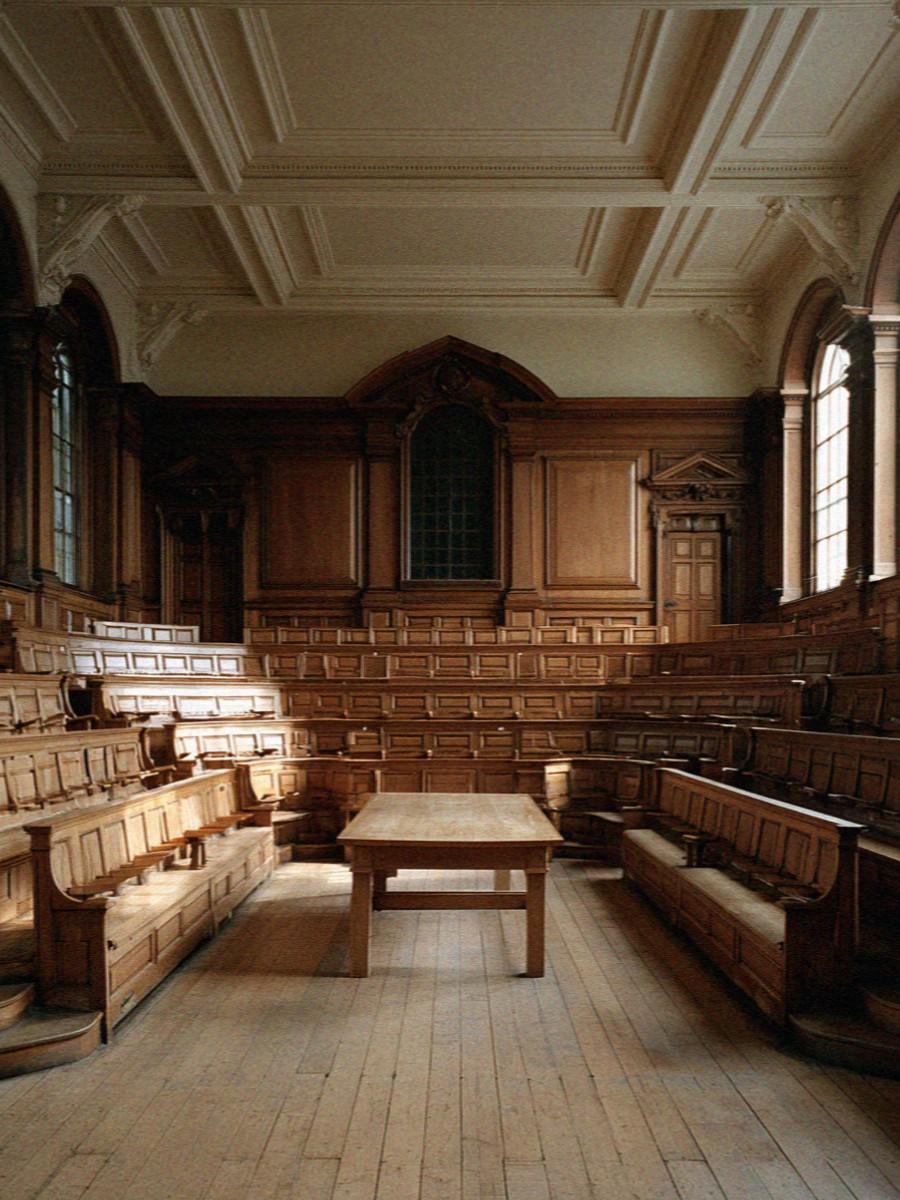
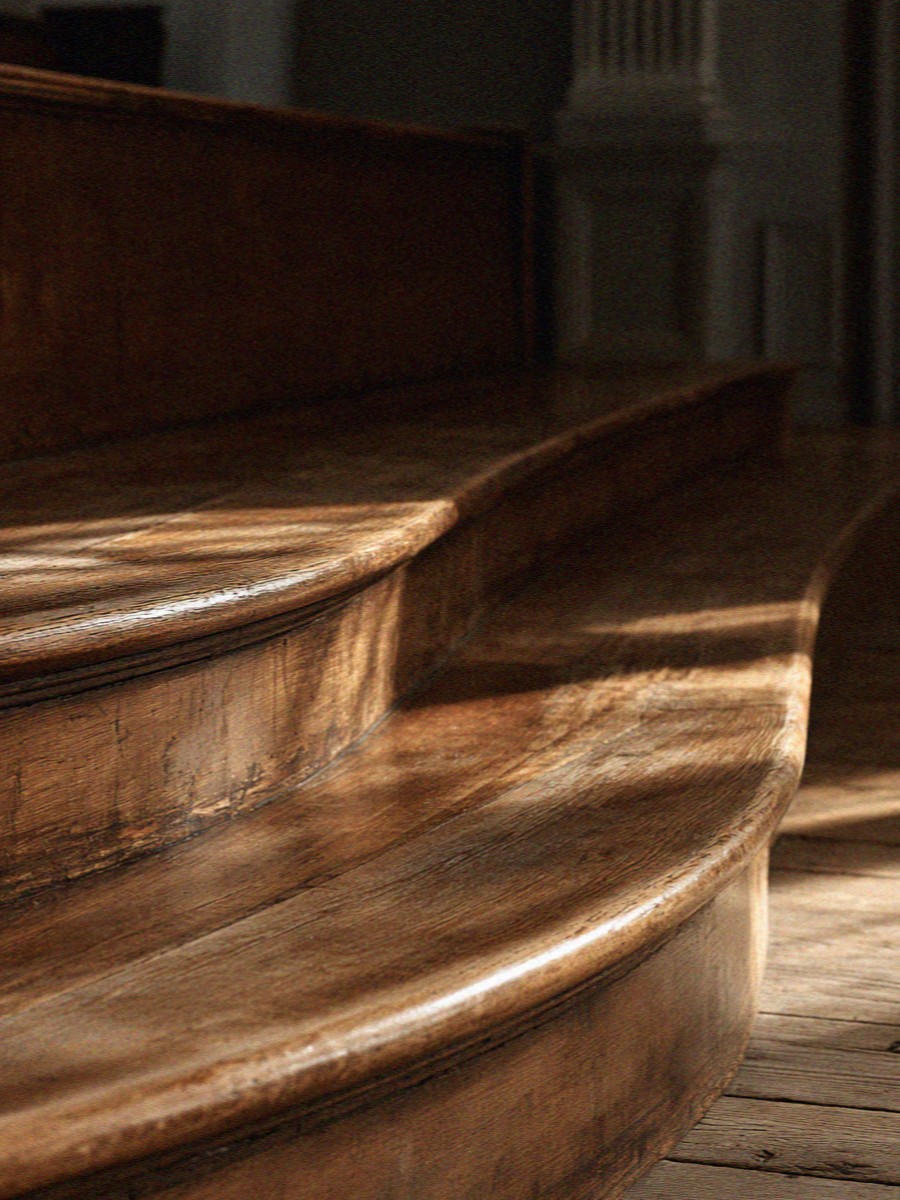
It is a room made almost entirely of wood, pale and close-grained and carved everywhere, and it is not large. Tiered benches rise steeply on all four sides, the way seats do when the thing being looked at is small and everyone must be able to see it.
In the middle, a table.
This is where they took bodies apart in front of an audience.
The professor sat beneath a canopy at one end, and the canopy is held up by two carved men with their skin removed, standing there calmly with their muscles showing, doing the work of columns.
They are the first thing you notice, and they are not gruesome, which surprised me.
They are patient.
They look like men who have agreed to be useful.
I sat on the second tier for a long time with the room almost to myself.
What I kept thinking was that somebody had decided this should be beautiful.
It did not have to be. A dissection requires a table, light, and somewhere for people to sit. It does not require carved wood and a coffered ceiling and a canopy held up by sculpture. But they built the room almost like a chapel, because in this city the explanation of a human body was a serious public occasion, and a serious public occasion deserved a room worth sitting in.
There is something about that idea I find difficult to shake. That understanding a thing was important enough to deserve beauty.
And then, in January of 1944, a bomb fell on it.
Not near it.
On it.
The theatre, centuries of carved wood and all that patient workmanship, was blown apart in a morning.
What you see now is the room they made afterwards from what remained. They went into the rubble and recovered everything they could. Pieces of carving. Sections of benches. Figures. Panels. Wood that had belonged to the room before the sky came through the ceiling.
And then they put it back together.
Where the original pieces survived, they returned them. Where something had disappeared completely, it was reconstructed to match what had been there before. The room you enter now is therefore neither entirely the room that existed before the bombing nor an imitation of it. It is something stranger and, to me, more beautiful.
It is the same room after surviving its own destruction.
Nobody makes much of this while you are sitting there. The room does not announce its wounds. Unless you know what happened, you can look around and simply believe you are sitting inside something that has remained untouched for centuries.
I find that almost unreasonably moving.
A room built so that people could watch a body be taken apart and understood was itself taken apart, and then understood well enough by somebody to be put back together.
I came out into the full heat of the morning, and the city had woken while I was in there.
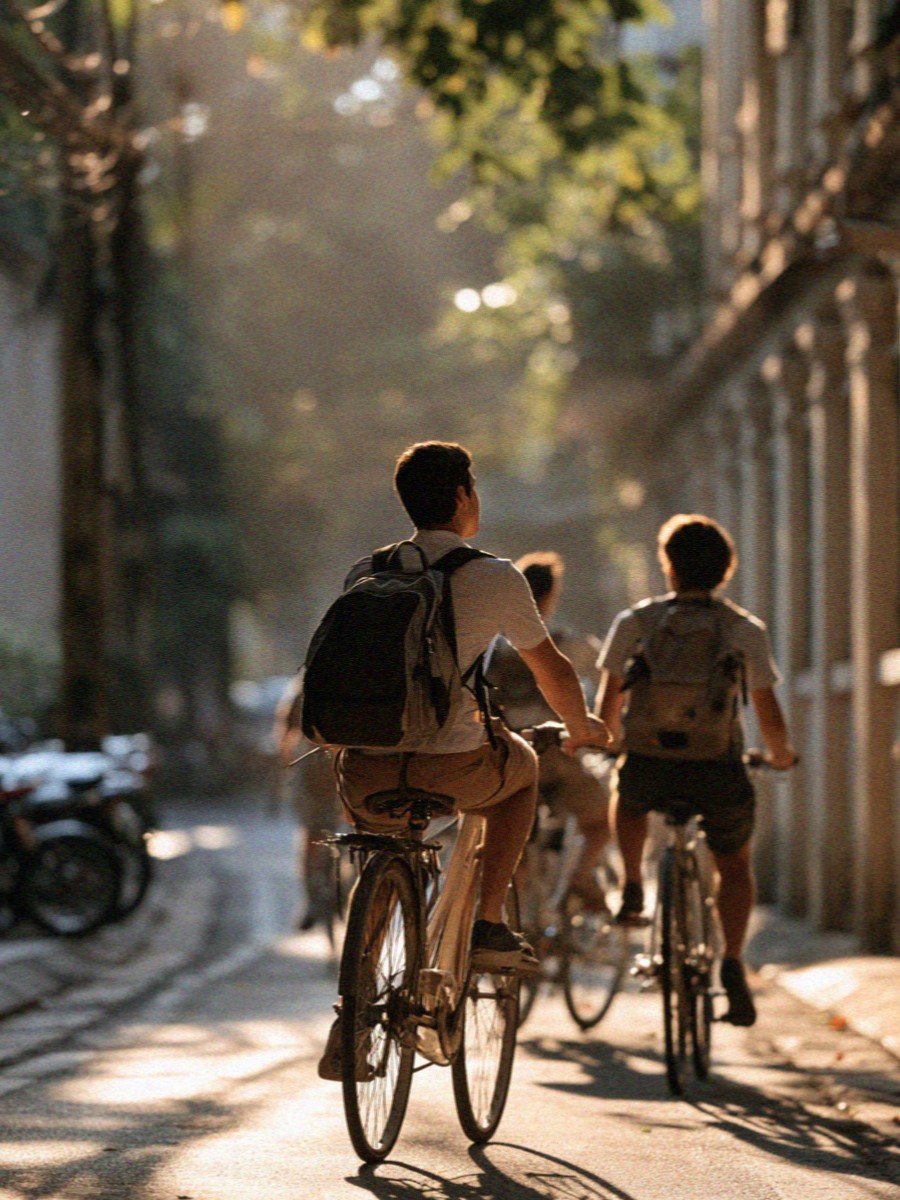
Shutters up. The first students going past on bicycles. Cups beginning to collect on the little tables outside the bars. Someone arguing pleasantly with a fruit seller about something that was almost certainly not really about fruit.
I stood under the arches for a while and let it happen around me.
Bologna does not sell itself particularly hard. It has no single view that the whole world would recognise from a postcard, and it does not appear troubled by this. It simply keeps a room where people once gathered to understand the human body, and walls where thousands of students wrote themselves into the building, and then goes on making some of the best food in Italy without making a performance of any of it.
Perhaps that is why I liked it so quickly.
There are cities that introduce themselves before you have even arrived. You already know what you are supposed to photograph, what you are supposed to admire, where you are supposed to stand.
Bologna makes you pay attention.
And if you do, it gives you things like this. The rest of what it gave me, and everything I would send you to see and eat there, is in my complete guide to Bologna.
Two days were not enough.
It was never going to be.
V.
More images from Bologna