Venice is easier to reach than its dreamlike remove suggests. The city sits out in its lagoon with no roads inside it, which sounds like a puzzle until you understand the simple rule that governs every arrival: at some point, the wheels stop and you continue on foot or by water. Once you accept that, the whole business becomes rather lovely. Below is how I actually get there, and how I would tell a friend to, whether you are coming by train, by plane, or foolishly by car.
Arriving by train
If you can come by train, come by train. It is the arrival Venice was built for. The line runs across the causeway from the mainland and delivers you to Venezia Santa Lucia, a station that opens its front doors straight onto the Grand Canal. You step out with your bag, blink at the light on the water, and there are the vaporetto pontoons and a bridge and the whole improbable place laid out in front of you. No transfer, no shuttle, no shuffle through a car park.
One thing to fix in your head before you book: Venezia Santa Lucia is the station on the island. Venezia Mestre is on the mainland, a few minutes back down the causeway, and it is not Venice. Plenty of travellers have hopped off at Mestre by mistake, suitcase and all, and found themselves in a perfectly ordinary town. Check that your ticket ends at Santa Lucia, and if your train terminates at Mestre, it is a short local hop across to the island from there.
Rough journey times, so you can plan a day: Verona is about an hour and ten, Padua a mere twenty-five to forty minutes, Florence around two hours, Milan about two hours fifteen, and Rome roughly three and a half. From Santa Lucia you are already in Venice, so factor only the short walk or the vaporetto to your lodging. For more on when those trains are pleasant rather than sweltering, see my notes on the best time to visit Venice.
Plan Your Visit to Venice
A few things I booked and loved. These help support the blog, at no cost to you.
- Where I stayed: search Venice hotels
- Skip-the-line tickets for the main sights
- A Venice city pass
- Stay connected: get a travel eSIM
This section contains affiliate links. If you book through them I may earn a small commission, at no extra cost to you.
Which airport to choose
There are three, and they are not equal. Marco Polo is the main airport, on the mainland edge of the lagoon, and it is the one most flights use and the one best set up for reaching the city. Treviso, a little further out, is where the budget airlines tend to land; the fare may be cheaper but you pay some of it back in a longer transfer. And some people fly into Verona or even further and take the train in, which is not mad at all given how quick and comfortable those trains are.
My honest advice: unless the Treviso fare is meaningfully cheaper, favour Marco Polo. The difference in arrival experience, and the possibility of coming in across the water, is worth a good deal.
Getting in from the airport
From Marco Polo you have three ways across, and I have used all of them depending on mood, budget, and how many bags I was cursing.
The Alilaguna water bus is the slow, scenic option. It leaves from the airport dock, about a ten minute walk from the terminal along a covered walkway, and carries you across the open lagoon into the city. Reckon on around eighteen euros and give it plenty of time, because it stops along the way and it is not in a hurry. But it is a real boat on real water, and arriving that way settles you into Venice before you have even landed.
The land bus, the Aerobus or the local orange bus, runs to Piazzale Roma at the edge of the island for around ten euros. It is quick and cheap. The catch is that Piazzale Roma is where the road ends, so from there you still walk to your lodging or transfer to a vaporetto with your luggage. Fine if you are travelling light and staying nearby, less charming if your hotel is deep in the back lanes.
The private water taxi is the extravagance, and it is glorious. A sleek varnished wooden boat that takes you from the airport dock to a jetty as near your door as the canals allow. Expect north of one hundred and twenty euros, more for longer runs or awkward hours. Split between three or four people, it is less absurd than it sounds, and as a once-in-a-trip arrival it is hard to beat.
From Treviso, the practical route is the bus to Piazzale Roma, about forty minutes, and then you are in the same position as anyone arriving by land: on foot or onto a vaporetto for the last stretch.
Arriving by car (and where it stops)
You can drive to Venice, but you cannot drive in it. The causeway brings cars as far as Piazzale Roma or the neighbouring island of Tronchetto, and there the road simply ends. There is nothing beyond but water and paving.
Both Piazzale Roma and Tronchetto have garages, and both are expensive and fill up, especially in high season and at weekends. Book your space ahead rather than trusting to luck on the day. Once parked, you are back to the two Venetian modes: walk, or take a boat. Tronchetto connects onward by the People Mover monorail and by vaporetto, while Piazzale Roma puts you at the top of the Grand Canal with the Line 1 vaporetto waiting. My own preference is to leave the car at home entirely, but if you must bring one, treat these two spots as the full stop at the end of your drive.
Getting around once you are there
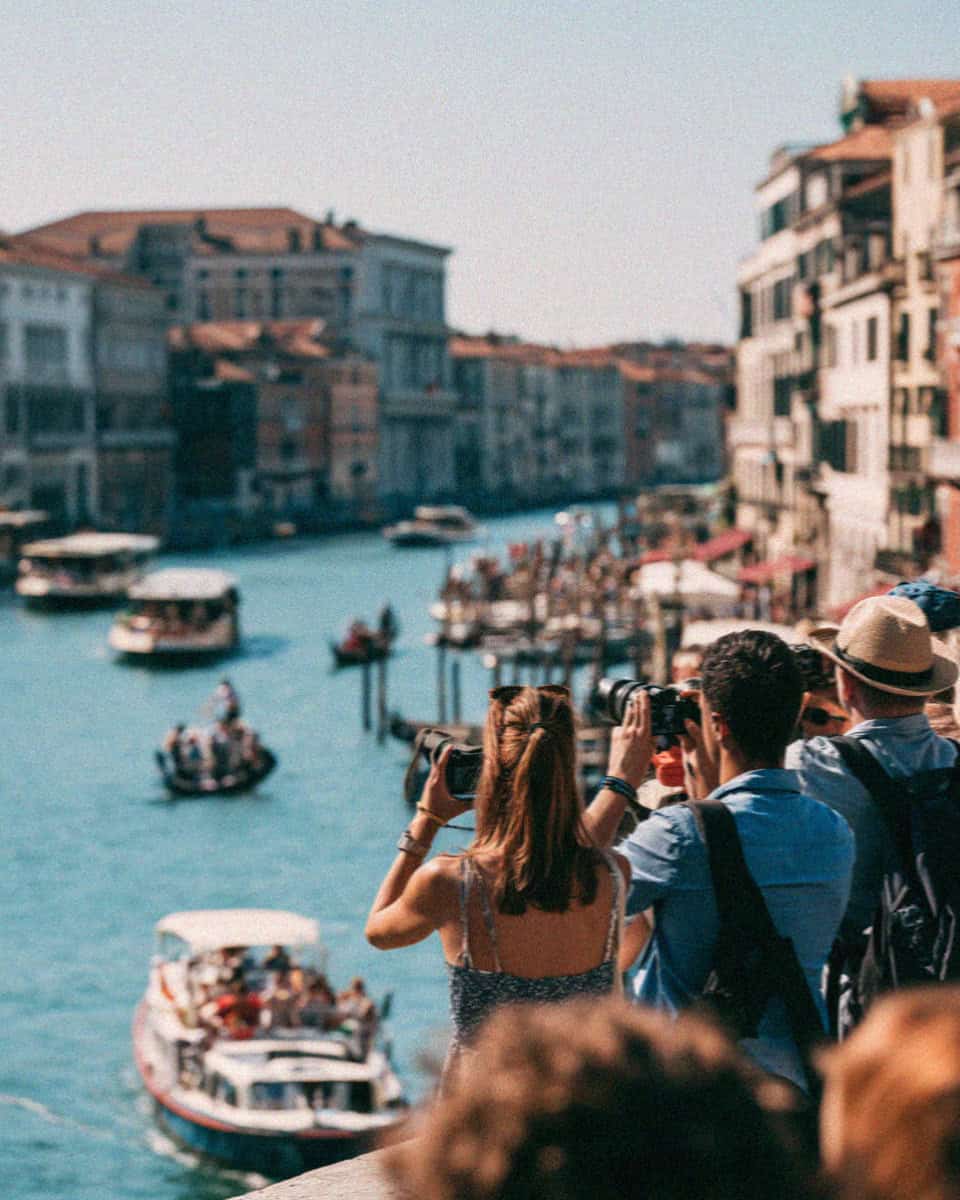
Inside Venice there are exactly two ways to move: your feet and a boat. That is the whole system, and it is a large part of why the place feels the way it does.
The workhorse boat is the vaporetto, the public water bus. A single ride costs around nine and a half euros and is valid for about seventy-five minutes, which frankly makes single tickets poor value if you plan to hop about. Line 1 is the one to know: it chugs the length of the Grand Canal, stopping often, and doubles as the finest cheap sightseeing in the city. Sit near the front if you can.
Buy your ticket before you board, from a machine or ticket booth, and validate it by tapping the reader on the pontoon. This matters. Inspectors do check, and an unvalidated ticket earns a fine, not a shrug.
The traghetto and water taxis
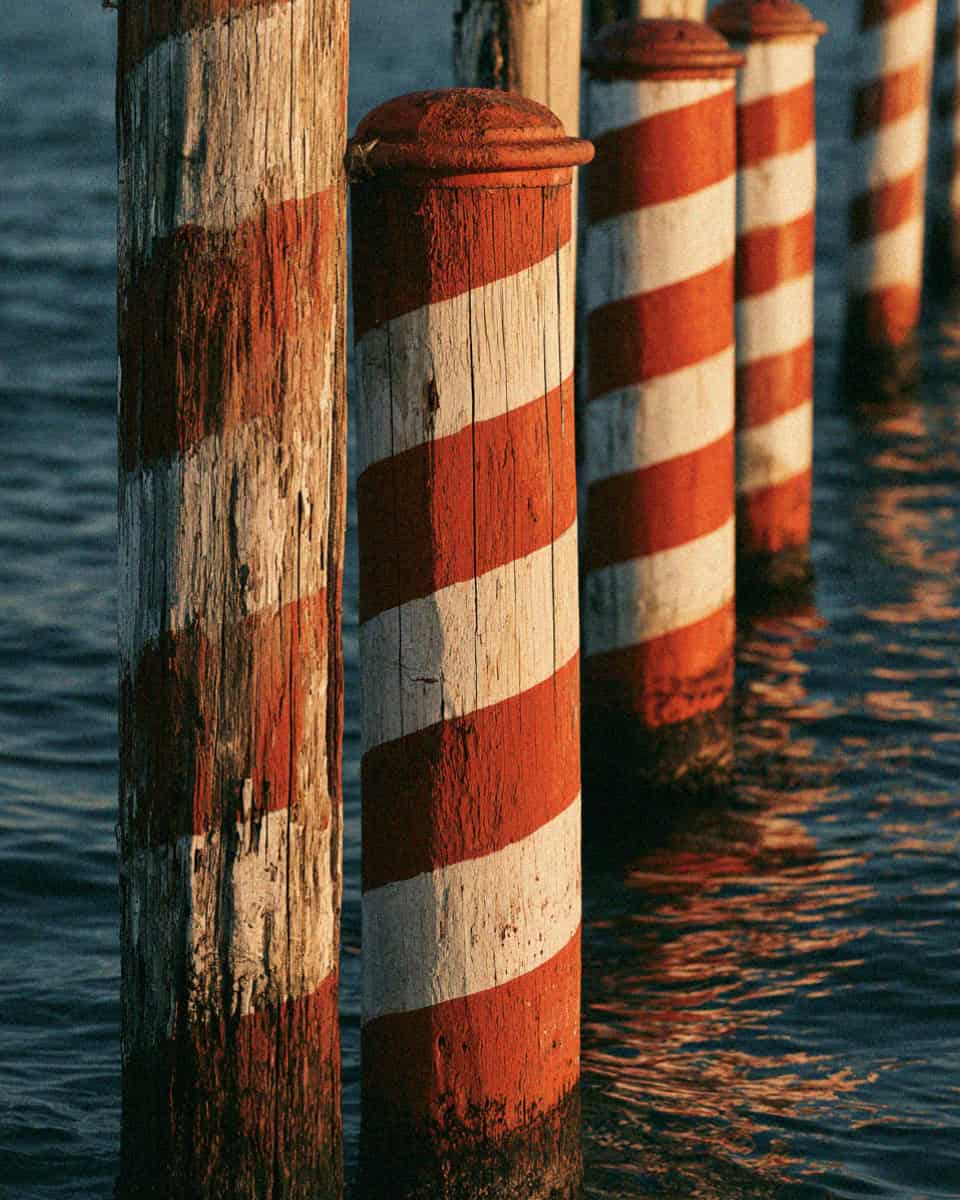
Two more boats worth knowing. The traghetto is Venice’s quiet secret: a working gondola that ferries people straight across the Grand Canal at a few points where the bridges are far apart. You pay around two euros, you step aboard, and tradition says you stand for the short crossing, though nobody minds if you sit. It saves a long walk to the nearest bridge and, for a couple of coins, gives you your gondola moment without the gondola price.
Water taxis are the other end of the scale: private motoscafi that take you anywhere the canals reach, door to jetty, on your own schedule. They are lovely and they are dear. Wonderful for a special evening or when you are laden and tired, extravagant as a daily habit. Agree the fare or confirm the meter before you cast off.
Luggage and the bridges
Here is the practical truth nobody prints on the brochure: Venice is a city of steps. Every bridge is an arc of stairs, and there is no wheeled help over them. A heavy roller case that glides through an airport becomes a two-armed haul up and down each little bridge between the vaporetto stop and your door.
So pack light. Genuinely light. A bag you can lift and carry is worth more here than any clever gadget. If you cannot travel light, you can hire a porter to shift your bags for you, which is money well spent when your lodging is buried in the lanes. And it is one more reason to weigh up a water taxi to the nearest jetty, since it spares you the bridges entirely. Choosing lodgings near a vaporetto stop helps enormously too, which I go into in where to stay in Venice.
Do you need a travel card
It depends entirely on how much you intend to ride. Because a single fare is around nine and a half euros, the sums add up fast. The tourist travel cards give you unlimited vaporetto travel for a flat price: roughly twenty-five euros for twenty-four hours, thirty-five for forty-eight, forty-five for seventy-two, and around sixty-five for a full week.
My rule of thumb is simple. If you will take three or more vaporetto rides in a day, a card almost certainly pays for itself, and it spares you queueing at machines each time. If you plan to walk everywhere, which in Venice is a joy and often quicker than you would think, you may barely use a boat at all, and a couple of single tickets or the odd traghetto will do. Buy the card before you board and validate it on the first ride, same as any ticket.
Frequently Asked Questions
What is the difference between Venezia Santa Lucia and Venezia Mestre?
Santa Lucia is the station on the island of Venice itself, opening directly onto the Grand Canal. Mestre is on the mainland, a few minutes back across the causeway, and is an ordinary town, not Venice. Make sure your ticket ends at Santa Lucia, and if a train stops only at Mestre, take a short local connection across to the island.
Can I drive into Venice?
No. Cars come as far as Piazzale Roma or Tronchetto, where the road ends, and go no further. Park in one of the garages there, which are pricey and best booked ahead, then continue on foot or by boat. There are no roads inside the city at all.
Which airport transfer is best from Marco Polo?
For scenery and a gentle arrival, the Alilaguna water bus across the lagoon, around eighteen euros and slow. For speed and economy, the land bus to Piazzale Roma, around ten euros, then walk or take a vaporetto. For a treat, a private wooden water taxi to your door, from about one hundred and twenty euros upward.
Is a vaporetto travel card worth buying?
If you expect three or more boat rides in a day, yes, a card almost always saves money against single fares of roughly nine and a half euros each. If you intend to walk most places, which is easy and often faster, you may hardly need a boat and can skip it.