There is a moment, usually on the vaporetto in from the airport or stepping off the train at Santa Lucia, when Venice stops being an idea and becomes a set of very specific decisions. The first of them is where you will sleep. Where you base yourself changes the city more here than almost anywhere. In a place with no cars, no easy taxis and a tangle of bridges between you and your bed, the neighbourhood you choose is not a detail. It shapes your mornings, your budget and how much of the real Venice you get to keep once the day trippers have gone home.
I have stayed in most corners of this city over the years, in grand rooms I could only afford once and in simple ones I have gone back to again and again. What follows is how I think it through, by area first and then by budget, with the trade-offs laid out honestly. For how to fill your days once you have settled in, see my Venice itinerary, and for the eating, my guide to where to eat in Venice. This piece sits inside my complete guide to Venice, where the wider picture lives.
Choose your sestiere first
Venice is made of six sestieri, and each one has a temperament. Decide the mood you want before you decide the price, because a cheap room in the wrong district can cost you more in walking and less in joy.
San Marco is the grand central heart, the most famous and the most expensive. Stay here, and you wake to the bells, you are minutes from the Basilica, and you pay handsomely for the privilege. It is glorious, and it is busy. I love it for a night or two, less so for a week.
San Polo and Santa Croce are the working middle of the city, wrapped around the Rialto market. This is where Venice still buys its fish and its artichokes, and it is beautifully connected, close to almost everything on foot and by water. Good value for how central it is.
Dorsoduro is the arty, student-flavoured south-facing district, home to the Accademia and the Peggy Guggenheim, with sunsets over the Giudecca canal and quiet campos in the evenings. It is my own favourite for romance. There is space to breathe here, and yet you are never far from the crush when you want it.
Cannaregio is the long, quiet northern district where real Venetians still live. Canal-side local bars, washing strung between windows, the best value and, to my mind, the most character. Walk far enough in, and the tour groups simply vanish.
Castello is the broad eastern tail, calmer and more residential, with actual green space in the public gardens. It has room to spread out, which makes it kind on families and on anyone who wants Venice at a gentler pitch.
Pick the temperament that suits your trip, then look for the room. Not the other way round.
Plan Your Visit to Venice
A few things I booked and loved. These help support the blog, at no cost to you.
- Where I stayed: search Venice hotels
- Skip-the-line tickets for the main sights
- A Venice city pass
- Stay connected: get a travel eSIM
This section contains affiliate links. If you book through them I may earn a small commission, at no extra cost to you.
The luxury tier
If this is the trip where you spend, Venice knows exactly how to receive you. The great names sit mostly along the Grand Canal and out on the islands. The Gritti Palace and the Bauer in San Marco, the Danieli near the waterfront by the Doge’s Palace, all give you that old-world, chandeliers-and-terrace grandeur with a canal at the door. Expect a top-tier band, and expect it to climb further for a room that actually faces the water.
Out on the islands the mood changes. The Cipriani on Giudecca and the Aman, tucked into a palazzo on the Grand Canal, trade bustle for hush, gardens, pools and a private launch to ferry you across. This is Venice as a retreat rather than a plunge into the crowd. You lose a little spontaneity, since everything involves a boat, but you gain a calm that the central grand hotels cannot quite offer.
My honest view: one or two nights at this level, timed for a special occasion, is worth more than a whole week you spend fretting about the bill. Splurge with intent.
The upper-mid and characterful
This, for most people, is the sweet spot, and it is where Venice is at its most charming. A characterful small palazzo hotel or a well-run guesthouse, ideally in Dorsoduro or Cannaregio, gives you frescoed ceilings, a breakfast room that was once someone’s grand salon, and a host who knows which bacaro to send you to. You are paying a mid-range band for a genuine sense of place rather than a corporate sameness.
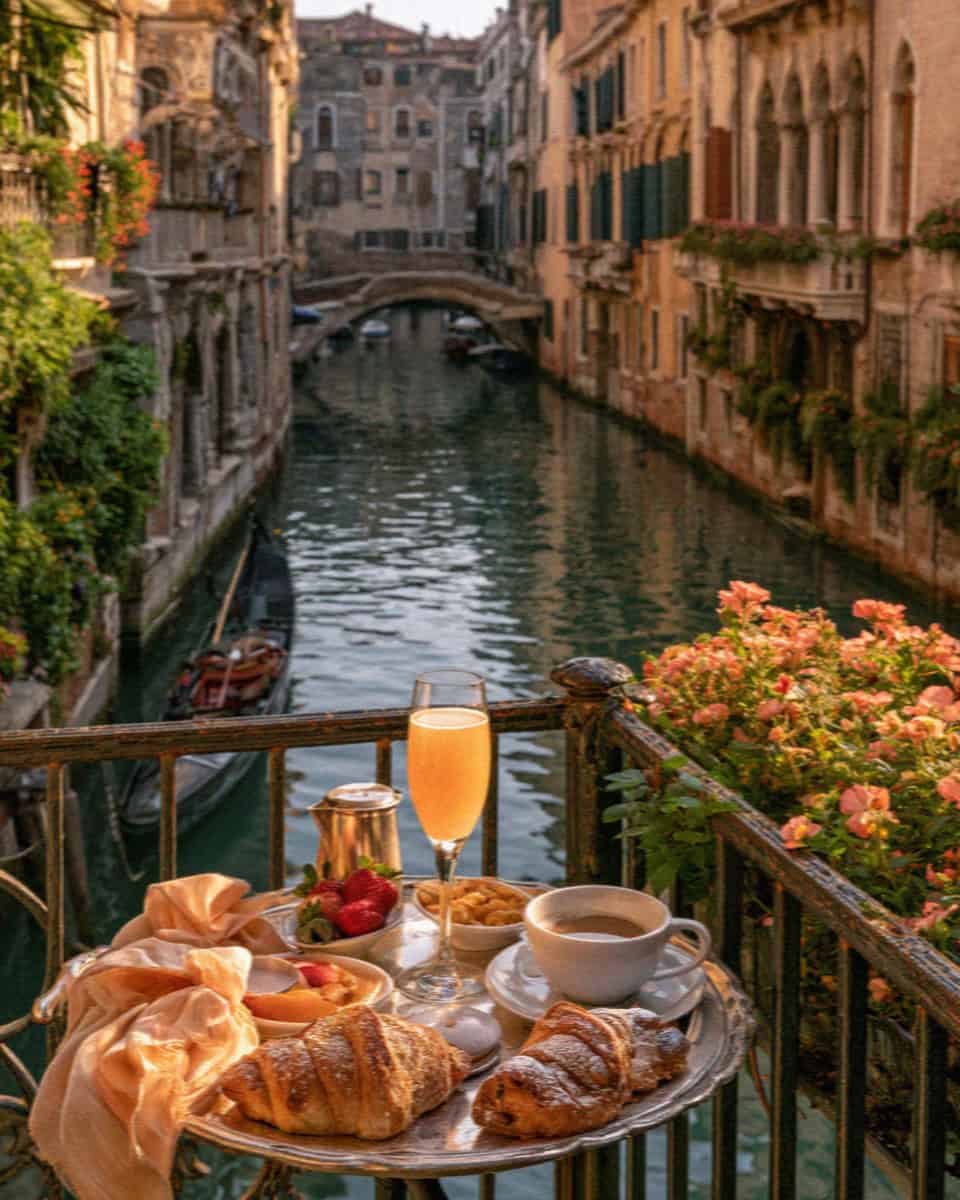
In Dorsoduro you will find converted palazzi a few minutes from the Accademia, some with a small garden or a canal-facing terrace. In Cannaregio the value stretches further still, and you get the bonus of a neighbourhood that carries on being itself around you. These are the rooms I recommend most often, because they hold the balance between magic and money better than anything else in the city.
Book these early. The good small places have only a handful of rooms, and they are precisely the ones that fill first.
Value and where to save
Venice will never be cheap, but it can be reasonable if you are clever about it. The best-value character is deep in Cannaregio or out along Castello, in simple, clean rooms a short walk from a vaporetto stop. You give up the canal view and the grand address; you keep the thing that actually matters, which is waking up inside Venice, hearing the city stir, stepping out into a quiet campo before the crowds arrive. That is worth more than most people realise until they have had it.
The genuinely budget option is to sleep on the mainland in Mestre, where a room costs a fraction of what it does across the water. It is well connected by train and bus, and I understand the maths. But I will be plain with you: you lose the magic. Venice at dawn and Venice at midnight, when it is quietest and most itself, are the reasons to come, and you cannot have them from Mestre. If your budget truly demands it, do it, but do it knowing what you are trading away. My own advice is to spend fewer nights and stay in the city rather than more nights outside it.
A word on canal views and luggage
Two practicalities that catch people out. First, the canal view. A room overlooking water costs a real premium, sometimes a startling one, and it is not always the room you think you want. Water-facing rooms can be brighter and lovelier, but also noisier, with boats and voices carrying up the canal at odd hours. A quiet room over a garden or a back campo can be the better night’s sleep. Ask before you pay for the view, and decide whether it is the view or the rest you are really after.
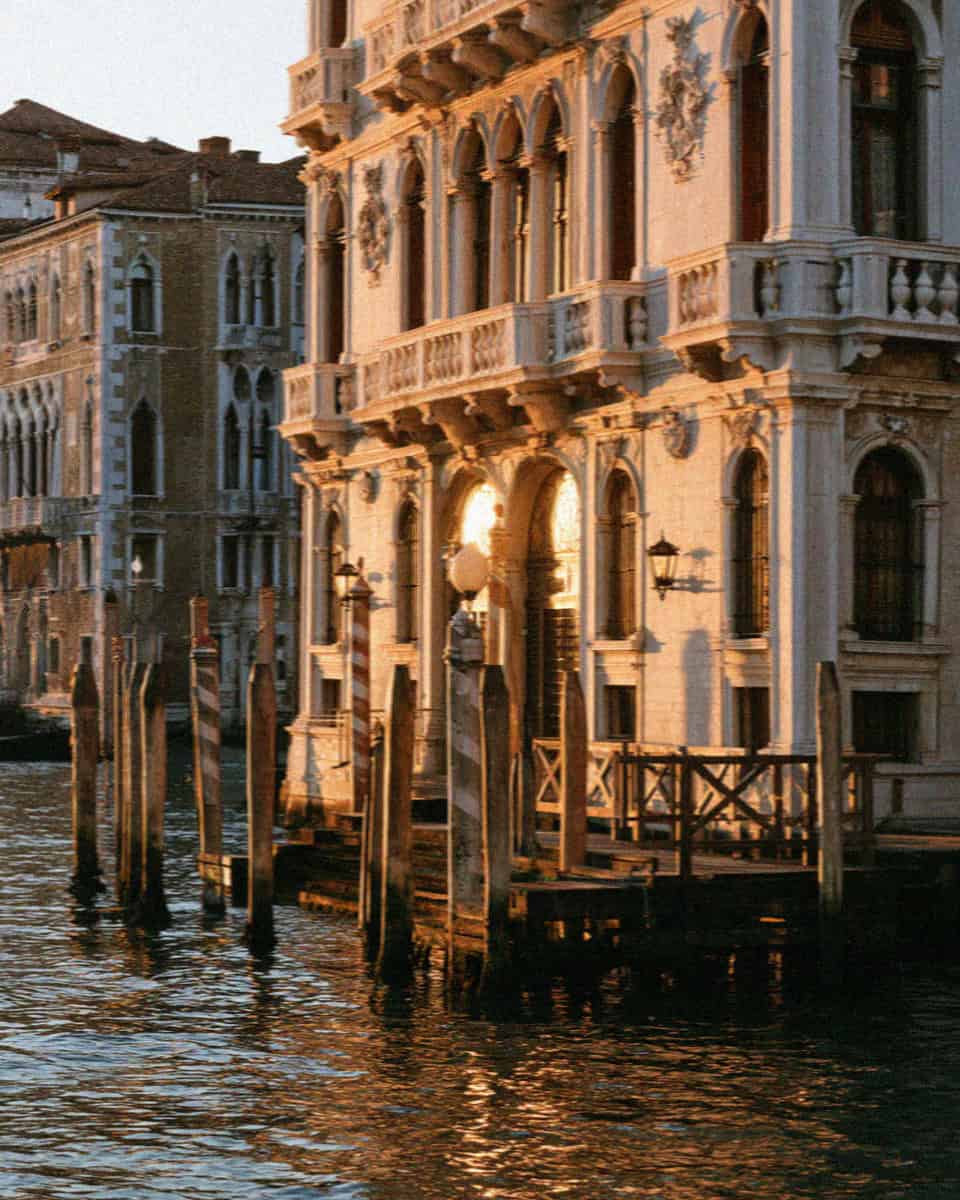
Second, the luggage. There are no cars in Venice, none, and no wheeling your case to a taxi rank. From the airport or the station, you either walk, dragging your bag over the arched stone bridges on foot, or you pay. A private water taxi to your hotel’s nearest canal is the smooth option and costs from around one hundred and twenty euros, often more. The cheaper route is the Alilaguna boat, which drops you at a public stop from which you still walk the last stretch. Pack light, choose a room near a vaporetto or Alilaguna stop, and count the bridges between the two before you book. Your arms will thank you.
Practical notes on booking
Venice fills, and it fills earlier than you expect. For spring, for the summer, for Carnival and for the film festival in late summer, the best rooms at every price level go months ahead. Book early is not a cliché here; it is the single most useful thing I can tell you. Leave it late, and you are left with the overpriced and the inconvenient.
A few more habits worth keeping. Prices swing hard by season, so check current rates rather than trusting any figure for long, and compare a midweek stay against a weekend one. Read the address closely and find it on a map, because “near San Marco” can still mean a fifteen-minute walk with a case. Ask your hotel directly about arrival, since many will arrange a water taxi or tell you the exact Alilaguna stop and walking route. And if you are torn between two districts, remember what I said at the start: choose the sestiere first, the price second, and the view last of all.
Frequently Asked Questions
Which is the best area to stay in Venice for a first visit?
For a first trip, I usually point people to Dorsoduro or San Polo. Both are central enough that the sights are an easy walk, yet neither is as pressured or as pricey as San Marco. Dorsoduro adds sunsets and a romantic, arty calm; San Polo puts you beside the Rialto market and the working city. You get the magic without paying the very top band for it.
Is it worth paying extra for a canal-view room?
Sometimes, but not always. A canal view is genuinely lovely, and it does command a real premium, so it depends on what you want from the room. Water-facing rooms can be noisier, with boat traffic and voices at odd hours, while a quiet room over a garden may give you a far better sleep for less. Decide whether you are paying for the view or for the rest, and be honest about which your trip needs.
How do I get to my hotel with luggage if there are no cars?
You either walk or take a boat. From the airport, the Alilaguna is the affordable option and drops you at a public stop near your district, from which you walk the final stretch over the bridges. A private water taxi takes you closer to the door and costs from around one hundred and twenty euros upward. Pack light, pick a room near a vaporetto or Alilaguna stop, and check how many bridges stand between the two.
Should I stay in Mestre to save money?
Only if your budget genuinely requires it. Mestre on the mainland is markedly cheaper and well connected by train, so the sums are tempting. But you lose Venice at dawn and after dark, which are the quietest, most beautiful hours and the real reason to come. I would rather stay fewer nights inside the city than more nights outside it.