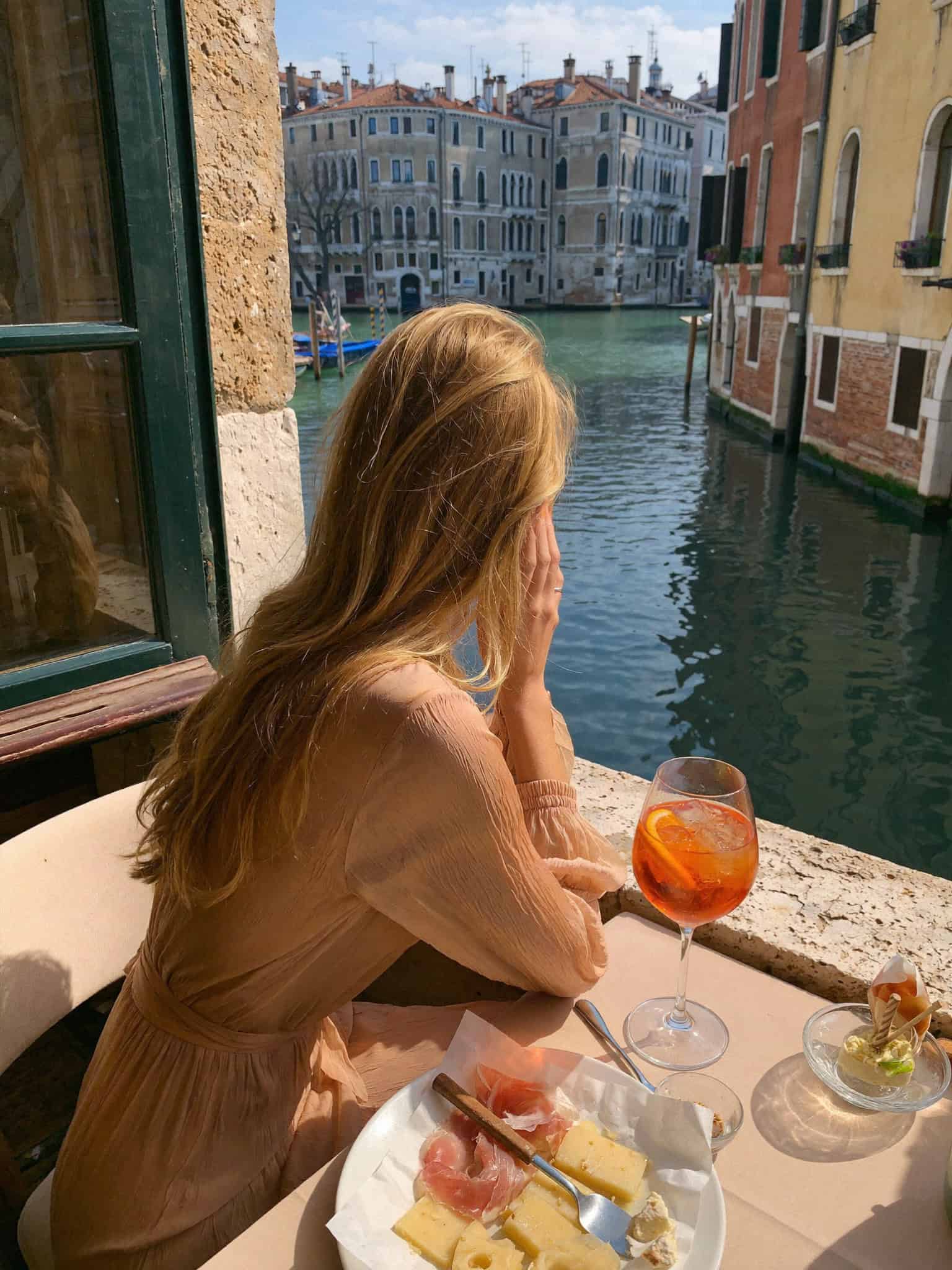
The first time I ate in Venice I did it wrong. I sat down at a table with a view of a canal, ordered something that arrived lukewarm, and paid too much for the privilege. The second time, an old man at the bar of a bacaro near Rialto watched me hesitate over the counter and simply pointed at the sardines, then at the wine, and nodded. That was the whole lesson. Venice eats unlike the rest of Italy, because it eats from the lagoon and the sea, and it eats best standing up, in small bites, with a glass in your hand.
What follows is how I eat here now, after many returns. It is less a list of restaurants than a way of moving through the city at mealtimes. If you want the wider picture of the place, I keep it all together in Victoria’s complete guide to Venice.
The dishes to try
Start with the water. Almost everything worth ordering here comes out of the lagoon or the Adriatic, and the cooking is older and stranger than the tomato-bright food most people picture when they think of Italy.
The dish I send everyone to first is sarde in saor: sardines fried and then laid down in a sweet-and-sour tangle of slow-cooked onions, pine nuts and soft raisins. It is a sailor’s preserving trick turned into something delicate, and it tastes of the whole city at once. Then baccala mantecato, salt cod whipped with oil until it is pale and airy, spread on a round of grilled polenta or bread. It sounds austere and is anything but; it is rich, gentle, faintly sweet.
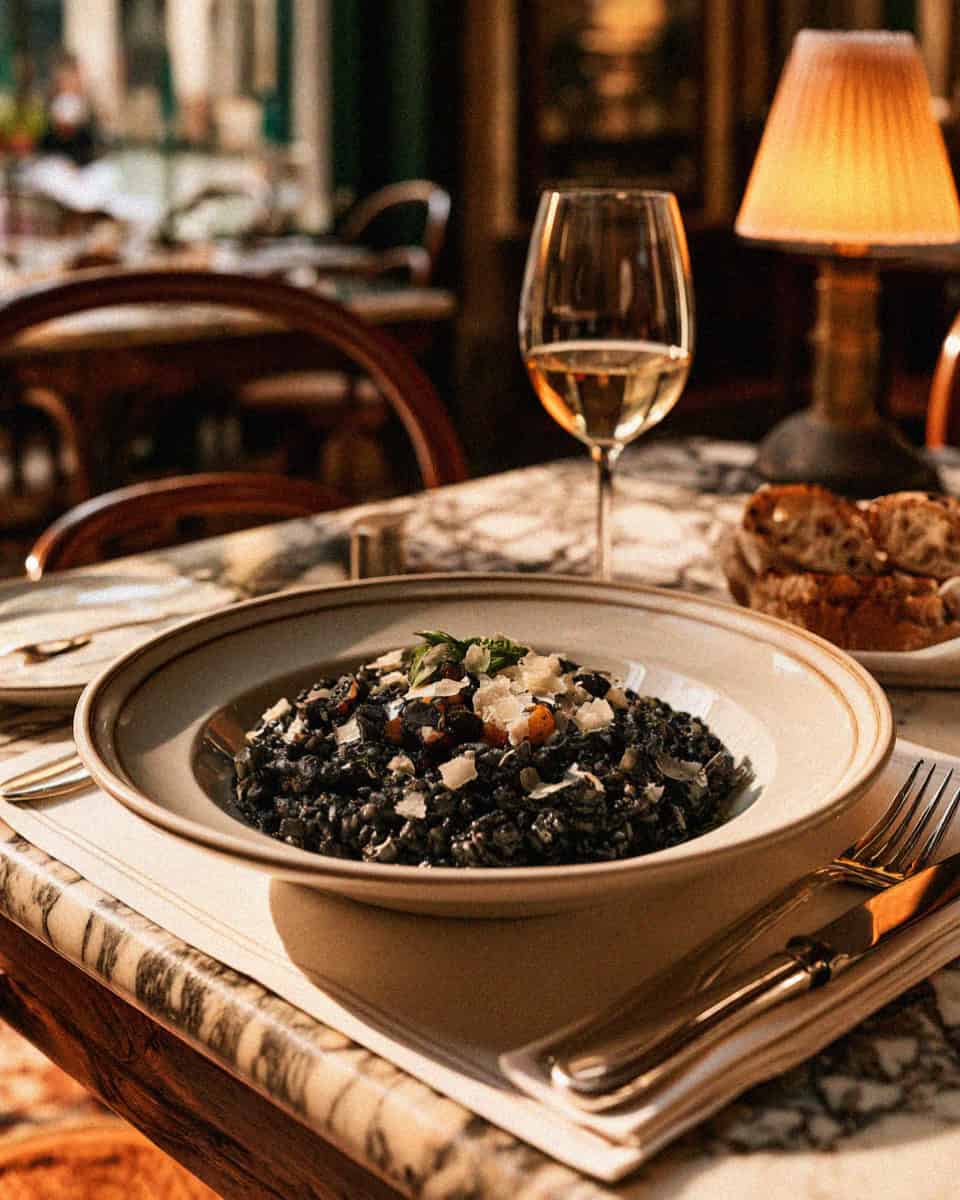
For something with real drama on the plate, there is risotto al nero di seppia, risotto blacked with cuttlefish ink, glossy and briny and the colour of a lagoon at midnight. Bigoli in salsa is the humble counterpoint, thick wholemeal pasta in a melted sauce of onion and anchovy, the kind of thing Venetians ate on fast days and never stopped loving. Fritto misto, a paper cone or plate of lightly fried lagoon seafood, is the great shared pleasure, best eaten hot and squeezed with lemon.
And if you come in spring, ask for moeche, the soft-shell crabs the fishermen catch in the brief window when they have shed their armour. They are fried whole and eaten whole, and they are one of the few genuinely seasonal treasures left in a city that could sell you anything.
Plan Your Visit to Venice
A few things I booked and loved. These help support the blog, at no cost to you.
- Where I stayed: search Venice hotels
- Skip-the-line tickets for the main sights
- A Venice city pass
- Stay connected: get a travel eSIM
This section contains affiliate links. If you book through them I may earn a small commission, at no extra cost to you.
The cicchetti and bacaro ritual
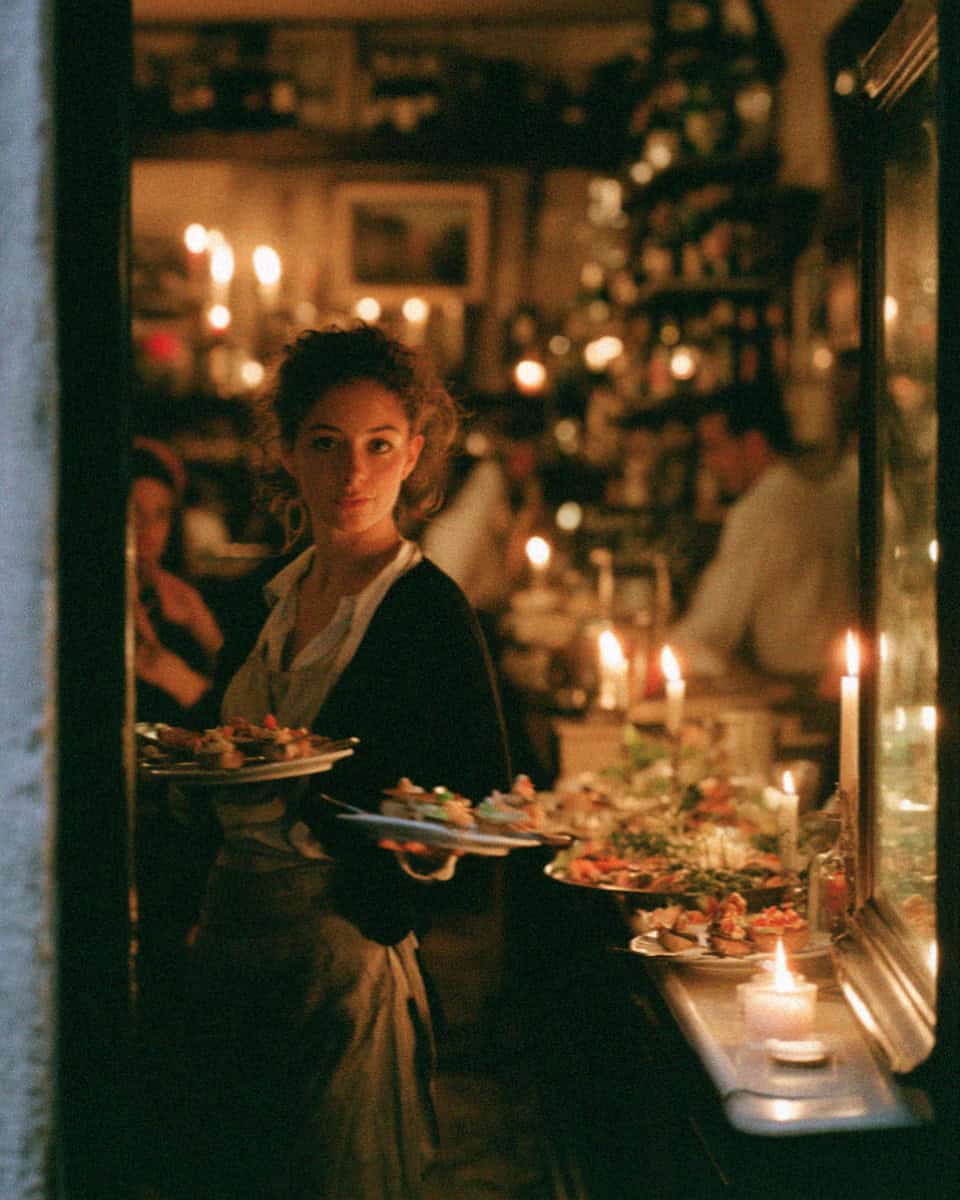
Here is the thing that changes a trip to Venice. A bacaro is a small, usually crowded wine bar, and cicchetti are the little plates and crostini lined up along its counter under glass: baccala on polenta, half a boiled egg with anchovy, a meatball, a slice of soft cheese, a spoon of the day’s stew. You point, you eat standing, you ask for a small glass of wine, and you move on.
That small glass has a name, an ombra, which means a shadow. The story goes that market traders once followed the shade of the campanile in San Marco to keep their wine cool, and the word for shade became the word for the glass. I love that a whole civic ritual is folded into one small word.
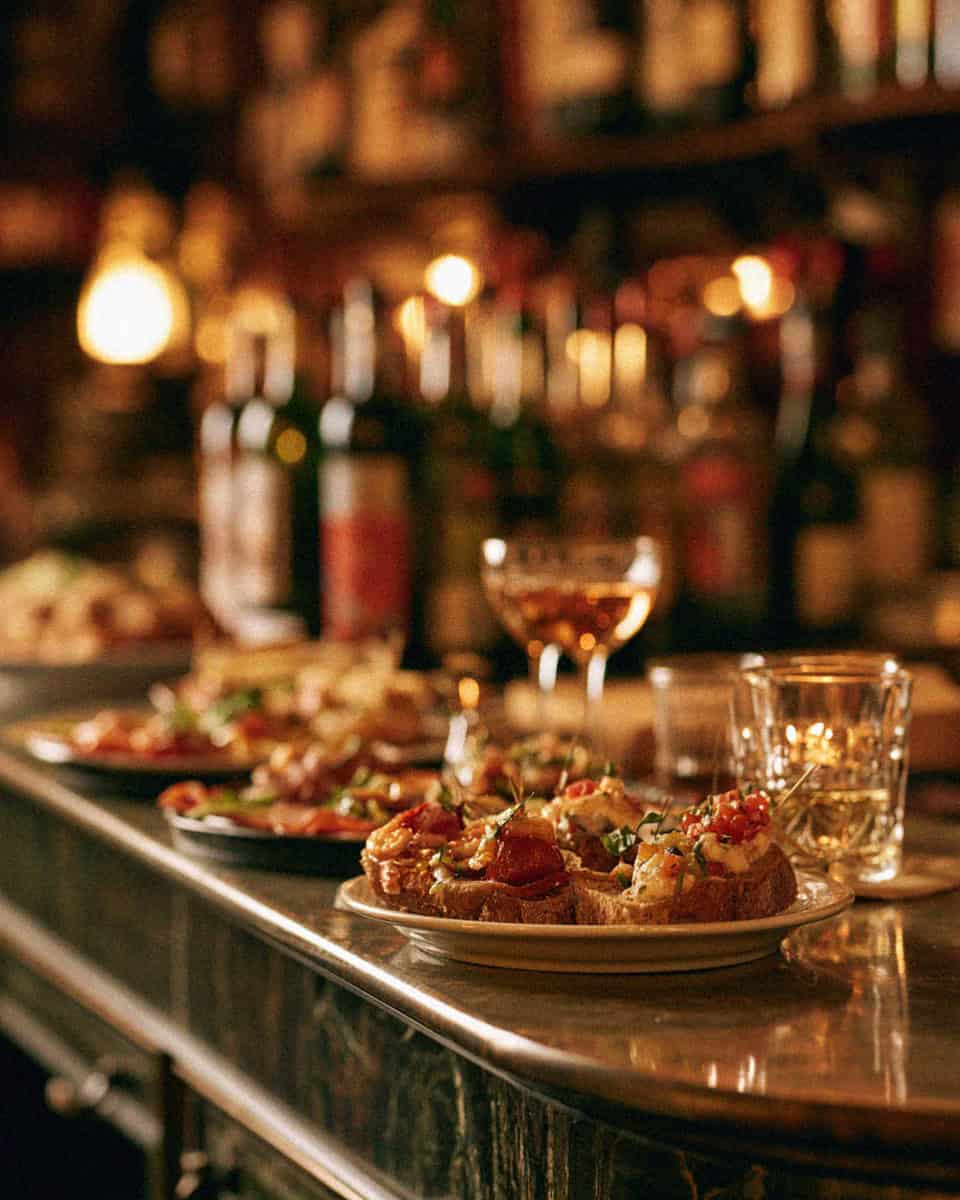
The way to spend an evening is not to sit down once but to walk a slow bacaro crawl: one or two cicchetti and an ombra in each place, then out into the calli to find the next. You eat lightly, you drink lightly, you keep moving, and somehow by the end you have had a full and joyful supper without ever committing to a menu. It costs very little, a few euros a stop, and it is the single best way to feel like you belong here for an evening. It pairs beautifully with an aimless evening wander, which I write more about in the best things to do in Venice.
The wines, the spritz and the Bellini
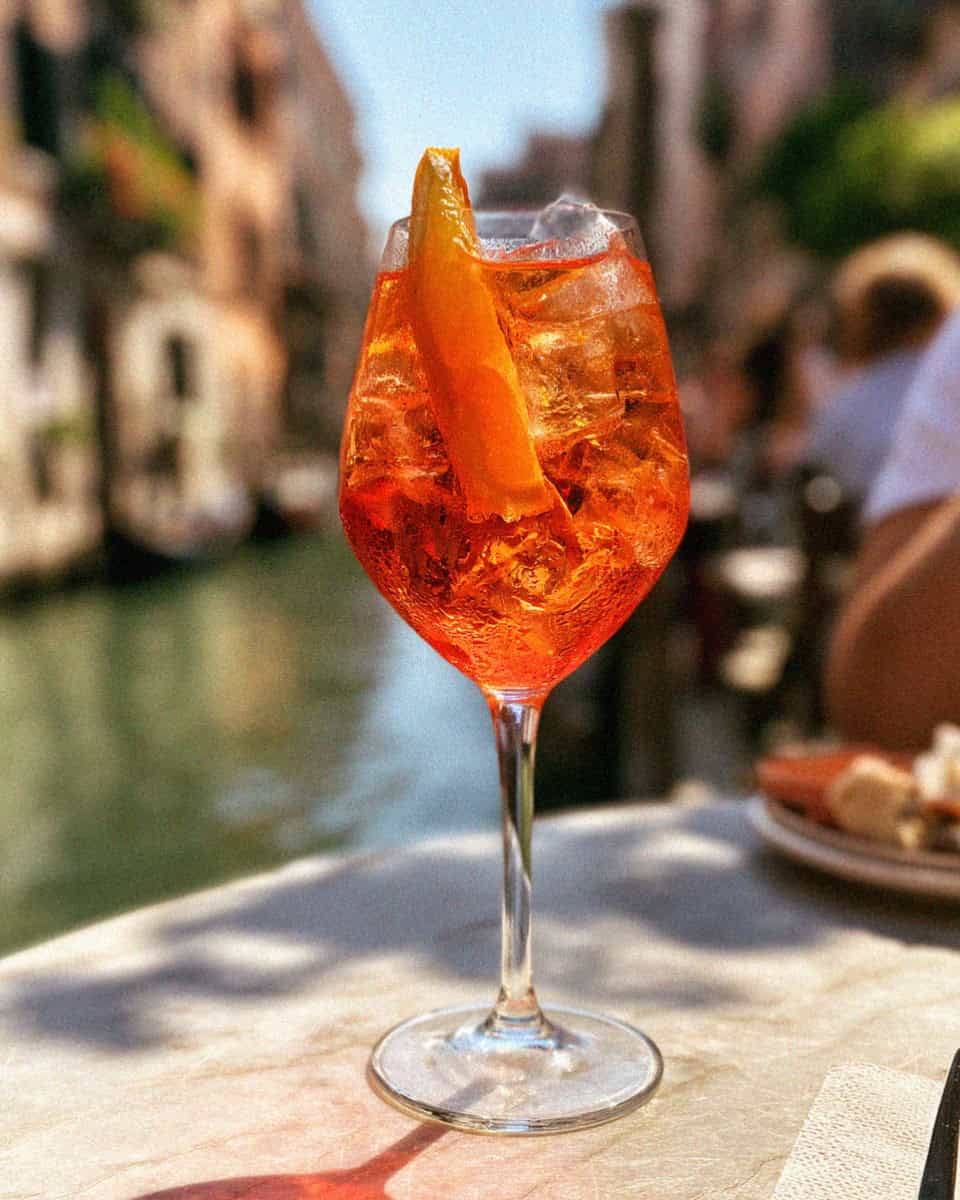
Venetian wine leans local and unfussy, which is exactly right for this food. A cool, dry Soave with the seafood and the fried things. A soft, easy Valpolicella if you want something red and low. And of course prosecco, the good stuff from the Conegliano and Valdobbiadene hills to the north, poured by the glass everywhere and treated as an everyday pleasure rather than a celebration.
The aperitivo drink you will see in every square is the spritz, and here it is properly Venetian: prosecco, a splash of soda, and a bitter, either Aperol for something gentler and orange, or Select for something darker and more herbal, which is the true local choice. In a neighbourhood bar a spritz runs a few euros. On the piazza in front of San Marco, with a band playing, it can cost many times that, and you are paying for the seat and the view, which is a fair trade only occasionally.
Then there is the Bellini, prosecco and white peach purée, invented at Harry’s Bar near San Marco. Harry’s is an institution and it is priced like one; a single Bellini there will cost what a whole round of ombre would cost elsewhere. Go once if the idea delights you, order the thing it is famous for, and understand you are buying a piece of history rather than a bargain.
Where to eat well, by area
The rule for eating well in Venice is almost embarrassingly simple: walk away from San Marco. The restaurants ringing the piazza with laminated set menus, photographs of the food, and a man outside beckoning you in are, with very few exceptions, the ones to avoid. Real Venetian eating happens in three clusters, and none of them is the tourist heart.
Around the Rialto market is where I always start. The bacari here feed the market workers, and the names people pass along are All’Arco, a tiny counter doing some of the best cicchetti in the city, and Cantina Do Mori, which has been pouring wine since the fifteenth century. Come at midday when the produce and fish stalls are still busy and the light is good.
Then Cannaregio, and specifically the Fondamenta della Misericordia, a long canal-side stretch that fills with locals in the evening. This is the place for the unhurried crawl, one bar to the next along the water, less crowded than Rialto and more residential.
And Dorsoduro, around Campo Santa Margherita, a big lived-in square with students and families and a scatter of good, honest bars. It has an easy, unpolished feel that I find hard to leave. Where you choose to base yourself shapes how easily you fall into these evenings, and I go into the neighbourhoods properly in where to stay in Venice.
A simple ordering plan
If you want one uncomplicated way to eat well, here it is.
For lunch, find a bacaro near Rialto around one o’clock. Order three or four cicchetti straight off the counter, whatever looks freshest, and a glass of Soave. Stand, eat, watch the room. That is a lovely light meal for very little.
For the evening, do the crawl. Start on the Misericordia or in Dorsoduro around six, when the aperitivo hour begins. Have a spritz and a couple of cicchetti in the first place, then move on, and let the evening find its own length. If at some point you want to sit down for a proper plate of risotto al nero or a fritto misto, do it late, at a small trattoria a few streets back from any famous view.
Two small practicalities. A coperto, a cover charge of a few euros per person, is normal when you sit down and is not a scam. And when fish is offered, check whether it is priced al etto, by the hundred grams, because a whole fish can arrive costing far more than you expected. Ask the weight before you agree. A good host will tell you gladly.
The coffee, the sweets and the aperitivo hour
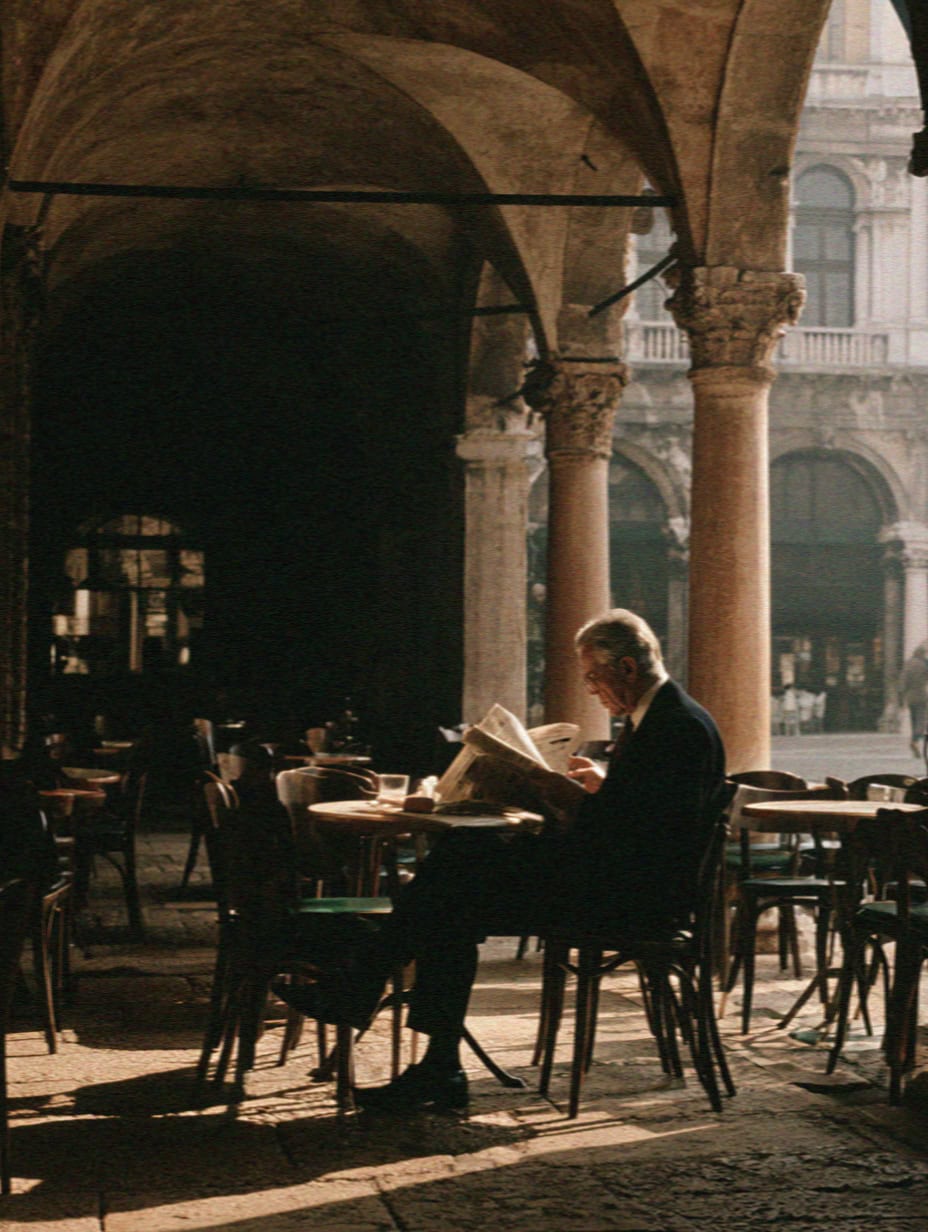
Coffee in Venice follows the Italian rule: it is cheapest and best standing at the bar. A caffe, which means an espresso, taken in one go with your elbow on the counter, costs very little. Sit down at a table and the same coffee costs more, sometimes much more in a grand cafe. In the morning a cappuccino and a pastry at the bar is the whole ritual, and no Venetian drinks a cappuccino after eleven, though nobody will actually stop you.
For something sweet, look for fritelle, the fried, raisin-studded fritters that appear around Carnival, and the little cornmeal biscuits called zaeti that are made for dunking in sweet wine. And there is always tiramisu, which the Veneto claims as its own invention, disputed but delicious.
But the hour that matters most is the aperitivo, roughly six to eight, when the city sheds the day-trippers and comes out to drink and pick at cicchetti before supper. Stand at a bar with a spritz, watch the light go soft and gold on the water, and let Venice be a place where people live rather than a place people photograph. That is when I love it best, and it costs almost nothing at all.
Frequently Asked Questions
What is the one thing I should eat in Venice?
If you eat only one thing, make it sarde in saor, sweet-and-sour sardines with onions, pine nuts and raisins. It is the dish that most tastes of this particular city, and you will find it on almost every bacaro counter for very little.
How much should a meal cost?
It depends entirely on how you eat. A crawl of cicchetti and small glasses of wine can fill an evening for the price of a modest sit-down lunch, a few euros per stop. A proper restaurant meal costs more, and remember the coperto of a few euros and the possibility of fish priced by the etto. The piazza in San Marco is where prices climb steepest.
How do I avoid the tourist traps?
Walk away from San Marco, avoid anywhere with photographs on the menu or a man outside urging you in, and head instead to the bacari around the Rialto market, along Cannaregio’s Fondamenta della Misericordia, or near Campo Santa Margherita in Dorsoduro. If it is full of Venetians eating standing up, you have found the right place.
What should I drink?
Start with a spritz, ideally made with Select for the true local bitter, or a glass of cool Soave with seafood. Prosecco from the Conegliano hills is everywhere and lovely. The Bellini is worth trying once at Harry’s Bar, where it was invented, as long as you know you are paying for the history.