Eating well on Ischia depends almost entirely on how far you are willing to travel from the water. The island has a real cuisine of its own, older and more agricultural than people expect from the Bay of Naples, and it does not live on the harbourfront. It lives up in the hills, in villages most day visitors never see, in kitchens that still cook rabbit in clay.
Once I understood that, I ate better here than anywhere else on this coast.
Coniglio all’Ischitana, the Dish the Island Is Actually About
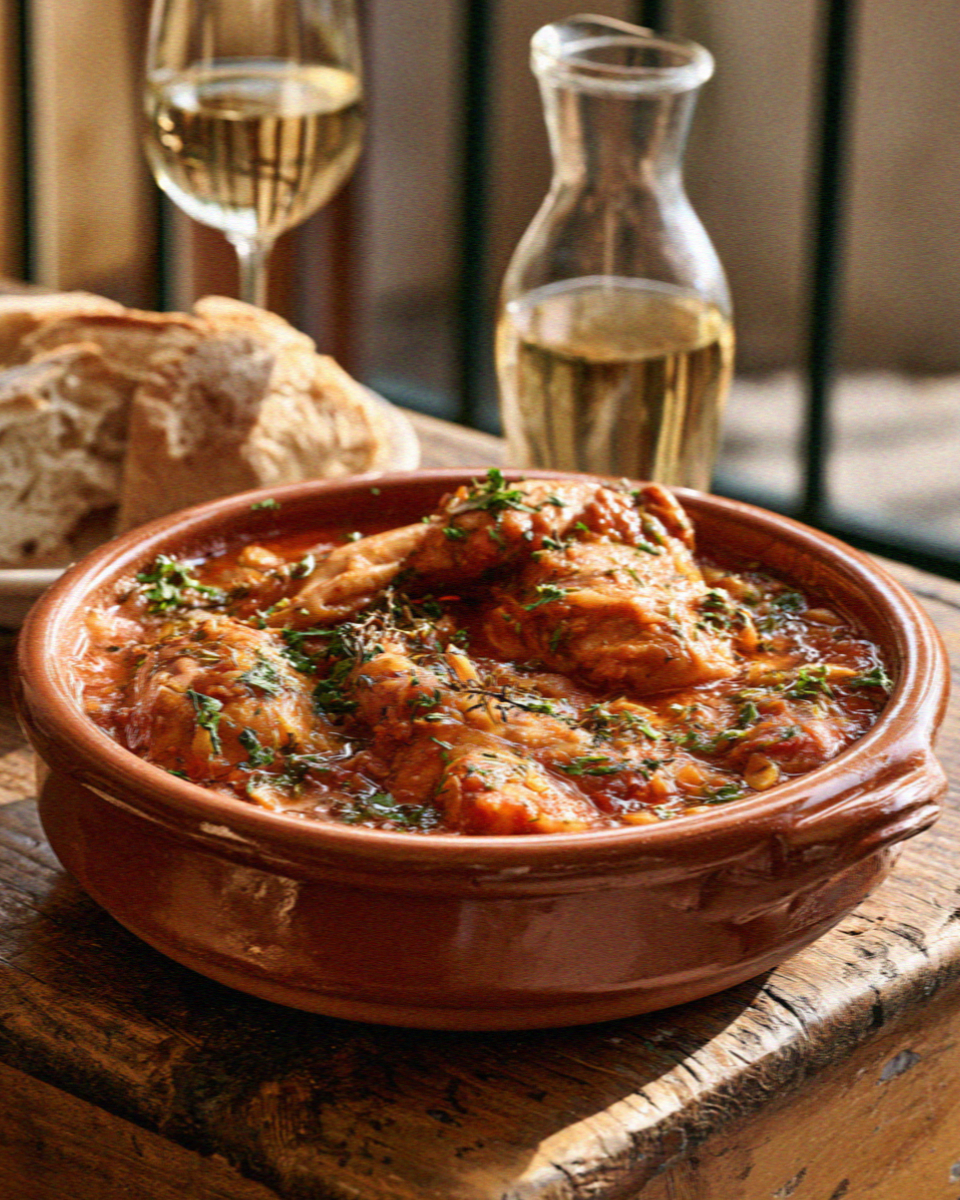
Rabbit, not fish, is the dish of Ischia. Coniglio all’ischitana is a whole rabbit jointed and browned in a terracotta pot with olive oil, garlic, chilli, cherry tomatoes, white wine and a great deal of wild herb, thyme and basil mostly, then left to braise slowly until the sauce goes dark and sticky.
It comes from farming, not from the sea. Rabbits were traditionally kept in the fosse ischitane, deep pits cut into the soft tuff and lined with dry stone walls, where they burrowed and fed on vine leaves, broad bean pods and whatever grew wild around them. That diet is the whole point. The meat tastes of the hillside, and the cave-raised rabbit is now a Slow Food Presidium, which tells you how close it came to disappearing.
The part nobody warns you about is the order. In the proper version the sauce comes first, spooned over bucatini as a primo, and the rabbit arrives afterwards as the second course. Order a pasta and the rabbit expecting two unrelated plates and you will end up with far more food than you planned. Ask. They are used to explaining it.
A portion at a village trattoria runs around twenty to twenty five euros, climbing to thirty five or forty at the polished places. Several of the best kitchens want a phone call the day before, because the pot goes on hours in advance.
The Hill Trattorias, Where the Rabbit Lives
Trattoria Il Focolare, up at Cretaio between Barano and Casamicciola, is the one everybody eventually names. It is the D’Ambra family’s place, the rabbit comes out in its terracotta pot exactly as tradition demands, and the rest of the menu is unapologetically inland: herb pastas, grilled pork, mountain things. Enough international attention to be busy year round, so book. Dinner with wine sat around fifty to seventy euros a head when I went.
Il Bracconiere, above Serrara Fontana at roughly 480 metres, is my favourite for atmosphere. Old tuff and timber farm buildings, a long veranda over the southern slope, a view that swallows the whole sea. Order the rabbit when you book. Roughly thirty five to fifty euros a head with wine.
Cantina ‘U Scilatur sits in the lanes of Buonopane, a hamlet of Barano most visitors drive through without noticing. Built into a restored wine cellar, tables made from old barrels, niches carved into the tuff, and in summer pergolas out among the vines. The produce is largely their own and the wine list entirely organic. Figure thirty to forty euros a head.
Da Peppina di Renato is technically Forio, but it is up at Montecorvo on the flank of Monte Epomeo and belongs with this group. Vine-shoot roof, candles, the bay of Citara going dark below you, rabbit in the clay pot, very good bruschette and white pizzas. Best value of the lot at roughly twenty five to forty euros a head.
Taverna Verde, in the Ciglio district of Serrara Fontana, is the quieter alternative if the rest are full.
None of these are walkable from the ports, and the hill roads are not relaxing after dark, so budget for a taxi or ask whether the restaurant runs a pickup. Several do.
The Seafood, and Where It Is Worth Eating
The fish here is genuinely good, but not automatically good just because you can see water from your table.
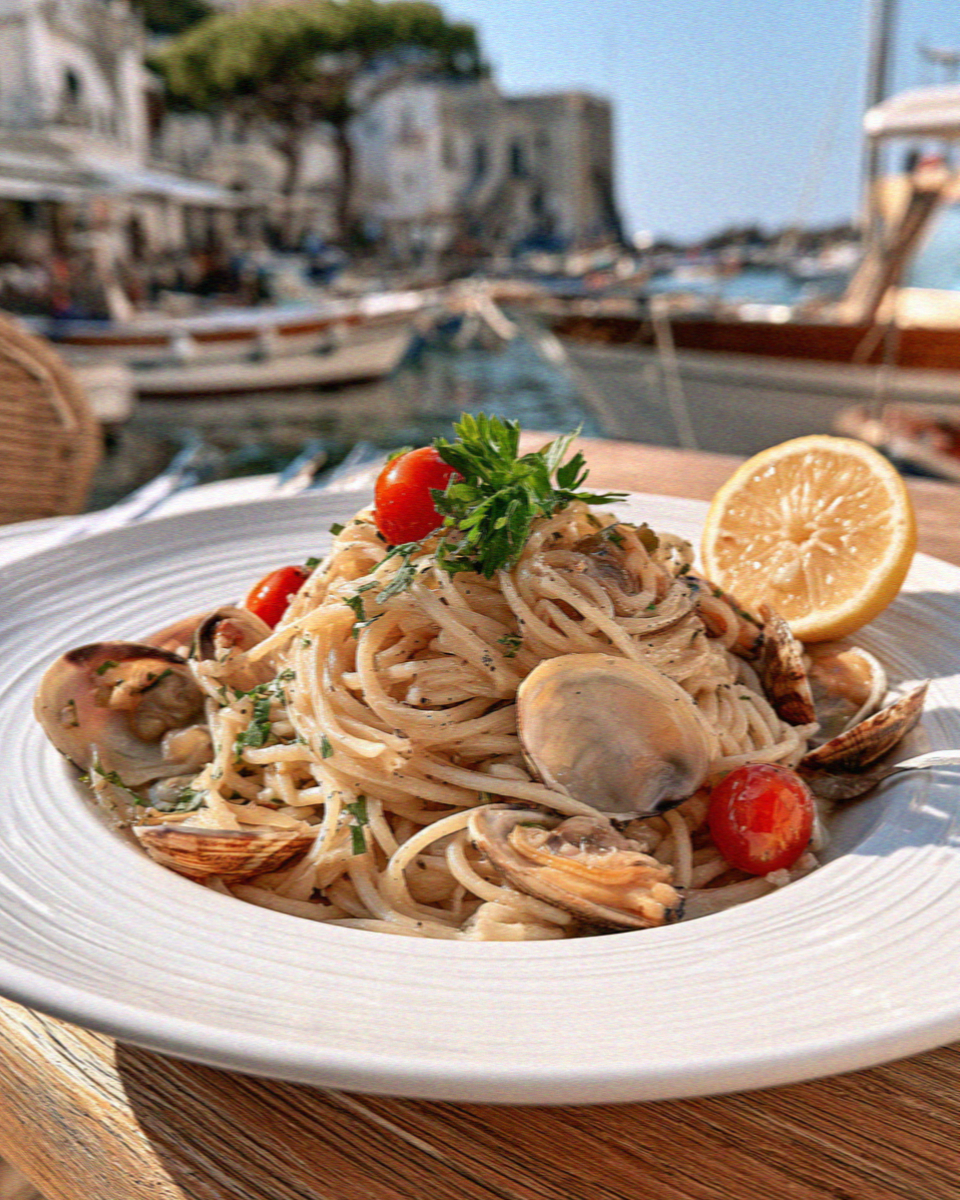
Sant’Angelo, the car-free fishing village on the south coast, is the prettiest place on the island to eat and priced accordingly. Ristorante Lo Scoglio has the position, tables essentially over the rocks, and the bill to match: with fish sold by weight, budget eighty euros a head and up. Deus Neptunus is the sane counterweight, a properly good spaghetti allo scoglio with prawns, squid, mussels and clams for around eighteen euros, so thirty five to fifty a head all in. Casa Celestino‘s restaurant is the polished choice, particularly its seafood salad, at roughly fifty to eighty.
Ischia Ponte, in the shadow of the Castello Aragonese, is where I would eat most nights. Da Ciccio on Via Luigi Mazzella does stuffed squid with raisins and pine nuts worth ordering twice, plus very good octopus, for around thirty five to fifty euros a head. Da Cocò, below the causeway to the castle, is the one locals actually name, and stays reasonable.
On the Forio side, Umberto a Mare sits beneath the Soccorso church with the best sunset on Ischia and a Michelin star it picked up in late 2025. Contemporary Campanian cooking, grouper tortelli, a cellar of well over a thousand labels. Budget from around a hundred euros a head with wine.
Biancolella, Forastera, and the Terraced Vineyards
Ischia grows its wine on hand-built terraces cut into volcanic slope and held up by dry stone walls, in places a mule would refuse.
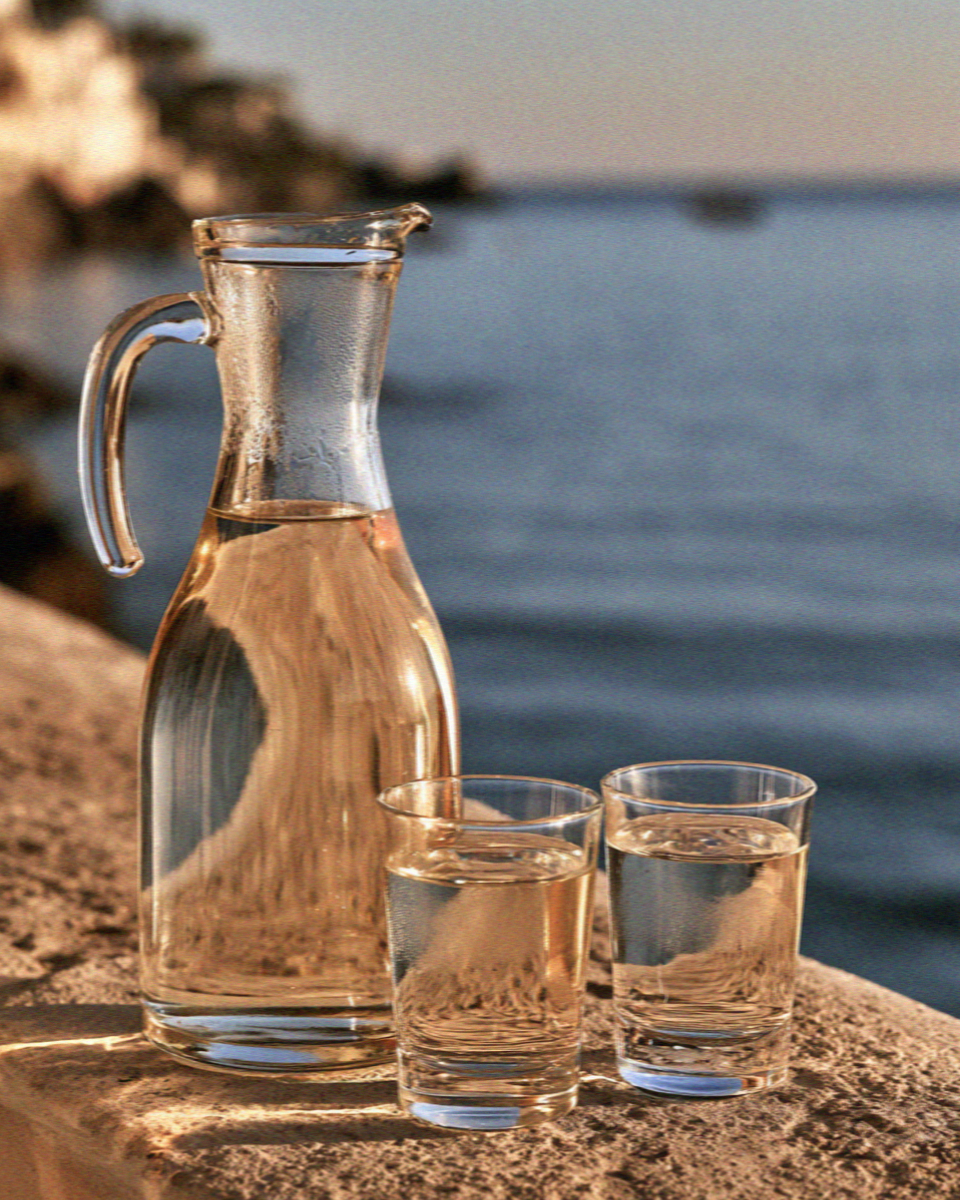
The two whites to know are Biancolella, lean and saline with a green-almond bitterness at the end, and Forastera, rounder and softer with more orchard fruit. Both go into DOC Ischia, a denomination created in 1966 and among the oldest in Italy. Ordered by the carafe at a hill trattoria, either costs very little and tastes more of this island than anything else on the table. The reds, Piedirosso and Guarnaccia, are light and a bit rustic, and worth trying with the rabbit.
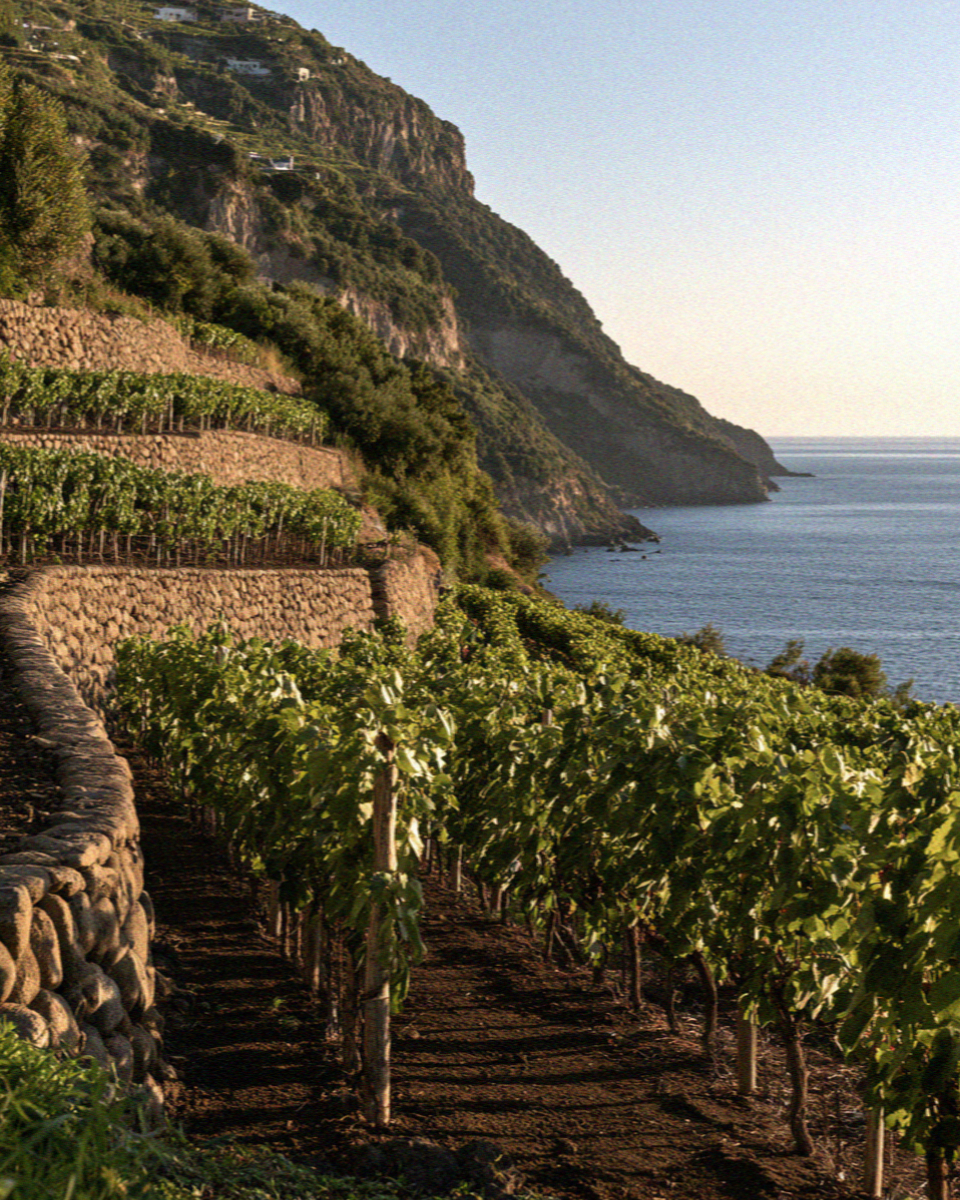
Casa D’Ambra, whose cellars sit in a natural amphitheatre below Monte Epomeo, is the historic name and the easiest bottle to find. Pietratorcia, above Forio near Panza, is the one to visit: tastings run on the patio and under the pergola by the garden, a genuinely pleasant hour rather than a sales pitch. Call ahead in season. More on the island’s inland roads in my complete guide to Ischia.
The Port Waterfront, Honestly
Riva Destra, the strip of some twenty five bars and restaurants along the marina at Ischia Porto, is where most arrivals eat their first dinner. It looks the part at night. Some of it is good and expensive, some is mediocre and expensive, and almost none of it is where an Ischitano would choose to spend an evening. The tell is a printed multilingual menu on a stand outside with someone standing beside it.
Walk on. Ischia Ponte is twenty minutes along the seafront and eats far better for the money. The hills eat better still.
Bread, Pizza and the Sweet Things
The island snack is the zingara, a stuffed sandwich on good bread built to be carried down to the beach, sold at bars and rosticcerie all over. Pizza is Neapolitan and reliable, and the hill trattoria versions, thin and white and served almost as an antipasto, are more interesting than the tourist margheritas at the port.
For pastry, Pasticceria Ascione at Ischia Porto has been baking since 1981 and is the safe morning stop: sfogliatelle, lemon tarts, cornetti, granita later in the day.
Practical Notes
Kitchens open late. Dinner generally begins around eight and the rooms fill closer to nine or ten, so a seven o’clock arrival gets you an empty terrace and a slightly confused waiter.
Most restaurants here run roughly April to October. From November the inland trattorias and sea-view terraces close almost completely, and what stays open is concentrated in Ischia Porto, Ischia Ponte and the hotel dining rooms. Ischia has just over sixty thousand residents, so it never quite shuts the way Capri does, but in winter ring ahead before driving anywhere remote.
In August, book. Everything, several days out, and ask for the rabbit when you call the hill places.
I came expecting to eat fish and left thinking about a pot of rabbit in a village I had to find on a map. That is Ischia in one plate.
Read also: The Perfect Ischia Itinerary | Where to Stay in Ischia | The Complete Guide to Ischia
Frequently Asked Questions
What food is Ischia known for?
Coniglio all’ischitana, rabbit braised in a terracotta pot with garlic, chilli, tomato, white wine and wild herbs, is the island’s signature dish, and the sauce is traditionally served first over bucatini before the meat arrives as a second course. Beyond that: seafood at the harbours, the volcanic-terrace whites Biancolella and Forastera, and the zingara, a stuffed sandwich sold at bars all over.
Where do locals eat on Ischia?
Inland and uphill, mostly. The trattorias around Barano, Buonopane, Serrara Fontana and Montecorvo are where the island’s own cooking happens: Il Focolare, Il Bracconiere, Cantina ‘U Scilatur, Da Peppina di Renato. In town, Ischia Ponte under the Castello Aragonese feels far more local than the Riva Destra marina strip at Ischia Porto, where most arriving visitors eat by default.
How much does dinner cost on Ischia?
A hill trattoria with wine tends to land between twenty five and fifty euros a head, and a portion of rabbit alone is roughly twenty to twenty five. Harbour seafood sits around thirty five to sixty, rising steeply where fish is sold by weight, and a famous terrace in Sant’Angelo can pass eighty. The Michelin-starred Umberto a Mare in Forio starts around a hundred with wine.
Do I need to book restaurants in Ischia?
In July and August, yes, several days ahead, and that applies to the hill places as much as the waterfront. Request the rabbit when you reserve, because it braises for hours and the better kitchens cook it to order. Outside the season the opposite problem applies: from November much of the island’s dining closes, so ring before driving anywhere inland.