The best things to do in Lucca reward a slow pace, and the town seems built to enforce one. Inside a ring of Renaissance walls, the streets curl and double back, opening without warning onto a piazza shaped like an oval or a façade so tall it looks as though someone stacked a second church on top of the first. I have come in spring rain and in the flat gold light of late September, and both times the pleasure was the same: no single monument demands you rush towards it, so you end up seeing everything. What follows is how I would spend a couple of unhurried days, and where they fit against Pisa is set out in the itinerary.
What to book before you come
Lucca is a town you can do entirely for the price of a bicycle, and I would. But three things here are worth somebody else organising.
- The two hour walk through the centre. 4.7 from nearly two thousand people. Lucca hides its history behind very plain frontages and a great deal of it is invisible without somebody to say what you are standing next to. The Roman amphitheatre is a residential square now and you can walk through it without noticing.
- The food walk, three and a half hours. Rated 4.9. This is a full meal spread across the town rather than a tasting, so come hungry and do not book dinner.
- A winery in the hills above the town. 4.7 from seven hundred people. Ninety minutes, and the hills north of Lucca are the part of this stay everybody forgets to plan for.
Walking or cycling the walls, the Piazza dell Anfiteatro and every street inside them cost nothing. A bicycle for the day is a few euros and is the single best thing you can spend money on here.
Walking or cycling the walls
Begin on top of the walls, because they explain the shape of everything below. Lucca’s ramparts run roughly 4.2 kilometres in an unbroken loop around the historic centre, wide enough at the top for a tree-lined promenade with benches, joggers and prams. They were built slowly, between the early sixteenth century and the mid-seventeenth, with eleven projecting bastions designed to hold cannon that were never fired in anger. When the military purpose faded, the town turned the whole circuit into a public park raised above the rooftops. It is free, open year-round, and the full lap on foot takes a gentle hour or so with stops.
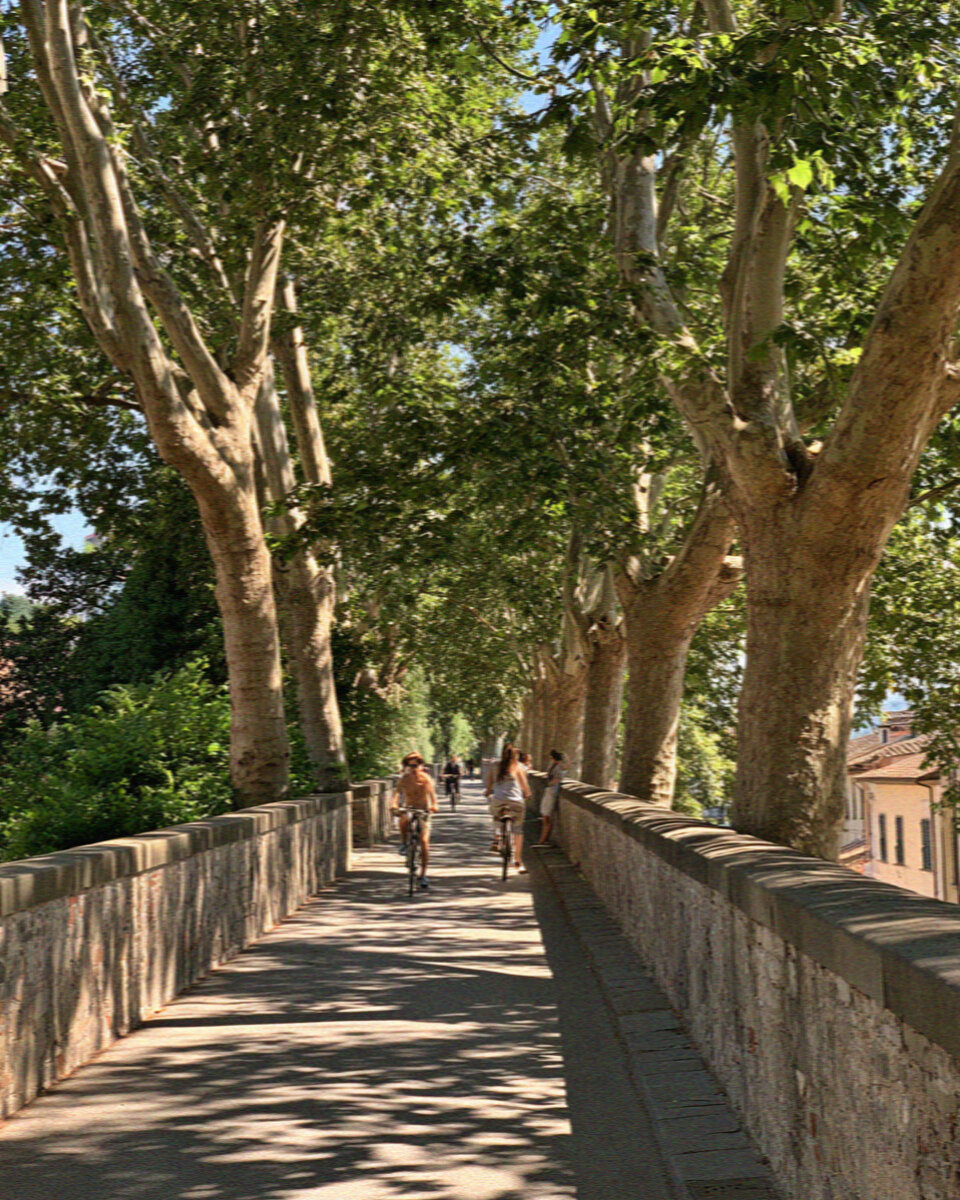
I prefer to walk them first thing, when the plane trees throw long shadows and the town is still opening its shutters. If you would rather cycle, rental shops cluster near the gates, thickest around Porta Santa Maria to the north and Porta San Pietro to the south, and a standard bike runs to only a few euros an hour. From up here you can see how the amphitheatre hides its oval among the ordinary roofs.
Plan Your Visit to Pisa and Lucca
A few things I booked and loved. These help support the blog, at no cost to you.
- Where I stayed: search Pisa hotels
- Leaning Tower and Cathedral tickets
- Rent a car to explore the area
- Stay connected: get a travel eSIM
This section contains affiliate links. If you book through them I may earn a small commission, at no extra cost to you.
Piazza dell’Anfiteatro
Come down into Piazza dell’Anfiteatro through one of its four low archways and the effect is a small shock. The square is a closed ellipse of pale, mismatched houses, and its shape is not a conceit but an inheritance: a Roman amphitheatre stood here in the second century, and over the centuries people built their homes directly onto its curved foundations, filling the arena with a warren of dwellings. In the 1830s the architect Lorenzo Nottolini cleared the tangle from the centre and opened the piazza we walk into today, keeping the oval the Romans had drawn.
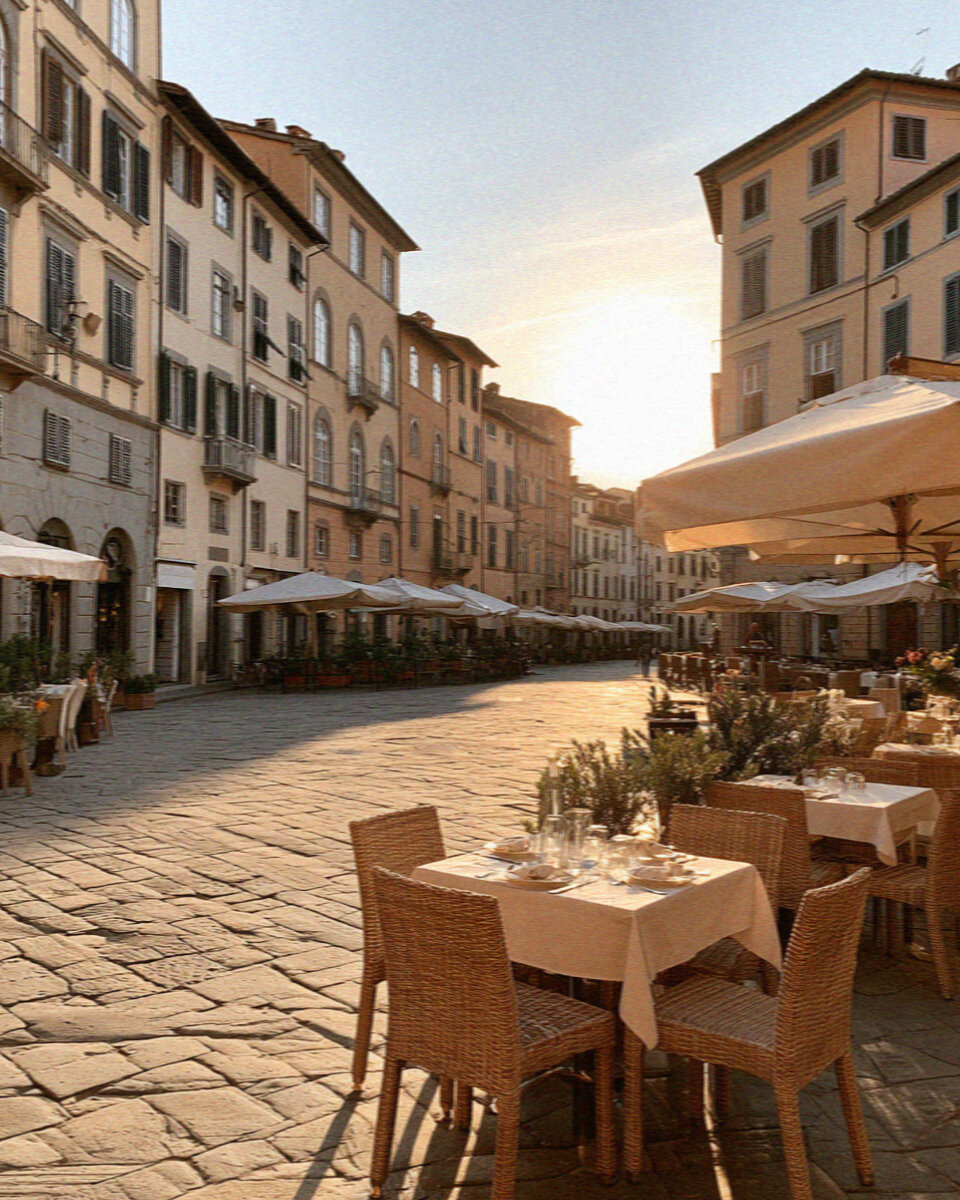
The cafés around the rim are priced for the view, so I treat the square as a place to sit with a single coffee and watch rather than to eat well. The light changes it completely: bleaching at midday, warm and forgiving in the hour before sunset, when the ochre and cream fronts seem to lean in. It is the town’s most photographed spot for good reason, and I have more on the timing of it in Best Photo Spots.
Guinigi Tower and its oaks
The Guinigi were the town’s ruling merchant dynasty, and their tower is the one everyone knows, because a small grove of holm oaks grows from a garden at the very top. Seven of them, roots held in a raised bed of soil, branches leaning out over the medieval brick. From the street you look up and see a hanging thicket of green where you expect battlements.
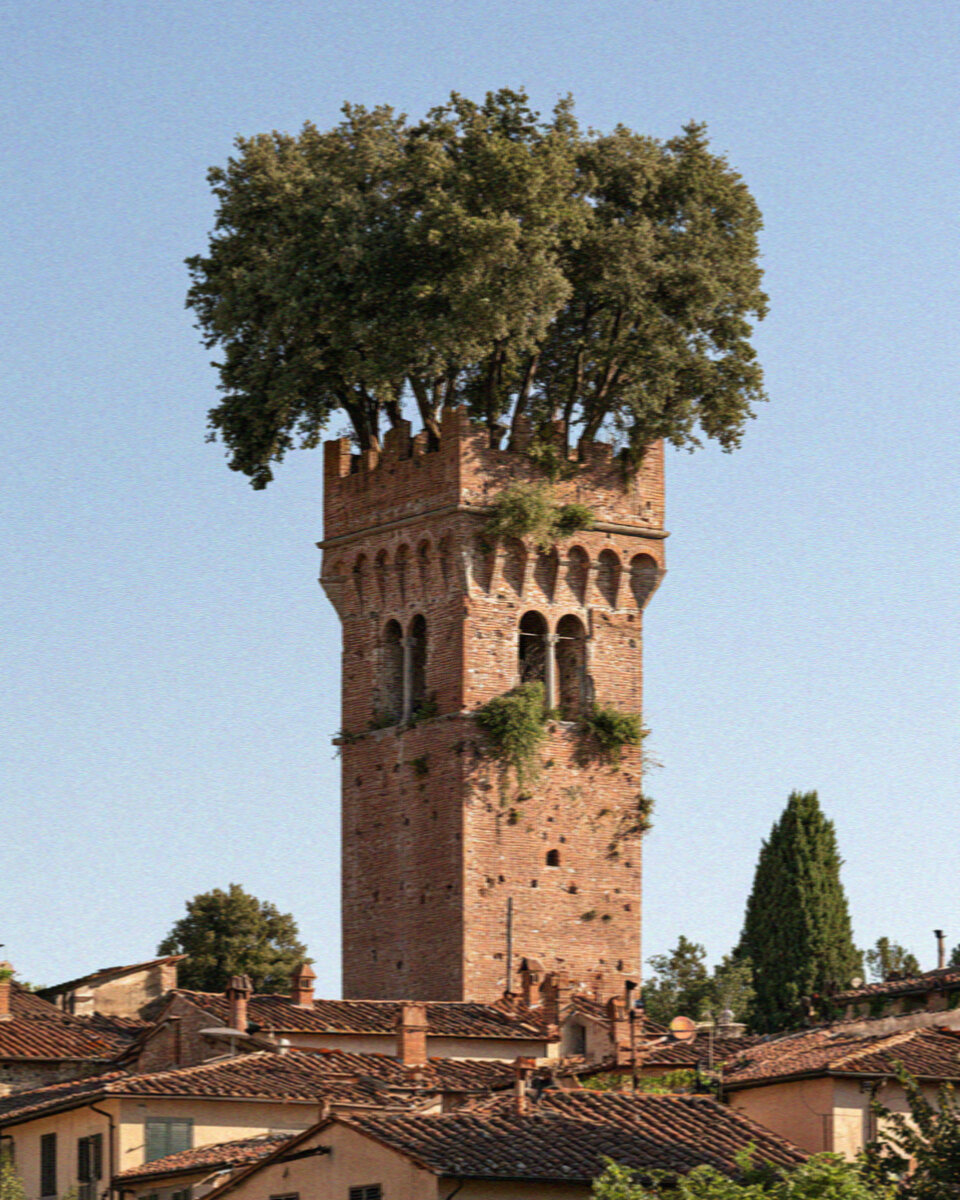
The climb is around 230 steps, brick staircases giving way to metal flights near the top, manageable at a steady pace with a pause or two. Admission is modest, in the region of five to six euros when I last checked, and hours shift with the season: roughly half past nine until early evening in summer, closing earlier in winter. Because these things change, confirm on the day. What you climb for is the view, kept for its own section below.
San Michele in Foro
San Michele stands on the old Roman forum, which is how it takes its name, and its façade is a bold piece of theatre. Tier upon tier of slender columns, each carved differently, rise well above the roofline of the church behind them, a screen of white marble built taller than the building could support so the town would have a grand front to look at. On the very top the Archangel Michael spreads bronze wings, and a story persists that a jewel set in his hand glints down at the piazza when the light is right.
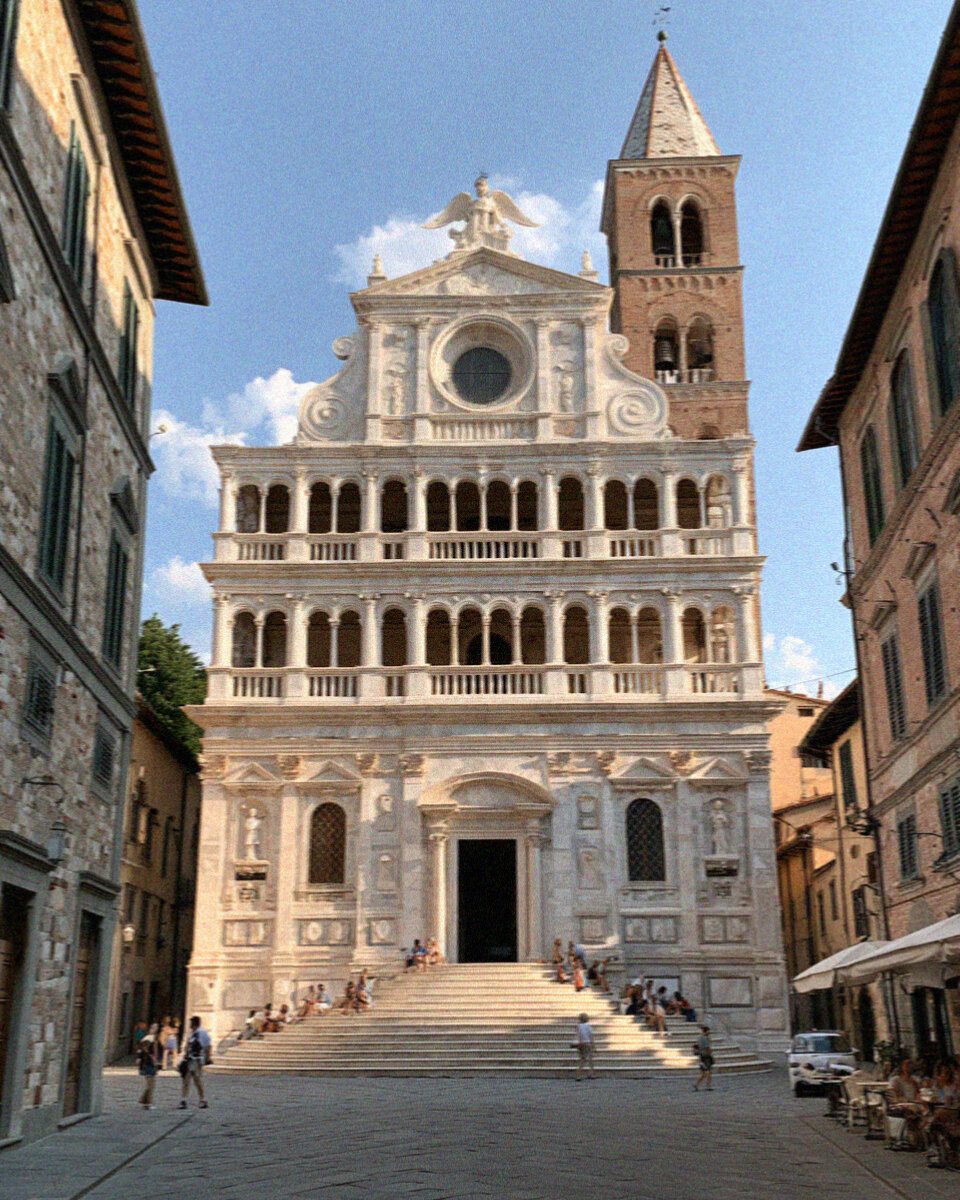
Step inside and the mood drops to something plainer and cooler, exactly the point after the flamboyance out front. Entry to the church is free, and Puccini sang here as a boy chorister. The piazza around it is where locals gather in the evening, a better spot for an aperitivo than the amphitheatre if you want to feel less like a visitor.
The Cattedrale di San Martino
The cathedral sits slightly off the main circuit, near the southern walls, its asymmetrical front, one arch pinched narrow to fit the bell tower already standing beside it, a lesson in medieval compromise. Two things inside are worth the visit on their own. The first is the Volto Santo, a dark wooden crucifix Lucca has venerated for centuries, kept in a small octagonal chapel within the nave and long the object of pilgrimage. The carved Christ is solemn and severe, and the devotion around it still feels alive.
The second is the tomb of Ilaria del Carretto, carved by Jacopo della Quercia in the early fifteenth century for the young wife of a Lucchese lord. She lies in white marble with a small dog at her feet, the sculpture so tender it stops most people in the aisle. There is usually a small admission for the sacristy where the tomb is kept, and a combined ticket often covers the cathedral museum and baptistery nearby, the sensible way to buy in.
Via Fillungo and the Torre delle Ore
Via Fillungo is Lucca’s spine, a long, narrow shopping street threading from near the amphitheatre down towards San Michele, lined with old ironmongers’ signs, a few grand belle époque shopfronts and the odd surviving tower stub. It is where the passeggiata happens, the slow evening walk Italians treat as a civic duty, and it is pleasant to be swept along in it with no destination.
Rising over the street is the Torre delle Ore, the Tower of the Hours, tallest of Lucca’s surviving towers and its public clock since the fifteenth century. You climb its wooden staircases, a couple of hundred steps, to stand beside the old clock mechanism as it works. If you have already climbed the Guinigi Tower you may not need a second ascent, but the view here is arguably better composed, because the Guinigi oaks appear in it.
Puccini and Palazzo Pfanner
Giacomo Puccini was born in Lucca in 1858, into a family of church musicians, and the flat where he grew up on Corte San Lorenzo is now a small, well-kept museum. It holds the piano on which he composed Turandot, along with costumes, letters and manuscripts, an intimate hour rather than a grand institution. A seated bronze of the composer sits in the little square outside, cigarette in hand, treated with the easy affection reserved for someone who never quite left.
A short stroll away, tucked against the northern walls, Palazzo Pfanner offers the town’s loveliest garden: a small baroque parterre of clipped hedges, lemon trees in pots and a central avenue lined with eighteenth-century statues of gods and the seasons, a fountain at the crossing. The palace interior, once home to a brewing family, can be visited too. I would buy the ticket for both, on a warm afternoon.
A food note: buccellato and tordelli
Two dishes anchor a Lucchese table. Buccellato is the town’s sweet bread, a firm ring flavoured with aniseed and studded with raisins, traditionally given at christenings and confirmations. It is dry by design, meant to be dunked in wine or eaten with fresh figs, and a good bakery will sell you a small loaf that keeps for days.
The savoury one to seek out is tordelli lucchesi, plump half-moons of pasta filled with meat, chard and herbs and dressed with a slow-cooked ragù. It is heartier than you would expect from a town this genteel, a proper Sunday dish, and the best versions come from the older trattorie rather than the piazza terraces. Where to find those, and the wines to drink with them, I have gathered in Where to Eat.
The view from Guinigi Tower
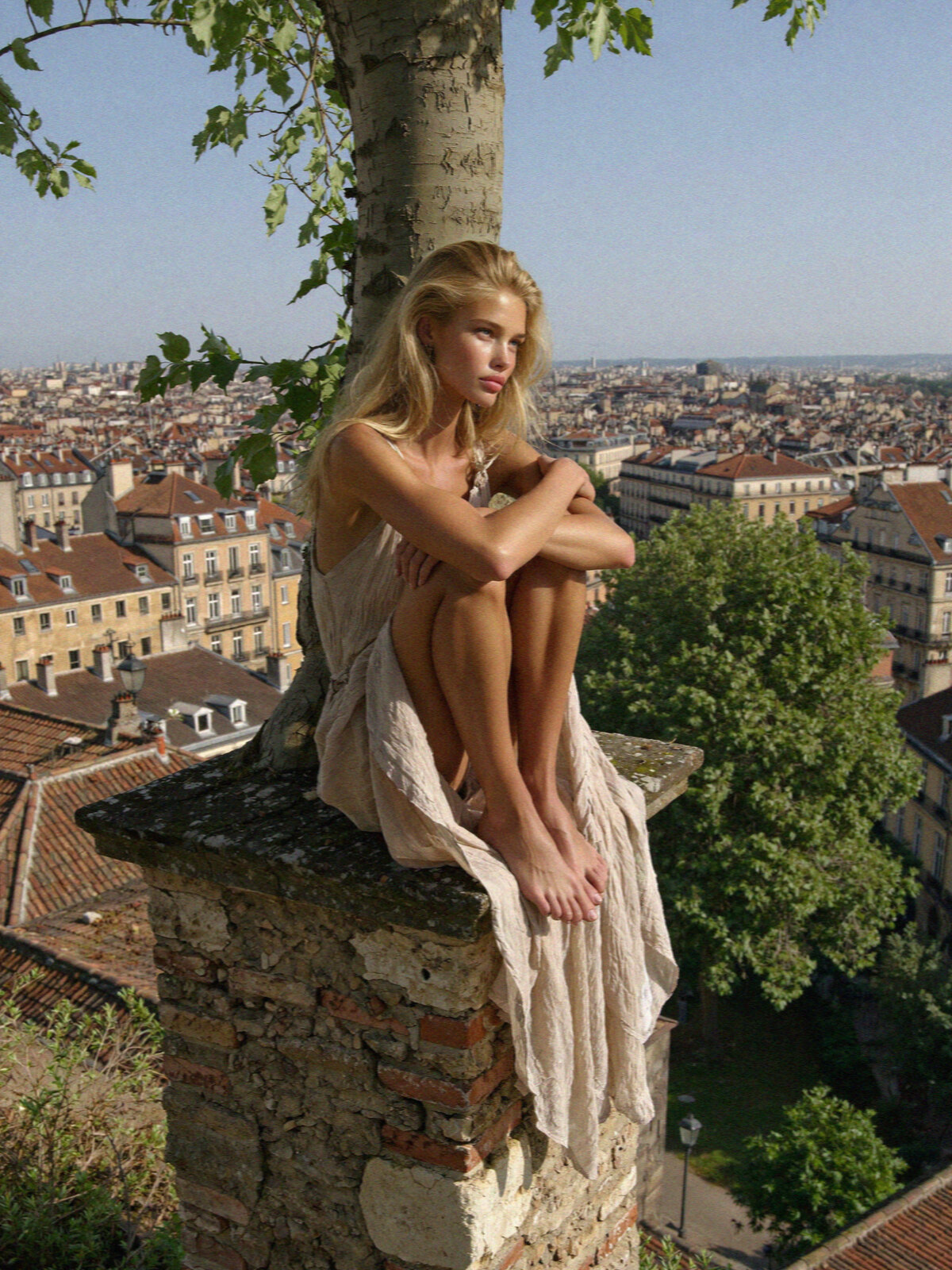
Save the top of the Guinigi Tower for a clear late afternoon. From the garden among the oaks the whole town lies open: red roofs pressed tight, the green line of the walls drawn around them, the oval of the amphitheatre suddenly legible from above, and beyond it the Apuan Alps going blue in the distance. The oaks rustle at your shoulder while you look, and it is the one climb in Lucca I would never skip. Time it for the last hour of light and the town hands you everything at once.
Frequently Asked Questions
How many days do you need in Lucca?
One full day covers the essentials: a lap of the walls, the amphitheatre, San Michele, the cathedral and one tower climb. A second day lets you slow right down, add the Puccini museum and Palazzo Pfanner, and combine Lucca with Pisa without hurry. I would always take the second day if I could.
Should I climb the Guinigi Tower or the Torre delle Ore?
If you climb only one, make it the Guinigi Tower for the oak grove on its roof, which is unique. The Torre delle Ore is taller and its view actually includes the Guinigi oaks, so it is the better photograph. Ask at the desk about a combined ticket if you want both, and check current prices and hours on the day, as they shift by season.
Is Lucca easy to visit without a car?
Very. The historic centre is walkable end to end and cars are largely kept out, so a bicycle is the fastest way around. Lucca sits on the regional rail line, with frequent trains to Pisa in about half an hour and on to Florence, and the station is a short walk from the walls.
Lucca is the gentle half of this corner of Tuscany, and it pairs beautifully with the grander drama of the Leaning Tower down the line. For how to string the two together, see the itinerary; for the tables I return to, Where to Eat; and for the light, Best Photo Spots. Everything sits together in my complete guide to Pisa and Lucca.