Two days in Pisa and Lucca is, to my mind, the most quietly rewarding pairing in this corner of Tuscany, and the itinerary below is the one I keep returning to. Pisa gives you the marble and the myth, the tower everyone has already seen a thousand times and still gasps at in person. Lucca gives you the thing you did not know you were looking for, a walled town you can loop on a bicycle in under half an hour, where the plane trees do most of the talking. The two sit barely thirty minutes apart by train, easy to fold into a single, unrushed weekend.
Why Pisa and Lucca Belong Together
People tend to give Pisa an afternoon and treat it as a photograph to be collected on the way to Florence. That is a shame, if an understandable one, because the Piazza dei Miracoli is so overwhelming that it swallows the rest of a real city whole. Lucca is the antidote. Where Pisa is grand and a little frayed at the edges, Lucca is contained and intact, ringed by Renaissance walls that were never breached and are now a park you walk or cycle on top of.
Split across two days, they balance each other beautifully. Day one is monumental and a touch chaotic, day two slow and green. You could base yourself in either town, but for a first visit I lean towards sleeping in Lucca, far lovelier to come home to after dark. I weigh the choice properly in my guide to where to stay.
Plan Your Visit to Pisa and Lucca
A few things I booked and loved. These help support the blog, at no cost to you.
- Where I stayed: search Pisa hotels
- Leaning Tower and Cathedral tickets
- Rent a car to explore the area
- Stay connected: get a travel eSIM
This section contains affiliate links. If you book through them I may earn a small commission, at no extra cost to you.
Day One: Pisa, From the Marble to the River
Morning: Piazza dei Miracoli
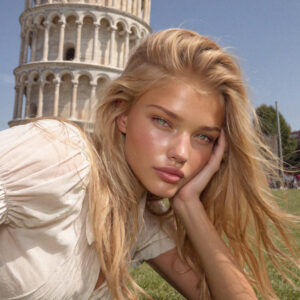
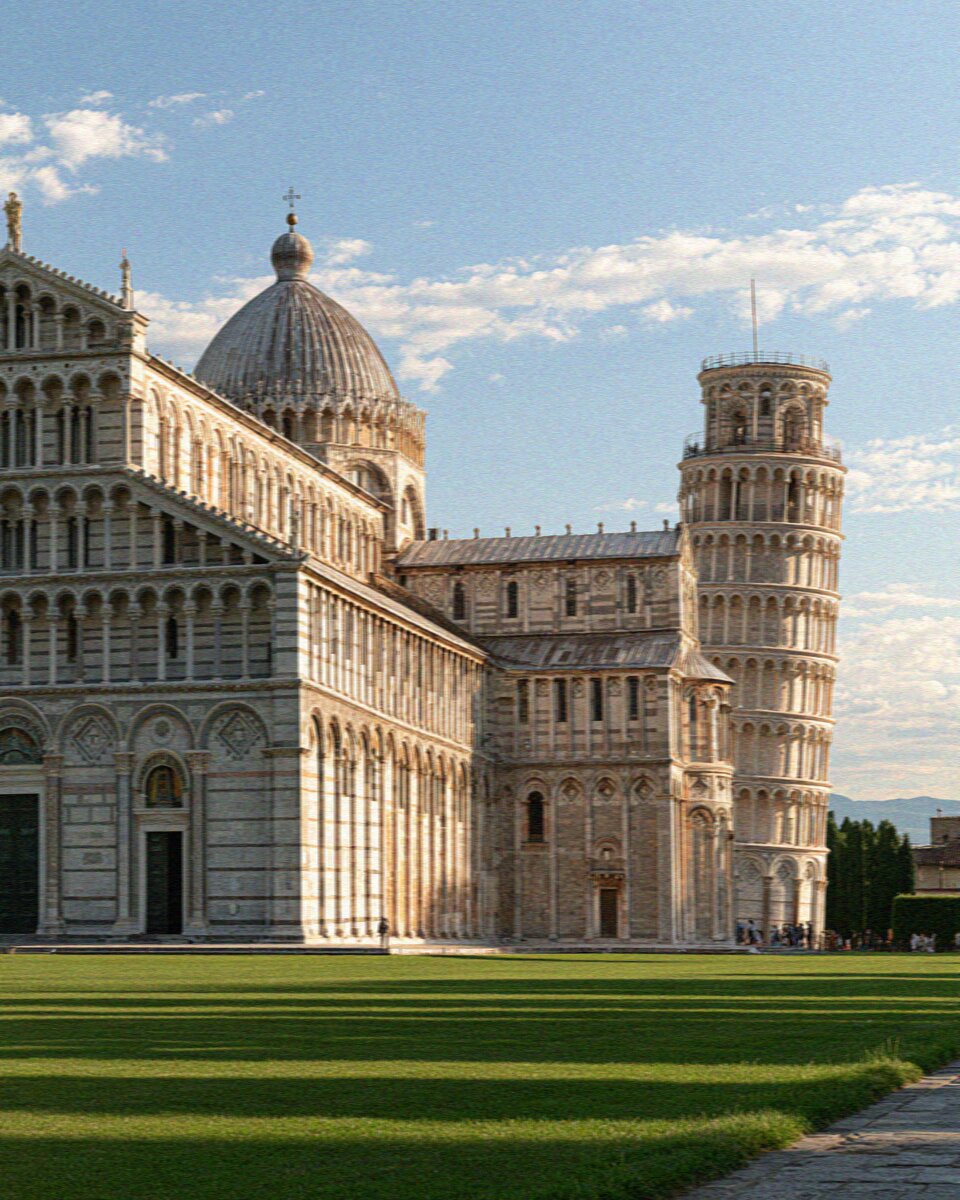
Go early. The Piazza dei Miracoli, the Field of Miracles, opens onto you all at once, and the emptier the lawn the better. The cathedral, the round baptistery and the leaning campanile sit together on the same green, and the thing the photographs never quite convey is the colour, a soft grey-white marble that turns almost gold in early light.
If you want to climb the tower, book ahead. Entry to the Leaning Tower runs to around €20 at the time of writing, which also covers the cathedral, and a combined ticket for the tower plus the other monuments is roughly €27. The cathedral itself is free, though in high season you may need a timed slot. Children under eight cannot climb the tower, and under-eighteens must be accompanied. If you would rather not queue, the lawn is free, and watching everyone mime holding the tower up is its own entertainment. I have written more about the square, and the quieter Camposanto and Sinopie Museum, in my guide to the best things to do in Pisa.
Afternoon: Borgo Stretto and the Real Pisa
Walk south from the piazza and, within a few minutes, the coach parties thin and the actual city closes around you. Borgo Stretto is the spine of it, a narrow arcaded street of shuttered storeys and pavement cafés, where students carry books rather than selfie sticks. Stop for a coffee standing at the bar, the way it is done here, and drift down towards the market square of Piazza delle Vettovaglie, where Pisa finally becomes a place rather than a monument. Give the rest of the afternoon to wandering, out to the Knights’ Square and down to Santa Maria della Spina, a Gothic jewel-box of a church perched on the riverbank.
Evening: The Arno at Sunset
Come sunset, make your way to the Arno. The river bends through the middle of Pisa lined with ochre and butter-coloured palazzi, and the low light catches their faces and the water together. Lean on the parapet of the Ponte di Mezzo and watch, then find a wine bar along the Lungarni. It is a gentler, more local Pisa than the one you met at nine in the morning, and the one that tends to stay with me.
The Train Hop to Lucca
The connection could hardly be simpler. Regionale trains run frequently between Pisa Centrale and Lucca, usually a couple an hour, and the journey takes roughly thirty minutes. The fare is modest, in the region of €4 one way at present, on a standard second-class ticket with no reservation needed. Remember to validate a paper ticket in the platform machines before you board. Both stations sit an easy walk from the historic centres, so you can travel light and leave the car behind entirely.
Day Two: Lucca, Walls and Ovals and Trees on a Tower
Cycle the Walls First
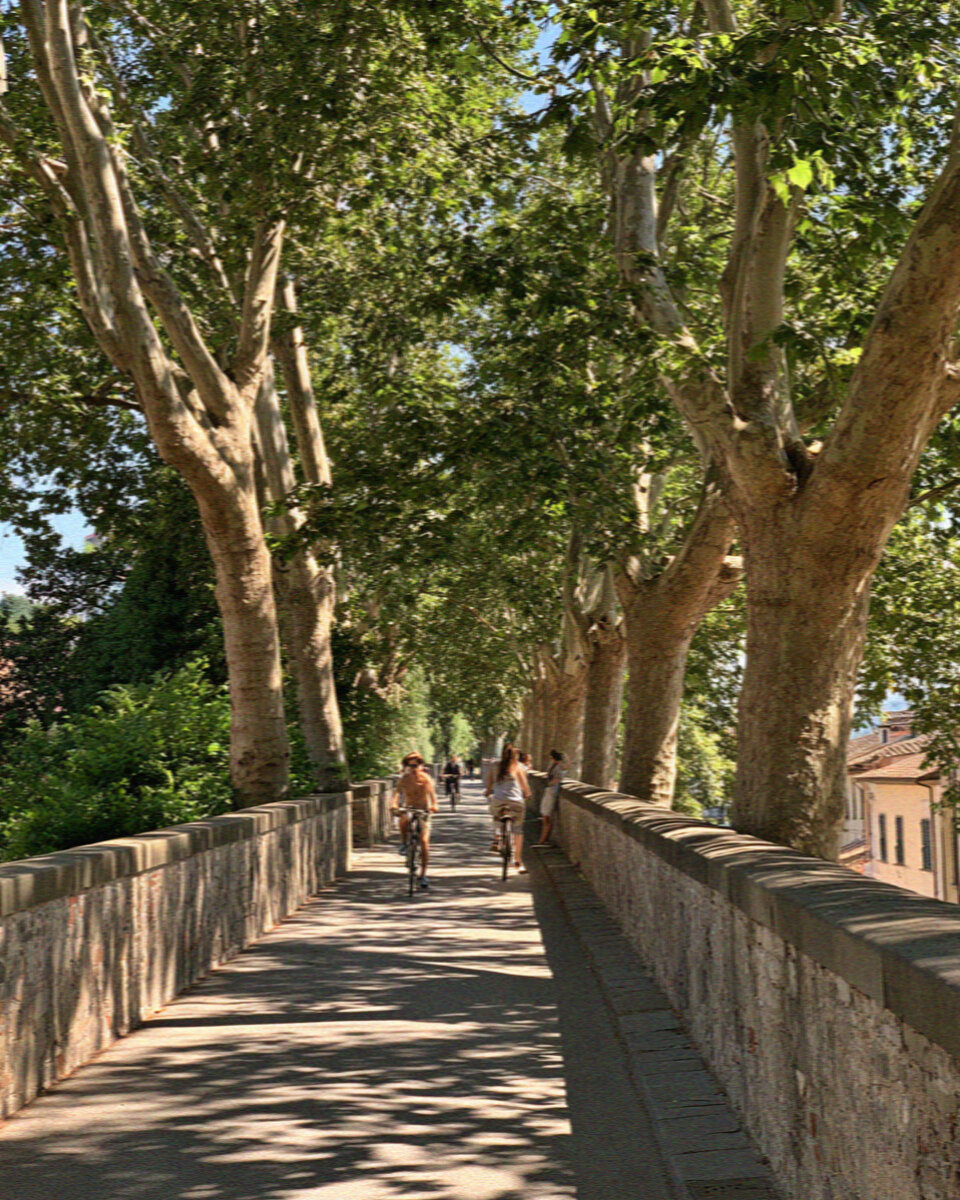
Start the day on top of the walls, before anything else. Lucca’s ramparts run a complete circuit of about 4.2 kilometres around the old town, wide enough for a tree-lined promenade, and were so well built that the town never had to fight from them. Today they are simply the loveliest public park I know, a raised green ribbon of plane trees looking down over rooftops on one side and the plain on the other.
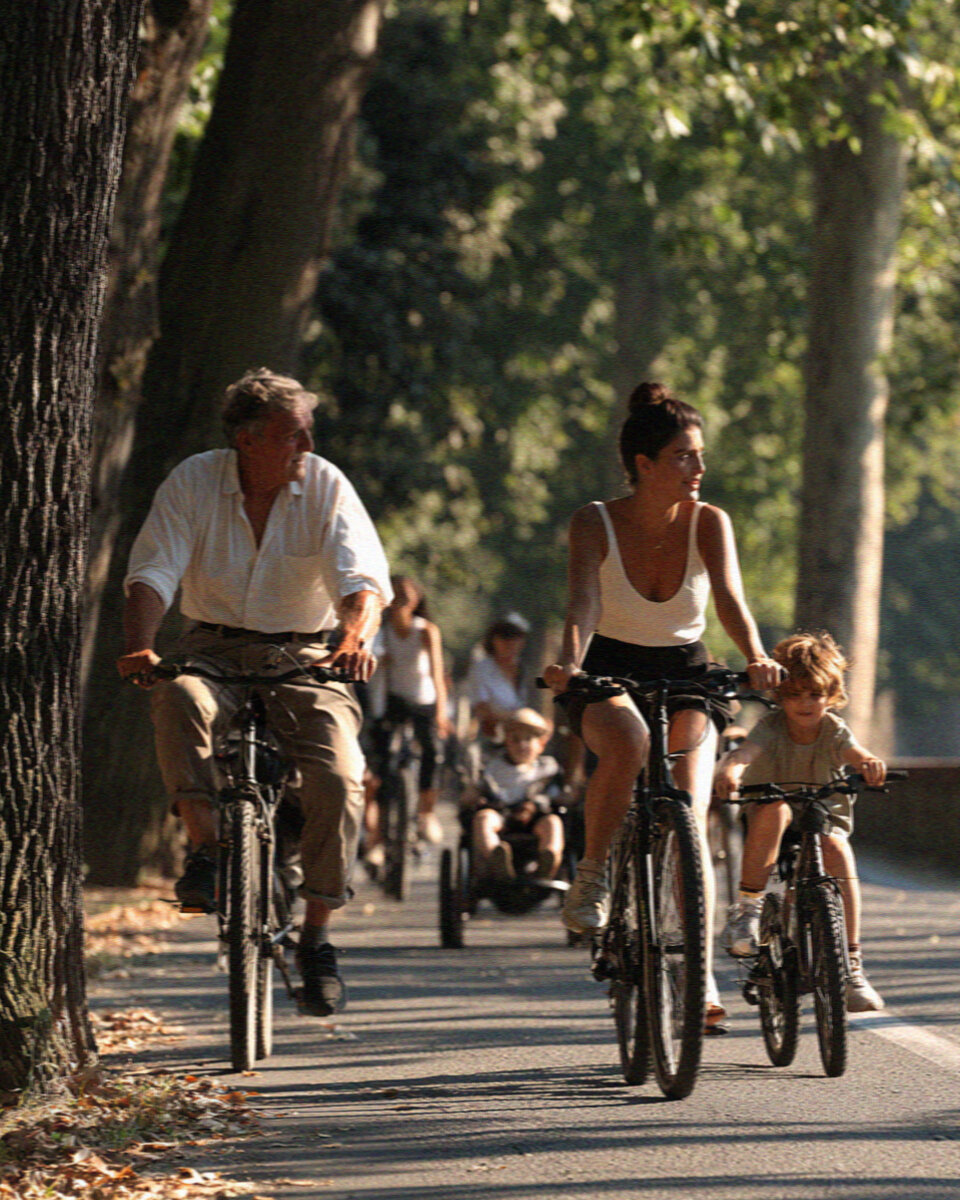
You can walk the full loop in something under an hour, but I would rent a bicycle. On two wheels the circuit takes only around twenty minutes, though the joy of it is not to hurry, to stop at each bastion and freewheel under the trees. Families do it, grandmothers do it, courting couples do it wobbling on a shared tandem. It is the most Lucchese thing you can do, and it costs almost nothing.
Piazza dell’Anfiteatro
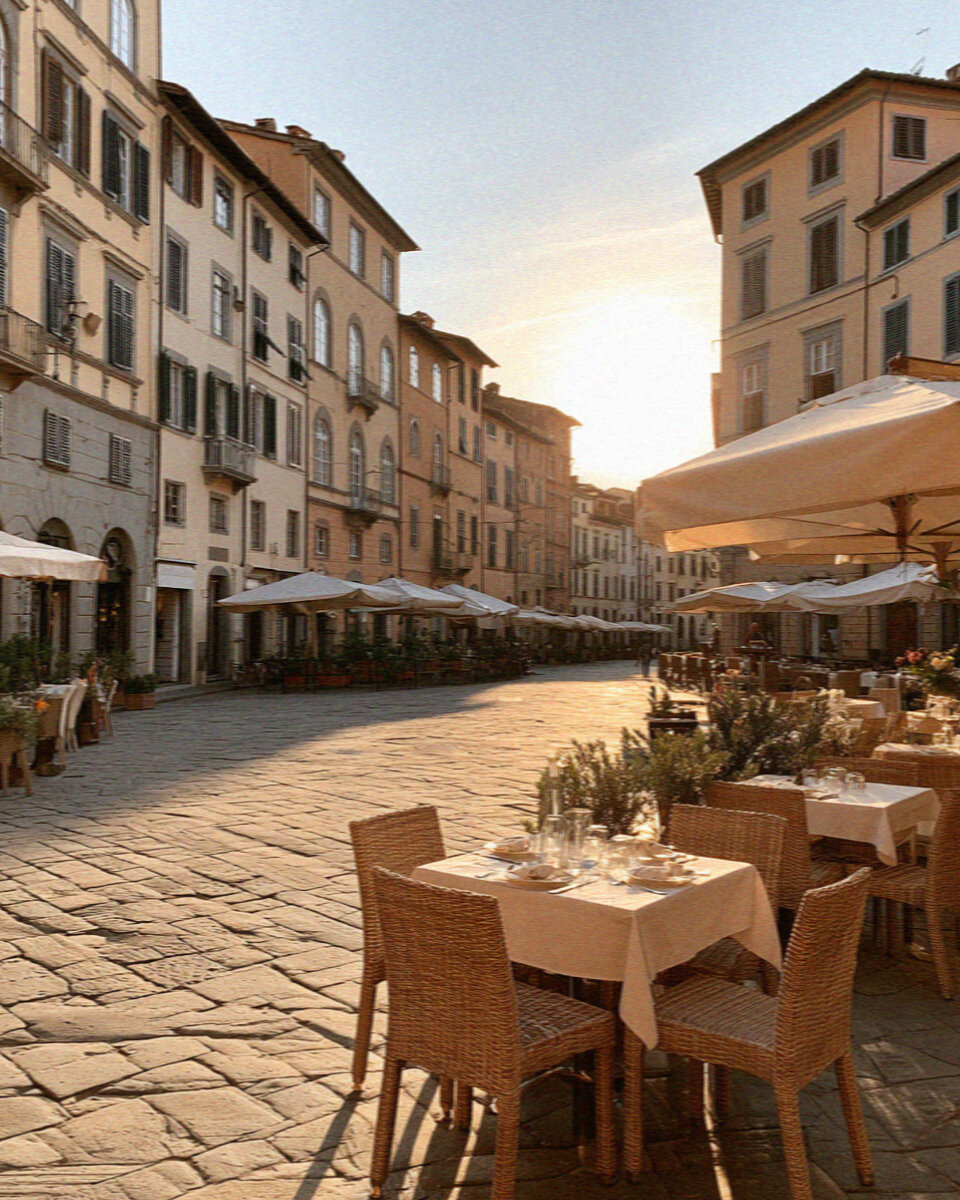
Drop down off the walls and find the Piazza dell’Anfiteatro. The name gives the secret away. This oval of pastel houses was built on the footprint of a Roman amphitheatre, the medieval town filling in the old ring seat by seat, so the shape of the arena survives in the shape of the square. You enter through low arched passages that were once the animal gates, into a perfect ellipse of café tables and washing lines. It is touristy, of course, and I do not care in the slightest. Come before the tables fill and it is quietly astonishing.
The Guinigi Tower and San Michele
A short walk away stands the Torre Guinigi, and you will spot it before you reach it, because a small grove of holm oaks grows on the roof, seven trees crowning the brick tower and rooted there for six centuries. The climb is 230 steps, and admission is only a few euros, somewhere around €5 to €6 last I checked. The view from the top, out over the terracotta town to the mountains with the oaks rustling beside you, is the one I would not skip.
Then find the church of San Michele in Foro, standing where the Roman forum once was. Its facade is the great Pisan-Romanesque showpiece of the town, tier upon tier of little columns, each one carved differently, topped by a winged statue of the Archangel Michael that seems about to launch off the gable. It is free to step inside, and gloriously calm.
Via Fillungo
Save the late afternoon for Via Fillungo, the long shopping street that threads north through the old town. It is a lovely muddle of centuries, medieval towers and Liberty-era shopfronts and old apothecary signs, the kind of street made for the passeggiata, that unhurried early-evening stroll the whole town seems to take together. There is more in my guide to the best things to do in Lucca.
Where to Eat Along the Way
In Pisa, eat away from the tower. The streets around Piazza delle Vettovaglie hide the trattorias where students and locals go, and the cecina, a warm chickpea flatbread sold by the slice, makes a perfect walking lunch. In Lucca, look for tordelli lucchesi, plump meat-filled pasta in a ragù, and buccellato, the sweet aniseed and raisin ring that every family keeps on the sideboard, with a glass of Colline Lucchesi red from the hills just outside. Book dinner rather than chance it on a Saturday, and eat around eight, once the places that fed the coach crowds have quietened down.
The One-Day Version
If you truly only have a single day, it can be done, though you will feel the compression. Take an early train and give Pisa just the morning, the Piazza dei Miracoli and a quick loop through Borgo Stretto, no tower climb. Be on a midday train to Lucca, rent a bike, ride the walls, then walk to the Piazza dell’Anfiteatro, San Michele and, if your legs allow, up the Guinigi Tower. Watch the sun go down from the ramparts and take a late train back. You will have skimmed both, but the surface here is unusually good.
Practical Tips
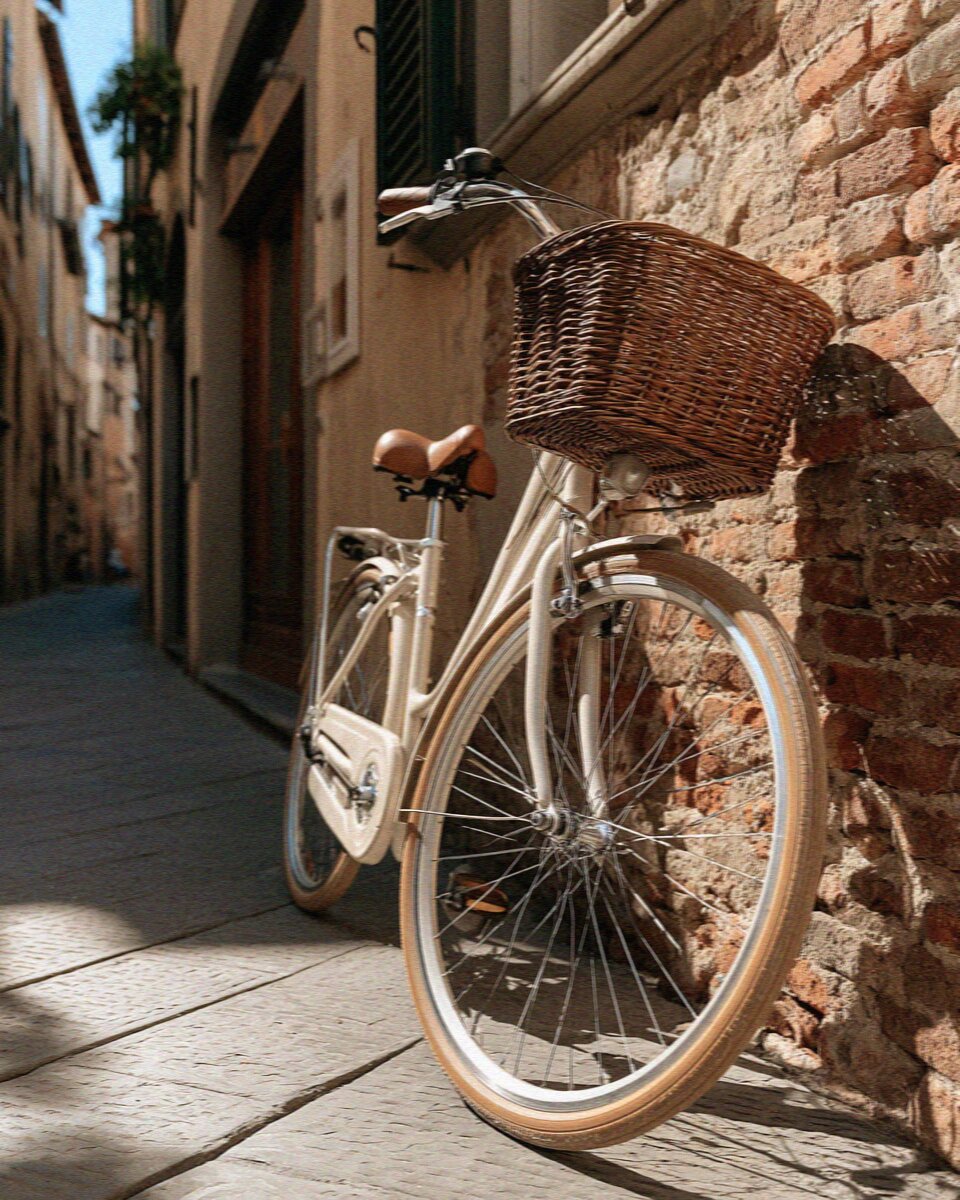
Bike rental in Lucca is cheap and plentiful, with shops clustered just inside the main gates. Reckon on roughly €3 to €4 an hour for a standard bike, or in the region of €11 to €15 for a full day, with tandems and electric bikes for a little more. There is rarely any need to book ahead.
For Pisa, book the Leaning Tower online if you intend to climb, especially between spring and autumn, when the timed slots fill and the queues run long. Wear shoes you can climb 230 steps in, keep small change for the ticket machines, and validate every paper train ticket before boarding. Both towns are flat and walkable, so leave the car outside the walls, or do the whole trip by train.
Frequently Asked Questions
Is two days enough for Pisa and Lucca?
Two days is comfortable and, I would say, close to ideal. It gives Pisa a proper day rather than a hurried stop, and it lets Lucca unfold at its own gentle pace, which is really the only way to enjoy it. You will not see every church, but you will see both towns properly.
How do you get from Pisa to Lucca?
By regional train. Services run frequently from Pisa Centrale to Lucca and take around thirty minutes, for a fare of roughly €4 one way, no reservation required. Both stations are a short walk from the centres, so the train is faster and far less stressful than driving and parking.
Should I stay in Pisa or Lucca?
For a first visit I would sleep in Lucca. It is prettier and calmer after dark, and there is real pleasure in having the walls and empty morning streets to yourself before the day-trippers arrive. Pisa makes sense if you are flying in or out of its airport. My guide to where to stay in Pisa and Lucca weighs both.
This itinerary is one piece of a larger picture. For everything else, start with my complete guide to Pisa and Lucca, then read on through the best things to do in Pisa, the best things to do in Lucca, and my thoughts on where to stay. Two towns, two days, a thirty-minute train between them. I cannot think of a better small journey in Tuscany.