The famous thing about the ancient theatre in Taormina is not the theatre. It is the hole in it.
The stage wall has fallen, and through the gap where it used to stand solid you get the Ionian sea on one side and Mount Etna on the other, held inside the same frame, with the ruin as a proscenium around them. Whoever picked this hillside two and a half thousand years ago picked it for exactly that, and then built a wall in front of it, and then time took the wall away and improved the design.
Here is what it is, what to pay, and when to go. The wider planning is in my complete guide to Taormina.
What you are actually looking at
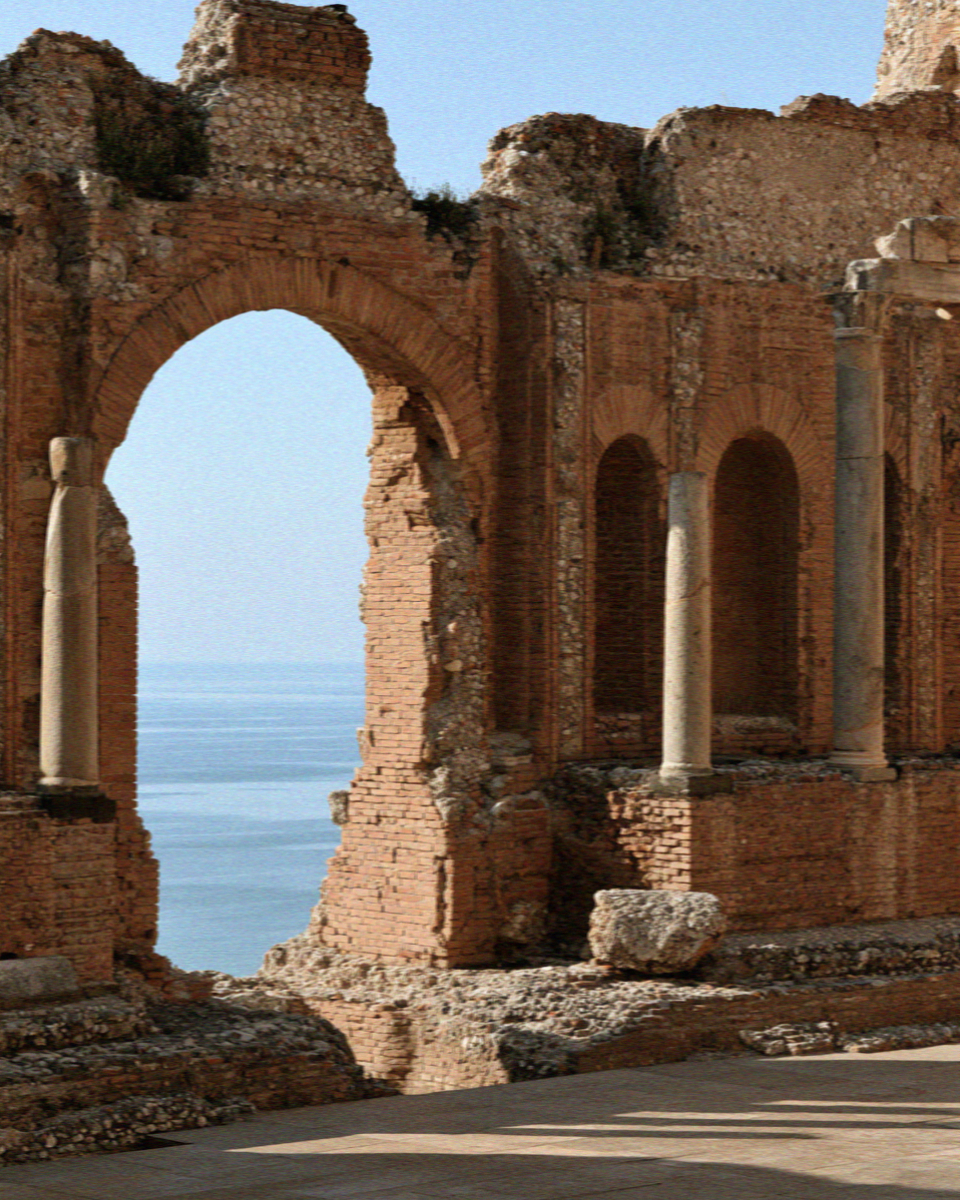
It is the second largest ancient theatre in Sicily, cut into the slope of Monte Tauro.
The Greeks made it, in the third century before Christ, carving the seating bowl straight out of the hillside the way they always did, because the hill does the engineering for you. The Romans then rebuilt it substantially, in brick, and adapted it for their own kind of spectacle.
That layering is what you are walking through. The curve of the seating is Greek thinking. The tall red brick of the stage wall, with its broken arches and its re-erected columns, is Roman. The two do not quite agree with each other, and that is more interesting than a single clean period would be.
Stand at the bottom, in the orchestra, and look back up. Then climb to the top row and look the other way.
Greek bones, Roman rebuilding

The seating is the part I found myself photographing.
Limestone tiers, worn smooth and dished in the middle, grass and small plants growing out of every joint. You can see where people sat, in the same way you can see it on a worn stone stair, which is to say precisely.
The acoustics still work. If someone stands in the orchestra and speaks at a normal volume you will hear them from most of the bowl, which is not a party trick but the entire point of the shape.
There is very little shade anywhere in it. Remember that in July.
What it costs, and what not to pay
Ten euros full price. Five euros for EU citizens aged eighteen to twenty-five. Free for under eighteens.
You will see it advertised online at twelve to fourteen euros. That is a reseller adding an audioguide and a booking fee to the same ten euro ticket. The site is small and well signed and the audioguide is not necessary. Buy at the gate.
It is managed as part of the archaeological park that also covers the excavations down at Naxos, so combined tickets exist if you are going to both.
There is no need to book ahead. There is no timed entry. Turn up.
When to go, hour by hour
First thing, at opening, is best. Roughly nine in the morning, before the coach groups and before the sun gets on the stone.
Late afternoon is the second best, when the light goes long and warm across the tiers and the sea turns metallic.
The middle of a summer day is the worst. It is a stone bowl facing the sun with no shade and several hundred people in it, and you will spend the visit looking for somewhere to stand rather than looking at anything.
Opening is roughly nine to seven from April to October, last entry half past six, and nine to five from November to March, last entry half past four. Check before you go, because those hours shift.
Going in the evening

On selected dates through the year the theatre opens at night, sometimes until midnight with last entry at half past ten.
It is worth building a day around. Lit from below, the brick goes warm and the arches turn into silhouettes, the sea behind is black, and the volcano is a shape rather than a view. The crowd is a fraction of the daytime one.
Dates are published by the archaeological park and they are not every night, so look them up rather than turning up hopefully.
It is still a working theatre
This is the part people forget. It is not only a ruin.
In summer the theatre hosts a concert and film programme, and the Taormina Film Festival uses it, which means the seats you were photographing in the morning have several thousand people in them by evening.
Two consequences. Buying a ticket to a performance is a genuinely extraordinary way to see the place, with the sea behind the stage and the volcano lit by the last of the sun. And during setup or an event, parts of the site can be closed to ordinary visitors, with scaffolding and staging in the frame. If your visit is timed around photographs, check the programme first.
Practical notes
Wear proper shoes. The tiers are uneven, worn round at the edges and slippery when damp.
Take water and a hat in summer. There is no shade in the bowl and no fountain inside.
Allow an hour. Forty minutes if you are moving briskly, longer if you sit down at the top and stop trying to leave, which I recommend.
Come out and turn right for the terrace views back at the town, which are free and nearly as good as what you just paid for.
Read also: the best things to do in Taormina, the best photo spots in Taormina, and my complete guide to Taormina.
Frequently Asked Questions
How much does the Greek theatre in Taormina cost?
Ten euros full price, five euros for EU citizens aged eighteen to twenty-five, and free for under eighteens. Buy at the gate. Online resellers charge twelve to fourteen euros because they bundle an audioguide and a booking fee onto the same ticket.
Is the theatre in Taormina Greek or Roman?
Both. The Greeks cut the seating bowl into the hillside in the third century BC, and the Romans later rebuilt it substantially in brick, including the tall stage wall with its arches. What you walk through is two periods layered on each other.
What is the best time of day to visit the Taormina theatre?
First thing at opening, around nine in the morning, before the coach groups and before the sun is on the stone. Late afternoon is the next best for warm light on the tiers. Avoid the middle of a summer day, as the bowl has no shade at all.
Do you need to book tickets for the Taormina Greek theatre?
No. There is no timed entry and no need to book. Turn up and buy at the gate. The exception is a performance during the summer concert and film season, which is ticketed separately.
Can you visit the theatre at night?
On selected dates the site opens in the evening, sometimes to midnight with last entry at half past ten. The dates are published by the archaeological park and it is not every night, so check rather than turning up hopefully. Lit after dark it is a very different place and far less crowded.