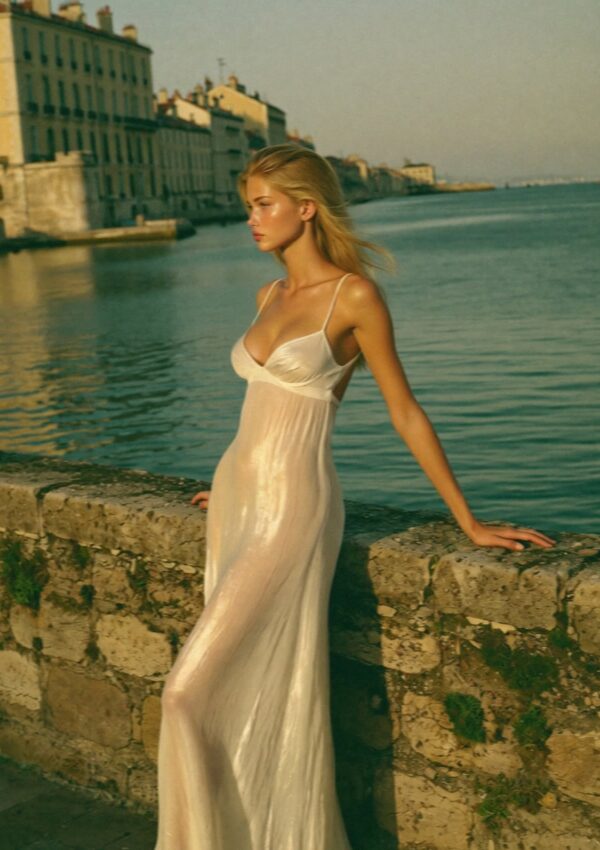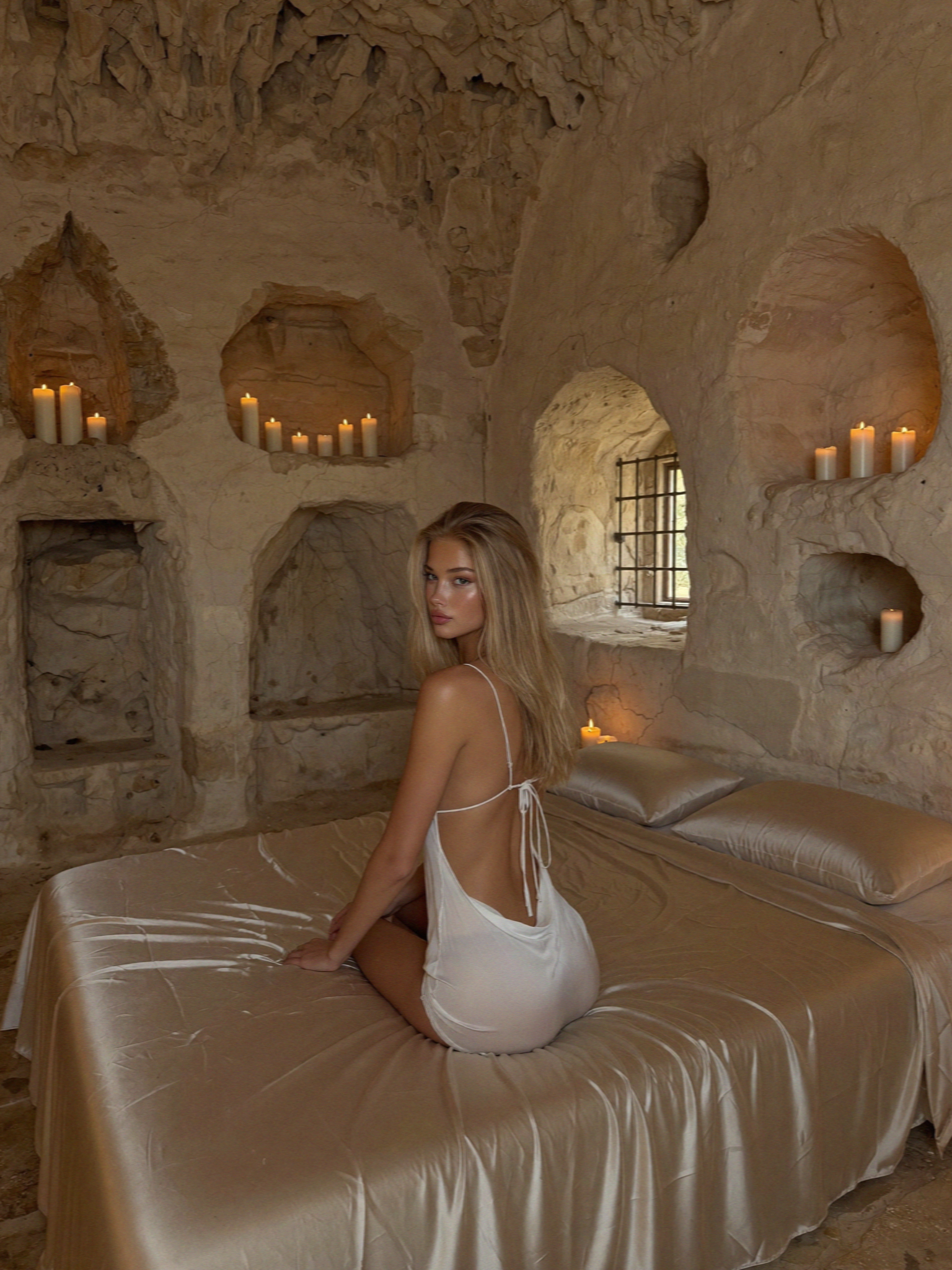
I am sleeping in a room that somebody was made to leave.
Not this room exactly. I have no idea who was in this one, and nobody offered to tell me, and I did not ask because I could not work out how to ask it without it sounding like a tour. But somebody was. In 1952 a law was passed and fifteen thousand people were moved out of these caves and up onto the plateau into new housing with windows and taps, and the doors down here were sealed, and for thirty years this was a hollow town underneath a modern one.
Now there are candles in the wall niches and a linen bed and I slept extremely well.
The practical version of Matera, the tickets and the trains and where to eat, is in my complete guide to Matera. This is not that.
There is no window. That is the first thing. You cannot put a window in a room that has forty metres of rock above it, so what you get instead is a door, and at night when the door is shut the dark is total in a way I have not experienced anywhere else. Not dim. Absent. I put my hand up in front of my face on the first night, the way everybody does, and there was nothing there.
The second thing is the silence. Stone does not carry sound. In a hotel you hear the building; here you hear your own ears.
I went out at eleven because I could not settle.
The town at night is lit from inside itself. Because the houses are stacked, the light does not run along a street, it climbs a wall, small warm openings going up and up in what is essentially a cliff, and everything between them is black rock. From a terrace you are not looking at a view. You are looking at something more like a hive with the lights on.
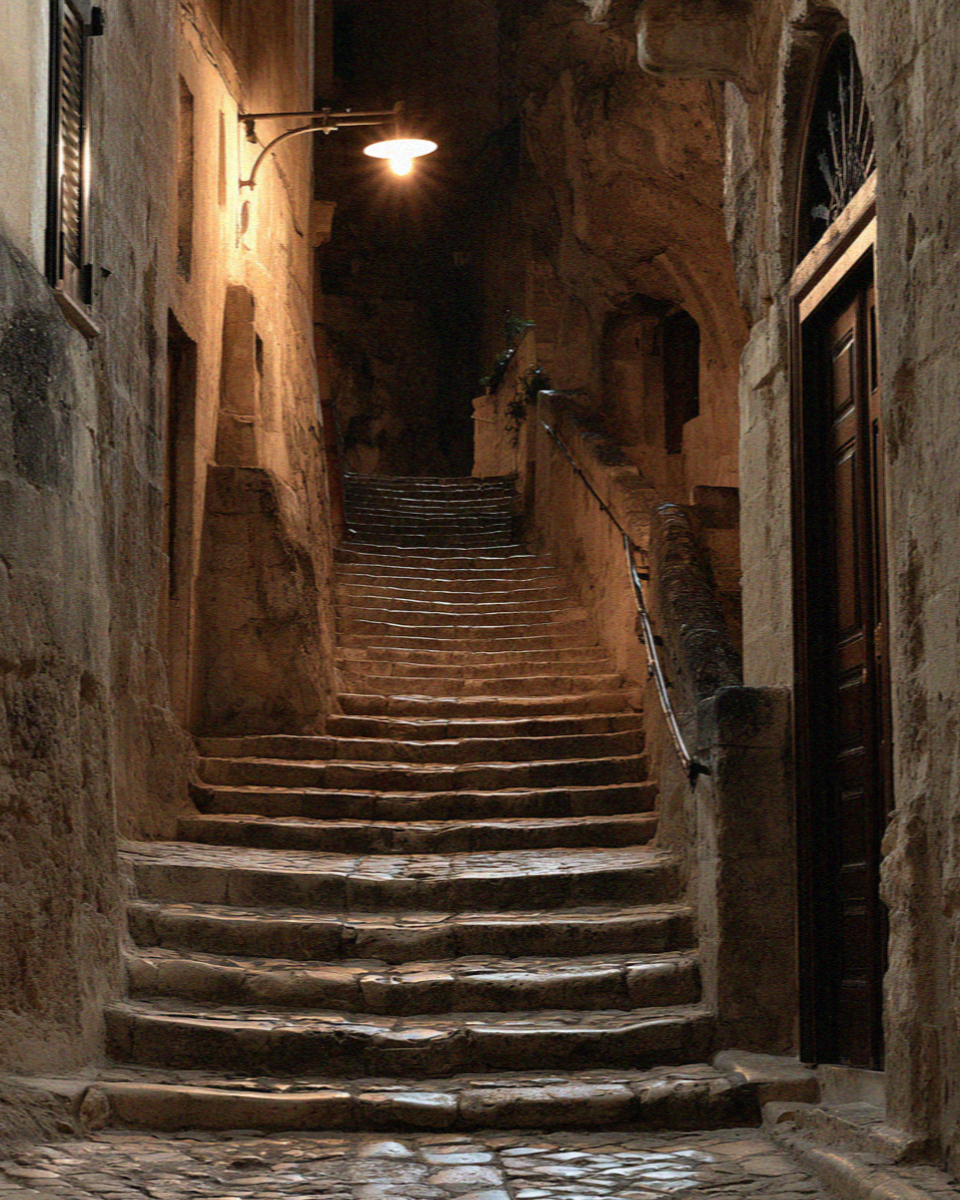
The steps are the thing I keep thinking about.
They are cut, not laid. Somebody took them out of the rock with hand tools, one at a time, and then several hundred years of feet wore each one into a shallow dish in the middle. You can see exactly where people walked. Not roughly. Exactly, to within about the width of a shoe, because everybody who ever went up to that door put their foot in the same place.
I sat on a set of them for a while and did the arithmetic badly. If a family lived in one of these rooms for two hundred years, and somebody went up and down four times a day, that is nearly three hundred thousand journeys on eleven steps. The dish in the stone is that. It is not damage. It is a record.
My grandmother has a stone house in the south of France with fields around it and goats in them, and I grew up understanding that the animals were part of the household in a way people from cities find odd.
I did not understand it properly until I stood in a cave house here in the afternoon and saw the recess along the wall where the mule slept, inside the room, three feet from the bed. It was not sentiment. The animal was warmth. It was also the entire economy of the family, so you did not leave it outside where it could be stolen, any more than you would leave the money outside.
Six people, sometimes ten, in one room, with the mule. The bed up high because the space beneath it was storage. A hole in the floor for the water. And the door open all day because the door was the window.
It is very hard to walk out of that room and back into a lane of restaurants and be normal about it.
The thing I cannot resolve, and I have been turning it over for three days, is that I am pleased to be here.
The clearance was right. It was not vandalism, it was malaria and infant mortality and a national scandal, and a writer exiled here in the thirties made the country look at it, and the country moved everybody out. Then it turned out the rooms were not the problem. Plumbing was the problem. Light was the problem. With water and drains and electricity, a room cut into rock is cool in August, warm in February, silent, and rather beautiful.
So the town came back, slowly, from the eighties on. Three thousand people live down here again. And the same room that was condemned as unfit is now the one I am paying to sleep in, and the difference between those two facts is about four utilities and seventy years.
I do not think there is anything to feel guilty about in that. I think it is just unusually visible here, when normally it is not visible at all.

I took a glass of Aglianico out onto the ledge outside the door at about half past midnight and sat with my back against the rock.
Somebody two tiers down was watching television. Somebody else was having the last part of an argument, the tired part, where both people have stopped meaning it. A dog. Then a long stretch of nothing at all.

And below all of it the gorge, which at night is not dark so much as missing. The town stops at a line and after that there is no information. No lights on the far side, no shape, nothing to focus on. You know there is a river down there and a plateau beyond it with more caves in it, older than these, but at one in the morning it is simply an absence with a lit town standing at the edge of it.
That is what I will remember about Matera. Not the famous view from across the ravine, which is magnificent and which I walked to and photographed like everybody else.
The other thing. The lit wall with the black nothing beside it, and behind every one of those small warm openings a room that somebody was once carried out of.
V.