I have come back to the Dolomites in every season, and I still cannot decide whether they are best met on foot, from the seat of a slow cable car, or through a windscreen on a high pass at dawn. The honest answer is that the range rewards all three, and the pleasure of a fortnight here lies in mixing them: a long walk one day, a lazy rifugio lunch the next, a drive over the passes on the third while your legs recover. What follows is the shortlist I give friends who ask me what they must not miss, with the practical detail I wish someone had given me, including the access rules that have tightened considerably by 2026. For the wider picture, see Victoria’s complete guide to the Dolomites.
What to book before you come
This depends entirely on whether you are staying up here or coming for a day. If you are staying, hire a car and book nothing: the trails are free, the lifts you buy on the morning, and the whole point is going where you feel like going. If you are coming from Venice or Lake Garda for one day, do not attempt it on your own. The driving is four hours each way on mountain roads and Lake Braies has a summer access permit system that turns people around at the barrier.
- The Venice day trip, Cortina and two lakes. 4.9 from over a thousand people, and the highest rated of the lot. A very long day, but it puts you at Misurina and Cortina without you driving a mountain pass on no sleep.
- Venice to Lake Braies by minivan. 4.9. Smaller vehicle, and it handles the Braies access question for you, which in July and August is the whole problem.
- The best of the Dolomites from Venice. 4.8 from nearly nine hundred people. The broadest itinerary of the three if you want the range rather than the lakes.
- From Lake Garda, a full day. The one to take if you are based on Garda rather than in Venice. 4.6 from nearly seven hundred people.
Every trail, every viewpoint and every one of the walks on this page is free. The cable cars are not, and you pay for those at the bottom station on the day.
Walk the Tre Cime di Lavaredo loop
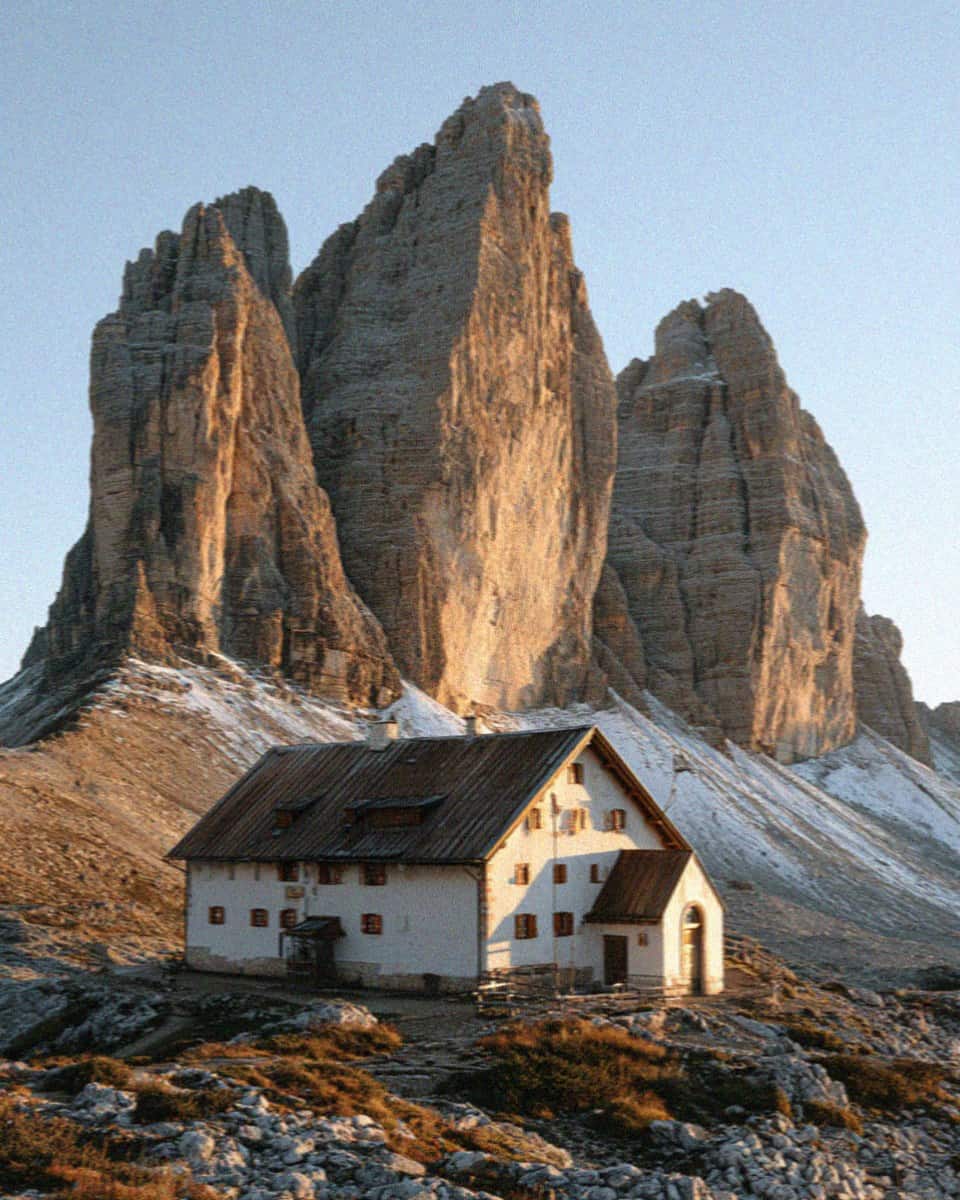
If you do only one walk, make it this one. The circuit around the three great towers is roughly ten kilometres, mostly gentle, and takes the average walker three to four hours with stops. It is not a secret, and you will not have it to yourself, but the scale of the place absorbs the crowds, and the back side, where Rifugio Locatelli frames the towers head on, is one of the most satisfying views in the Alps.
Be warned about access. The toll road up from Misurina to Rifugio Auronzo now costs around €40 for the day and, crucially, requires a timed online booking in high season; turning up on spec no longer works. Book the earliest slot you can bear, park at Auronzo, and walk anticlockwise so the best light is ahead of you. I go into route detail in my guide to the best hikes and via ferrata.
Plan Your Visit to the Dolomites
A few things I booked and loved. These help support the blog, at no cost to you.
- Where I stayed: search Dolomites hotels
- Rent a car to explore the area
- Stay connected: get a travel eSIM
This section contains affiliate links. If you book through them I may earn a small commission, at no extra cost to you.
Lago di Braies, early or not at all
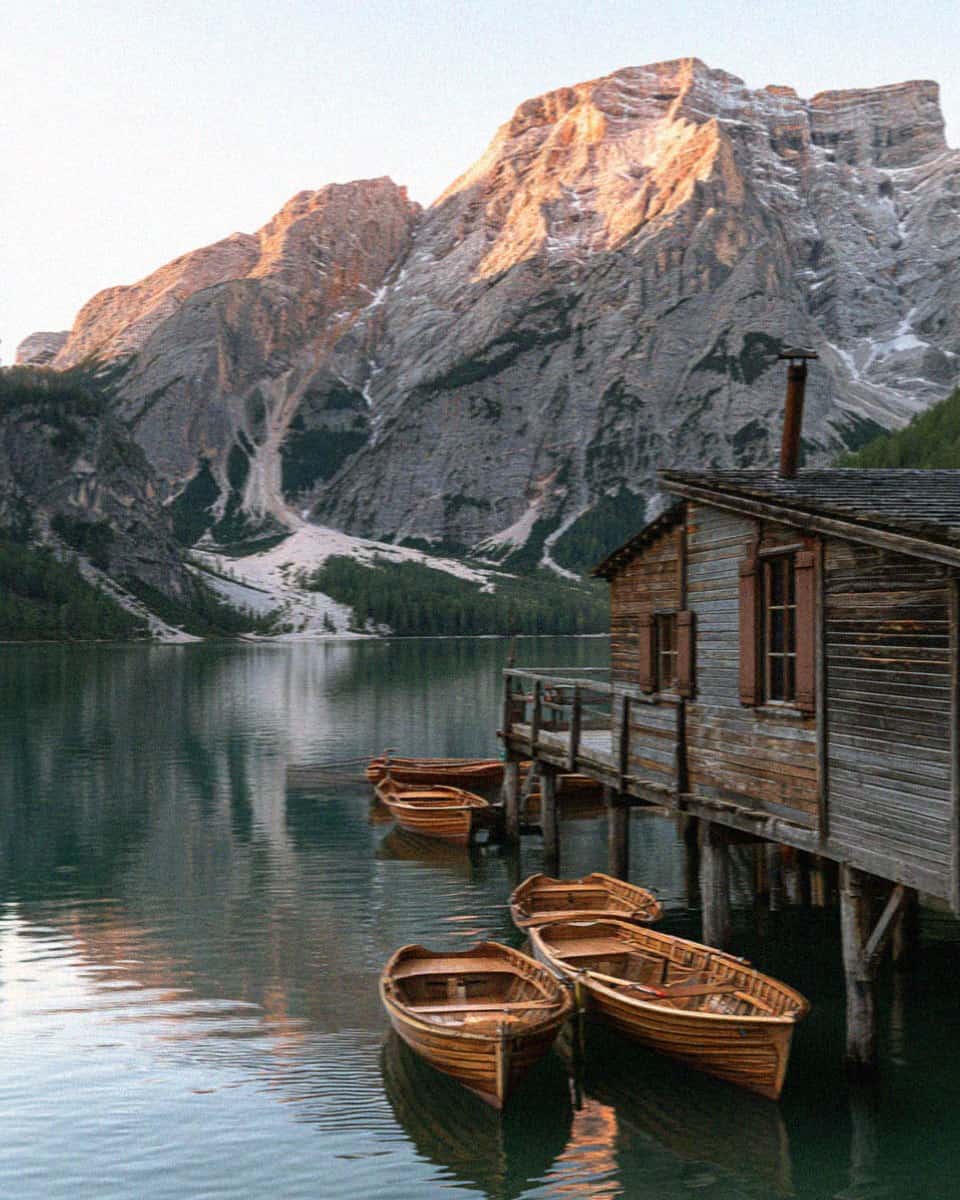
The emerald lake with its wooden boathouse is the most photographed water in the Dolomites, and its popularity has consequences. From 1 July to 15 September the access road is closed to cars between roughly 9am and 4pm unless you have a reservation, so most visitors arrive by shuttle bus. My advice is unchanged and unfashionable: come at first light, walk the flat loop around the shore in under an hour and a half, hire one of the hand rowed boats when the hut opens, and be leaving as the coaches arrive. By ten the magic has thinned considerably.
The Seceda ridgeline
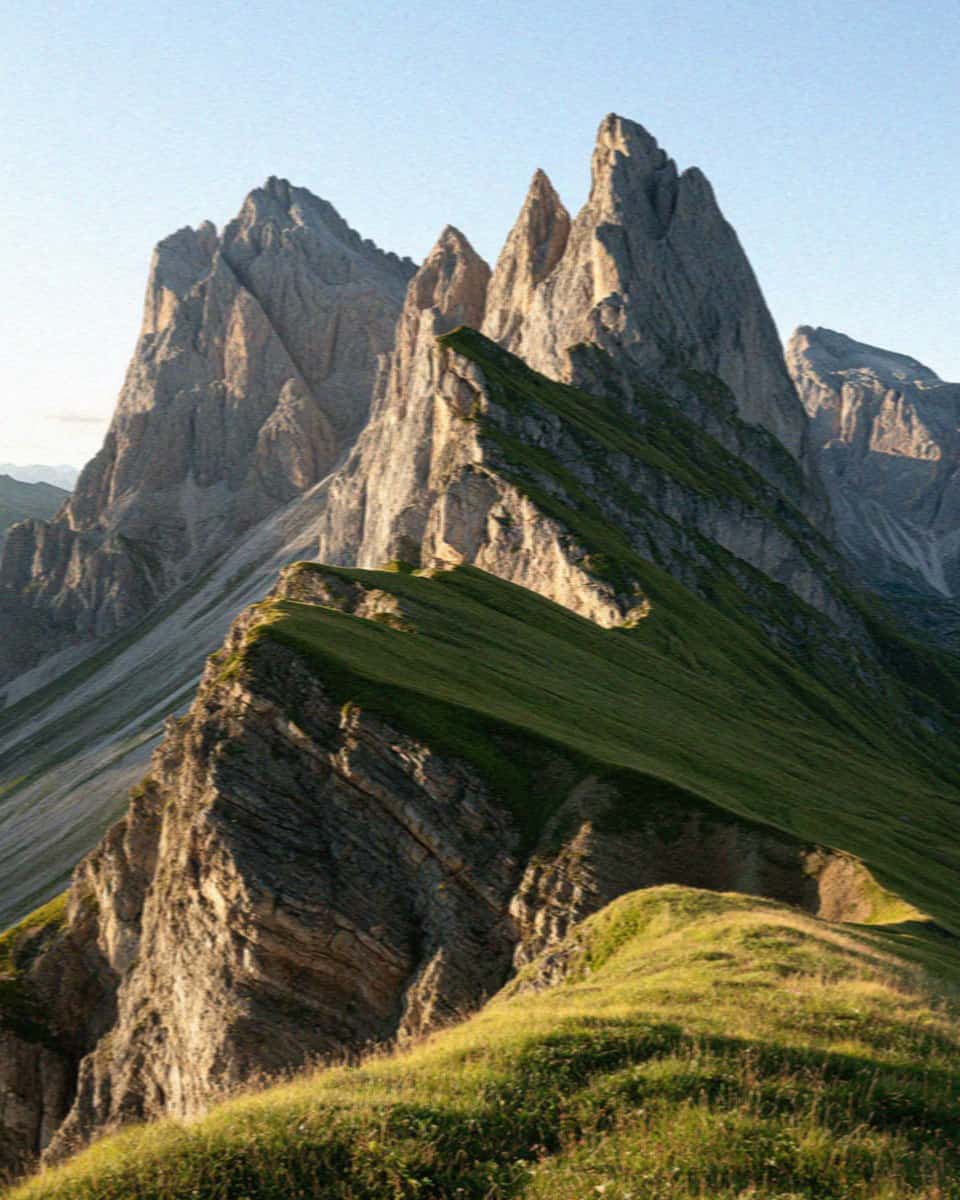
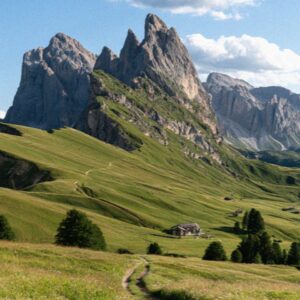
Seceda is the tilted green ridge that looks, from the top, as though the earth has been sliced with a knife and set on edge. You reach it by the cable car from Ortisei in Val Gardena, and I will not pretend it is cheap: a return ticket is around €74 in 2026, now sold as a pre-booked timed slot, and there is a small trail fee of a few euros on the ridge itself. It is worth it. From the top station a short, easy walk brings you to the viewpoint where the pinnacles of the Fermeda towers fall away beneath you. Go up on the first lift of the morning, before the cloud builds against the ridge, which it reliably does by early afternoon. This is one of my favourite frames anywhere, and I say more about it in the best photo spots in the Dolomites.
The Alpe di Siusi, Europe’s high meadow
The Alpe di Siusi, or Seiser Alm, is the largest high alpine meadow in Europe, a vast rolling pasture dotted with hay barns and backed by the Sassolungo and Sciliar massifs. It is a gentler landscape than the jagged towers, and all the better for a slow day. The access road is closed to cars from about 9am to 5pm, so either arrive before nine and pay around €30 a day to park at Compatsch, or, far simpler, take the cable car up from the valley and walk out across the meadow with a picnic. The paths are broad and forgiving, the gradients kind, and the light in the late afternoon, once the day trippers have gone, is exceptional.
Drive the Sellaronda and the great passes
The four passes that ring the Sella massif, Gardena, Sella, Pordoi and Campolongo, form the celebrated Sellaronda loop, and driving the full circuit is a day’s outing in itself, perhaps 50 kilometres of switchbacks with a rifugio at nearly every col. Cyclists adore it, so give them room, and note that Passo Gardena closes to motor traffic from 1 September, part of the range’s slow move to calm its most loved roads.
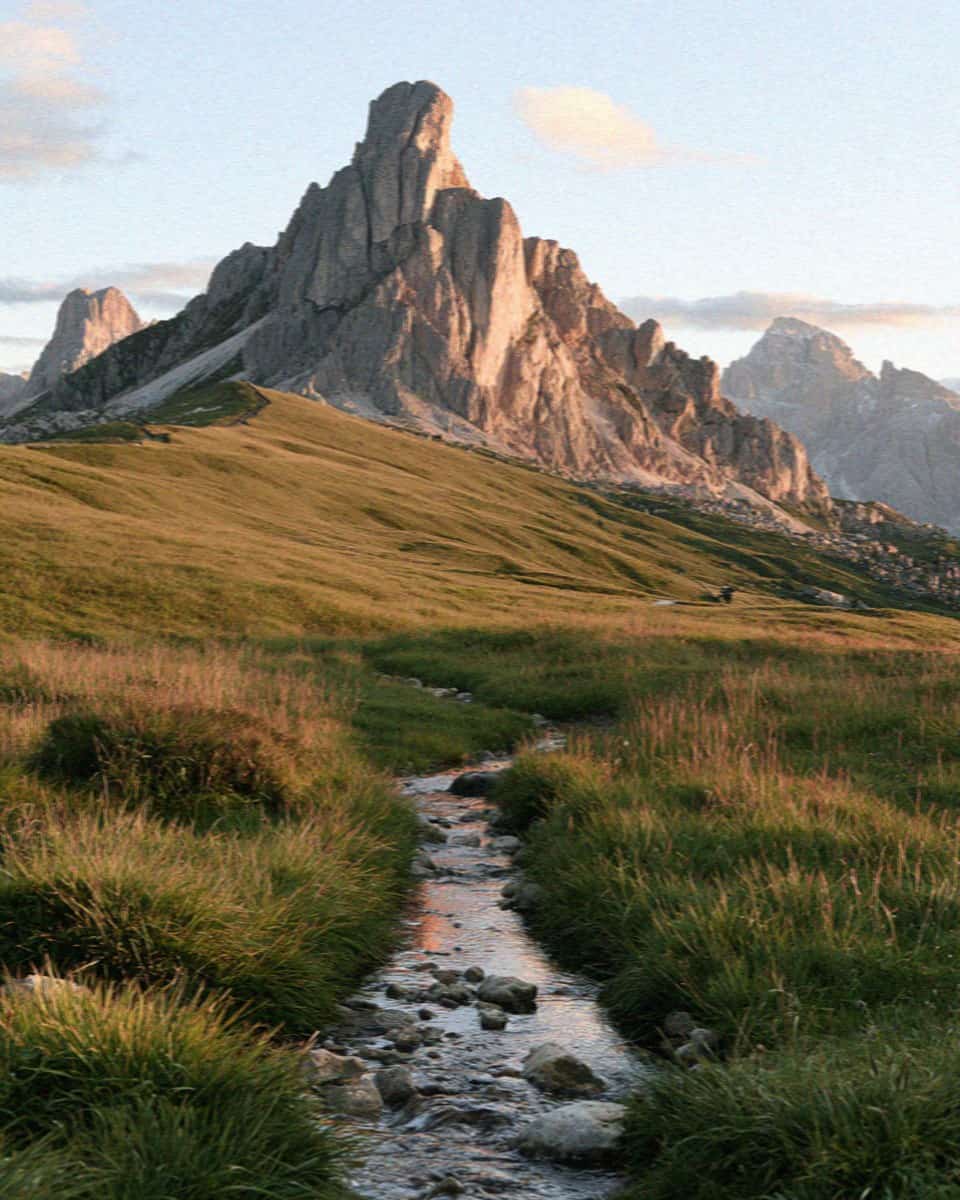
If I had to choose one pass for its sheer drama, it would be Passo Giau, whose hairpins unspool beneath the fang of Ra Gusela and which is glorious at sunrise. Passo Falzarego, linking Cortina with the Val Badia, is the other essential, not least for what waits at the top of it. Drive these early; by late morning in August the laybys fill and the mood changes.
Lagazuoi and its First World War tunnels
From the summit of Passo Falzarego a cable car climbs to Rifugio Lagazuoi at around 2,750 metres, and the terrace there commands one of the great panoramas of the range, a sea of peaks with the Marmolada glinting to the south. But Lagazuoi is more than a view. During the First World War, Italian and Austro-Hungarian troops tunnelled through this mountain, and you can descend on foot through the restored galleries, head torch on, emerging back near the pass after a steep but unforgettable hour or so. It is history you feel in your knees and your palms, and it lingers.
Cinque Torri, an open-air war museum
A short way along from Falzarego, a chairlift lifts you towards the Cinque Torri, five stumpy towers beloved of climbers and ringed by restored trenches, gun emplacements and walkways from the same war. Wandering the open-air museum takes an easy hour or two on nearly level ground, and the rifugios here, Averau and Scoiattoli, are among the best placed lunch stops in the Dolomites. It is one of the range’s rare sights that combines gentle walking, deep history and a proper plate of food.
The church view in Val di Funes
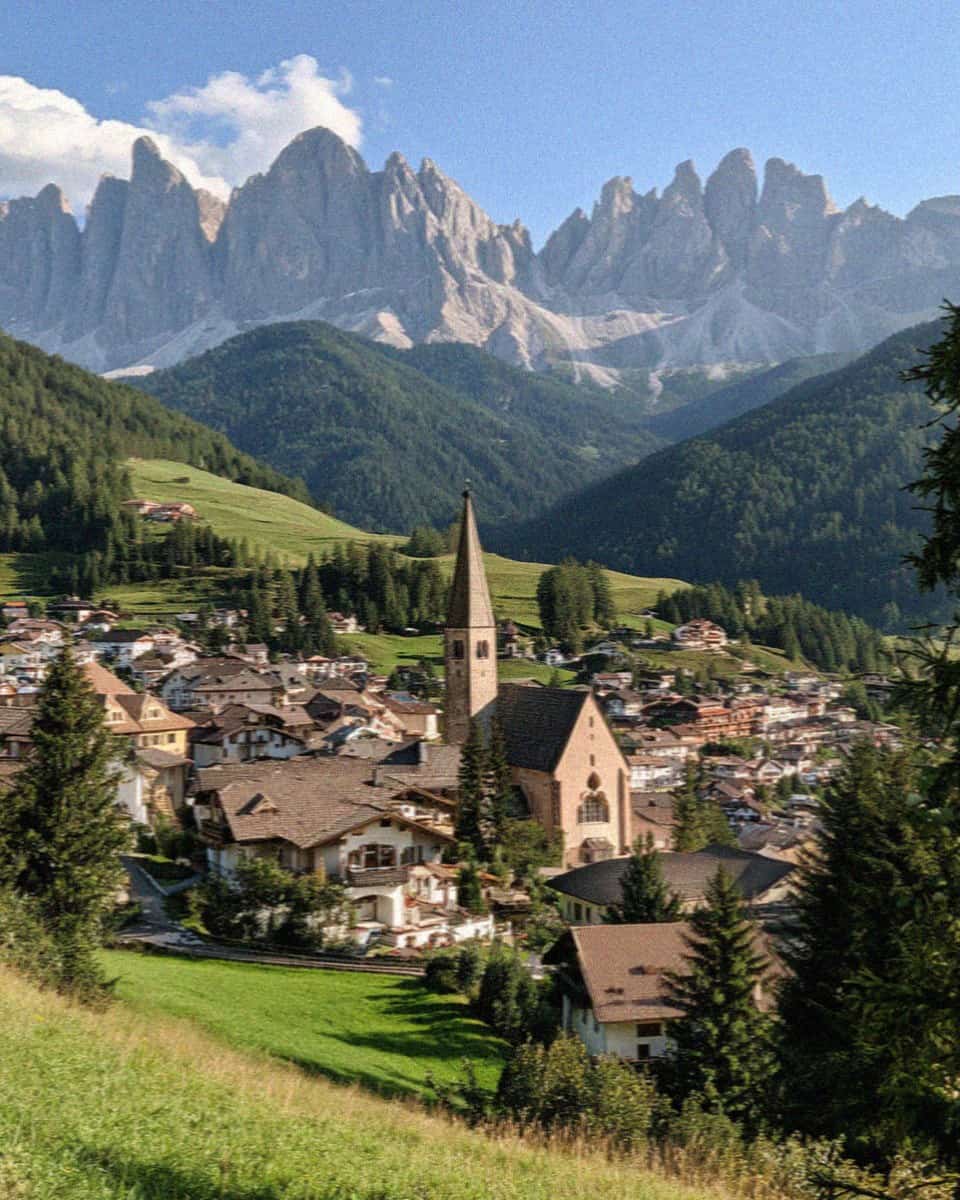
Everyone has seen the photograph even if they cannot name it: the little church of Santa Maddalena on its green knoll, the serrated Odle peaks rising behind. In the flesh, in the quiet valley of Val di Funes, it is even lovelier and mercifully unspoilt. There is no ticket and no cable car, simply a village, a footpath, and a view. Come at the end of the day when the Odle catch the last light, and you may well have the classic viewpoint above the hamlet almost to yourself.
The Marmolada, queen of the Dolomites
The Marmolada is the highest peak in the range, its summit of Punta Penia standing at 3,343 metres, and it carries the only true glacier the Dolomites still have, though it is shrinking sadly fast. A three-stage cable car climbs from Malga Ciapela to Punta Rocca at 3,265 metres, and the terrace there, hung over the ice, is genuinely vertiginous. At the middle station is the Great War museum, the highest in Europe, another reminder that these serene summits were once a front line. Dress warmly whatever the calendar says; it is a different world up there.
A rifugio lunch, unhurried
No day in the Dolomites is complete without lunch in a rifugio, one of the mountain huts that dot the high passes and meadows. This is not a chore to be endured but one of the pleasures of the range: canederli dumplings in broth, a plate of speck and cheese, barley soup, and a glass of something local on a sun-warmed terrace with the peaks all around. Prices are fair for the altitude, mains often in the low to middle teens of euros. Sit for an hour. Watch the light move. This is what people mean when they say the Dolomites are civilised mountains.
One quiet lake to end on
To close, seek out a lake that asks a little effort. Lago di Sorapis, reached on a two to two-and-a-half hour walk from Passo Tre Croci, glows an improbable milky turquoise and rewards the climb, though it too now draws a crowd by midday, so start early. If you would rather drive to your water, Lago di Carezza, a small emerald tarn mirroring the Latemar peaks, sits right by the road near the Costalunga pass and takes only a gentle stroll. Either way, choose your hour well; timing, in the Dolomites, is everything, and I say more about that in the best time to visit.
Frequently asked questions
Do I need to book anything in advance for 2026?
Yes, more than ever. The Tre Cime toll road (around €40) requires a timed online booking in high season, Lago di Braies restricts car access from 1 July to 15 September, and the Seceda cable car (around €74 return) now sells pre-booked timed slots. Reserve the earliest slots you can; they sell out on fine summer mornings.
What can I do without a long hike?
Plenty. The Seceda and Alpe di Siusi cable cars, the Lagazuoi lift with its short terrace walk, the Cinque Torri chairlift, the Marmolada cable car and the Santa Maddalena viewpoint all deliver spectacular scenery for very little effort. Pair any of them with a rifugio lunch for a full and easy day.
When are the crowds worst, and how do I dodge them?
July and August, roughly from 10am to 4pm at the famous spots. The remedy is simple and reliable: be at the honeypots, Braies, Tre Cime, Seceda, Sorapis, either at first light or in the last hours of the day, and use the quieter middle of the day for a leisurely lunch or a drive over the passes.