I have never quite made peace with the fact that the Dolomites photograph better than they have any right to. Most beautiful places ask you to work for the good frame, to hike and wait and forgive the weather. These mountains simply hand it to you. The rock is pale and theatrical, the meadows are absurdly green, and twice a day the light does something that no filter has ever managed to fake. What follows is the shortlist I actually return to, with the honest truth about when to arrive and how much of the view you will be sharing. For the wider trip, my complete guide to the Dolomites sets the scene, and the best time to visit matters more here than almost anywhere I know.
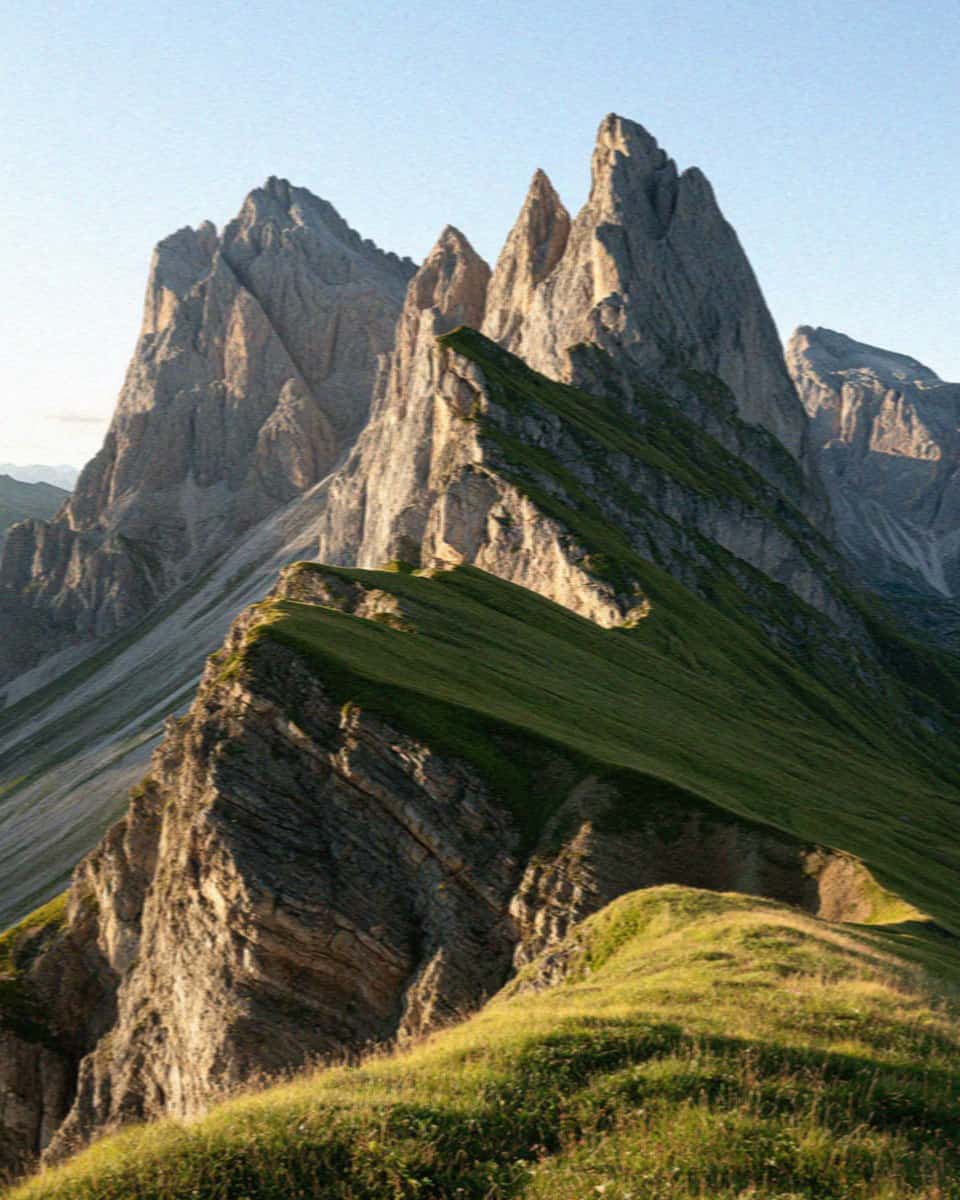
The Seceda ridgeline
If the Dolomites have a signature, this is it: a great grassy wave of meadow that falls away to nothing, with the jagged Fermeda and Furchetta towers standing behind like a row of broken teeth. You reach it from Ortisei on the Ortisei-Furnes-Seceda cable car, which in 2026 you should pre-book online, both to guarantee a slot and to skip the queue that forms by mid-morning. The catch every photographer eventually confronts is timing. The peaks catch their most beautiful light at sunrise and again at sunset, yet the lift does not open until well after dawn and stops before the evening glow. So you have two honest choices. Come for the first lift and shoot the ridge in clean morning light with the towers side-lit, which is lovely and far quieter, or commit to sunset by hiking up and walking back down, or staying at a rifugio near the top. The reward for the second is the towers turning coral against a darkening sky, and almost nobody left to share it with.
Plan Your Visit to the Dolomites
A few things I booked and loved. These help support the blog, at no cost to you.
- Where I stayed: search Dolomites hotels
- Rent a car to explore the area
- Stay connected: get a travel eSIM
This section contains affiliate links. If you book through them I may earn a small commission, at no extra cost to you.
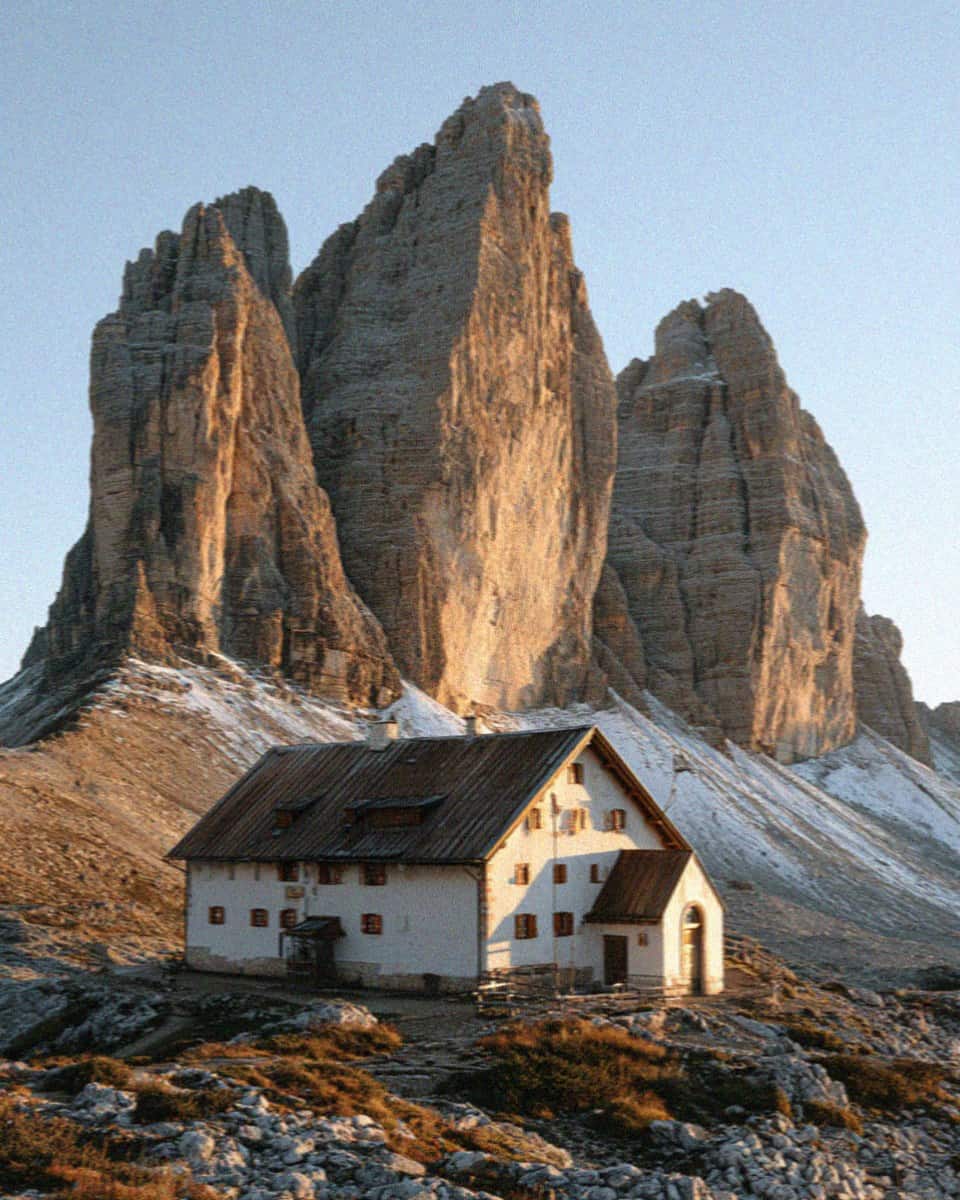
Tre Cime di Lavaredo from Rifugio Locatelli
The three great monoliths are best known from their south side, but the photograph worth the effort is taken from the north, from around Rifugio Locatelli, where the sheer north faces rise in a wall and the little chapel sits in the foreground. To get there you drive the Tre Cime toll road up to Rifugio Auronzo, which in 2026 costs in the region of forty euros and, in high season, must be booked in advance for a timed entry. From Auronzo it is a walk of roughly two hours around the base to Locatelli. The north faces glow at sunset and again at first light, so this is a spot that rewards either an early start or a night in the hut. It is one of the most photographed views in the Alps, which means company, but the walk thins the crowd and the scale of those faces never quite fits the frame, which is part of the thrill. If you fancy going further, the best hikes and via ferrata piece maps the fuller loop.
Lago di Braies at dawn
Braies is the lake from a thousand screensavers: emerald water, a wooden boathouse, the wall of the Croda del Becco behind. It is also, by ten in the morning, one of the busiest places in the range, and I mean genuinely busy, coach-park busy. The only way to love it is to arrive for dawn. In summer this is doubly true, because from 1 July to 15 September private cars are banned from the access road between roughly nine and four, so an early arrival is both the pretty choice and the practical one. Stand at the boathouse with the still water holding the reflection and the first light climbing the far wall, and you will understand the fuss. Shoot it, then leave before the crowds and the wind arrive, in that order.
Santa Maddalena and San Giovanni in Ranui, Val di Funes
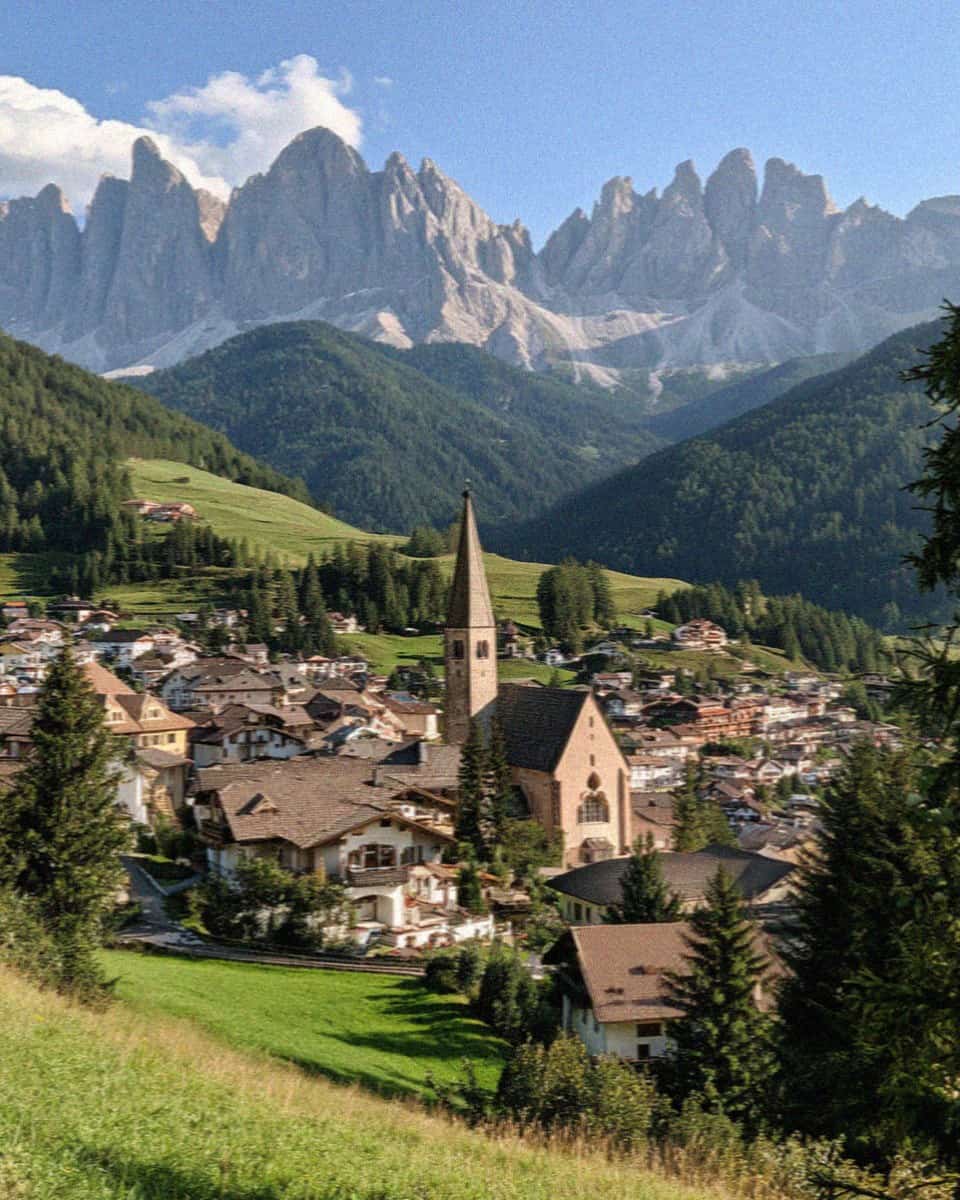
Some views are famous for a mountain, this one is famous for a church. In the Val di Funes the little onion-domed church of Santa Maddalena sits on a green shoulder with the serrated Odle behind, and it is, quite simply, one of the most harmonious compositions in the Alps. The classic frame is taken from the marked viewpoints on the slope above the village, best at sunrise when mist often pools in the valley, or at sunset when the Odle catch the last warm light. A short drive down the valley brings you to San Giovanni in Ranui, a tiny baroque chapel in a meadow that you photograph from a small paid viewing platform, again with the peaks behind. Both are on private and working land, so keep to the paths and platforms, close the gates, and resist the urge to wade into someone’s hay meadow for a marginally better angle.
Lago di Sorapis and its milky turquoise
Sorapis is the one you earn. From Passo Tre Croci the trail 215 climbs and traverses for something like two to two and a half hours, with a few exposed ledges fitted with fixed cables that are straightforward but not for anyone unhappy with heights. What waits is a lake of the most improbable milky turquoise, coloured by glacial rock flour suspended in the meltwater, with the pale amphitheatre of the Sorapis massif behind. This is one of the rare spots where the middle of the day is your friend, because the colour only truly ignites when sunlight strikes the water. Go in the morning to beat both the crowds and the afternoon cloud that so often builds over these peaks, and tread gently at the shore, which is fragile and much abused.
Alpe di Siusi with the Sassolungo
Europe’s largest high meadow rolls away in long green folds with the twin bulk of the Sassolungo and Sassopiatto rising behind, and at dawn, when mist lies in the hollows and the meadow is empty, it is pure enchantment. Access needs a little planning, because private cars are banned from the road up for most of the day, roughly nine to five, so either drive up before the barrier or take the cable car from Ortisei. Sunrise is the prize here, the low light raking across the meadow and the Sassolungo catching fire, and it is worth the alarm clock precisely because so few people manage it.
Passo Giau at sunrise
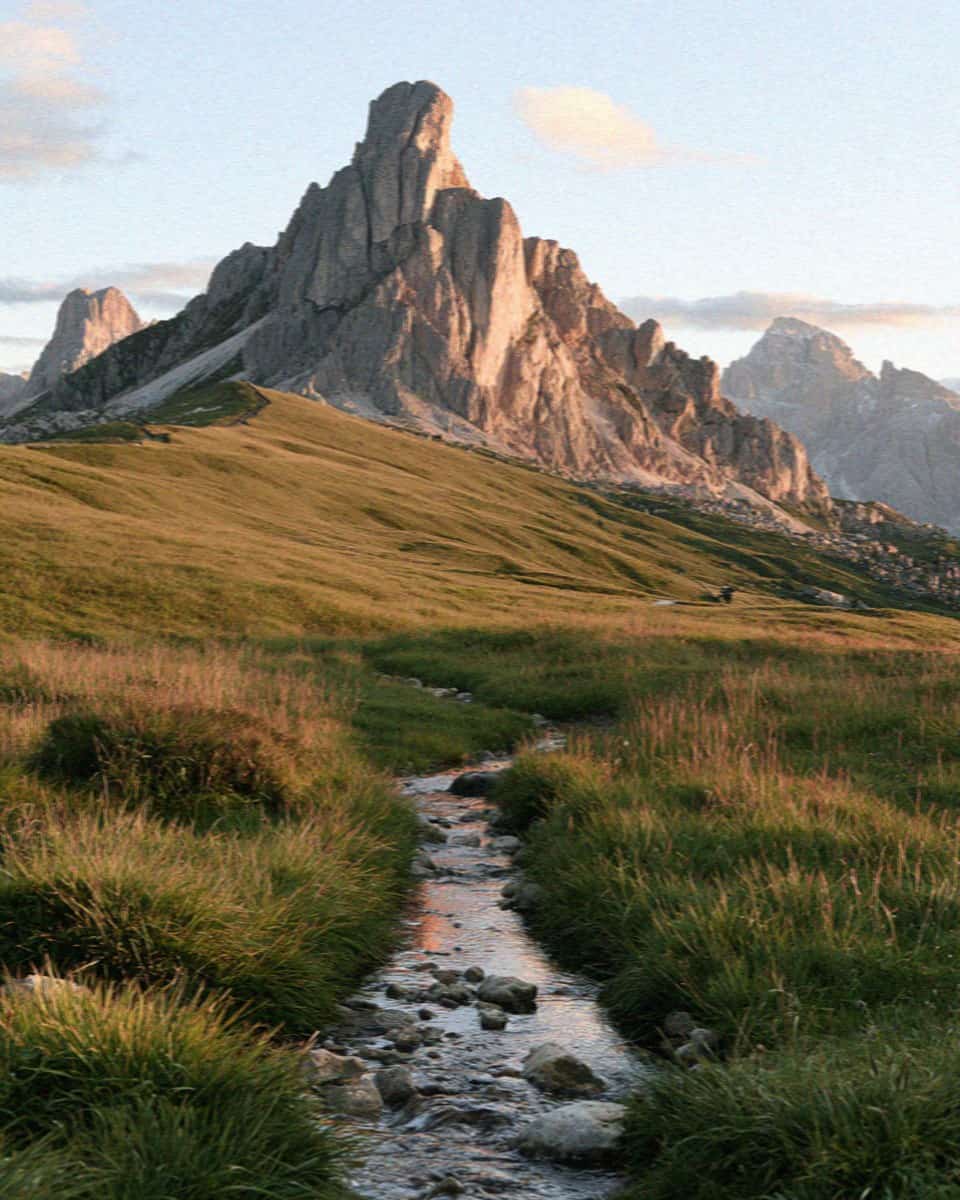
Of all the high passes, Giau is the photographer’s favourite, and the great mercy is that you can drive right to it. The pointed Ra Gusela and the ridges of the Nuvolau stand close and dramatic, foreground grasses and streams are everywhere, and at sunrise the whole scene turns rose and gold. Being reachable by car means it draws a dawn crowd of tripods, so arrive in good time and be gracious about sharing the roadside meadows, which are, once again, someone’s grazing land.
Lago di Carezza, the rainbow lake
Small, roadside and ringed by dark spruce, Carezza would be pretty enough on its own, but its trick is the reflection: on a still morning the jagged Latemar lies mirrored in water that shades from emerald to a deep, unlikely blue. It sits directly on the SS241 with a car park opposite, so this is the least strenuous shot in the whole list, which of course means it is popular. Come early, before any breeze breaks the surface, because everything here depends on stillness. You shoot from the fenced perimeter path, and rightly so, the shoreline is protected and off limits.
Cadini di Misurina above Lago di Misurina
The last is my quiet favourite: a labyrinth of slender rock spires seen from a narrow ledge, one of the most dramatic viewpoints in the Dolomites and, mercifully, a short walk rather than a long one. You reach it from Rifugio Auronzo, the same drive up the Tre Cime toll road, then a modest twenty to forty minutes along the trail to the viewpoint. It faces east, so sunrise is glorious, the spires lit and the valley below still in shadow. The viewing ledge itself is small and can hold a surprising number of tripods, so arrive early and mind your footing, the drop is real.
A closing word on shooting responsibly, because it matters more each year. Nearly every view here is on farmed or protected land. Keep to paths and platforms, leave gates as you found them, take your rubbish home, and remember that the meadow you are trampling for a foreground is somebody’s livelihood. The Dolomites give so generously that the least we can do is take the picture and leave no trace.
Frequently asked questions
When is the best overall time of year to photograph the Dolomites?
Late June to September gives you the green meadows, open rifugi and running cable cars, with the summer car bans in force at Braies and Alpe di Siusi. Late September brings the larches turning gold and thinner crowds. My best time to visit guide goes into the trade-offs in full.
Do I need a car, or can I reach these spots by public transport?
A car makes life far easier, especially for dawn starts at Giau, Carezza and the Tre Cime road. Some spots, notably Alpe di Siusi and Seceda, are well served by cable cars from Ortisei, but the earliest and best light usually falls before the first lift, which is the argument for having your own wheels.
Which single viewpoint would you choose if you only had one morning?
Seceda, without much hesitation. The ridgeline is unlike anything else in the Alps, and even in ordinary light it delivers. Take the first cable car up from Ortisei, walk out along the meadow, and you will have your Dolomites photograph before breakfast.