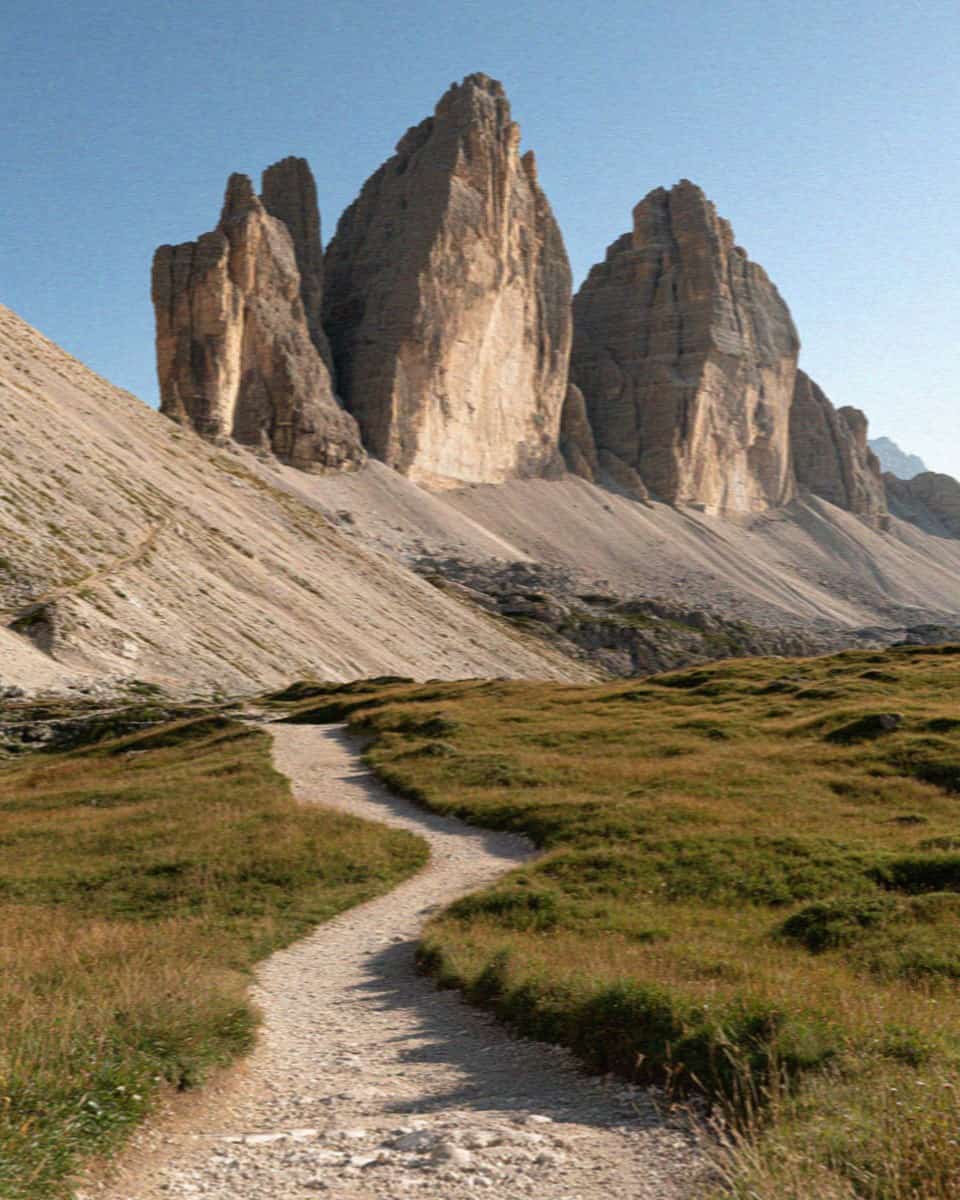
I have walked in a great many mountains, and I still cannot think of a range that gives so much for so little effort as the Dolomites. You step off a chairlift into a meadow, turn a corner on a well graded path, and there they are: pale towers rising sheer out of green pasture, close enough that you feel you could reach out and touch them. What follows is not an exhaustive list but the walks and via ferrata I return to, and would send a friend towards, with honest notes on distance, difficulty and how exposed each one really is. For the wider picture of where to base yourself and how to move around, I would read this alongside my complete guide to the Dolomites and my thoughts on the best time to visit.
The classic: the Tre Cime di Lavaredo loop
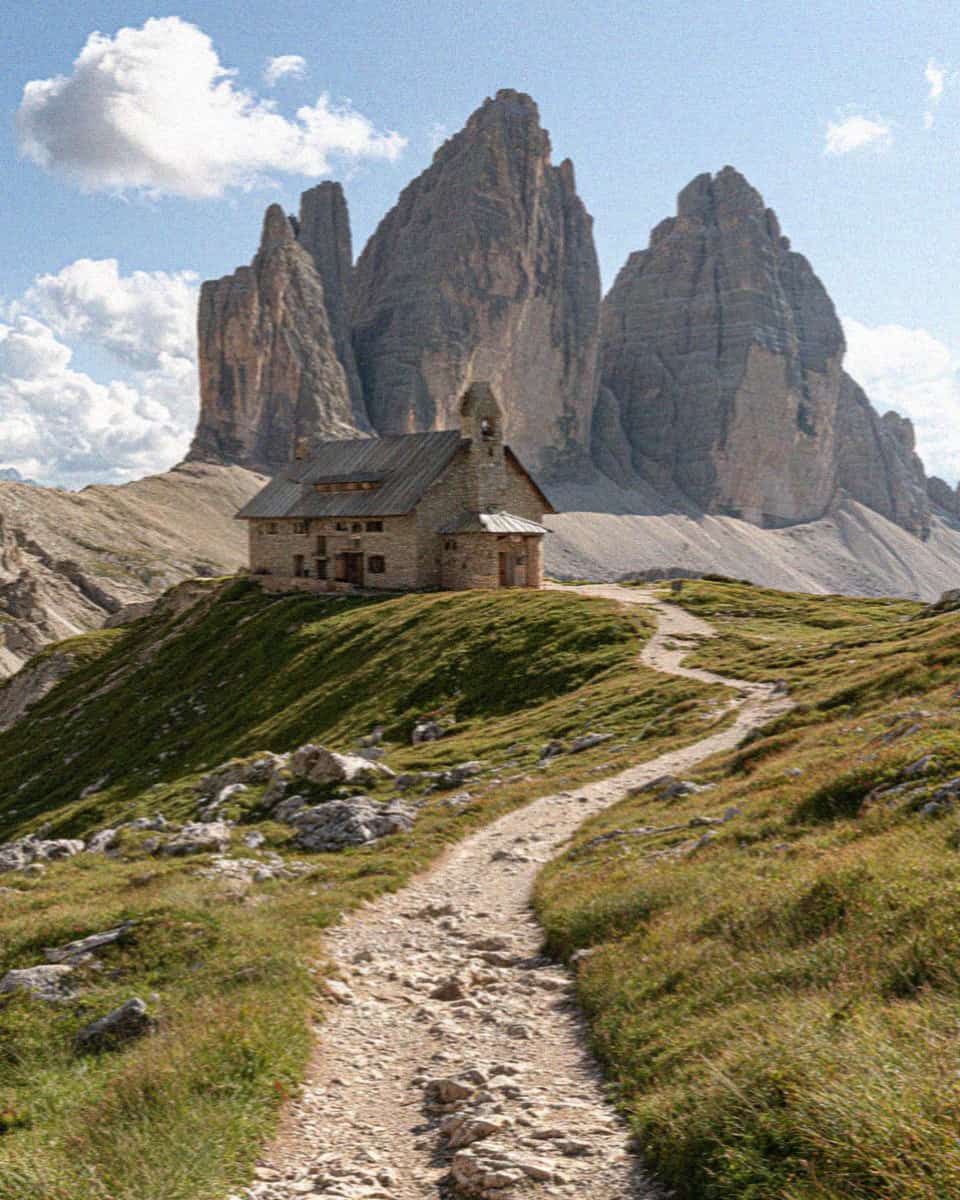
If you do only one walk here, make it this one. The circuit of the three great sentinels of Lavaredo runs roughly 10 km with about 350 metres of ascent, and most people take three to four hours at a gentle pace. It begins and ends at Rifugio Auronzo, and it is graded easy to moderate, which is to say the path is broad and clear throughout, with a handful of short climbs that will have you breathing but never scrambling. Walk it anticlockwise and the famous north faces reveal themselves gradually, with Rifugio Locatelli and its view of all three peaks as the reward at the far side. It is popular, gloriously so, and I would set out early or late to have the light and a little more quiet.
One practical note for 2026: reaching the Rifugio Auronzo car park means driving the toll road, which now costs around 40 euros for a car and, crucially, requires a mandatory online booking in advance with your number plate. Do not turn up hoping to pay at the barrier. More on the day around it in my roundup of the best things to do.
Plan Your Visit to the Dolomites
A few things I booked and loved. These help support the blog, at no cost to you.
- Where I stayed: search Dolomites hotels
- Rent a car to explore the area
- Stay connected: get a travel eSIM
This section contains affiliate links. If you book through them I may earn a small commission, at no extra cost to you.
Beneath the Odle: the Adolf Munkel Trail
For a softer, greener day, the Adolf Munkel Trail in Val di Funes traces the very foot of the Odle, or Geisler, spires. It is a walk of roughly 9 to 10 km depending on where you start and how you loop it back, three to four hours, and genuinely easy underfoot, mostly through open pasture and cool larch and spruce woodland with the serrated ridge above you the whole way. The mountain huts along it, Geisler Alm and Malga Brogles among them, serve exactly the sort of lunch you want after a morning of walking. It is a wonderful choice for a mixed group or anyone easing into mountain days. Note that Val di Funes has tightened its own access in recent seasons, with the road up to Zannes controlled at peak times, so check parking before you go.
Seceda and the tilted ridge
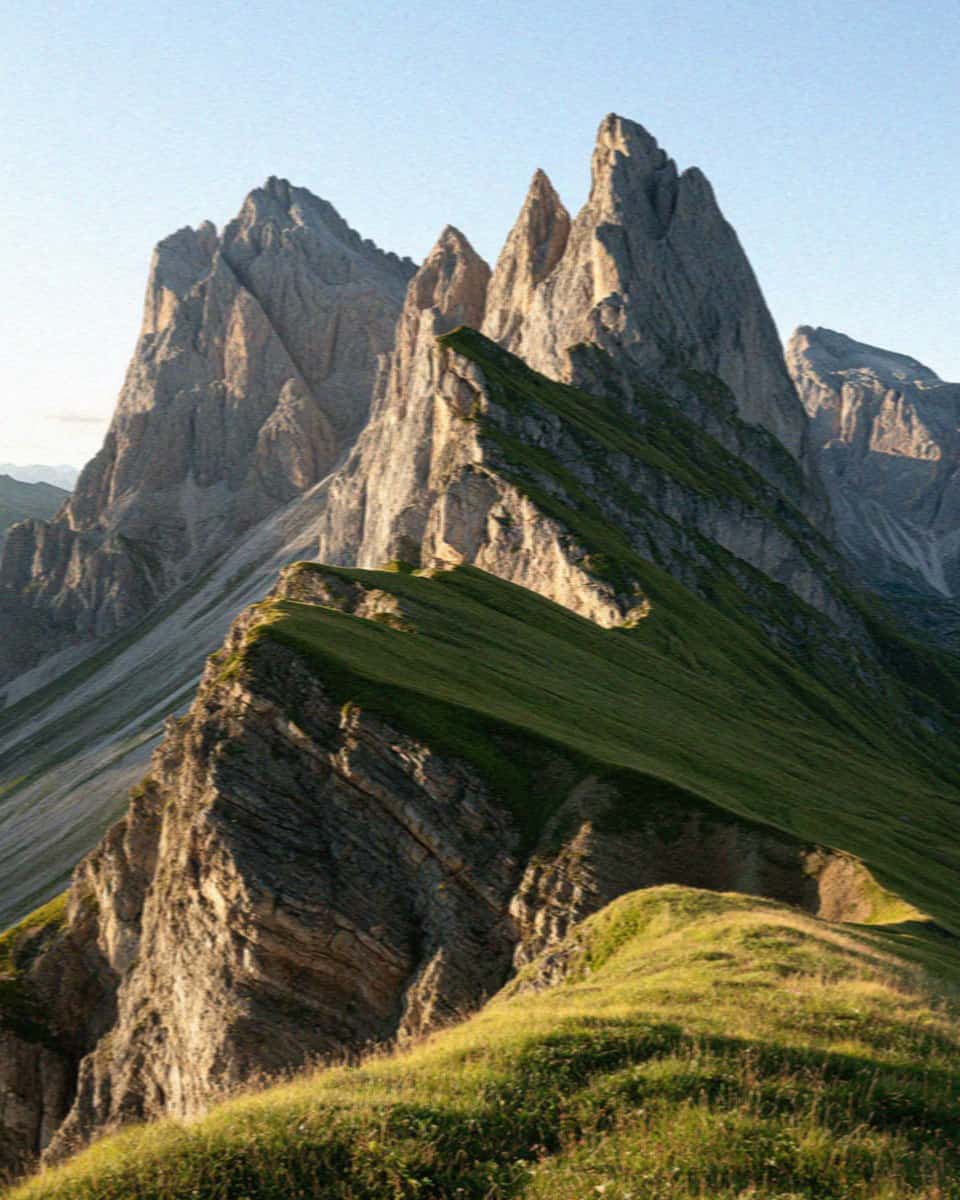
Seceda is one of those places that photographs seem to exaggerate until you stand there and find they did not. The great tilted comb of rock, dropping away in a single sweep, is reached by cable car and gondola from Ortisei, and from the top you can walk as much or as little as you like. A short amble takes you to the finest viewpoints in twenty minutes; a longer traverse of two to three hours drops you down towards the huts and, for the strong, on into the Val di Funes side. It is high, open and windswept, so carry a layer even in August. I have written more about the light here in my notes on the best photo spots.
The gentlest days: Alpe di Siusi
Not every day in the mountains needs to test you. The Alpe di Siusi, the largest high alpine meadow in Europe, is a rolling green sea of pasture and hay barns beneath the Sciliar and, in the distance, Sassolungo. The trails here are broad, gently graded and forgiving, and you can string together a loop of almost any length from an hour to a full day. It is ideal for families, for a recovery day, or simply for walking slowly with a good view. Do remember that private cars are banned from driving up during the day, roughly from nine in the morning until five in the afternoon, so you arrive by cable car from Siusi or stay up on the plateau itself.
For a head for heights: Lago di Sorapis
The turquoise lake of Sorapis, that improbable milky blue beneath the Sorapiss massif, is one of the loveliest destinations in the range, and I want to be honest about the walk to it. From Passo Tre Croci it is about 12 to 13 km there and back, four to five hours, with something over 600 metres of ascent, and while the difficulty is only moderate on paper, the final approach traverses exposed scree on narrow ledges with fixed steel cables and a few metal steps bolted into the rock. It is not climbing, but there are real drops beside you, and if exposure makes you freeze this is not your walk. In high summer the cabled sections bottleneck and you may queue. Go with sure feet and, ideally, early.
Around the great massifs: Sassolungo and Cinque Torri
Two more that I would not want to leave out. The circuit of the Sassolungo, or Langkofel, group is a grand full day of roughly 18 to 20 km and six or so hours, but you can shorten it considerably by taking the Friedrich-August-Weg, a genuinely easy high balcony path that contours beneath the peaks between Passo Sella and the Rifugio Sasso Piatto with barely any climbing and views the whole way. It is one of the great gentle walks of the Dolomites.
The Cinque Torri, near Cortina, are five stout towers beloved of climbers, and the loop around their base is short and easy, an hour or two, but threaded with the trenches and tunnels of an open air First World War museum. Combine it with the climb to Rifugio Nuvolau for one of the finest panoramas in the whole region.
A harder objective: the Vajolet Towers
For those wanting a proper mountain day, the Vajolet Towers in the Catinaccio, the Rosengarten, are a fine goal. From the top of the Catinaccio chairlift above Vigo di Fassa the walk in to Rifugio Vajolet is manageable, but to stand beneath the towers themselves at Rifugio Re Alberto you climb a steep, rough zigzag of scree and rock that is demanding on tired legs. Reckon on a long day of real ascent, six hours or more of walking with well over 700 metres of climbing, and treat it as a full mountain outing with proper boots, food and an eye on the weather.
Via ferrata: the iron roads
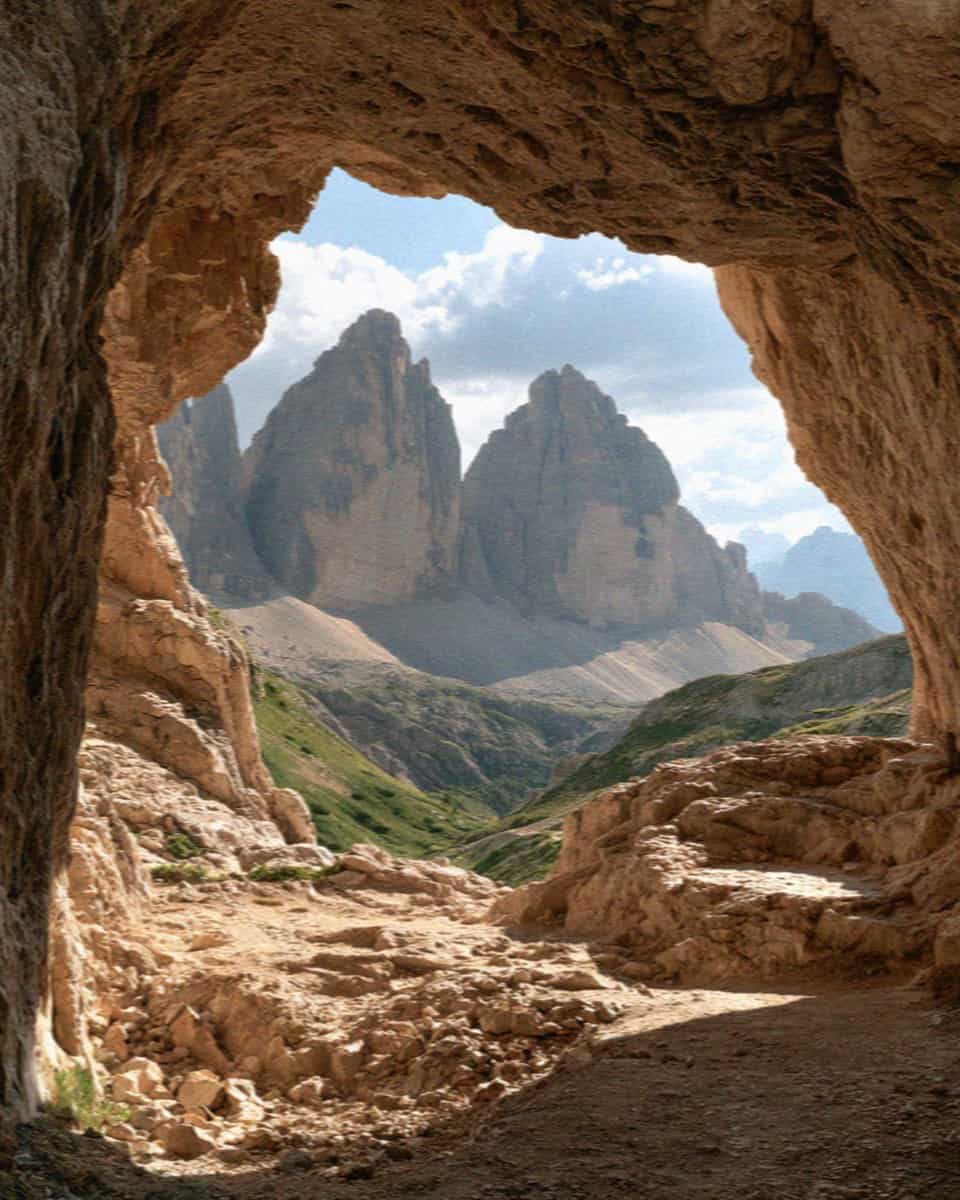
No account of walking here is complete without the via ferrata, the “iron roads”: routes equipped with fixed steel cables, rungs and ladders that let a walker travel terrain that would otherwise need ropes and rock skill. Many of them exist because of the First World War, when Italian and Austro-Hungarian troops fought across these very ridges and tunnelled through the peaks, and to follow their cables today is to walk through history as much as landscape.
Two are genuinely suitable for beginners. The Lagazuoi tunnel route, reached by cable car above the Falzarego pass, descends through the wartime galleries hewn inside the mountain: you need a head torch and a helmet, the cabling is straightforward, and the sense of the past is overwhelming. The short ferrata to the summit of the Averau, from Rifugio Averau near the Cinque Torri, is another well graded introduction with a big reward at the top.
The kit is not optional. You need a climbing harness, a proper via ferrata set, that is the shock absorbing lanyard with two carabiners, and a helmet, and on the tunnel route a torch. All of it can be hired in Cortina, Corvara and the larger valley towns. Weather is the real hazard: steel cables and afternoon thunderstorms are a lethal combination, so start early, watch the sky, and turn back without shame if it darkens. If you have never clipped in before, spend one day with a qualified mountain guide. It is the single best money you will spend here, and it turns a nervous scramble into a genuine pleasure.
Frequently asked questions
Which Dolomites hike is best for a first visit?
The Tre Cime di Lavaredo loop, without hesitation: about 10 km, three to four hours, easy to moderate, and unforgettable. Just remember the mandatory toll road booking for 2026.
Do I need any experience to try a via ferrata?
Not for the beginner routes like the Lagazuoi tunnels or the Averau, but you do need the correct kit, a harness, via ferrata set and helmet, and I would strongly advise a guide for your very first outing.
Are the Dolomites walks suitable for children and gentle walkers?
Very much so. The Alpe di Siusi meadow trails and the Friedrich-August-Weg beneath Sassolungo are broad, gentle and forgiving, with huts for lunch along the way.