There are places you discover and places you return to. They require different things from you. Discovery asks you to be open, receptive, willing to be surprised. Return asks something harder: to be present in a place that already holds a version of you that no longer exists.
I have been coming to the Amalfi Coast since I was small. I do not remember the first time. That is its own kind of information: the coast was present before I had the memory to record it. It entered me in that earlier period when places become not memories but something more foundational, a tone or a temperature that the body recognizes before the mind catches up. Every time I return, the body catches up first.

The heat here is not like heat elsewhere. It is not aggressive. It does not push against you the way city heat does, amplified by stone and glass and the density of people who did not come here to slow down. The heat of the Amalfi Coast asks you to slow down. It is patient. It settles into the afternoon and it stays there, and after a day or two you stop resisting it and you slow down too, and something releases in you that you had not known you were holding.
This is what I come for. Not exactly the heat itself, but what the heat produces in me: a quality of attention that I can only reach when the conditions for urgency have been removed. The coast removes the conditions for urgency. The road is too narrow to drive fast. The towns are too vertical to move through quickly. The sea is too large and too blue and too indifferent to your schedule to let you pretend that your schedule matters. You arrive at the Amalfi Coast and within forty-eight hours you have stopped pretending.
So it is here, I can put my phone away and write. From here I see red umbrellas, red sun loungers, the geometry of it repeated down the beach in a pattern that manages to be both deliberately designed and completely natural-looking, the way certain things become natural after enough repetitions. I have sat under these umbrellas enough times now that the red has become a color I associate with a particular quality of afternoon: unhurried, warm, the smell of salt and sun oil, the sound of the sea making the same argument it always makes, which is that time moves differently here, and you should let it.
The ritual of the beach has its own grammar. You arrive, and you are shown to a lounger, and you arrange your things, and you lie down, and the sun is very direct and very clear, the Mediterranean sun that does not filter itself through cloud or haze but arrives at you unmediated, and you feel it as a kind of permission. Permission to be still. Permission to want nothing more than what is already present. This is harder than it sounds. Most of the year I want things that are not present. Here the wanting goes quiet.
I swam before noon and after the swim I stood at the outdoor shower on the edge of the beach and let the cold water run over me while the sun dried me almost as fast as the water could wet me, and I thought about nothing. This is the specific luxury the Amalfi Coast offers that no amount of money can purchase in other contexts: the ability to think about nothing. The coast creates the conditions for it, and you either accept the conditions, or you spend your holiday carrying the same weight you brought with you, which some people do. I have done it too.

In the afternoon I had gelato that was better than it should have been for something eaten standing up at a wooden table on a crowded beach. Chocolate and something I could not identify, something floral that might have been lavender or might have been the afternoon itself translated into flavor. A child at the next table dropped her cone and stared at it on the ground with an expression of complete philosophical devastation. I understood exactly how she felt. Gelato on the Amalfi Coast in August is not a small thing. It is a very specific and unrepeatable thing, and when it ends it ends.

There is a particular hour in the late afternoon when the beach begins to empty and the light changes. It goes from white to gold and the shadows of the umbrellas lengthen and cross each other and the sea changes color. For most of the day the Tyrrhenian is a clear deep blue that does not vary much, a declarative blue, certain of itself. In the late afternoon it shifts toward something more complicated: green at the edges, darker farther out, the surface moving more visibly as the heat drops and the wind comes in off the water. I stay for this hour. I have always stayed for this hour, even when I was small and did not know why I was staying. The body knew. It was waiting for the light.
What I come back to the Amalfi Coast for is not any specific thing. It is not the beach or the food or the towns carved into the cliffs or the road that winds above the sea with its drops on one side and its stone walls on the other. It is something underneath all of those things, something the coast produces when the particular combination of heat and water and vertical landscape and ancient occupation is present together. A feeling of scale. Of proportion. The sense that a human life is the correct size for this landscape, neither too large nor too small, but exactly fitted to it.
I do not come here to escape from something. I come here to return to something. The distinction matters to me. Escapism implies flight, implies that what you are leaving is larger and more real than what you are going toward. The Amalfi Coast is not less real than the rest of my life. It is more real. It is where I remember what real feels like: water, heat, the smell of rosemary from the hillside, the sound of a language spoken at full volume with full conviction. The rest of my life is what I return from.
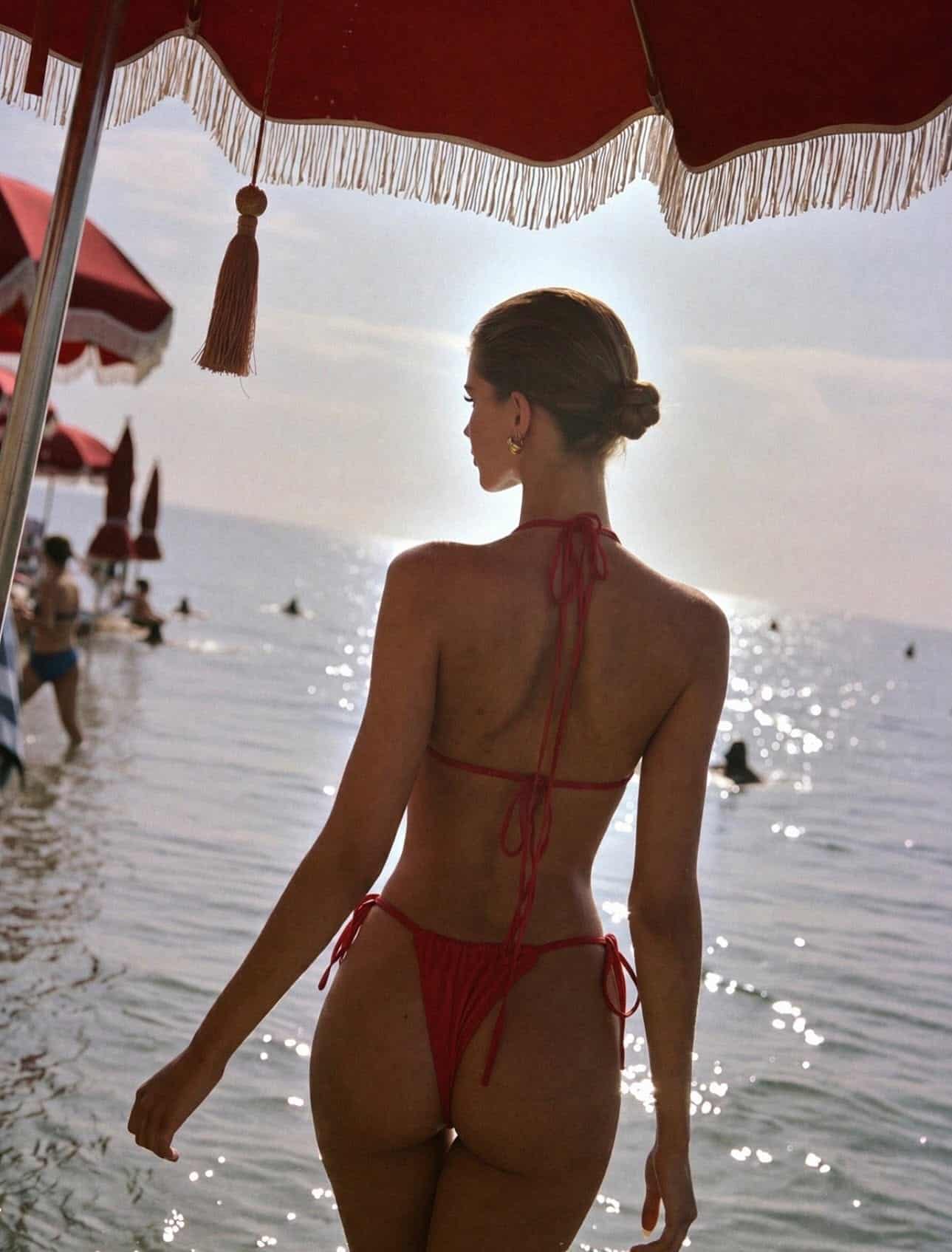
I walked back along the beach in the early evening when the last swimmers were coming out of the water, and the sun was low enough to be looked at almost directly, and the sea was doing the thing it does at this hour, holding the last of the light in its surface the way a glass holds wine: not containing it but giving it a shape. I stood at the water’s edge for a while. The sand was still warm from the day.
I have stood here many times. I will stand here again. Some places give themselves to you once and then withhold themselves. The Amalfi Coast gives itself again each time, as though it has been waiting, as though the interval between visits is simply the pause between one sentence and the next.
For a Comprehensive guide to the Amalfi Coast click here.
Read also: Silver Moon Beach Club