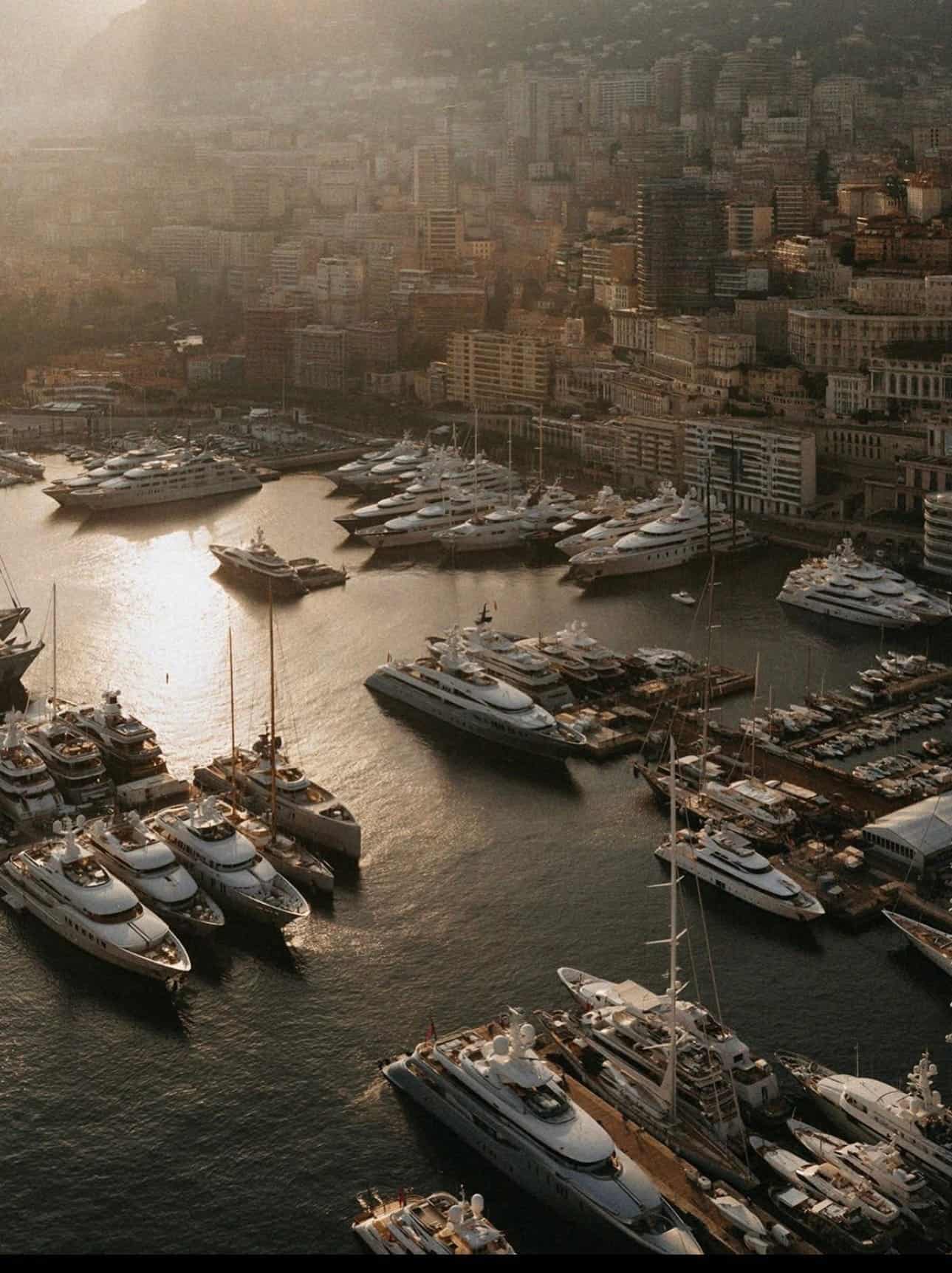
The city does not build toward the race weekend. It arrives already built. One morning the harbor is a harbor and the next morning it is something else: a compressed sea of white hulls, stacked close enough that from above they look like a single interrupted surface, separated only by light on water. I arrived by helicopter. This matters, because the only way to understand Monaco at race week is to see it from above first, before you are inside it and unable to see anything at all.
From the air the harbor looked like a sentence that had been written and then revised until only the essential words remained: water, boat, mountain, city, sun. Everything unnecessary had been removed. Down inside it, I would discover that this is not true, that Monaco at race week is excessive in every possible sense, but from above it looked spare, precise, necessary. The helicopter came down over the hillside and the scale collapsed and I lost the view and was inside the city before I had finished understanding the view I had just lost.
That is Monaco’s primary technique. It moves faster than your understanding of it.
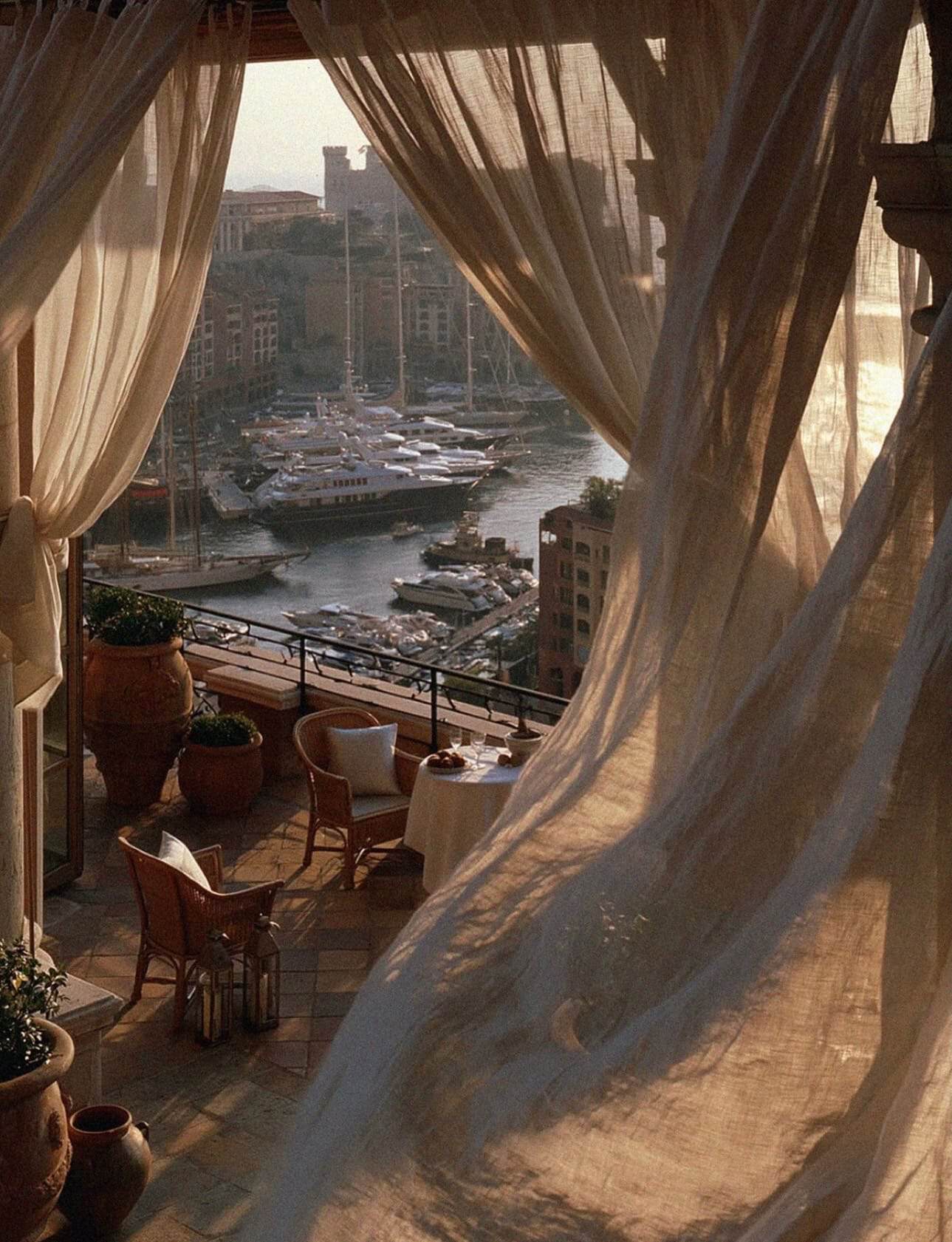
I had a room with a terrace overlooking the harbor. The curtains were linen, the kind that moves in the morning air without any wind, just from the heat rising off the stone. I stood on the terrace the first morning and watched the harbor fill. The yachts had arrived overnight. The largest ones had taken the positions closest to the circuit, which made a certain sense: proximity to the thing you came to see, purchased at the scale only available to people on those particular boats. I drank coffee and watched two men on a neighboring deck argue about something in a language I could not identify, and then shake hands, and then open a bottle of something too good for nine in the morning. Monaco operates on its own relationship to appropriate timing.
The streets are narrower than you expect. Everything in Monaco is narrower or smaller or more compressed than you expect except for the view, which is consistently more dramatic than it has any right to be from a principality eight-tenths of a square mile in area. The harbor looks like it was designed to be looked at from above. The terraces look like they were designed to be looked at from the harbor. The whole city is a series of vantage points, each one constructed to make the previous one look deliberate.
The sound of the cars begins on Friday and does not stop. It enters you through surfaces, not through air. You feel it in the soles of your feet before you hear it, and once you have heard it you cannot remember what the city sounded like before. Standing near the circuit during qualifying, I thought about what it means to engineer something to that pitch: a car operating at the absolute outer edge of what is physically possible, millimeters from walls that do not forgive contact. The drivers know this. You can see it in how they carry themselves in the paddock, a quality of compressed attention, as though they have removed everything unnecessary and left only what the next ninety minutes will require.
I have always appreciated Ferrari for this reason. Not for the mythology, not for the color, though the color is its own argument. For what the cars represent as an object: the intersection of extreme technical precision and genuine aesthetic intention. A Ferrari is not beautiful despite being engineered. It is beautiful because it is engineered, because every surface is the consequence of a decision made at the limit of what materials can do. I stood near one and understood that what I was looking at was a specific kind of claim: that beauty and function do not oppose each other. That the most resolved version of a thing is also the most beautiful version of it. I found this persuasive. I find it persuasive in other contexts too.
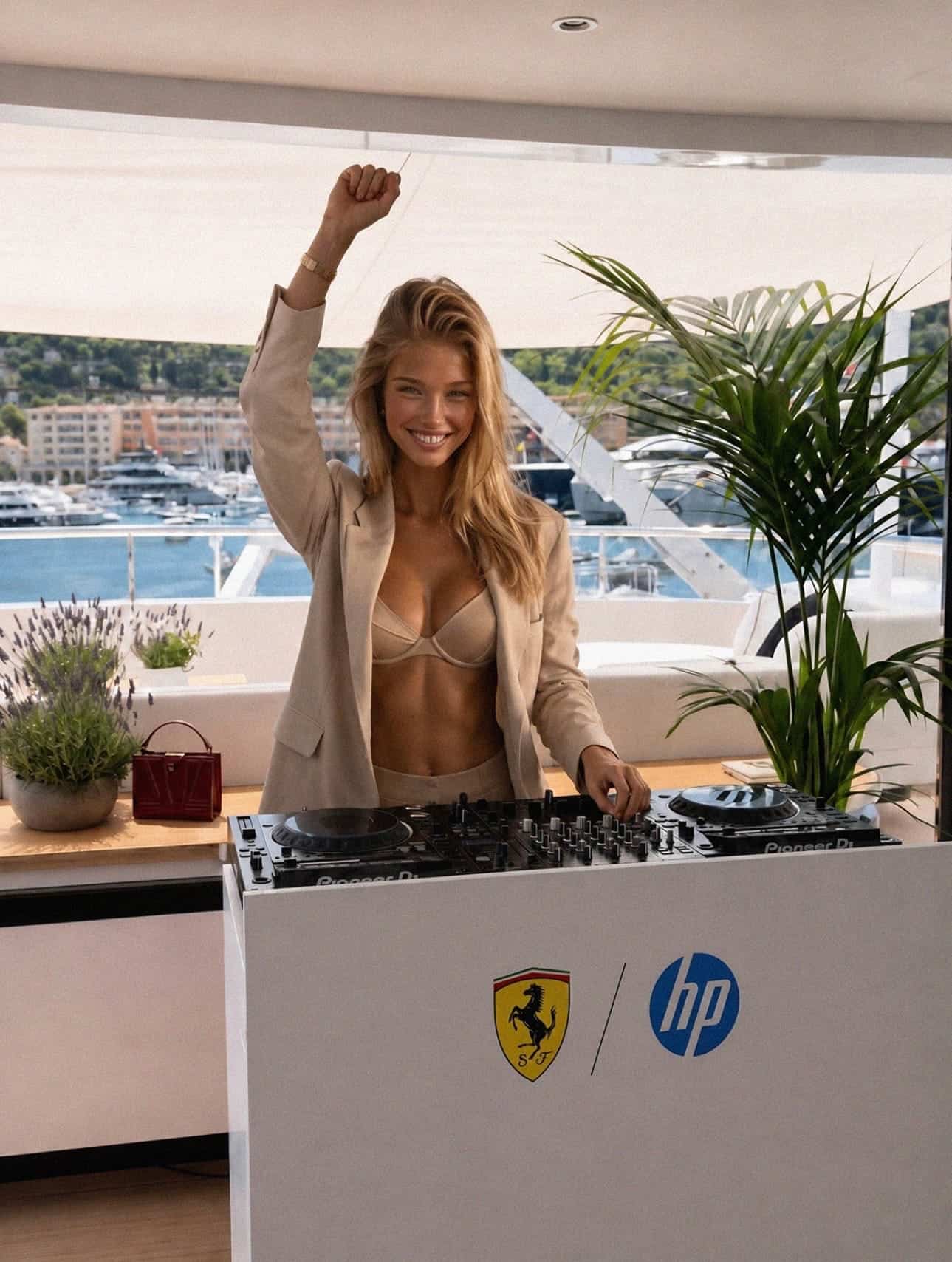
The harbor at night is different from the harbor in the day in the way all things built for luxury are different after dark: more itself, more committed to its own premise. The lights on the water are warm and they double in the reflections and the yachts become a lower city, built on the same geography but inverted. I walked the harbor front on Thursday evening after the Amber Lounge yacht experience, which had been one of those rare afternoons where the setting and the people and the music reached some kind of equilibrium and the result was not a party but something more like a suspension of ordinary time. There is no adequate way to thank Amber Lounge for what they build into Monaco race week, the particular quality of that Thursday afternoon where the water is in the background and the racing is audible in the distance and none of it feels like an event so much as a natural condition. I have been to many things. That afternoon is not in the same category.
I have also been to events where the joy is performed. The distinction is worth stating because it is not always obvious from the outside, and it was not performed.
The race itself is too loud to watch in the way you watch other things. You do not observe the Monaco Grand Prix. You absorb it. I was on a terrace above the circuit, and the cars came out of the tunnel and into the section below, and the sound arrived a half-second before the cars were visible, and then they were past before the sound had finished arriving. This happened seventy-eight times. By the end I had lost the ability to separate the noise from the visual from the sensation of it moving through my chest. I understand now why people return to this race year after year. You cannot remember it accurately. Memory flattens it into something manageable and the actual experience is not manageable, so you have to come back to verify that it was real.
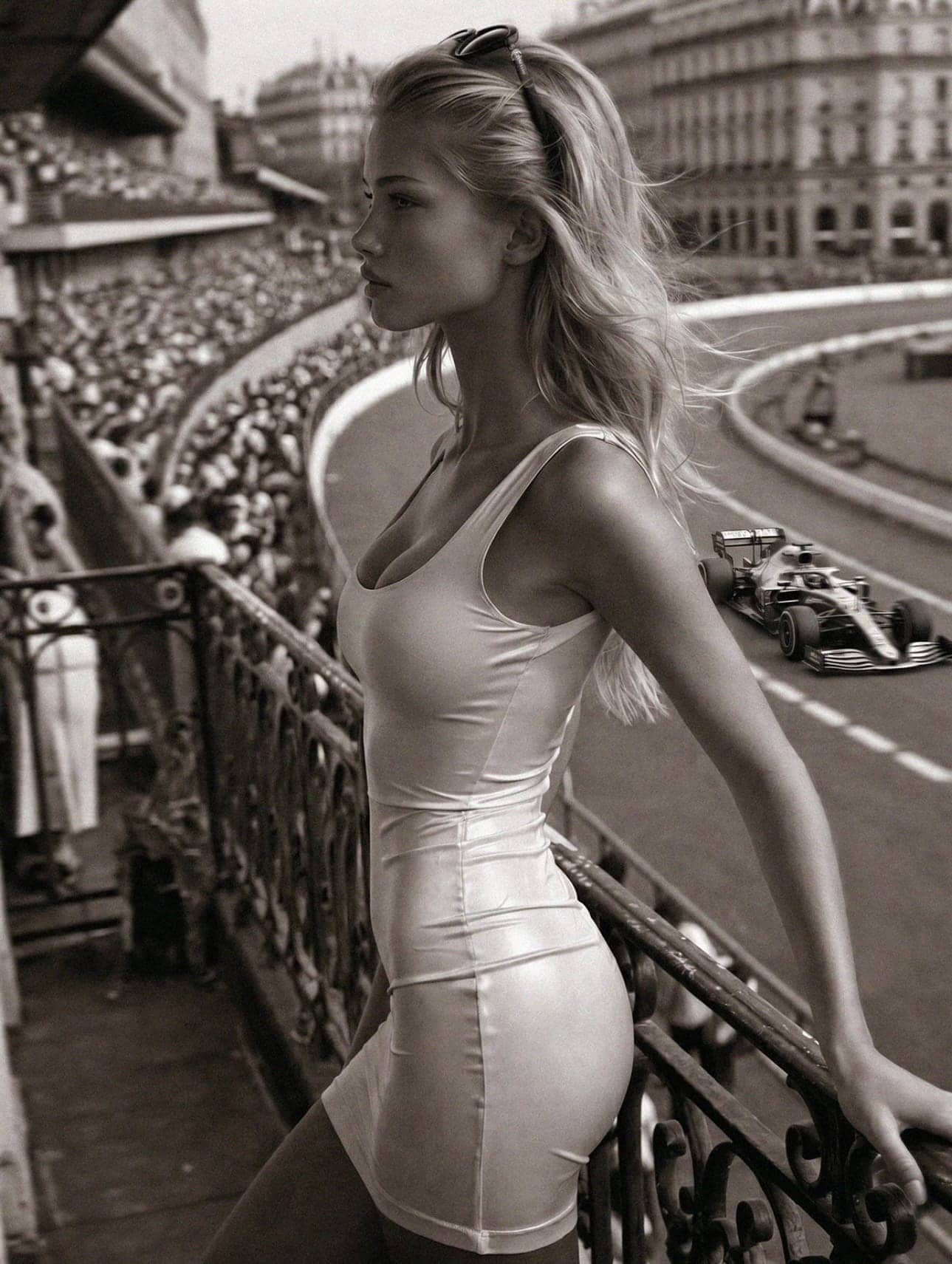
I took notes. I do this in places I know I will not remember correctly: write something down before the impression sets, while it is still moving. The words I wrote do not capture what the passes sounded like but they give me something to return to. Evidence that I was there. That it happened. That it was not imagined.
The evening after the race the city shifted again. The drivers who had been in their cars four hours earlier were at the Amber Lounge party after midnight, which is either strange or entirely logical depending on how you hold it. Roger Sanchez played well past any reasonable hour. Monaco does not acknowledge reasonable hours.
I stood on a deck above the harbor very late, the race finished, the week nearly finished, the lights still on across the water. The largest yachts would leave in the morning. The circuit would be dismantled and the streets would return to being streets. In a few weeks someone will walk that same stretch of road near the tunnel exit and they will simply be walking down a road. They will not be standing where I was standing. Which was somewhere else entirely, still listening to something that had not finished arriving.
I kept the notebook.
V.
For more information on the Monaco Grand Prix you can read my complete guide here.