The path begins before you expect it to. One moment you are still on the road above Amalfi, and the next the road has ended and something older has taken its place: a track of stone and root, wet where the valley narrows and the light cannot reach. The valley does not reveal itself gradually. It swallows you.
I had read about the mills before I went. I should not have. Reading about a place before you enter it gives the place a script to follow, and the script is never the place itself. What the reading gave me: dates, ownership transfers, a type of paper valued across Europe for its particular quality. What the valley gave me: something else, arrived at by a different route.
The mills are above the town. You climb past lemon groves that belong to no one visible, past walls that have mostly returned to the hillside. At a certain point the path becomes the bed of the stream itself, and you are walking on wet stone, and the ferns on either side are so green they seem unreal, the green of things that have never once been looked at by anyone who expected to find them beautiful. The light filters down through the canopy in irregular columns. It is not dramatic. It is simply there, the way certain facts are simply there, requiring no interpretation.
I arrived at the first ruin without registering it as a ruin. The wall was the end of the path, and then I was inside.

The rooms of an abandoned building smell different from the rooms of a building that is merely old. Underneath the damp and the minerals, there is something else: paper, perhaps, or wood, or the residue of sustained human effort over a very long time. I stood in the first room and breathed it in and tried to understand what I was standing inside. The light enters through gaps where the roof has gone, through windows where the frames have rotted and fallen, and it settles on the floor in a way that makes the floor look more ancient than the walls. A light that has given up trying to illuminate anything, and has instead become part of the ruin itself.
I sat down on a stone that had fallen from somewhere. I stayed there for a long time.
There was a wheel in the far corner of the room, its mechanism locked by rust, the wood around it blackened with decades of damp. Whatever it had driven was gone. I am not someone who thinks of machines as poetic. But a stopped wheel is different from other stopped things. A stopped clock tells you the time it stopped. A stopped wheel tells you only that the force which moved it has disappeared. This is a different kind of information. It points at an absence rather than a moment.
This is what abandoned places do. They teach you what attention actually is. In a place where no one is performing for anyone, you stop performing too. The interior of the mill asked nothing of me and so I could simply be there, inside it, noticing.
I climbed to the second building. The path between them had been reclaimed by the vegetation, and I had to push through in places, and the ferns left water on my arms and on the backs of my hands. Inside, the rooms were smaller, lower. The ceiling in one had partially collapsed, and the rubble had been there long enough to gather its own moss, its own small ecosystem of things growing in the dark.
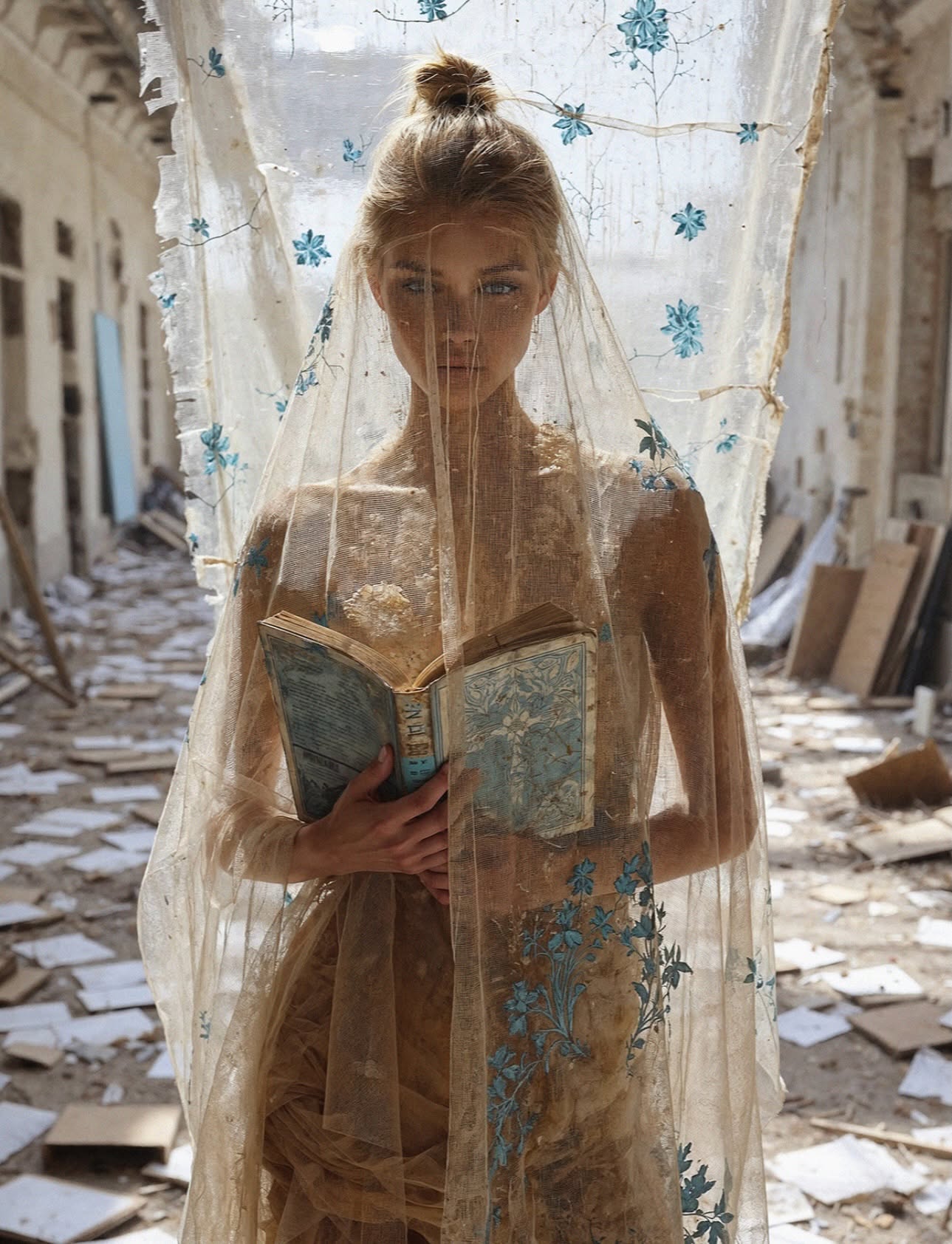
I found the documents in a corner where they had survived by accident, the way things survive: not through intention but through the particular failure of the disaster to reach them. The papers had warped and fused at the edges. The handwriting on the ones I could open had curled inward on itself, as though the words were trying to return to the hand that had written them. I could not read them. The Italian was of a different period, the ink had gone grey, and the paper itself resisted. But I held them. I understood that I was holding someone’s record of something: a transaction, a dispute, a claim. Evidence that for a brief moment two people had existed in the same story.
That is finally all a document is. Evidence of coexistence.
Among the papers was a book. Small, its binding separating from the spine. I recognized it before I could read the title properly: Voltaire in Love. A French edition, paperback, of a type common in the sixties and seventies, the kind sold in train stations. Someone had brought it here. Someone had read it in a paper mill above Amalfi, or intended to, which struck me as exactly the right place to read a book about a man who never stopped writing even when it destroyed everything around him. I held it for a while. I thought about Voltaire, who was not a careful man, but was a precise one.
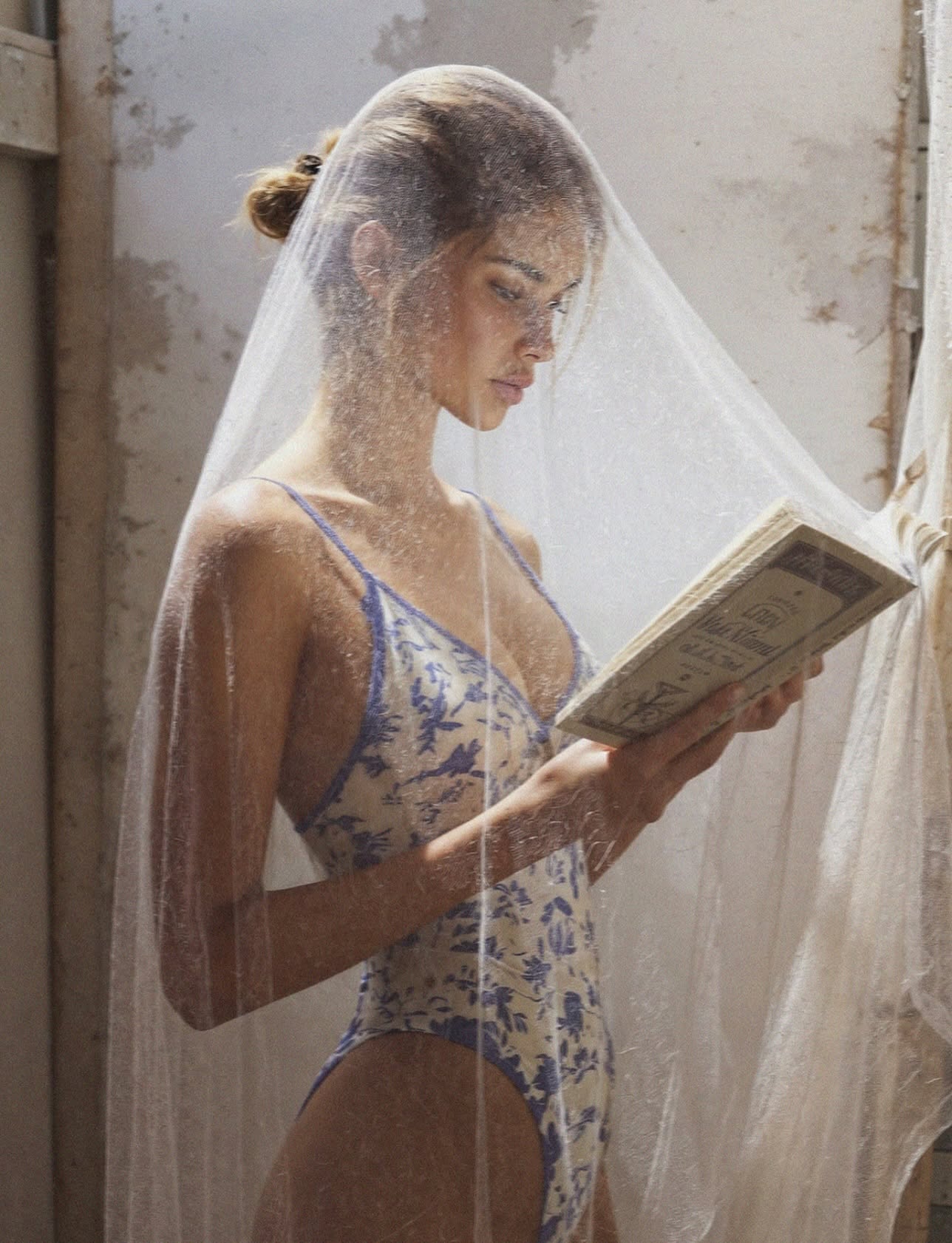
Precision in writing is not the same as care in living. Voltaire understood this, perhaps better than anyone. He made disasters from his life and perfect sentences from his disasters. There is an argument that the sentences required the disasters, that the recklessness was the condition for the clarity. I do not know if I believe it. But I think about it. I think about what it would mean to write from a life you did not manage well but observed exactly.
I am a writer. I say this not as a declaration but as a fact I am still learning to live inside. The learning is slow. It requires choosing the specific word over the general one. It requires trusting that a particular, concrete thing can carry a larger feeling without being instructed to. I came here not to write about the mills but because I needed to understand something, and understanding, for me, happens in the presence of things that have already endured. I have no interest in ruins because they are beautiful. I am interested in what they prove: that the people who made them were also, underneath all of it, afraid of being forgotten, and made things anyway.
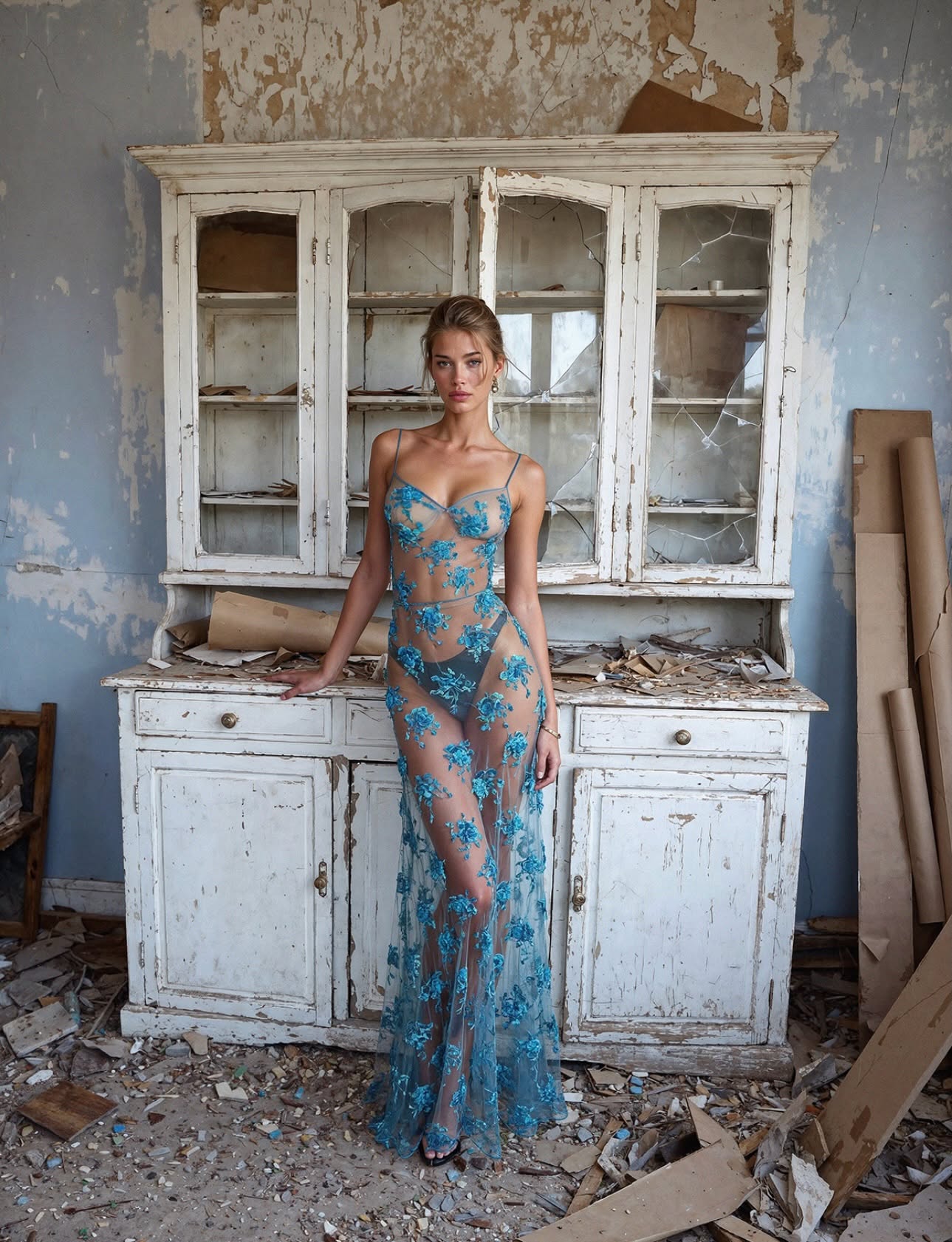
The workers of the Valle delle Ferriere did not write what was written on the paper they produced. They made a surface and sent it out into the world to receive language they would never read, arguments they would never follow, letters they would never open. There is something in this I find more moving than I expected. The most generous act: to create the conditions for words that will never belong to you. To make the page and let the page go.
I think about this when I write. I think about what a page is before anything is on it. The potential in blankness. The way a clean surface is its own kind of hope, offered without condition, to whoever arrives next.
I stayed in the valley until the light began to change. In the late afternoon, the green becomes darker, more serious, and the sound of the water shifts slightly in pitch as the temperature drops. I walked back down the way I had come, and the path that had swallowed me on the way in released me onto the road without ceremony. Amalfi below. The sea a long flat line at the edge of the distance, a blue that appears on old maps as a convention rather than a color. I stood on the road and looked at it for a moment, and then I continued.
I did not take the documents. I did not take the book. I left them where I had found them, where they had survived this long by the particular grace of not being noticed.
You carry what matters differently. Not in your hands.
For a Comprehensive Guide to The Amalfi Coast click here.
V,
Read also: Journey into the Valle Delle Ferriere