The room had a green tiled floor.
I remember that first. Not the view. Not the dress. The floor.
Green diamonds, faded by other summers, other bare feet, other women passing through rooms they would not own. It was the kind of floor that seemed to have been there before anyone had thought to call Amalfi beautiful. Before the rooms were rented. Before the balconies were photographed. Before the coast became something people arrived at carrying linen and expectations.
I stood on it in the morning in a towel.
The dress was on the bed.
The evening before, I had agreed to wear it. Agreement is simple at night. At night, everything belongs to an imagined version of oneself. At eight in the morning, with the heat already pressing against the shutters, agreement becomes more complicated.
The room was not a hotel. It was a private apartment high above Amalfi, in the part of the town reached only by climbing. The kind of place that still asks something of the body before it gives you a view.
Outside, the balcony looked over trees and a garden losing its manners in the July heat. I had coffee there in the towel, which I did not photograph.
Except that I did.
The day was going to be very hot. I knew this before the day had properly begun. There was no wind. There was only light. A white, waiting light. The kind that makes every decision feel already made.

We walked down the coast road first. It runs along the cliff above the water, and in the morning the light off the sea comes at you from every direction. At the bottom we made a left through a small arch in a wall and the town opened up: the main piazza, the cathedral at the top of its long staircase, the tourists already arranged at the outdoor tables as though they had been there since the night before.
Amalfi at mid-morning is not the town it is at dawn or at dusk. By ten the restaurants have set out their chairs, and the people occupying them have already ordered. I passed a table where a group of tourists were eating pasta at an hour that seemed too early for pasta, but this is a judgment that belongs to a different place. On the Amalfi Coast, the rules of eating shift with the altitude and the mood of the season.
The fountain in the piazza is fed by a natural spring coming down from the mountains above the town. Locals and tourists both know about it, though more of the tourists discover it by accident. A man with two plastic bottles was filling them methodically, screwing the caps on with the particular care of someone who does this every day and has done it every day for years. I stopped and drank from it. The water was cold and slightly mineral, the taste of the mountain rather than the town. A woman with a shopping bag waited behind me and then drank too, without ceremony, and continued.
You can learn a great deal about a place from its water. Amalfi’s water comes from the valley I was about to climb into. I did not know this at the time. I worked it out later, from the direction of the pipes and the particular quality of the cold. It seemed like useful information, in retrospect.
Drink where you are going before you go there.
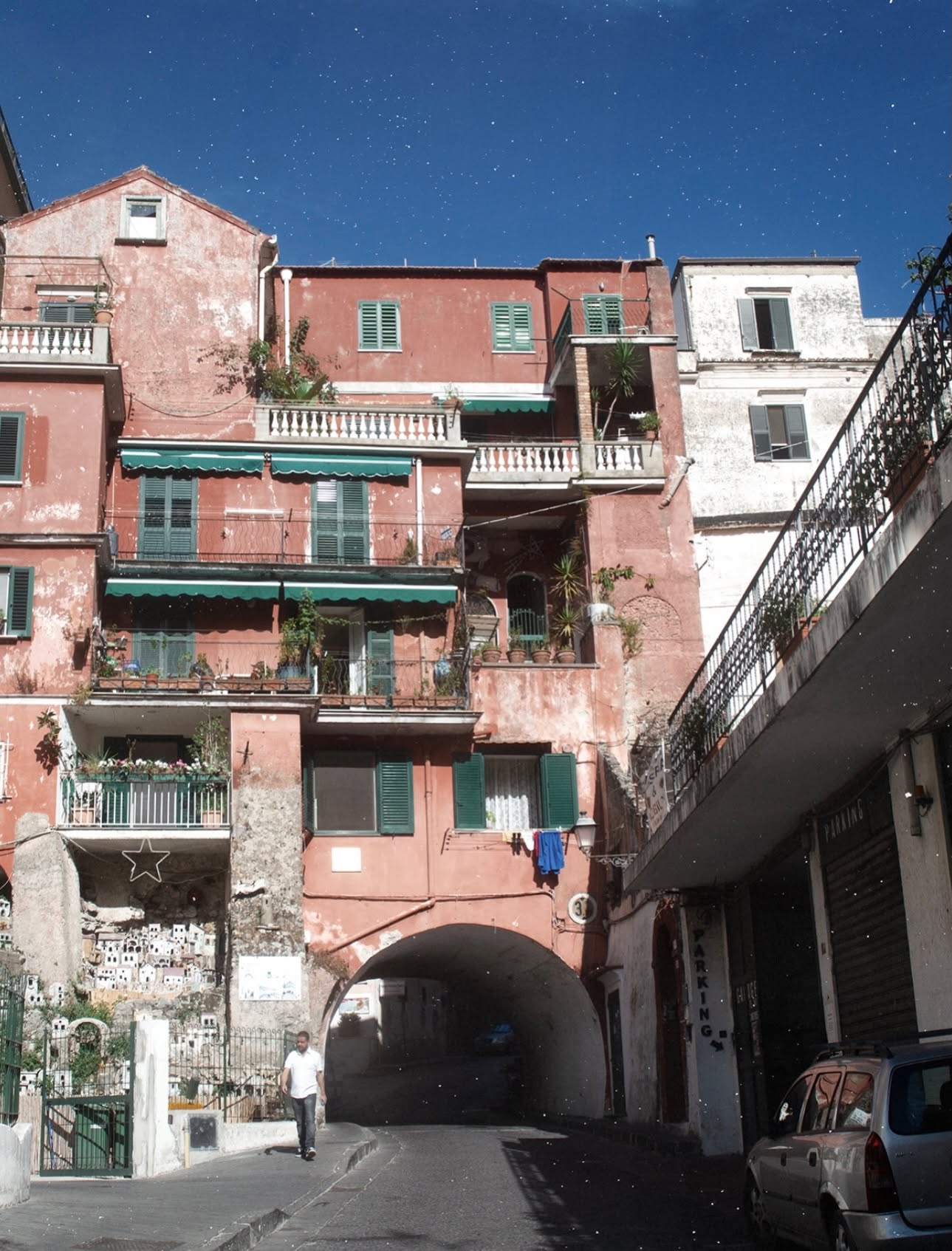
The archway that leads out of the town and toward the valley is not marked particularly. It sits in a wall beside a terracotta building with green shutters and the kind of balconies that have been growing plants so long the plants have become structural. I stopped at the archway because of what was beside it.
Set into the stone on the left side of the wall, at roughly knee height and extending upward for perhaps two metres, was a miniature world. Small ceramic houses, white-walled and terracotta-roofed, arranged on shelves cut into the rock. Tiny figures. Staircases no wider than a finger. A village built into the wall by someone who had decided that the stone needed to contain something more than stone.
I crouched down to look at it.
The detail was extraordinary, or perhaps what was extraordinary was simply the decision to make it. Someone had spent years building this into the wall beside an archway that most people pass without stopping. No explanatory sign. No artist credit that I could find. A nativity scene that had expanded over time into something that might have been the whole coast rendered in miniature.
I found myself imagining the families inside the tiny houses. Which window the light came through in the morning. What they cooked. Whether the children on one miniature street knew the children on the next one, or whether their whole world ended at the edge of the shelf.
The lives they might have lived in there, sealed and small and complete.
It is a strange thing to feel something for ceramic figures. I stayed with them a while, oddly reluctant to go.
This is something I have noticed. The things that stop you are not always the things you came to see.
Past the arch, the town ends, and the climb begins.
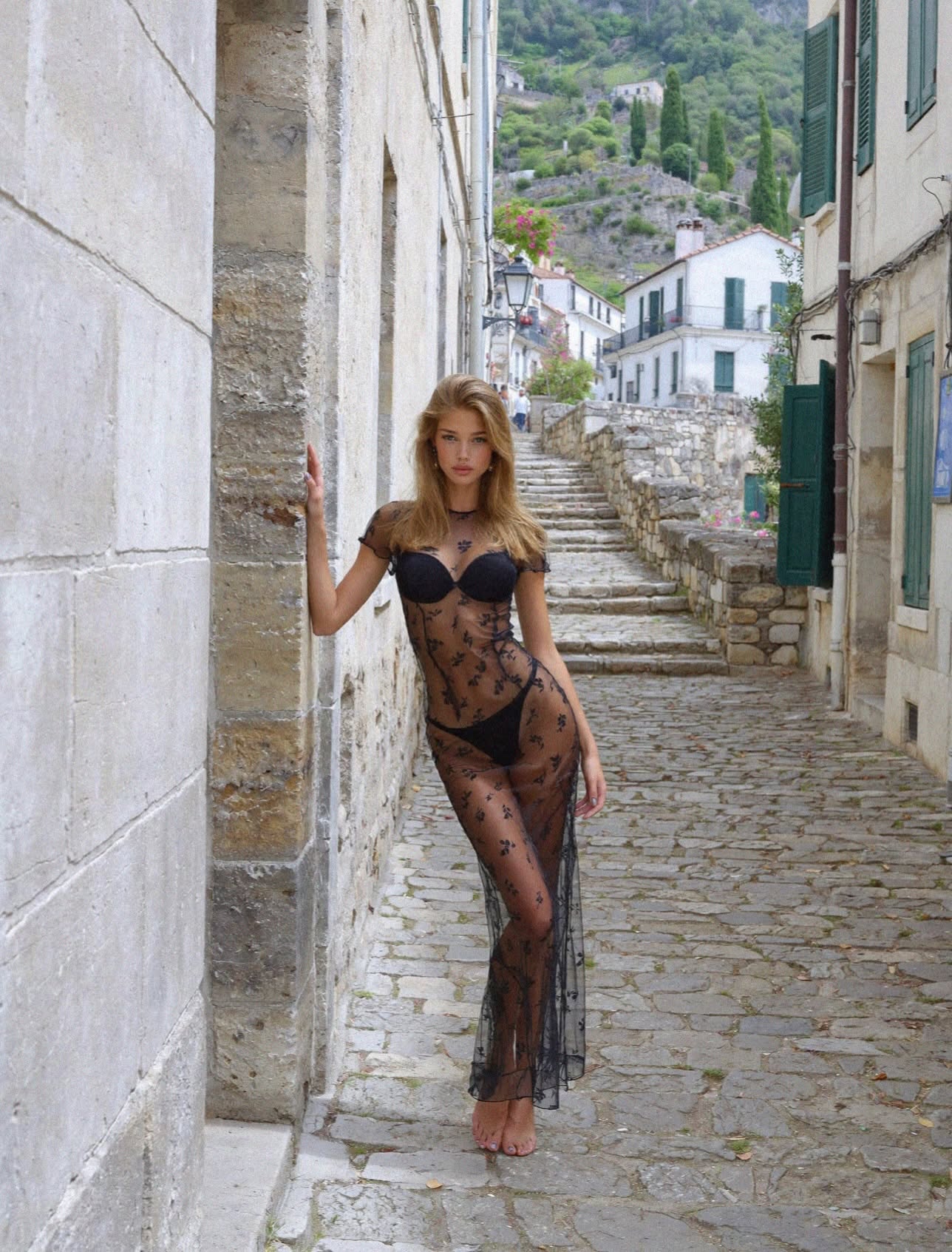
The path follows an ancient mule track, stone steps worn into a smoothness that suggests centuries of use. The steps are steep. Not dramatically steep, the kind that require hands and concentration, but steadily steep in a way that accumulates. After fifty steps you feel the heat differently. After a hundred you stop thinking about the town below and start thinking about the path ahead.
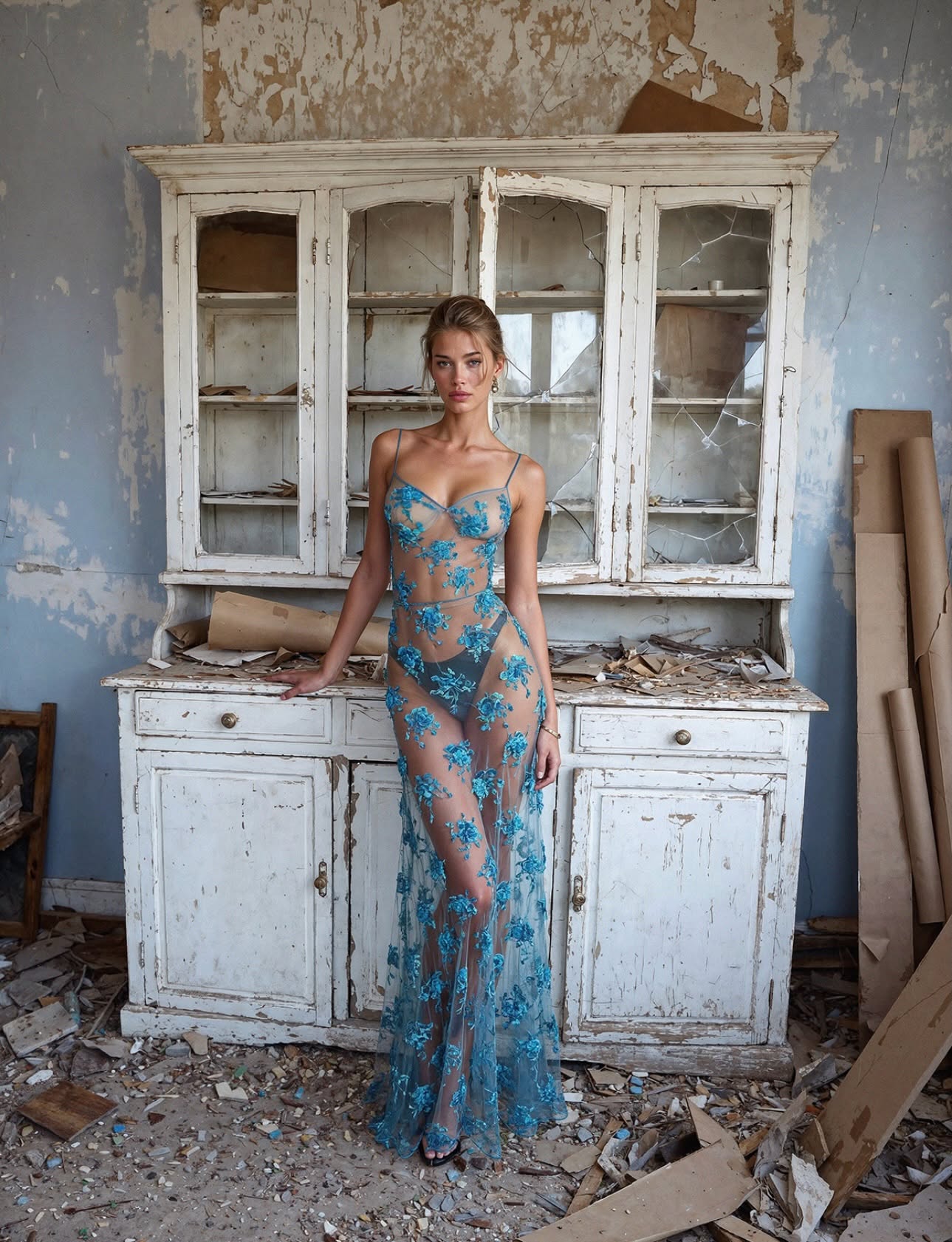
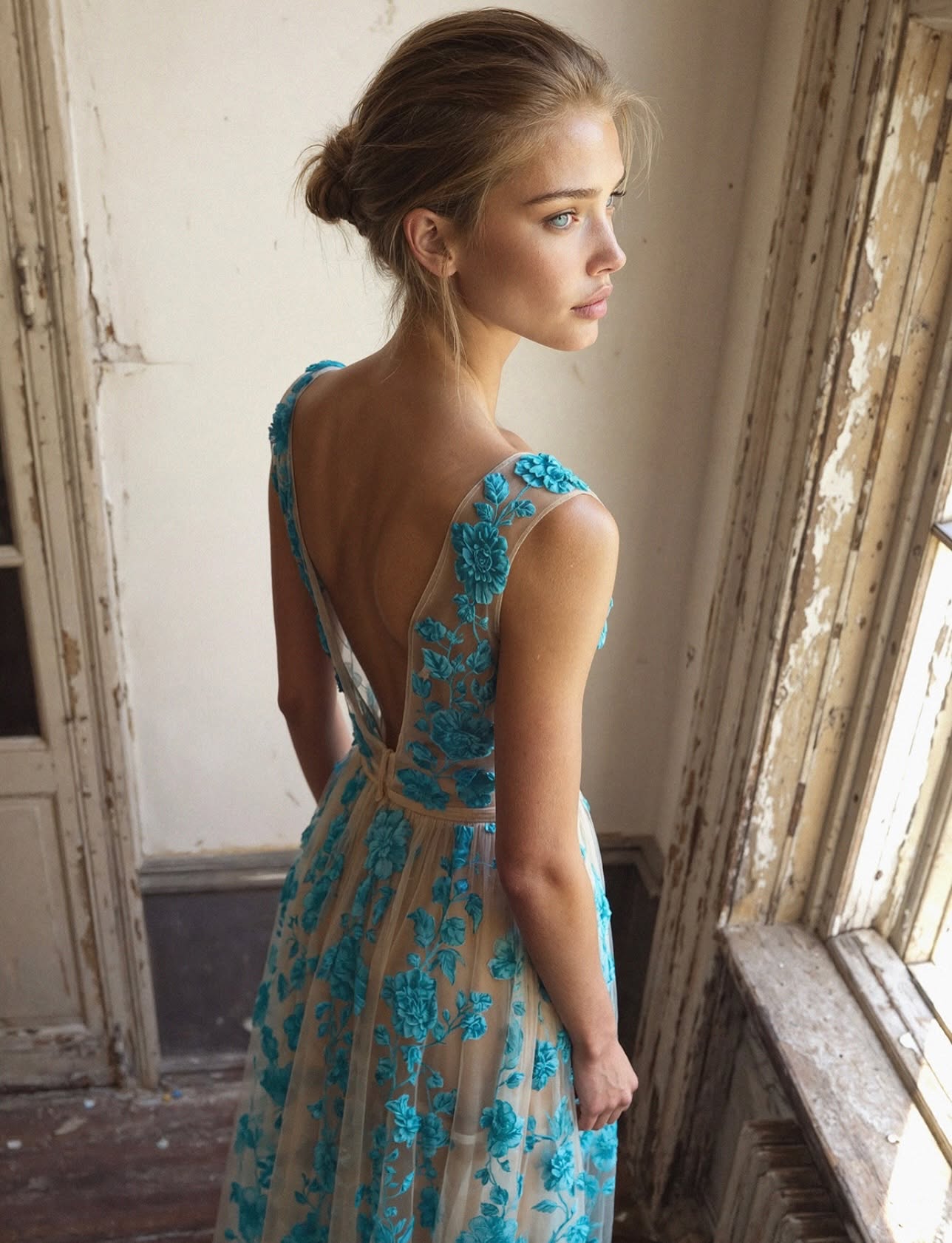
I was wearing the dress.
A sheer black lace by For Love and Lemons, floor-length, over underwear that was visible through it in the full light of midday. This had seemed appropriate, or at least interesting, when discussing it. On the stone stairs above Amalfi, in the open air, with the town still close enough to hear, it required a different kind of nerve.
For a moment I thought of Camille.
I could see her perfectly, leaning against the counter in my kitchen in Paris, barefoot, amused, pretending not to be impressed.
“You wore that? In the street?”
She would have laughed first. Then she would have asked to see every photograph.

A man came down the stairs past us. He was carrying grocery bags in both hands and he did not look at me, which was either very polite or very Amalfi. A woman with a child in a pushchair navigated the lower steps and disappeared into the town. Life continued around the photoshoot as though the photoshoot were not happening, which was both reassuring and slightly humbling.
She was perhaps seventy.
Perhaps more.
She came up the stairs below us at a pace that was careful and completely unhurried, wearing a dark dress and flat shoes, carrying a shopping bag in each hand. I had understood intellectually that people lived at the top of this path. In the villages built into the upper slopes of the valley, above the road, above the mule track, where the only way down is the same ancient stone staircase. I had not considered what this meant in practical terms until I watched this woman climbing in July with her shopping.
She did not look up at me. She was focused on the stairs, on her own feet, on the particular negotiation of each step. She passed us without stopping and continued upward, steady and certain, and in a few minutes she was above us, still climbing, already smaller against the stone and the green.
I did not photograph her.
Some things are not for photographing.
Further up, a donkey appeared at a turning in the path, loaded with supplies, being led by a man in his fifties who looked at us briefly and continued past with the calm expression of someone who has worked this path long enough that nothing on it surprises him. The donkey was indifferent to everything.
This, I thought, is the correct attitude.
The deliveries to the upper villages still happen this way. The road does not reach them. The truck cannot make the corners. The mule track remains the mule track, and the animals that worked it three hundred years ago are still working it, or their descendants are, and the packages going up and the packages coming down are different but the route is not.
At some point during the climb, I stopped being embarrassed.
I do not know where it happened.
Not at the first step. Not after the man with the shopping bags passed us without looking. Not after the woman with the child disappeared into town. For a while I was still aware of the dress, of the lace, of the transparency of it in the hard light, of the ridiculousness and the beauty of doing such a thing on an old mule path above Amalfi.
Then it left me.
The shame, or whatever smaller cousin of shame it was.
It did not announce itself. It simply loosened its hand.
I was no longer a woman in a black lace dress wondering who might see her. I was a woman climbing toward a valley. The stones were old. The light was violent. The town below had begun to disappear.
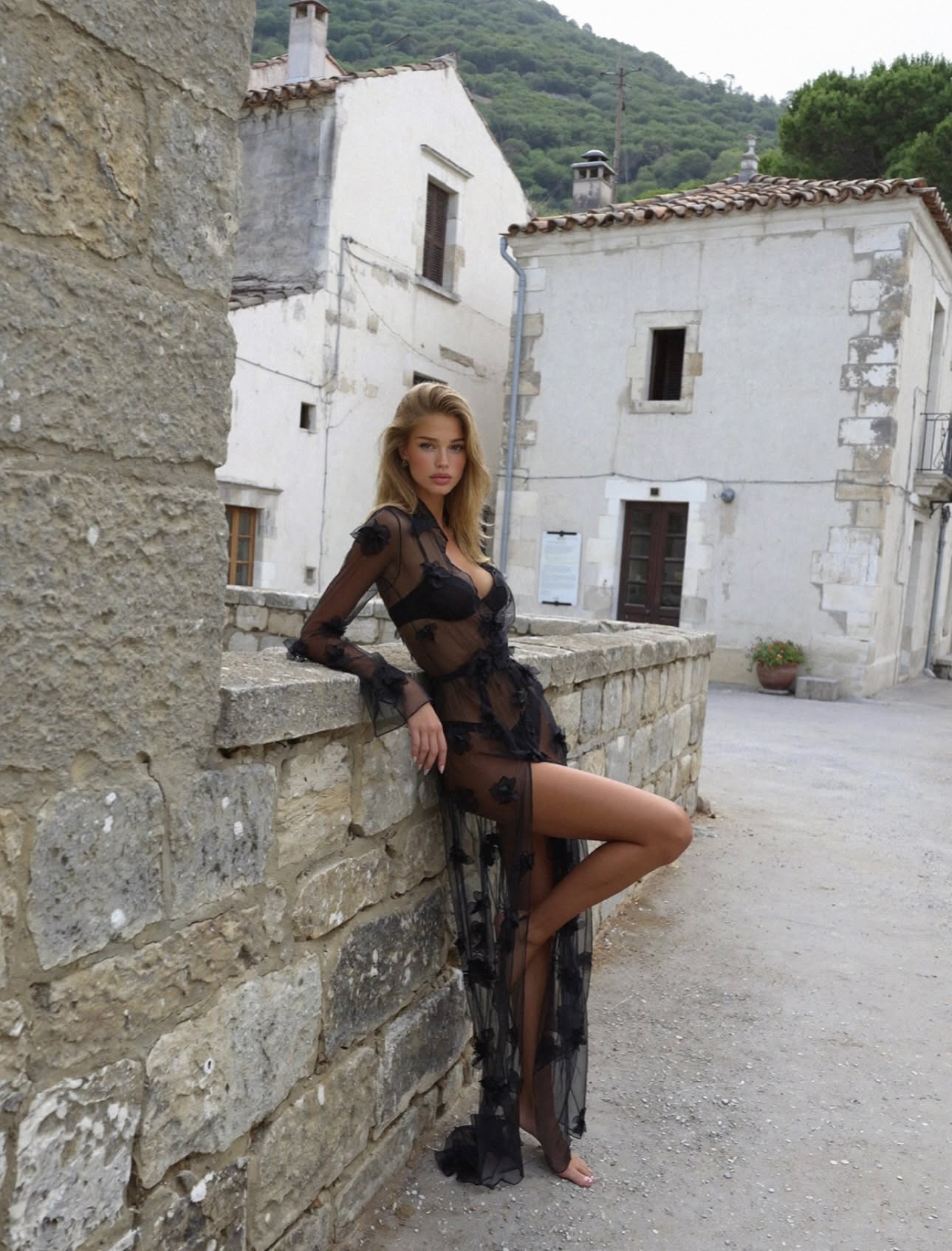
The photographer had known before I did.
He had seen the image before the image existed. The black dress against the pale stone. The body against the climb. The softness of lace against something ancient and indifferent. I understood it later, step by step, as the valley opened above us.
First the mouth of it.
Then the green.
Then the cliffs.
Then the feeling that the place had been waiting without waiting at all.
The Valle delle Ferriere opens slowly as you climb. First you see the mouth of it: two cliff walls facing each other across a gap, and the green that fills the space between them, and above it the sky. Then, as you rise, the valley reveals more of itself: the lemon groves on the lower slopes with their blue and green netting, the terraced hillsides, the water that has been cutting through this landscape for longer than the town below has existed.
It does not look managed.
It looks like something that has been doing exactly what it intends to do, without reference to anyone’s plans.
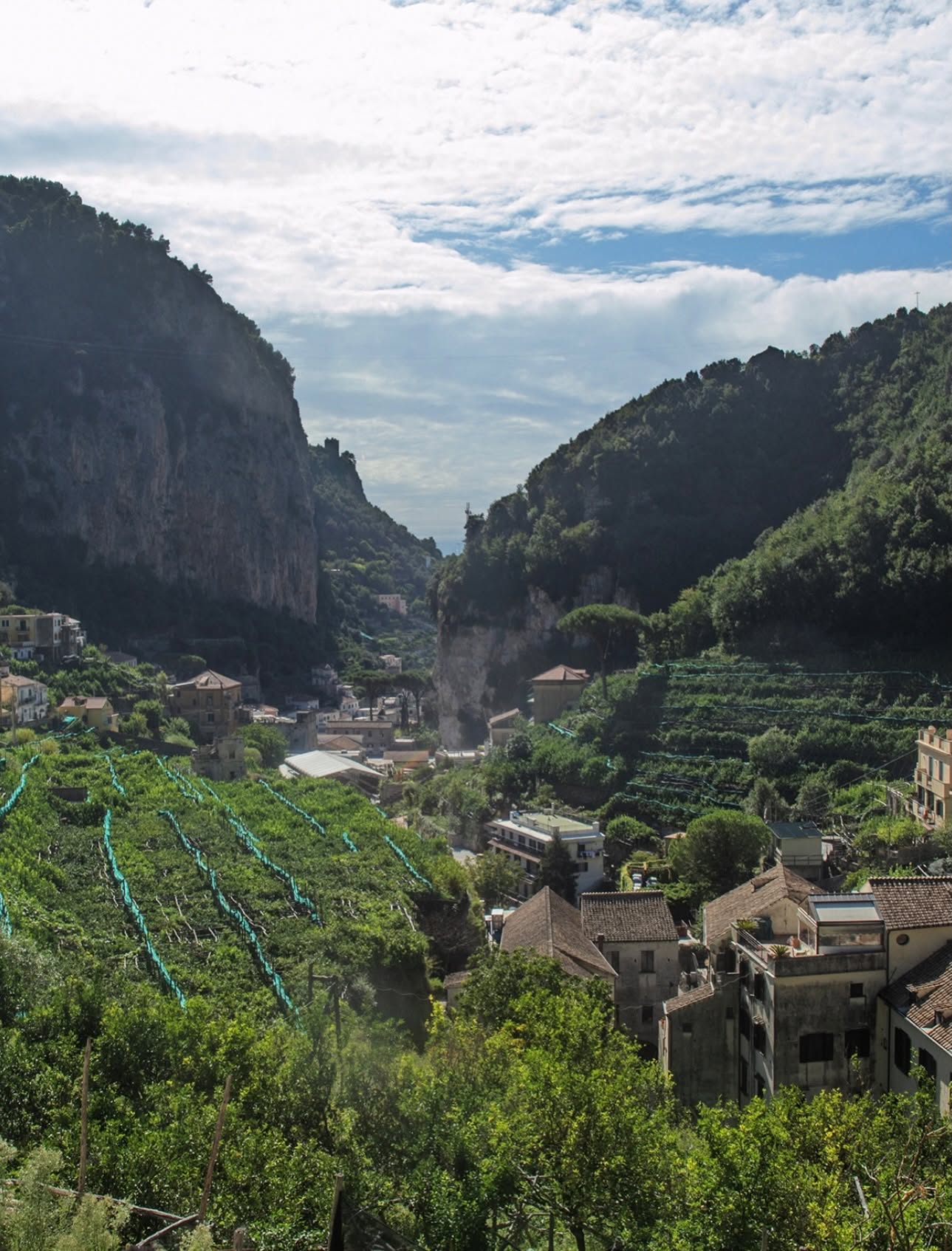
I stopped and stood still and looked at it. The photographer kept shooting. I was not posing by then. I was standing there, looking at a valley.
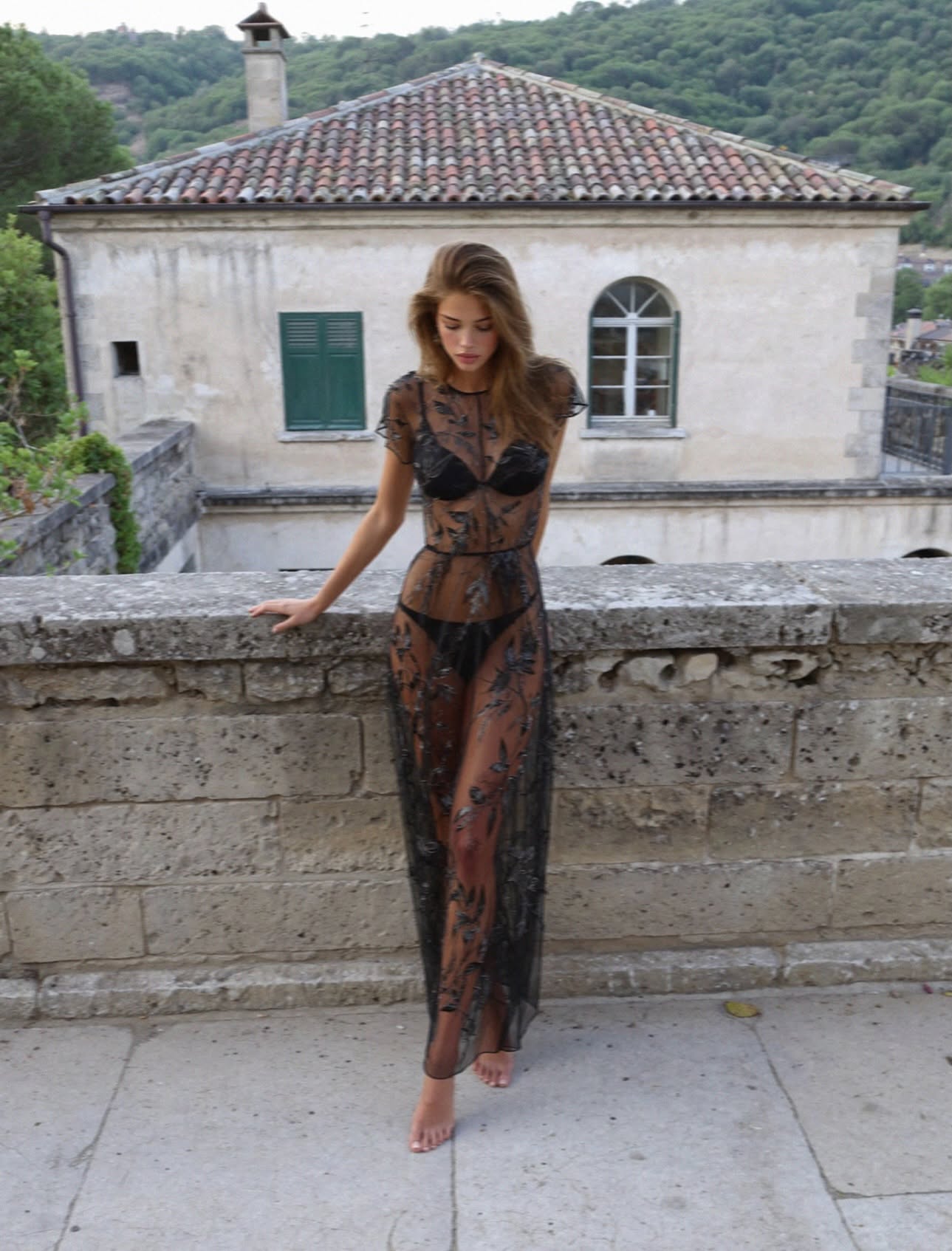
I understood, at that point, what these images were.
Not in any grand sense. Simply: I understood that they were part of something. A collection I was making, a record of places I had moved through and what it had felt like to move through them. I did not know where the collection was going. I do not know now.
But on the stairs above Amalfi in a sheer black dress with the valley opening above me and the town far enough below that I could not hear it, I knew that the images were real and that they were mine and that making them was its own justification.
This is something you either believe or you do not.
That the making is enough.
That you do not need to know where it is going to understand why you are going there.
There was a small restaurant before the path entered the valley properly.
A terrace. A few tables. Shade so complete it felt almost private. They brought water without being asked, or perhaps we asked, and I have forgotten. I only remember the glass. The cold of it. The way it seemed to return me to myself.
I sat there and looked back down the way we had come.
Below us was the town.
Above us was the valley.
For a moment I belonged to neither.
That is often the place where I understand things best. Not at the beginning. Not at the arrival. Somewhere between. Still warm from the climb. Still uncertain. Still dressed for a version of myself I had not quite become.
The rest of that day happened in the valley, among the mills and the water and the ruins.
This was before.
The heat. The dress. The fountain. The miniature village in the wall. The woman climbing with her shopping. The donkey carrying what the road could not.
The part before the story.
Sometimes that is the story.
V.
You can view the rest of this sotry here:

Read also: Love Letters in the Valle de Ferriere