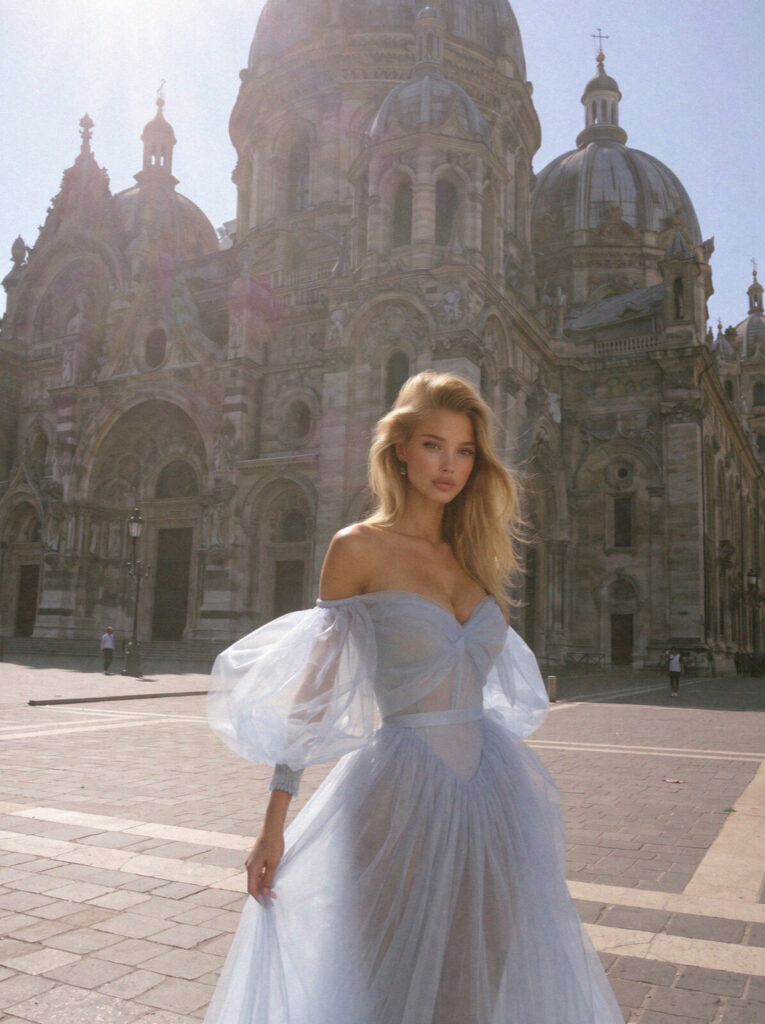
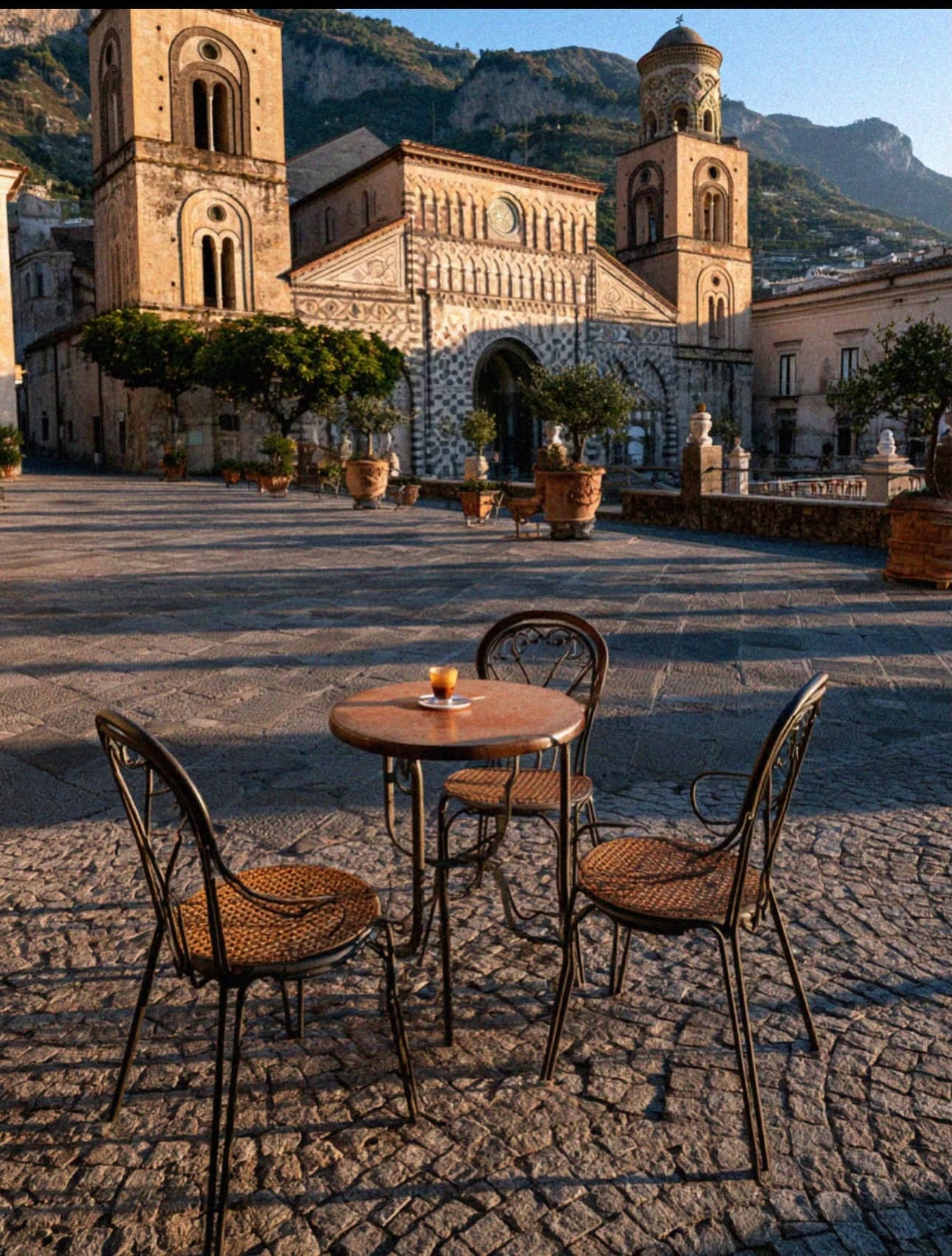
The piazza was empty when I arrived.
A café table stood in the centre of the square, two chairs pulled slightly apart as though someone had just left. The cathedral behind it was catching the first real light of the morning, the stone turning from grey to gold in the time it took to set down my bag. I sat at the table. An espresso appeared. I did not ask for it. This is what Ravello does from the first hour: it anticipates things.
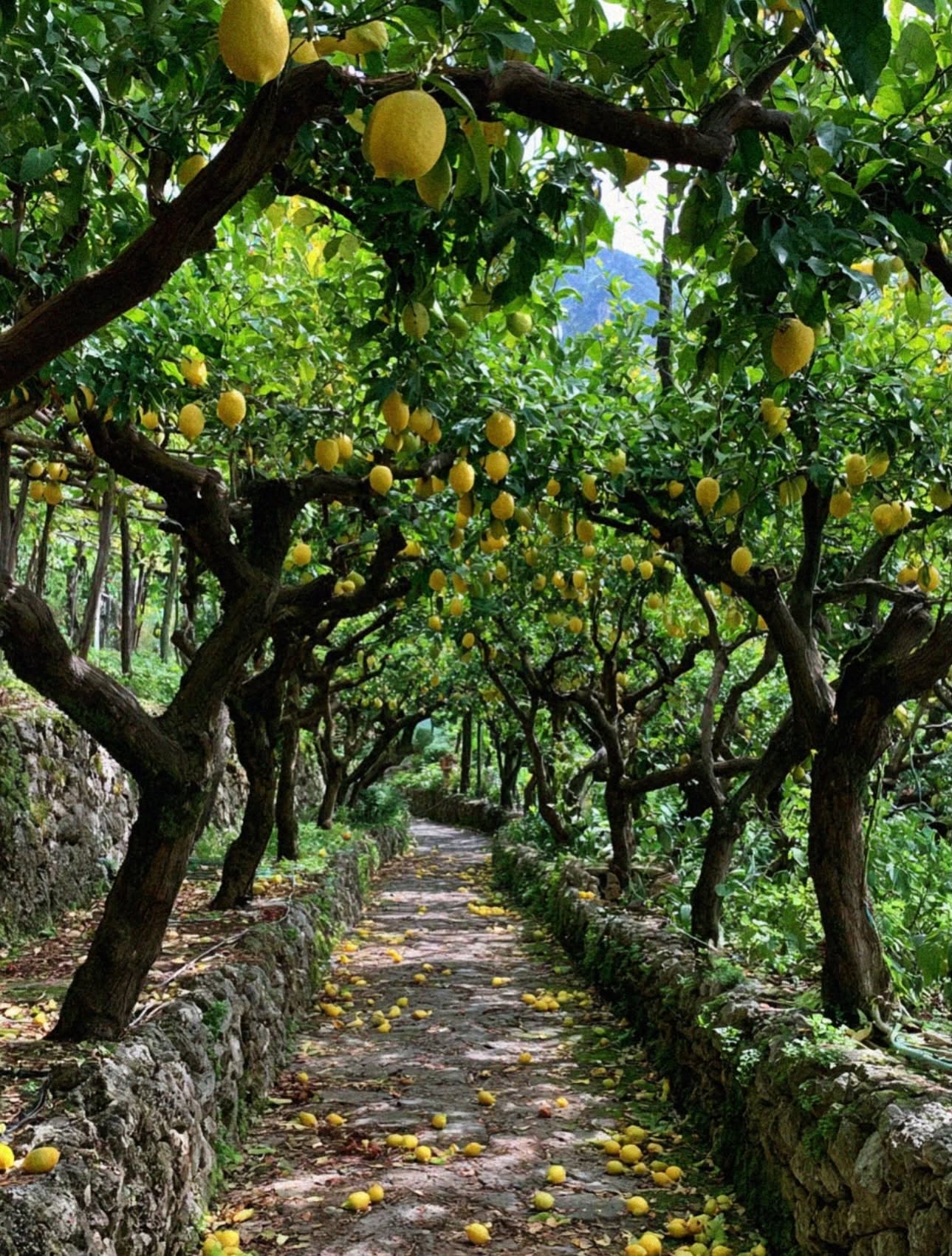
I had come up from Amalfi the day before on the SITA bus, a narrow winding road through lemon groves and dry stone walls, the sea dropping below us in increments until it was simply a colour visible between the buildings. Three hundred and fifty metres above the coast. The air was different. Cooler. Slower.
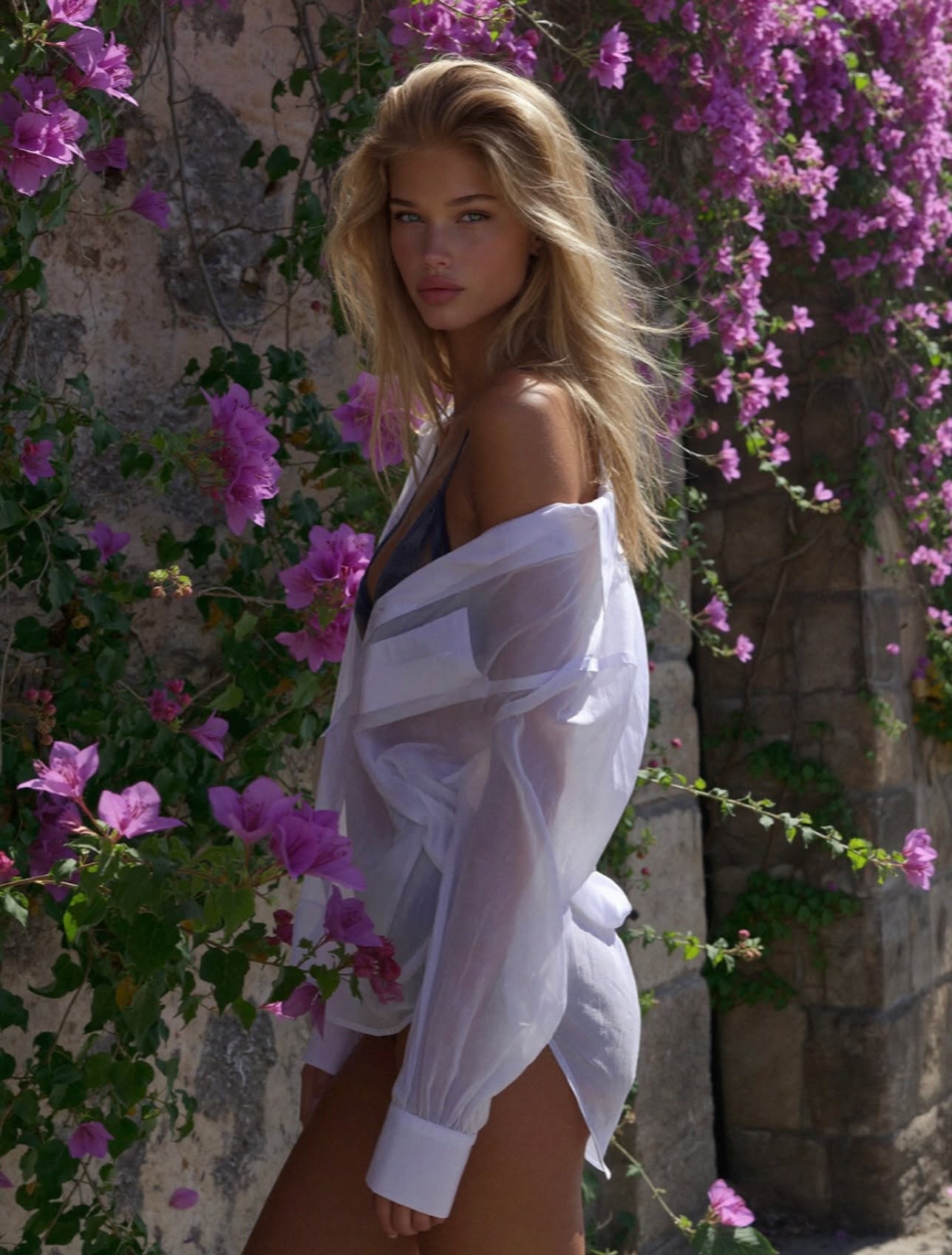
The town is small enough to learn in a morning. The streets lead off the piazza in several directions, all of them narrow, all of them eventually arriving somewhere unexpected. A ceramic staircase. A wall thick with bougainvillea. A gateway that opens onto nothing but sky and sea.
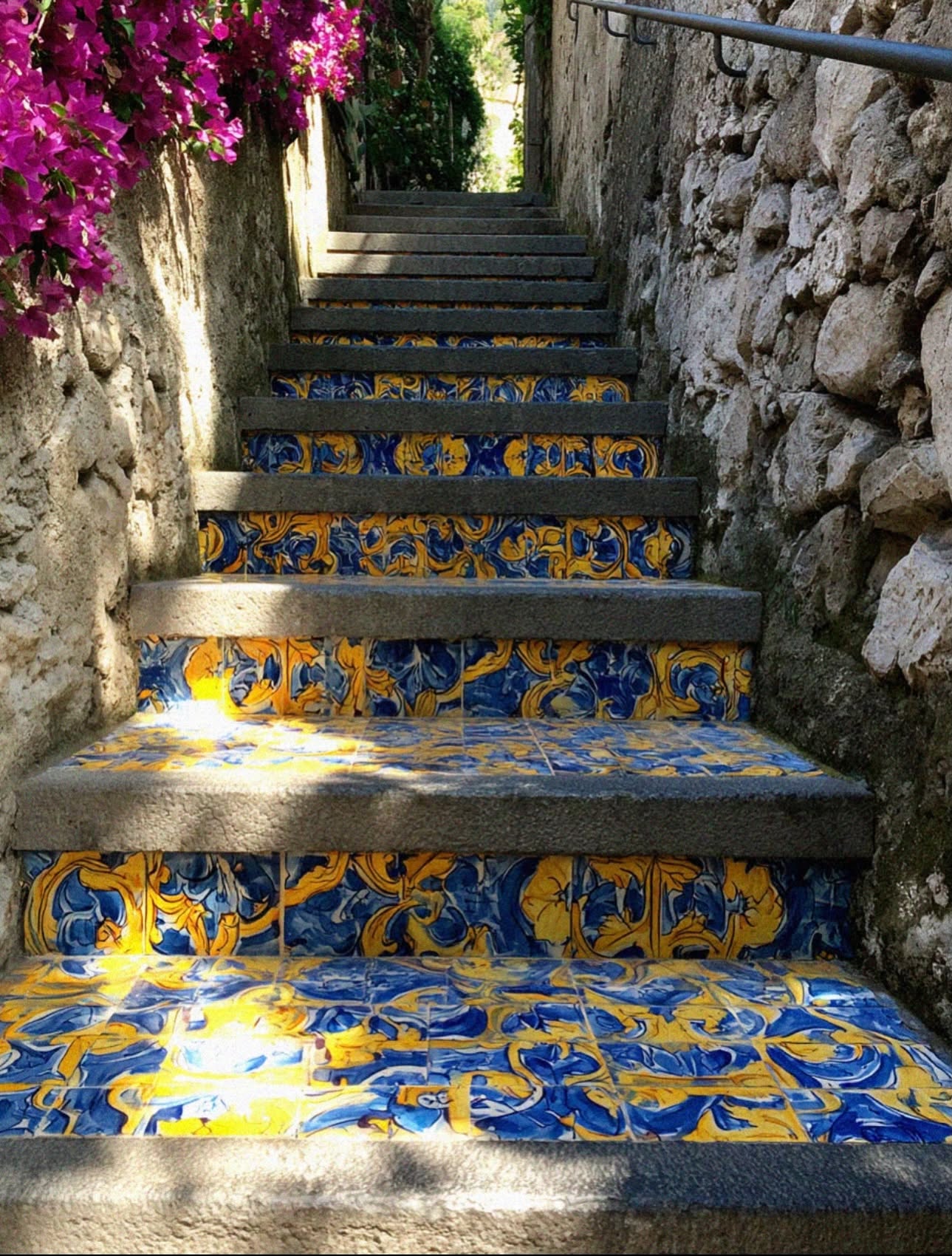
I found the ceramic staircase on the second day, on one of the streets that descend steeply from the main square. The tiles were blue and yellow, hand-painted, each riser a different pattern. Pink bougainvillea fell across the upper steps from a wall above. The light came at an angle that made the cobalt almost luminous. I stood there and lost all sense of time, which happened often in Ravello. The town has a quality of making time go sideways.
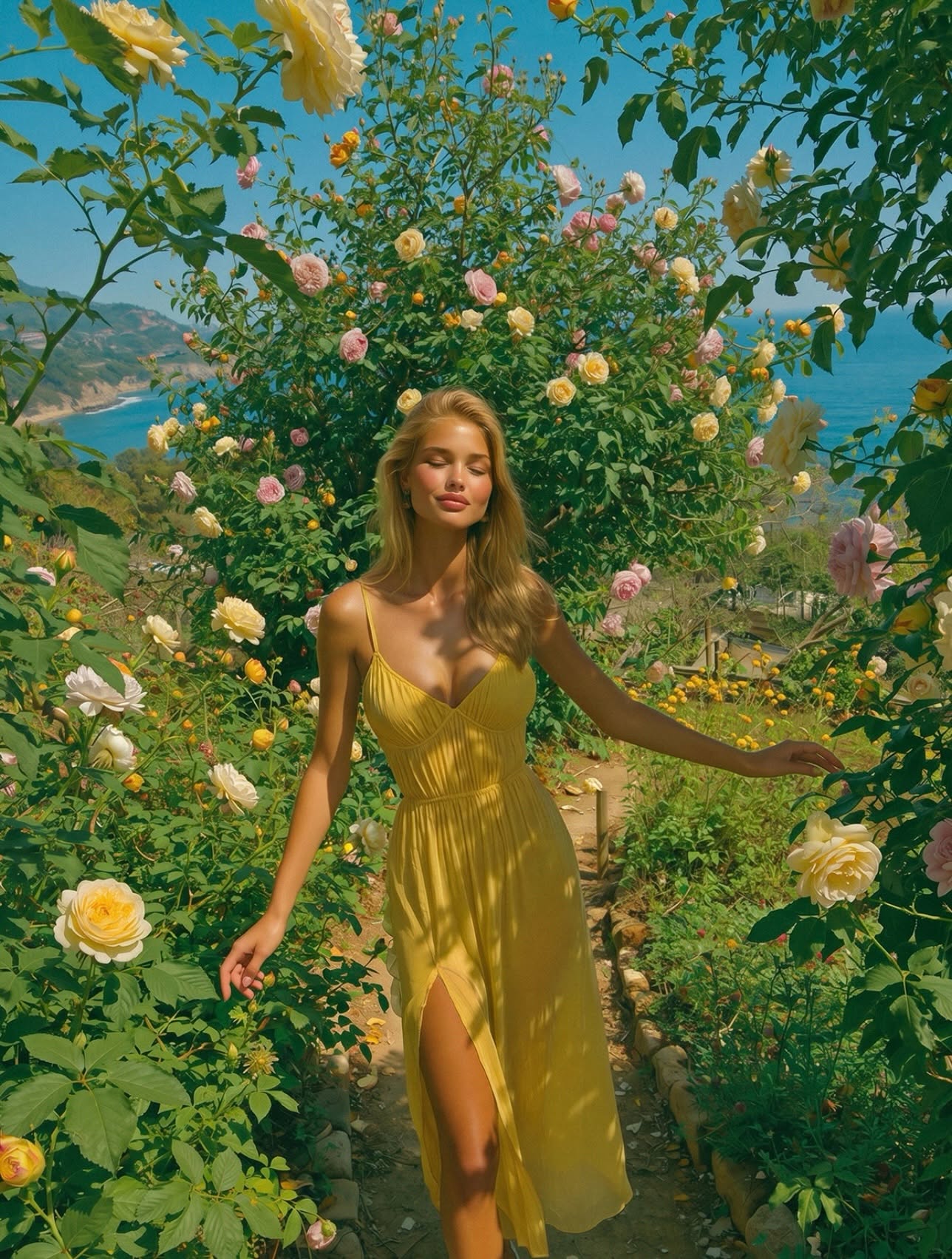
The rose garden was a surprise.
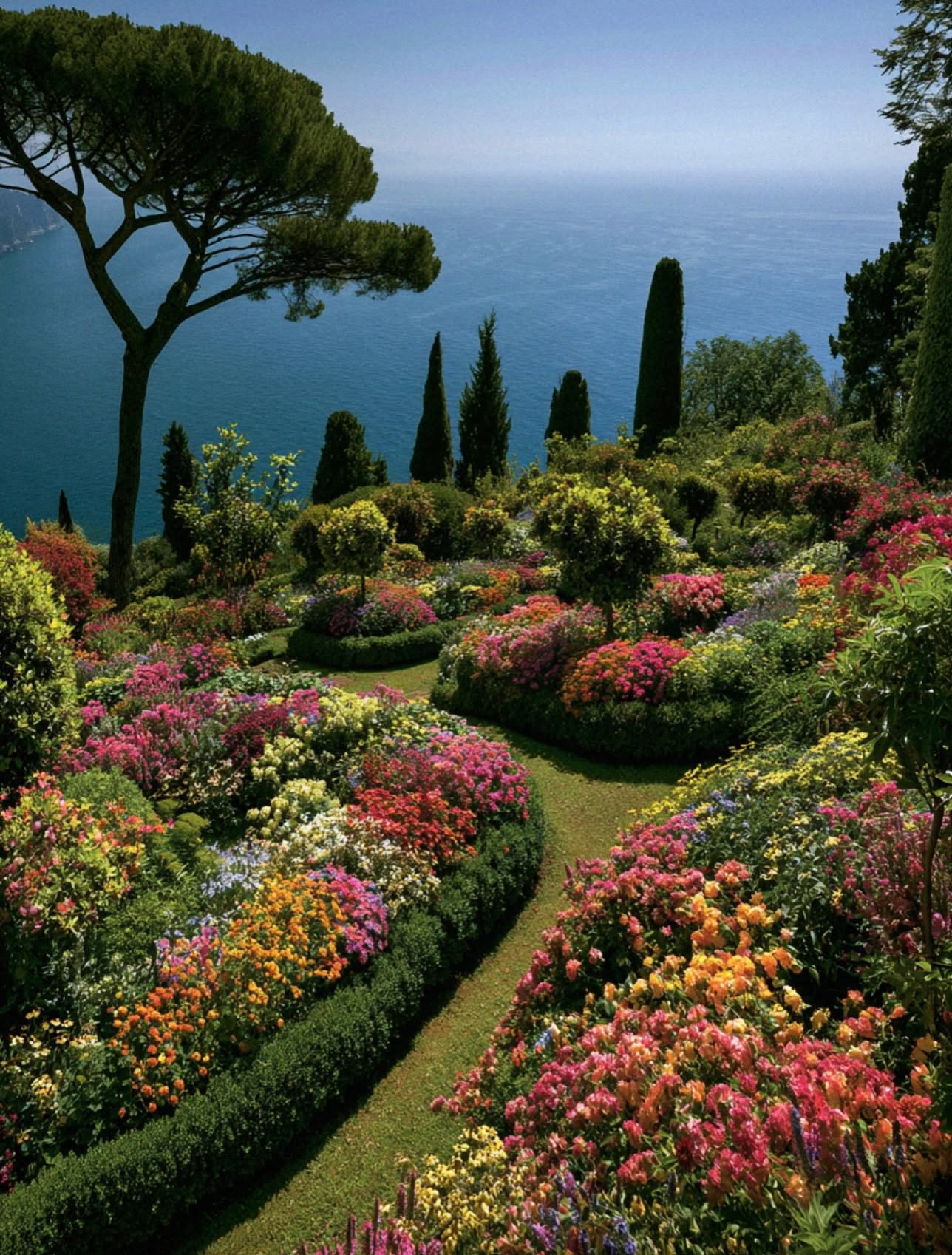
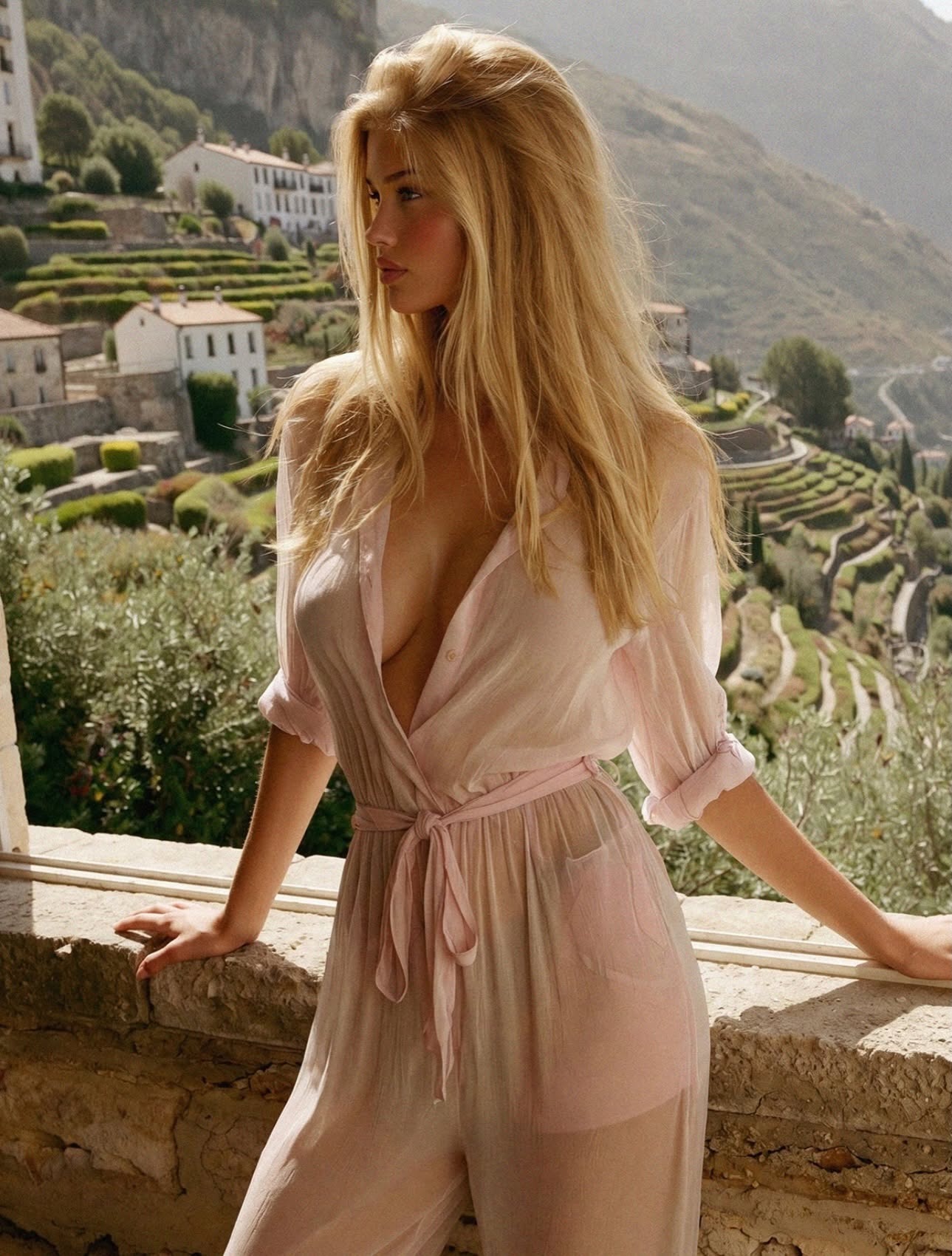
I had followed a path beyond the lower terraces of the hotel, past cypress trees and through a gate that seemed to be there purely by accident. And then it opened. Roses in every direction, yellow and white and pale pink, heavy with summer and slightly untamed. Beyond the roses, through a gap between the trees, the Gulf of Salerno lay flat and blue under the afternoon sun. I walked through the garden slowly. The dress I was wearing caught on a branch, and I stopped to free it, and in that moment, holding still among the flowers with the sea somewhere behind me, I understood why people have been coming to this place for a hundred years.
There is a garden at the edge of the cliff, the Belvedere dell’Infinito, the Terrace of Infinity, where a row of marble busts faces the sea from the balustrade. Virginia Woolf stood there. T.S. Eliot. Winston Churchill. Greta Garbo came here in secret in 1938 and chose this garden of all the gardens in the world. I walked the length of the terrace in the early evening, when the day visitors had gone, and the light had turned amber. The busts watched the sea. The sea did not notice. There was no wind.
You think you understand what people mean when they describe a view that takes something from you. You don’t, until you stand at that particular balustrade and see the horizon negotiate with the sky somewhere in the distance and feel the three hundred metres of cliff drop away beneath your feet.
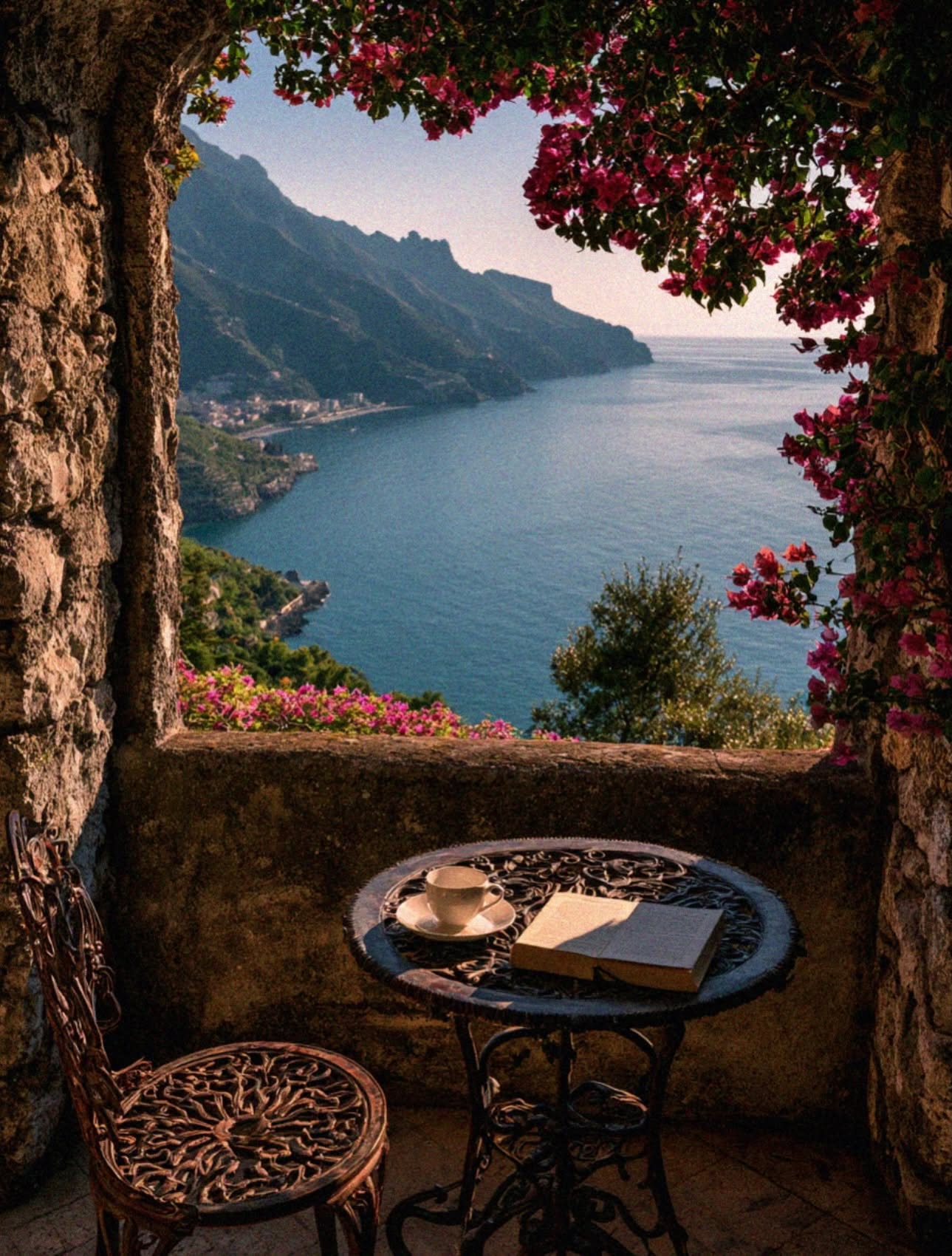
In the mornings I took coffee on the terrace.
The table had a wrought-iron base and a top that was cold in the early hours. A cup. A book I opened but did not read. The bougainvillea grew through the stone arch above the terrace wall and hung in clusters over the view. The Gulf of Salerno was pale at seven in the morning and turned darker and more certain as the light came fully in. The mountains on the far side were always slightly haze-blurred.
I spent a long time at that table. Not thinking, particularly. Watching the light move.
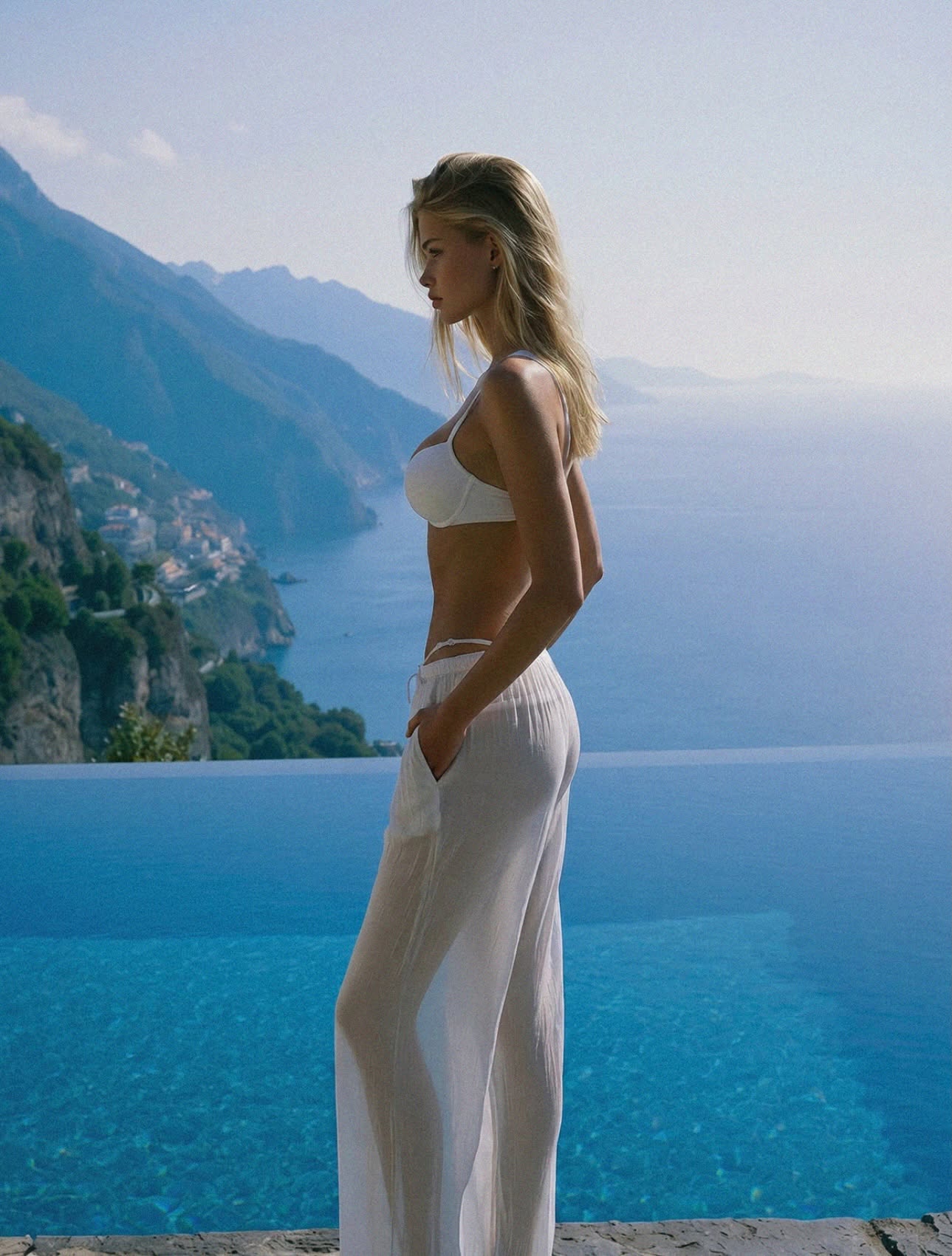
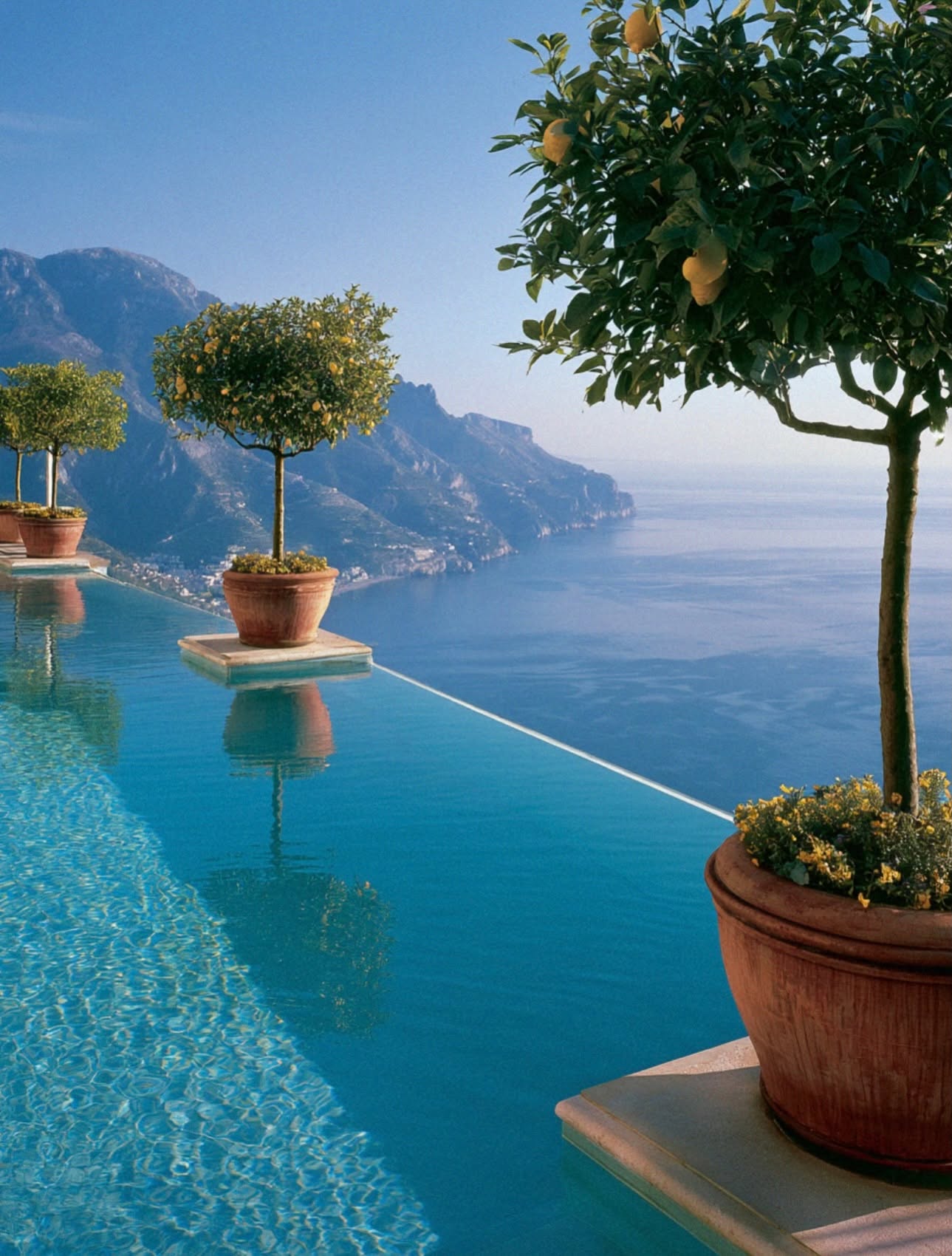
The pool was below the terrace, long and still, lemon trees in terracotta pots lined along its edge and reflected in the water with a clarity that made the reflection seem more real than the trees themselves. I swam in the late mornings, after the haze had burned off. The water was the same blue as the sea below. From the water, the Amalfi Coast stretched away in both directions, the cliffs dropping into the Mediterranean, the white houses of the villages clinging to the rock face. I would close my eyes and float and listen to the water.
In the afternoon, when the heat was absolute, I lay on the chair beside the pool with my eyes closed and the sun on my face and thought about nothing with considerable concentration.

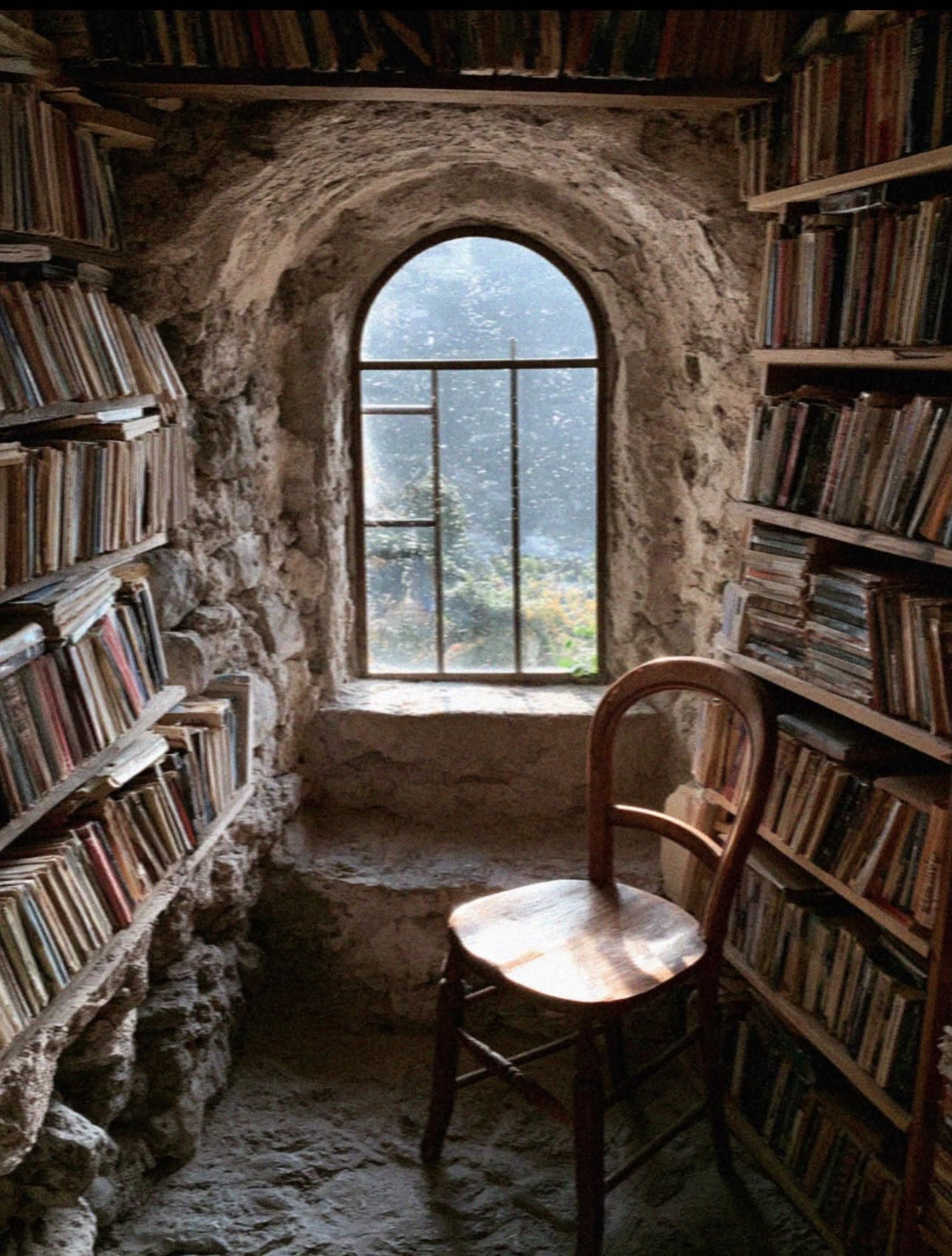
There was a bookshop down one of the side streets. Or perhaps it was a private library that had simply never fully closed. The walls were raw stone, very old, the ceiling low and vaulted. Bookshelves ran floor to ceiling on every side, the books tightly packed and without apparent order, Italian and French and English spines pressed together. A wooden chair sat beneath an arched window that looked out onto a garden. Afternoon light came through it in a single column.

I went back three times.
The second time I took a book from the shelf. I do not remember which one. I sat in the chair and read two pages and then looked out the window at the overgrown garden for a long time. The third time I wore the cream dress that moves when you walk, and I turned to leave and caught my own reflection in the dark glass of a bookcase and did not immediately recognise myself. This is also something Ravello does. It changes the terms of who you are while you are inside it.
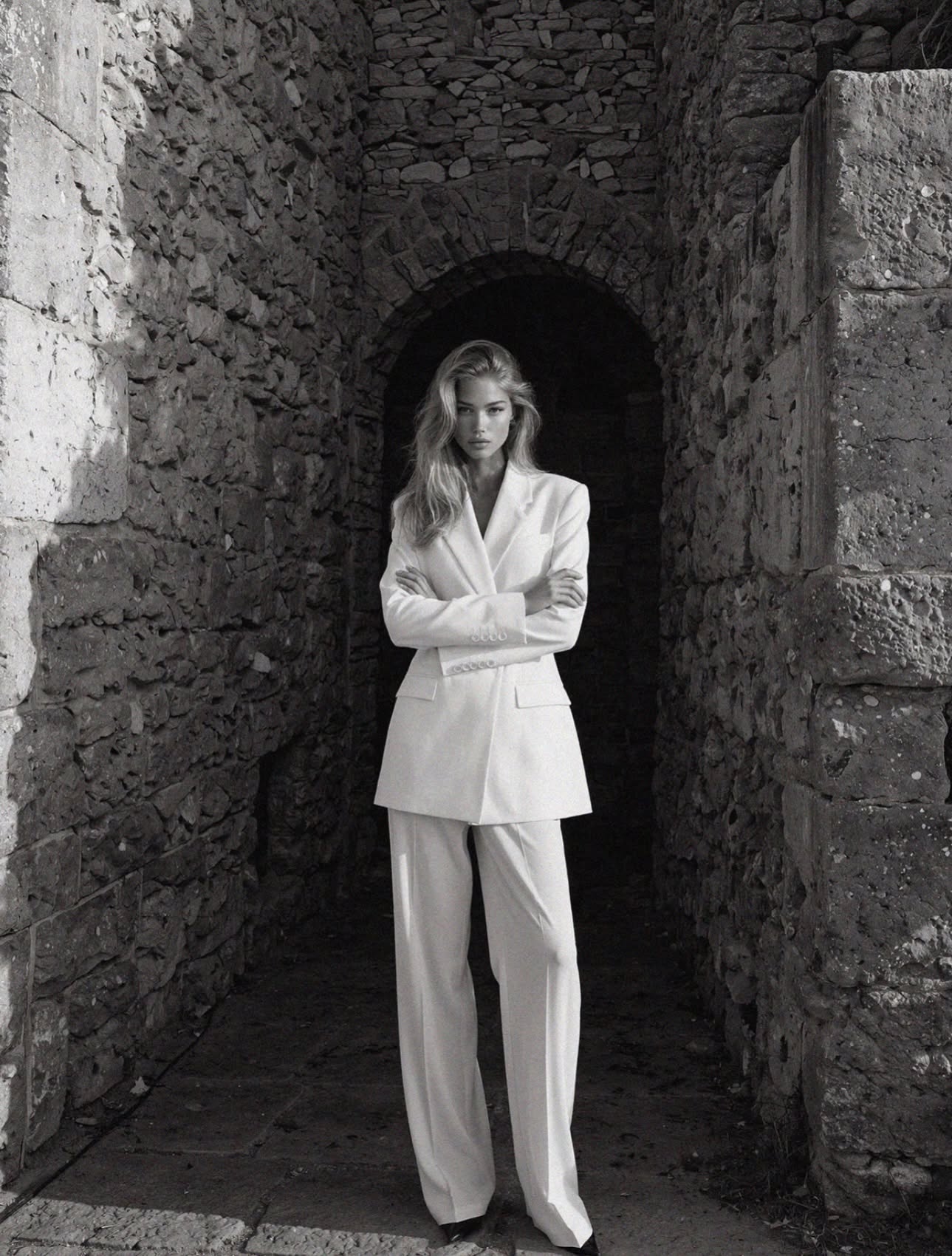
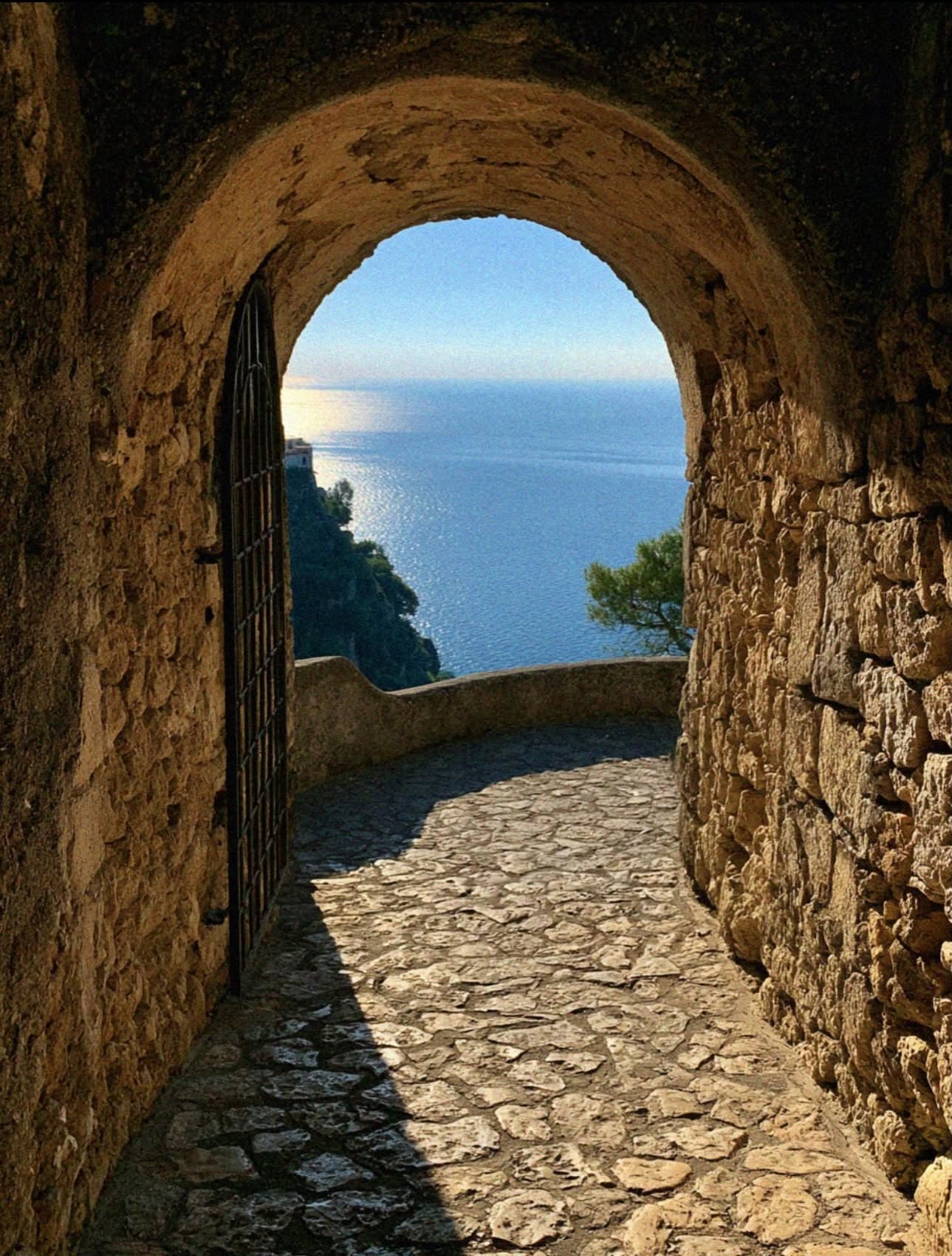
The stone archways are everywhere.
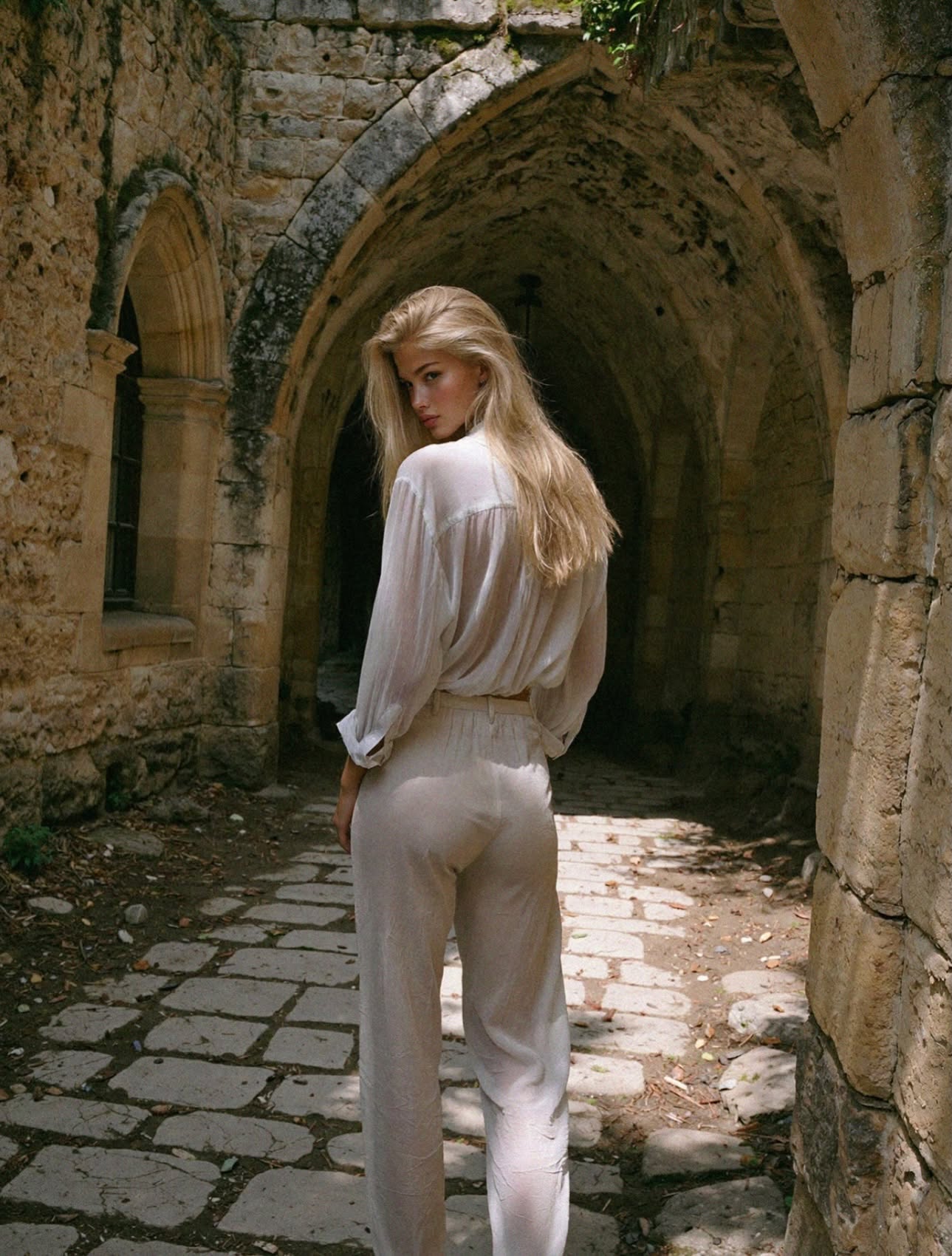
Medieval, most of them, built before the idea of a view was considered something to be arranged around. But they arrange themselves anyway. A gateway at the end of an alley frames the sea so precisely that it seems intentional, composed, the cobblestones leading through shadow to that rectangle of light and blue water beyond. I walked through it on the last morning and stopped on the other side and turned back to look at the arch from the outside. The shadow inside it. The way the stone curved.
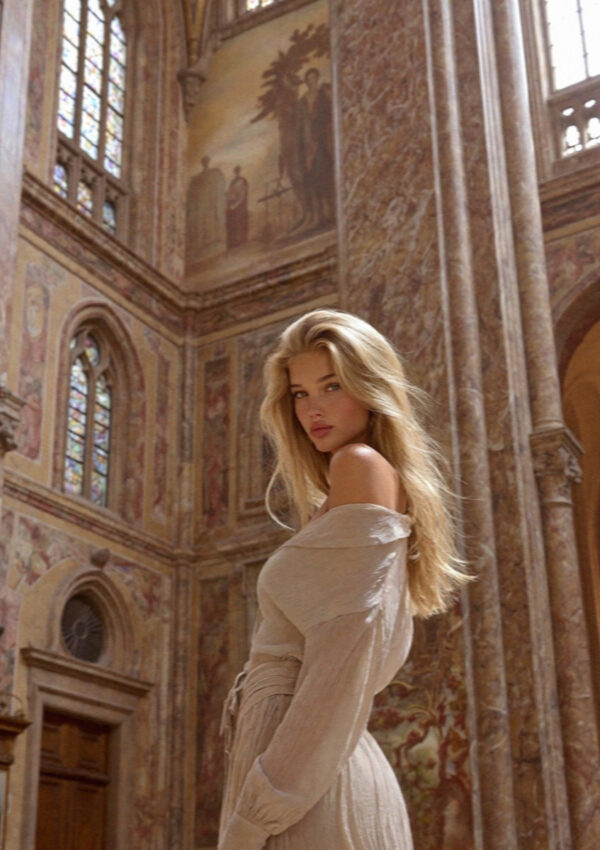
There is another archway further along, a series of Gothic vaults in what was once a cloister or a monastery, the stone worn smooth in places by centuries of passing. The light inside was dim and golden, coming from the gaps in the vaulting where the stone had shifted. I walked through slowly and came out the other side into full sun and stood blinking for a moment, adjusting.
Later that afternoon I stood at the cliff edge above the coast in the white dress and the wind came in from the sea, and the clouds had gathered on the horizon with a purpose they hadn’t had in the morning. The light was harder. More dramatic. The coast curved away below me, the villages small at this distance, the sea a shade darker than it had been.
I had the thought that I had been here longer than a few days. That Ravello had a way of compressing time in one direction and stretching it in another, so that the mornings felt very brief and the afternoons lasted until they were simply over.
The bus back to Amalfi left from the piazza.
I sat at the same café table in the same square while I waited. The cathedral was in afternoon shadow now, the stone grey again. Two children crossed the square running, one chasing the other, and then they were gone into a side street, and it was quiet.
The ceramic staircase. The rose garden. The water in the pool. The bookshop with its single column of afternoon light.
I do not know what people mean when they say a place stays with you. I used to think it was something they said because they had run out of more precise language.
I am less certain of that now.
Somewhere you are reading this and thinking about whether to go. The road up from Amalfi is narrow and takes longer than you expect, and the town at the top is smaller than you imagined.
Go anyway.
V.
You can read my complete guide to Ravello here.
More images from this trip: