What to book before you come
Ravello sits three hundred and fifty metres above the coast and is reached by a bus up a series of hairpins, which is why it is quiet when Positano is not. Almost nothing here needs booking. The villas charge a few euros at the gate and are worth it.
- A guided walk through the villas. Villa Rufolo and Villa Cimbrone are gardens rather than houses, and the Terrace of Infinity at Cimbrone is the single best view on this coast.
- The coast in a day, ending in Ravello. Positano, Amalfi and Ravello together, which is the right order and the one the buses make difficult.
- The coast by boat, from below. Worth doing once from the water, so you can see how far above it Ravello actually sits.
The walk down the old stepped path to Atrani and Amalfi is free, takes about an hour and is one of the great walks in Italy. The town square and the cathedral cost nothing.
A Guide to the Town Above the Sea
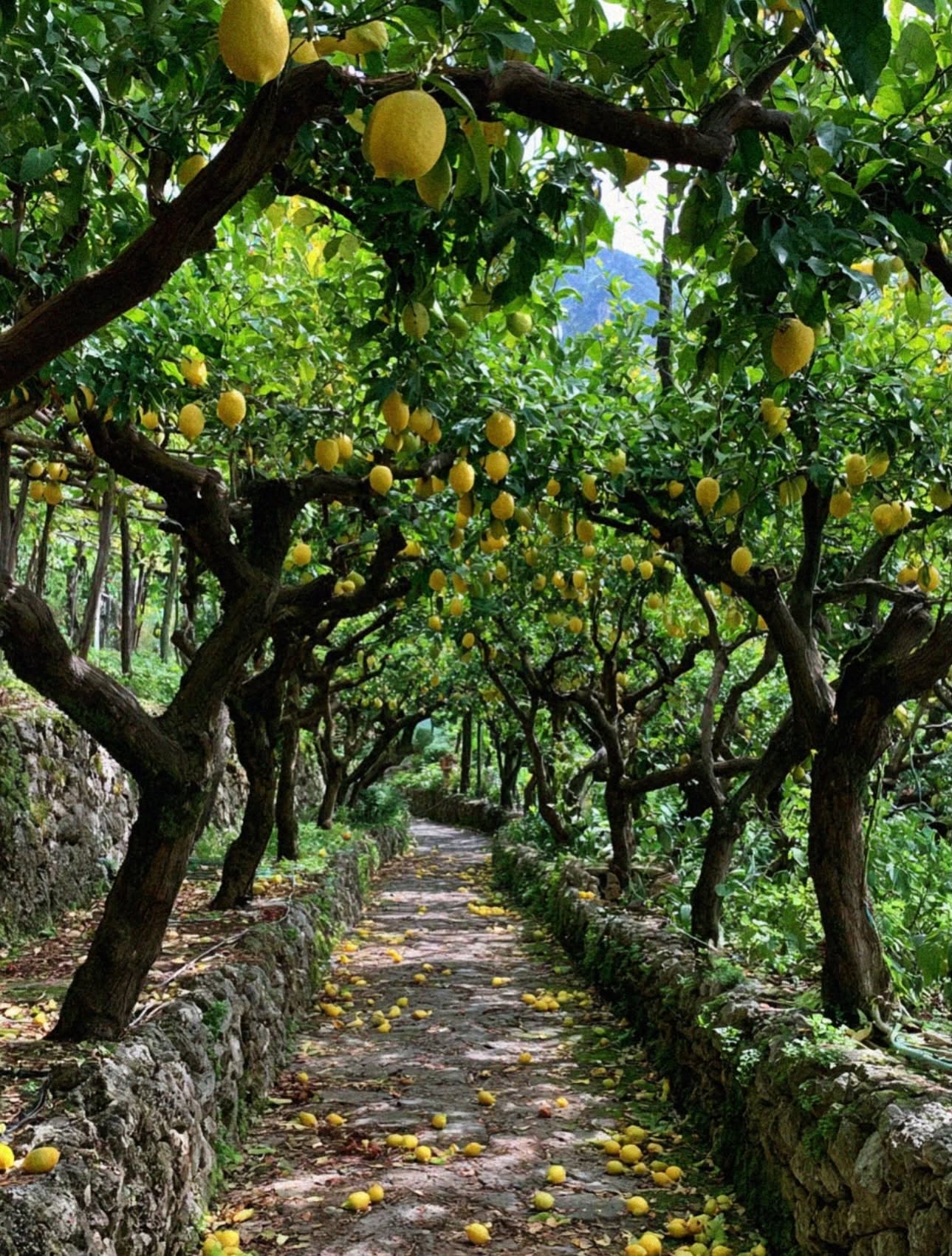
The light changes when you leave Amalfi. You take the road that climbs away from the coast, through terraced lemon groves and past dry stone walls, and the sea drops below you in increments. By the time you arrive in Ravello, you are three hundred and fifty metres above it. The town sits there like something forgotten by everyone except itself.
This is not a criticism.
What Ravello Is
There are towns on the Amalfi Coast that exist primarily to be seen from a boat. Ravello is different. It asks to be lived in, even briefly.
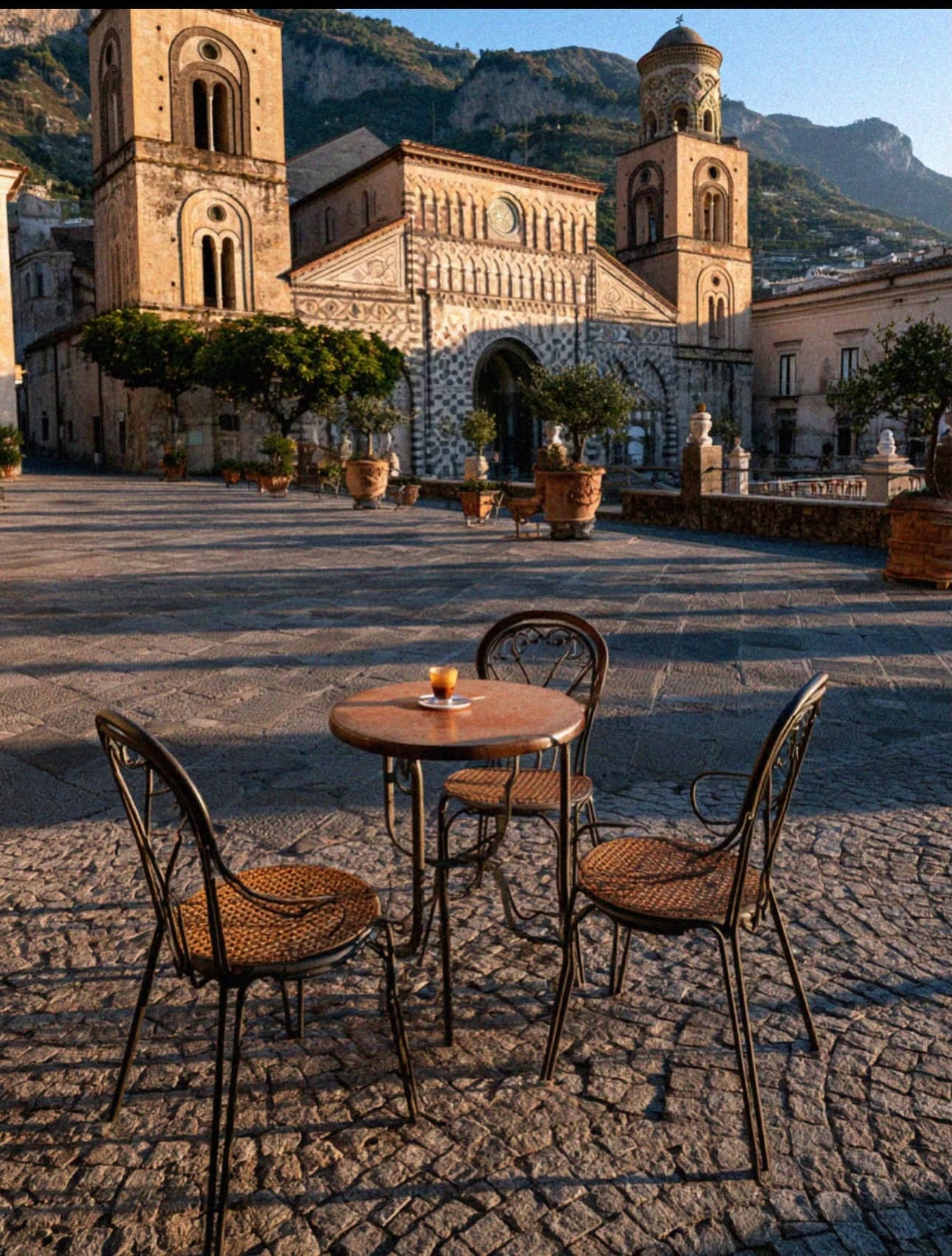
The Piazza Duomo is small enough that you could cross it in two minutes. An eleventh-century cathedral anchors one end. Café tables extend into the stone square. The streets that lead away from it are narrow, mostly pedestrian, cool even in the height of summer because the buildings press together and the sun only finds them at certain hours. There is the smell of lemon and something older underneath it.
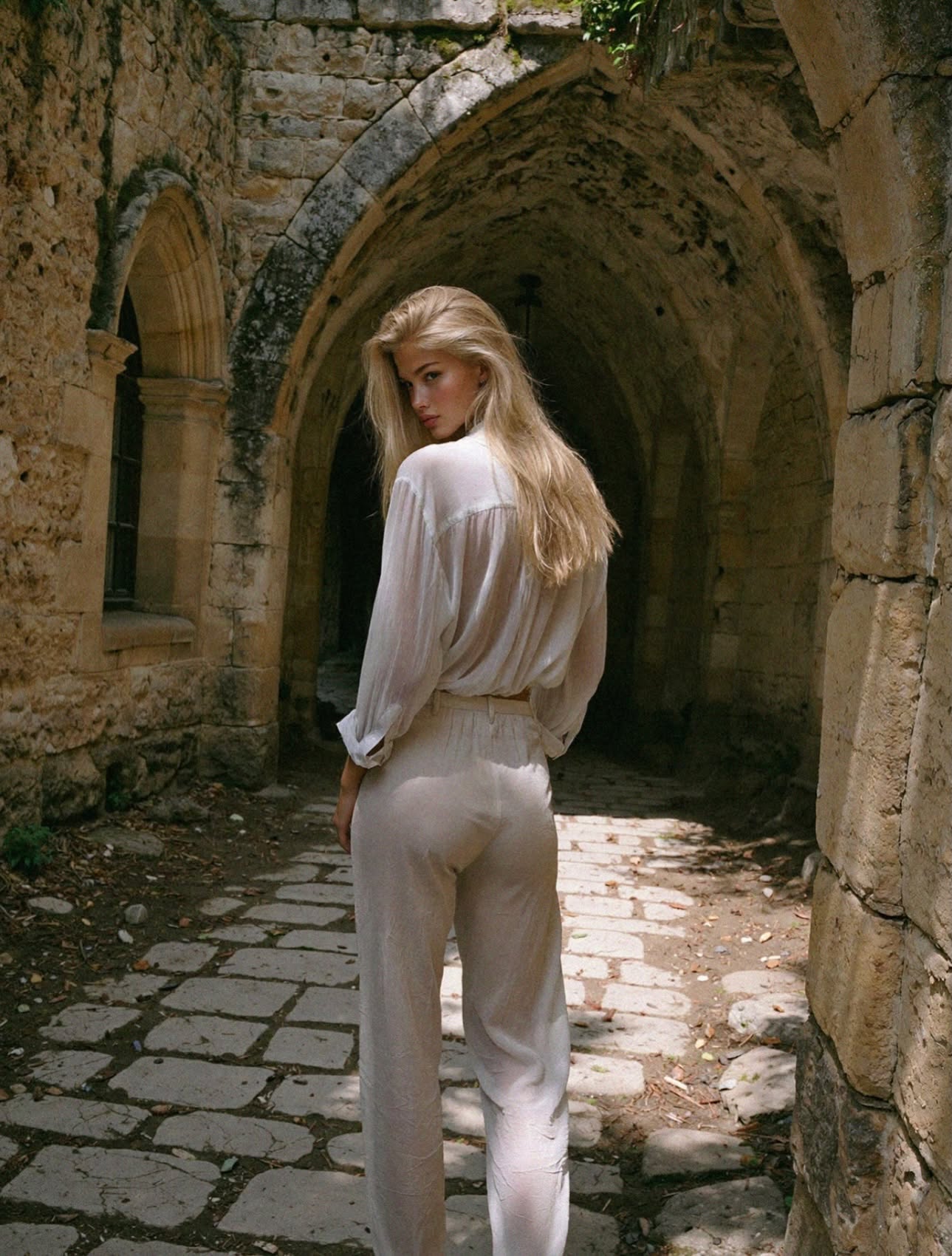
Ravello has always attracted people who wanted to disappear. Writers, painters, composers, a Swedish actress with a secret. They came for the altitude, for the quiet, for the quality of light that is neither fully coast nor fully inland. They stayed longer than they planned.
Most visitors arrive by day and leave before the evening. This is a mistake. After five o’clock, when the tour buses have gone back down the hill, the town returns to itself. The piazza empties. The ceramic shops pull down their shutters. The light on the Gulf of Salerno turns amber and then rose, and there is no one left to photograph it except you.
Plan Your Visit to Ravello
A few things I booked and loved. These help support the blog, at no cost to you.
- Where I stayed: search Ravello hotels
- Amalfi Coast boat tours and tickets
- Stay connected: get a travel eSIM
This section contains affiliate links. If you book through them I may earn a small commission, at no extra cost to you.
Getting There
Naples is the nearest airport. From Naples, Ravello is roughly an hour and forty minutes by road, depending on traffic and the particular courage of your driver.
There is no train. The SITA bus runs from Amalfi up to Ravello several times a day and costs very little. A private transfer is more comfortable and ends the question of luggage on narrow staircases.
The road itself is worth paying attention to. It switches back on itself through the hills above Amalfi, past the village of Scala and through groves that cling to the cliffs at angles that seem, briefly, implausible. Cars are not permitted inside the town. The world narrows pleasantly once you arrive on foot.
From Positano, the journey takes closer to two hours. From Sorrento, the same. Budget the time. It is not a stop to rush.
When to Go
April and May are very good. The wisteria is in bloom along the pergola at Villa Cimbrone. The gardens are extravagant and the main summer crowds have not yet arrived.
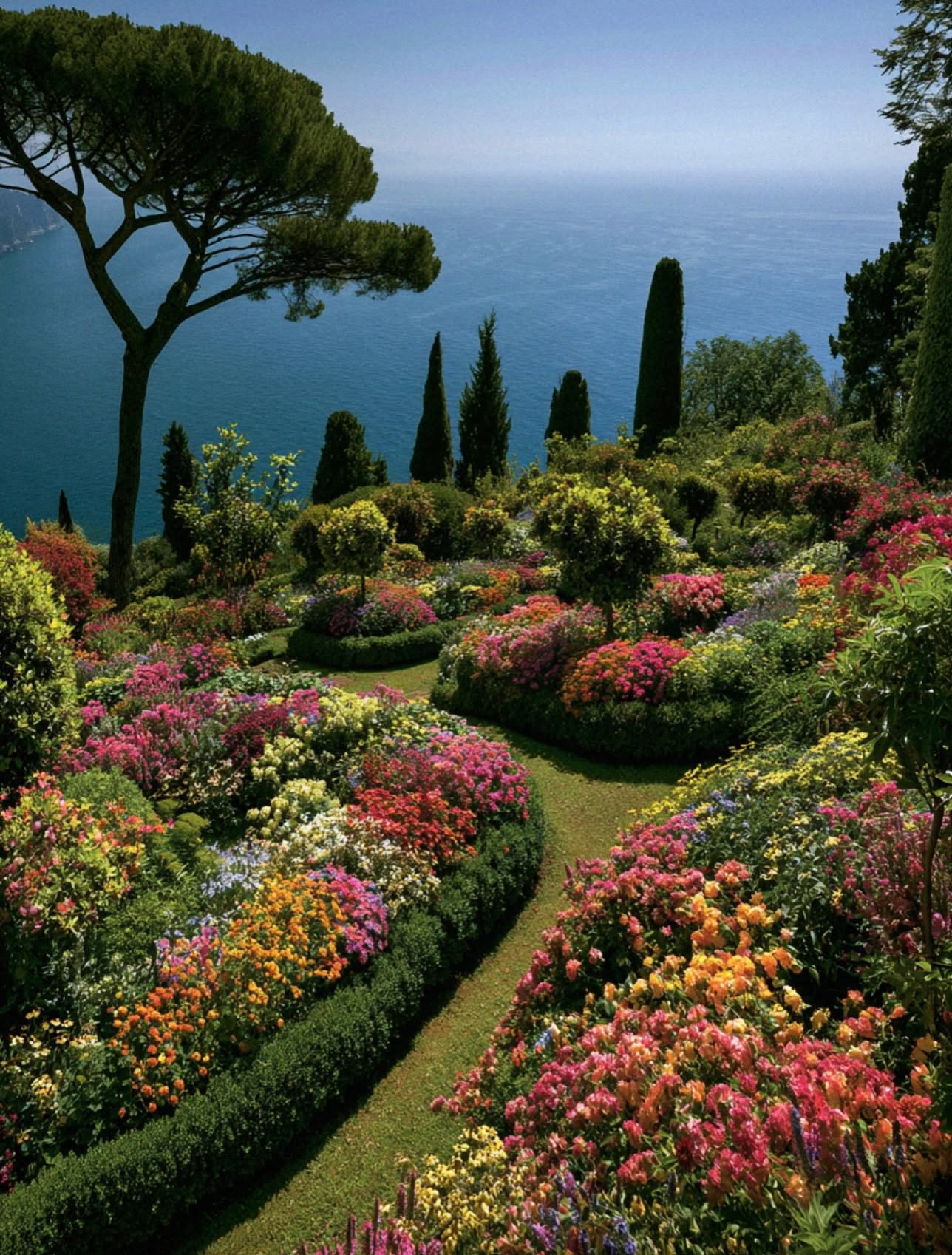
September is perhaps better. The heat is less absolute. The light has acquired a certain weight it doesn’t have in June. The Ravello Festival is still running into early September, and the town feels inhabited rather than overrun.
July and August are the peak of everything: heat, price, people. Cruise ships dock in Salerno and Amalfi and send their passengers up the hill. The views are unchanged. The solitude is not.
Winter is quiet in a way that is either restorative or lonely, depending on what you have brought with you. Some restaurants close. The ferry to Amalfi stops. The town contracts to its essentials: the cathedral, the piazza, the particular silence of a place that knows the tourists will return.
Best Things to Do in Ravello
Ravello is small and made for slowness, a town of gardens and views rather than a checklist. These are the things worth your time.
Walk out to the Terrace of Infinity at Villa Cimbrone, the most famous view on the whole coast, then lose an hour in its romantic gardens. See the gardens and the belvedere of Villa Rufolo, which inspired Wagner and still hosts concerts above the sea. Step into the ancient Cathedral for its bronze doors and marble pulpit. Follow the quiet footpaths down toward Amalfi and Atrani for views no road can offer. And if your timing is lucky, catch a performance of the Ravello Festival, when the music plays on a stage that seems to float over the water. Each of these has its own section below.
Villa Cimbrone
The garden opens to the public. This is the first thing to know.
Villa Cimbrone operates as a hotel now, five-star and intimate, but anyone may pay the entrance fee and walk the grounds. Most people come for one thing: the Belvedere dell’Infinito, the Terrace of Infinity, which extends to the edge of the cliff above the Gulf of Salerno.
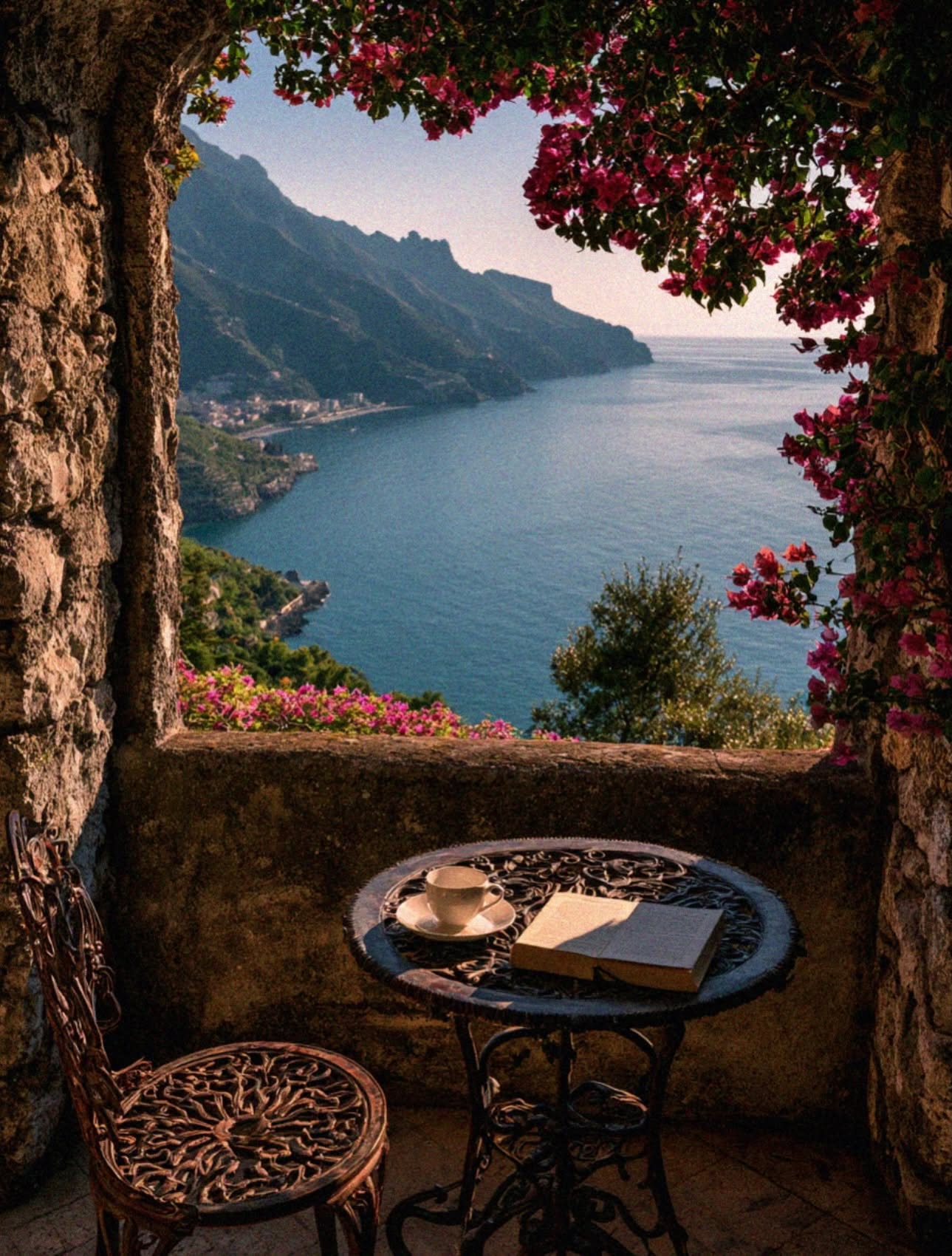
A row of marble busts lines the balustrade. They stand at the edge where the garden simply ends, and the sea begins three hundred metres below. On a clear day there is no visible horizon. The sea and the sky negotiate between themselves somewhere in the distance, and the effect is, as the name suggests, of a view without limit.
The path to the belvedere is called the Viale dell’Immenso, the Alley of Immensity, which is either poetic or slightly excessive depending on your mood. A pergola runs its length. In late spring the wisteria, white and pale blue, hangs overhead. It is the kind of place that makes people want to write things down.
They have. Virginia Woolf walked this garden. So did E.M. Forster, T.S. Eliot, John Maynard Keynes, Winston Churchill, Henry Moore, Lytton Strachey. The Bloomsbury Group used Villa Cimbrone as a kind of retreat, a place far enough from London that the usual conversations could be abandoned.
In February of 1938, Greta Garbo arrived in secret. She had come with Leopold Stokowski, the conductor who had composed the score for Fantasia. They intended to be married. Whether they were or not is a matter of historical uncertainty. What is clear is that she chose Ravello, this specific garden, this specific altitude above the sea. The choice is not difficult to understand.
M.C. Escher was here too. The lizard patterns and Moorish tilework of the region filtered into his geometric imagination for decades afterward.
The villa was largely rebuilt at the turn of the twentieth century by an English lord, Ernest Beckett, later Lord Grimthorpe. Before him it dated to the eleventh century, and before that to something older still. The garden is a kind of archaeology: classical statuary beside Gothic towers beside pergolas overrun with roses. It should not cohere. It does.
Practical: Entrance to the gardens is approximately €9. The hotel gates open at 9am and close at dusk. The path is uneven in places and the cliff drop at the belvedere is without barrier, which is either thrilling or alarming.
Villa Rufolo
The other great garden is older and historically more significant. Villa Rufolo was built in the thirteenth century by the Rufolo family, Amalfi merchants of considerable wealth. Popes and Angevin kings were received here. Charles II of Naples held court in these gardens. For several centuries it was the most luxurious private residence on the coast.
By the nineteenth century it had fallen into ruin. It was purchased in 1853 by a Scottish botanist named Francis Neville Reid, who restored it and planted the gardens anew with tropical specimens brought from around the world. He gave the garden a different kind of excess: exotic blooms alongside crumbling medieval towers alongside views of the sea.
Richard Wagner came in 1880. He walked into the garden and, according to the account he later wrote, recognised it immediately as the source of something he had been looking for. “I have found Klingsor’s garden,” he reportedly said. He was working on Parsifal, an opera he had been composing for nearly two decades. He stayed in Ravello long enough to complete the second act. The inspiration had been waiting for him here.
The stage that now juts over the cliff edge from Villa Rufolo’s terraced gardens is a direct consequence of that visit. It is the primary stage for the Ravello Festival, and the relationship between the place and music has not diminished.
Practical: Villa Rufolo is open daily. Entrance is approximately €10. The Moorish cloister and the Norman towers are accessible along with the gardens. The panoramic terrace looks out directly over the Gulf of Salerno.
The Ravello Festival
Each summer, roughly from early July through the first days of September, the Ravello Festival occupies the garden stage at Villa Rufolo.
The 2026 programme runs from July 4 through September 5. The Royal Philharmonic Orchestra is scheduled. So is the Filarmonica della Scala. Yuja Wang is among the soloists.
The stage is extraordinary. It is built to extend beyond the edge of the cliff, so that the performers appear to be playing against nothing but sea and sky. An orchestral concert in this setting is not a neutral experience.
There is also the Dawn Concert: a single performance on August 11, beginning at five in the morning. An orchestra on a cliff above the Mediterranean while the sun rises over the water. Tickets for the headline concerts sell out quickly, often within days of going on sale in spring. The Dawn Concert sells out fastest of all.
This is the 2026 schedule and the dates are subject to change.
Tickets range from approximately €30 for general admission to €120 and above for premium positions. The Oscar Niemeyer Auditorium, a modernist building that caused some controversy when it opened in the hills just outside town, hosts additional indoor performances throughout the season.
Even if the programme does not particularly interest you, the setting will. Something about music played above the sea at night changes the music.
The Town’s Literary Geography
D.H. Lawrence wrote Lady Chatterley’s Lover in Ravello in 1927. The novel is about desire and class and England, and he wrote it here, above the Tyrrhenian Sea, possibly because distance from England was necessary.
André Gide wrote his first novel in Ravello at the age of thirty-one. E.M. Forster wrote his first short story in the Villa Episcopio, just off the main square. Gore Vidal spent more than thirty years here, on and off, and was eventually made an honorary citizen of the town. He wrote and received and argued from a house on the hill, and the town absorbed him without much fuss.
There is a quality Ravello has always had for writers: the sensation that one’s ordinary life has been temporarily suspended. The altitude does something to perspective. The piazza is too small for anyone to ignore you, but the town is large enough to lose yourself in by walking. The light is very good in the mornings and again in the late afternoons, and in between it is too hot to do anything except sit in the shade and think.
This is a good environment for thinking. It is also, possibly for the same reason, a good environment for finishing things.
The Cathedral
The Duomo di Ravello dates to the eleventh century. It has been added to and altered many times since. The bronze doors are notable: cast in 1179 by Barisano da Trani, they depict scenes in relief that can be read panel by panel like a slow narrative.
Inside: a Romanesque interior of considerable austerity, with two ambones, pulpits of marble mosaic, one from the twelfth century and one from 1272. The older of the two depicts Jonah and the whale in fragments of gold and cobalt. The newer one has a small shrine to the Virgin, supported by columns set on the backs of stone lions.
The crypt contains the relics of San Pantaleone, a third-century martyr whose blood is said to liquefy each year on July 27th, which is the feast day. Whether one is interested in the miraculous or not, the crypt is cool and the marble is old, and the frescoes are faded to just the suggestion of what they once were.
The piazza outside the cathedral is where Ravello gathers. There are four or five cafés. The afternoon light comes at an angle that makes the stone glow briefly and then not.
Walking
Ravello is almost entirely pedestrian. This is partly because the streets are too narrow for cars and partly because the town was built before cars were a consideration.
The walk from Ravello to Amalfi takes approximately an hour and a half on foot. It follows ancient stone staircases, some dating to the medieval period, that connect the hilltop towns to the coast below. There are roughly 1,500 steps. It is steep in both directions; descending to Amalfi is the more sensible direction to walk, with the sea appearing at intervals as you descend. Climbing the steps to Ravello is for experienced hikers with ample water.
The path passes through the village of Scala, which sits directly across the valley from Ravello and is often overlooked entirely. The two towns face each other across a gorge cut by the Dragone river. Scala is slightly higher and considerably quieter. It has an unrestored medieval centre and a cathedral of its own and almost no tourists. This is not because it is inferior. It is because it is not on the list most people bring with them.
There is also a walk through the Valle del Dragone, the valley between the two towns, past terraced farms and through chestnut woods. In spring the terraces are in bloom. In autumn the chestnuts fall.
Where to Stay
Belmond Hotel Caruso
The hotel is in a building from the eleventh century, set at the highest point of Ravello with views across the Gulf of Salerno on three sides. Fifty rooms. Frescoed ceilings, mosaic floors, marble hallways. The gardens descend in terraces to the north.
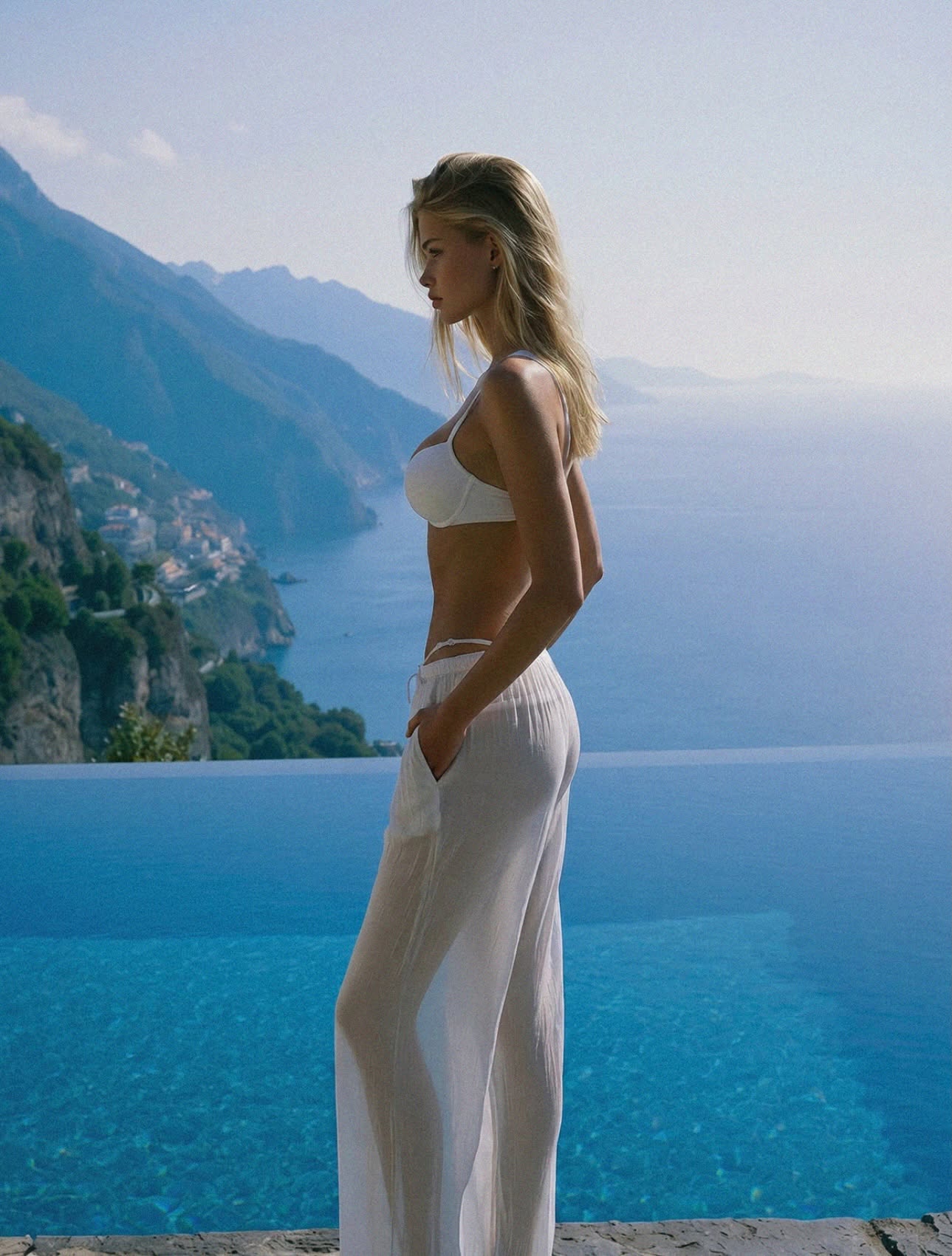
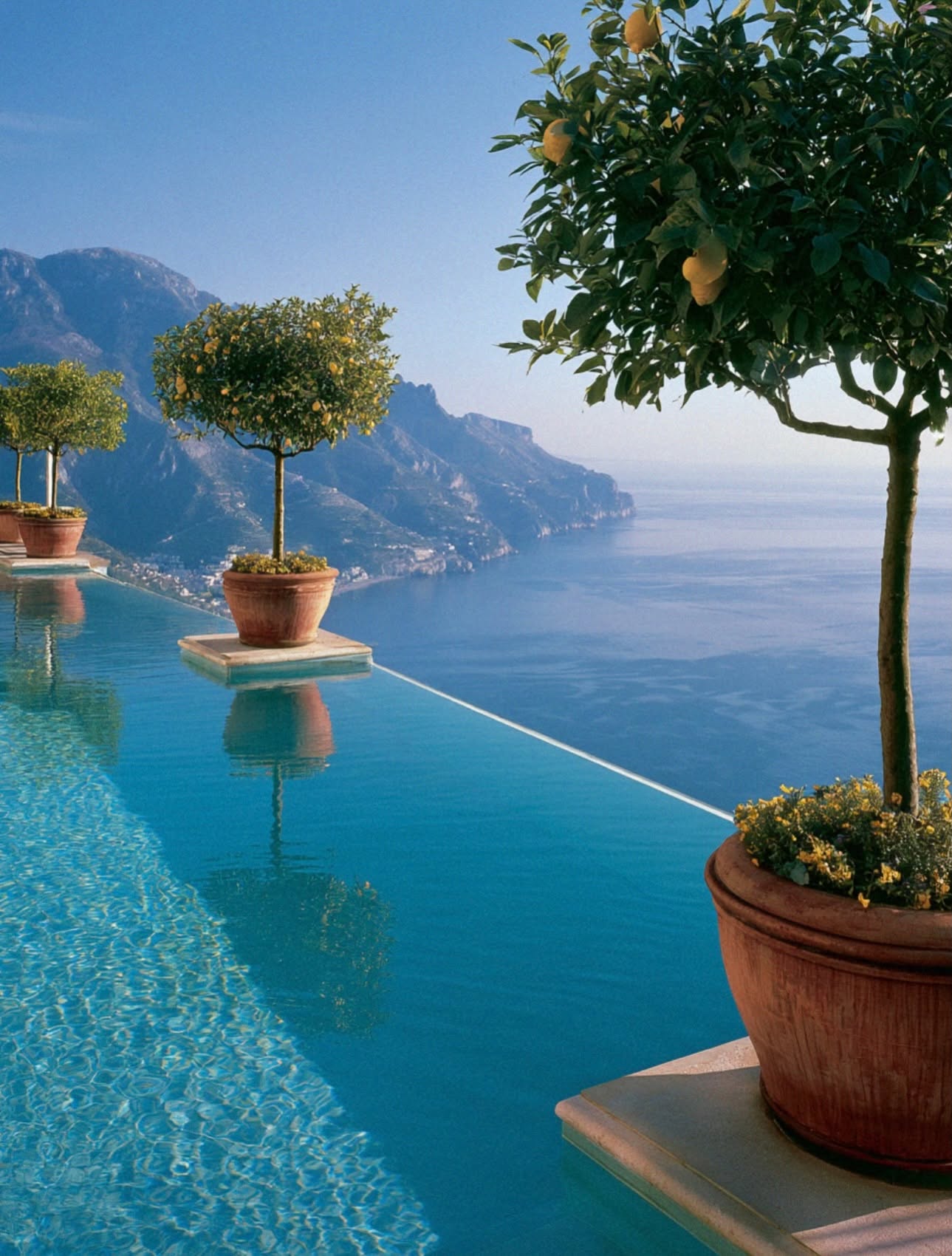
The infinity pool is the one people come to see. It extends to the edge of the terrace and then, visually at least, into the sea below. The effect has been photographed so many times that it has become a kind of visual cliché, which does not make the thing itself any less good. The water is very blue. The sea is very far below. In the late afternoon the light turns everything golden and the pool loses all sense of irony.
The restaurant, Belvedere, serves Campanian cuisine with views that require no embellishment. There is a piano bar. The service is formal in the Italian style, which means attentive without being intrusive.
Peak summer rates begin at approximately €2,000 per night for a standard room. Shoulder season, May or September, is considerably more reasonable. The hotel connects with Belmond’s network of benefits for those who book accordingly.
Palazzo Avino
A twelfth-century villa on the western edge of town, converted into a hotel. Pink stone exterior, the kind of deep terracotta pink that photographs well but in person is more complex. Forty-three rooms. The views from the upper terrace are comparable to the Caruso, which is to say remarkable.
The Michelin-starred restaurant, Rossellinis, is on the premises. It is worth a dinner reservation even if you are not staying here. The menu is rooted in Campanian ingredients, elevated and precise. The dining terrace overlooks the coast.
Hotel Villa Cimbrone
To stay in the villa itself is to have the garden before anyone else arrives and after everyone has left. Eighteen rooms, mostly suites. The decor is antique and atmospheric in a way that either appeals immediately or does not. Breakfast is served in the garden in summer.
The garden closes to day visitors at dusk. After that it belongs to the guests.
Where to Eat
Il Flauto di Pan, Villa Cimbrone
A Michelin-starred restaurant inside the villa grounds. The setting is, straightforwardly, extraordinary: stone terraces, the sound of the sea far below, candlelight on old walls. The menu changes seasonally and centres on Amalfi Coast seafood, handled with some innovation but not excessively. A place for a long dinner.
Rossellinis, Palazzo Avino
The other Michelin star in Ravello. More formal in atmosphere than Il Flauto di Pan. The view from the dining terrace competes with the food for attention. Mediterranean cuisine in a strictly contemporary interpretation. Wines from Campania are treated seriously here.
Salvatore Ravello 1958
A family restaurant, run by the Aceto family since its founding. This is the Ravello that exists below the hotel level, where the food is based on what the coast has always produced: fresh pasta, seafood, the local mozzarella di bufala, the lemons that grow on every terrace. The view is panoramic. The atmosphere is familial. Three generations of the family appear to be involved at any given time.
Trattoria da Cumpa’ Cosimo
A local institution. No view, no pretension. The dining room is plain, the menu is handwritten, and the food is what Italian grandmothers mean when they say home cooking. Pappardelle with ragù. Roast meats. Vegetables from the kitchen garden. A carafe of local wine. The kind of meal that makes everything else on the Amalfi Coast feel slightly overdressed.
Ristorante Alba
For something less expensive without sacrificing either quality or view. The Spaghetto di Mezzanotte, midnight spaghetti, made with spaghettoni, capers, anchovies, San Marzano tomatoes, and garlic-heavy breadcrumbs, is worth the visit alone. The terrace looks out over the coast. The prices are the most honest in town.
A note on coffee: The bar on the piazza. There is only one early in the morning, and it is where Ravello has its espresso before the day begins. Sit at the counter. There is no view from there. This is the point.
Ceramics and Shopping
The Amalfi Coast ceramic tradition is very old and very specific: majolica, fired and hand-painted in the Mediterranean palette of cobalt blue, sun yellow, terracotta, and pale green. Ravello has several good shops.
Ceramiche d’Arte Caruso and Ceramiche Cosmolena are both near the piazza and offer pieces of consistent quality. The family-run workshops will, if you ask, show you the process. The decorative wall tiles are the most portable purchase. The full dinner services are beautiful and approximately impossible to bring home on a plane.
The shops along the Via Roma leading from the piazza are worth walking slowly. Cashmere, linen, limoncello in every possible format. Ravello is less aggressively commercial than Amalfi town or Positano, and browsing here has a different quality because of it.
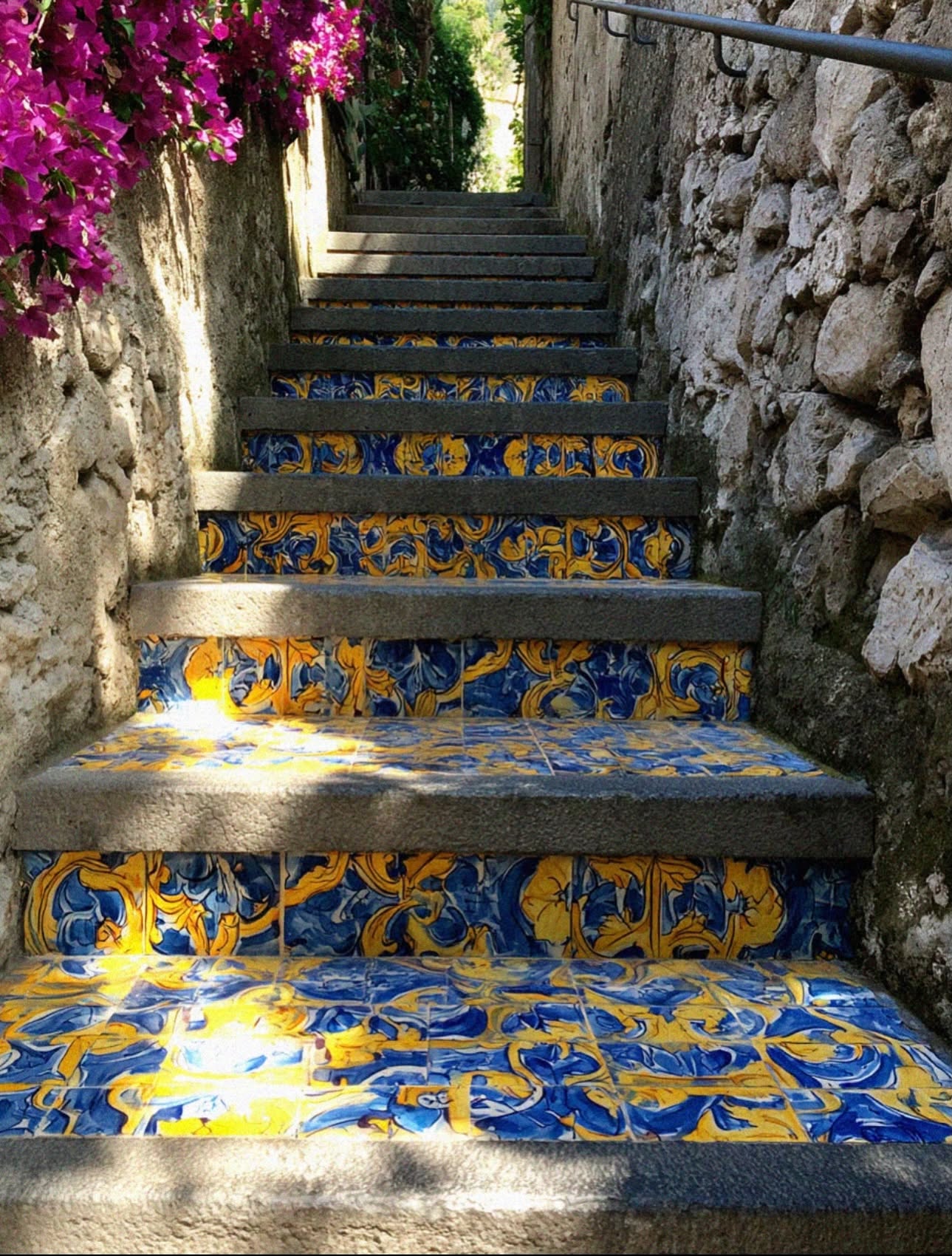
The ceramic staircases scattered through the side streets are not for sale. They are simply there, tiled in patterns that have been maintained for centuries by people who live above them. Pay attention to the alleyways.
Practical Notes
Getting to Ravello from Amalfi: The SITA bus runs frequently in high season, takes about thirty minutes, and costs under €2. It is the most direct route if you are already on the coast. Taxis are available but expensive. The ferry runs between Amalfi and Positano but does not go up to Ravello.
How long to stay: One night is the minimum to understand the place. Two nights is better. Three allows for the walk to Scala, an evening at the Festival if the timing is right, and the particular quality of Ravello mornings, which are calmer than most places twice its size.
What to bring: Shoes for uneven stone. A layer for evenings, even in July. The temperature in Ravello is several degrees cooler than on the coast below, which is one of the reasons the town was built here.
What the town lacks: A beach. The coast is far below and reached most easily by bus or car. Ravello is a hilltop town, not a seaside one, and the sea is something you look at from above. If a beach is the primary requirement, stay in Amalfi or Positano and make a day trip.
Access: The town is largely pedestrian but the terrain is steep and cobblestoned. The main piazza and Villa Rufolo have some accessible routes. Villa Cimbrone’s garden paths are uneven. The Ravello to Amalfi staircase is not accessible.
Entrance fees: Villa Cimbrone garden, approximately €9. Villa Rufolo, approximately €10. The Duomo is free to enter.
Frequently Asked Questions
How many days do you need in Ravello?
Ravello can be seen in a single unhurried day, but it rewards an overnight stay, when the day trippers leave and the town becomes quiet and yours.
Is Ravello worth visiting?
Yes, for the gardens and the views above all. The Terrace of Infinity at Villa Cimbrone and the belvedere at Villa Rufolo are among the finest sights on the Amalfi Coast.
How do you get to Ravello?
Ravello sits high above Amalfi, reached by the SITA bus up the hill from Amalfi town or by taxi. There is no ferry directly to Ravello, since the town stands well above the sea, so you arrive first at Amalfi and climb from there.
What is the best time to visit Ravello?
Late spring and early autumn, for warm weather, open gardens, and the Ravello Festival in summer. The gardens are at their best from April through October.
Where should you stay in Ravello?
In the town itself, if you want the quiet evenings and the gardens to yourself, at one of its historic hotels or smaller guesthouses. Staying up in Ravello rather than on the coast below is the whole point.
A Last Word
You take the same road back down. The same lemon groves, the same sea appearing and disappearing between the walls. The coast flattens out below you, the boats in the harbour at Amalfi small from this height.
What Ravello does is difficult to articulate precisely. It is not simply beautiful, although it is. It is that the altitude changes the terms of everything. The sea is present but not overwhelming. The coast is visible but distant. There is a quality of looking at one’s own life from a slight remove.
D.H. Lawrence wrote a novel about England from here. Wagner finished an opera. Greta Garbo came in secret and disappeared into the garden.
I understand the impulse.
Somewhere, you are reading this and wondering whether it is worth the drive up the hill. It is.
V.
You can read my complete Guide To The Amalfi Coast here.
For the beach town below, my guide to Maiori and Minori is here.
Images from my trip to Ravello: