Venice diary, entry 4 of 5
I practised early again, before the light had found its way down into the canal, playing quietly by the open window until the first delivery boats began to move below and the city cleared its throat for the day. I had been saving the grand heart of Venice until now, the way you save the richest thing on the plate, a little wary of it. The islands had been all colour and craft and open water, and the back canals had offered themselves without asking anything in return, but the monumental city, the one every visitor arrives already half knowing, is harder to meet honestly. There is only one time to attempt it, I think, and that is at the very beginning of the day, before the crowds inherit the squares.
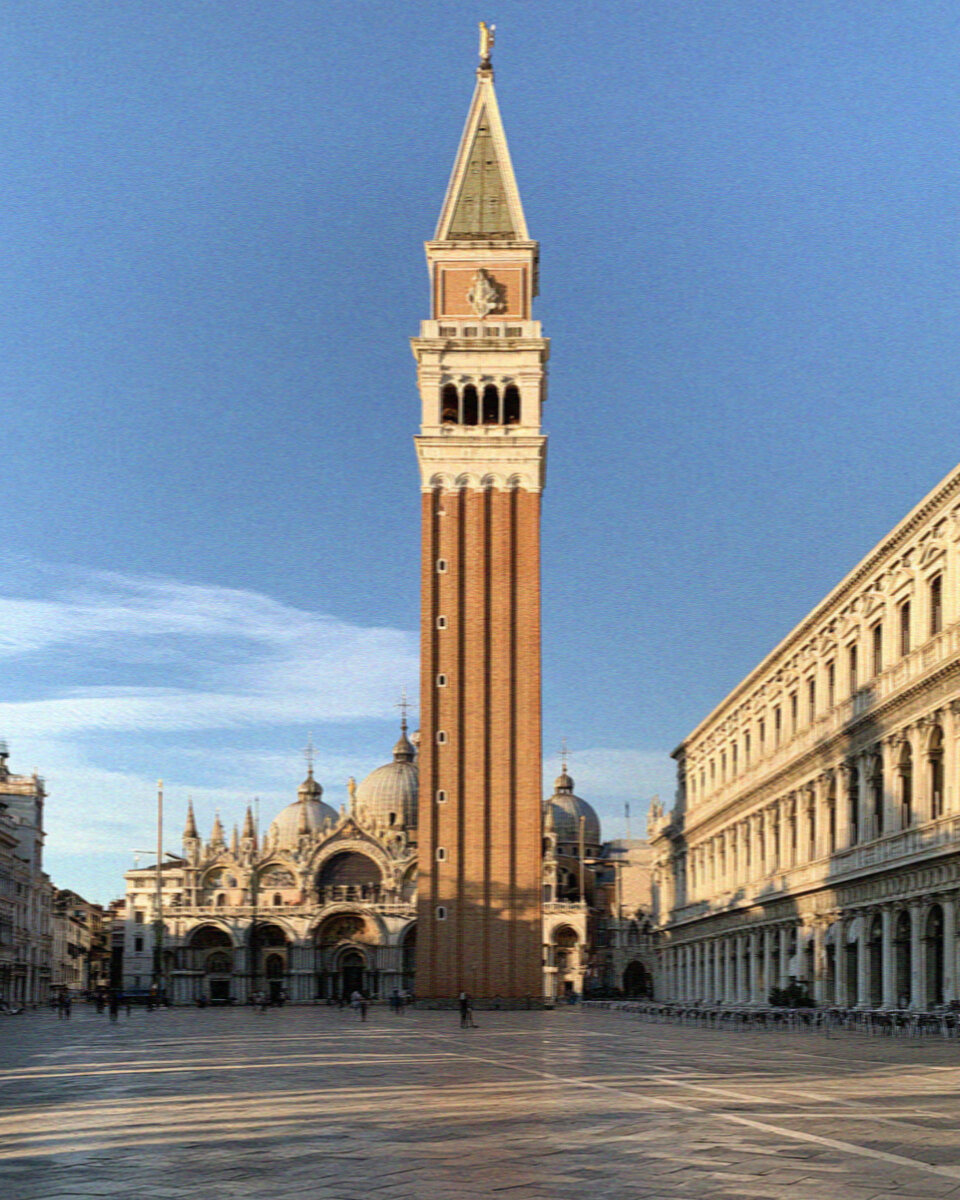
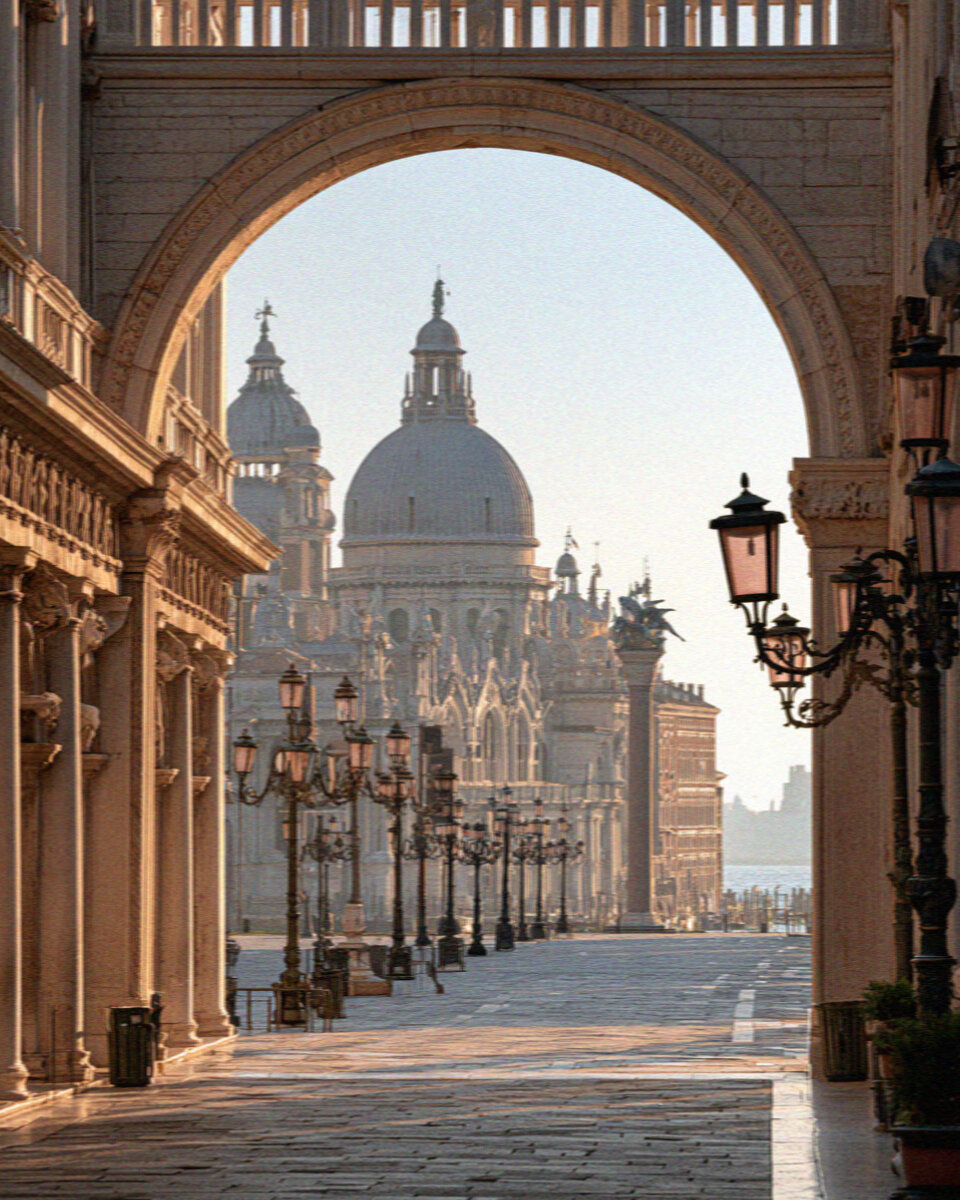
So I went to Piazza San Marco at the hour when it still belongs to no one.
There is nothing else in Europe quite like arriving in that square while it is empty. It is the only great room in the city with no roof, enclosed on three sides by the long arcaded buildings and opened on the fourth by the Basilica, and at dawn it holds the particular silence of a theatre before the doors are unlocked. A few pigeons. A man rinsing the paving with a slow hose. The cafés still shuttered, their orchestras’ chairs stacked and sleeping. I stood more or less in the middle of it and understood, as you cannot from any photograph, that the square is not simply a space between buildings. It is a single deliberate composition, arranged over centuries so that whichever way you turn, you are looking at something someone meant you to admire.
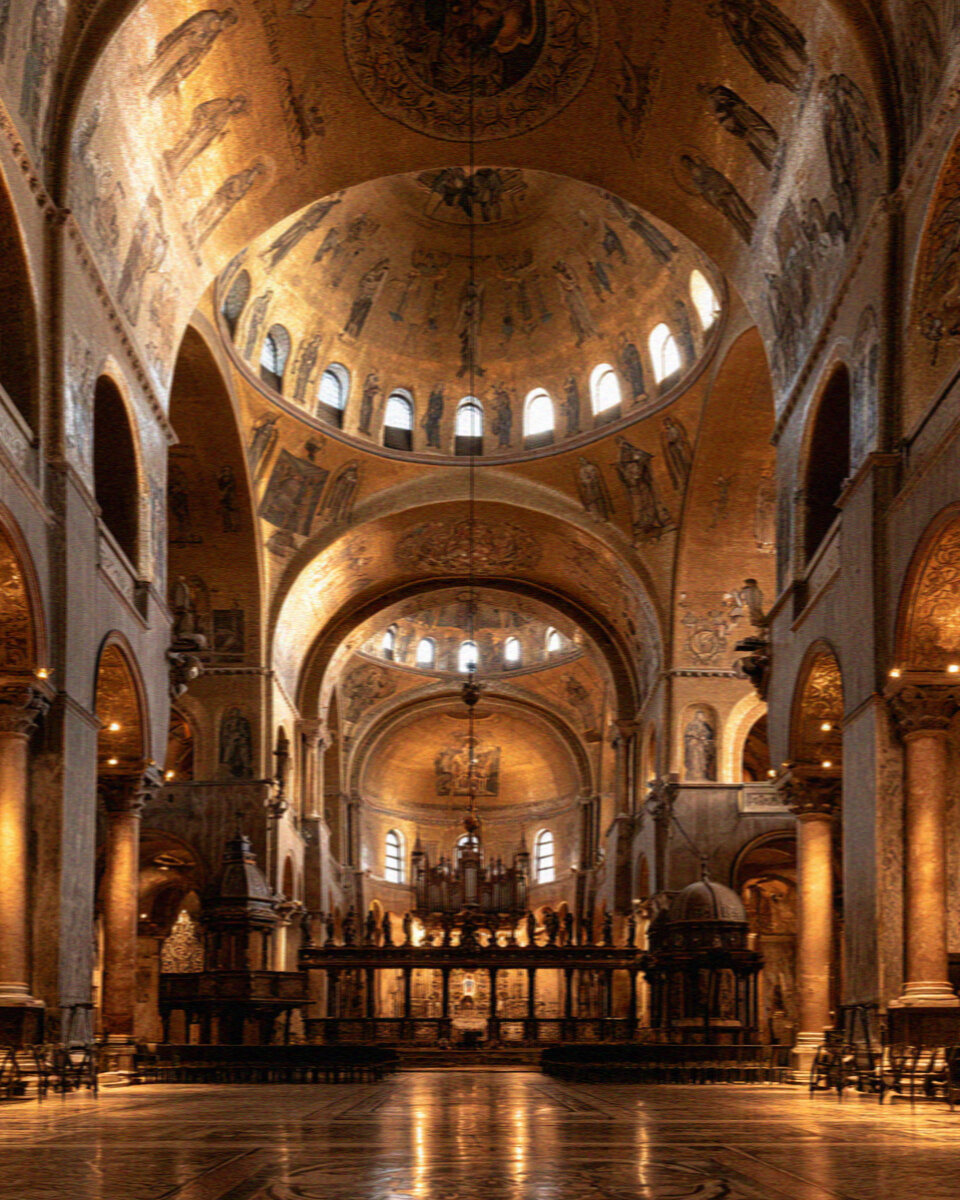
The Basilica of San Marco is best entered in the first minutes after it opens, when the queue is still only a handful of early risers, and the interior remains dim. I went in with my violin case under my arm, having come straight from playing, and stopped just inside the door the way everyone does, because the eye needs a moment to understand what it is seeing.
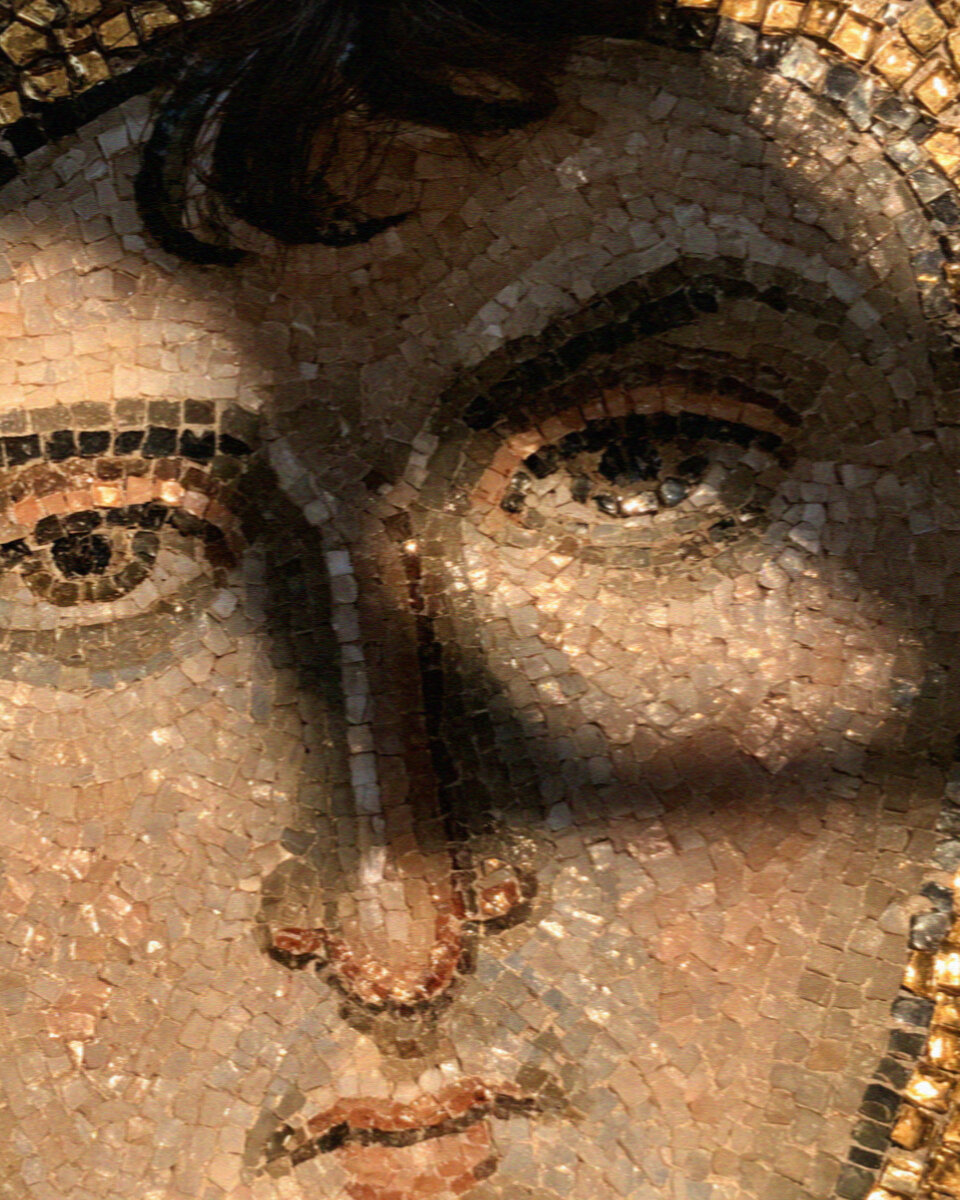
The whole upper church is gold.
Not gilded here and there, the way churches often are, but sheathed almost entirely in mosaic, millions of tiny tesserae, many of them gold glass, set at slightly different angles so that the light does not lie flat upon them. It moves. It breathes. It gathers in the domes and seems to pour slowly down the walls.
The air was cool after the warmth of the square, and smelled of stone and cold candle smoke. My own footsteps sounded enormous.
Venice built this because Venice looked east as much as west. Its merchants sailed to Constantinople and Alexandria and beyond, and the Basilica became a kind of glittering record of everything the Republic encountered, coveted, traded for and, sometimes, simply took. Some of what is here was carried home after the sack of Constantinople, which makes the beauty more complicated than the postcards allow. It should feel like plunder, and somehow it also feels like devotion. Venice is full of contradictions like that. It rarely troubles itself to resolve them for you.
I lit a candle near a side altar, as I tend to do whenever I find myself in a church early in the morning, and said the small private thing I say, which does not require anyone else to know its shape.
My father comes to me most easily in rooms like that one. Not because he was especially religious, but because the gold and the trade and the far-carried marble belonged to a world he would have understood. He worked among ledgers and holdings and the movement of money across borders, and he taught me, without ever making a lesson of it, that great wealth places a person beneath a very bright light and that the only dignity available is to decline to perform beneath it.
I thought of him there because Venice is perhaps the largest argument against that lesson I have ever stood inside.
The Republic became impossibly rich and performed magnificently. It covered ceilings in gold, commissioned enormous paintings of itself, built palaces along the water and constructed a skyline with the apparent intention that nobody arriving by sea should ever doubt who was in charge. And yet much of what it spent its fortune upon was beauty that would outlive the people who paid for it. Whatever the vanity behind the gesture, there is something moving about building magnificently for a future you know you will never see.
Next to the Basilica stands the Doge’s Palace, and if the church is the city’s soul, then the palace is its mind, the place where the Most Serene Republic actually ran itself for centuries. From outside it performs a lovely architectural trick, the great weight of the building apparently resting on delicate arcades beneath, so that the whole pink and white mass seems almost to float above its own colonnade.
Inside it is all staircases and gilding and enormous painted rooms, Tintoretto and Veronese covering ceilings and walls with allegories of a Venice triumphant, serene, eternal, everything the Republic wished to believe about itself and, for a remarkably long time, managed to make others believe too.
I walked through the council chambers where the machinery of the state once turned, the vast hall where the patricians gathered, and the smaller rooms where decisions that travelled across seas were made by men who could not possibly have imagined tourists would one day shuffle through wearing headphones.
The floors gave a little underfoot, and the rooms were cool and smelled of wax. Through one high window the lagoon flashed between the columns, small and bright and entirely indifferent to all of it.
The paintings insist upon permanence everywhere you look.
The Republic has been gone for more than two hundred years.
The paintings remain.
Whether that is the joke or the moral, I have not decided.
For more than a thousand years, none of this was Italy. Venice was its own republic, La Serenissima, the Most Serene, a maritime power that answered to itself and traded between Europe and the East with an appetite that built much of what we now queue to photograph. And as that trading power slowly faded across its final centuries, the city became famous less for what it sold than for what it offered: masks and music, gambling and midnight, the pleasure capital of Europe in the long, glittering dusk of the Republic.
Something of both cities remains in the stones. The merchant and the reveller still seem to stand at the same counter.
I find I love Venice more for having had a second act. There is something moving about a place that, after centuries of being powerful, became famous instead for being beautiful. Power is always temporary, however much trouble people go to pretending otherwise. Beauty has proved considerably more stubborn.
By the time I came back out into the Piazzetta, the two great columns at the water’s edge throwing their long shadows across the stone, the square behind me had begun to fill. So I did what I have learned to do in Venice when the crowds arrive. I crossed the water away from them.
A short vaporetto ride carries you to the island of San Giorgio Maggiore directly opposite, where Palladio built a cool white church of astonishing calm and where a lift takes you to the top of the campanile and one of the loveliest views in Venice.
I prefer it to looking down from the more famous tower in San Marco, partly because the queue is kinder and partly because from across the water Venice can finally be seen as it was always meant to be seen: rising directly from the lagoon, domes and campanili and red roofs laid across the bright water like something dreamed rather than built.
From up there the impossibility of the place becomes almost comic.
People drove wooden piles into a marsh and built a marble city on top of them. Then, having accomplished the impossible part, they decided it ought to be beautiful too.
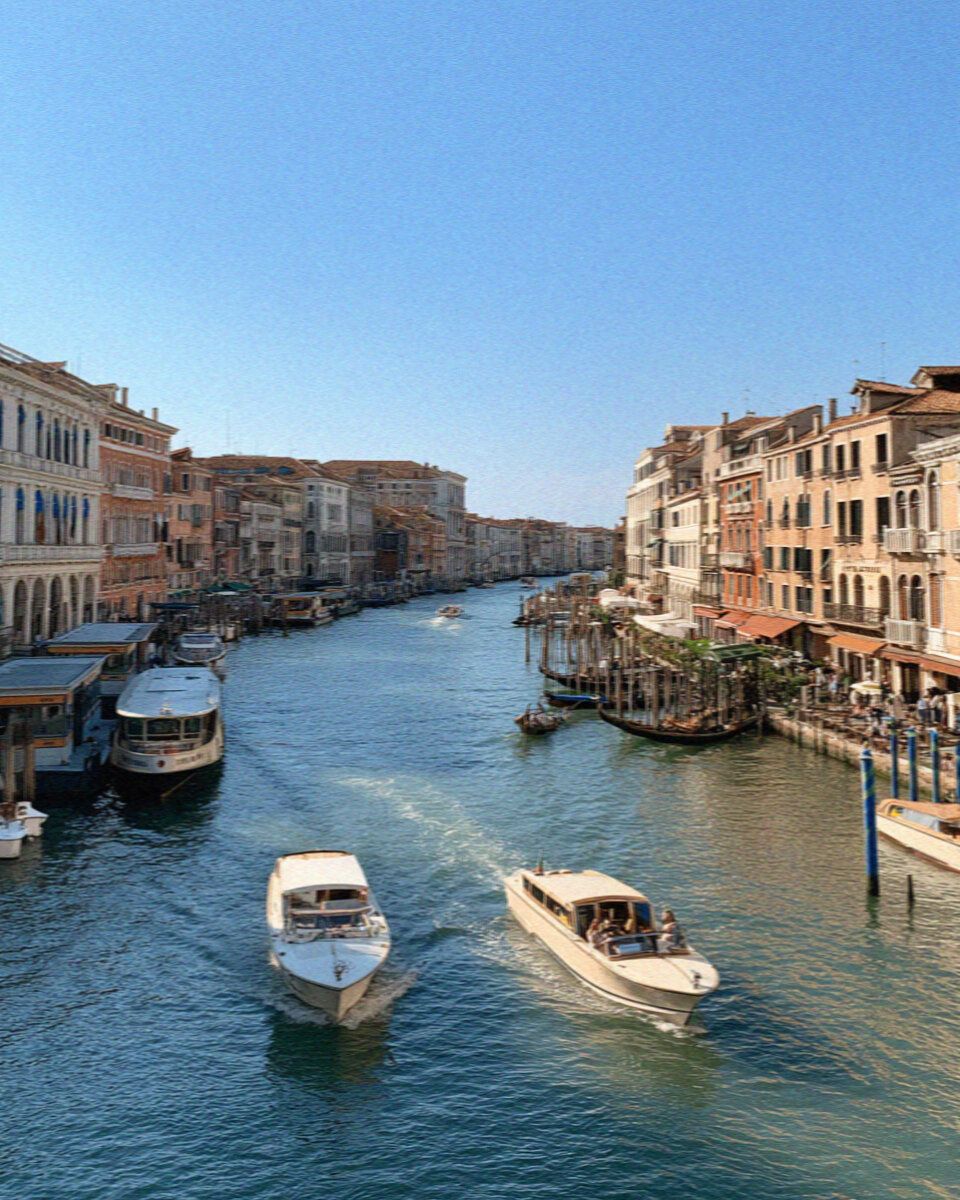
I stayed at the parapet with the warm wind moving off the lagoon and watched boats draw white lines through the water below. San Marco sat opposite me, suddenly small enough to understand. The palace, the domes, the campanile, the long front of the Riva, all of it held within a single glance.
This was the view I wanted to keep. Not because it was the grandest, but because from there the whole argument of Venice fitted into one frame: audacity made beautiful.
I came down and let the middle of the day go slowly. There is very little reward in Venice for hurrying and quite a lot of punishment.
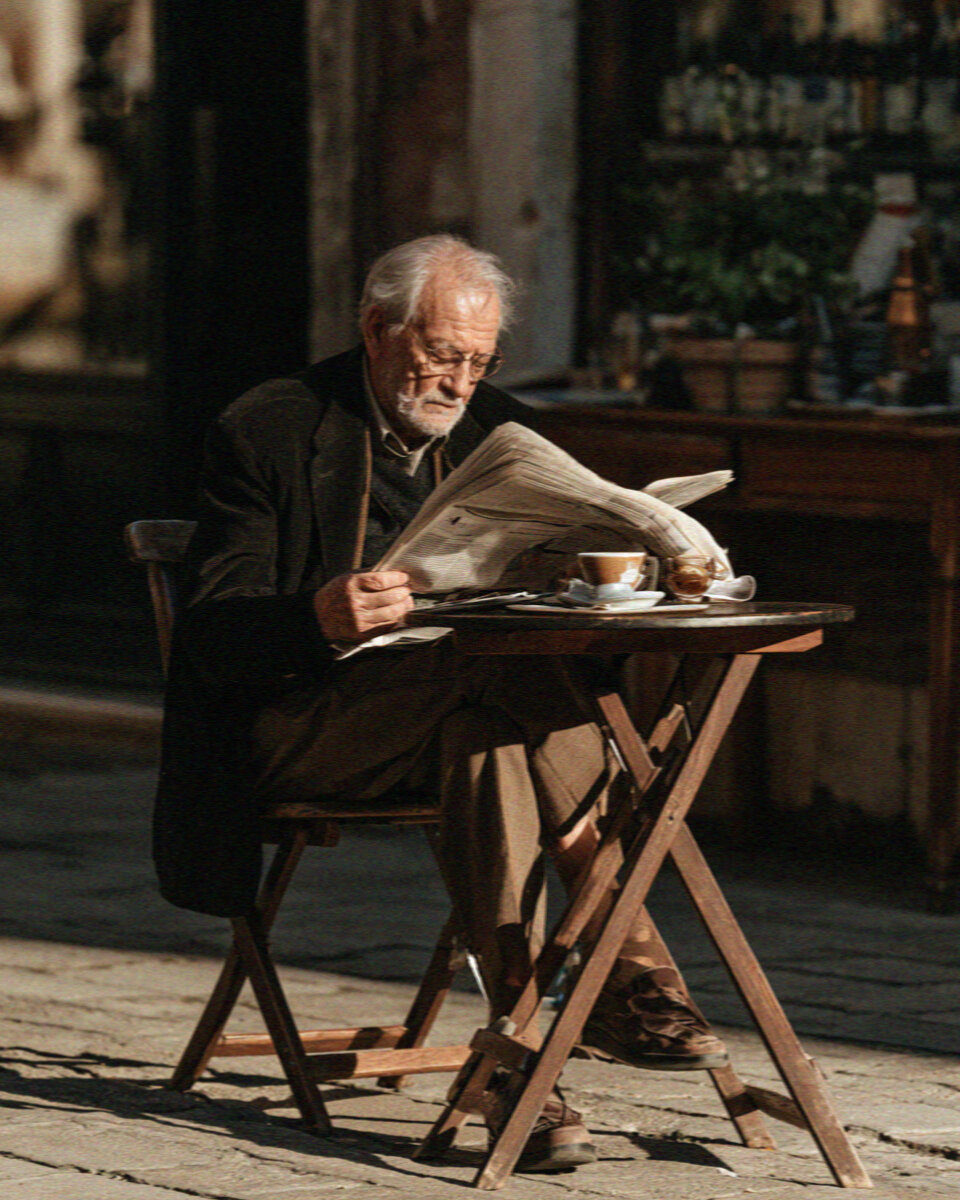
I sat for a while beneath the arcade at one of the old cafés on the square, the kind with a small orchestra and prices that make you gasp and then, somehow, forgive them. I paid what a coffee costs there for the privilege of sitting where Venetians and travellers have sat watching the same square for generations.
It is a tourist’s thing to do, and I did it without apology. Some pleasures are obvious for the simple reason that they are real.
The coffee came in a small gold-rimmed cup. It was very good. I drank it slowly and, for a while, thought about nothing at all.
The violinist in the little orchestra was very good too. He played to a nearly empty terrace with all the seriousness he might have given a full concert hall, and I found myself watching his bow rather than the people crossing the square.
I thought of Vivaldi’s hidden girls again, and of the discipline required to play beautifully whether or not anyone important is listening.
It is the only kind of playing worth doing.
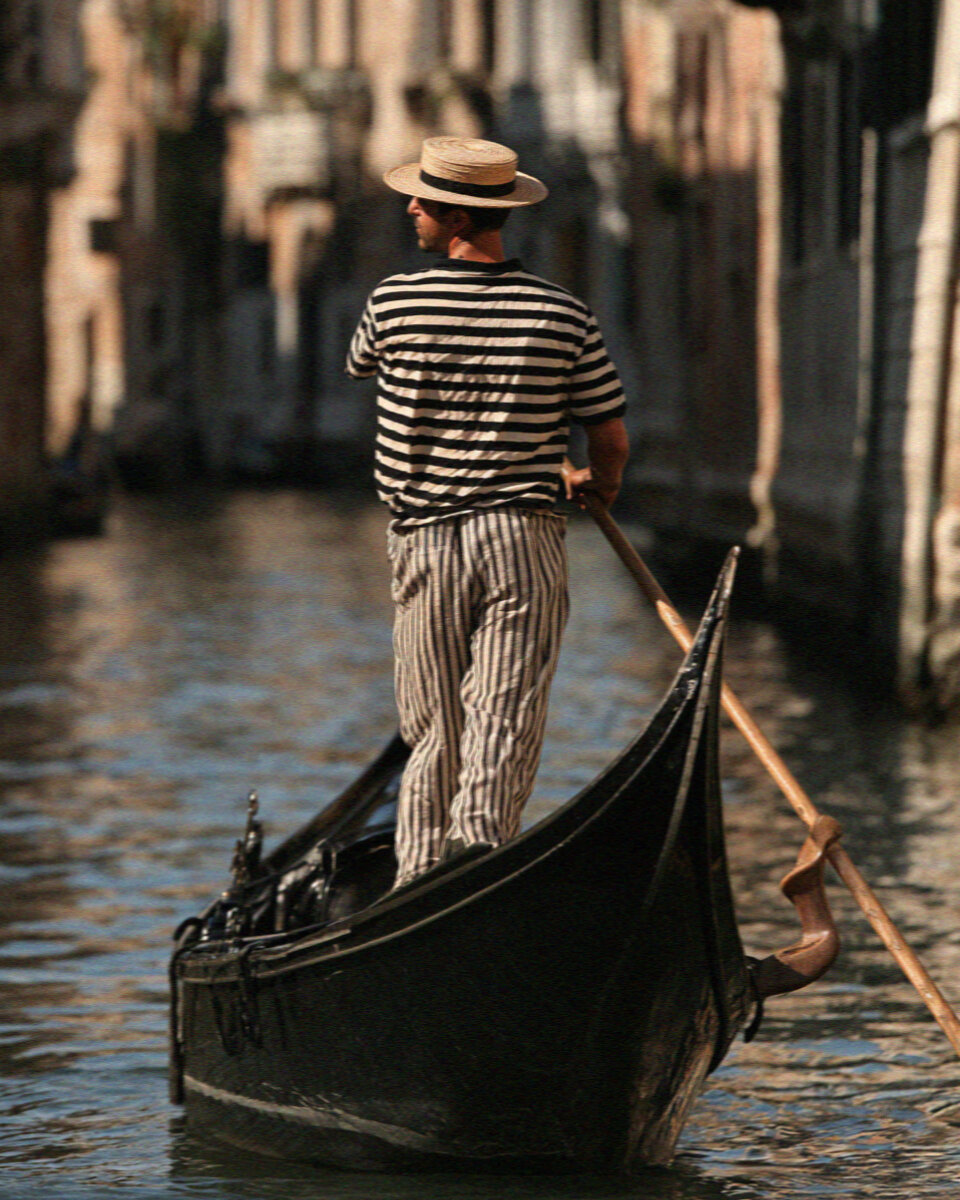
Towards evening the monumental city softened, as it always does, and seemed to forgive itself for being so much looked at. The gold of the Basilica went from hard to warm. The stone of the palace turned the colour of the inside of a shell. Gondolas came out onto the water in their evening numbers, and the light performed the trick it seems able to perform only here, rising from the lagoon almost as much as it fell from the sky, so that the whole front of the city appeared to be lit from beneath, a stage just before the curtain.
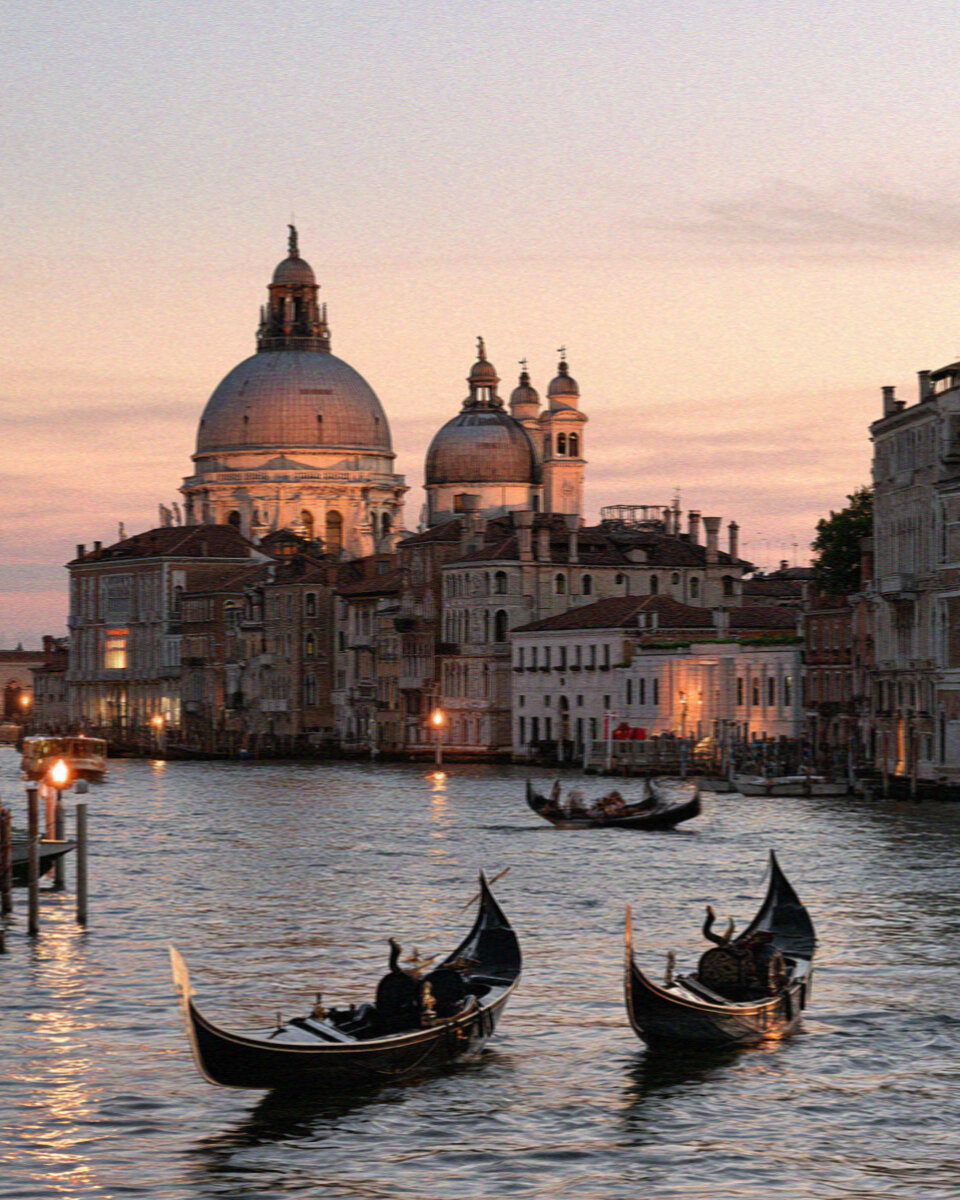
I walked back along the Riva with the crowds thinning and lamps coming on one by one in the windows above the water.
I had spent the day among the most famous things in Venice, and yet when I tried to decide what I wanted to remember, it was none of them exactly.
It was the empty square at dawn. The single candle. My violin case beneath my arm in the darkness of San Marco. A musician playing beautifully to almost nobody. The warm wind at the top of San Giorgio. The strange grace of a city that accumulated an enormous fortune, spent so much of it making itself beautiful, and then, eventually, had no choice but to leave the beauty behind for the rest of us.
The great sights of Venice are great.
That is perhaps the thing no one warns you about, because we are taught to expect the famous to disappoint. We arrive prepared to discover that the photograph was better, that too many people have looked already, that whatever magic once existed has been rubbed smooth by millions of hands.
But they do not disappoint here.
They only ask to be met at the right hour, thanked quietly, and left before the crowd arrives to tell you what you are supposed to feel.
V.
This is the fourth of five entries from my August week in Venice. The full practical guide lives in Victoria’s complete guide to Venice.