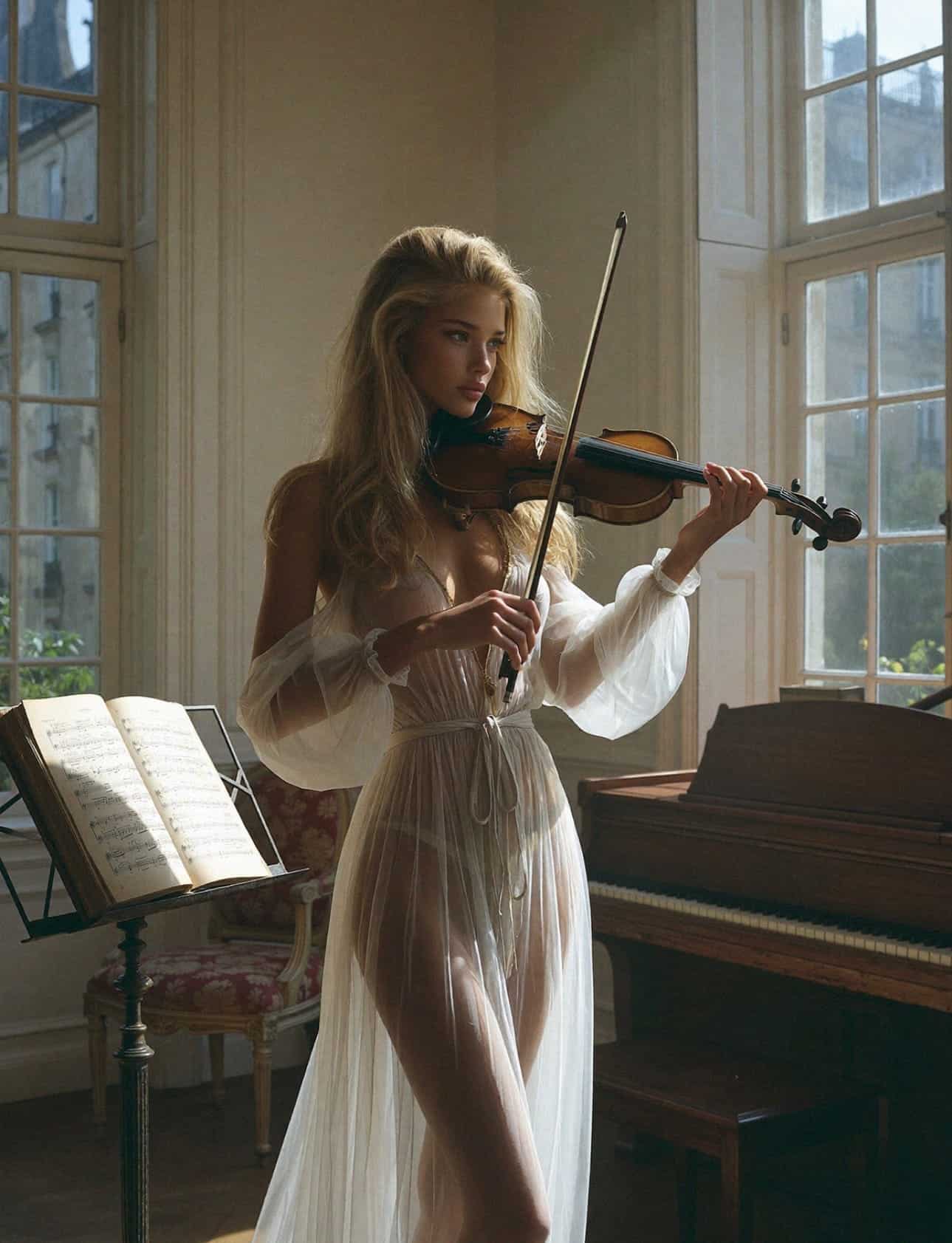
Every day starts the same way. Music.
I noticed the stand the evening I arrived. It was already positioned by the tall window, angled toward the light the way I would have placed it myself. I asked Lady Alderton about it at dinner, and she said only that she had been at two of my recitals in Lyon and that she imagined I would want it. This is who she is. She anticipates rather than asks. In twenty years of knowing her, across dinners and seasons and various versions of myself, I have never once had to explain what I needed.
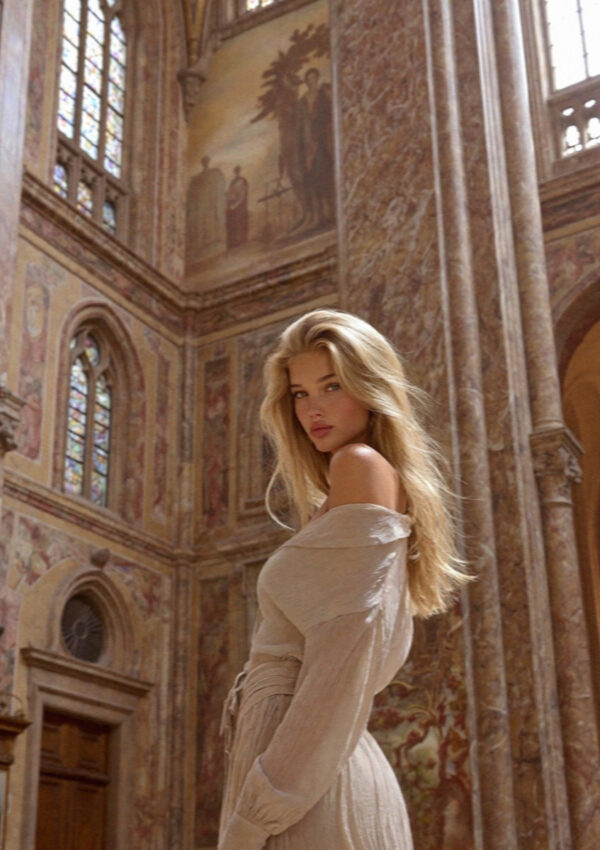
Before the house was fully awake, I took the violin from its case and played for an hour. The morning light at that stage has not yet committed to itself. It came through the glass in long pale corridors, uncertain, tentative. The room carried the quiet weight of age. Floors polished by generations. Tall windows that had watched countless mornings arrive exactly this way. I played until the sound stopped feeling like effort. Then I put the bow down and stood at the window with my hands still.
The garden was quiet below. I could hear, very distantly, horses.
I went to the writing desk after. The notebook I brought is half-full of things I will probably never read again, observations that seemed important in the moment and will seem ordinary later. Three pages about the rose beds. A note about something Lady Alderton said. A sentence I started and did not finish about the conservatory the previous morning. About the vines tracing slow paths across the glass and the way the light shifted through them hour by hour, changing the room without ever quite transforming it.
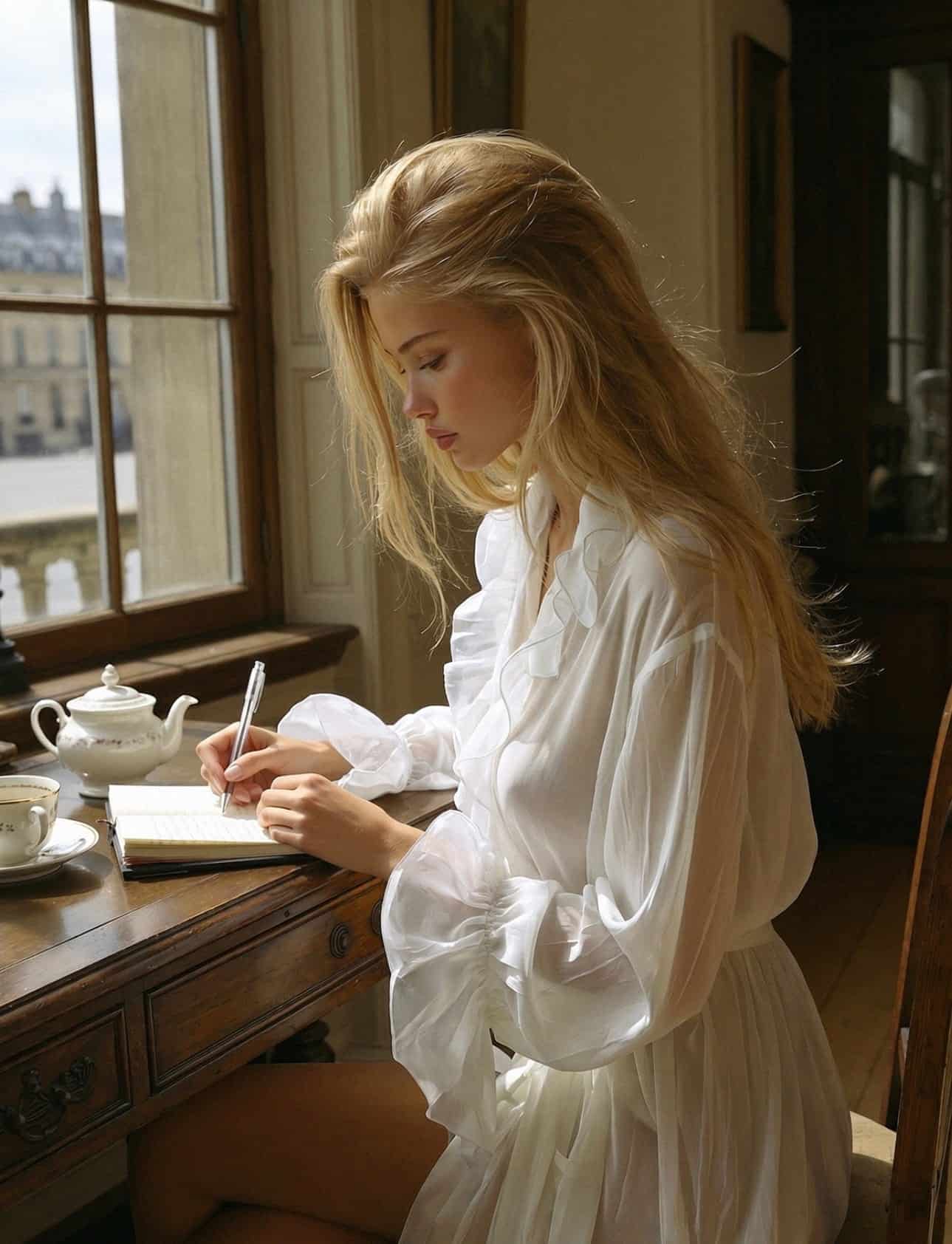
Writing by hand slows the mind to a pace it prefers but rarely gets.
I was still at the desk when I heard movement in the corridor. A knock. Then another. Then a third.
Then the hatboxes arrived.
Not one. Not three. Perhaps a dozen, carried in by two members of the household staff and stacked carefully in the corner of the room until it was filled. They were ivory, each one stamped with the crest of The Manor House. Opening them felt oddly ceremonial. Layers of tissue paper. Careful folds. The sort of attention usually reserved for things that matter more than they probably should. Each box revealed another possibility, another version of the day waiting to happen.
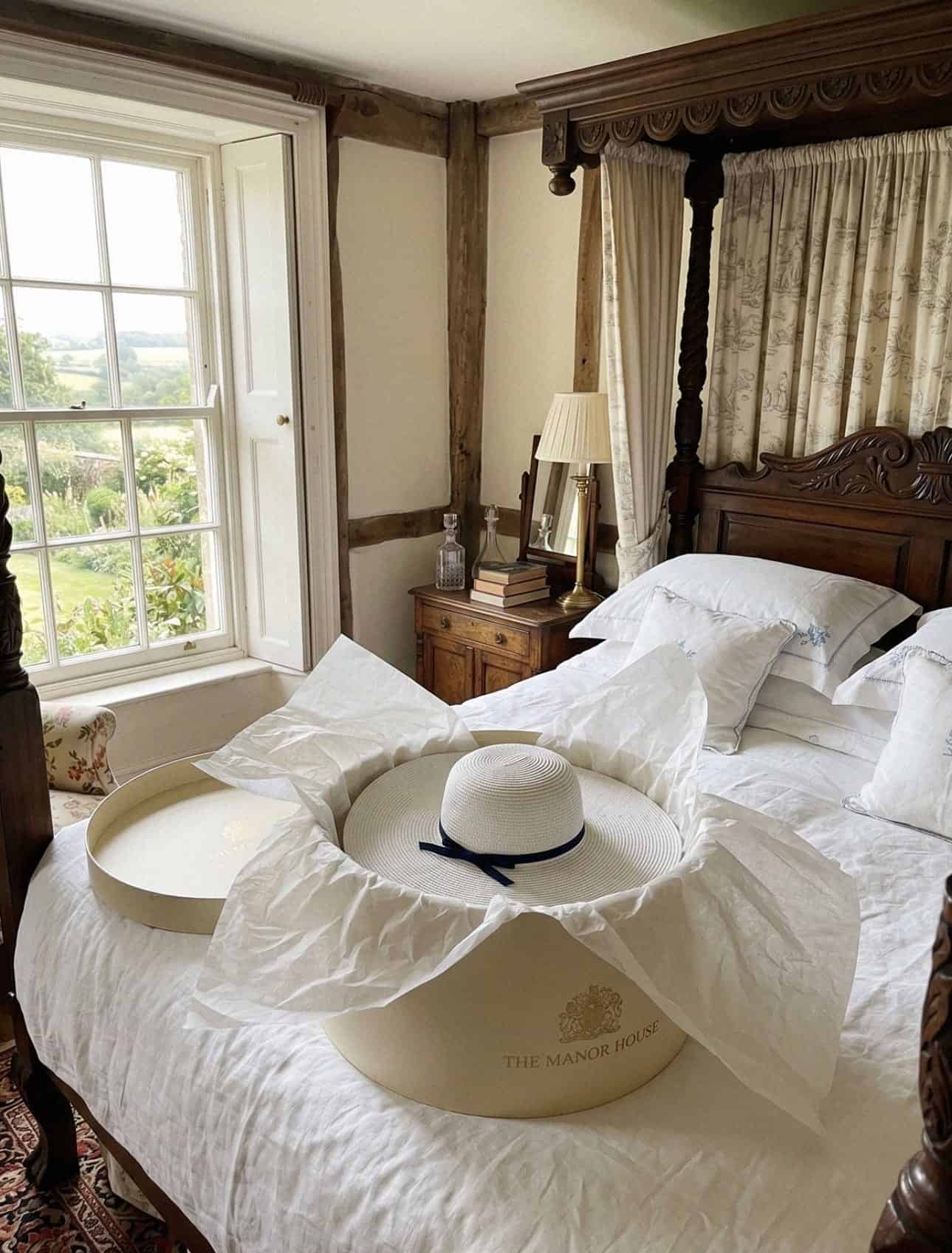
I lifted lids for twenty minutes. White hats, cream hats, a sculpted ivory fascinator with a single fold at the crown that sat differently from the others, less decorative, more architectural. I tried them all. There is a particular kind of nerves that has nothing to do with fear. It is closer to the feeling before a performance, when the piece is ready, and the bow is rosined, and the only thing left is to begin. The choice of the hat felt like that. Consequential in a way I could not entirely justify.
I chose the architectural one. I put on the white dress. I pulled on the gloves and stood in front of the mirror a moment more, just for myself.
I went downstairs. Lady Alderton was in the hall. She looked at me for a moment and said nothing, which was its own kind of answer.
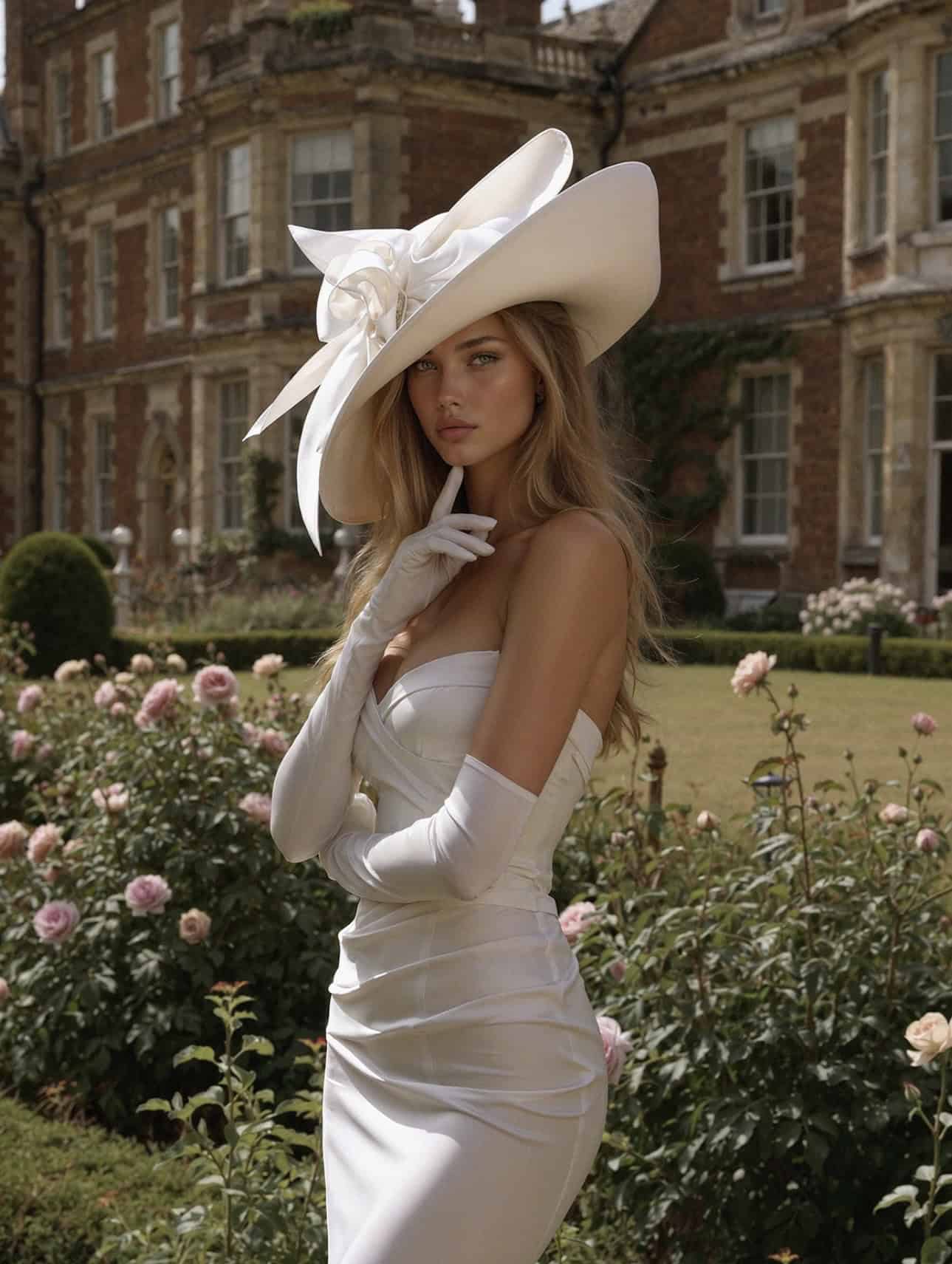
The drive to Ascot takes less than twenty minutes. Long enough to watch the hedgerows give way to the wider approaches, the car parks filling, the colours already visible from a distance. Something about June light in Berkshire does things to colour that other light does not. The green of the course is very green. The white of the marquees is absolute.
We went through the gates, and the noise arrived.
Ascot announces itself before you properly arrive. Not through noise but through colour. Hats moving between pathways. Linen catching the light. Stewards walking with quiet purpose. Even from a distance, the whole place seemed to shimmer slightly in the June sun, as though the occasion itself generated its own weather.
The Royal Enclosure was its own weather. White tablecloths, flowers. The crowd visible beyond the balcony railing, coloured and moving. Inside, the noise dropped. I sat, and the champagne was already poured.
Tradition, I learned, apparently requires cake.
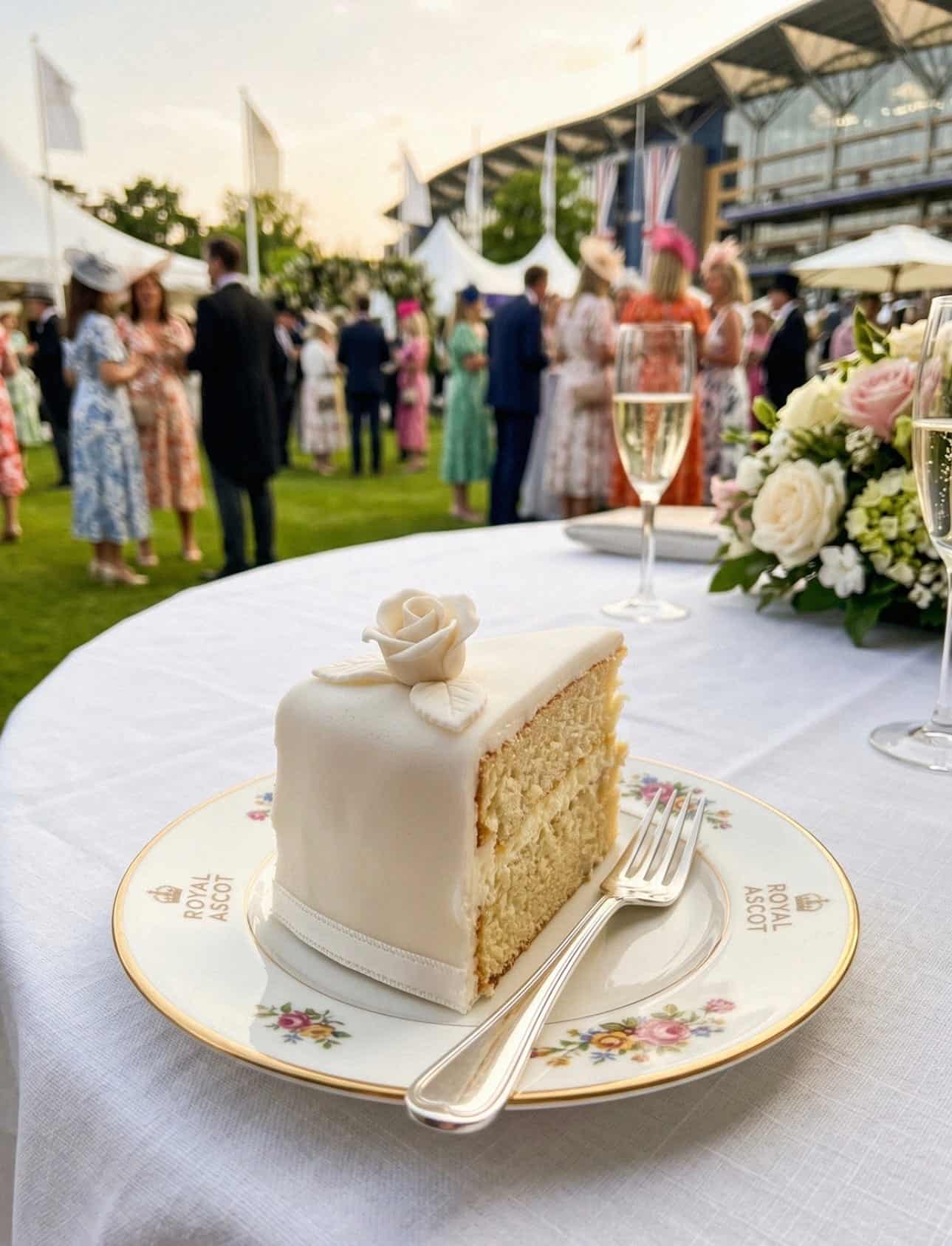
The slice arrived on a Royal Ascot plate, white fondant, a sugar rose at the crown. The fork was silver. I ate it while watching the hats move below on the lawn, a thousand of them in every direction, flocks of birds in flight, feathered and sculptural and occasionally improbable. It is one of those occasions that asks you to look. The looking is part of the ritual.
Between races, we walked down to the paddock. The handlers led the horses in wide circles, their faces carrying the focused expression of people responsible for something extremely fast and not entirely predictable.
The paddock felt entirely separate from the enclosure. Less performance. More concentration. The handlers moved with practiced calm while the horses circled patiently beside them. I stood at the rail and watched a chestnut mare complete her third circuit. She looked straight ahead. She was not performing anything. Several thousand people in their finest clothes watched with great seriousness, and she did not notice at all.
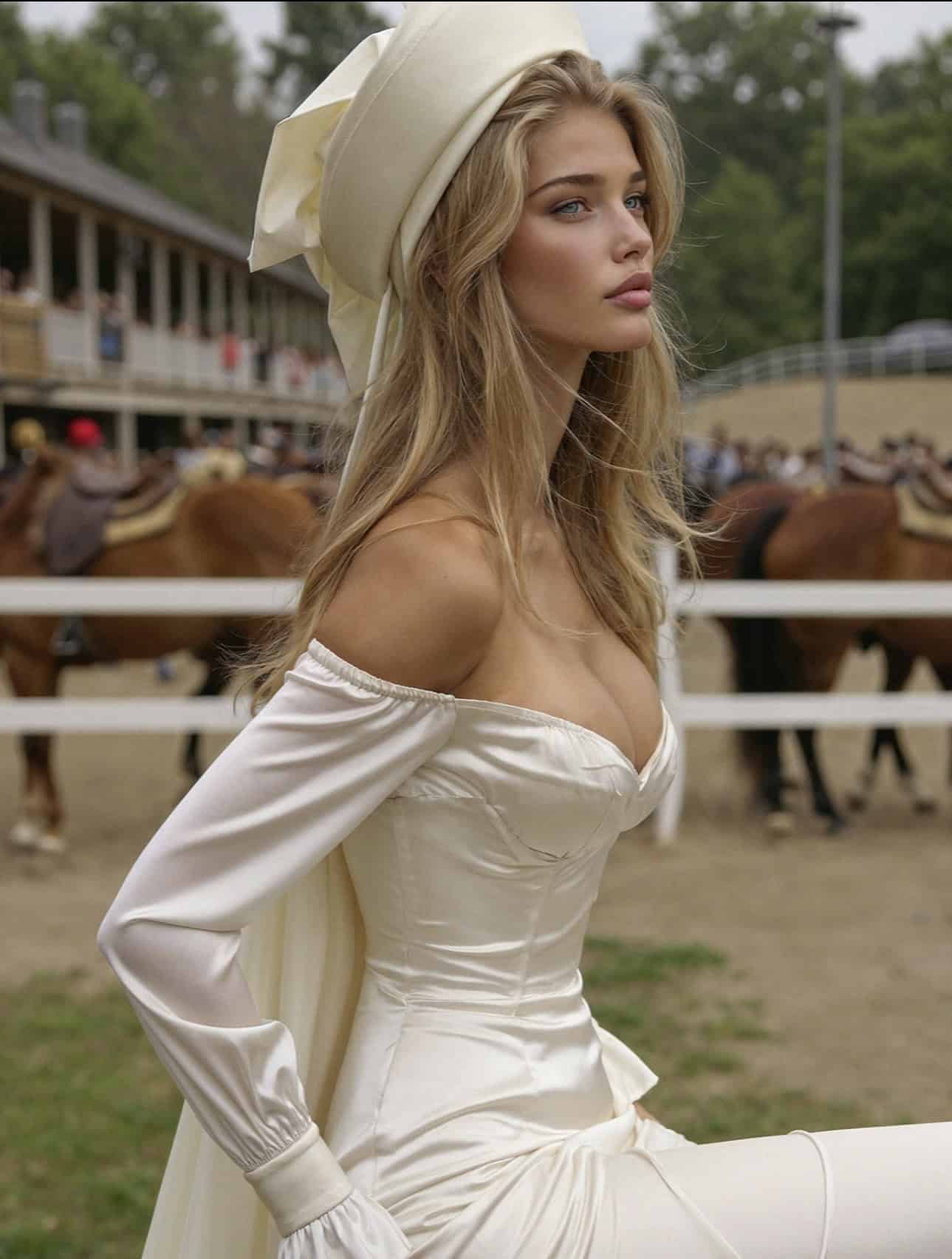
The race itself lasted less than two minutes. Then it was over, and the crowd redistributed itself, and more champagne appeared, and the afternoon continued at its own particular pace.
Just before the sun began to lower, I slipped away from the enclosure for a moment. Through the crowd and out through a side gate where the noise dropped suddenly, as if a door had closed behind me. I stood on the grass and looked at the length of the course, the white rails catching the evening light, the green going amber at the edges.
I was ready to go back.
The drive home was quieter than the drive there. The light through the car window was the light of late afternoon, golden and slightly tired, the kind that makes everything look as though it is already being remembered. The hedgerows closed back in as we turned off the main road. The house appeared at the end of the gravel drive, and I felt, not for the first time that week, the specific relief of returning to somewhere that does not ask you to be anything in particular.
I went to the conservatory.
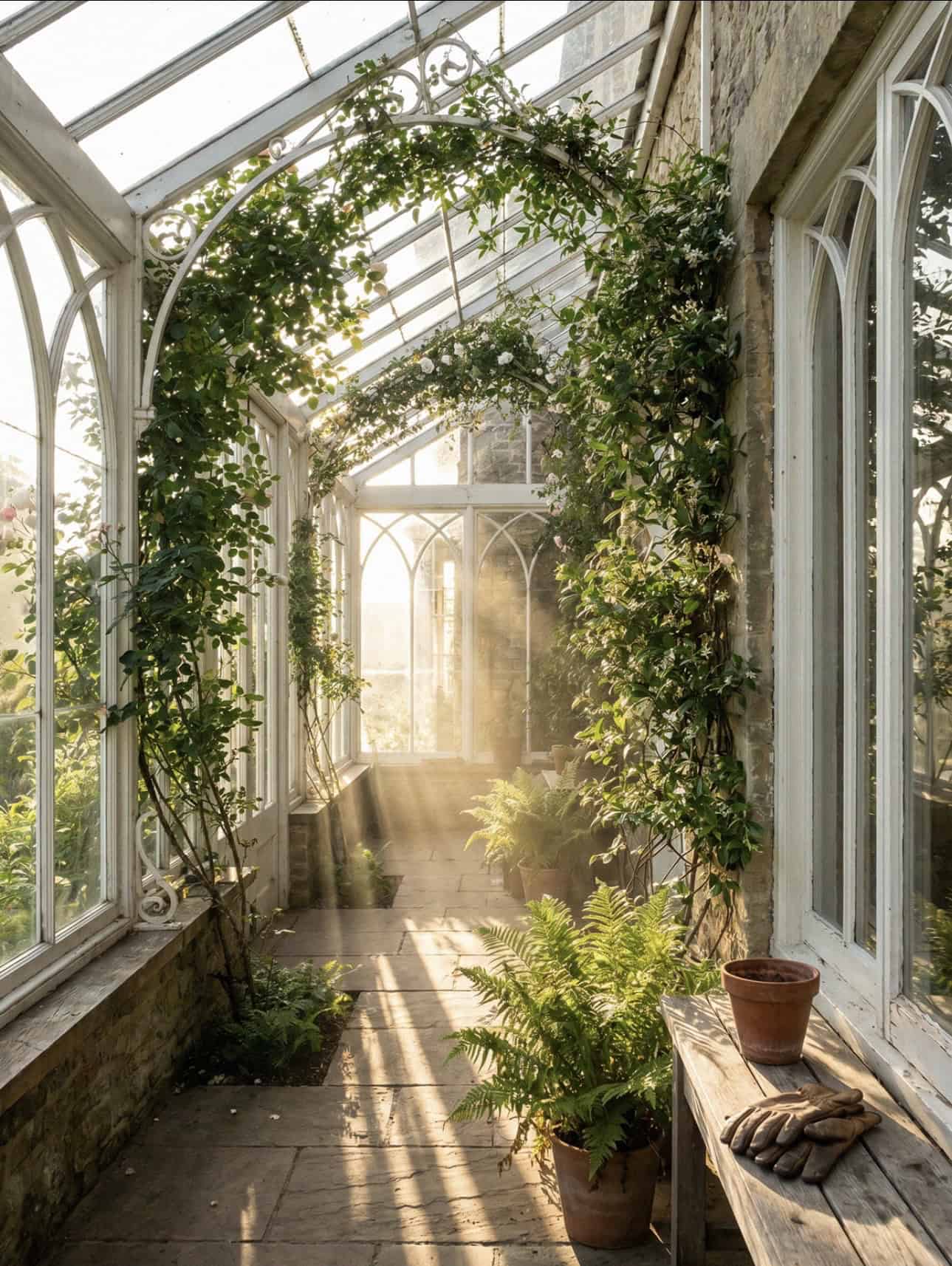
Through the door at the back of the house, the one that looks like it should not lead anywhere important. White ironwork. Climbing vines old enough to have reached the roof and begun their return journey downward. The ferns in their terracotta pots, the stone bench, the pair of garden gloves someone had left and never collected.
The conservatory seemed to exist entirely outside the day. The air was cooler there, softened by stone and shade, and the noise of the house faded almost completely. It was a room that belonged equally to spring, summer, autumn and winter, and therefore never seemed entirely committed to any of them.
The light came through the glass roof in long rectangles that moved across the floor as I stood there. I watched one move from the bench to the far wall and disappear. I had no particular reason to stay. I stayed anyway.
I walked through the rose garden before dinner.
The evening had arrived slowly, as it does here in June, as if it had other appointments and could not quite commit to this one. The roses had changed. All day they had been pink and cream and white in the full afternoon light, clear and pretty. At this hour they had gone deeper, the shadows between them thicker, the colour of each one more particular.
Rose gardens have a particular smell, like the smell of perfumed skin in the heat. Especially at dusk, they have something of that quality, something that is less about flowers than about the accumulated warmth of the day leaving through petals.
I stopped where the path narrows between two old beds and the manor house is visible directly ahead, its stone gone amber with the last of the sun. I had not planned to stop. Something about the light and the particular hush of that moment.
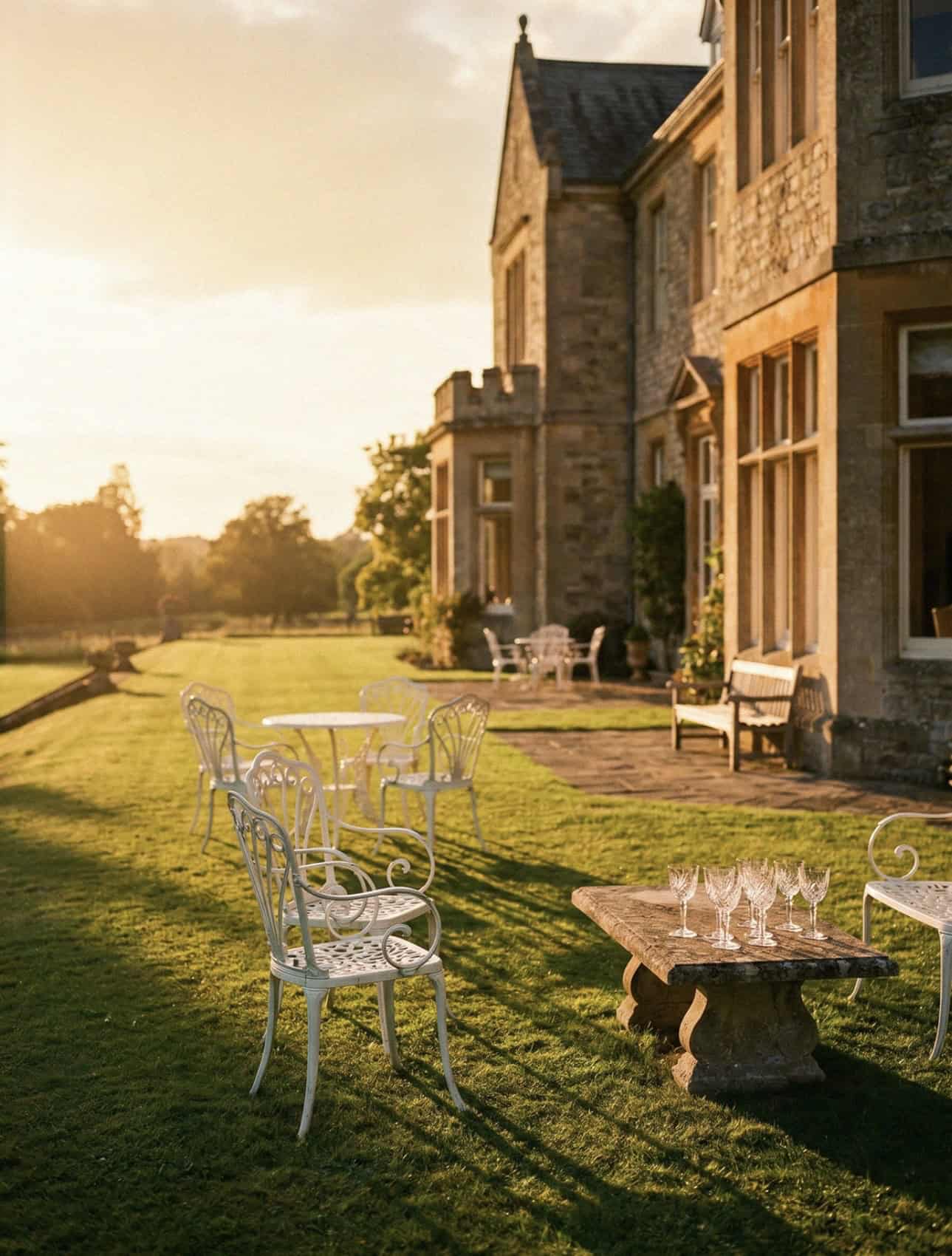
Then I went inside. The fire was already lit. Lady Alderton had arranged that too.
Goodnight, Ascot.
V.
Click here for a comprehensive guide on everything you need to know about Royal Ascot.
Continue reading: Royal Ascot 2026 – The Final Day