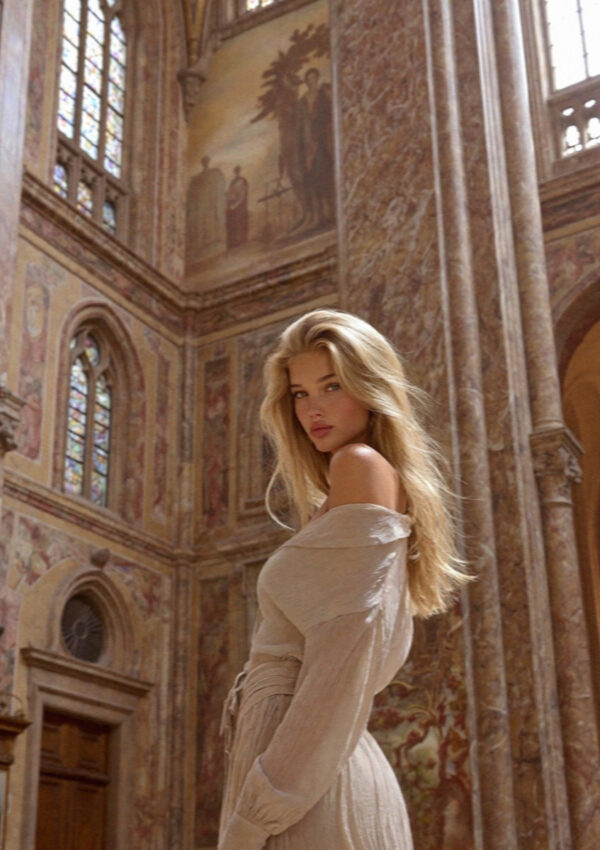
The drive from Ascot takes less than fifteen minutes. By the time we turned off the main road, the hedgerows had closed in on both sides, and the light had changed entirely. It does that in Berkshire. Something about the way the fields absorb the afternoon.
Alderton Park appeared at the end of a long gravel drive, honey-coloured stone, roses already reaching the second-floor windows. I had the feeling, standing in front of it, that it had been waiting. Not for me in particular. For anyone who arrived without an agenda.
I went to the stables first. That is always where I go.
There is a particular quality to a stable block at the end of the day, when the horses have been fed and the afternoon light comes through at an angle. It goes quiet in a way that nothing else goes quiet. The smell of hay and warm animal and old stone. I stood in the archway for a while with no particular purpose. Rosemary, the dark bay in the far stall, turned to look at me and then looked away, which seemed reasonable. She is bigger than I remembered. There are months between visits and horses grow into themselves quietly, without announcement. The last time I was here she was still uncertain in her movements, still finding where her own edges were. She has found them now.
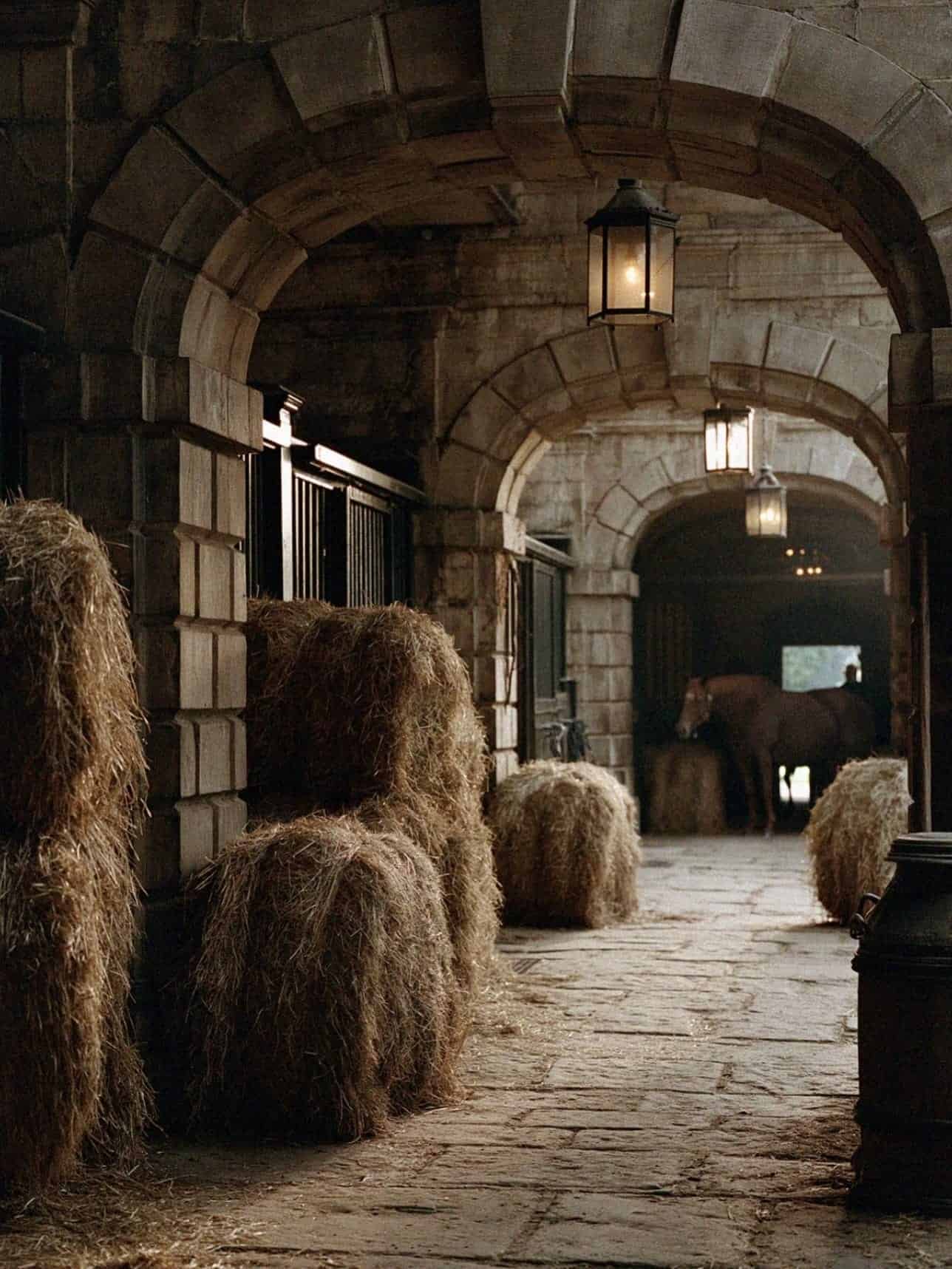
I rested my cheek against her neck. She was very still. I have known Rosemary since she was young enough to be startled by her own shadow, and there is something about returning to an animal that has known you through different versions of yourself. She does not require the current version to explain anything. She simply stands there, warm and certain, and that is enough.
These animals have a way of absorbing whatever you bring to them and returning nothing but warmth. I have always been grateful for that. There is no performance involved. What you bring into a stable is what you get back, clarified and simplified. It is an honest arrangement. I find most honest arrangements easier than the alternative.
That was the first thing I noticed about the days that followed. The whole house had something of that quality. It did not ask you to be anything in particular.
The rooms were old in the good way. Not preserved, but lived in. The drawing room had leather chairs positioned near the fireplace as if people had been sitting there for two hundred years and had simply stepped out. A decanter on the table. A painting above the mantelpiece, a portrait; I do not remember who is depicted.
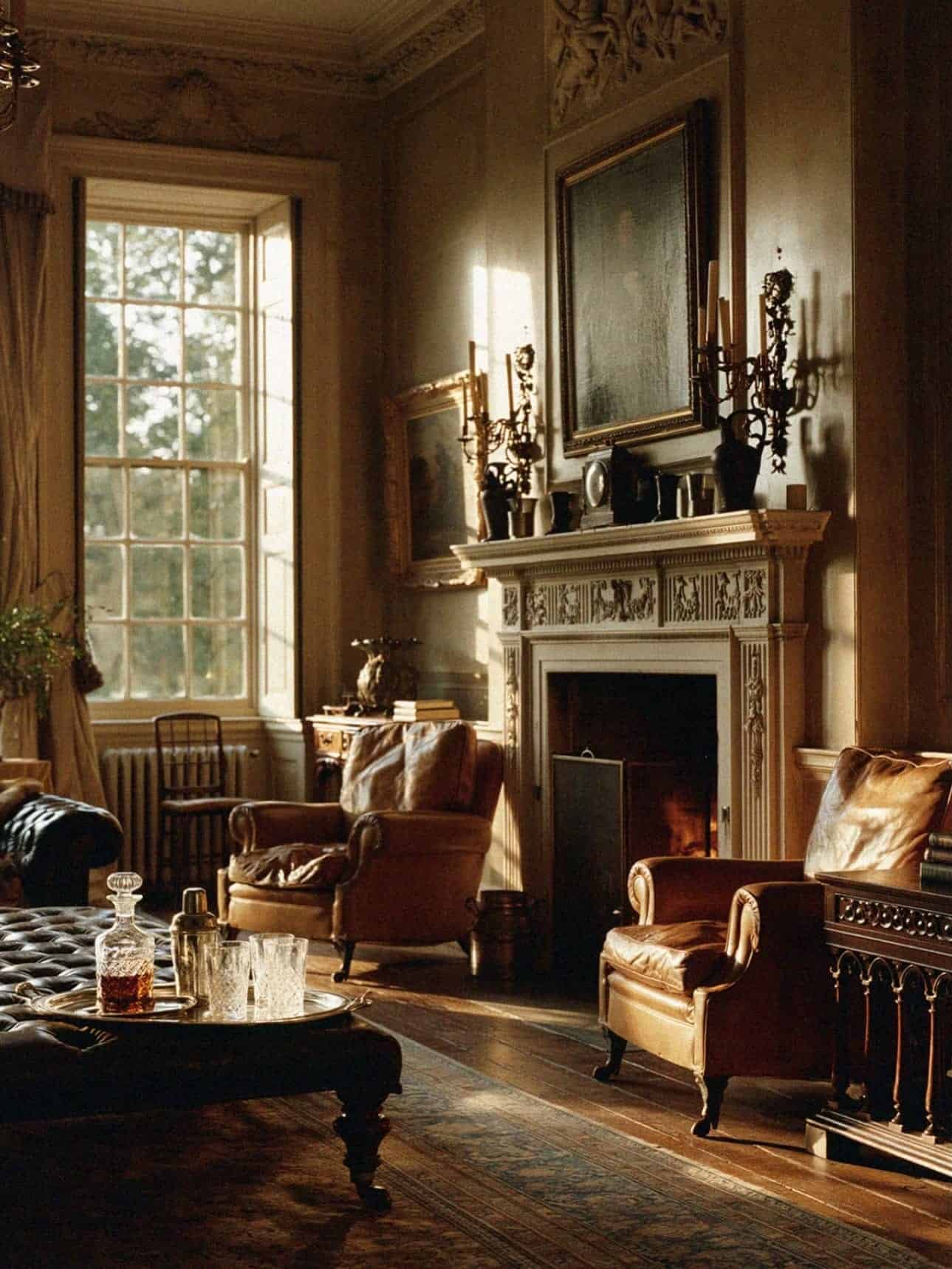
I have never looked up the history of the house. I made that decision the first time I came here, and I have kept it since. The moment you learn the history, rooms start to belong to other people. You begin to see them as documents rather than rooms. I prefer to use the chairs.
The fire was lit each evening by someone I never saw. It was already burning when I came down. The Alderton-Wrens are like that. They anticipate without asking, and they have been doing it long enough that I have stopped noticing the seams between their care and the general atmosphere of the house. I have known this family since I was young enough that coming here feels less like a visit and more like a seasonal return. There are people in your life who become a second family not through declaration but through accumulation, through enough dinners and enough years and enough afternoons in the same garden. The Alderton-Wrens are those people for me.
The library was better still. Floor-to-ceiling shelves, the books the kind that had been read rather than arranged. I found one on Greek sculpture, half its spine gone, and spent most of the first morning in the armchair by the window. The light came in at the right angle. It is a particular pleasure to read about marble in a house where everything else is also cold to the touch and very old.
Between the races, the house becomes something else entirely.
Ascot is its own world. The colour of it, the hats, the ritual of the Royal Procession. I find it genuinely beautiful in the way that very particular English things are beautiful, precise and unselfconscious at the same time. But it is also loud in ways that are difficult to explain. Coming back to the house in the afternoon, when the noise has been absorbed by the drive and the hedgerows, is something I look forward to more each day.
It rained one afternoon, the English kind, which is more like a general atmospheric condition than a weather event. I sat at a window with tea and watched the garden go grey and close in. The hedges were almost black when they were wet. The gravel disappeared.

There is something the rain does to old glass. The view through a Georgian window in the rain is like looking at a painting of itself, slightly softened, slightly uncertain. I stayed at that window longer than I intended.
The bedroom had a four-poster bed with white linen and the kind of curtains that move even when there is no wind. I left a book open on the pillow when I went down for dinner and found it in the same place when I came back, which seemed right. Some rooms hold their arrangements.
I ran a bath the first morning and stayed in it until the candles had burned low and the water had gone cold enough to notice. The light came through the window in the way it does before the day has fully committed to itself, pale and unhurried. Somewhere below, I could hear the house settling into itself. I got out eventually, but I had three pages of notes by then, and that felt like enough.

I thought a great deal about sculpture that week. There was a set of classical figures in a room along the garden side of the house, white marble against a pale wall, Greek goddesses arranged as though they had simply wandered in and stopped. I found myself going back to them at different hours to see what the light did. In the morning they were cool and a little severe. By late afternoon they had warmed to something else entirely.
There is no distance in sculpture. That is what painting can never quite replicate. You are aware of the weight, the displacement of air, the fact that someone’s hands moved across that surface. I read once that the ancient Greeks painted their marble. Coloured eyes, gilded hair, pigment on the lips. The white we associate with classical beauty was never what they intended. I find this difficult to reconcile with what I know of those figures now. The coloured versions would have been more literal. The white ones are somehow more true.

The conservatory is always where I end up, eventually. Through the door at the back of the house that looks like it shouldn’t lead anywhere important. White ironwork, climbing vines that had been growing long enough to reach the roof and begin their return journey downward. The light came through the glass in long rectangles across the stone floor and moved as the morning moved. Someone had left a pair of gloves on the windowsill. The space had that quality of rooms that are used but never announced, never shown to guests, quietly essential to the people who actually live there.
I thought about the care required to maintain a place like this. The vines alone must take hours each season. The ironwork needs painting. The glass needs to be kept clean enough to let the light in but not so clean it loses its age. There is a whole invisible labour behind beautiful old houses that never appears in the finished result. That is probably the point.
I went there one morning with coffee and sat until the light moved off the floor.
The terrace at evening was best. The house behind you, the garden ahead, the light going amber across the lawn as it does here at nine in the evening, which still surprises me. Someone had left two crystal glasses on the iron table and a bottle of white wine that was still cold. I poured a glass and watched the sun drop behind the tree line.
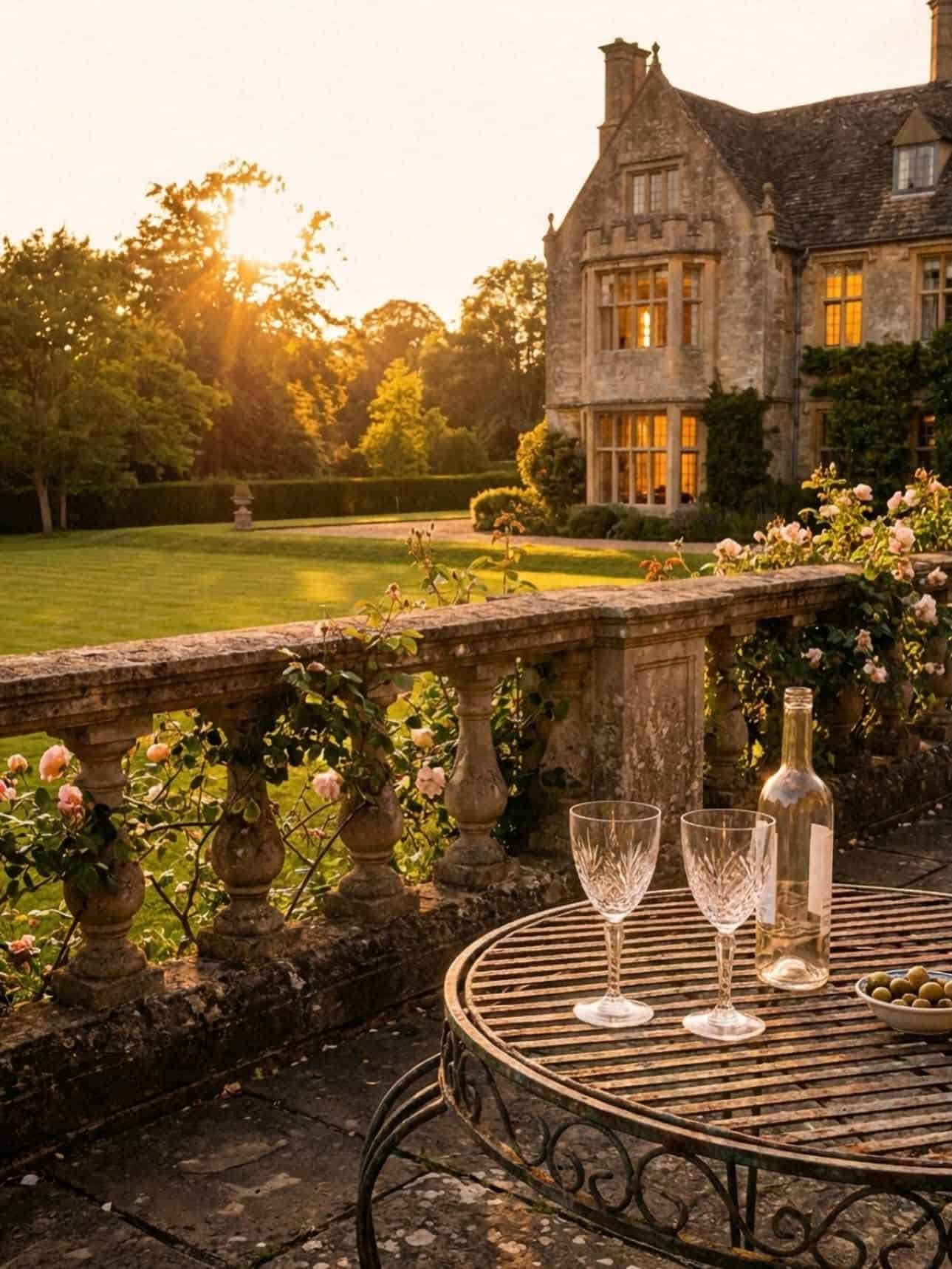
This part of England has a way of making time feel optional. The fields do not change between six in the morning and six in the evening. The roses are there, and then they are gone, and then they are there again. The house does not notice. The races happen nearby, and the house does not notice those either.
I am still here. I had not expected to want to stay.
V.