Capri Is for Lovers
The first time I came to Capri, I was small enough that my father carried me up the steps from the marina. He carried me until I asked him not to, and I remember the moment I asked because he didn’t argue. He just set me down and kept his hand near my back instead. Not holding. Present.
My mother wore a yellow dress that day. Not many memories from childhood arrive in color, but that one does. She was waiting at the top of the steps with the light behind her, and my father crossed to her and put his hand at the base of her spine the same way he’d been keeping it near mine. Small and constant. A language they had agreed upon before I was old enough to understand what language was.
I watched it then without knowing what I was watching. I filed it somewhere.
I left Positano in the early morning before the heat had found its full authority. La Sireneuse was still cool when I walked out of it, the corridor tiled and quiet, the kind of quiet that belongs to places that have been beautiful long enough to stop performing it.
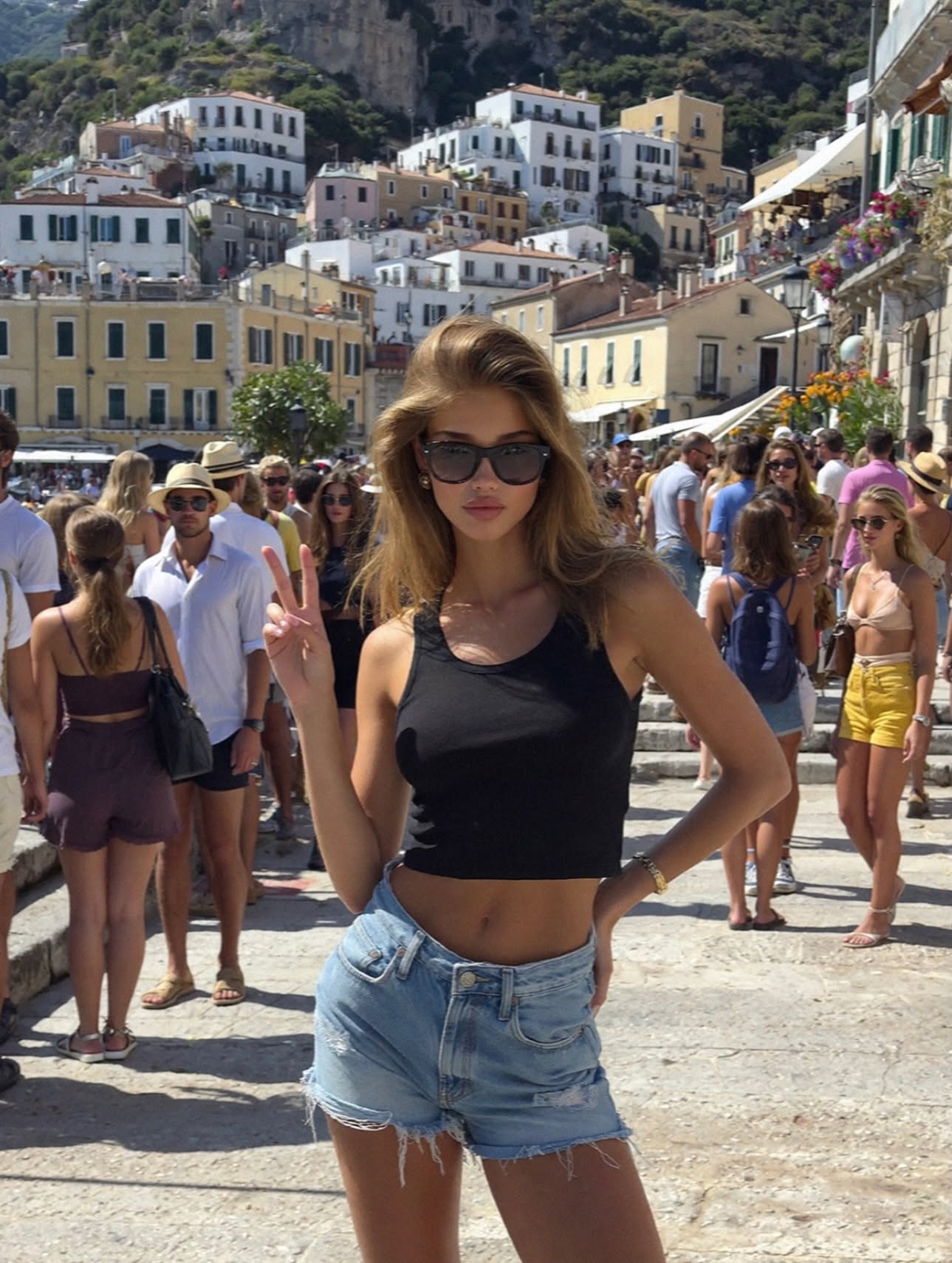
The harbor smelled of salt and diesel. It always does. Every harbor I have ever left smells exactly this way, and I have come to understand it as a beginning rather than a thing to be noted.
The boatman handed me aboard without ceremony, and we moved out past the last of the buildings. Positano reduced itself into the cliff the way it does, stacked and pink and vertical, until it was small enough to hold between two fingers. Then the open water.
.My team travels with me. I don’t talk about them much, which is unfair, because they are some of my favorite people in the world. They work quietly, at the edge of things, and somewhere along the way I stopped noticing the camera, not because it isn’t there, but because the team behind my photographs feel like home.
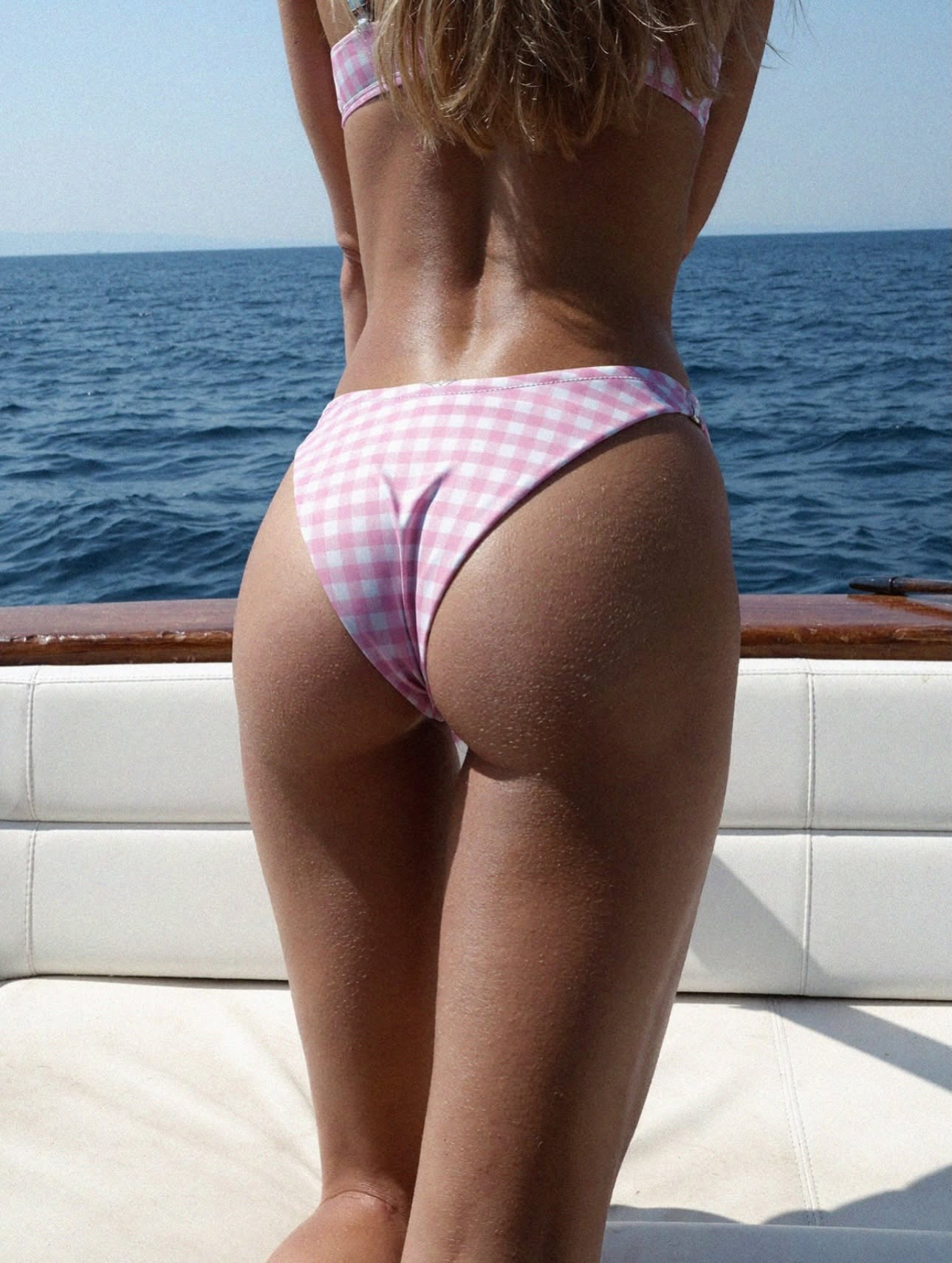
On the water, with the coast running east and the boat cutting a clean line through the chop, I felt the particular loosening that comes from being between places. Positano behind me. Capri somewhere ahead. Nothing required of me in the interval.
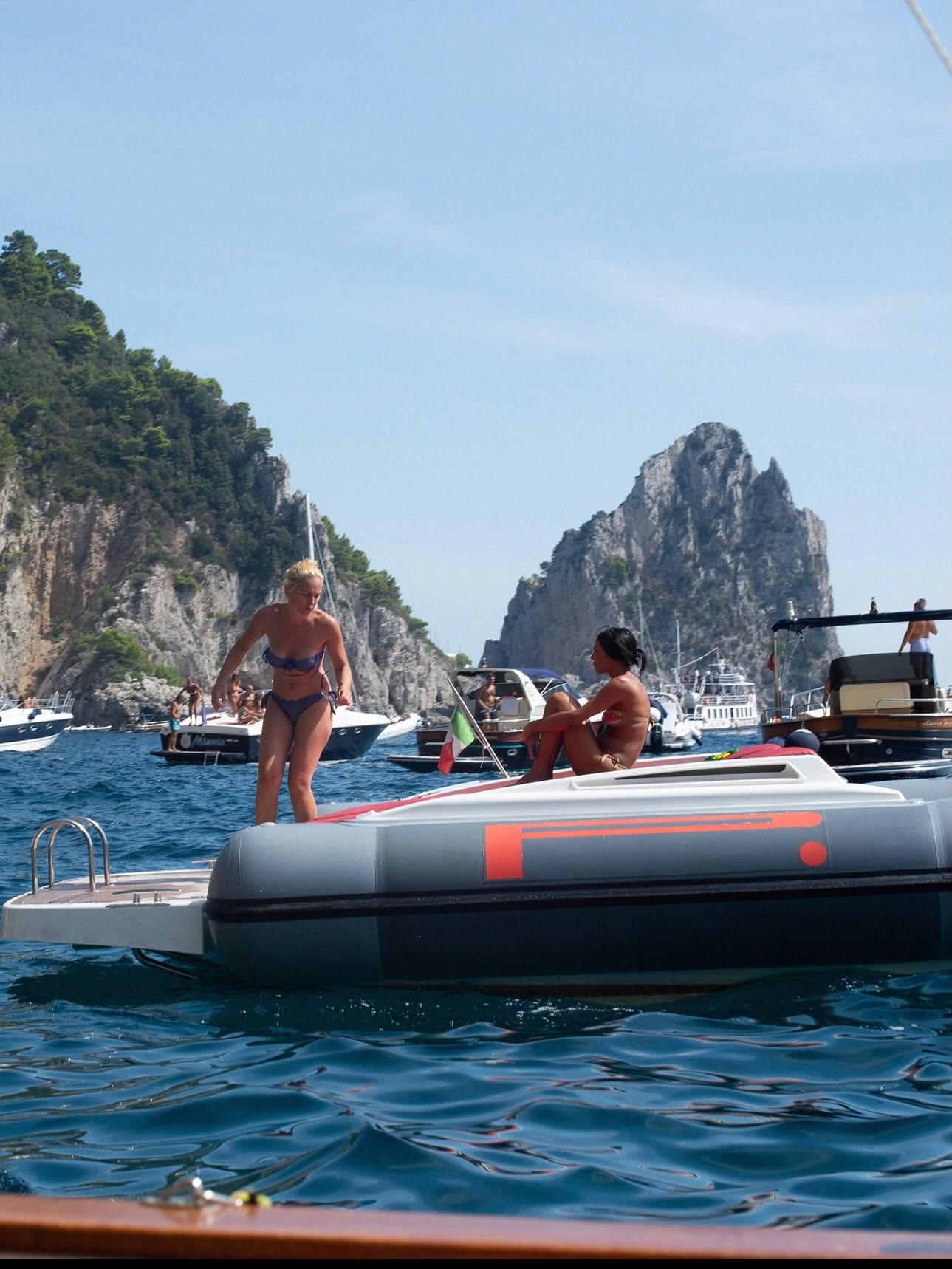
The other boats were already out.
A wooden gozzo heading south with two people in it, the woman’s hair loose in the wind, the man’s hand on the tiller. They were not young. They moved together in the boat with the economy of people who have moved together in many boats and no longer need to think about it. I watched them until they were past.
Further out, a larger craft with a family on the stern deck. Children in life vests. A mother applying something to a child’s shoulders with the focused attention mothers give to small preventions. A father leaning on the rail with a coffee cup, looking at the water the way men look at water when they are briefly satisfied.
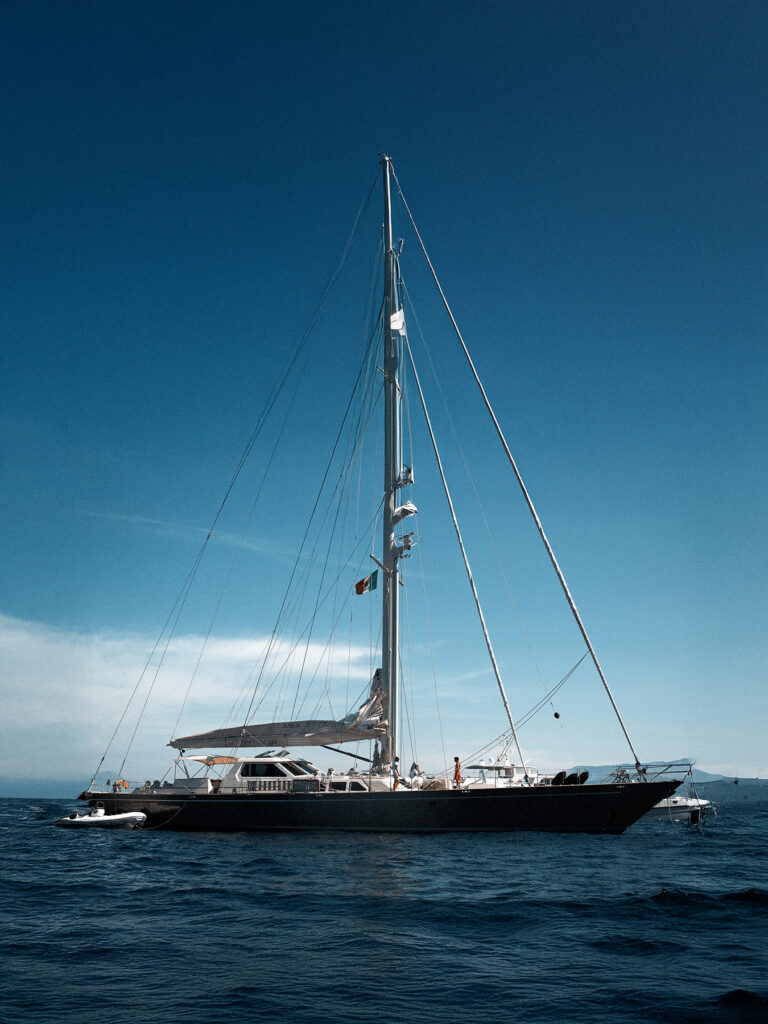
I did not feel envious of any of it. I felt something quieter than envy, an awareness of a future self.
I thought about my parents on this water. Not this exact water but water like it, the summer they brought me here. My father would have been standing in the bow. He always positioned himself in the bow on boats, facing forward, which I understood even then as a statement about his character. My mother would have been in the stern with her face in the sun. They were easy together in the way that people are easy when they have chosen correctly and know it.
I don’t know exactly what they had. I just know I recognized it even then, and that I have been looking for the right word for it ever since.
Capri arrives from the sea the way it always has. White limestone cliffs rising without apology. Green above the white. The island presents itself as a fact rather than an invitation, and you either accept it or you do not. I have always accepted it.
We went first to the Faraglioni.
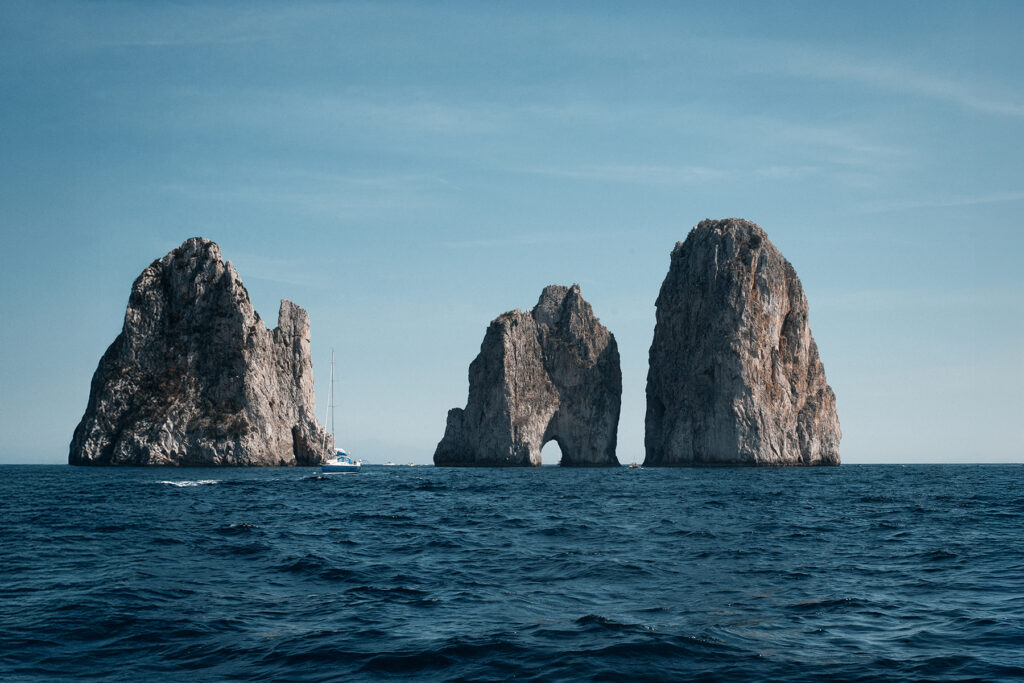
The sea stacks rise from the southern water, and the boat passes through the arch of the largest one, into the tunnel and out the other side, and in the transition the light changes in a way that is difficult to prepare for even when you know it is coming. And I did know it was coming. I have always known. It doesn’t matter. Every time the Faraglioni appear I feel as though I have never seen them before in my life. I don’t know how a thing manages this. I only know it does, and that I am grateful it does. Inside the arch it falls in silver fragments, broken by the stone, landing on the water in pieces that keep moving after the light has moved on. It lands on the water and on the boat and on whatever is in the boat, and for a moment everything inside that arch is the same material.
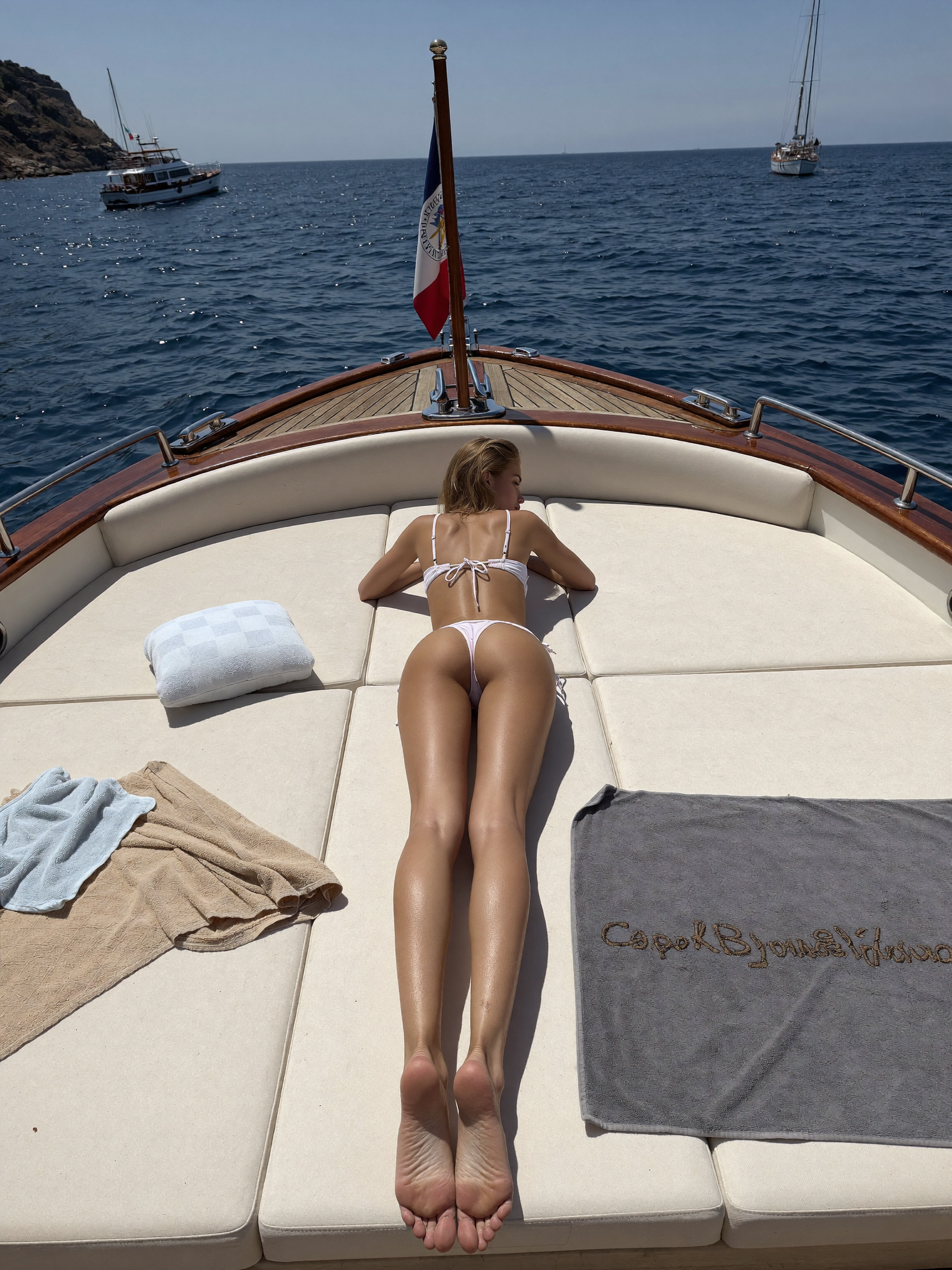
I sat in the bow and did not move.
Behind me the camera was working. I could feel it without looking. The light inside the arch was doing something specific to everything it touched, and I have learned that when conditions like this exist, the best thing you can do is hold still and let them.
On the way out, we passed a yacht and a couple at the stern watching the Faraglioni the way people watch things they want to keep. The man raised his hand when I raised mine. I don’t know why you wave at strangers from boats. You just do.
I thought: my father would have waved like that.
We found a cove on the western side of the island in the early afternoon where the boats don’t go. The boatman knew it. Some people always know these places and don’t explain how.
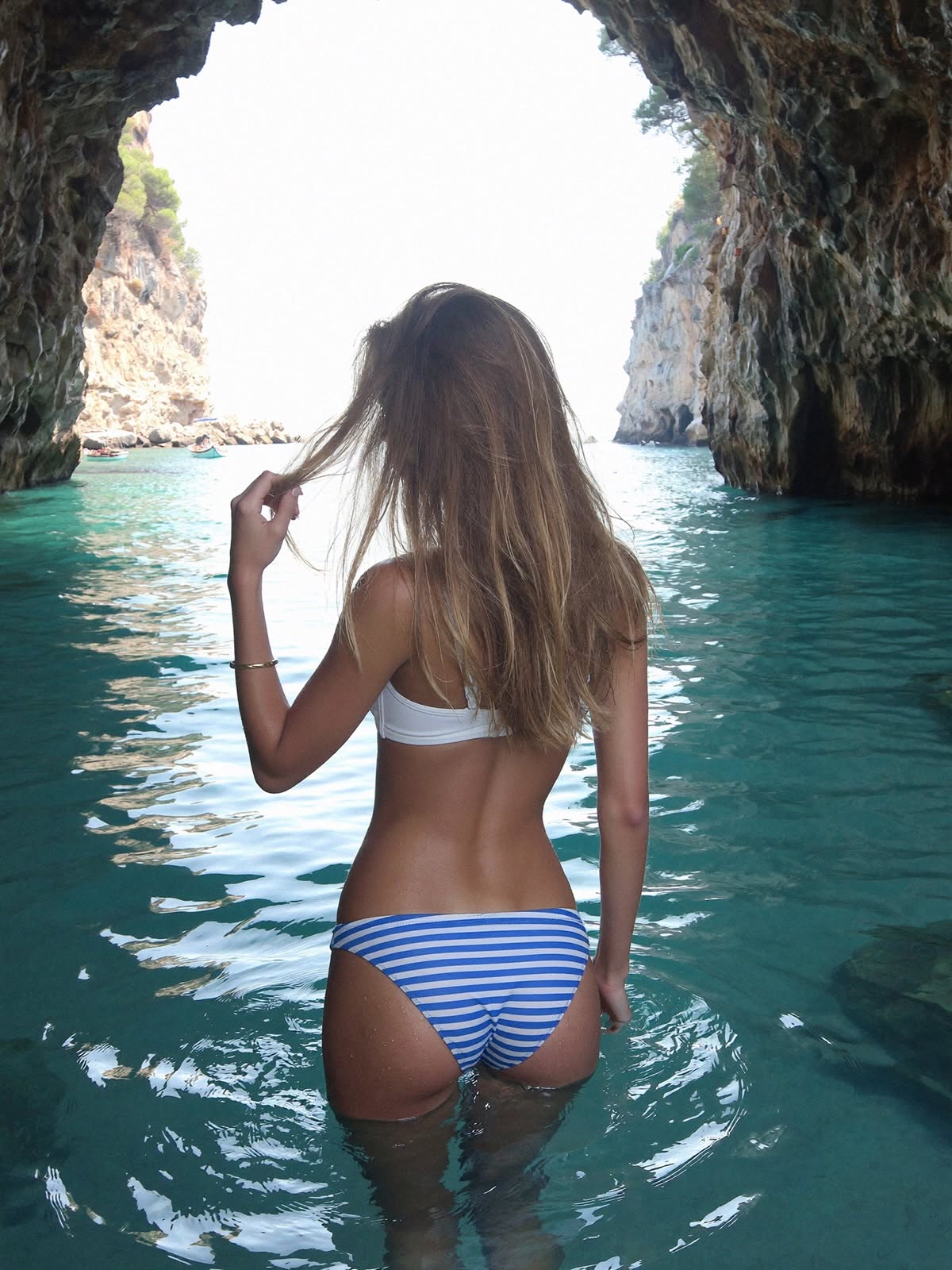
He cut the engine, and the silence arrived the way silence arrives at sea: completely and all at once. The water in the cove was a green so deep it looked chosen rather than natural, the kind of color that seems to exist in defiance of the spectrum’s more reasonable offerings.
I stayed in the boat for a while and let the cove be what it was.

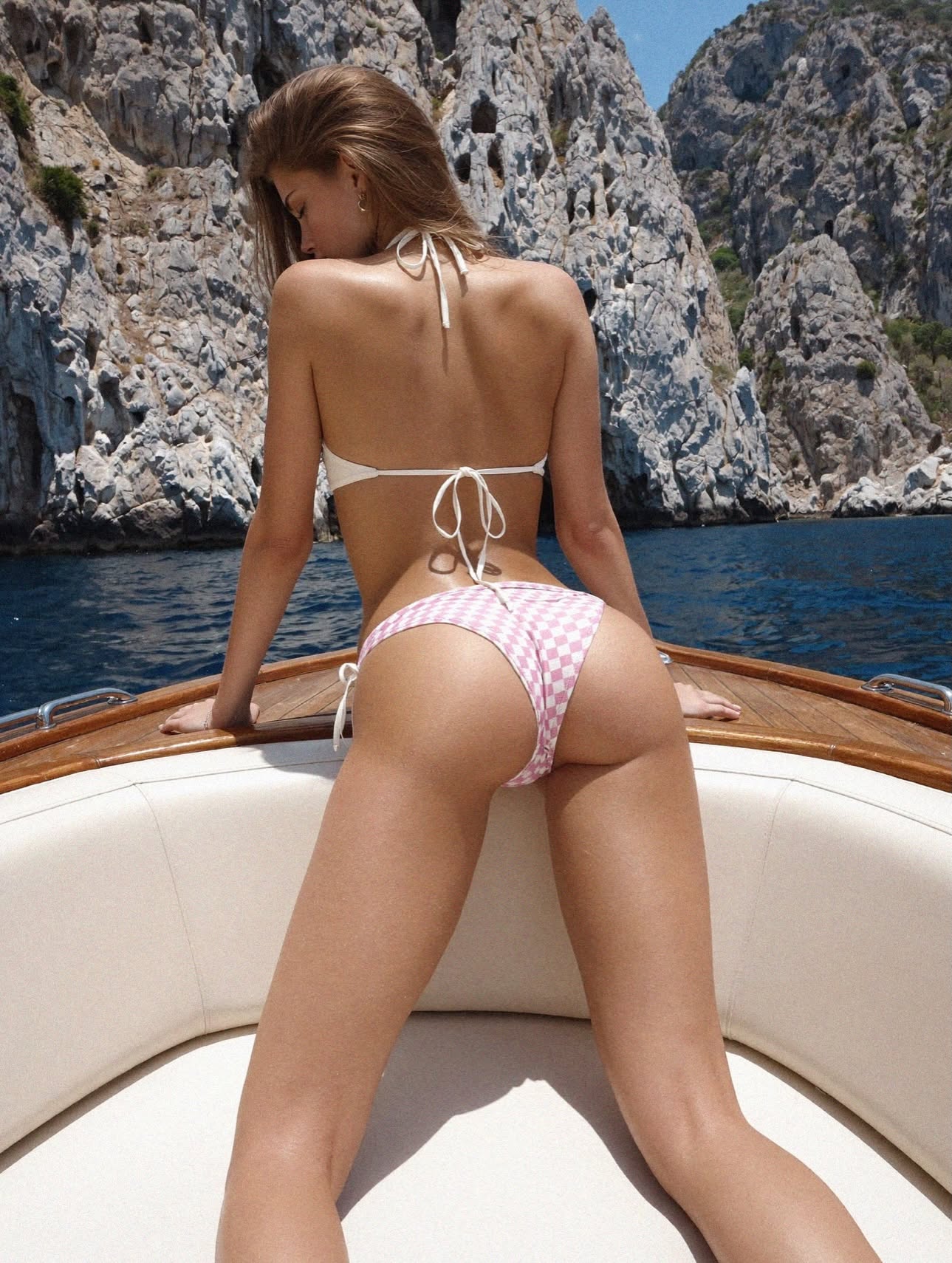
Behind me, I was aware of the camera working. The light was good, and the cove was good, and I have learned that when these conditions exist, it is best not to interfere with them. I sat with my knees up and looked at the water and thought about nothing sequential.
Then I swam.
The water took me immediately. Cold enough to matter, warm enough to stay in. I went under and came up and shook my hair back and floated on my back, and the sky above the cove was a hard specific blue with no clouds and no haze and no interpretation available. Just sky, doing what sky does in July above Capri.
I stayed out until the light started to go.
When I climbed back into the boat, the water broke in diamonds around me. The photographer handed me a towel without making it a moment. This is what I value in working with someone over time. The absence of ceremony around ordinary things.
Later I would see the photographs from the cove. In them I am already black and white in a world burning with color. I do not know how this happens. It simply does.

I lay on the bow in the sun and let my hair dry, and the boat rocked very gently in the cove, and I think I may have slept for a while. The kind of sleep that is not sleep exactly but a suspension of the waking requirements. When I came back, I was facing the cliff wall of the cove and the light had moved, and the green of the water was a different green now, deeper, the afternoon green rather than the morning green.

There is always a point in a good day when you become aware it is a good day. This was that point.
We returned to Marina Grande in the middle of the afternoon, and I took the funicular up.
Four minutes. The town rises toward you in the cable car window, or you rise toward it, depending on your philosophy. The marina falls away below. The houses on the cliff arrange themselves into a postcard you have seen ten thousand times, and you realize the postcard was always insufficient.
The Piazzetta in high summer is not a place for quiet reflection. This is not a criticism. The Piazzetta in high summer is a place for the observation of everyone else’s quiet reflection, which serves the same function but with more material.
I walked slowly.
The streets of Capri town are narrow, and the shops are expensive, and the bougainvillea is excessive in the best possible way. Everything is white, and the light on white in the afternoon does something specific. It finds the shadows and makes them blue. Every shadow on Capri is slightly blue in the afternoon.
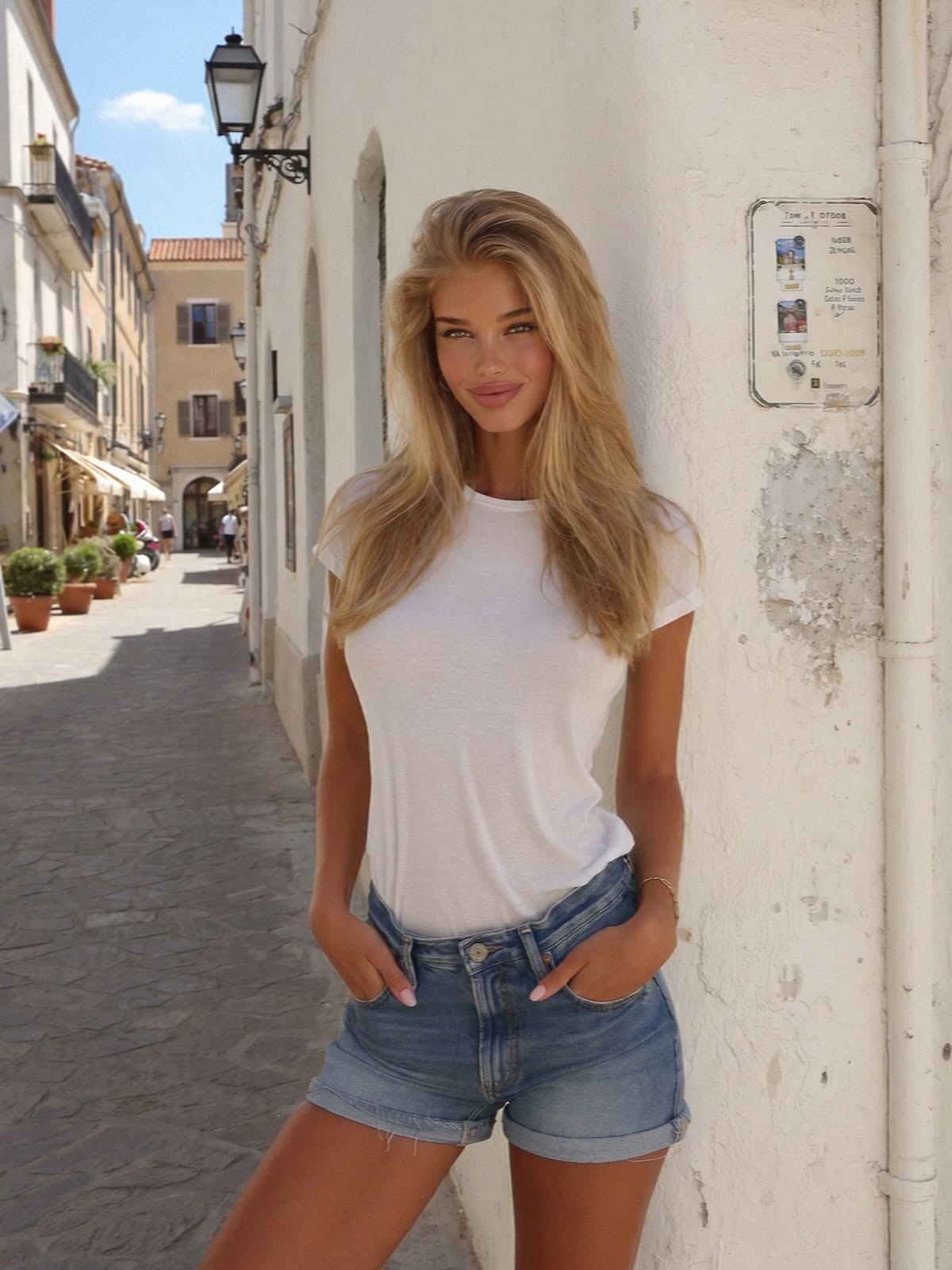
The couples were everywhere.
A young couple coming out of a shop, the woman holding something wrapped in tissue, the man already looking at his phone, and then looking up and back at her in a way that suggested the phone was a reflex and she was the actual thing. Two women walking with their arms linked at the elbow, the older one laughing at something the younger one had said. An elderly couple at a café table, ice cream in the heat, neither of them speaking, neither of them needing to. A man who stopped in the middle of the street to take a photograph of his wife against the white wall, and she shook her head as they always do and he took it anyway and then showed it to her, and she looked at it with the private expression of someone who is being seen in a way they have become used to.
I stood at the edge of a small piazza and watched all of this, held in place by it. I couldn’t have said why exactly. Something about it I didn’t want to stop looking at.
The version of Capri I remembered from childhood was warm. That is what I keep returning to. My parents did not perform happiness here. They simply had it, the way they had it in most places they went together. I was the child of people who had genuinely chosen each other. I understood this before I had words for it. I am still finding the words.
I walked down to Marina Piccola.
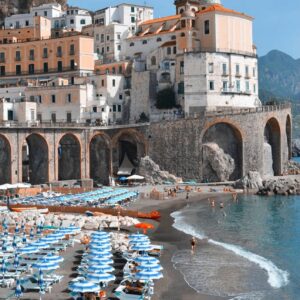
The descent from Capri town takes you through turns and steps, and eventually the sea reappears below, and you understand where you are in relation to everything. Marina Piccola is on the southern side of the island, tucked beneath the cliffs, the Faraglioni visible to the east. A different angle on the same rock I had passed through by water that morning. The cove from land looks like an entirely different place from the cove from sea. This is always true of beautiful things.
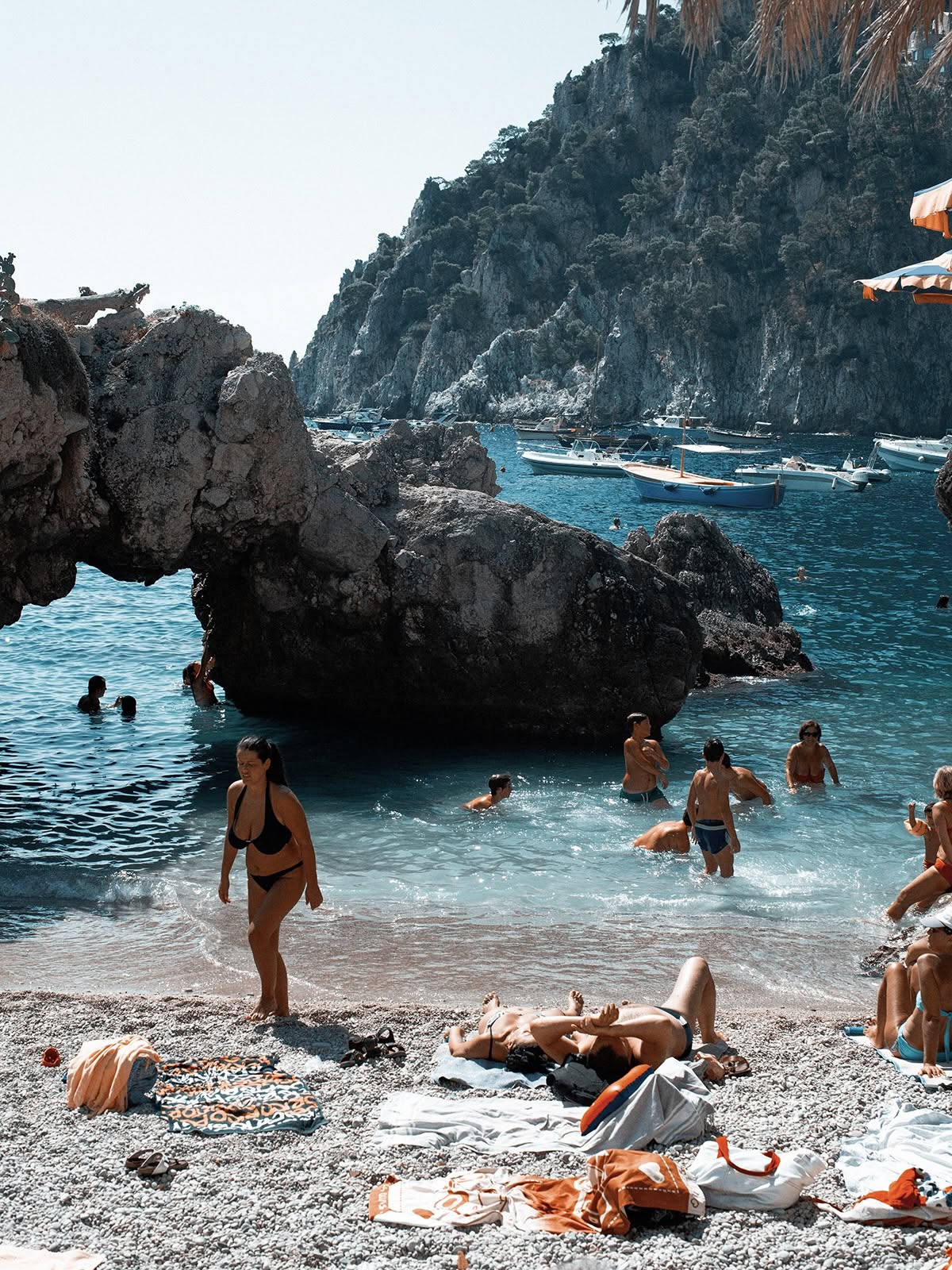
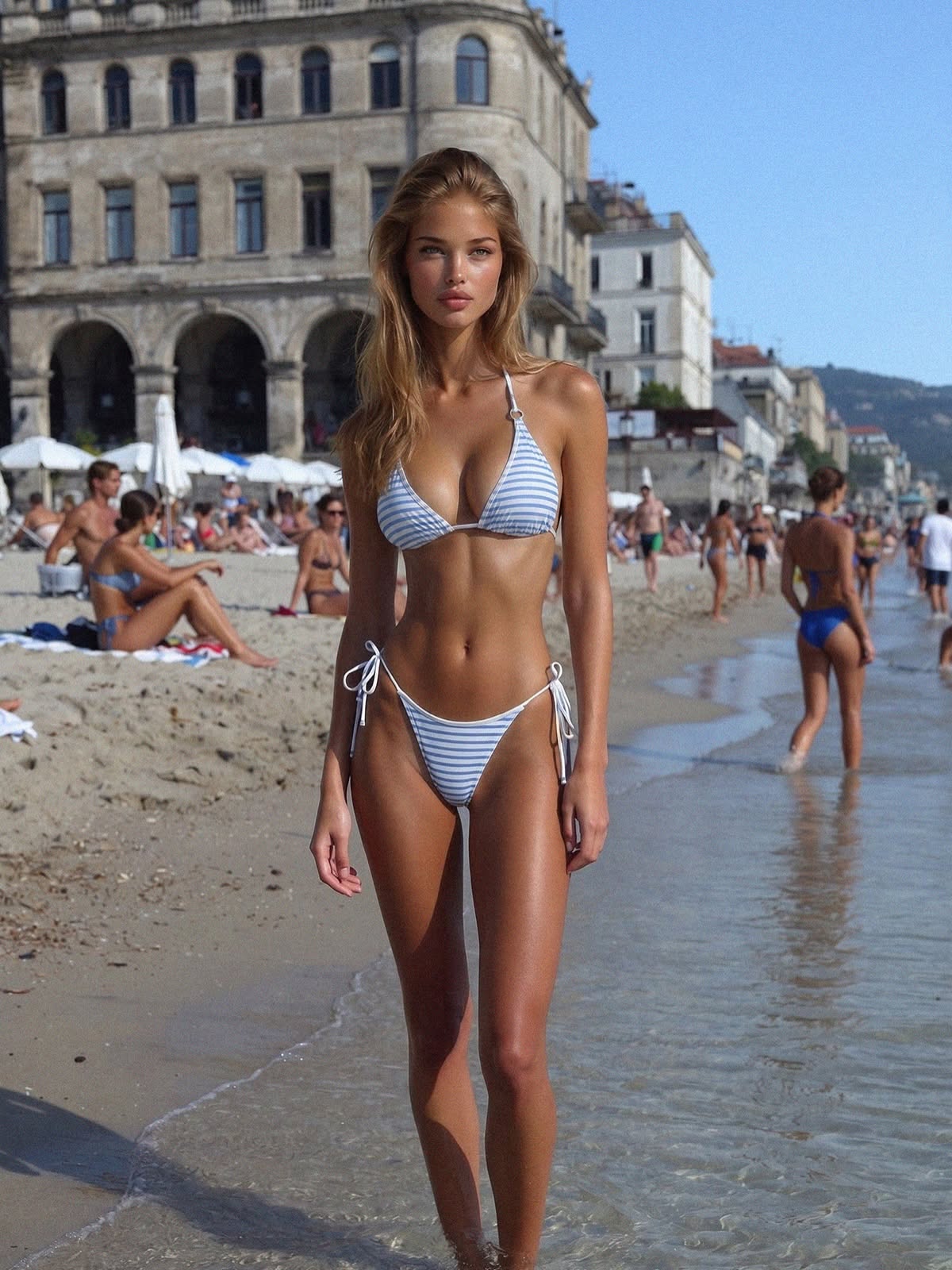
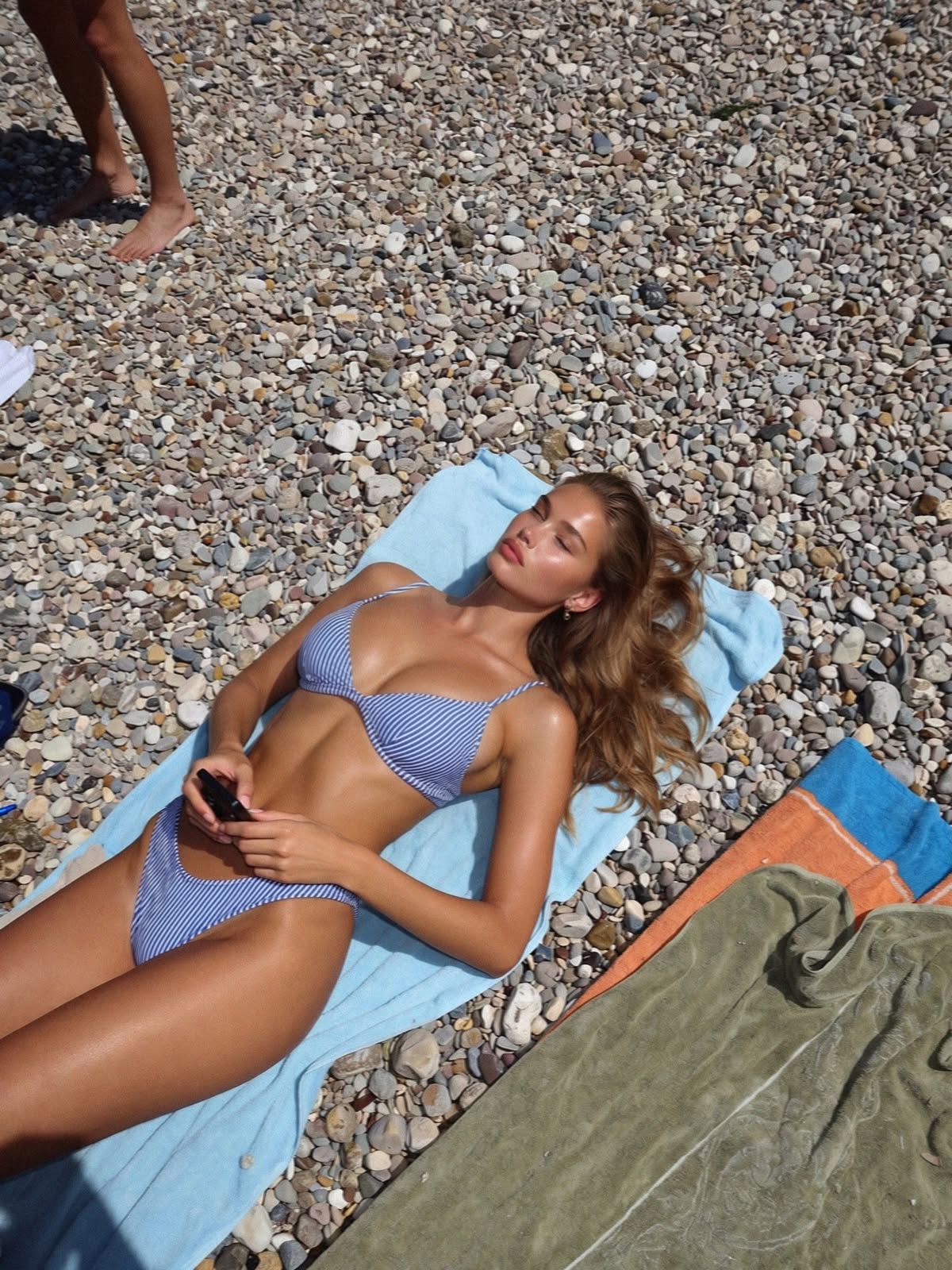
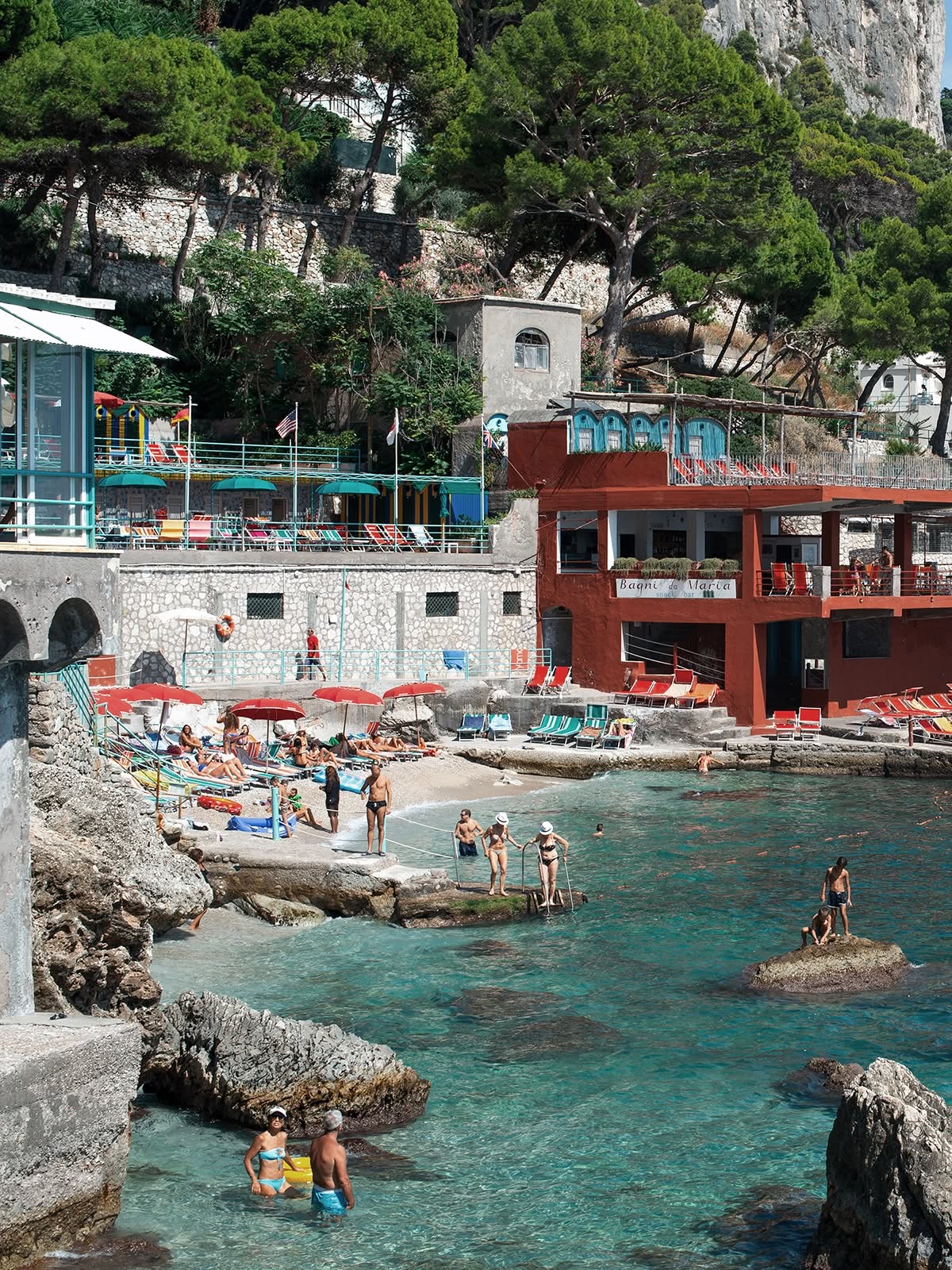
Da Gioia is at the water’s edge, the sign simple and sun-faded, the beach in front of it a mix of pebble and rock and people arranged on both with the particular ease of people who have been in the sun long enough to have stopped thinking. Bright umbrellas. Brighter water. A young couple lying on a single towel, asleep with their limbs overlapping, unconscious of the arrangement in a way that is only possible when two people have been unconscious next to each other many times before.
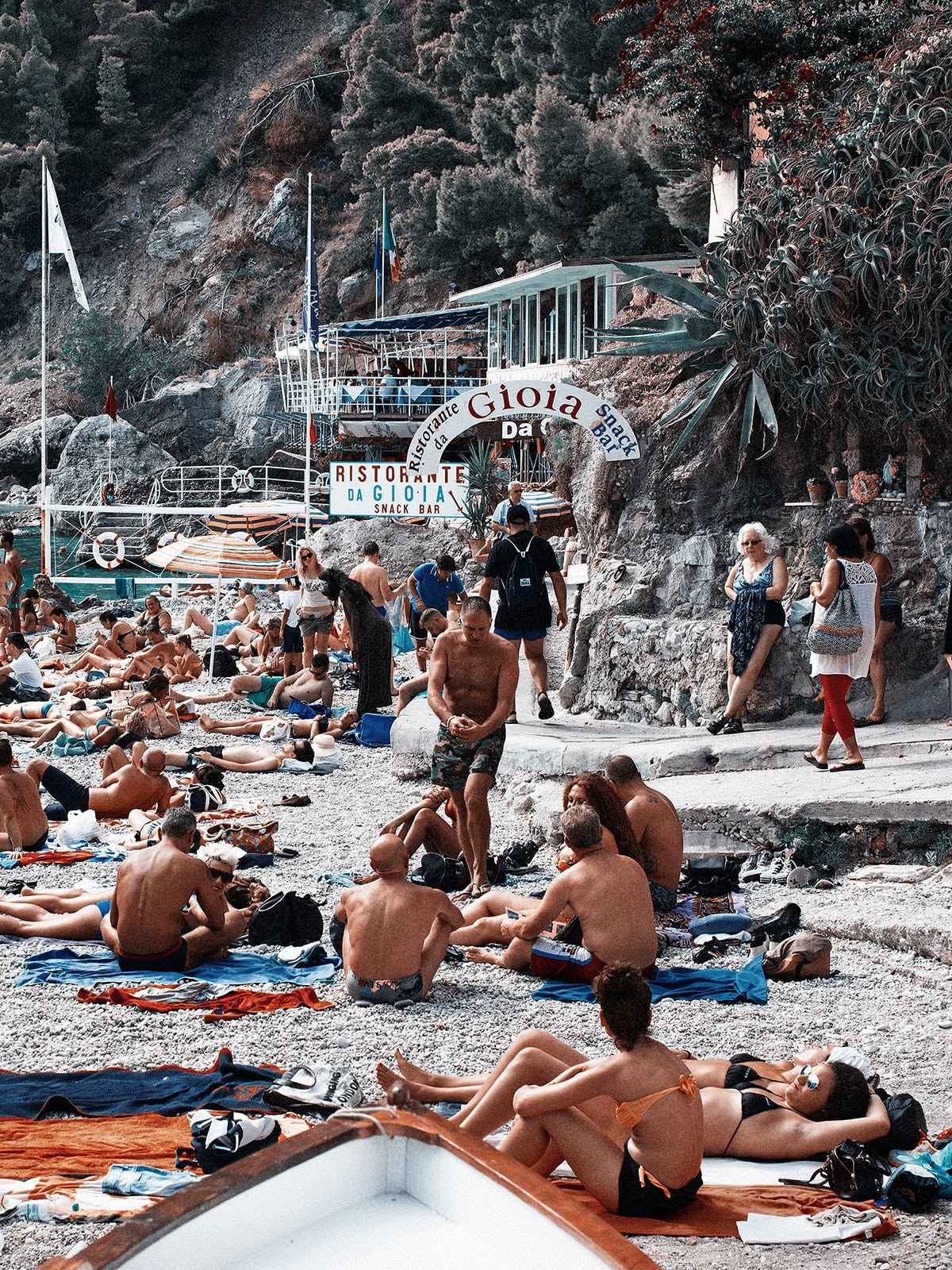
I found a spot on the rock above the water and sat with my feet over the edge.
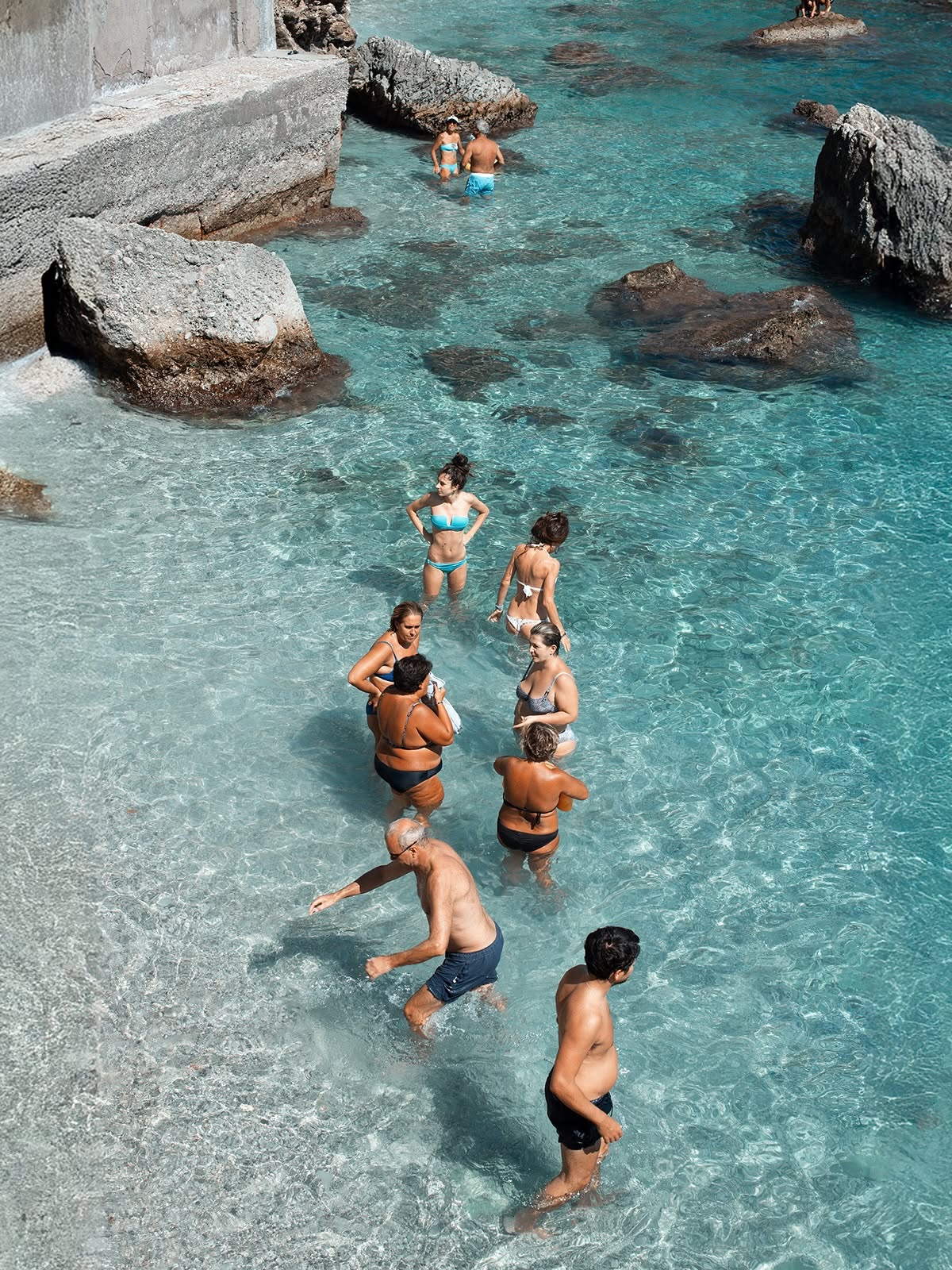
From here I could see the whole of the small bay. Boats anchored offshore. Swimmers in the turquoise shallows, a family wading in from a dinghy, the children jumping from its bow into water that was waist-deep on the adults and chest-deep on them. An older man standing alone in the sea with his arms spread slightly, face to the sun, perfectly still, the way people stand in water when they are asking nothing of anyone.
I swam again. The water at Marina Piccola is clear in the particular way that means you can see the bottom and the bottom is interesting: rock and light and shadow and the slow movement of whatever lives there going about its business below the level of human concern.
I floated for a while and looked back at the beach.
I thought about the morning. The couple in the gozzo with the woman’s hair in the wind. The family on the stern deck with the children in life vests. The man at the café who photographed his wife against the white wall. All day the island had been showing me the same thing in different arrangements.
I have been thinking about you.
Not only today. But today more than usual, perhaps because the island insists on it. Everything here is organized for two. The streets are the right width for two people walking close together. The café tables seat two comfortably and four with negotiation. The funicular is most itself when it carries two people who have something to say to each other for four minutes.
I don’t know when we will do this.
I think we will. I feel this more than I know it, which might be the same thing. I’m not sure yet.
Maybe it will be summer. Maybe the light will be exactly this light, the late afternoon light that turns the shadows blue and makes the white walls luminous. Maybe you will stop in a street somewhere above the marina and look at something, and I will look at you looking at it, and that will be the moment I understand what my father understood about my mother in whatever early moment he understood it.
Maybe we will walk down to the water together. Hold hands the way my parents held hands, without making it a gesture. Just doing it because it is the obvious thing to do and we have agreed without agreeing that this is the kind of people we are.
Capri will still be here. It has been here since before either of us, and it is not waiting for us specifically, but it will accommodate us when we come.
The boat back to Positano left as the light was turning.
The island pulled back into its outline as we moved away. White cliffs, green above, then a shape, then the open water and Positano somewhere ahead rebuilding itself from the haze.
Heat still on my shoulders. Salt in my hair. The wind moved across the water in long, gentle breaths and I let it.
La Sireneuse was lit when I arrived. The corridor was still cool.
I sat on the terrace for a while before going in. The sea below was the color of something I didn’t have a word for. Not black, not blue. The color the Mediterranean is at dusk when the day has been very good, and you are not yet ready to let it become memory.
I stayed until it did.
V.
You can read my complete guide to Capri here.
More from my trip to Capri:






Capri is reached by private boat from Positano in approximately fifty minutes. The funicular from Marina Grande to Capri town takes four minutes. Marina Piccola is a fifteen-minute walk from the Piazzetta, accessible via the road or the descent through the gardens. I stayed at La Sireneuse, Positano, in the Amalfi Coast.
Read also: The Blue of Capri