I woke in Naples before I meant to.
The shutters were still open from the night before. I had left them that way on purpose, too greedy for the city to close it out, and so the morning came in exactly as the evening had, without knocking. Light first. Then sound. A gull somewhere beyond the glass. A shutter rolling up on its chain. A motorbike far below, already late for something. I lay still for a while and let it arrive, the way you let a tide come in over your feet, and through the tall windows the bay was there, and beyond it the mountain, blue and patient and enormous against a sky going white with the heat to come.

The second day of a city is a different animal from the first. The first day, Naples had come at me all at once and left me to sort through it afterward, breathless and a little frightened and completely in love. But the second morning I woke already knowing the shape of the noise. It did not startle me. Not anymore. It felt, absurdly, like something I had always known. I got up and crossed the cool tiles and stood at the tall windows with my hands on the frame, and there was Vesuvius across the water, and there was the whole loud silver bay, and there was the day, waiting, in no particular hurry for once.

I was slow about getting ready, which is not like me. I sat at the little mirror with the lamp still on against the morning and put myself together without hurrying. The room behind me appeared in the glass in fragments. The unmade bed. The pale wall. The light coming in long across the floor. The sound of the street rising up and filling the room the way water fills a glass. There is a particular pleasure in dressing for a city you have decided to love. You do it more carefully. You do it for the streets, and for no one, and for yourself.

I went out early, before the heat had properly arrived, and the city gave me the version of itself it keeps for the ones who wake up first.
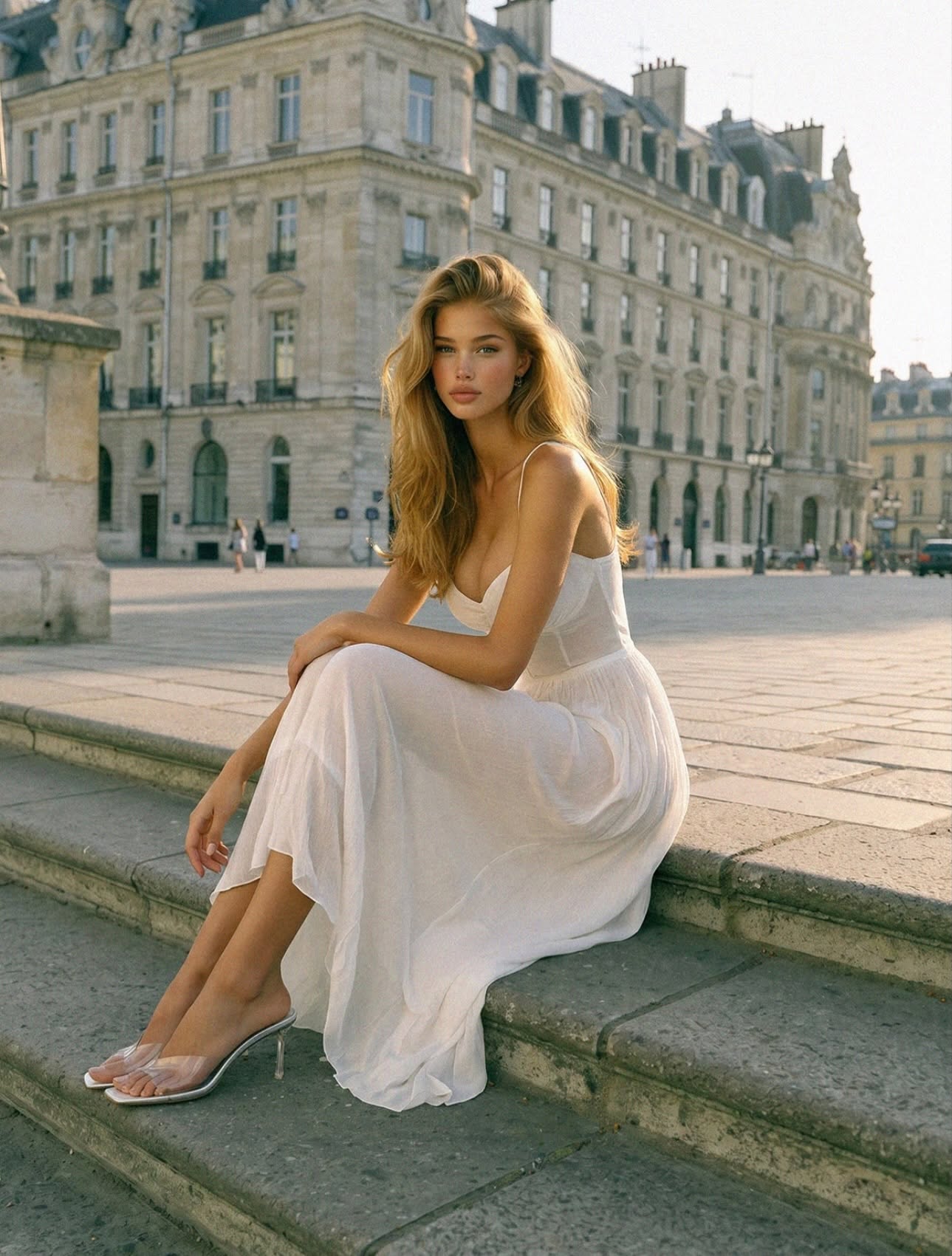
Piazza del Plebiscito was almost empty. The evening before I had only crossed it in passing, one more grand thing in a day already full of them, but in the morning it was mine. The great curved colonnade stood pale in the low light, the palace facing it across all that open stone, and there was almost no one to fill the space between them. Only a few figures crossing far off. The pigeons. Me.
I sat down on the cool steps at the edge and let the square be quiet around me. A city that shouts all day keeps its mornings gentle, as if to say sorry in advance for everything it is about to do.
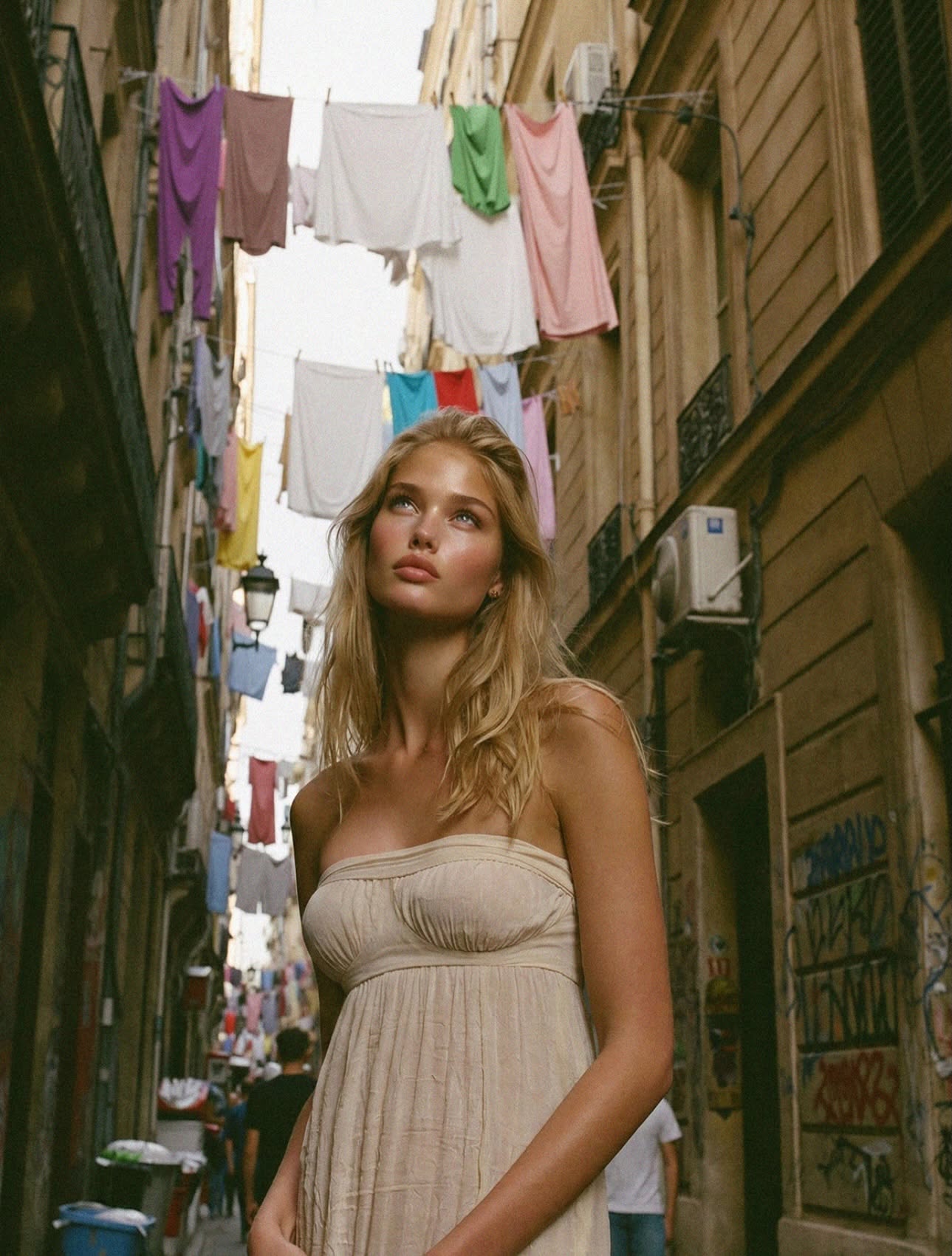
From there I climbed back up into the narrow streets, into the old tangle where the buildings lean toward each other, and the washing crosses overhead. The Quartieri Spagnoli was awake by then, but softly. The shops were only just opening. A man set out crates of lemons. A radio played somewhere above me. The smell of coffee came out of a doorway and followed me down the lane.
I stopped where the laundry was strung between the balconies, colour against colour against a thin bright ribbon of sky, and stood looking up like a tourist, because I was one, and because some things are worth stopping the whole street for. A woman leaned out of a window and said something I did not understand. It did not matter. The city was speaking all the time. Translation would have been too small a thing.
Somewhere past the middle of the morning I stepped in out of the noise and found the one room in Naples that holds completely still.
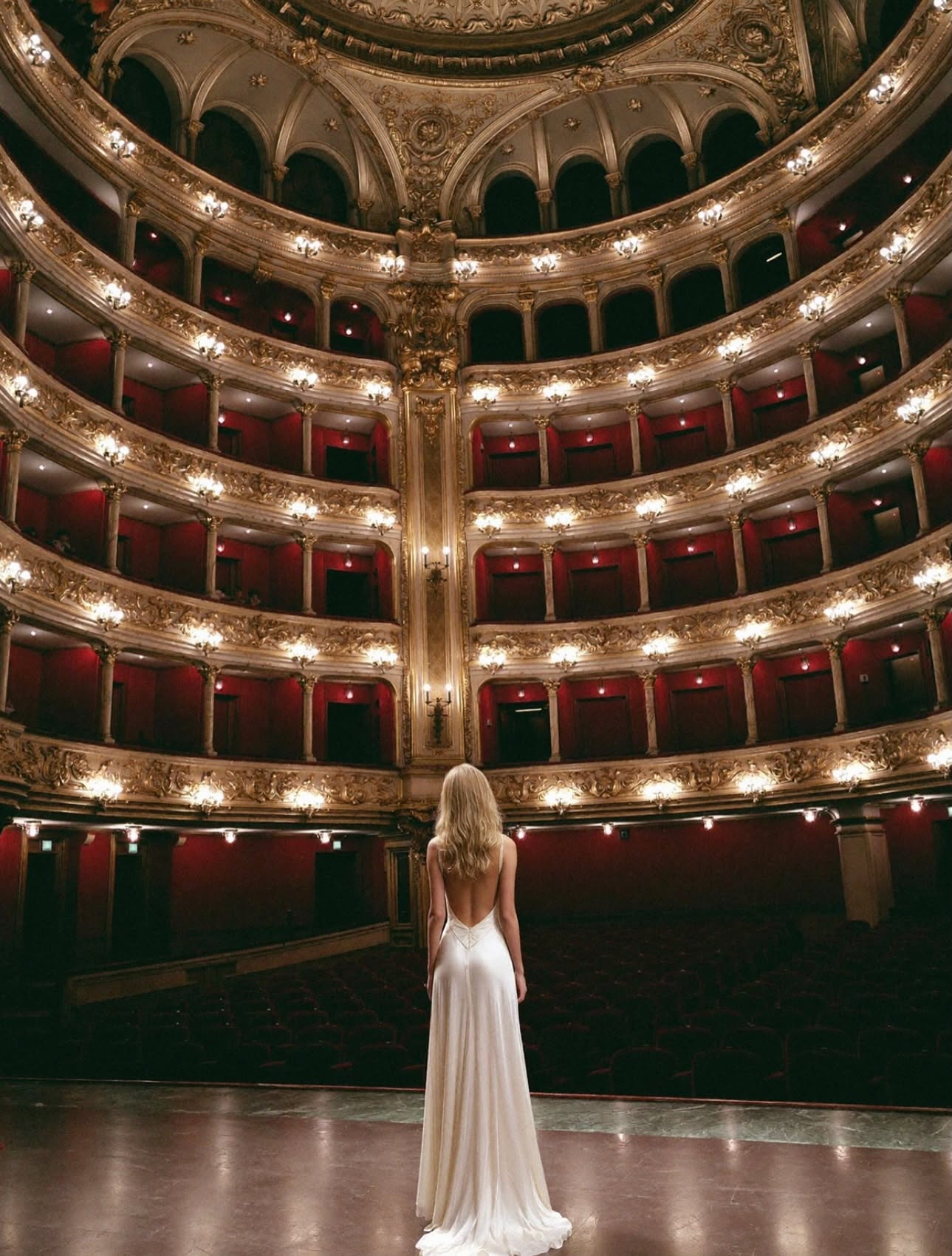
Teatro San Carlo is the oldest working opera house in the world, and standing inside it empty is like standing inside a held breath. Tier upon tier of red and gold curved up and around me, the boxes dark, the great chandelier unlit, the stage bare and waiting for a night that was still hours away. I stood in the middle of all that gold and looked up and up, and there was no sound at all. None. The first true silence the city had given me.
Naples spends itself so completely out on the street that it has to keep its quiet somewhere, and it keeps it here, folded into the gilt like a secret it is saving.

In the afternoon I walked back down to the water, to the castle I had watched turn gold at sunset the evening before.
By daylight Castel dell’Ovo is a different creature entirely, not a silhouette against a pink sky but a great honest heap of sun-warmed stone you can walk straight into. I went up through its courtyards and along its passages, the walls thick and warm under my hand, the sea appearing suddenly through an archway, blue and flat and blinding.
There is a legend that a poet buried an egg in the foundations, and that the whole city will stand only as long as the egg stays whole. Standing there, with a thousand years of sea light coming sideways through the arches, I found it very easy to believe the egg is still down there somewhere, and still quietly doing its work.

And then the long slow gold of the late afternoon, which in Naples belongs to the water.
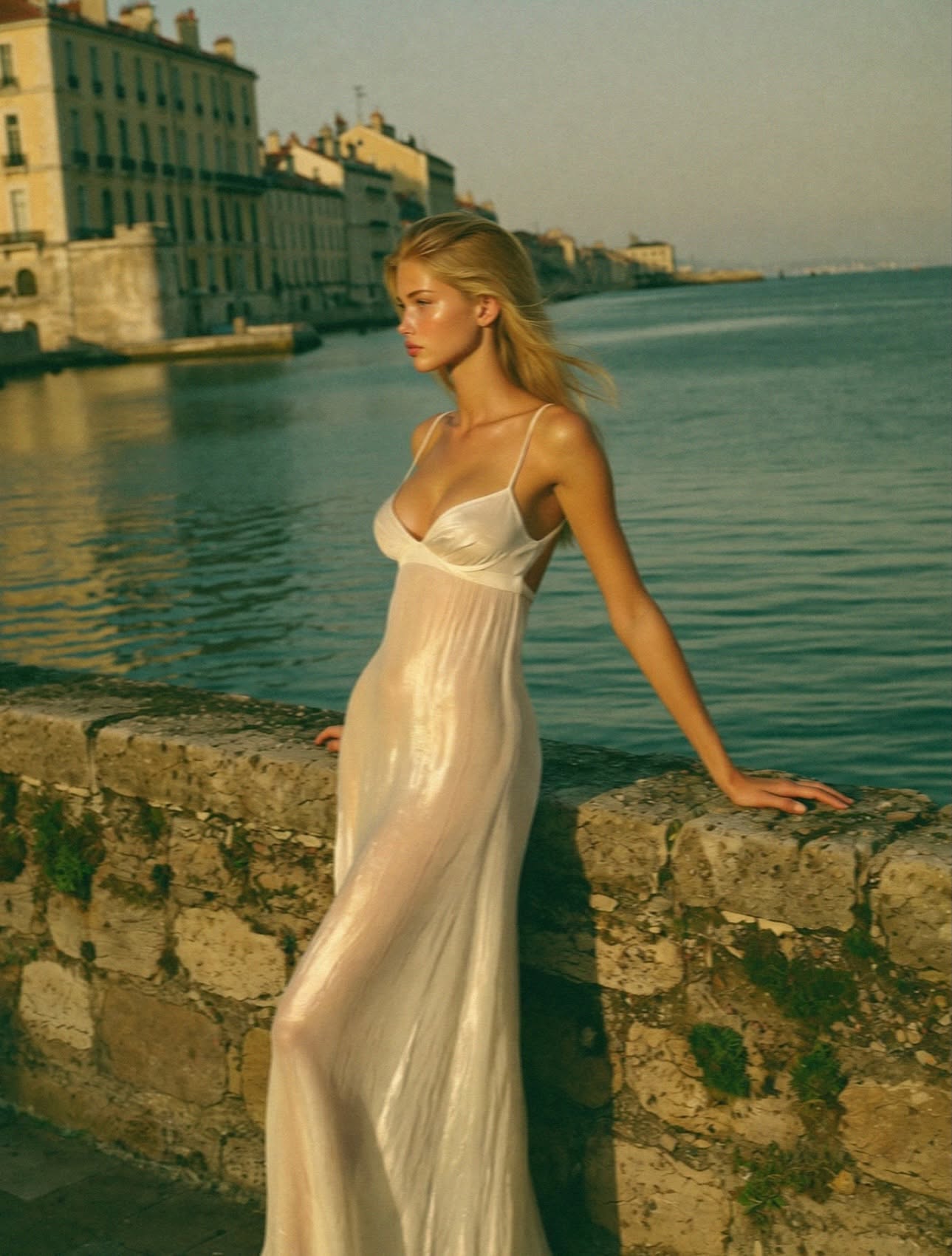
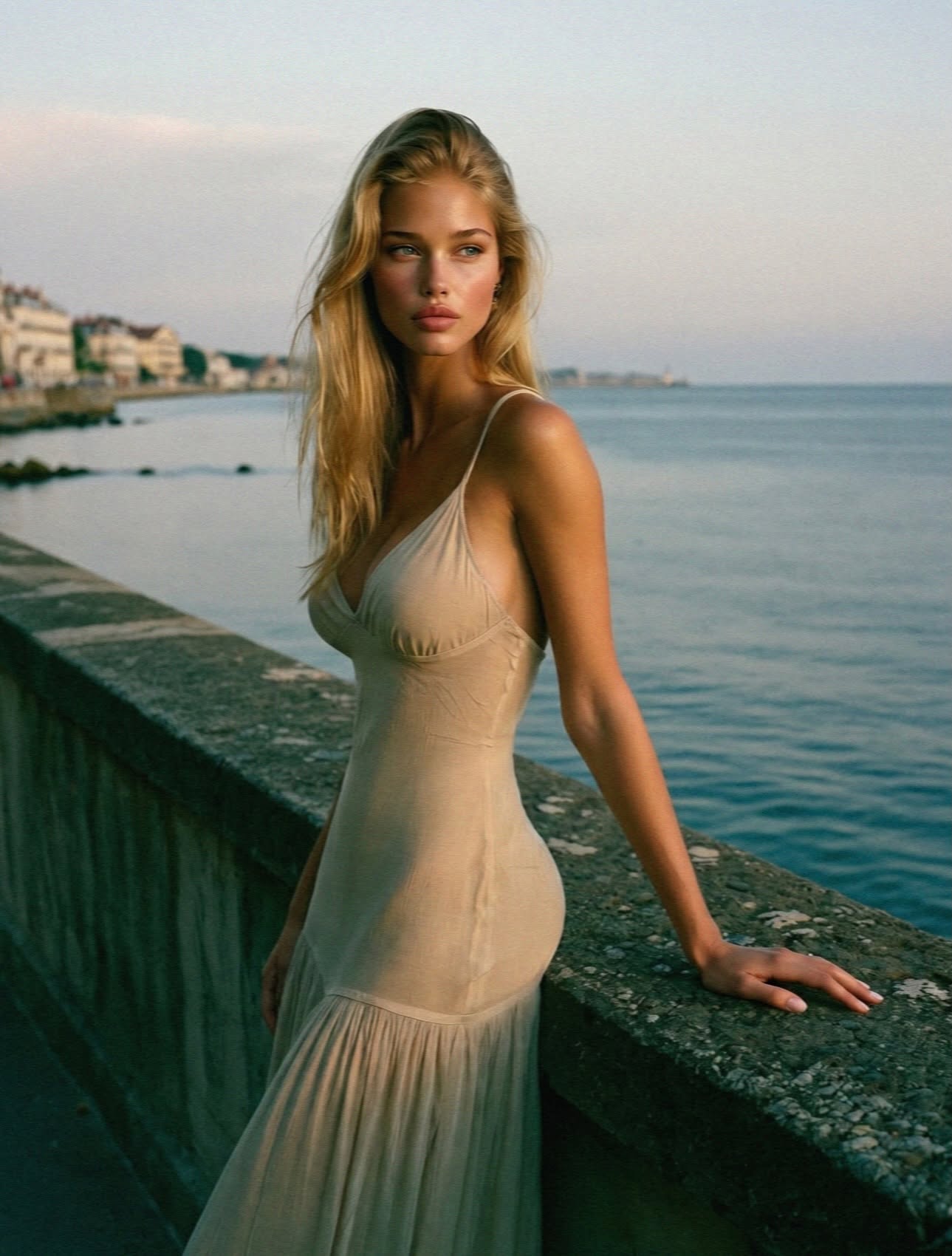
I walked the Lungomare, the sea road, the bay on one side turning from blue to bronze and the city on the other letting go of the day’s heat at last. The breeze came in off the water, the first cool thing since morning, and lifted the hem of my dress and my hair. I did not hurry. There was nowhere I could be that was better than exactly where I was.
Runners went by. Couples leaned on the railing. A boy sold cut fruit from a cart. The whole city seemed to have come down to the sea to watch the day end, the way it does every single evening, as though it had never once seen anything so good.
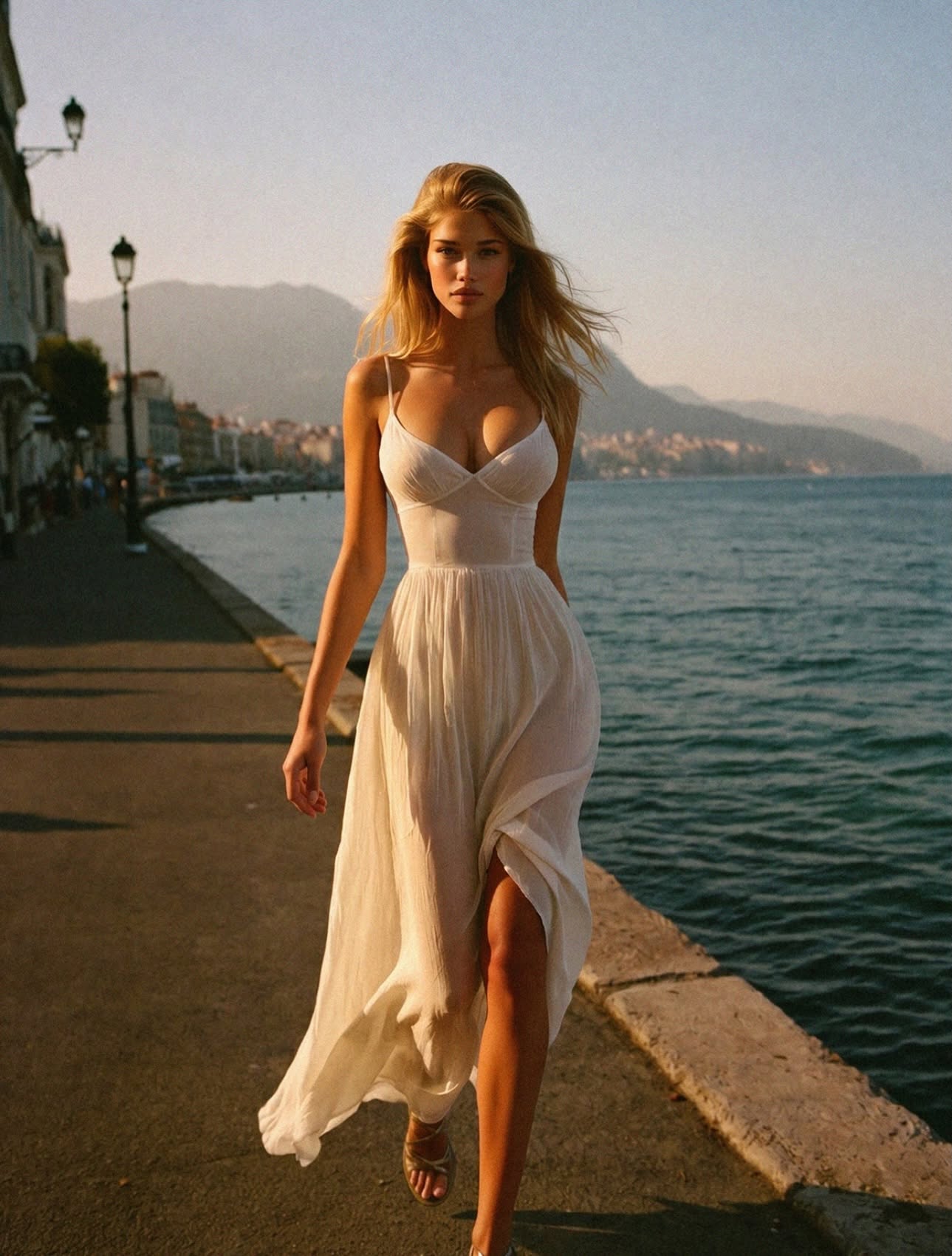
I stopped at the sea wall as the light began to go, and this, it turns out, is the thing Naples does best of all. The bay went to hammered metal. Vesuvius softened and darkened across the water. The whole face of the city caught fire in the low sun, every window a small gold rectangle for a moment, and then another, and then all of them at once.
I leaned on the warm stone and watched. The light held the way it always seems about to not, as if the world had changed its mind for one more minute. Then it slipped down behind the far headland and the colour drained slowly out into the blue.
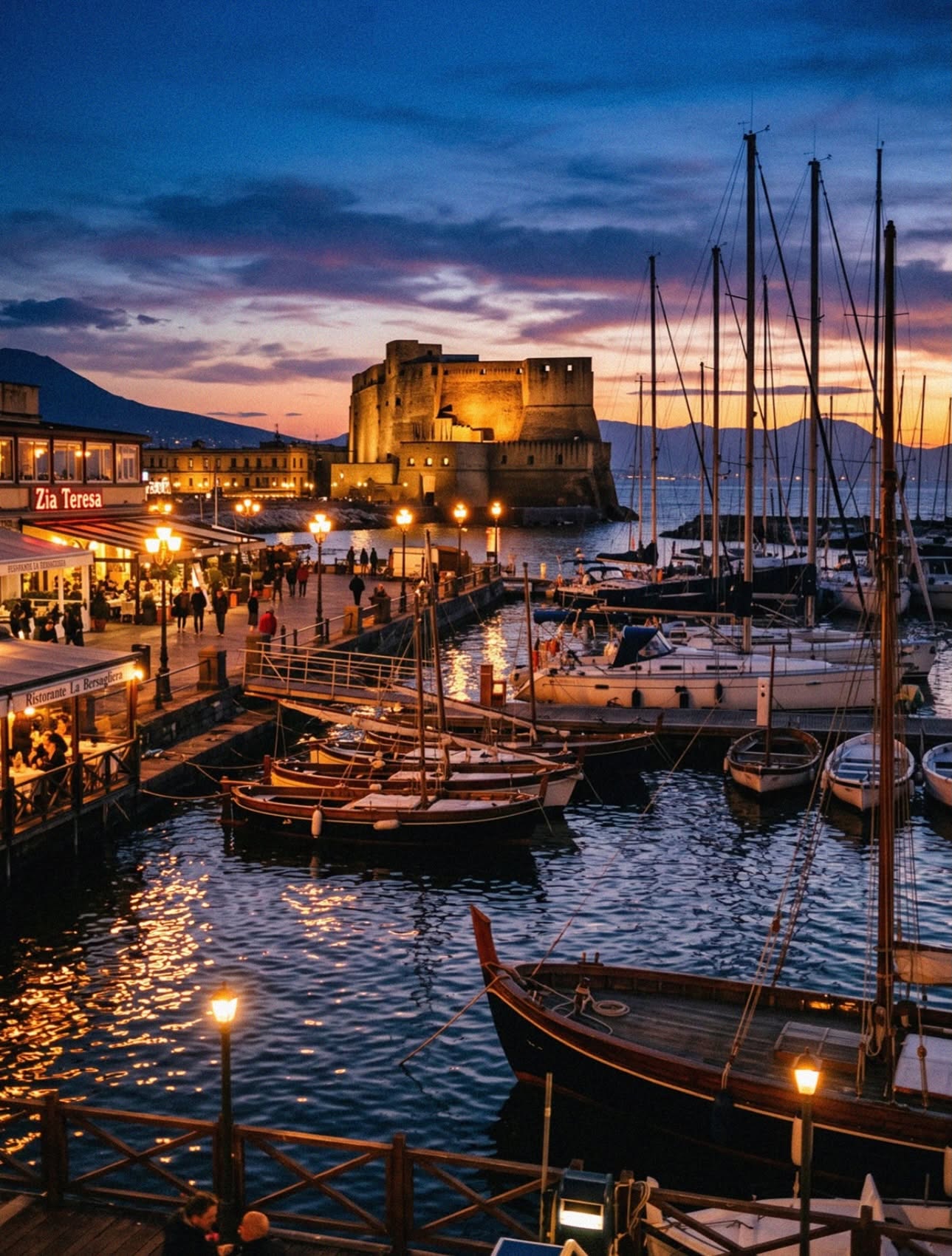
I ate that night down at Borgo Marinari, the little harbour in the shadow of the castle, where the fishing boats knock against the pontoons and the restaurants spill their light out across the water. By then it was the blue hour, the sky gone deep and soft behind the castle walls, the lamps coming on all along the quay and doubling themselves in the black water.
I sat with a glass of something cold and a plate of something simple and very good, and watched the boats rock, and the people pass. The castle stood over all of it, lit up gold, exactly as it has stood over this same small harbour for longer than anyone can honestly imagine. There was nothing dramatic about it. The ordinary meal. The ordinary light. The unbearable fact of being somewhere and knowing already that you will remember it.
Some cities you visit. Naples, you move into, a little, whether you meant to or not.
On the first day it had overwhelmed me, arrived all at once and left me standing breathless in the middle of it. But the second day it did something quieter and much harder to shake off. It gave me its mornings and its silences, its one still golden theatre and its long slow evenings by the sea, and somewhere in the middle of all of it the noise stopped being something happening to me and became something I was simply a part of.
I had stopped being a person watching Naples.
I had become, just for a day, a person in it.
That is the thing no one warns you about. They tell you Naples is loud, and it is. They tell you to be careful, and you should be. What they do not tell you is how quickly it stops being a place you are looking at and becomes a place you are living in, how a city this full can somehow make so much room for you, how two days in you are already doing the quiet arithmetic in your head, already wondering what it would cost, in every sense of the word, to simply not get on the train.
I will get on the train, of course. There is a whole coast north of here still waiting, and it runs early. But I will leave the way you leave a place that has got into you, looking back at it from the window, promising to come back, and half meaning it.
Naples arrived all at once.
And then, when I had stopped bracing for it, it let me stay.
V.
For Victoria’s Complete Guide to Naples, click here.
Read also: Naples – The City That Arrives All at Once.
More from my trip to Naples: