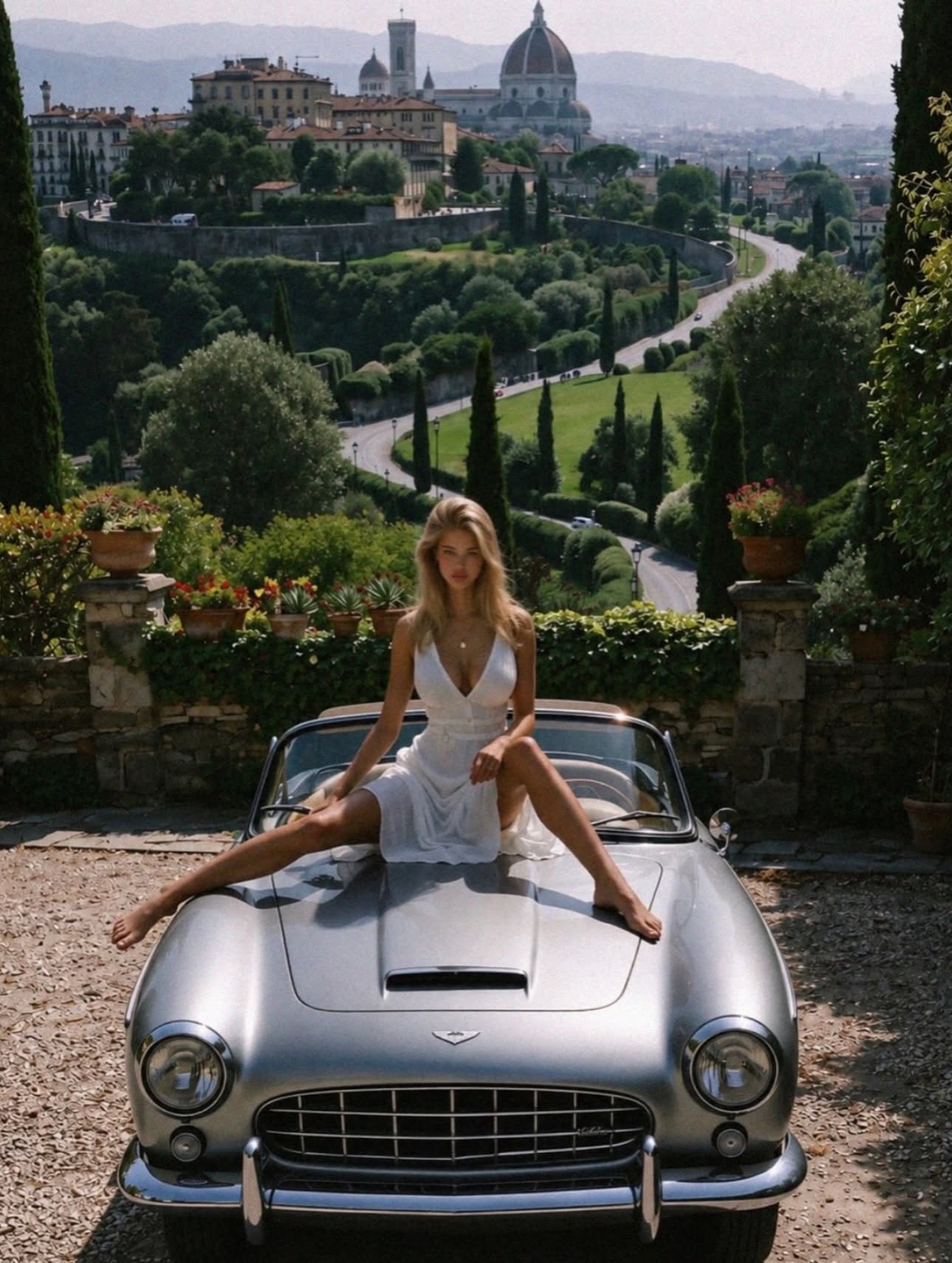
I woke early in the villa, before the house had quite decided to be awake, and lay for a while watching the light come up green through the shutters, listening to the particular silence that belongs to places built high above a city. It is never complete silence. Somewhere below, Florence was already beginning its day. A scooter climbed a distant road. A church bell carried upward through the warm air. Birds argued briefly in the cypress trees before settling again. Up here, everything arrived softened, as though distance had rubbed the edges from every sound.
My aunt was not coming down with me today.
She had said as much the night before in that quiet way of hers that leaves you believing the idea had been yours all along. A person, she had said while pouring the last of the wine into her own glass, ought to meet Florence once entirely alone, with no one naming the towers for her or deciding which streets deserved to be remembered. Cities reveal themselves differently when no one is translating them.
So I dressed slowly before the long mirror, pinned my hair, chose the white linen because it is the only sensible thing to wear when the day promises heat and endless walking, and lingered for a moment at the open window before going downstairs. The hills were still wrapped in that pale morning haze that disappears almost as soon as you notice it.
Before I left, I did a small and slightly foolish thing.
The folded paper from the sheet music, the cream page tied with its faded ribbon, the one my father had marked in pencil and my aunt would not explain, was still resting in the drawer where I had placed it the evening before. I picked it up almost without thinking and slipped it into my bag.
I did not untie the ribbon.
I did not even look at it.
I only wanted it with me, the way you carry a smooth stone home from a beach, not because you intend to study it but because its quiet weight reminds you that a place, or a person, existed. Some things are companions long before they become answers.
When I stepped into the hallway, Colette was sitting at the top of the staircase watching me with the complete indifference that only cats seem able to perfect. She blinked once, slowly, as though acknowledging my departure without considering it particularly important. I suspected she had watched many people come and go from this house and had found all of them equally temporary.
The city receives you differently when there is no one to receive it with.
I came down through the cypresses and into the streets below, letting myself become lost almost at once, because I have long suspected that getting lost is the only honest way to arrive anywhere. Maps are useful for leaving places. They are less useful for meeting them.
The Duomo found me before I found it.
One moment I was walking through narrow lanes lined with shuttered windows and little shops still sweeping yesterday from their doorways. The next, it simply appeared above the rooftops, impossibly large, impossibly intricate, that great striped cliff of green, white, and rose marble rising at the end of a street too narrow to contain it. Florence has perfected the art of surprise. It hides greatness until the very last moment.
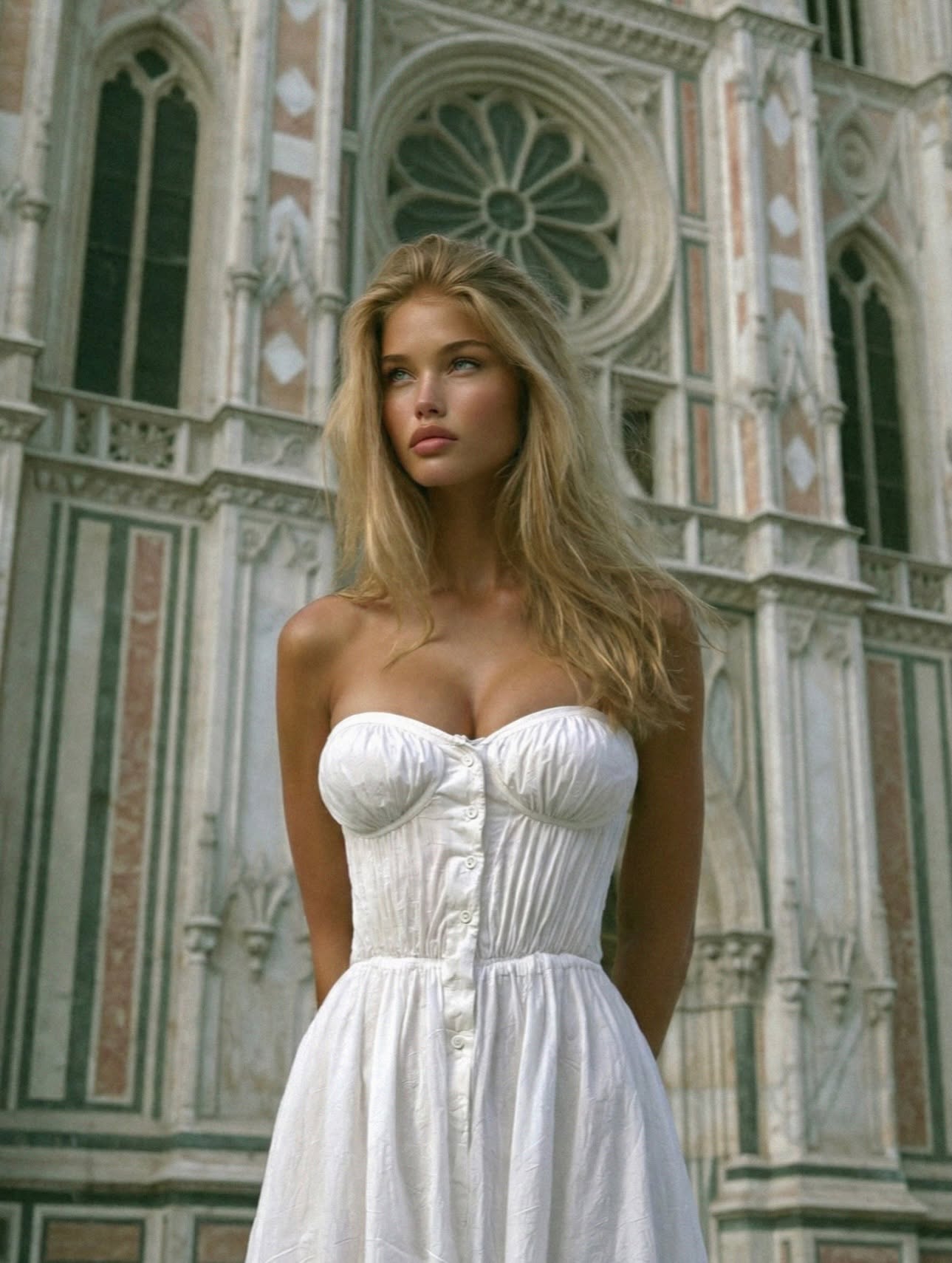
I stood beneath it with my head tilted back like everyone else in the square, and for once I did not mind becoming one more anonymous face in a crowd. Some buildings reduce us all to the same scale. We stop performing ourselves and simply look.
Across the piazza, the bronze doors of the Baptistery caught the early light. Their surfaces glowed where centuries of hands had polished them smooth without ever intending to. I stood looking at the small panels for a long time, imagining all the people who had paused exactly where I was standing. Pilgrims. Merchants. Artists. Lovers. Children brought by their parents. Old people making one final visit. We like to imagine ourselves discovering places, when most often we are only joining a conversation that began hundreds of years before we arrived.
I stopped for an espresso at a marble counter, standing as everyone should, quick and without ceremony. It was bitter and hot and gone in three small sips. I paid my coins, thanked the man behind the bar, and stepped back into the square before the taste had quite left my mouth.
In Piazza della Signoria I sat on the warm stone beneath the Loggia dei Lanzi, surrounded by marble figures forever caught in moments of triumph or struggle. Around me the morning slowly filled itself in. Guides lifted umbrellas into the air like little flags. Pigeons wandered with absurd confidence between people’s feet. Artists unpacked brushes. Children chased one another through patches of sunlight while parents pretended not to worry.
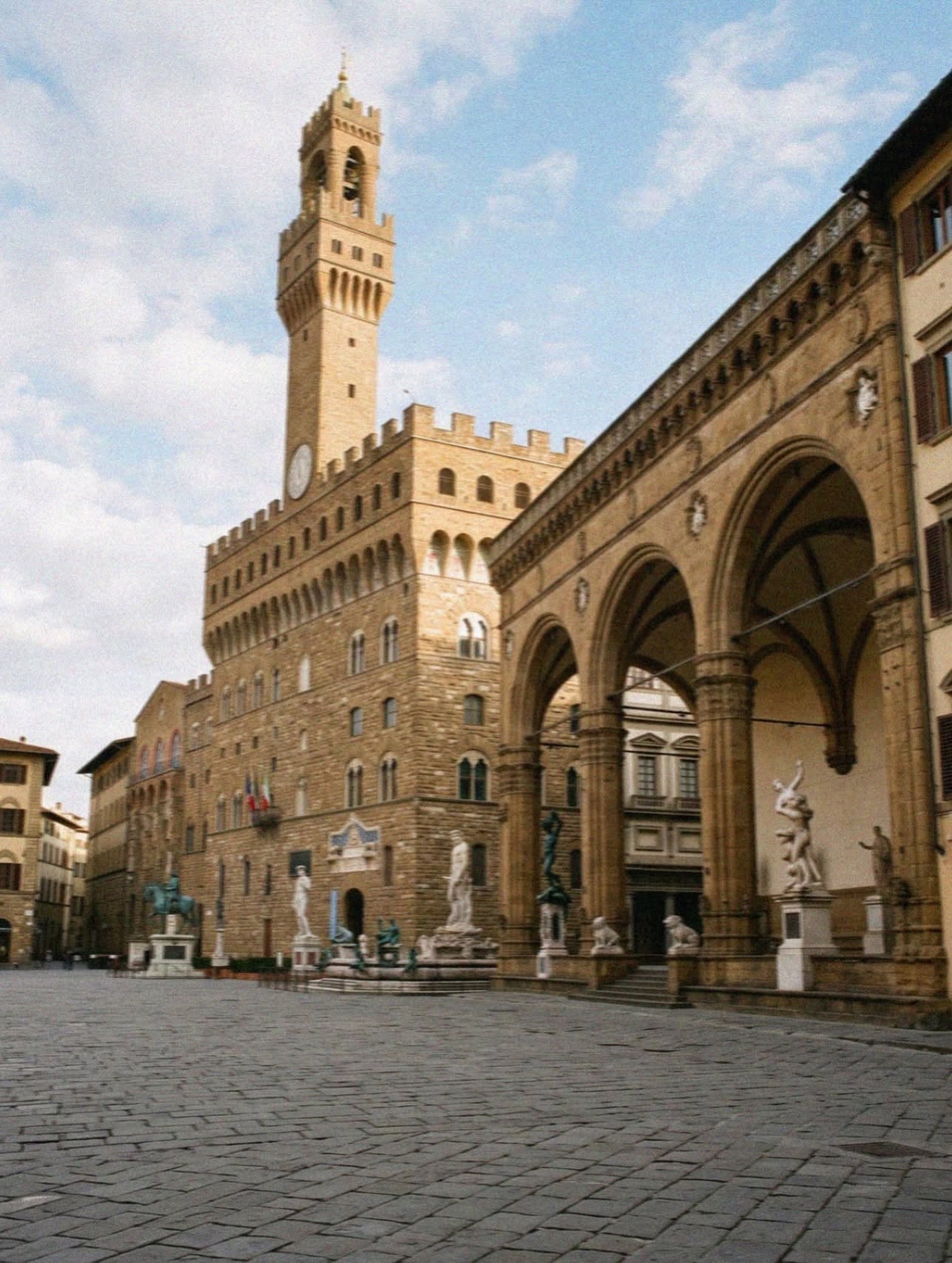
I watched all of it without feeling the need to become part of it.
There is a freedom in a city where nobody knows your name that I think I had forgotten. No one expected conversation. No one expected explanation. I owed nothing except my own attention. I turned down streets simply because they looked interesting, because the light fell differently there or because a doorway seemed to promise something worth seeing. None of those choices turned out to be mistakes.
Around midday I crossed the Arno below the Uffizi. The river lay beneath me, broad and unhurried, carrying reflections instead of urgency. On the opposite bank Florence seemed to change almost immediately, becoming quieter, older somehow, less interested in impressing visitors and more interested in continuing its own life.
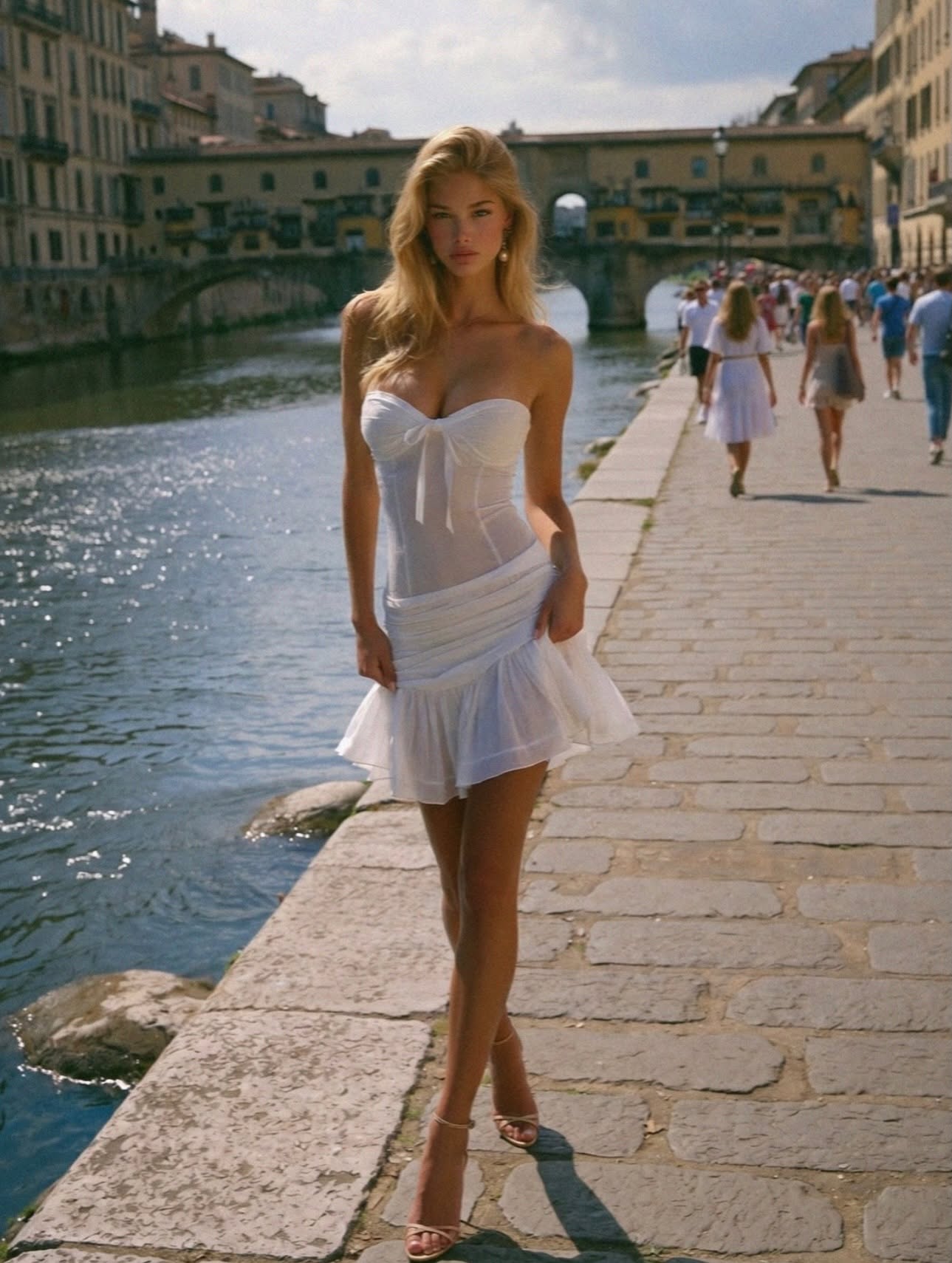
The Oltrarno is where the city still works with its hands.
Doors stood open onto workshops where craftsmen continued trades that feel almost impossible in an age that values speed above patience. A gilder leaned over an antique frame, laying sheets of gold leaf so delicate that even his breathing seemed part of the process. A little farther along, a woman restored the spine of an old leather book with movements so careful they resembled prayer more than labour. I could not pull myself away, and did not try very hard to.
There is almost nothing I admire more than watching someone do one small thing beautifully.
The world has become very good at doing things quickly.
Beauty still insists on taking its time.
Later I climbed into the Boboli Gardens and found a shaded place above the palace where Florence spread below me in pale terracotta and soft afternoon light. The dome floated above the rooftops as though it had always belonged to the sky more than the city itself. I sat there and lost track of the hour entirely.
Nothing remarkable happened.
The swifts circled.
Leaves moved gently in the breeze.
Someone laughed somewhere beyond the hedge.
For an hour I wanted nothing. Not another destination. Not another photograph. Not another conversation. I have come to think happiness is often mistaken for excitement. More often it is simply the absence of wishing to be somewhere else.
By the afternoon I was hungry in the honest way only walking can make you hungry, and I wandered into the Mercato Centrale where the city seemed to gather around food. Lemons glowed like lanterns beside peaches and tomatoes. Flowers spilled from buckets onto the pavement. Vendors called to one another in voices that sounded less like selling than conversation carried on for generations.
I stood at a counter and ordered something warm wrapped in paper. I never asked exactly what half of it was. It was delicious anyway. Sometimes curiosity is better satisfied after lunch than before it.
As the heat slowly loosened its grip on the city, I climbed to a rooftop terrace overlooking Florence and ordered a cold drink. The terracotta roofs stretched toward every horizon, interrupted only by towers, church spires, and the immense red dome rising above them all with complete confidence.
My bag rested across my knees.
Inside it, the folded paper remained exactly where I had placed it.
I did not open it.
Yet I was aware of it the entire time, the way you remain aware of someone sitting quietly behind you. Certain questions do not demand answers. They ask only to accompany us until we become the sort of person who can understand them.
Then, because everyone must eventually do it, I climbed at the end of the day to Piazzale Michelangelo. Florence unfolded beneath the terrace in every direction, turning first gold, then rose, then that impossible shade of violet that seems to exist only for a few moments before evening finally claims it. The dome, the towers, the long silver ribbon of the Arno all seemed to burn softly toward darkness.
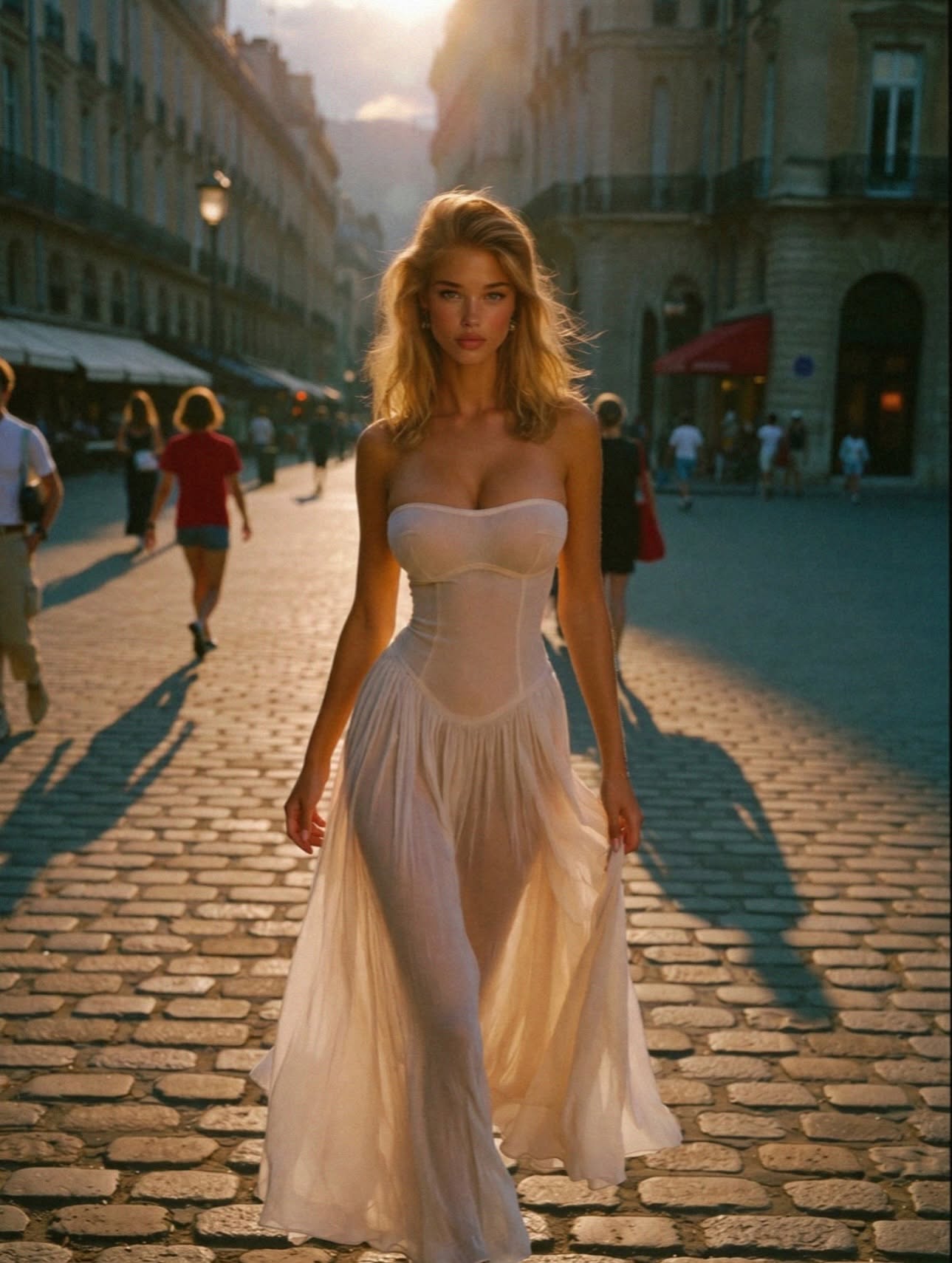
I was not alone.
No one ever is.
Yet it felt strangely as though the city had dismissed everyone else for a few moments and left only the view.
I thought of my aunt sitting in her chair back at the villa with Colette somewhere nearby and a lamp already glowing beside her. I thought of my father’s pencil marks folded quietly inside my bag. Standing there, I understood something that had been slowly finding its way toward me all day.
I was not ready to open the paper.
And that was allowed.
Some things ask to be carried before they ask to be read.
I came back through the lamplit streets in the blue hour, tired in the good way, my shoes dusty, my head pleasantly full. Restaurants had begun filling with evening conversations. Light spilled through open doorways onto the stone streets. Florence no longer belonged to visitors. It belonged again to the people who lived there.
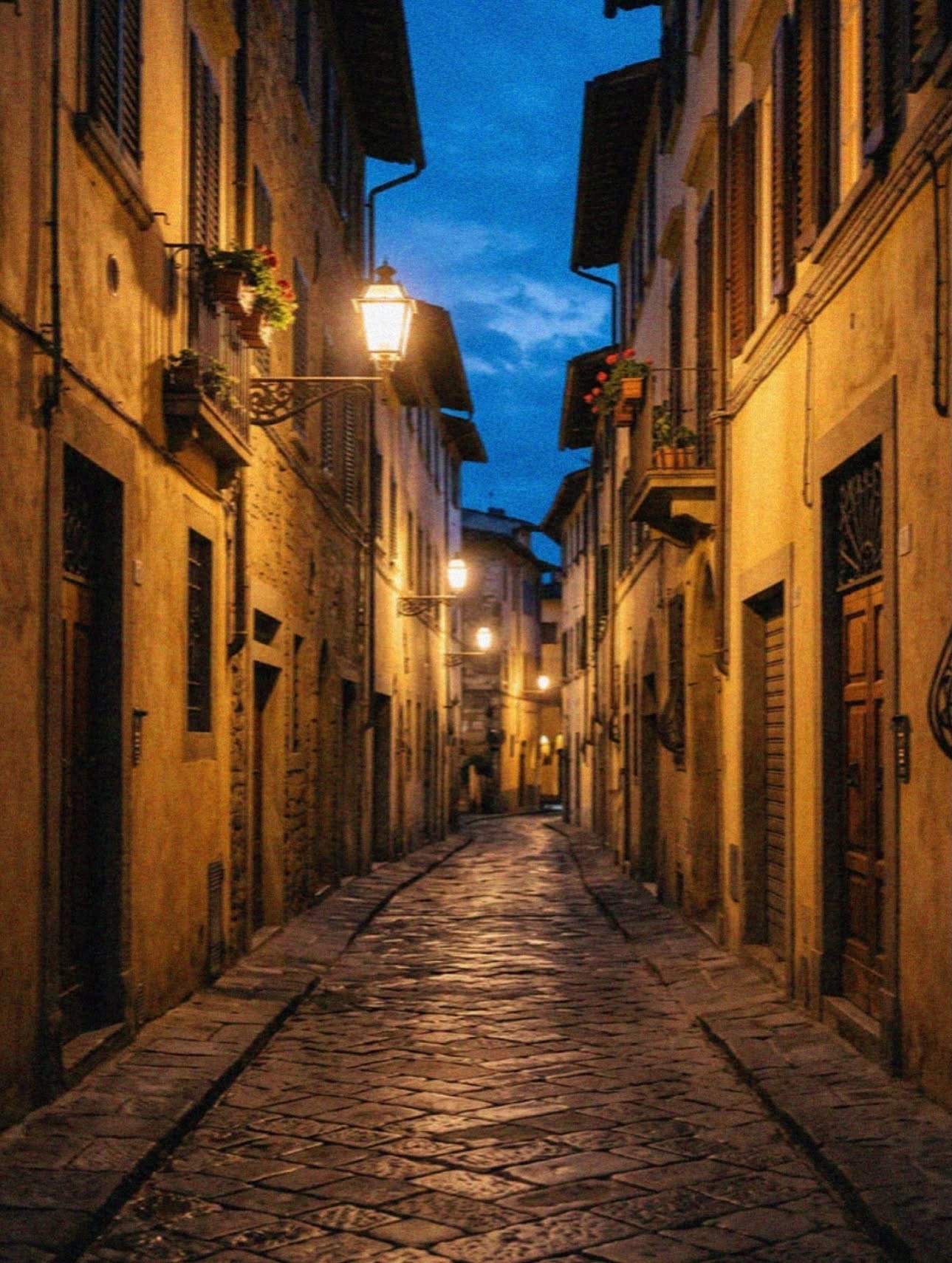
The paper was still folded in my bag.
Florence was still enormous and indifferent.
For one day, it had also been entirely mine.
Somewhere high in the dark hills above the city, a single light was burning in the villa. A woman who had known me almost my whole life had left it on without saying she would. She knew I would come home carrying the city inside me. She knew, too, that I would return with the question still safely unasked.
She had probably known that all along.
V.
The story continues in Tuscany: The Long Way Round.
Read also: The House Above Florence and For When You Are Ready. For planning a visit of your own, see Victoria’s Complete Guide to Florence.