What to book before you come
Amalfi is the flattest town on this coast and the easiest to walk, so very little needs buying. The exception is the water, and the valley behind the town that almost nobody walks up.
- Caves, beaches and snorkelling from Amalfi. Straight out of this harbour, along the stretch the buses do not stop on.
- The coast and Positano by boat. 4.9 from nearly two and a half thousand people. A full day, and Positano from the sea is the whole reason to bother.
- A private boat for a day. Split four ways it costs less than a day of coast road taxis and is a great deal more pleasant.
The cathedral steps, the Valle delle Ferriere walk up behind the town and the paper museum for a couple of euros are the best cheap things in Amalfi.
Amalfi
There is a particular confusion that afflicts most visitors to this part of Italy. They say they are going to the Amalfi Coast. They book a hotel in Positano, take photographs from a terrace above the sea, eat a plate of pasta, and go home having been to a place they call the Amalfi Coast. What they have not done, almost without exception, is go to Amalfi.
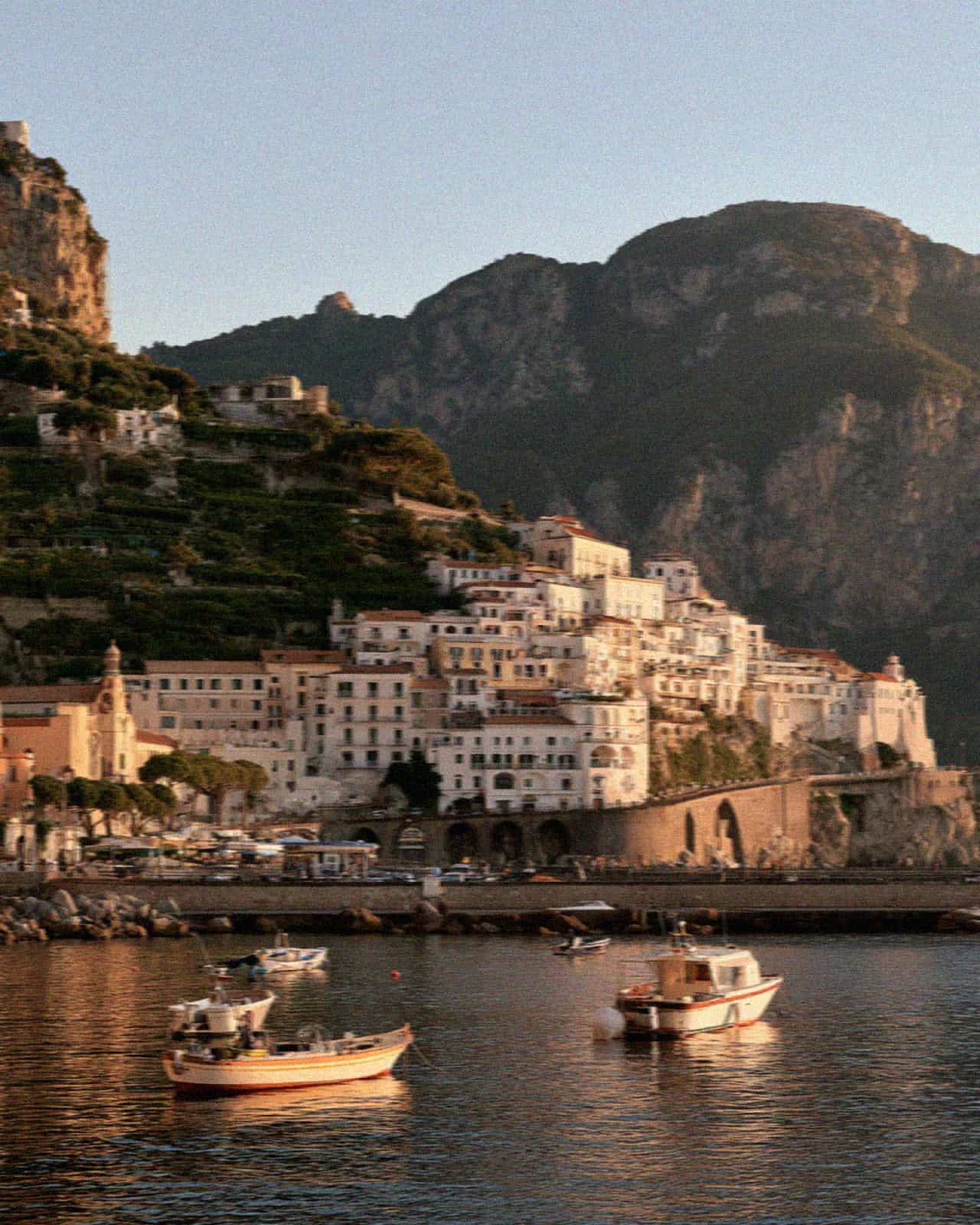
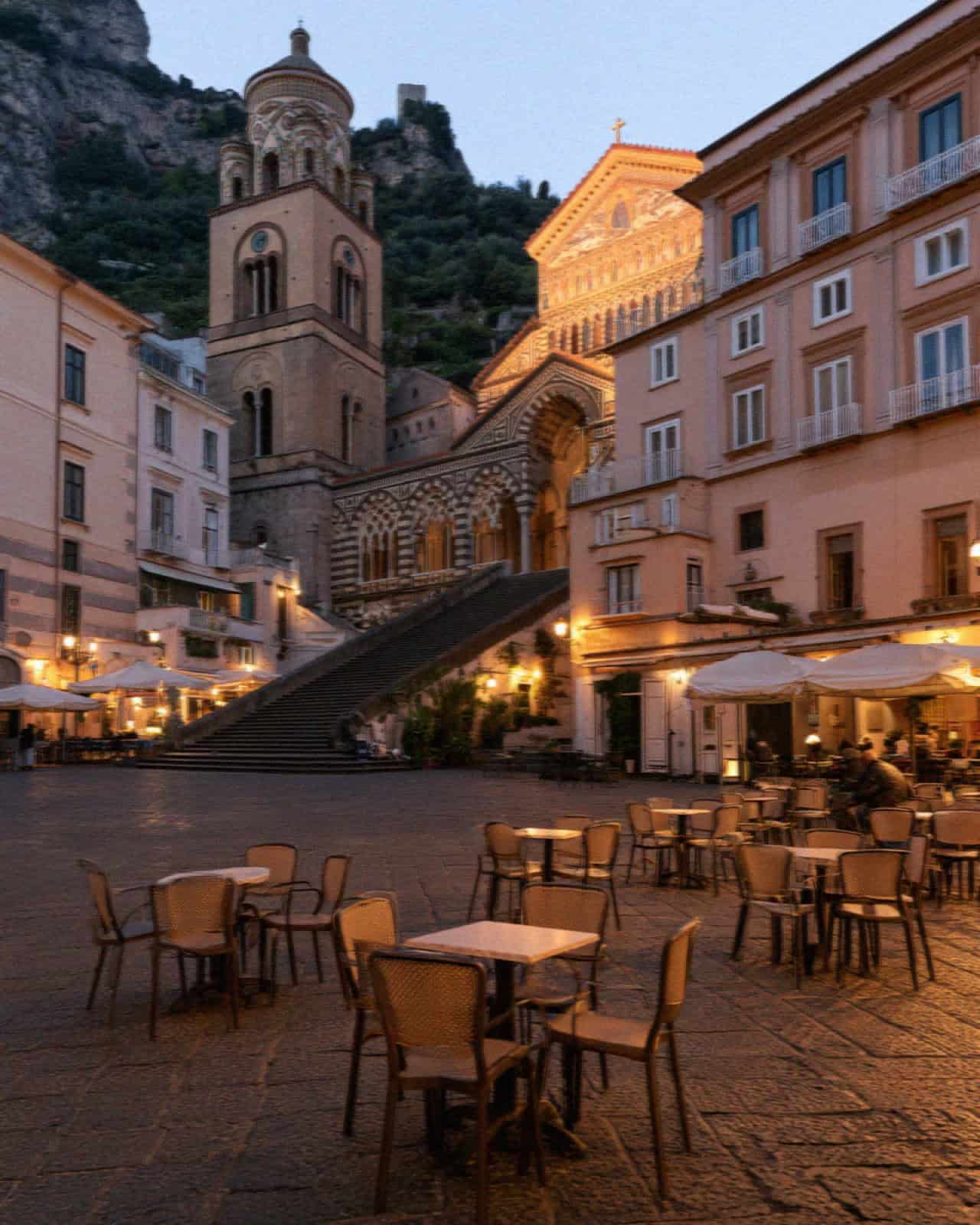
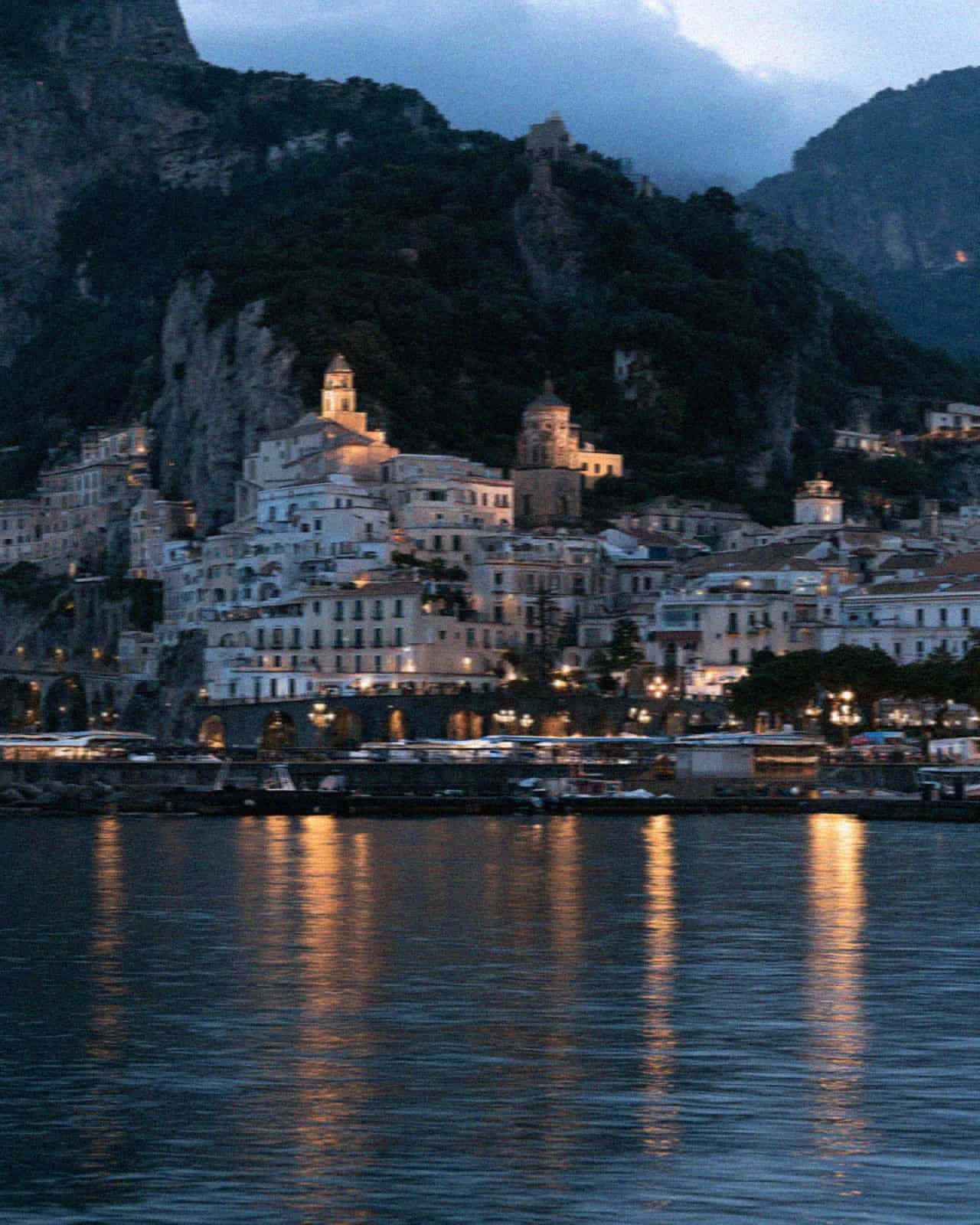
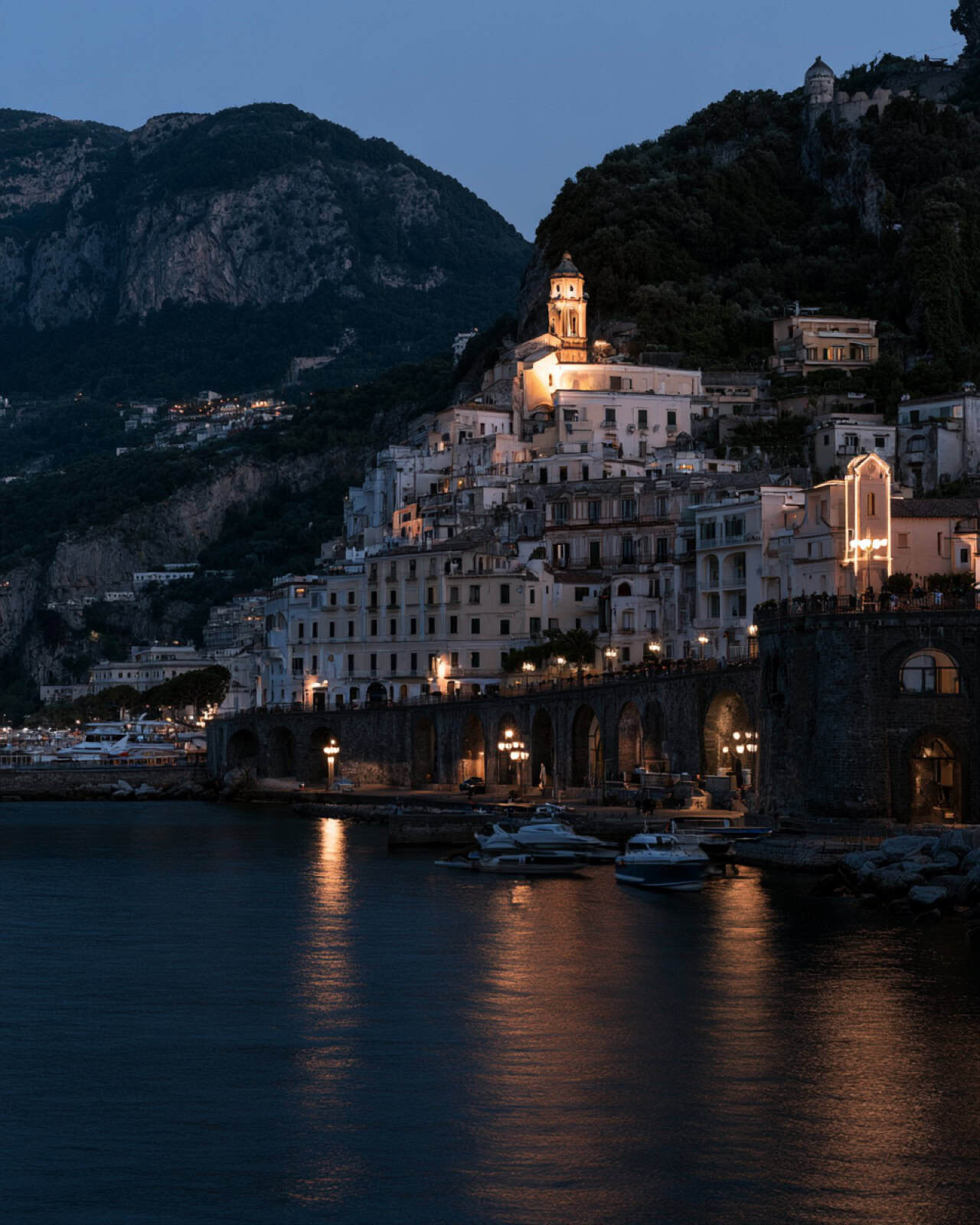
Amalfi is a town. It sits at the mouth of the Valle dei Mulini, pressed between cliffs, its harbor opening directly onto the Tyrrhenian Sea. It has a cathedral that has been modified and expanded so many times over eleven centuries that it contains, in its architecture alone, a compressed version of the Mediterranean’s entire medieval history. It has a piazza that on summer evenings fills with a combination of tourists and local families that, unlike many towns on this coast, still leans meaningfully toward the latter.
It is also the town that gave the coast its name. That fact alone, I have always thought, should earn it more careful attention than it generally receives.
I have been coming to Amalfi for as long as I have been coming to this coast. Which is to say, for as long as I can remember. I do not come here because it is the most beautiful town on the coast (I would give that to Ravello, without much contest). I do not come here because the beach is exceptional. It is not. I come because Amalfi is alive in a way that some of its more celebrated neighbors have partially ceased to be. It is a place with a functioning economy beyond tourism, a harbor that still moves real boats, streets that extend past the souvenir shops into a town with its own grammar. And it is, practically speaking, the best place on the coast from which to understand everything else.
This is a guide to Amalfi the town. Not the coast, not the concept. The place.
For the broader region, the full guide to the Amalfi Coast is here: Victoria’s Complete Guide to the Amalfi Coast
Plan Your Visit to the Amalfi Coast
A few things I booked and loved. These help support the blog, at no cost to you.
- Where I stayed: search Amalfi Coast hotels
- Boat tours and Amalfi Coast tickets
- Stay connected: get a travel eSIM
This section contains affiliate links. If you book through them I may earn a small commission, at no extra cost to you.
The History You Are Standing In
Most visitors to Amalfi encounter its history as a decorative element. The Duomo is beautiful. The medieval streets are charming. The harbor is picturesque. What is less commonly understood is the scale of what this place once was, and what it means that so much of it is now gone.
Amalfi was one of the four great Italian maritime republics, alongside Venice, Genoa, and Pisa. At its peak in the ninth and tenth centuries, it was among the most powerful trading cities in the known world. Its merchants moved between the Byzantine Empire, the Arab caliphates, and the Latin West with a fluency that was itself a form of power. Amalfitan traders had a permanent quarter in Constantinople. They had warehouses in Alexandria, in Antioch, in Jerusalem. They carried spices, silk, and dyes east and brought gold, grain, and knowledge west.
The population of Amalfi at its height has been estimated at between fifty and seventy thousand people. London in the same period held perhaps fifteen thousand.
The Tavole Amalfitane, the Amalfi Tables, were the maritime law code that governed commerce across the Mediterranean for centuries. They were not superseded until 1570. Any merchant ship that sailed the inland sea between the eleventh century and the sixteenth operated under rules that were written here, in this town, on this cliff above this harbor.
Then came the decline. The Normans conquered the region in 1131. The Pisans sacked the city in 1135, removing its archives and much of its accumulated wealth. And then, on the night of November 24, 1343, an earthquake triggered a tsunami that struck the lower city and took with it, in a matter of hours, a substantial portion of what had made Amalfi great. The harbor district. The lower quarters. A fleet of ships. Several thousand people.
What you walk through today is what remained and what was rebuilt over the subsequent centuries. It is a place shaped by catastrophic loss, which perhaps explains something about its quality of attention to what it still has. The Duomo was not destroyed by the tsunami. Neither were the paper mills higher in the valley. Neither, apparently, was the town’s particular capacity for endurance.
This history does not announce itself aggressively. You have to look for it. But it is present in the scale of the Duomo relative to the town around it, in the breadth of the piazza that was once even larger, in the fragments of the medieval arsenal that still stand at the harbor’s edge. Amalfi is a place that was once much more than it is now. That is not a tragedy. It gives the town a quality, call it depth, call it proportion, that places with simpler histories do not always possess.
Best Things to Do in Amalfi
Amalfi is small and walkable, an old maritime republic folded into a cleft in the cliffs. These are the things worth building a day around.
Stand before the striped Duomo di Amalfi and climb its grand staircase into the cathedral and its cloister. Wander the covered streets and stairways beyond the main piazza, where the town quickly turns local. Hike up the Valle delle Ferriere, a green and waterfalled ravine behind the town, for a cool escape from the coast. Spend time on the water, on the beach below the piazza or on a boat along the cliffs. Eat the lemon and the seafood the town has lived on for centuries, and walk the few minutes to neighbouring Atrani for the quiet the crowds never find. Each of these has its own section below.
The full guide to the best things to do in Amalfi: Victoria’s Guide
The Duomo di Amalfi
The steps are the beginning.
There are sixty-two of them, rising from the Piazza del Duomo to the facade of the Cathedral of Sant’Andrea. In midsummer this ascent is a negotiation with the crowd, but at seven in the morning, before the tour groups have organized themselves, it is possible to climb alone and stand at the top and look back over the piazza to the harbor and the sea beyond it, and understand something about what this town once meant to itself.
The facade is striped in the Arab-Norman style: alternating bands of grey volcanic stone and white marble. The effect is not subtle. It was not meant to be. The Duomo was built to announce the wealth and ambition of a maritime republic that traded with every civilization of its era, and its architecture reflects that commerce directly. The geometric patterns on the facade owe more to Cairo and Constantinople than to Rome.
The bronze doors are Byzantine work, cast in Constantinople in 1065. They were commissioned by a wealthy Amalfitan merchant named Pantaleone di Mauro and shipped here: the first bronze doors in Italy cast outside the country. They are still the main entrance. You pass through work made nine hundred and sixty years ago without ceremony every time you enter.
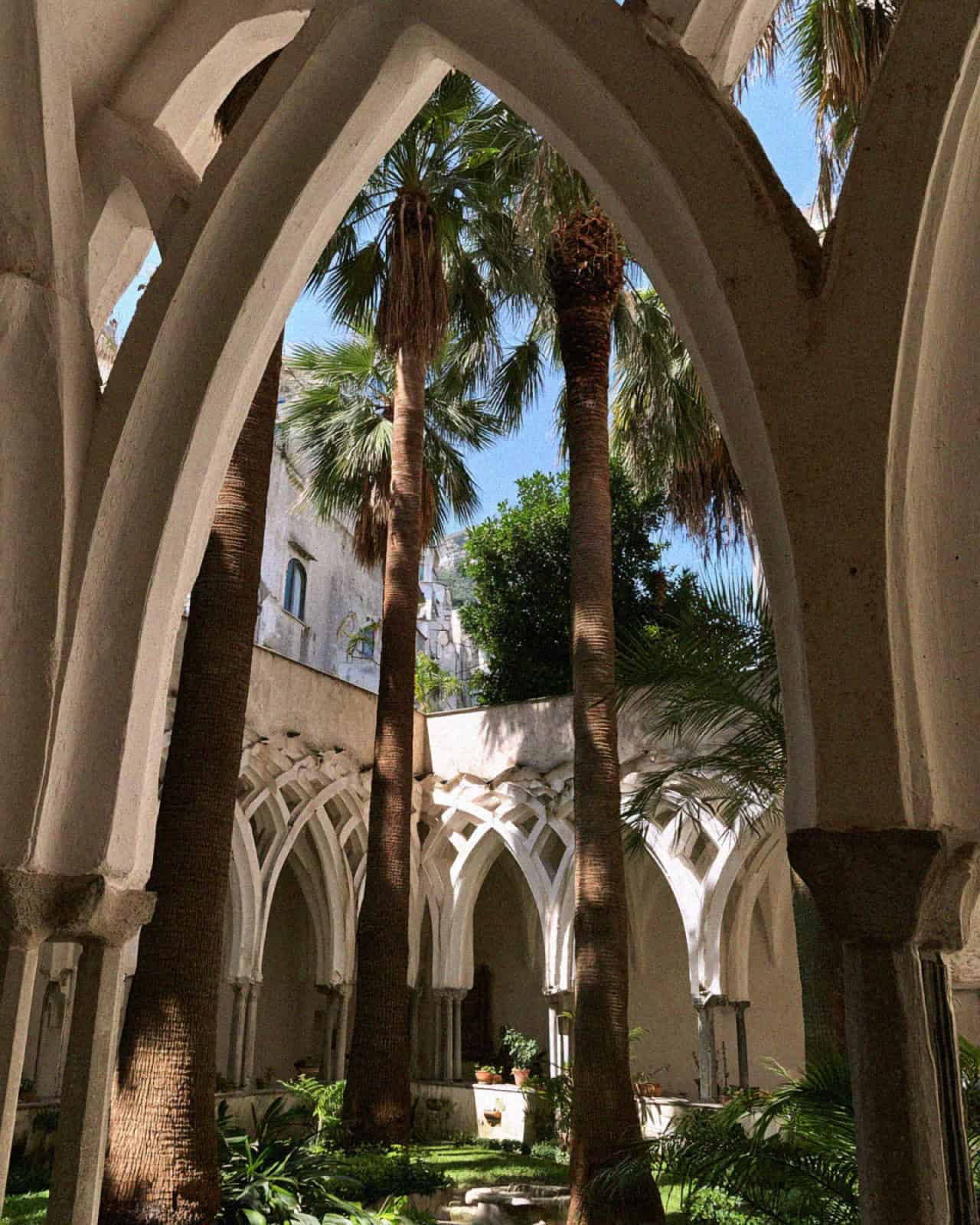
Inside, the nave is Baroque, heavily reworked in the eighteenth century. It requires some adjustment after the exterior. But the Chiostro del Paradiso (the Paradise Cloister), attached to the Duomo is another matter entirely. It was built in 1266 as a cemetery for the Amalfitan nobility, and its double arches in the Moorish style, its garden, its collection of ancient sarcophagi and Roman fragments, constitute one of the more unexpectedly affecting spaces on the entire coast. Go in the morning. Sit in the garden. The cats will find you.
Beneath the high altar lies the crypt of Sant’Andrea. St Andrew the Apostle, whose relics were brought to Amalfi from Constantinople in 1208. This is the town’s patron. His feast day is celebrated on the thirtieth of November with a procession down the Duomo steps that has been happening, in one form or another, for eight hundred years.
Entry to the Duomo is free. The cloister and museum require a small admission fee. Both are worth it.
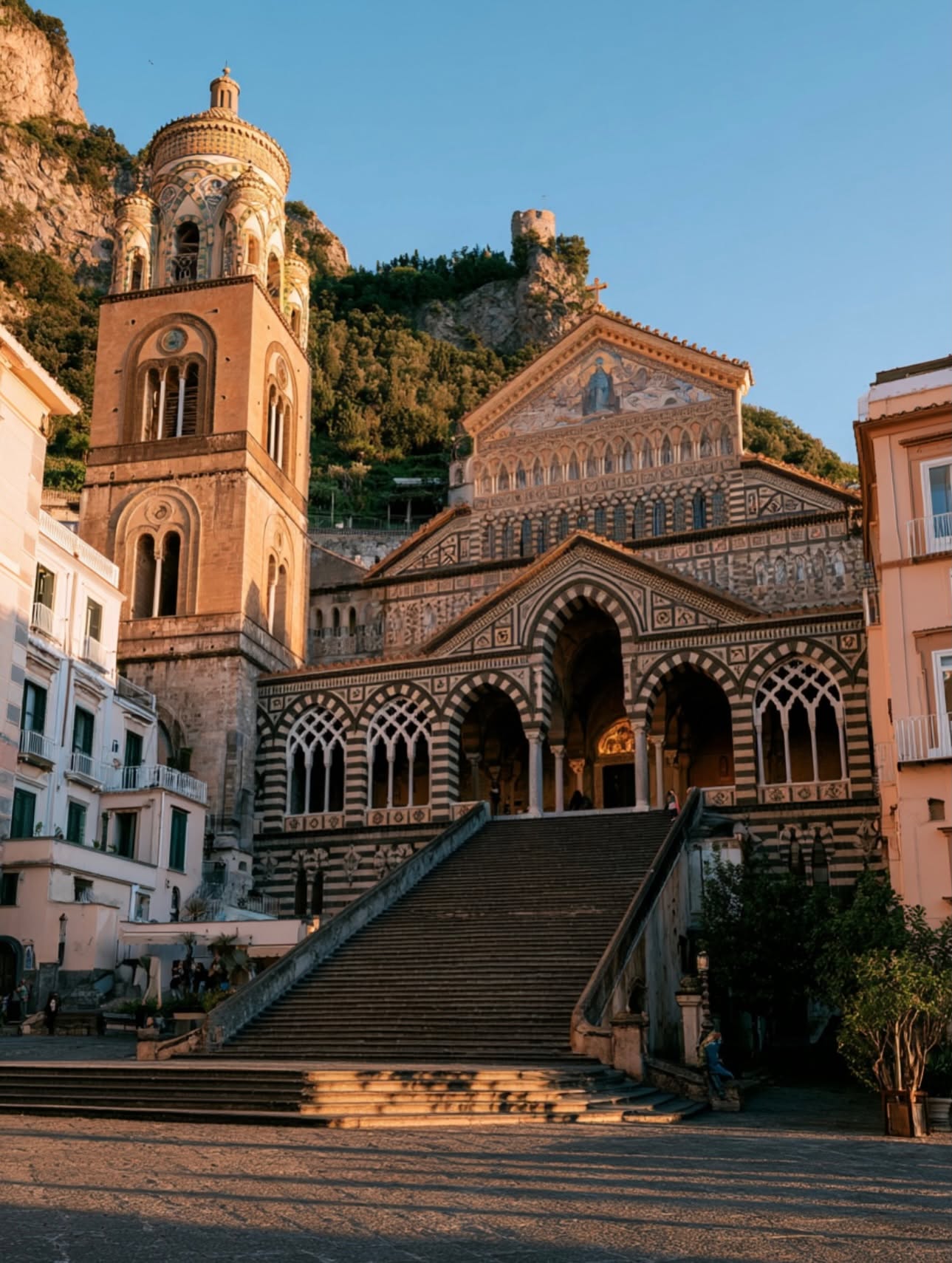
The full guide to visiting the Duomo di Amalfi: Victoria’s Guide
The Streets Beyond the Piazza
Most visitors to Amalfi do not leave the Piazza del Duomo. That is their error.
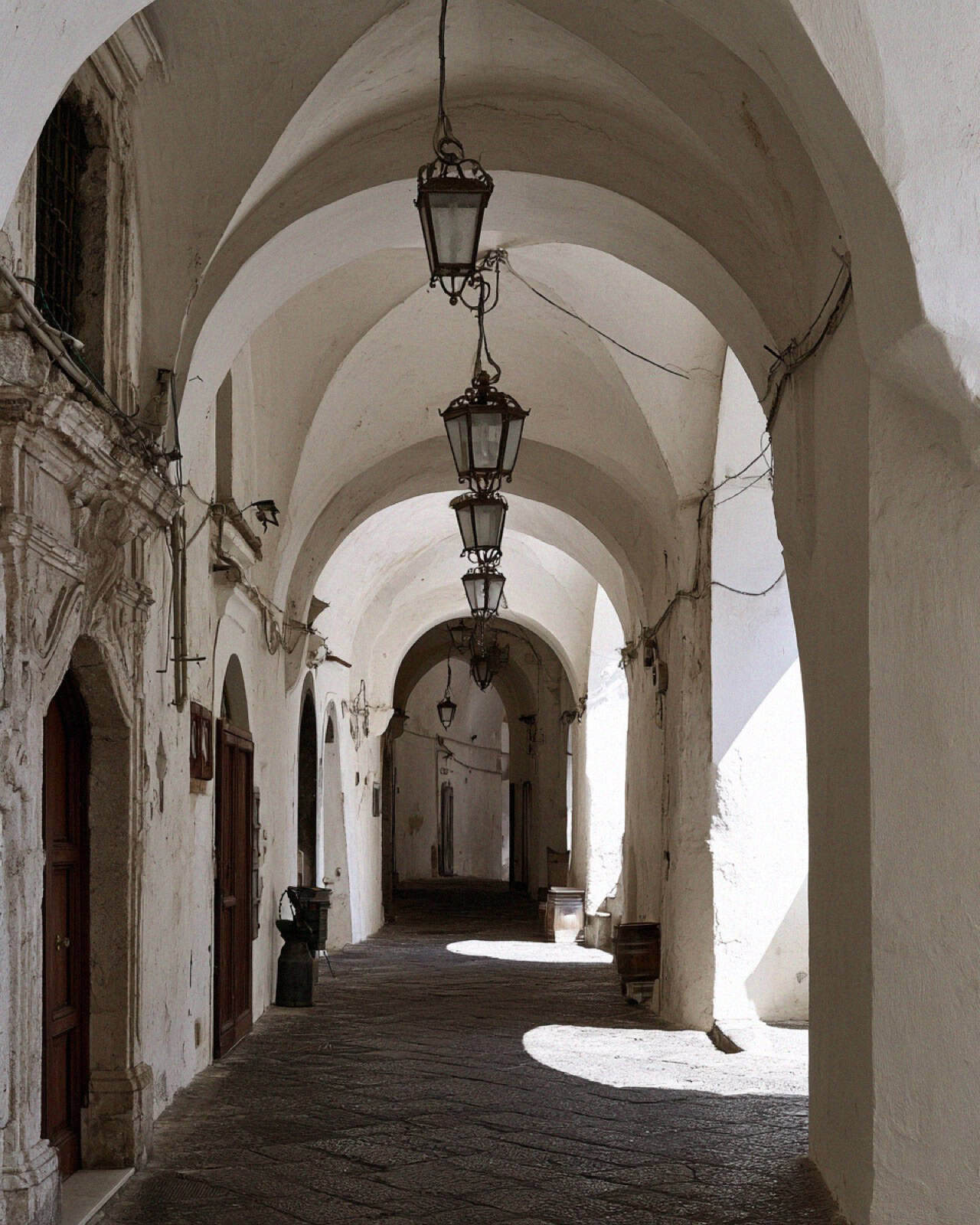
The town extends up into the valley behind the square through a network of covered arcades, stepped alleys, and narrow streets that have not changed their fundamental character in several centuries. The main commercial street, Via dei Mercanti, runs beneath a long vaulted stone arch and opens into small squares with the unhurried quality of a place that does not expect you to be here. There are shops selling ceramics and Amalfi paper and limoncello, some of them excellent and some of them identical to every other shop on the coast, and the task of distinguishing between them is itself a way of spending a morning usefully.
Amalfi paper, carta amalfitana, is the local product with the strongest claim on your attention. The paper mills in the valley above the town were established in the eleventh century, among the first in Europe, and the craft has been practiced continuously since then. Amalfi paper is handmade, heavy, durable, with a particular texture that fountain pen ink takes beautifully. The Museo della Carta, in a restored thirteenth-century mill higher in the valley, explains the process in detail and sells the product. It is one of the more satisfying small museums on the coast. The waterwheel still turns. The vats of macerated cotton fibers still stand in the main hall. You can watch the paper being made.
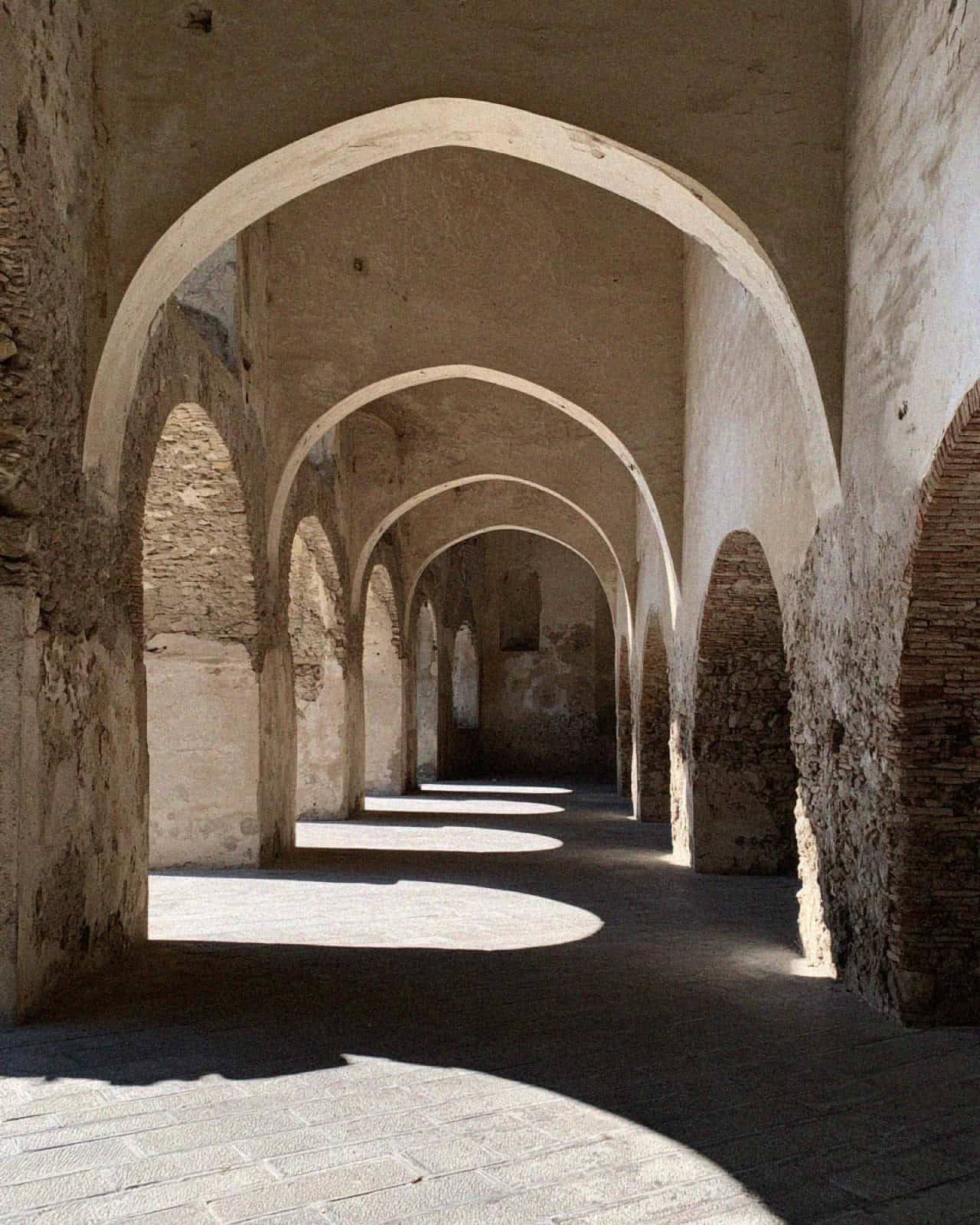
The Arsenale della Repubblica Amalfitana, at the harbor’s edge, is what remains of the shipyard where the Amalfitan fleet was built. It dates from the eleventh and twelfth centuries. Two of the original vaulted bays survive, their arches still intact, their scale a reminder of what was once built and launched from this harbor. The Arsenale now hosts occasional exhibitions. Even when empty, it is worth walking into for the proportions alone.
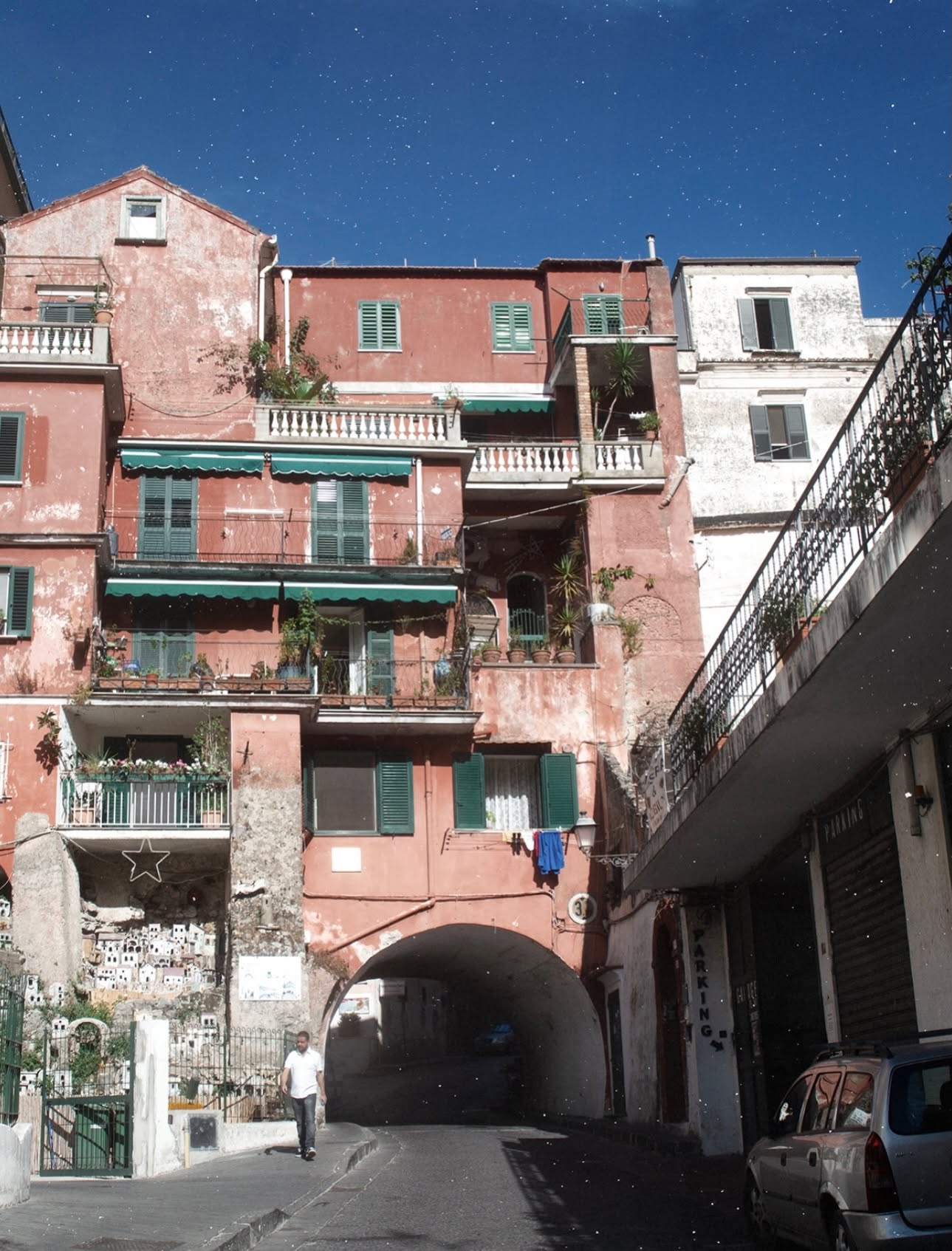
Beyond the tourist circuit, the town extends up the valley in successive tiers of houses, stairs, and small neighborhoods that become progressively quieter the further you climb. I have spent hours simply walking upward with no particular destination and found, reliably, that the town keeps offering new rooms. A terrace with a view of the valley and no other person on it. A bar with three stools where the coffee is made by someone who has been making it for forty years. A cat on a wall in the exact quality of afternoon light that a painter would have arranged on purpose.
Valle delle Ferriere
The hike begins in Amalfi itself, rising from the upper edge of town through the narrow gorge of the Valle dei Mulini and then into the Valle delle Ferriere above it. What you walk through is an accumulation of ruin and nature: the abandoned paper mills of the lower valley, their stone walls standing in the stream, the rusted water wheels still in place, the fern forest that has grown up around them over the century since they stopped operating.
Higher, the valley enters a nature reserve where endemic species of fern grow that exist nowhere else on earth, survivors of the pre-Ice Age Mediterranean flora that found refuge in this particular microclimate of running water and partial shade and never left. There are waterfalls. The air is different: cool and green-smelling in a way that the coast itself, for all its beauty, rarely is.
It is one of the most extraordinary walks on the entire coast, and it begins at the edge of an ordinary town on an ordinary morning.
The full account of Valle delle Ferriere (the mills, the fern forest, the waterfalls) is covered in a dedicated post: Valle delle Ferriere
The Water
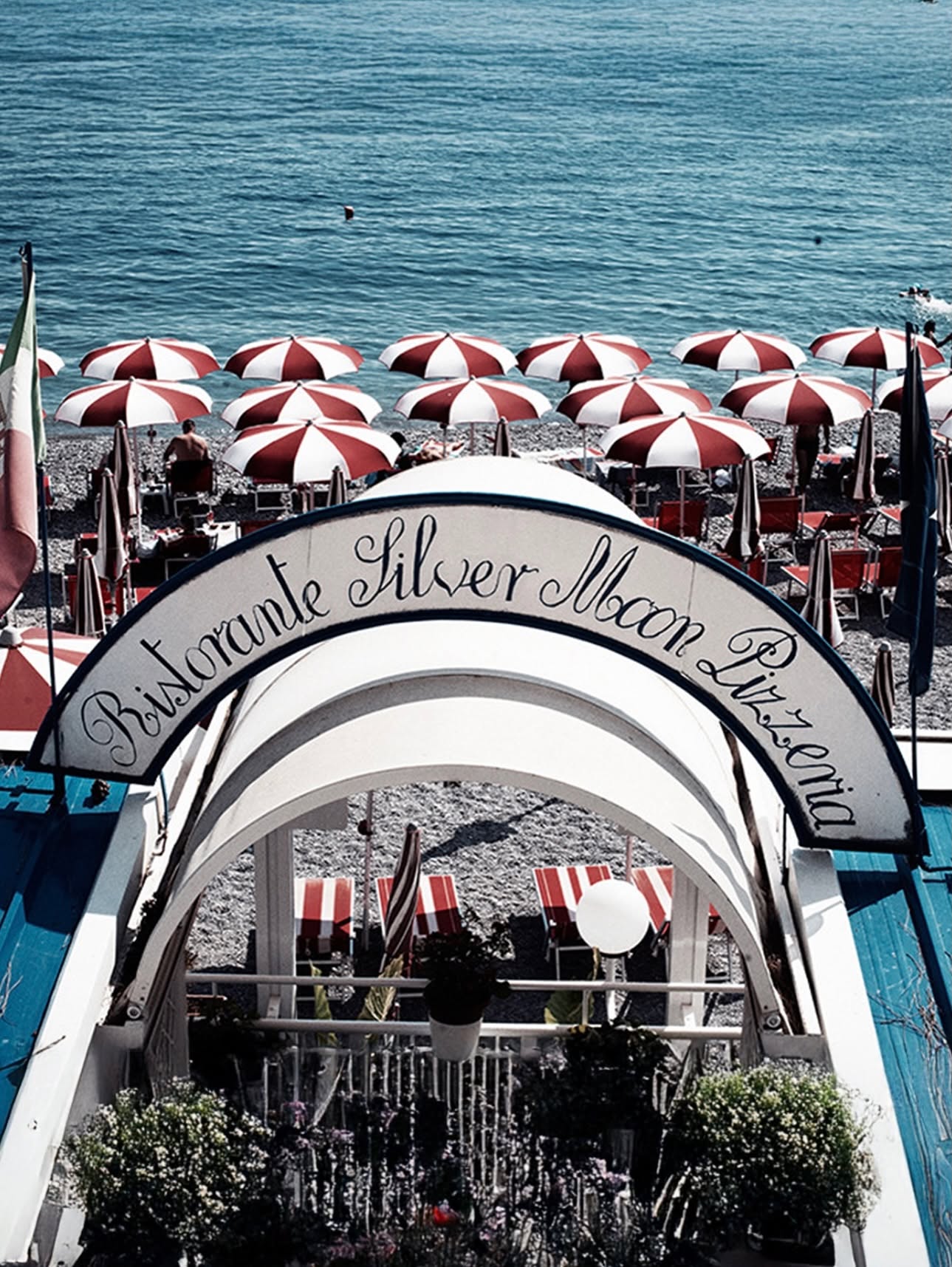
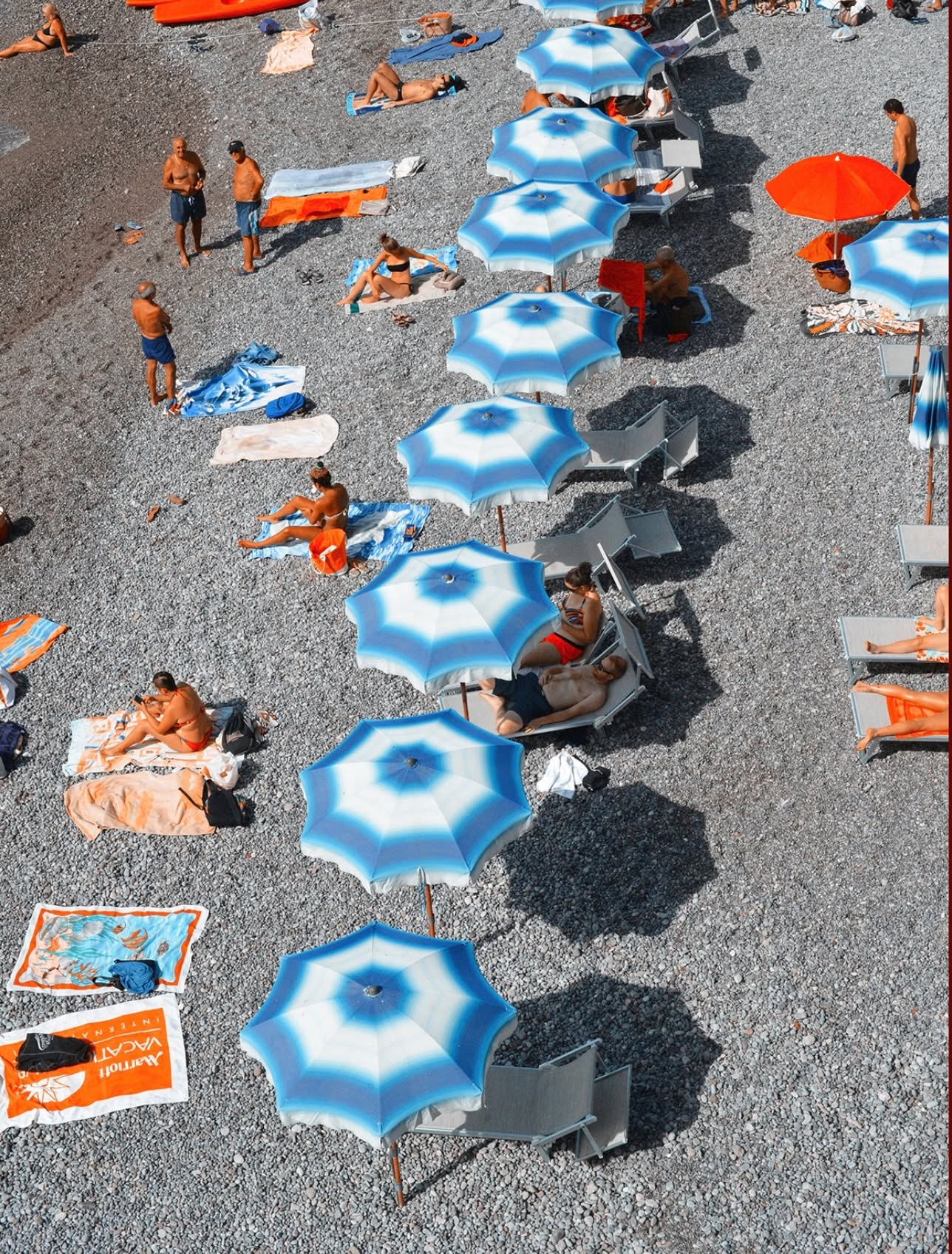
Amalfi’s beach is a useful place to understand the town’s relationship with tourism: present, functional, not particularly glorious. It is a strip of dark sand and pebbles squeezed between the harbor and the cliff, organized into rows of sun loungers that fill early in summer and empty late. The sea is clean. The swimming is good. It is not the reason to come to Amalfi, but it is where a great many people spend their afternoons, and it has the specific quality of a beach that exists for the town it serves rather than for the aesthetic impression it makes on arriving visitors.
If you want a beach that earns its setting, the coast east and west of Amalfi offers considerably better options within easy reach. Atrani, ten minutes on foot around the headland, has a small pebble beach with a fraction of the crowd. Further east, Minori has a proper sandy beach and the relaxed atmosphere of a town that has not yet been fully absorbed into the luxury economy of the upper coast.
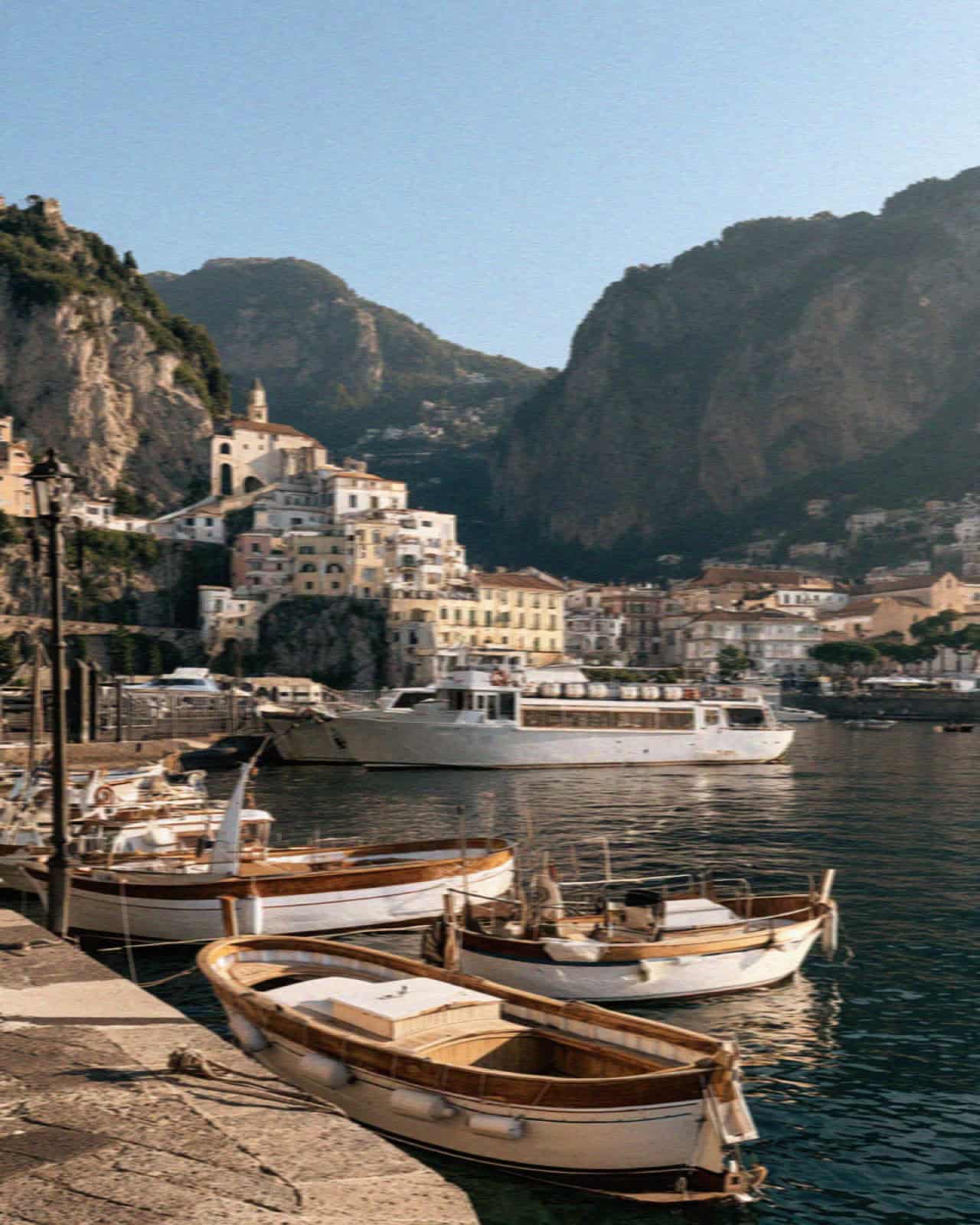
The harbor is where Amalfi’s water life actually lives. The ferries dock here. The fishing boats return here in the morning. The old men with no particular schedule sit at the harbor edge in the late afternoon watching the water with an attention that has no object and no destination. The ferry schedule is posted at the ticket booth beside the main dock, and it is one of the most useful documents on the coast: Positano in forty minutes, Salerno in an hour, Capri in an hour and a half, with boats running from early morning through the early evening in season. Stand at the harbor and you can reach most of the coast without getting in a car.
The eastern shore, covering Minori, Maiori, and the towns beyond, is covered in the dedicated guide: Victoria’s Complete Guide to Maiori and Minori
The full guide to the beaches of Amalfi: Victoria’s Guide
Food in Amalfi
The cardinal rule of eating in Amalfi is simple: do not eat in the Piazza del Duomo. The restaurants facing the square are not serving you badly. They are serving you expensively and adequately, which is a different and in some ways worse problem. Walk sixty seconds in any direction from the piazza and the quality rises sharply while the price comes down.
The local pasta is scialatielli, and it is worth ordering wherever it appears on the menu. It is thick, short, flat, somewhere between tagliatelle and fettuccine, with a heavier chew and a particular quality for holding sauce. The preparation that matters most here is scialatielli ai frutti di mare: the pasta tossed with whatever came off the boats that morning, in a sauce of white wine, cherry tomatoes, and olive oil that should taste primarily of the sea.
The seafood on this coast is not decorative. It is the point. Orata, sea bream, baked in a salt crust. Swordfish grilled simply with lemon. Ricci di mare, sea urchin, eaten raw on the harbor with half a lemon, if you can find them in season. The quality of the raw ingredient is high enough that the best cooking here is mostly an act of restraint: the fish is already good. It needs very little.
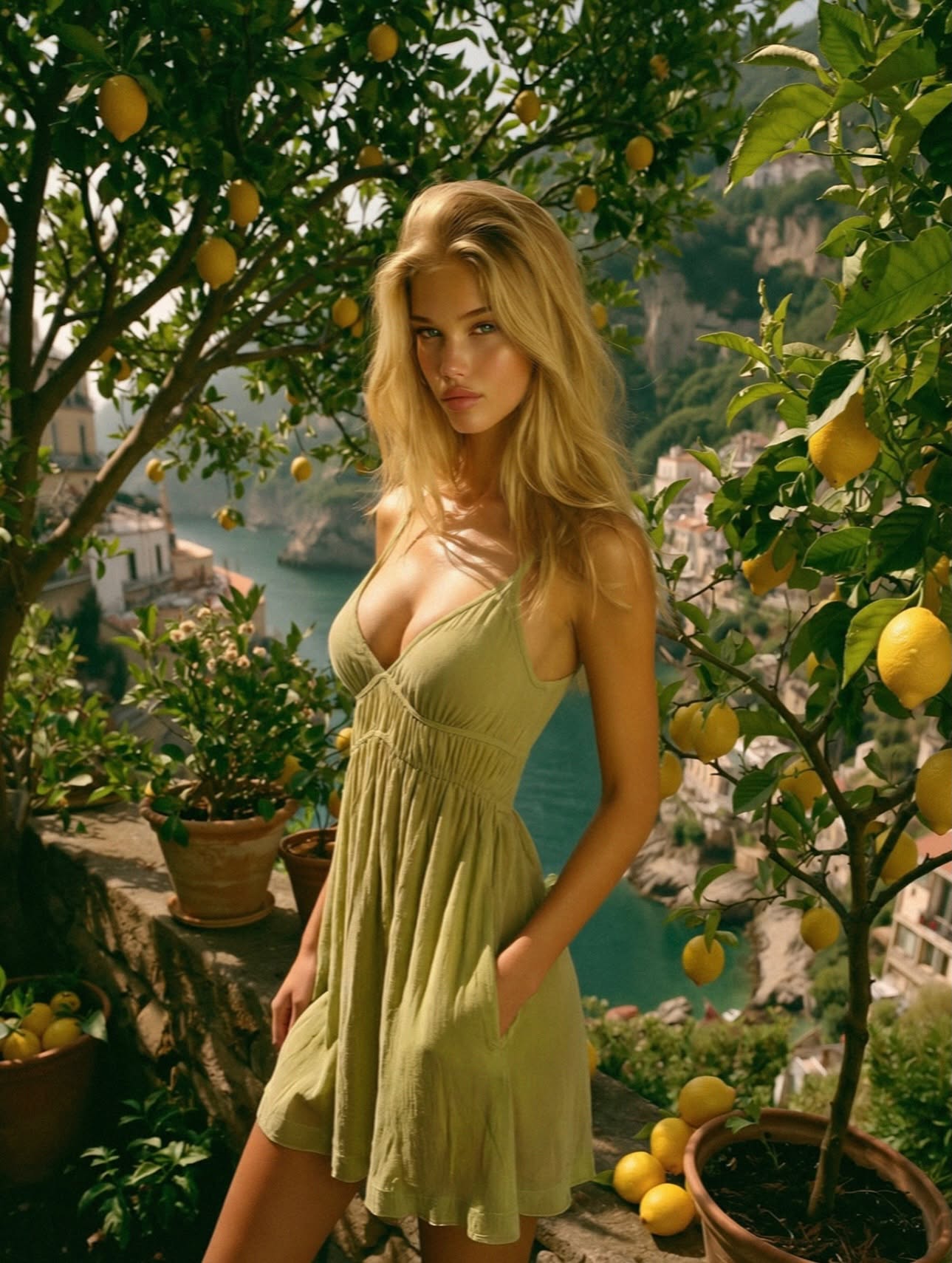
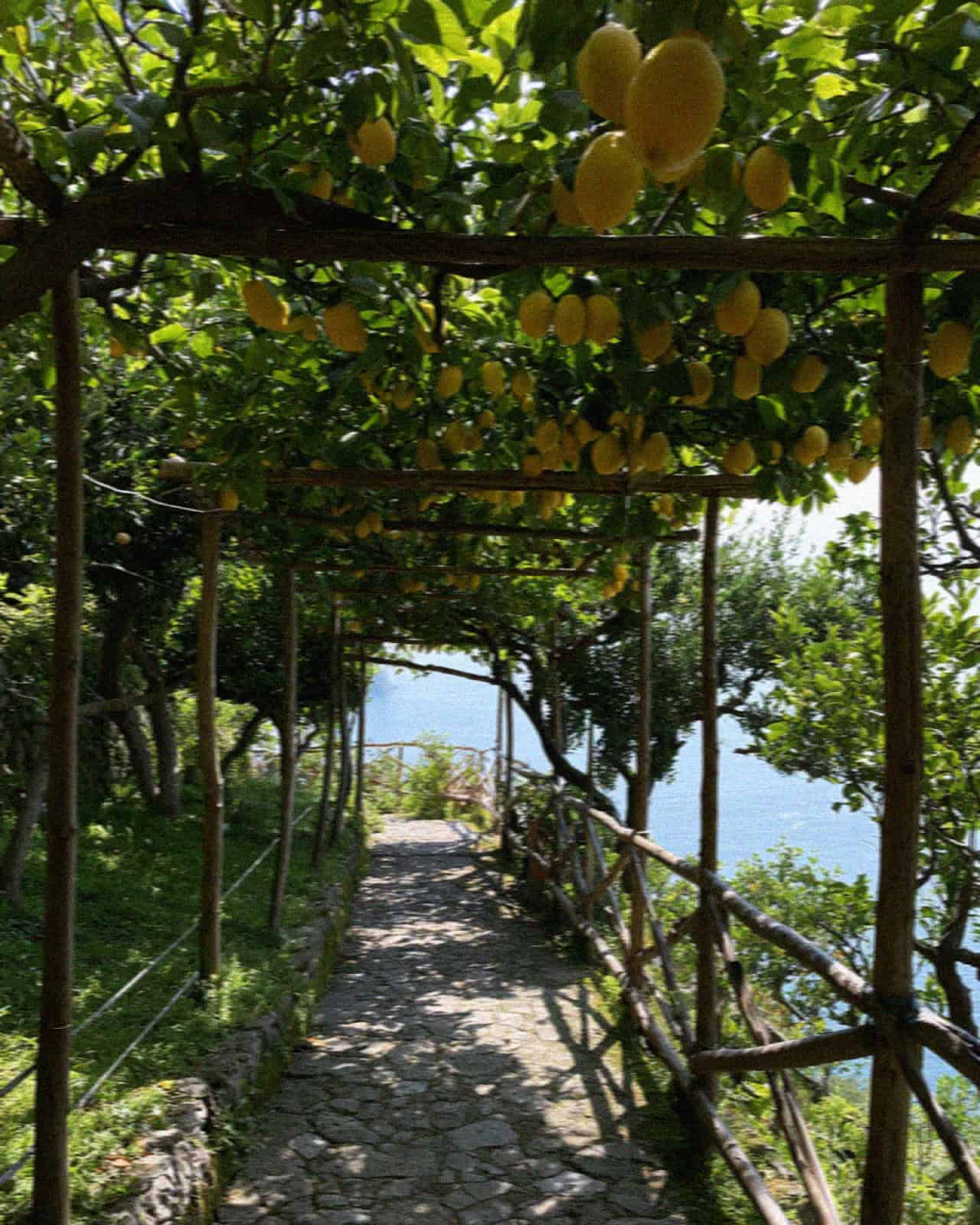
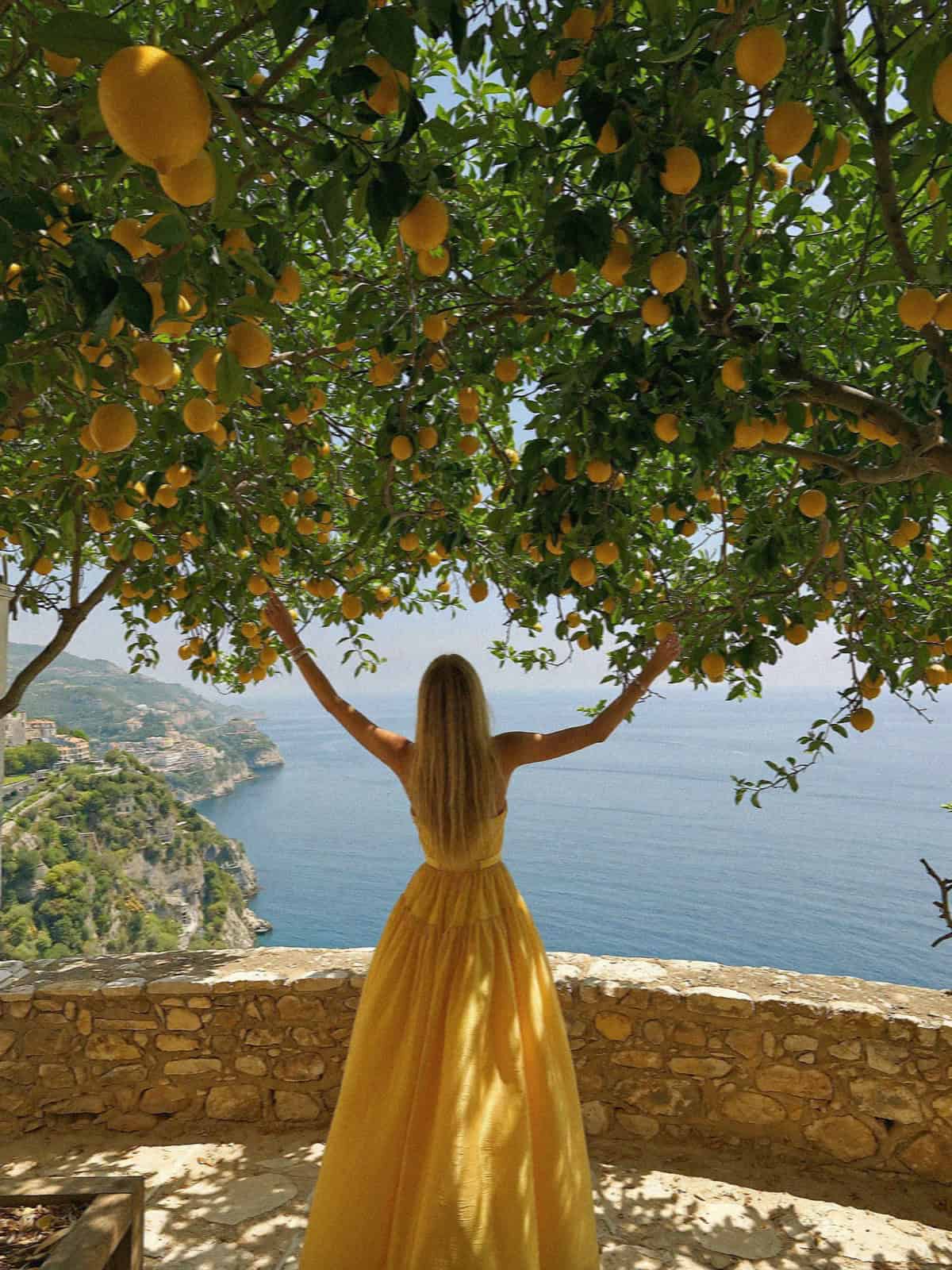
Lemons appear everywhere and the local ones earn their omnipresence. The sfusato amalfitano is the variety grown on these terraced hillsides, larger than the lemons you know from elsewhere, its skin thick and fragrant, its flesh surprisingly sweet. The limoncello produced from it is the version to taste at the end of a meal: not the commercial version in every supermarket from Naples to Milan, but the bottle produced by a family in the valley whose label is hand-applied and slightly crooked. Ask at the counter of the enoteca. They will know which one.
Granita di limone, lemon granita, dense with frozen citrus and almost too sour, is the correct thing to eat standing up in the mid-afternoon when the heat has become serious. The bar below the Duomo steps, despite its location, makes a creditable version.
Colatura di alici deserves its own mention, though it comes from Cetara rather than Amalfi itself, a town forty minutes east along the coast. Colatura is an anchovy extract, the direct descendant of the garum that the Romans used as a base condiment for everything. A few drops on pasta, on bruschetta, on grilled vegetables, transforms the dish without announcing itself. If you see it on a menu or in a shop, buy it.
The restaurants worth returning to in Amalfi are not the ones with the view or the polished presentation. They are the ones where the owner still cooks and the menu changes when the catch does. Finding them requires some willingness to turn down streets that do not lead anywhere obvious. This is not a hardship. It is the correct method.
The full guide to where to eat in Amalfi: Victoria’s Guide
Atrani
Ten minutes from Amalfi, around the headland to the east, the road arrives at Atrani. It is classified as a separate municipality, one of the smallest in all of Italy, with a population of several hundred. The physical distance from Amalfi is close enough that locals treat the two towns as a continuous place.
What Atrani offers that Amalfi does not is quiet. The tourist infrastructure of the larger town has not replicated itself here. The Piazza Umberto I, opening directly onto the beach, has a church, a bar, and a few tables set outside in the evening where the conversation is predominantly Italian. The small beach, dark pebble with the inevitable lounger rows and clear water, is considerably less crowded than the one in Amalfi and has the additional advantage of a small river mouth that keeps the water moving.
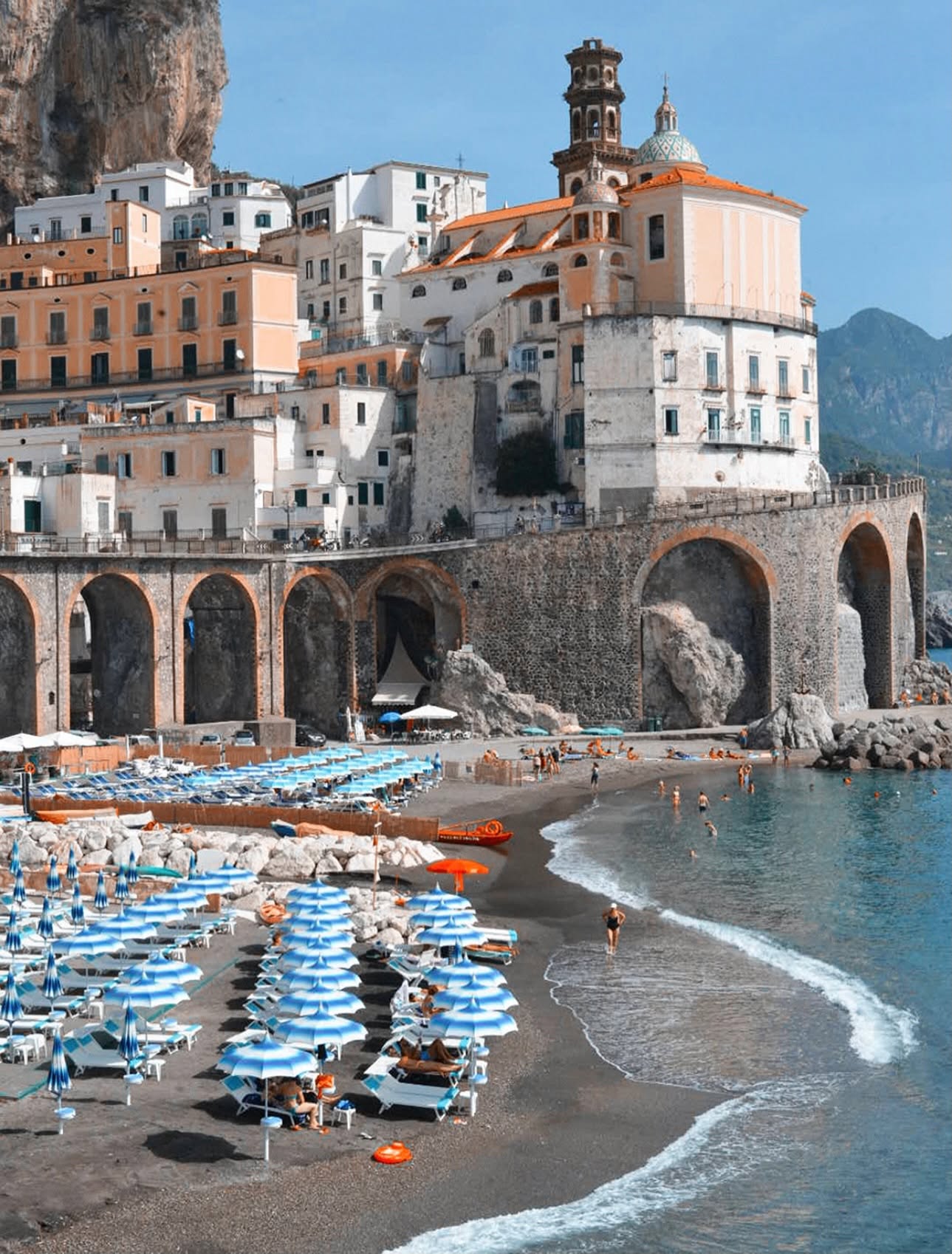
The Church of San Salvatore de’ Birecto stands at one edge of the square. It was here, in the medieval period, that the Doges of Amalfi were invested, crowned with the birecto, the Amalfitan ducal cap. A town of a few hundred people was the site of the duchy’s most formal ceremonial function. This is the kind of proportion that the Amalfi Coast keeps offering if you pay attention: enormous histories in tiny places.
Atrani is reached on foot along the coastal path from Amalfi in ten minutes, or by bus in five. It is the correct answer to the question of where to swim if you want to swim near Amalfi without being surrounded by everyone else who is also swimming near Amalfi.
The full guide to Atrani, covering its history, beach, and the walk from Amalfi, is covered here: Victoria’s Complete Guide to Atrani
The Case for Amalfi as Your Base
I want to make an argument. Not all visitors to this coast will find it persuasive, and the ones who find it most persuasive are probably the ones who have already made the mistake of ignoring it.
Amalfi is the correct place to base yourself for a week on this coast.
Not Positano. Positano is beautiful in the way that very expensive things are beautiful, with a kind of finality that discourages argument. Its views are extraordinary. Its hotels, the good ones, are among the better hotels in Italy. But Positano is difficult to leave. The town climbs so steeply that moving between it and anywhere else requires planning, expense, and the surrender of at least an hour in each direction. And Positano has, in the twenty-first century, become a place that exists primarily to be seen in. That is a legitimate thing to want from a holiday. It is not the only thing.
Ravello is transcendent and almost completely impractical as a base. It sits seven hundred meters above the sea on a ridge between two valleys. There is a bus. It takes forty-five minutes and requires a tolerance for switchbacks that not everyone possesses. Ravello is perfect for a night, perhaps two. The silence is absolute after nine in the evening. But you cannot swim from Ravello. You cannot catch a ferry from Ravello.
Amalfi can do everything.
The ferry terminal in the harbor serves Positano to the west in forty minutes. Capri in an hour and a half by hydrofoil. Salerno in an hour east. The SITA bus, which is orange and crowded and air-conditioned to no one’s satisfaction, leaves from the square behind the harbor and reaches Ravello in forty-five minutes for a few euros. It reaches Minori in fifteen minutes. It reaches Maiori in twenty. The hike to Valle delle Ferriere begins at the town’s edge.
And the cost of staying in Amalfi is, by the standards of this coast, rational. Not cheap: the Amalfi Coast charges what it charges throughout its length, but meaningfully less than Positano and Capri, and in the mid-range and lower categories the gap widens further. A well-chosen apartment in the upper town will give you a terrace with a view of the valley and access to the harbor in ten minutes on foot. The equivalent position in Positano costs considerably more and moves you no closer to the rest of the coast.
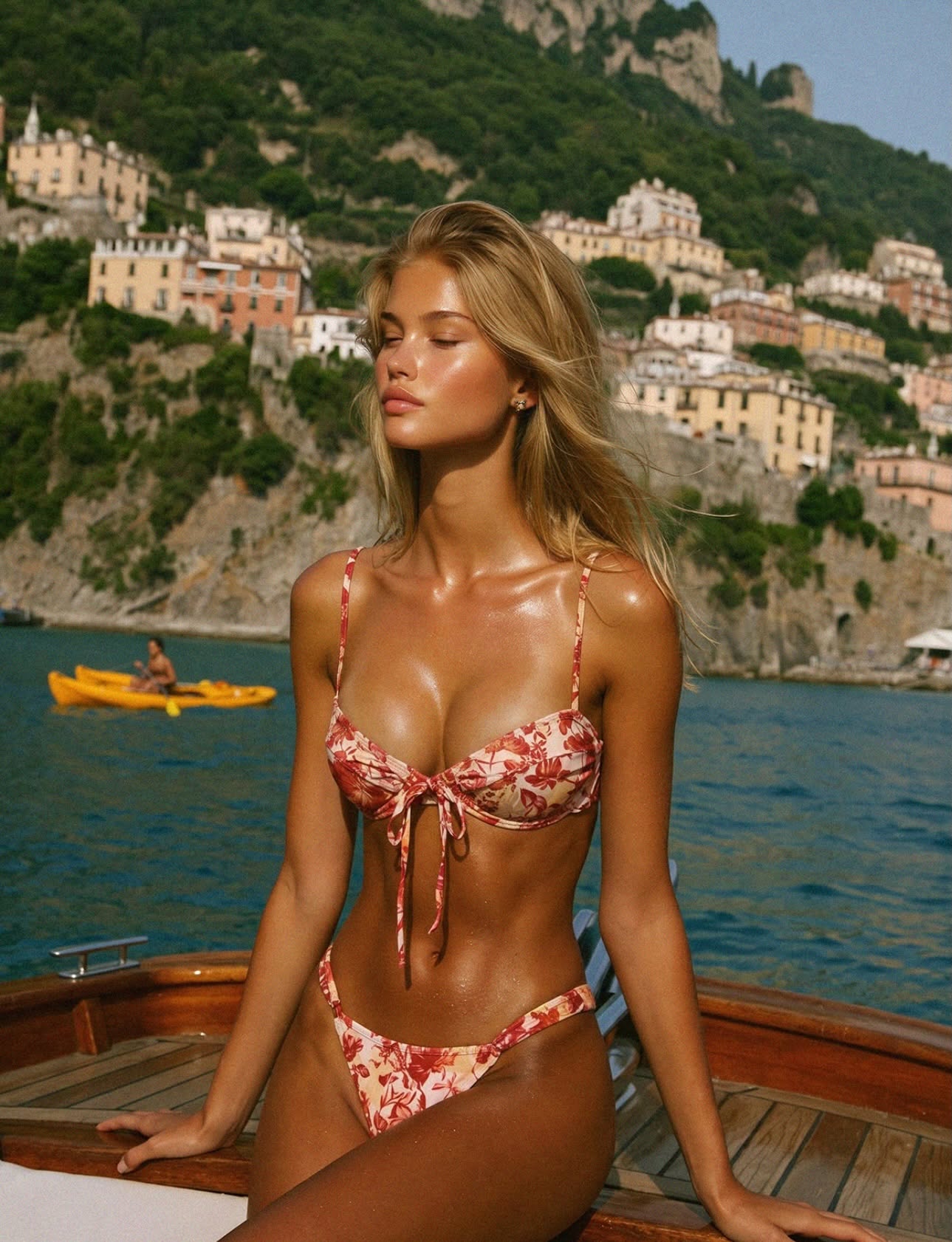
The traveler who bases themselves in Amalfi and takes a ferry to Positano for a day, has lunch, and takes the ferry back has had a better experience of Positano than the traveler who stays there. They have seen it without being confined by it. And they have come home in the evening to a harbor town that is still living its own life when the day-trippers have gone.
This is not a budget strategy. It is an intelligence strategy. The distinction matters.
Day Trips from Amalfi
The harbor is the departure point for most of what makes a week in Amalfi worth the price of the ferry tickets. These are the day trips that are direct and reliable from the town.
Positano. The ferry west takes forty minutes in season and runs multiple times daily. Arrive before ten to have any version of Positano that resembles the one in the photographs. Walk up through the town before it fills, eat lunch in a restaurant in the upper streets, swim from Spiaggia Grande in the afternoon, and take the late-afternoon ferry back to Amalfi when the light is going gold and the sea is changing color. This is the correct Positano day.
The full guide to Positano: Victoria’s Complete Guide to Positano
Ravello. The SITA bus from the square behind the harbor. Forty-five minutes, several times daily. Arrive and give yourself a full morning in the Villa Rufolo gardens and at least an hour sitting somewhere on the ridge doing nothing. Eat lunch. Walk to Villa Cimbrone in the afternoon. Return in the early evening when the light on the descent is at its best. Ravello requires a full day and rewards it completely.
The full guide to Ravello: Victoria’s Complete Guide to Ravello
Capri. The hydrofoil from the harbor. An hour and twenty minutes in season. Capri is best understood as a half-day or full-day excursion rather than a destination: go to Anacapri, ride the chairlift to Monte Solaro, have lunch on the terrace. Walk down rather than taking the bus. Return on the late afternoon boat. Capri as a day trip is more pleasurable than Capri as an overnight. It is the kind of place that benefits from a frame.
The full guide to Capri: Victoria’s Complete Guide to Capri
Atrani. Ten minutes on foot around the headland. Already described above. Go in the morning before the sun is overhead.
Minori and Maiori. East by bus, fifteen to twenty minutes. The sandy beach at Minori is the best swimming beach within easy reach of Amalfi. Maiori has a long seafront promenade and a beach club culture that is considerably more relaxed and considerably less expensive than anything to the west. Both towns offer an afternoon of swimming and local lunch for a fraction of what the western part of the coast charges.
The full guide: Victoria’s Complete Guide to Maiori and Minori
Pompeii. Take the bus or ferry to Salerno, then the Circumvesuviana regional train north toward Naples. The journey takes approximately two hours each way. Pompeii requires at minimum four hours on site to be worth the journey. A full day, departing by eight and returning by seven, is the correct allocation. It is a long day. It is also an irreplaceable one.
The full guide: Victoria’s Complete Guide to Pompeii
The full guide to the best day trips from Amalfi: Victoria’s Guide
Where to Stay in Amalfi
The accommodation in Amalfi ranges from budget rooms in the upper town with no particular view and entirely adequate everything, to small boutique hotels with terraces above the harbor and service that takes the business seriously. The middle of this range, a well-chosen apartment or a three-star hotel with a terrace, represents the best value proposition on the entire coast.
The upper town rewards exploration. The further from the piazza, the quieter and generally the cheaper. Many of the best apartments have been in families for generations and are now let through the usual platforms; the photographs do not always do justice to the quality of the view from the terrace. Look for properties in the Via Pantaleone Comite or the streets above the Valle dei Mulini, where the noise from the harbor has attenuated, and the valley provides its own particular morning light.
The harbor-facing hotels have the views and the prices to match. For a special occasion or a first night, the position is worth the premium. For a week, the upper-town apartment at half the price and twice the quiet is the more rational choice.
Amalfi does not have the grand hotel infrastructure of Positano or Ravello. What it has is variety, a genuine spectrum from budget to boutique, and that variety reflects the town’s character better than a single extraordinary property would. This is a working town with rooms in it, not a resort with a town attached.
The full guide to where to stay in Amalfi: Victoria’s Guide
Getting There
By ferry: The most pleasant arrival is by ferry from Salerno, which takes approximately an hour and runs in season from April through October. Salerno is straightforwardly accessible by train from Naples (forty minutes on the fast train). The ferry sets you down at the harbor with the Duomo above you and nothing to do except begin.
By bus: The SITA bus from Sorrento follows the Amalfi Drive along the cliff edge and is one of the more dramatic road journeys in Italy. The bus is often full in summer, the road is always narrow, and the view from the right-hand window is straight down to the sea. Buy tickets in advance at the tabacchino before boarding. The journey takes approximately ninety minutes depending on traffic, which in July and August can extend it considerably.
By car: You can drive to Amalfi. I would recommend against it unless you are arriving from inland or have no other option. The coast road in summer is genuinely difficult: narrow, crowded, governed by a meeting-place logic where two buses negotiate their passage around a blind bend with a patience that is either admirable or alarming depending on your temperament. Parking in Amalfi itself is scarce and expensive. Once you have arrived, the car is entirely unnecessary. Leave it in Salerno.
By private transfer: If you are arriving from Naples or the airport and carrying significant luggage, a private transfer is the most comfortable option and, at current prices, less unreasonable than it sounds when split across a group.
The ferry is the right answer. It always is.
The full guide to how to get to Amalfi: Victoria’s Guide
When to Go
May and early June are the months I would choose without hesitation if the choice were entirely mine. The coast has emerged from its winter quiet: the ferries are running, the restaurants are open, the temperatures are warm but not yet serious. The summer crowds have not fully materialized. The bougainvillea is at the height of its extravagance. The sea is still cold enough to be genuinely refreshing. May on the Amalfi Coast is the best version of itself, and Amalfi town in May is a place that has not yet decided to perform for anyone.
July and August are the full season, and they are what most people experience. The crowds are real. The heat is real. The prices are at their highest, and the patience of the people who work in the restaurants and hotels is at its most tested. It is still worth it, for the light, the sea, the particular energy of the coast at full operation, but it requires some preparation and a willingness to reorganize your day around the heat. Early mornings belong to you. The middle of the day belongs to the shade.
September and early October are the second window. The crowds thin noticeably after the third week of August. The sea is at its warmest, holding the summer’s heat into October. The light changes: lower in the sky, warmer in tone, with longer shadows and a particular golden quality to the afternoon that summer light does not have. September on this coast is for people who know what they are doing.
November through March. Amalfi contracts. Some restaurants close. The ferry schedule reduces. The coast returns to itself. There are travelers who find the winter coast, quiet and occasionally dramatic with storms and restored to its actual dimensions, more interesting than the summer version. I am among them, in small doses. But it requires accepting that some of what the coast offers seasonally will simply be closed, and that the weather will not cooperate with any particular plan you have made.
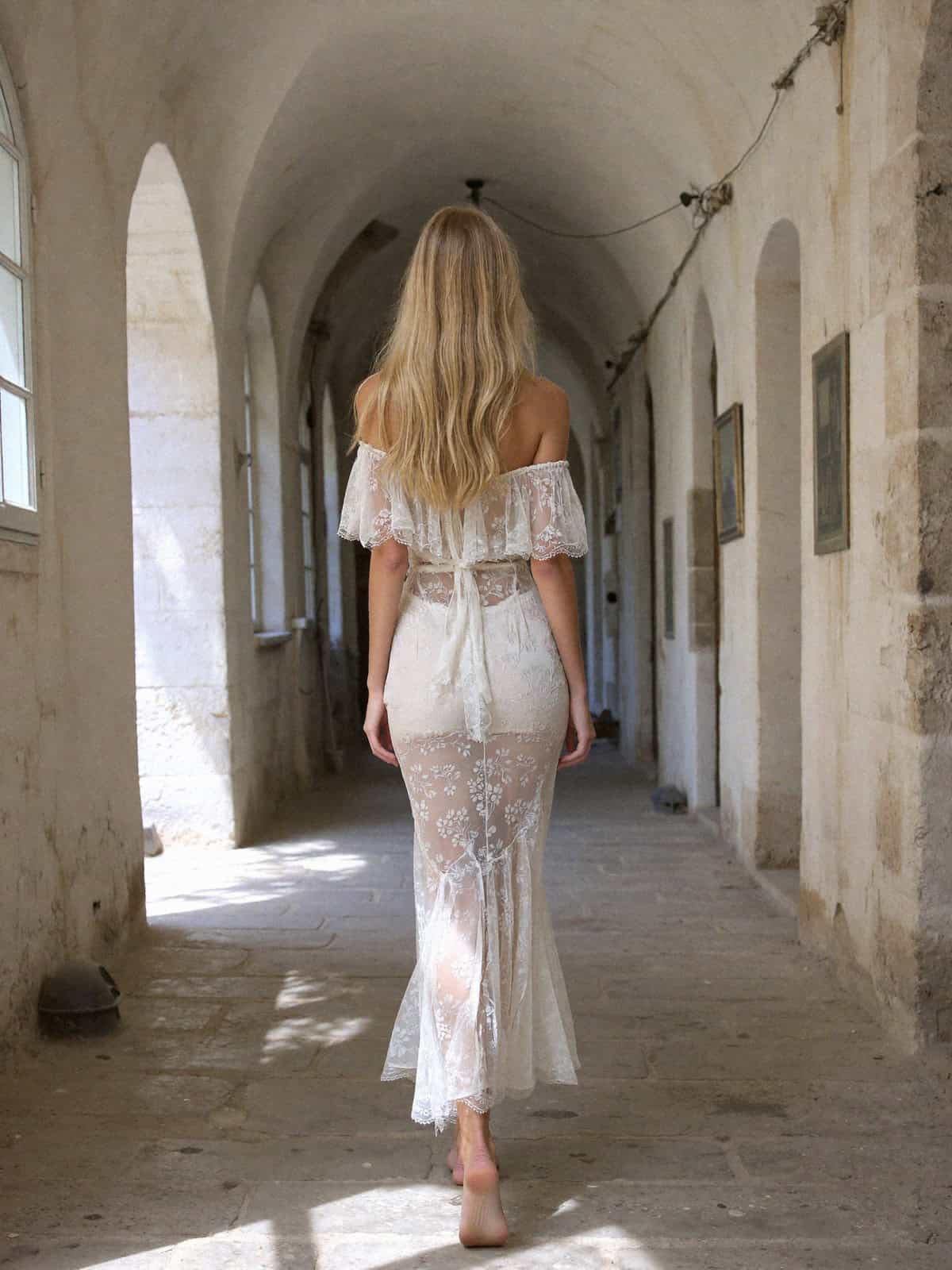
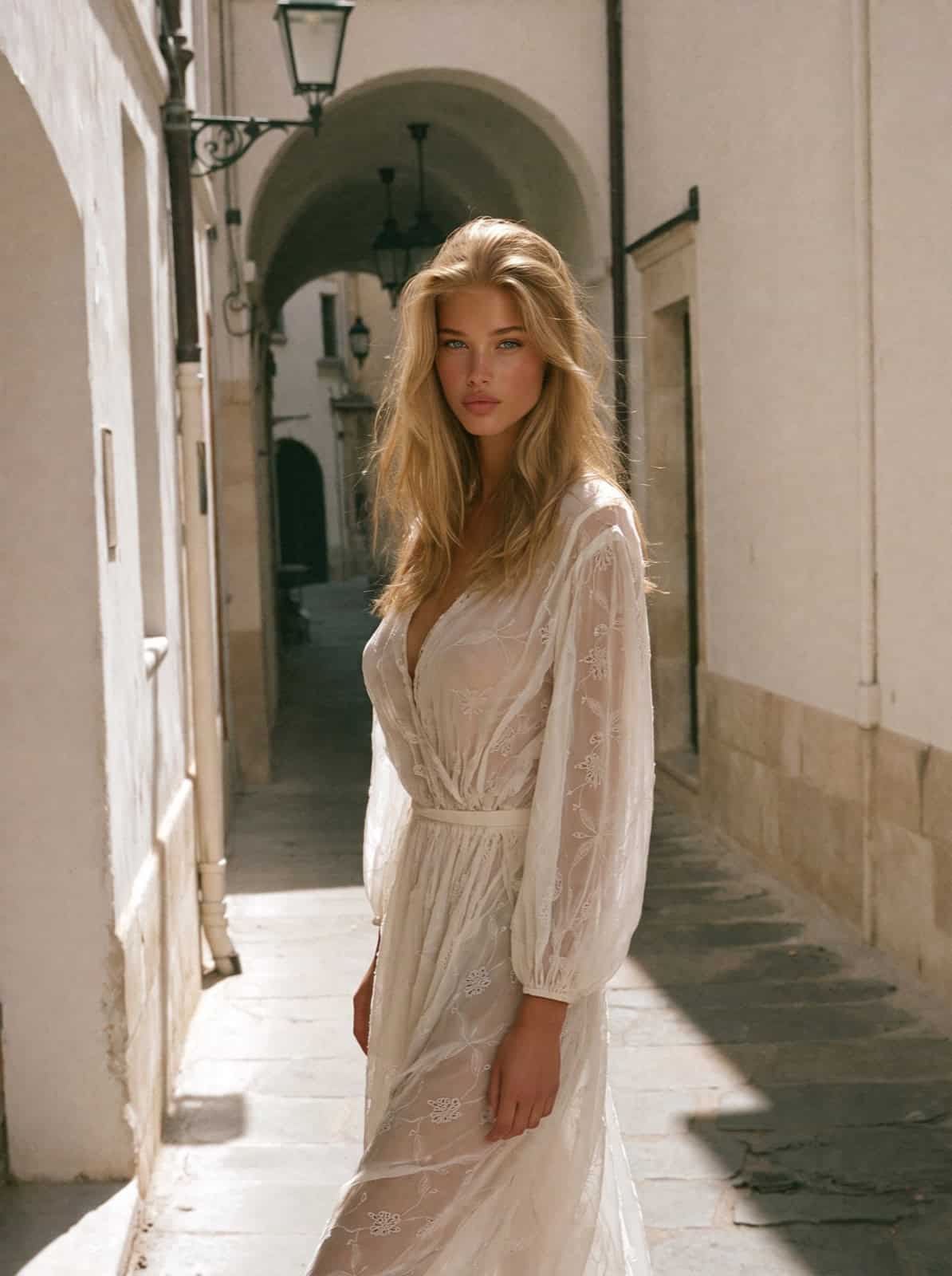
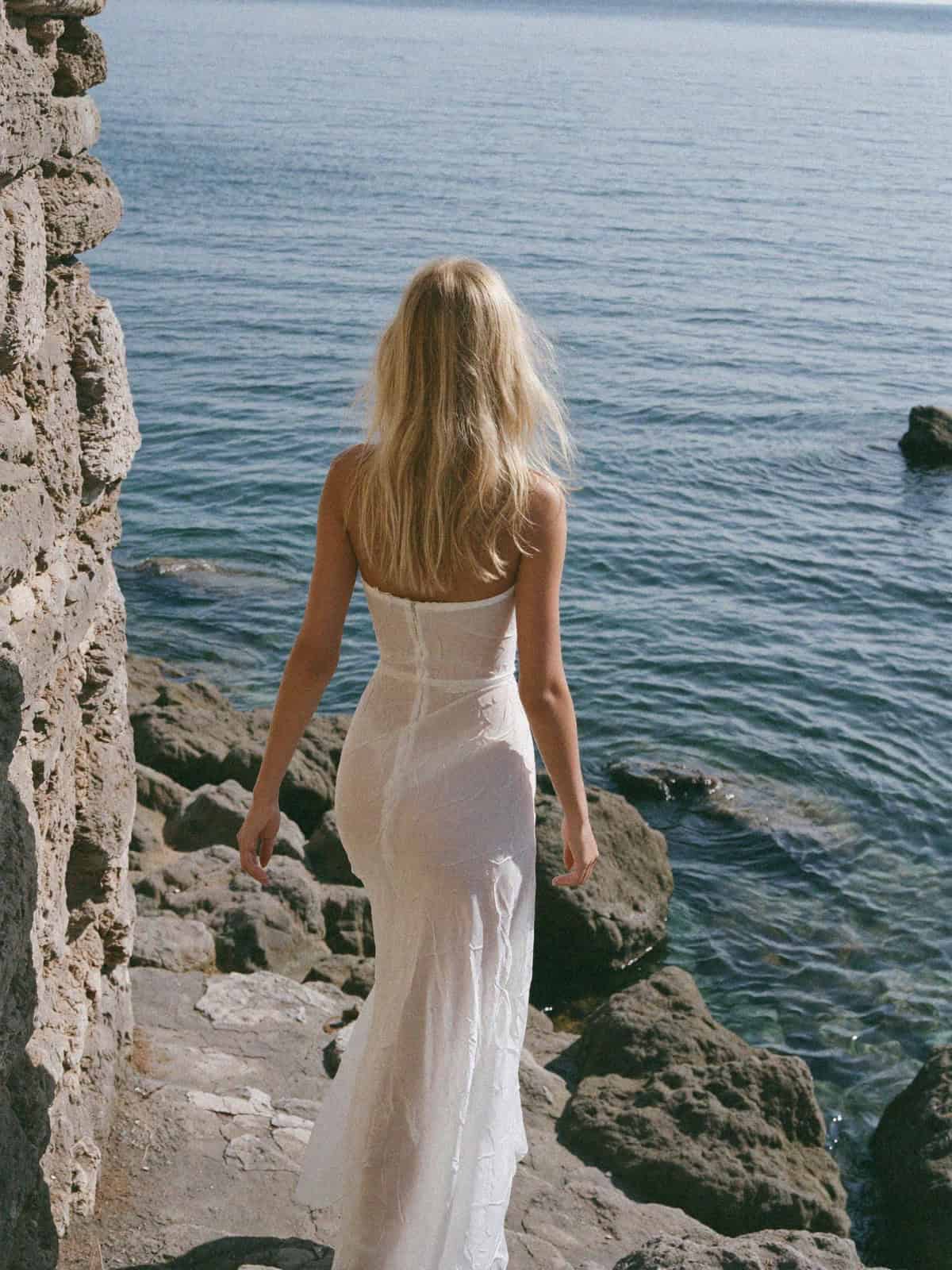
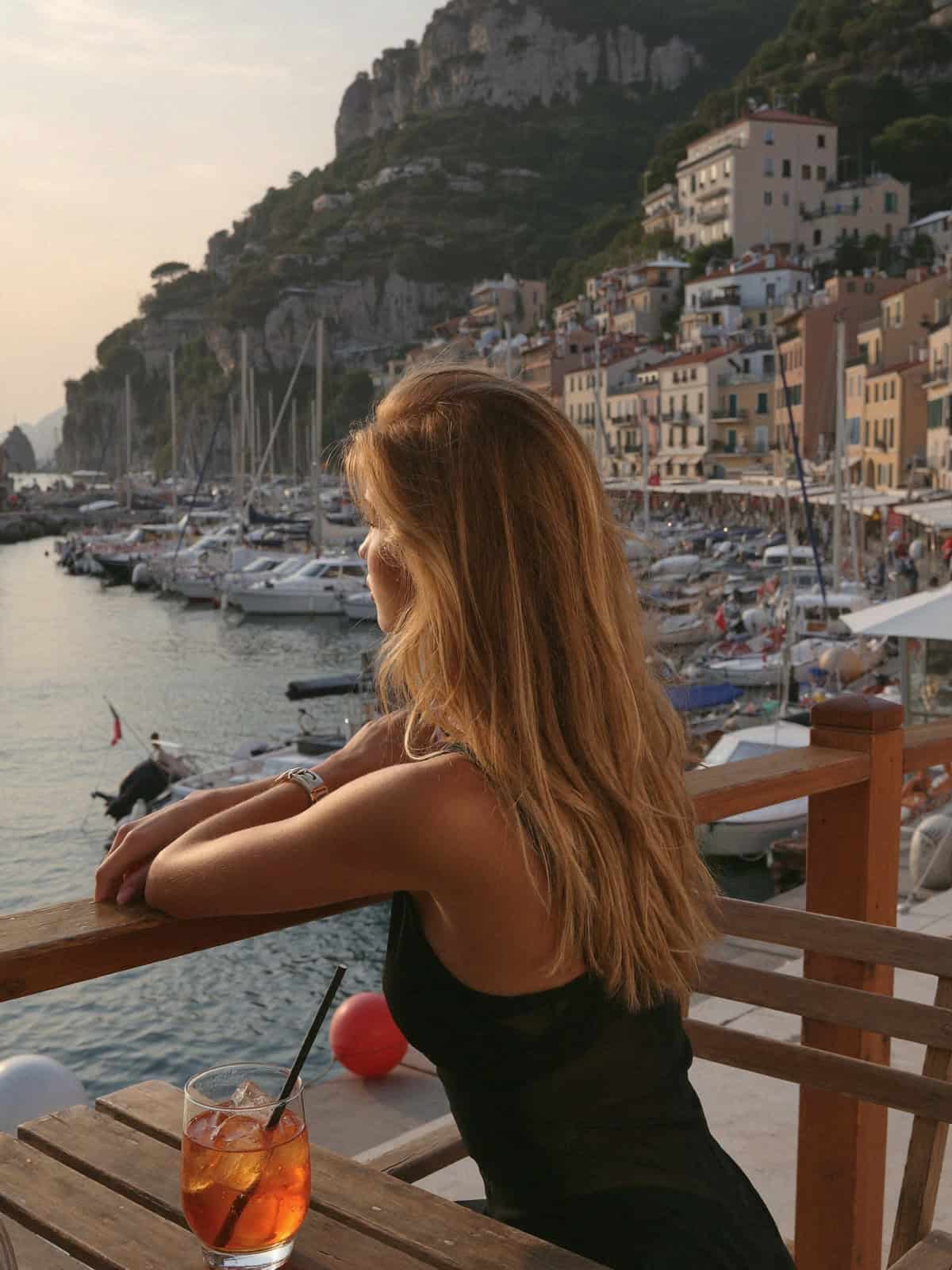
More images from Amalfi








Your Amalfi Guides
- The Best Things to Do in Amalfi
- The Duomo di Amalfi: Visiting the Cathedral of Sant’Andrea
- Where to Eat in Amalfi
- Where to Stay in Amalfi
- How to Get to Amalfi
- The Beaches of Amalfi
- The Best Day Trips from Amalfi
Amalfi Travel Diaries
Frequently Asked Questions
Is Amalfi worth visiting?
Yes, and it makes one of the best bases on the coast. Amalfi is central, walkable, and better connected by bus and ferry than its neighbours, with a great cathedral, a real town behind the piazza, and Atrani a few minutes away.
How many days do you need in Amalfi?
A day sees the town itself, but two or three let you use it as a base for Ravello, the Valle delle Ferriere, and day trips along the coast without rushing.
How do you get to Amalfi?
By the SITA bus along the coast road, by ferry in the warmer months from Salerno, Positano, and beyond, or by car. Amalfi is the coast’s main transport hub, which is part of its appeal.
Is Amalfi a good base for the Amalfi Coast?
Yes, arguably the best. It sits in the middle of the coast with the most frequent buses and ferries, so you can reach Positano, Ravello, and the smaller towns easily and come home each night to a real working town.
What is the best time to visit Amalfi?
Late spring and early autumn, for warm days and thinner crowds than the July and August peak. The town is quietest and loveliest early and late in the day, once the day trippers leave.
After the Day-Trippers Leave
At six-thirty in the evening in high summer, something shifts in Amalfi. The boats have finished their late runs. The tour groups have returned to their coaches. The Piazza del Duomo, which an hour ago was nearly impassable, begins to reveal its actual proportions. The light on the Duomo facade goes from white to amber to something between orange and rose, and stays there for twenty minutes before the sky darkens.
The town that emerges in the evening is not a different town. It is the same town, with a different proportion of people in it. Local families eating outside. The bar at the harbor corner is filling with the same group of men who are there every evening. Children on the Duomo steps because children have been on the Duomo steps in the evening for as long as anyone can remember.
This is what the day-trippers do not see. Not because it is hidden. It is entirely visible. But because by the time it becomes available, they have already left.
The case for staying in Amalfi, for making it your base rather than your excursion, comes down to this: the town has an evening, and the evening is worth staying for. Most of what is beautiful about the Amalfi Coast is available to everyone who shows up with a ferry ticket and a camera. What Amalfi specifically offers, the particular quality of a working town that has been here for twelve centuries and intends to be here for twelve more, requires more time than a day.
It requires the willingness to be somewhere rather than to have been somewhere.
That is what I come for. Every time.
V.
Amalfi sits at the heart of the coast, surrounded by places that deserve their own careful attention. This guide links throughout to the full guides for Positano, Ravello, Capri, Atrani, Maiori and Minori, and Pompeii, as well as the walk at Valle delle Ferriere that begins in the town itself. The full regional guide to the Amalfi Coast as a whole is here.