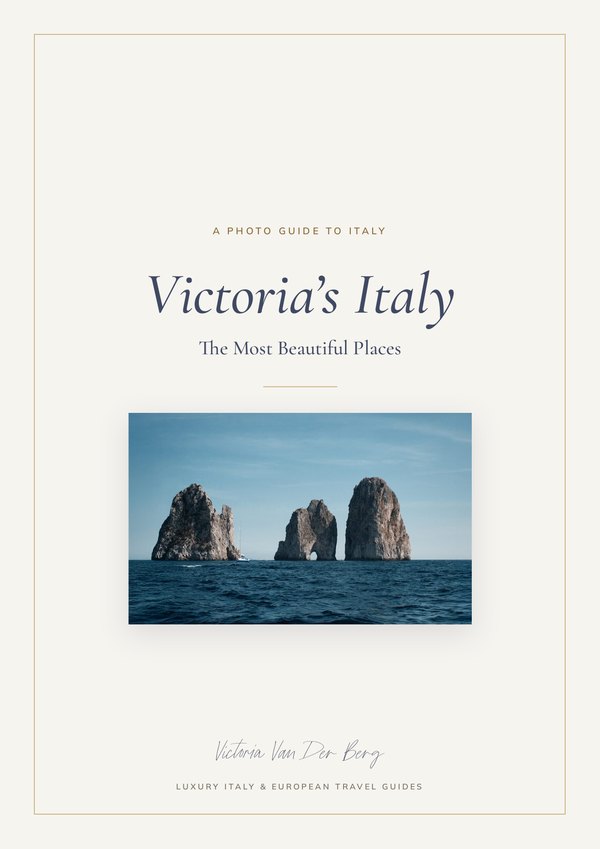
What to book before you come
Positano is vertical, expensive and worth it, and the two things I would spend money on both start at the jetty. Everything else here is a staircase and staircases are free.
- A shared boat along the coast. The affordable way onto the water, and it shows you the town as it is meant to be seen, from below and offshore.
- The shared sunset tour. Cheaper than the private cruise and the light does not know the difference.
- A sunset cruise with aperitivo. The upgrade, for the one evening you want to make into something.
- The full coast with snorkelling. 4.9 from nearly two and a half thousand people. A whole day, and the best value on this stretch.
Spiaggia Grande, the walk up to Fornillo, the church of Santa Maria Assunta and the long descent through the town cost nothing but your knees.
A Guide to the Vertical Town
The road from Sorrento gives no warning.
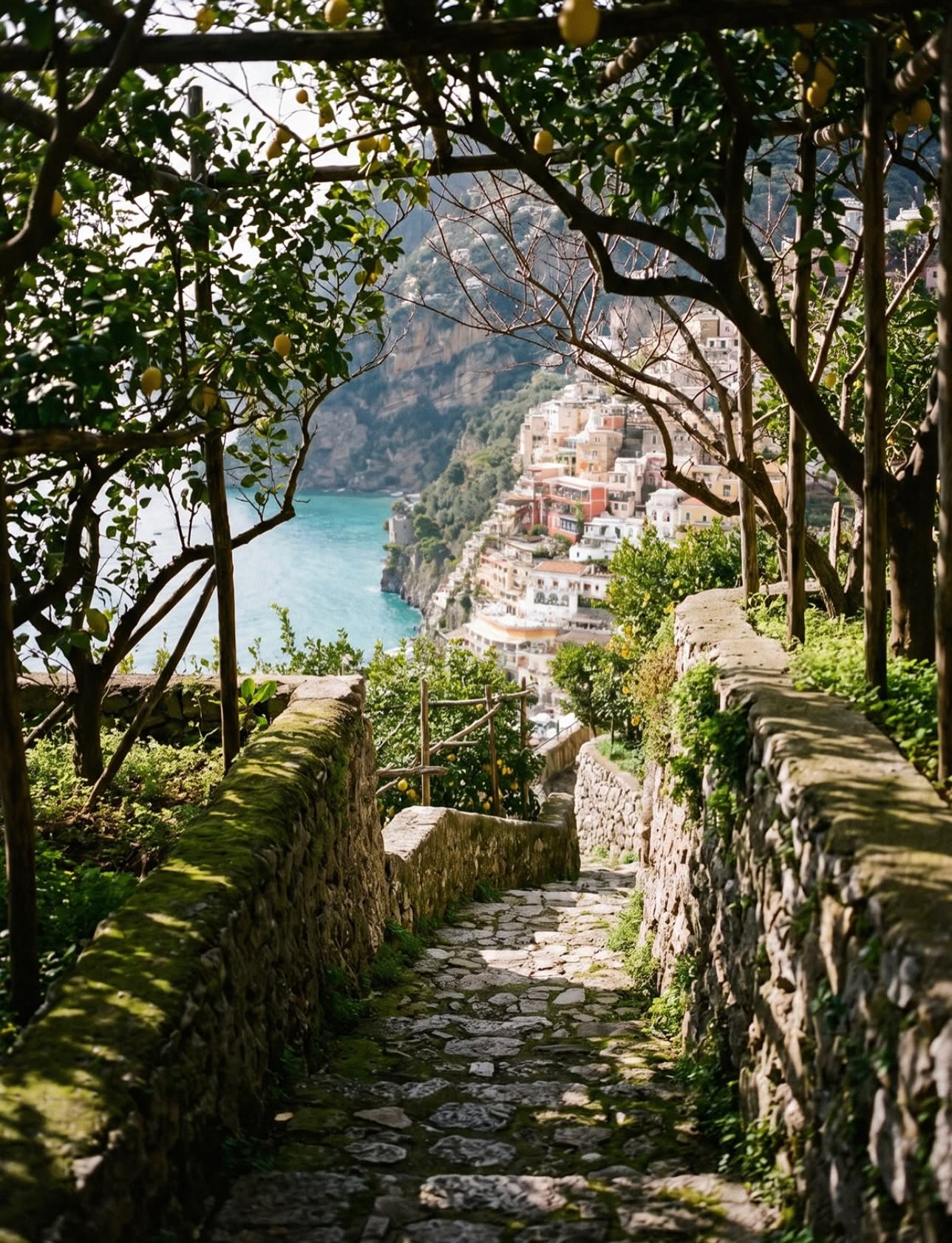
You round a curve above the sea, the hillside terraced with lemon groves, and then the town simply appears below you, stacked up the cliff in shades of pink and ochre and cream, a cascade of rooftops falling toward the water. It does not look like a place people live. It looks like something set down for the view.
John Steinbeck came here in 1953 and wrote that Positano “bites deep.” He meant that it is a dream place that is not quite real while you are in it, and becomes beckoningly real only after you have gone. I understood what he meant on the second morning, standing on a balcony with coffee going cold in my hand, watching the light move across the houses opposite. You do not entirely believe Positano while you are standing in it. You spend the whole visit half convinced it will not be there when you turn around again.
What Positano Is
Positano was a fishing village before it was anything else. A minor port of the old Amalfi maritime republic, then a place with no real purpose once larger ships made its harbour obsolete, then a town that fed itself on fishing and terraced farming and very little else for centuries. Nobody came here on purpose.
Then Steinbeck wrote about it for Harper’s Bazaar, and the world discovered a town that had been quietly perfecting the art of being beautiful without an audience. Since the 1970s it has not lacked for one.
What strikes you first is the verticality. Positano does not spread out. It climbs. Houses are stacked so tightly against the cliff that a neighbour’s roof terrace is often level with your own floor. There is a single main road, one way in and one way out for cars, and the town itself is best understood on foot, down flights of stairs that connect the upper streets to the water in a matter of minutes if your knees agree to it.
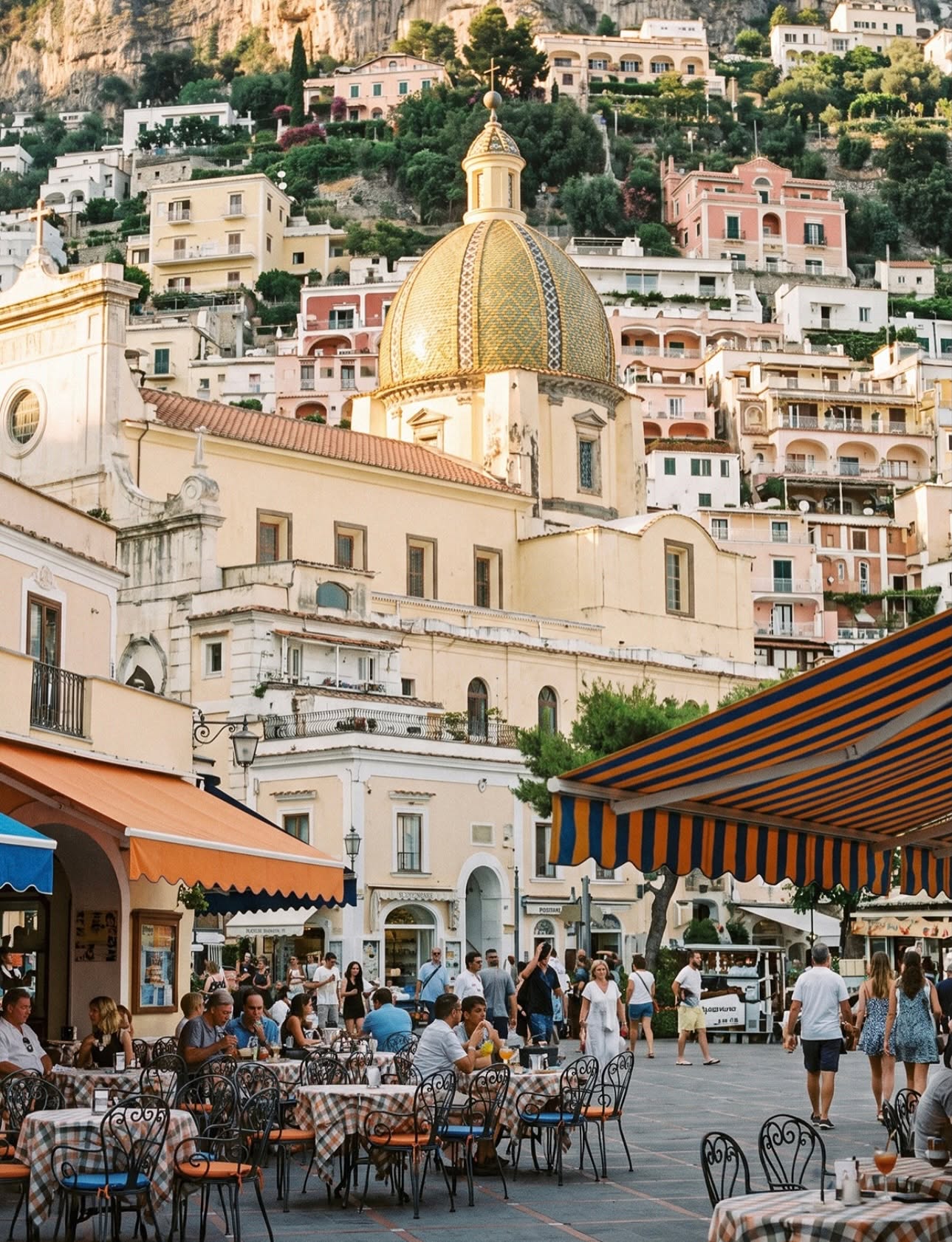
The town has one real beach, a scattering of excellent restaurants, an improbable number of ceramics shops, and a church dome tiled in the yellow, green, and blue majolica that has become the visual shorthand for this entire coastline. It is smaller than photographs suggest and steeper than anyone warns you.
Plan Your Visit to Positano
A few things I booked and loved. These help support the blog, at no cost to you.
- Where I stayed: search Positano hotels
- Amalfi Coast boat tours and tickets
- Stay connected: get a travel eSIM
This section contains affiliate links. If you book through them I may earn a small commission, at no extra cost to you.
Best Things to Do in Positano
Positano is small, and its pleasures are simple ones done well. If you do nothing else, do these.
Swim at Spiaggia Grande in the early morning, before the umbrellas fill. Walk the Via dei Positanesi d’America to quieter Fornillo. Climb the stepped Via dei Mulini through the ceramics and linen shops and have a pair of leather sandals fitted while you wait. Step inside the majolica-domed Chiesa di Santa Maria Assunta. Take a boat from the marina, to Da Adolfo for lunch, along the coast to the hidden coves, or out to Capri for the day. And give one morning to the Path of the Gods, the ridge walk above the coast that no road can match. Each of these has its own section below.
Getting There
Naples is the airport most people use. From there, the options split.
The fast way is a private transfer or taxi directly from the airport, roughly ninety minutes to two hours depending on the season and the particular temperament of the driver. The road narrows and switches back on itself for the last stretch, and you begin to understand why Steinbeck’s wife was in tears by the time they arrived.
The slower and, I think, better way is the train and bus combination. A shuttle or taxi to Sorrento, roughly an hour, followed by the SITA bus along the coast road to Positano, another forty-five minutes. The SITA buses run frequently in summer, every half hour or so, and the fare is almost embarrassingly small for what the ride delivers. Sit on the right side going south for the sea views.
Better still, if the season allows it, is the ferry. Boats run between Naples, Sorrento, and Positano from roughly May through October, and arriving by water is the correct way to see this town for the first time. The approach by sea is the one the town was designed for. Everything else is a compromise.
From Rome, the fastest route is the high-speed train to Naples followed by any of the above. Do not attempt to drive into Positano yourself unless you enjoy narrow roads, blind curves, and the company of tour buses coming the other way.
When to Go
Late May and June are close to ideal. The sea has warmed, the light is generous, and the very worst of the July and August crowds have not yet arrived.
September carries the same advantages with a softer heat and a sea that has spent all summer warming up. I would choose September over June if forced to pick, though the difference is not large.
July and August are what most people picture when they picture Positano, and also what most people should avoid if they can help it. The beach becomes difficult to find a chair on. The restaurants fill by seven. The road out of town moves at the pace of the tour buses in front of you. The town is still beautiful. It is simply beautiful in the company of everyone else who also thought July was a good idea.
Winter closes much of Positano. Restaurants shutter, hotels reduce to skeleton staff, and the town becomes a genuinely different place, quieter and more local and slightly melancholy in the way coastal towns often are out of season. It is not the Positano of the postcards, but it has its own appeal for anyone who has already seen the summer version.
The Places
Spiaggia Grande
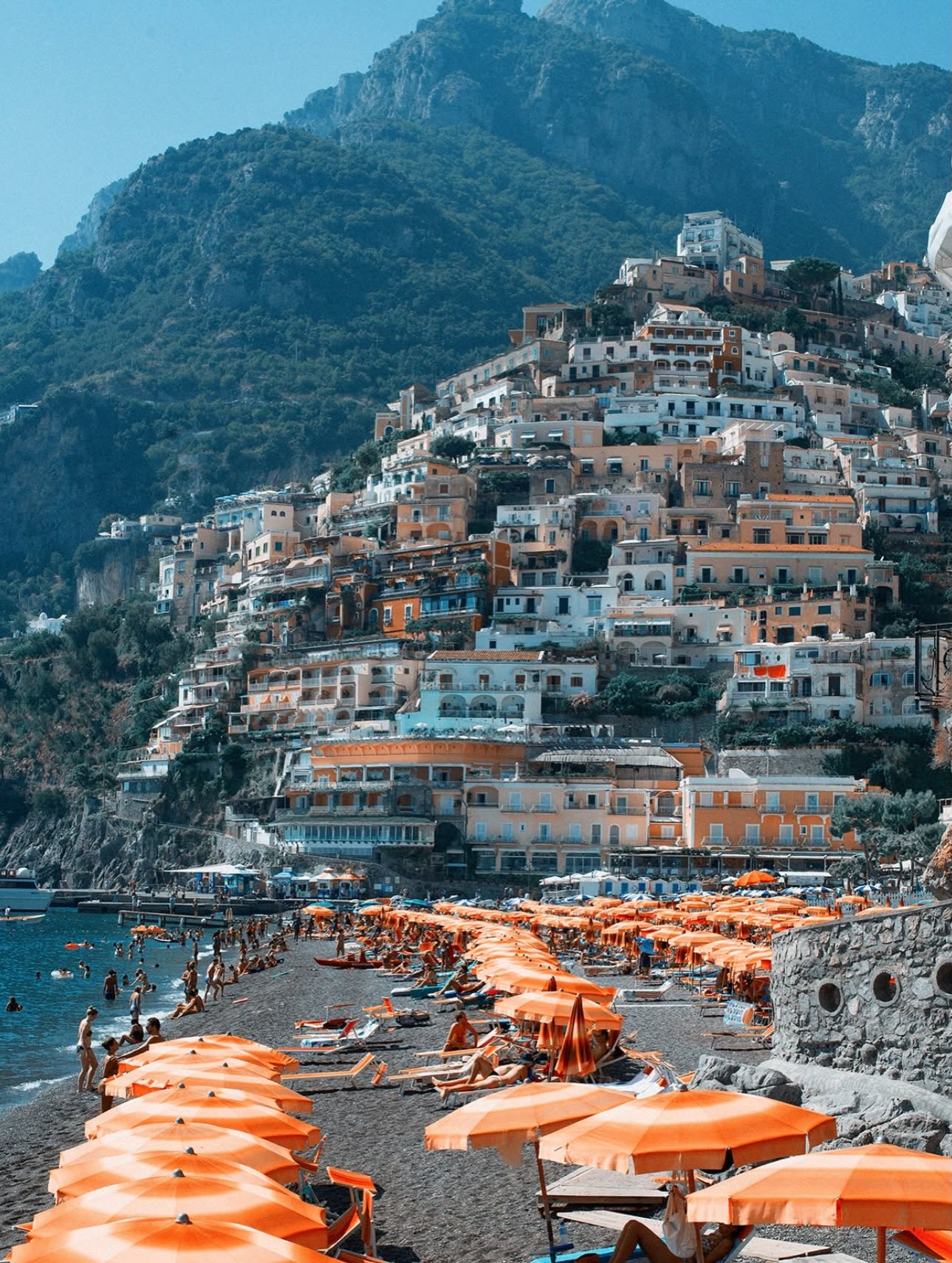
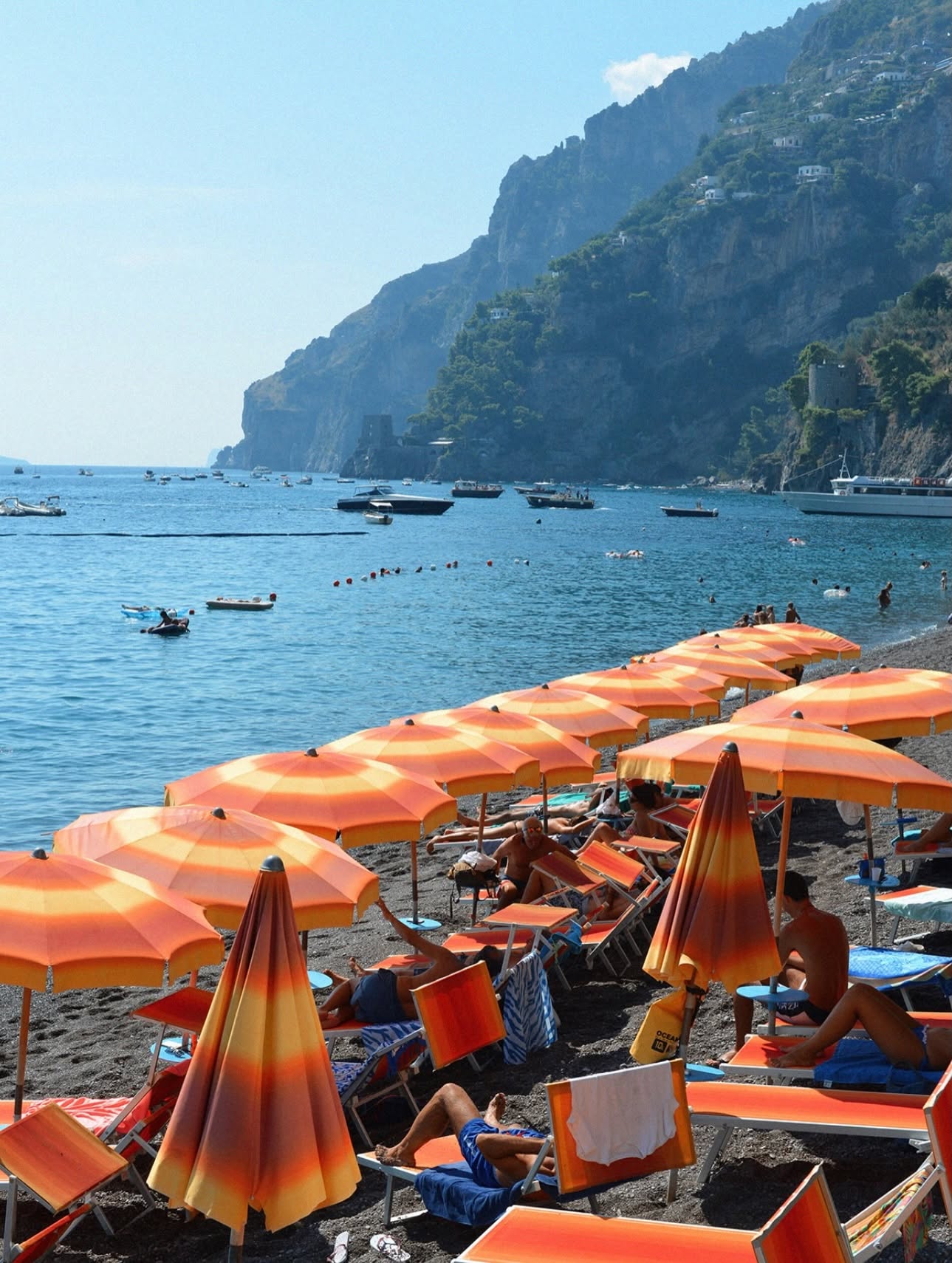
The main beach, and the reason most people first come to know this town’s shape. A long crescent of dark grey pebbles at the foot of the old town, lined with the orange and yellow umbrellas of the established beach clubs. In the morning it is quiet enough to swim without company. By midday it is loud, crowded, and entirely alive, boats arriving and departing, children in the shallows, the whole town’s energy compressed onto one strip of shore.
I wrote about a full day here already, if you want the longer version of what it feels like to spend a morning in that water.
Fornillo Beach
A ten-minute walk west along the Via dei Positanesi d’America, a coastal path that alone is worth the trip, takes you to Fornillo. Smaller, quieter, favoured by people who have already done Spiaggia Grande and want the same water without the same crowd. Two simple beach clubs, a scattering of umbrellas, and a much better chance of hearing the sea instead of everyone else’s conversation.
The Old Town and the Church
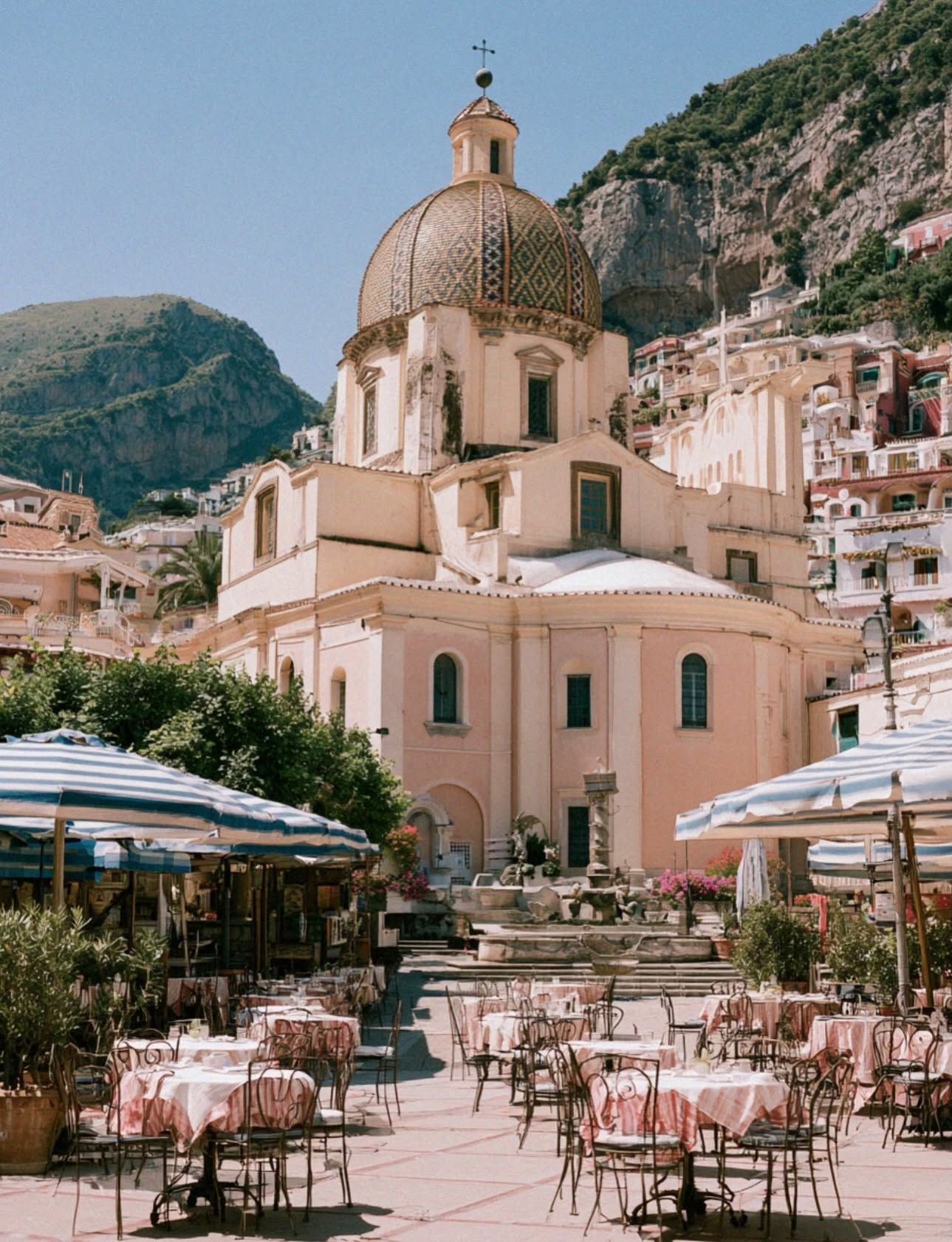
The Chiesa di Santa Maria Assunta anchors the lower town, its majolica dome visible from nearly everywhere in Positano and from the water long before you arrive. The interior holds a Byzantine icon of a black Madonna that, according to local legend, was being carried on a ship that stalled off the coast until sailors heard a voice instructing them to unload the painting in Positano. Whether one believes the legend or not, the church is worth the ten minutes.
The streets around it, narrow and largely pedestrian, hold the ceramics shops, the linen boutiques, and the sandal ateliers that make browsing Positano a genuine pleasure rather than an obligation. Most of the ceramics originate in Vietri sul Mare, further along the coast, but are sold here in the same cobalt and yellow and green patterns that decorate every staircase and doorway in town.
Via dei Mulini
The main shopping street running up from the beach, steep and stepped, lined with the shops selling the sandals, the linen, and the lemon everything that Positano has made into a small industry. Walk it slowly. It is not a street built for hurrying.
Fashion, Sandals, and the Positano Look
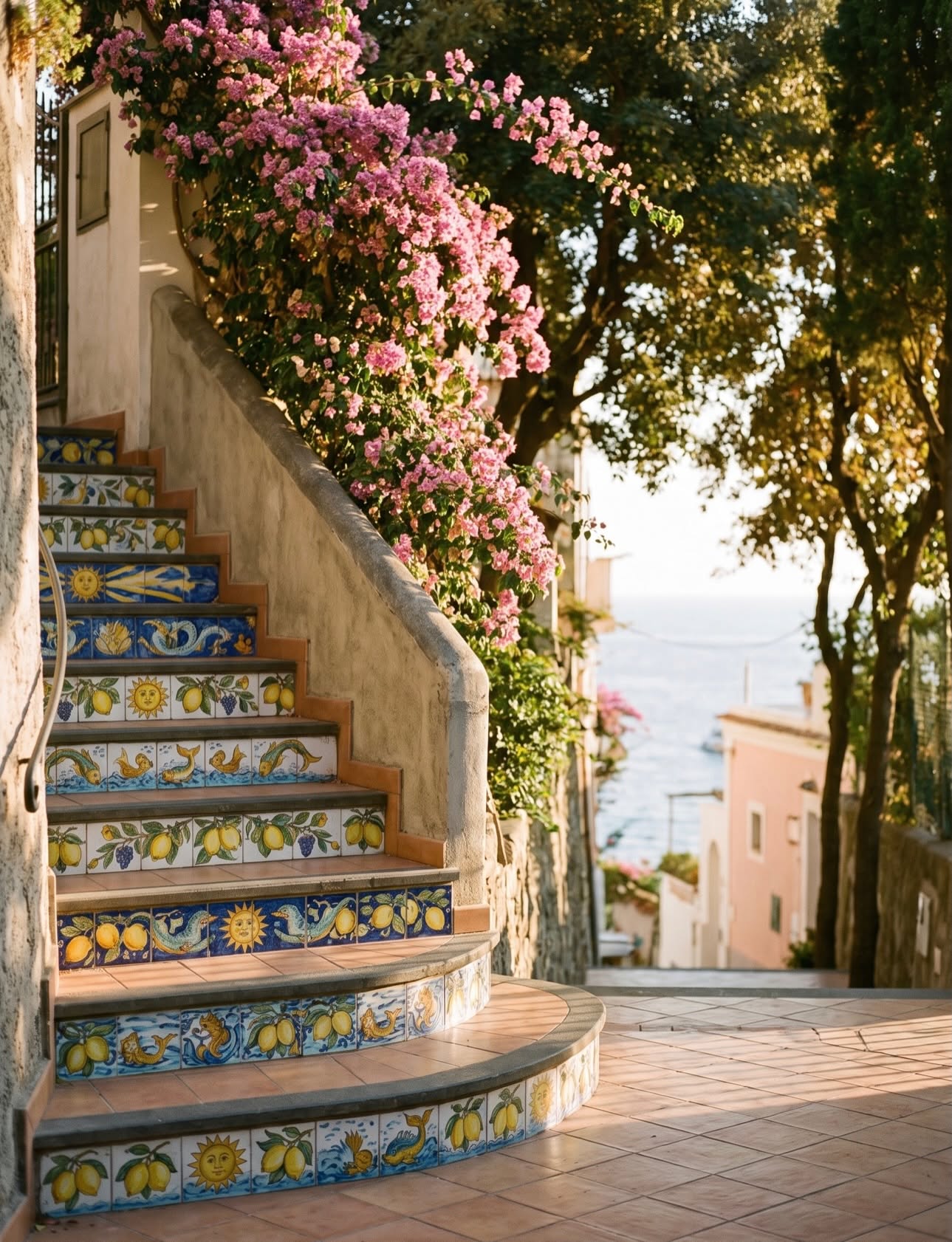
Positano did not simply become fashionable after the war. It manufactured a fashion of its own, and the town has never quite stopped.
In the 1950s and 60s, as the coast filled with an international crowd escaping Rome’s summer heat, a handful of local dressmakers began producing loose cotton dresses, crocheted bikinis, and patchwork resortwear suited to a life spent moving between the beach and the terrace and back again. It became known simply as moda mare, sea fashion, and eventually as “Positano fashion,” a term the town still uses without irony. The look was never about restriction. Cotton, not corsetry. Sandals, not heels. Clothes built for a place with no flat ground and no interest in pretending otherwise.
The sandals are their own institution. Amalfi Coast sandalari have been custom fitting leather sandals since long before the tourists arrived, but the trade found its modern fame after the war, when Jackie Kennedy, Brigitte Bardot, Sophia Loren, and Clark Gable were photographed in coast-made leather, each pair cut and stitched to the wearer’s foot in under an hour. Nanà Positano, on the walk up from Piazza dei Mulini, has been doing this since 1960, when a man named Carmine Ruocco began making sandals by hand and passed the craft to his son and now his grandson. A few doors from it, Antica Positano has been run by the same family since 1950, three generations deep into the same trade. You choose the leather, the strap, the sole, and someone measures your foot and builds the sandal around it while you wait, or return for it later that afternoon.
It is worth having a pair made here rather than bought anywhere else. The sandal is a small thing to carry home, and it carries the town with it.
Nature and Landscape
The Path of the Gods
The Sentiero degli Dei runs along the ridge above the coast between Bomerano and Nocelle, delivering views of the entire Amalfi coastline that no road can match. The most common approach starts in Bomerano and descends toward Nocelle and eventually Positano, mostly downhill, manageable for anyone with reasonable fitness and proper shoes. Allow two to three hours for the walk itself, longer if you stop for the views as often as you should.
From Nocelle, roughly seventeen hundred steps descend toward Positano and, if you choose the detour, toward Arienzo Beach below. It is a serious descent. Bring water and do not underestimate it because it is going downhill.
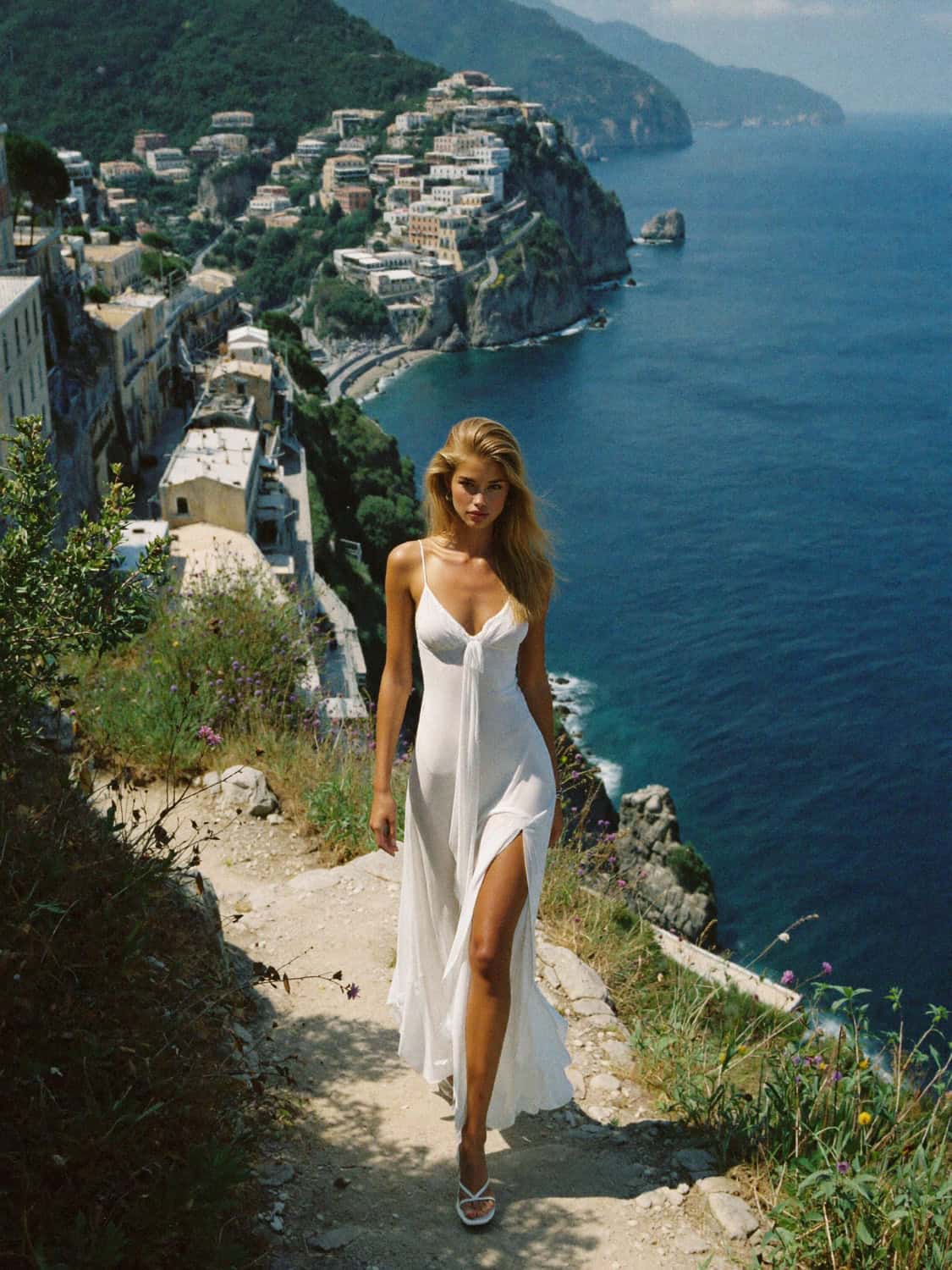
Nocelle itself is technically part of Positano, though it feels like a separate country. A hamlet on the slopes of Monte Peruso, reached only by that long stairway or by a single narrow road, with a small church, a smaller square, a café where the walk usually ends, and a view of the coast that the town below cannot offer, because the town below is what you are looking at. Stop here. Almost no one does, which is precisely the point.
Arienzo Beach
Reached by stairs from the upper town or by boat from the marina, Arienzo is smaller and less commercial than Spiaggia Grande, a private cove feeling despite being entirely public. The three hundred or so steps down are the price of admission, and most people find it worth paying.
The Sea Itself
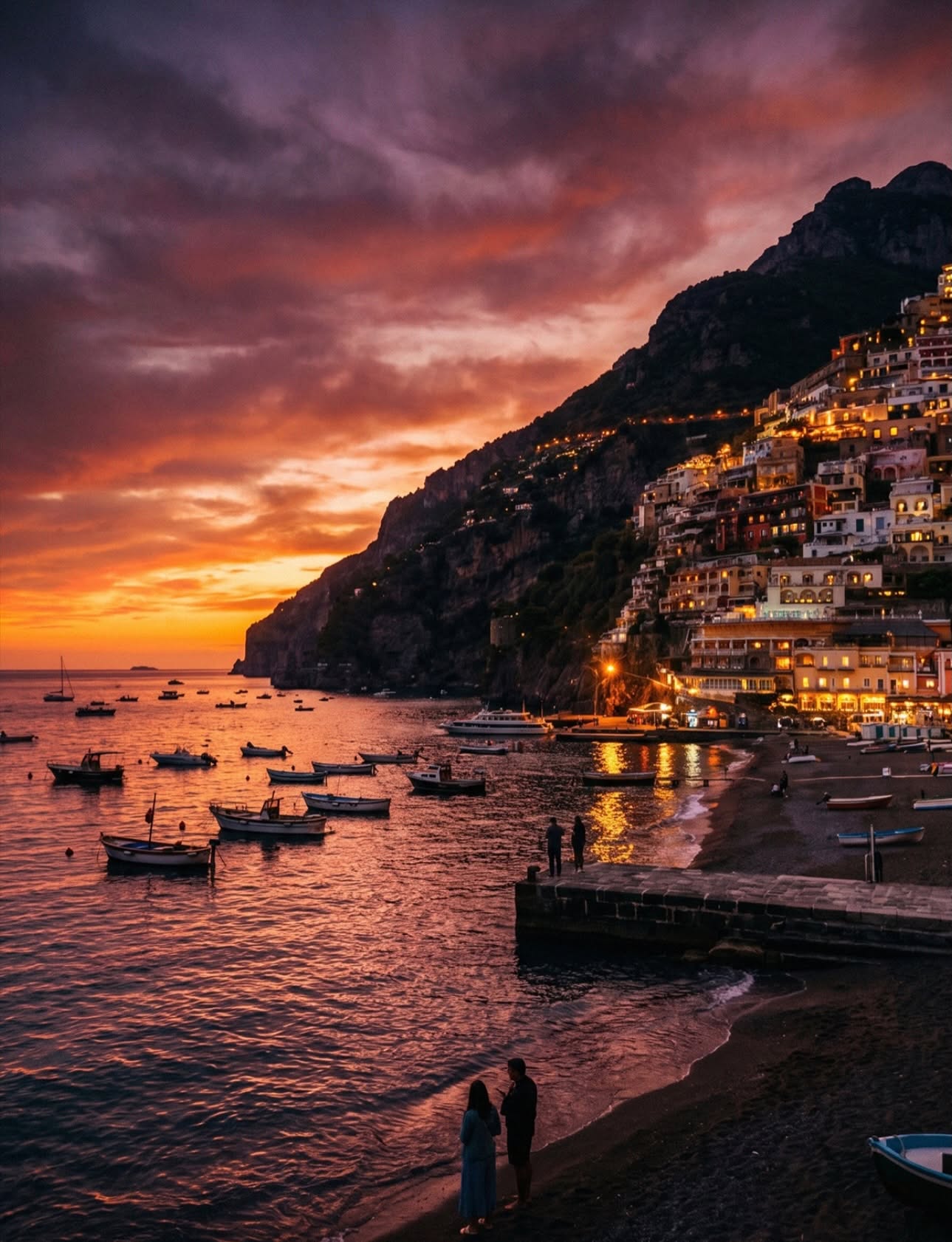
Positano is a town best understood partly from the water. Boat trips run from the main marina to Capri, to the Grotta dello Smeraldo, and along the coast to the smaller beaches and coves that are inaccessible by road. A morning on the water, away from the crowded pavements, changes how the town looks when you return to it.
Boat Trips and the Sea Caves
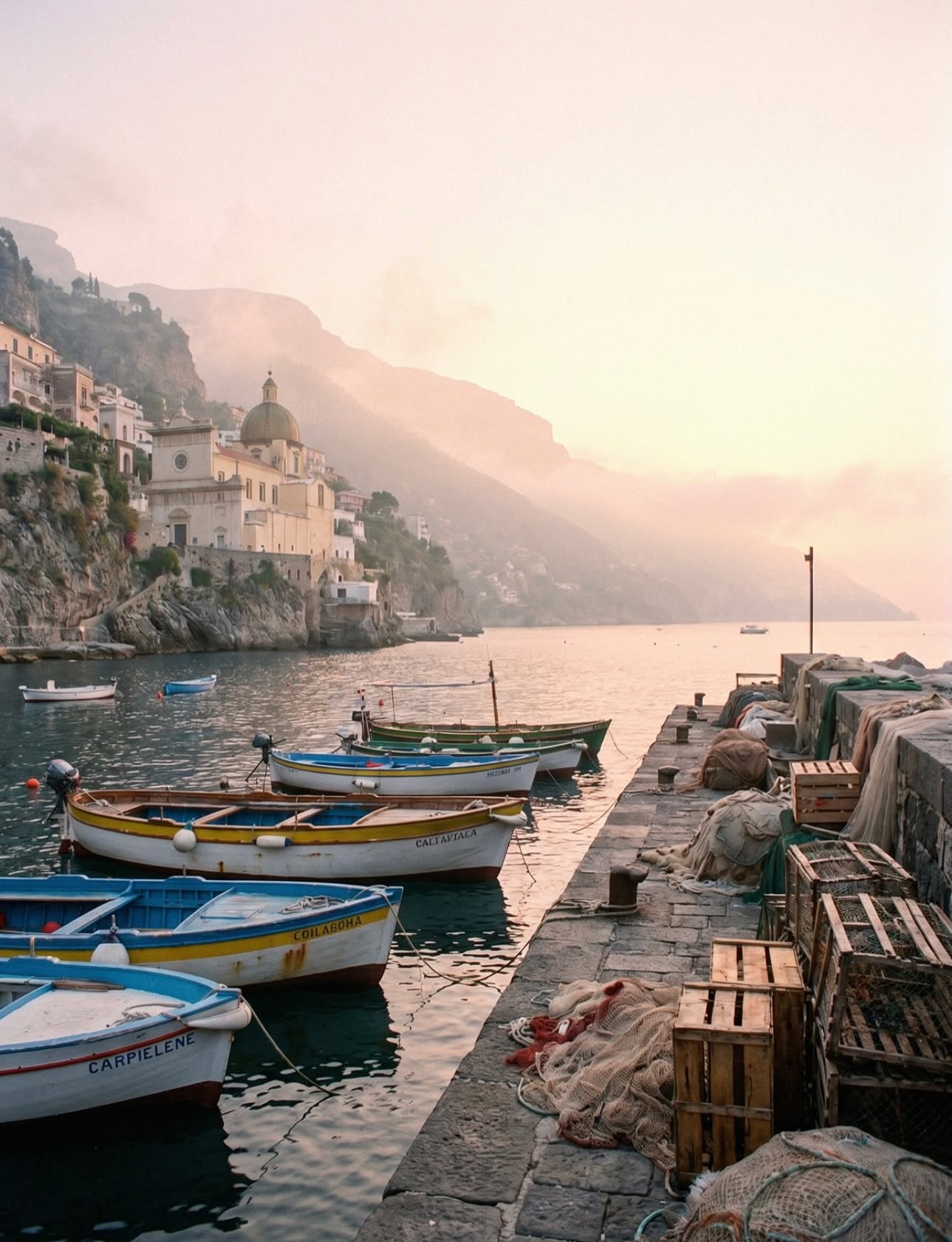
Everybody arrives from above and walks down, so the view they carry away is the one from the top of the ravine. The town itself is a vertical stack of houses in a cleft, and the only place you can see it whole is a few hundred metres offshore.
Half an hour after leaving Spiaggia Grande, if you turn round, Positano is doing the thing it does in every photograph, and you are the only person looking at it that way.
I have put the operators I would actually book, what each costs and which ones get into the caves, in my guide to boat tours from Positano.
Food and the Table
La Sponda, at Le Sirenuse, is Positano’s Michelin star, a candlelit terrace strung with ivy where the coast becomes background to a menu built on Campanian ingredients handled with real precision. Reserve well ahead. Dress the part.
Chez Black, on the beach since 1949, is the opposite register entirely. Peppino opened it a few years after the war, converting old boat storage rooms above the sand into a dining room. His son Salvatore took it over toward the end of the 1950s, and a visiting foreigner, taken with his dark complexion and the confidence he carried it with, started calling him Black. The name stuck to the man and then to the restaurant, and three generations later the walls are still lined with photographs of the decades of people who ate there before you did. It remains a family-run institution ten metres from the water, serving the kind of honest, unfussy seafood that made this coast’s reputation before Michelin stars had anything to do with it.
Da Adolfo, reachable only by the free boat that leaves the main pier through the morning, sits at Laurito beach and serves the mozzarella and lemon pasta people plan entire days around. Look for the boat with the small red fish flag. There is no other way in.
Buca di Bacco, at the edge of the beach since 1916, is where I have eaten more times than I can count, fresh pasta and grilled fish and a view that has not needed updating in over a century.
The gelato, made from sfusato amalfitano, the long pale lemons grown on the terraces above town, is worth seeking out on its own terms. Eat it on the steps. Everyone does.
On Screen and in Story
Positano has spent decades being borrowed by other people’s stories.
Steinbeck’s 1953 essay did the original work, turning a fishing village into a literary destination almost overnight. Since then the town has appeared, often uncredited by name, as the backdrop for the particular fantasy of Italy that films reach for when they want the coast without the crowds. Only You, the 1994 film with Marisa Tomei and Robert Downey Jr., used Positano’s stairs and terraces for its final act, and the town plays the part it always plays on screen: the place where the story resolves itself, because how could it not, with a view like that behind the two people finally saying what they mean.
There is a version of Positano in the popular imagination that is entirely constructed from other people’s cameras, other people’s honeymoons, other people’s Instagram grids. The town has learned to perform that version efficiently. It is worth remembering, walking the quieter streets above the shopping, that the fishing village underneath it is still there, still going about its own business slightly out of frame.
Photography
Positano photographs itself, which is both a gift and a trap. The view from the water, the town rising in tiers, is the shot everyone arrives already knowing they want, and it is a good shot precisely because the town really does look like that.
The better photographs come from resisting the obvious angle. The alley that frames the sea instead of the town. The ceramic tile catching afternoon light instead of the whole dome. The empty beach at eight in the morning instead of the crowded one at noon. The town gives you the postcard immediately. The photograph worth keeping usually asks you to wait another hour, or turn around, or notice something smaller.
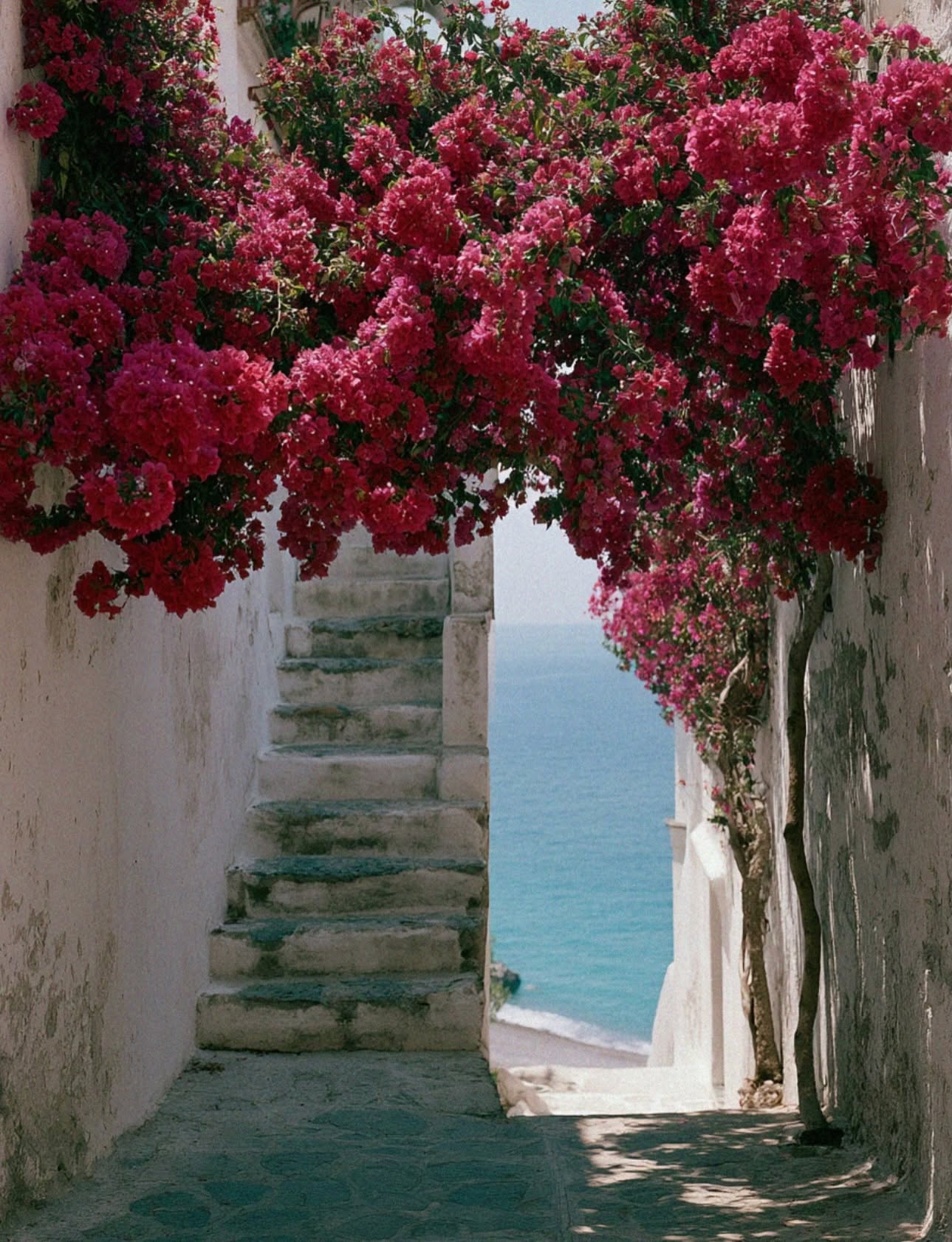
Morning and early evening carry the best light, as they do everywhere on this coast, but Positano’s particular gift is the way its own colour does half the composition’s work before you have decided on anything else.
What to Wear
Linen, always, in a town this warm and this vertical. Something that moves, because you will be walking uphill more than you expect to.
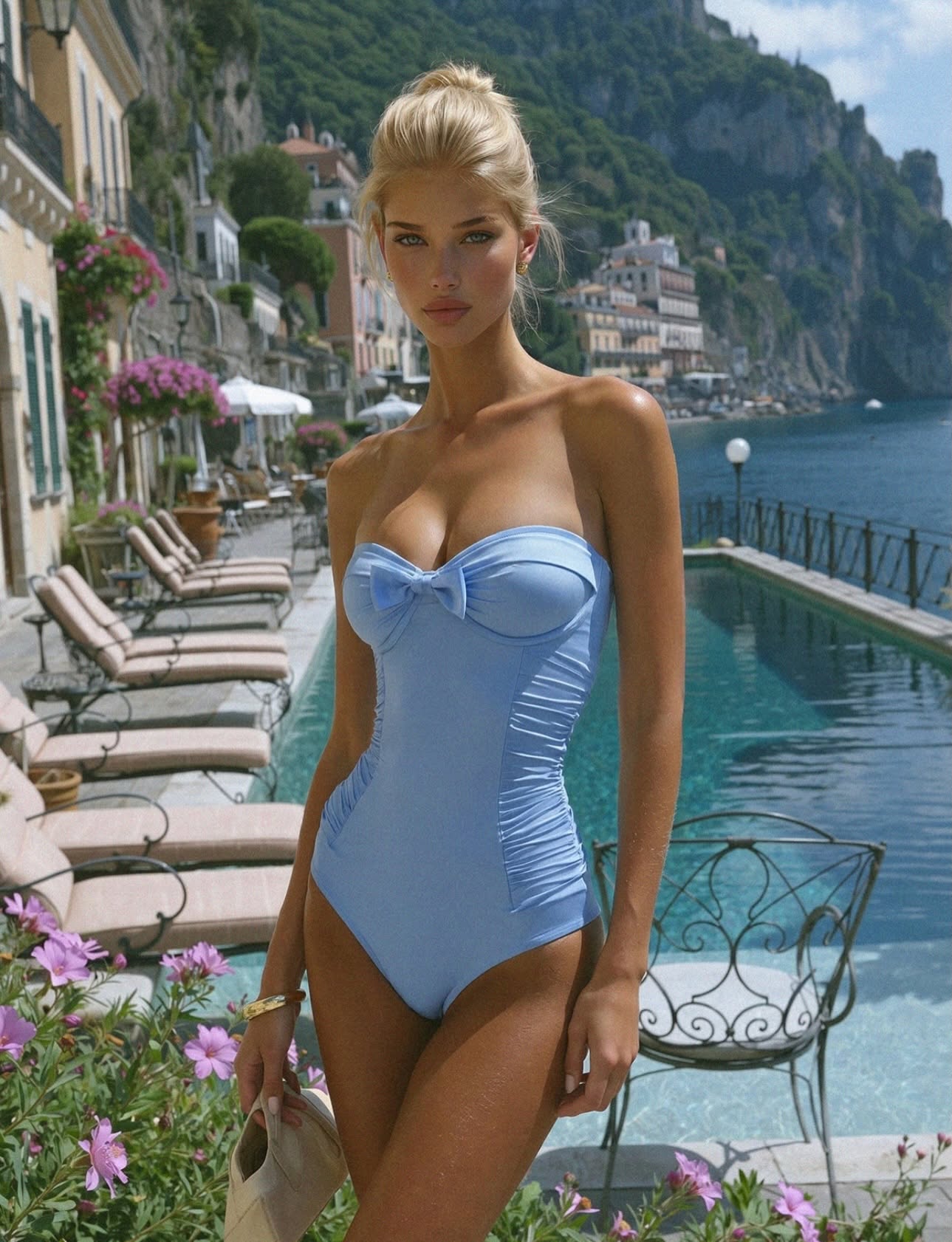
For the beach clubs, resort wear that survives a transition from sand to lunch without a full change of clothes. A cover-up worth being seen in matters here more than almost anywhere else on the coast.
For dinner at La Sponda or anywhere with a Michelin star attached, the town’s version of elegant: not stiff, not overdressed, but considered. A linen dress. Gold jewellery kept minimal. Sandals that can survive the walk there and the walk back, because everything in Positano involves a walk.
Bring flat shoes with real grip. The stairs are not decorative.
Where to Stay
Le Sirenuse
The Sersale family opened their summer house to guests in 1951 and, without quite meaning to, created one of the defining hotels of the Mediterranean. It remains the address that defines Positano for most people who can afford to choose. Centrally located, a few minutes from the beach, with La Sponda on site and a spa designed by Gae Aulenti built around citrus-scented aromatherapy and a traditional hammam. It does not feel like an institution despite being one. It feels, somehow, like a very well-kept private house that happens to let guests stay, which is more or less exactly what it was before it was anything else.
Il San Pietro
Just outside the town centre, requiring a short drive or the hotel shuttle, Il San Pietro trades centrality for what may be the single best view of any hotel on this coast. An elevator carries guests down the cliff face to a private beach on the rocks, which solves, at considerable expense, the one genuine inconvenience of staying in Positano. For anyone who wants the drama of the Amalfi Coast delivered directly to their room without the daily negotiation with the town’s stairs, this is the address.
Palazzo Murat
A quieter, more intimate option in a converted eighteenth-century palazzo just off the main square, gardens included, walking distance to everything, at a register slightly gentler than the coast’s grandest names. The building predates tourism entirely, which shows in the thickness of the walls and the particular cool of the rooms even in August.
Practical Notes
How long to stay: Two nights is the honest minimum to see the town properly rather than skim it. Three or four allows time for the water, the walk, and at least one day with no plan at all, which Positano rewards more than most places.
What the town lacks: Flat ground, mostly. There is no easy stroll here, only stairs in one direction or another. Cars are limited to the single main road, and driving into the centre yourself is rarely worth the trouble when taxis, buses, and boats do the job better.
Entrance fees and costs: The beach clubs on Spiaggia Grande charge for a lounger and umbrella, typically thirty to fifty euros a day in high season, though a public strip of free beach exists at either end for anyone unwilling to pay for sand. The church is free. The boat to Da Adolfo is free with lunch.
Access: The stairs that define Positano make it a genuinely difficult town for anyone with mobility limitations. The main road along the beach is manageable. Nearly everything above it is not.
Money: Positano is expensive by Amalfi Coast standards, and the Amalfi Coast is expensive by Italian standards. It is possible to eat and stay here without spending extravagantly, but it takes more effort to find than it does in Amalfi town or Salerno.
Suggested Itineraries
One day: Arrive by ferry if the season allows it, since the approach by water is worth more than the hour it saves you. Walk the old town and the church. Swim at Spiaggia Grande in the late morning before the crowds peak. Lunch at Chez Black. Climb slowly back through the shops on Via dei Mulini and have a sandal fitted while you are there, even if you cannot collect it until later in the day. Watch the evening light from anywhere above the water.
Three days: Add the boat to Da Adolfo for lunch on day two, an afternoon at Fornillo away from the main beach, and the walk along Via dei Positanesi d’America at golden hour. Give one morning to the ceramics and sandal shops properly, without the pressure of a beach day competing for the hours. Reserve dinner at La Sponda for the final night.
Five days: Add the Path of the Gods, ideally in the cooler hours of the morning, with the detour into Nocelle before the final descent. Give a full day to the water, Capri or the Grotta dello Smeraldo or simply along the coast with no destination beyond the coves that have no road access. Positano rewards the extra days by finally slowing down around you, and by the fourth day you will have stopped counting the steps.
More images from Positano








Your Positano Guides
- The Perfect Positano Itinerary: 2 to 4 Days
- How to Get to Positano: Ferries, Buses and Transfers
- The Best Beaches in Positano (and How to Reach Them)
- The Best Restaurants in Positano: Where to Eat
- Where to Stay in Positano: The Best Areas and Hotels
- The Best Photo Spots in Positano
- What to Wear in Positano: A Practical Style Guide
- The Best Positano Boat Tours: Leaving From the Beach You Are Staying On
Positano Travel Diaries
Frequently Asked Questions
How many days do you need in Positano?
Two nights is the honest minimum to see the town rather than skim it. Three or four is better, leaving time for the water, the Path of the Gods, and at least one day with no plan at all.
What is the best time to visit Positano?
Late May, June, and September are ideal, with warm sea, generous light, and thinner crowds than the July and August peak. Winter is quiet and much of the town closes.
Is Positano expensive?
Yes, by both Amalfi Coast and Italian standards. Beach club loungers run thirty to fifty euros a day in high season, though free public strips exist at either end of Spiaggia Grande, the church is free, and the boat to Da Adolfo is free with lunch.
Do you need a car in Positano?
No, and it is better without one. The town is a network of stairs best walked, and taxis, the SITA bus, and ferries connect you to the rest of the coast. Driving into the centre is rarely worth the trouble.
Where should you stay in Positano?
Le Sirenuse and Il San Pietro are the defining luxury addresses, and Palazzo Murat a quieter option just off the main square. Staying in the lower town keeps you close to the beach and the restaurants, at the cost of more stairs.
How do you get to Positano?
Most people fly into Naples, then take a transfer, or the train to Sorrento followed by the SITA bus, or, best of all, the ferry from May through October. Arriving by sea is the way the town was meant to be seen.
A Last Word
The town does not change much, which is precisely its appeal. The houses are still stacked the way they have always been stacked. The steps are still steep. The light still does, in the evening, exactly what it did the century before Steinbeck arrived to write it down.
What changes is you, slightly, by the time you leave. Something about a town built entirely on a vertical incline, with no flat ground to retreat to, forces a kind of attention that flatter places do not require. You cannot be careless in Positano. You have to watch your footing, and somewhere in the process of watching your footing you end up watching everything else more closely too.
Somewhere, you are reading this and wondering whether it is worth the climb.
It is.
V.
You can read my complete guide to the Amalfi Coast here.