A journal entry by Victoria Van Der Berg
The pebbles are dark here. That is the first thing.
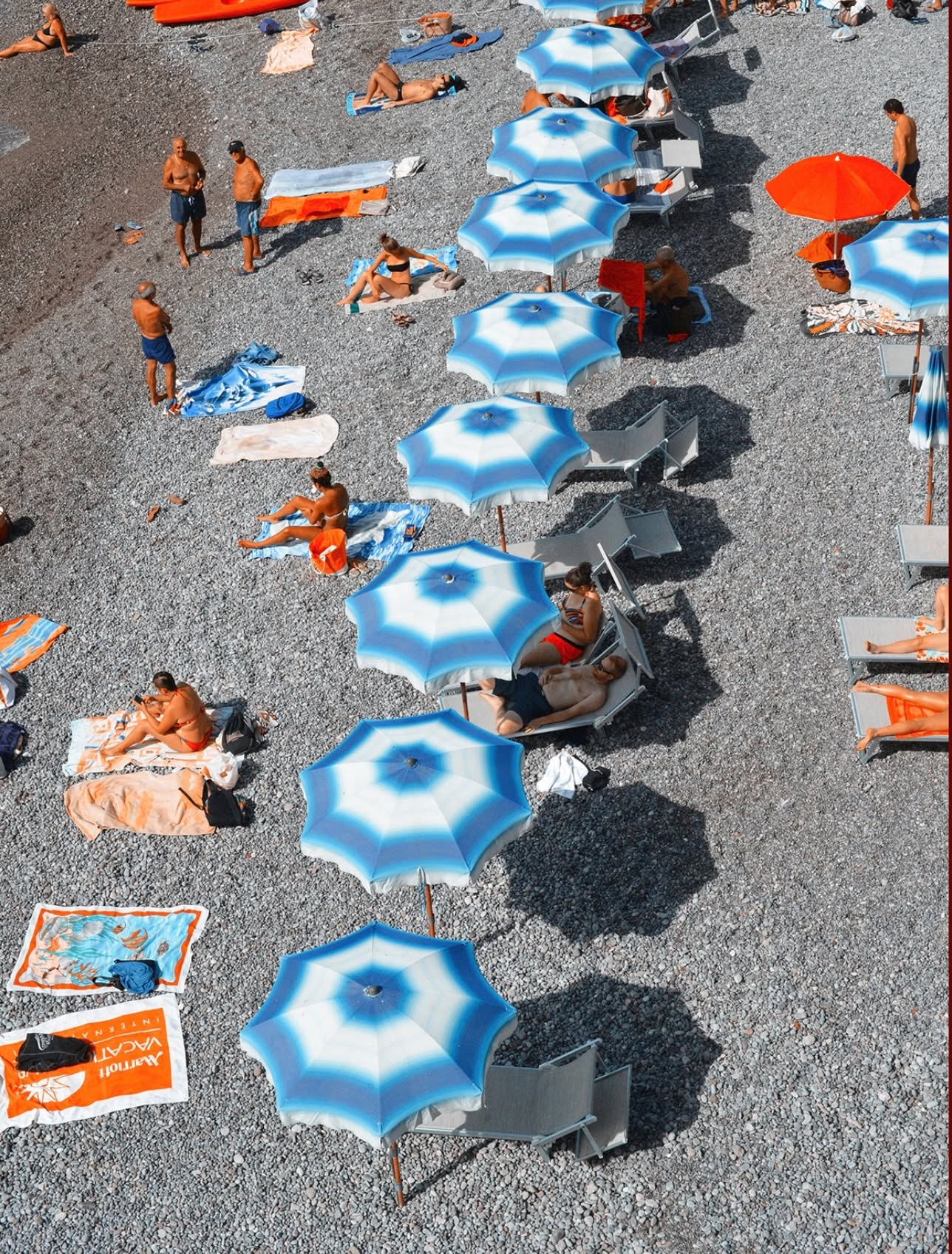
On the other side of the headland, they are pale grey, almost white, the kind that photograph well and end up on postcards. But Atrani’s beach is darker, closer to charcoal, and when the water pulls back between waves, it makes a sound like glass being sorted. I sat with that sound for a long time before I did anything else.
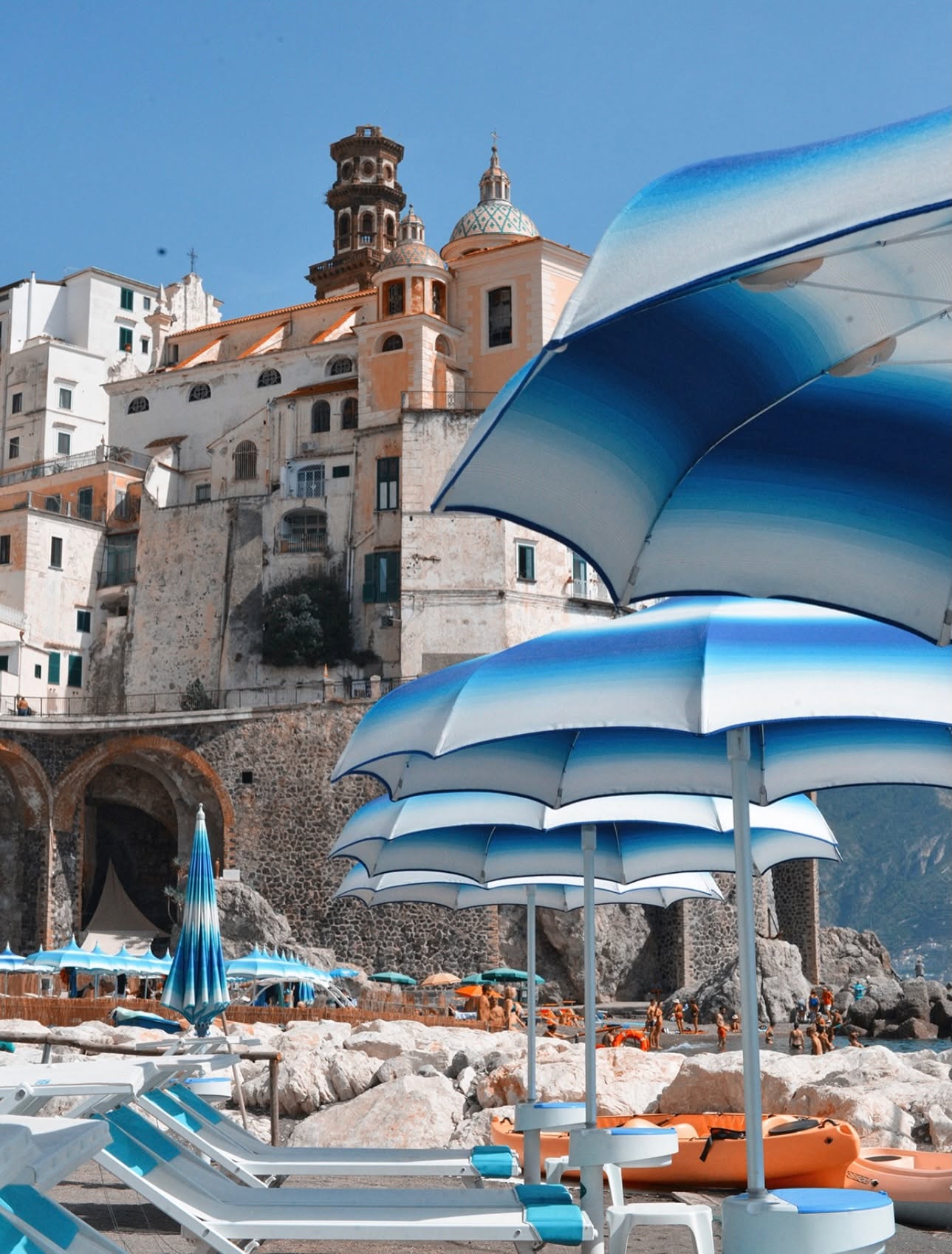
I had walked from Amalfi. Twenty minutes, maybe less. I walked through Amalfi and then found a hidden tunnel that delivers you here. Once in Atrani, you arrive at a square so small the church fills most of it, and beyond the church, down through a passageway that smells of stone and shade, the beach. It surprised me. That is not something I expected from a place this close to somewhere so famous.
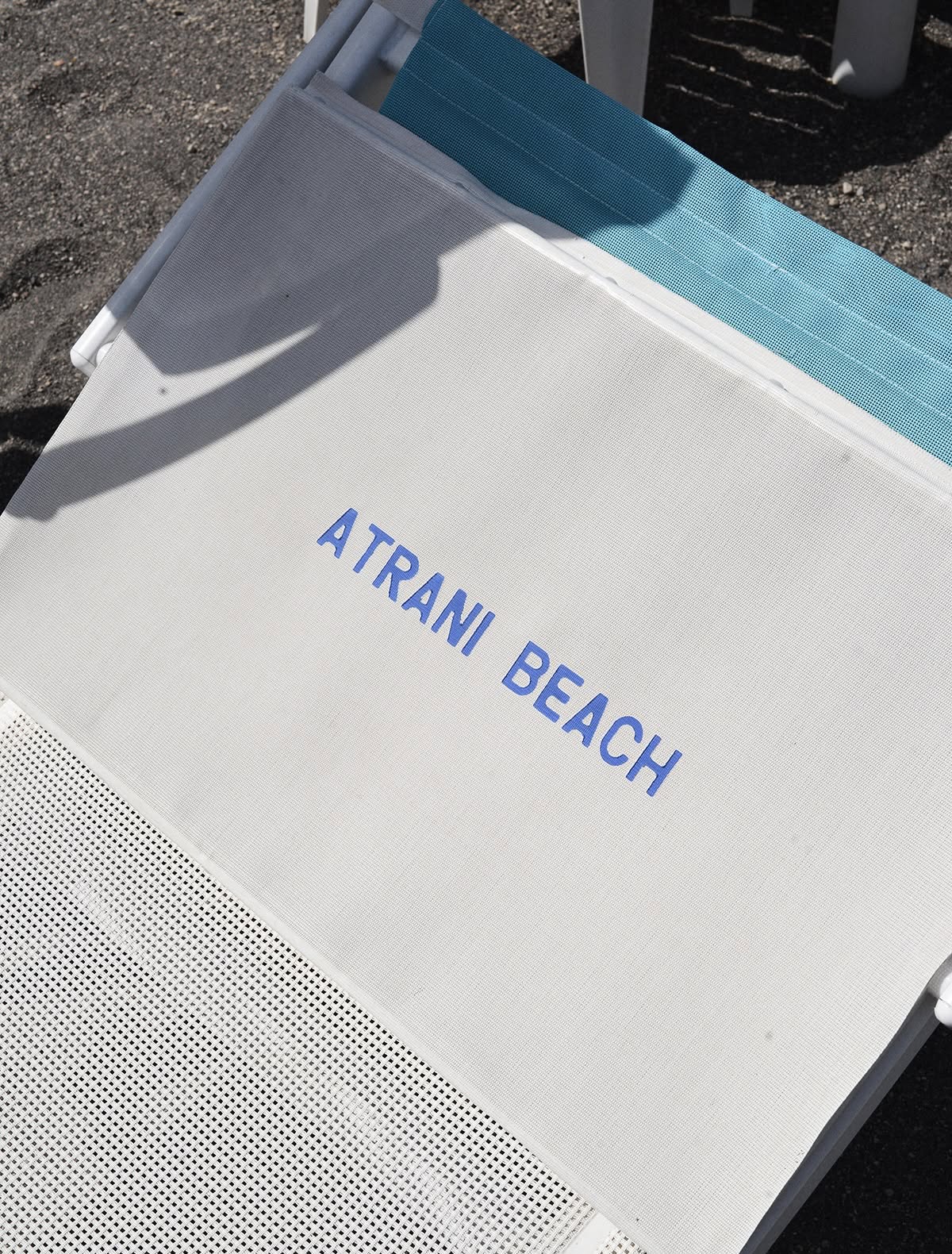
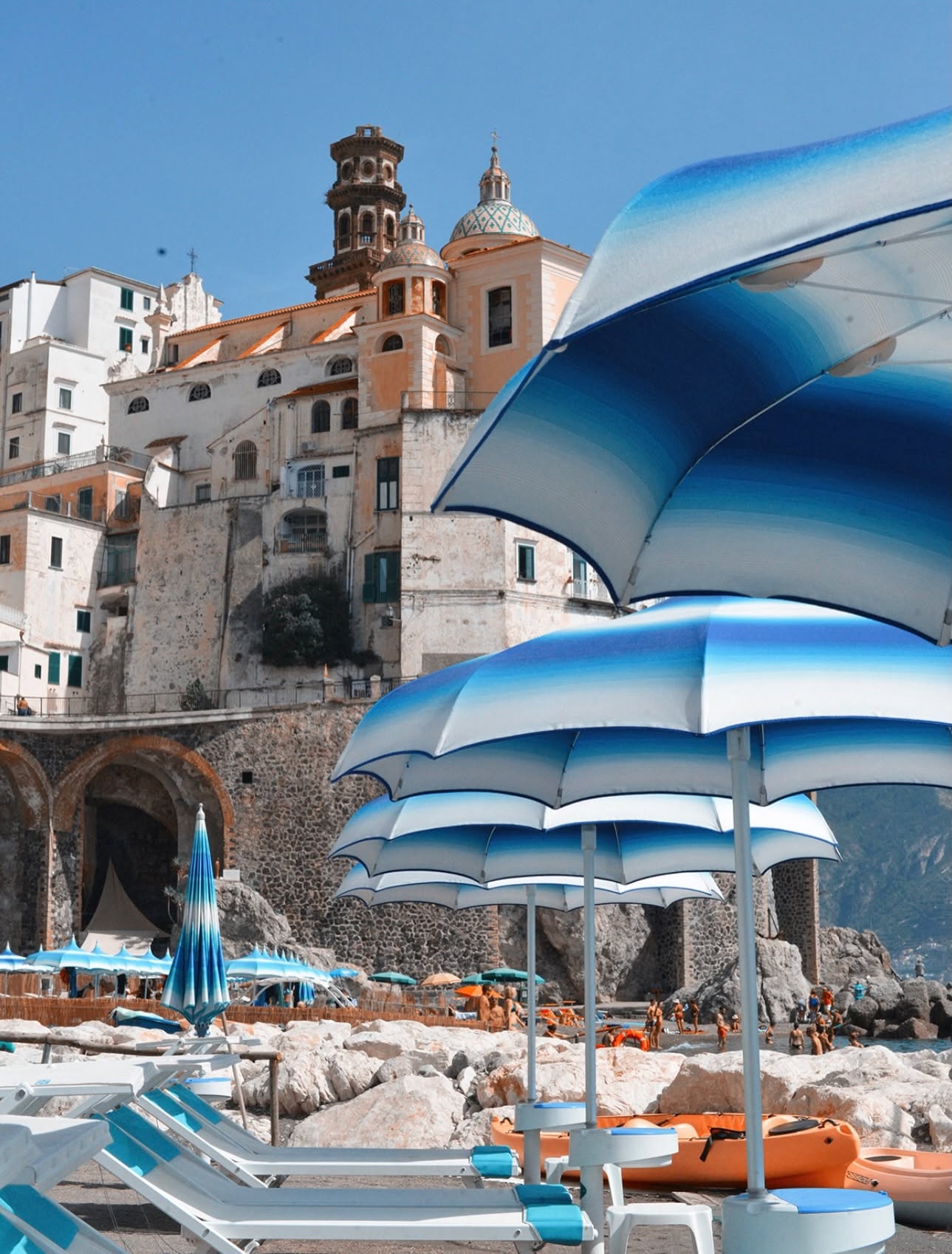
The beach club is called Atrani Beach. The name is stenciled on the loungers in blue letters, clean and without flourish, as though stating a fact rather than making a claim. I rented one of these loungers and lay back and let the sun organize itself around me. The umbrellas are blue and white, the striped kind that appear in every Italian beach photograph from every decade since the fifties. There is a reason for this. They work.
The water in front of me was the color of a glass bottle held up to light. Not turquoise, not teal. Something more particular than that. Something that resists being named precisely.
I ordered nothing for a long time.
At some point, I walked to the outdoor shower at the edge of the beach club. The sign said doccia freda on the left and doccia calda on the right. Cold shower. Hot shower. I chose cold, the way you are supposed to after swimming, and stood under it and let my hair go heavy with water. Above me, bamboo. Above the bamboo, the cliff face. Above the cliff, the town folded into the rock, window by window, balcony by balcony, laundry on the lines.

Something is clarifying about cold water in the middle of a hot afternoon. Not revelatory. Simply clarifying. The noise inside the head becomes quieter. The afternoon becomes what it actually is.
I ate lunch at the bar. The bar is the kind with a wooden counter and bottles lined up without particular arrangement, and a young man who does not perform friendliness but is, nonetheless, friendly. I ate something cold and watched the beach from the shade of the thatched roof.

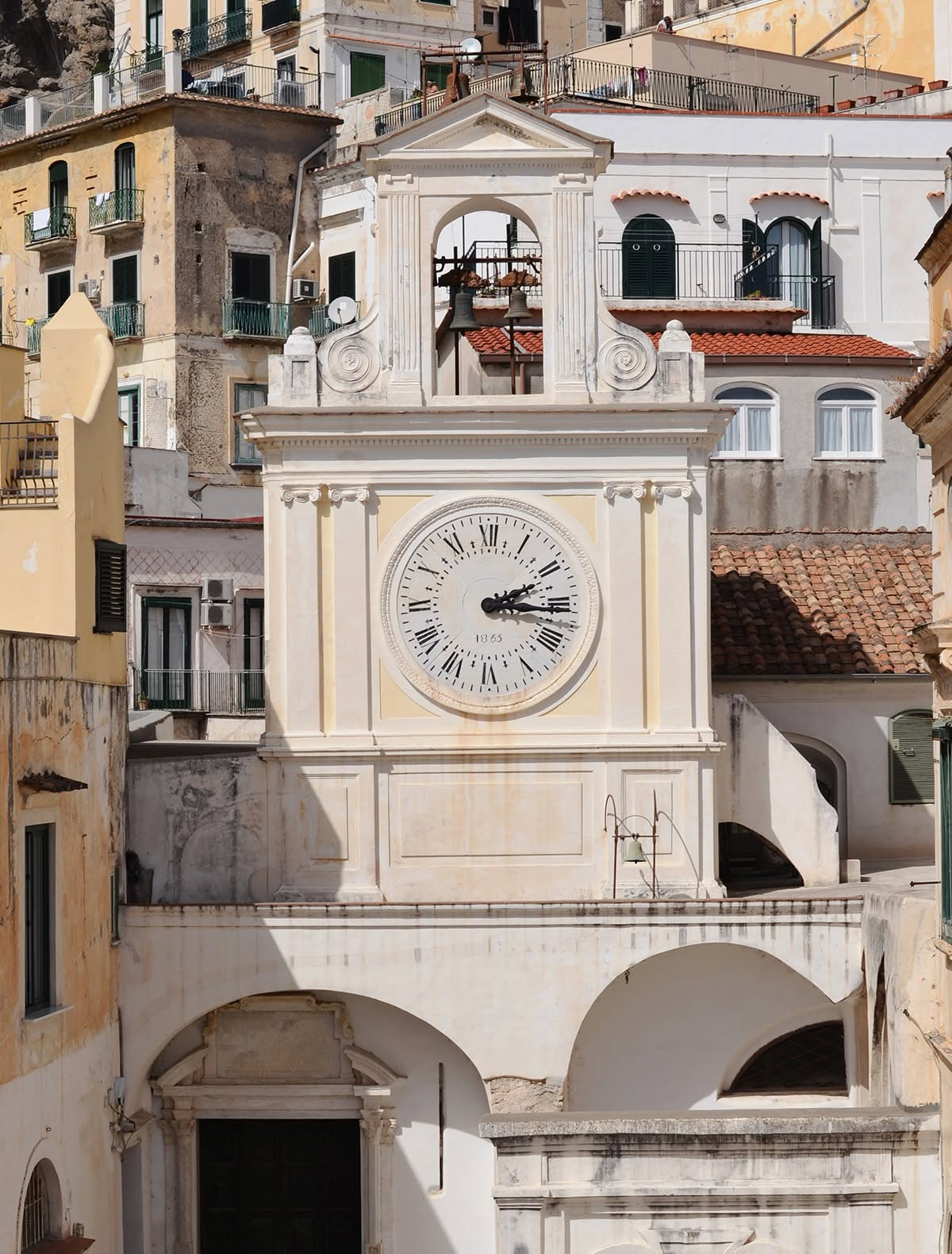
From that angle, Atrani resolved into a specific geometry. The stone arches of the old road along the waterline. The church above, the Collegiata di Santa Maria Maddalena, its baroque tower visible from almost everywhere on the beach, rising out of the town like something that predates the town. A clock set into the facade, Roman numerals, the year 1865 in smaller text below the hands. The bells sounded at two o’clock. I counted them.
I had not expected to be counting anything. I had expected the coast to be loud and beautiful and to move through it quickly. But Atrani slows you down in the way that small places do when they are not performing smallness for visitors. It simply is what it is and assumes you will adjust.
I adjusted.
In the afternoon, I moved back to the lounger and opened my notebook.

I write badly at the beach. The light is too direct, and the glare off the page is difficult; everything I write sounds like a draft. But I have learned that sometimes the worst conditions produce the most honest sentences, perhaps because you cannot overthink them.
I was writing about the difference between looking at a place and being in one, how most travel is the former. How Atrani was slowly becoming the latter.
The pebbles are uncomfortable. Your back knows it immediately. You shift, and shift again, and eventually accept that the discomfort is part of the arrangement.
I wrote that down too. The discomfort is part of the arrangement. Then I looked at the sentence and thought it was probably about something else.
The water was warm enough to stay in without convincing yourself to stay in. That is the particular gift of the Mediterranean in summer. There is no reluctance. You walk in and keep walking, and at some point, the water is around you, and there is nothing to do but swim.
I swam out further than I intended. The town pulled back into something smaller. The church tower and the arches and the umbrellas on the beach arranged themselves into a view. From out there, I could see the whole of it at once: the way the town climbs the cliff without apology, the way the beach occupies only a narrow margin between the water and the stone, the way the blue umbrellas held their row with the patience of things that have stood in the same spot for a very long time.
I floated on my back.
The sky above Atrani in the afternoon is not particularly dramatic. This is not Positano, where everything tilts toward spectacle. The sky here is simply sky. Blue with some haze near the horizon. The occasional bird.
I stayed out there well after everyone else had drifted in.
There is a version of the Amalfi Coast that exists entirely in photographs. It is saturated and vertical and full of bougainvillea, and it appears approximately four hundred times per day on screens around the world. It is not false. But it is not the whole truth either.
The whole truth includes the dark pebbles and the sound they make. The whole truth includes a clock that struck two while I was eating alone and reading the year 1865 below the hands. The whole truth includes a cold shower that lasted ninety seconds and clarified something I had not known was unclear.
You probably have a version of the coast in your mind already. You have probably seen the pictures. What I am trying to say is that Atrani was something the pictures had not prepared me for, which is to say it was real in the way that most photographed places are not, or not exactly, or not until you have been there and let your back feel the pebbles.
I walked back through the tunnel as the afternoon began to cool. The light inside the tunnel was orange from the far end. I moved toward it.
Behind me, the bells struck four.
V.
For a comprehensive guide to Atrani, check out my complete guide.

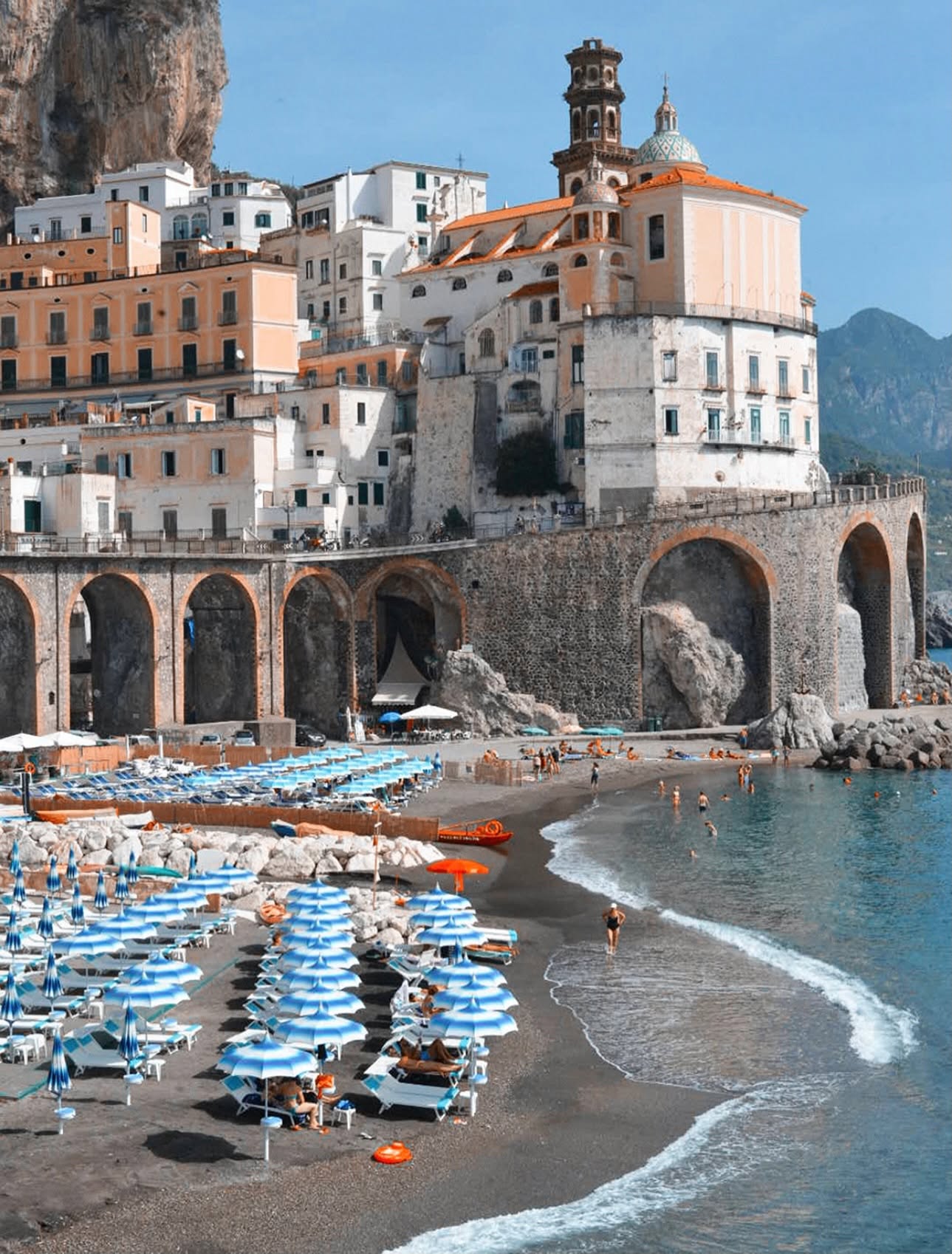


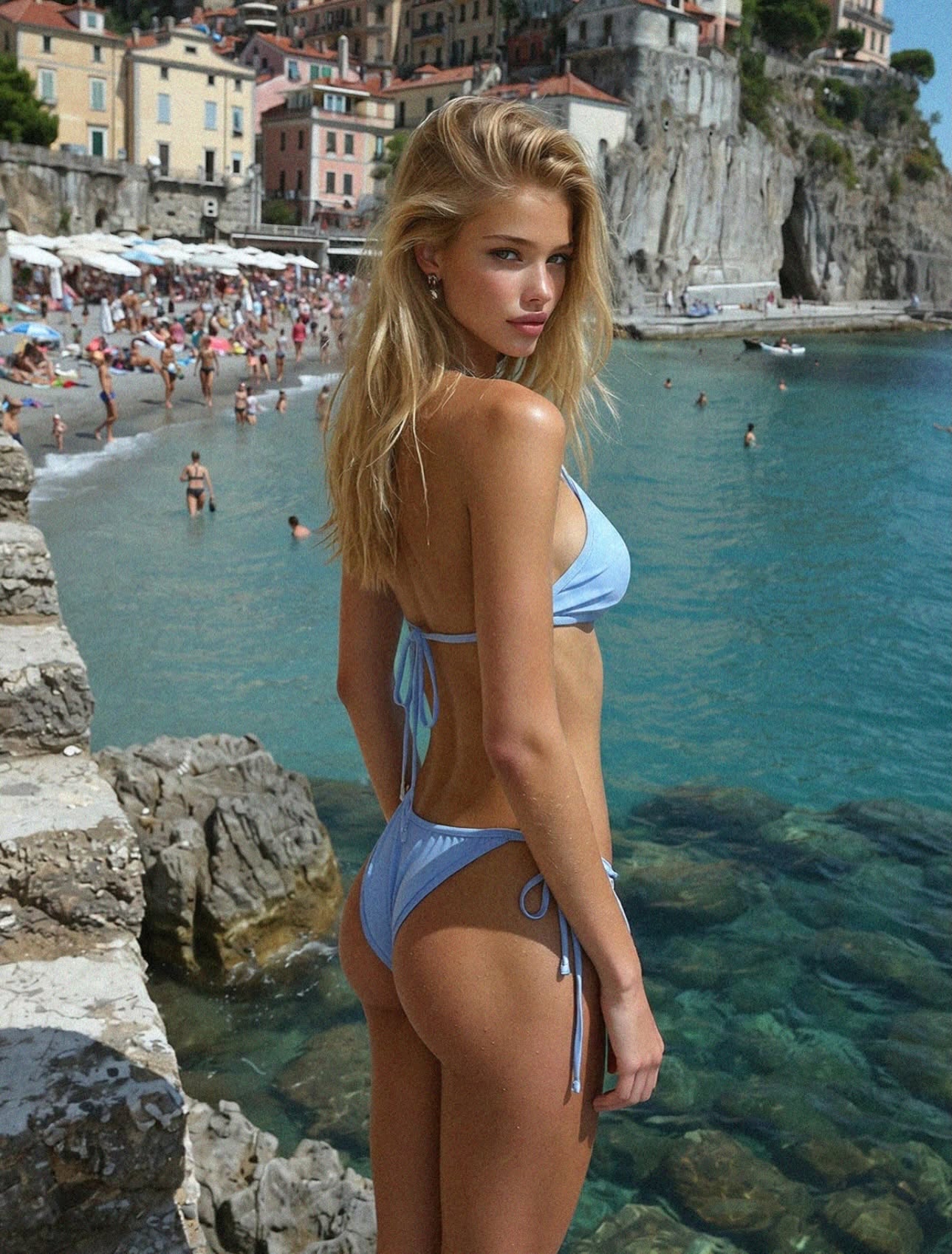





Atrani sits just east of Amalfi along the SS163. It shares the same coastline and a different quality of silence. If the coast is on your itinerary, it is worth an afternoon.