Conca dei Marini
What is a cliff Lido? It is an outdoor swimming area or beach club built directly into, below, or along a seaside cliff.
The road does not go all the way down. This is the first thing to understand about Lido Capo di Conca: to reach it you must agree to be transported via jeep shuttle along a road that descends in the way this coast’s roads always descend, which is steeply and with confidence and without offering much reassurance about what comes next. You can also walk from the town of Amalfi, which is how I got there, but I was staying at a hotel nearby. It was a very hot day, and I was exhausted. Then the jeep stops, and you walk, and the path opens out onto a promontory above the sea, and there is the watchtower that has been standing here since the sixteenth century, placed on this particular point of rock to watch for Saracen pirates approaching from the water. The pirates no longer come. The tower remains. Below it, in tiers cut into the cliff face, is the lido.
There is no sand at Lido Capo di Conca. The water is reached by ladder. This is not a detail to bury: it is the nature of the place, and the people who come here have generally decided that the sea itself is the point, and the means of reaching it is negotiable.
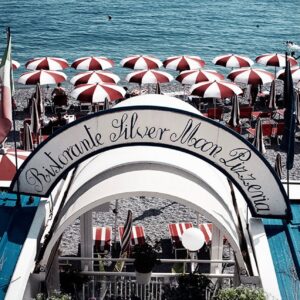
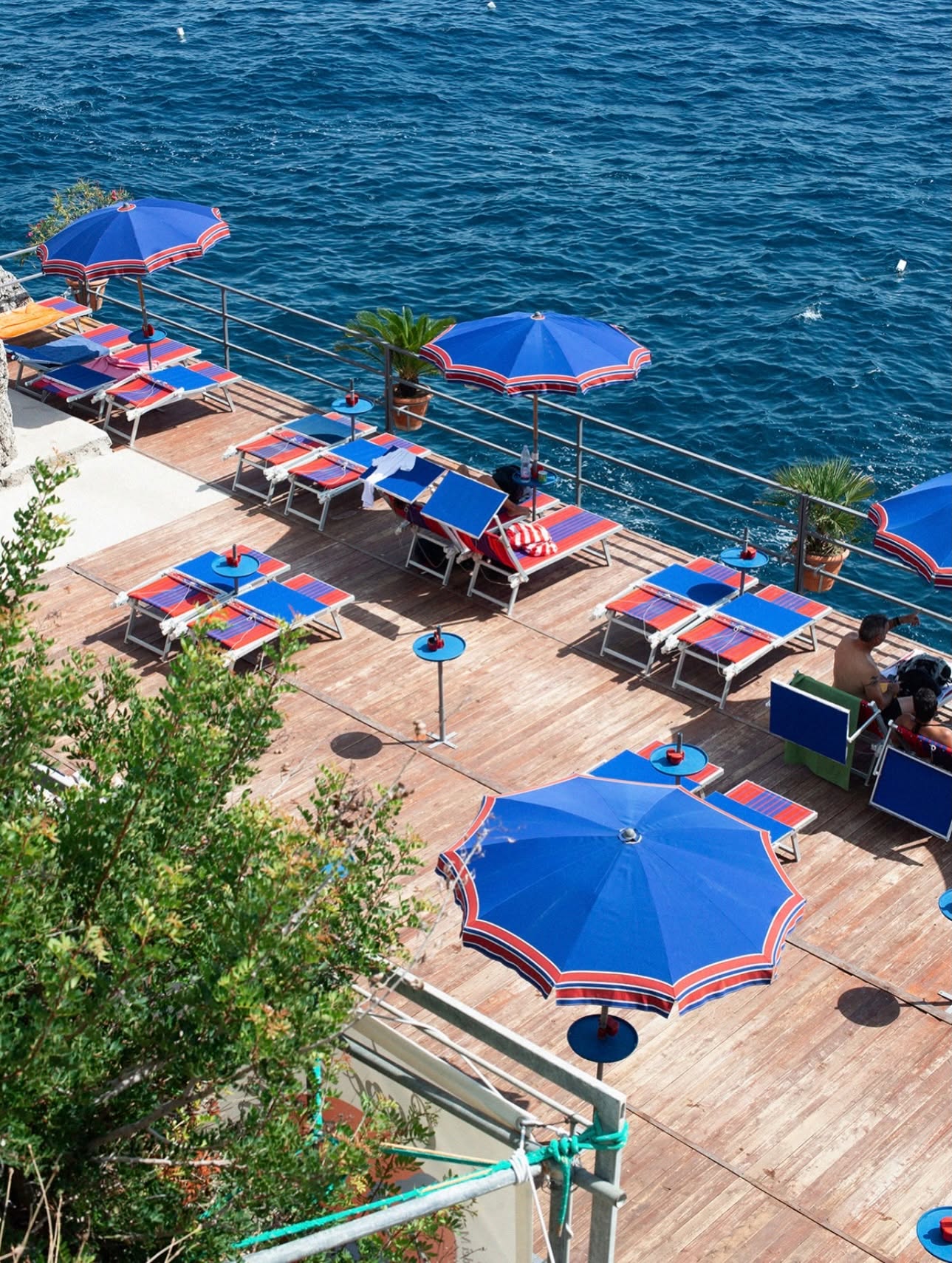
The blue umbrellas run in rows along the wooden sun decks, three and four levels of them descending toward the water, each level getting closer to the sea until the lowest platforms are near enough that a wave, on certain days, could reach you where you sit. The umbrellas here are not red and white like those in Silver Moon in Amalfi town. They are blue, with a stripe of red and white at the edge, and from above they read as a single plane of color pressed against the cliff and the Tyrrhenian. The effect is deliberate. Everything at Capo di Conca has been thought about, even the things that look accidental.

I arrived on a morning when the sea was calm. This is, from a practical standpoint, the correct kind of morning for a lido built into the cliffs, because a rough sea at a place like this recalibrates the entire experience in ways that can become inconvenient. The shuttle left me at the path, and I descended to the first terrace and took a lounger near the railing and ordered a coffee from the snack bar and looked at the water below and understood why people return to this particular promontory every summer as though it were an appointment they had made some time ago and intended to keep.
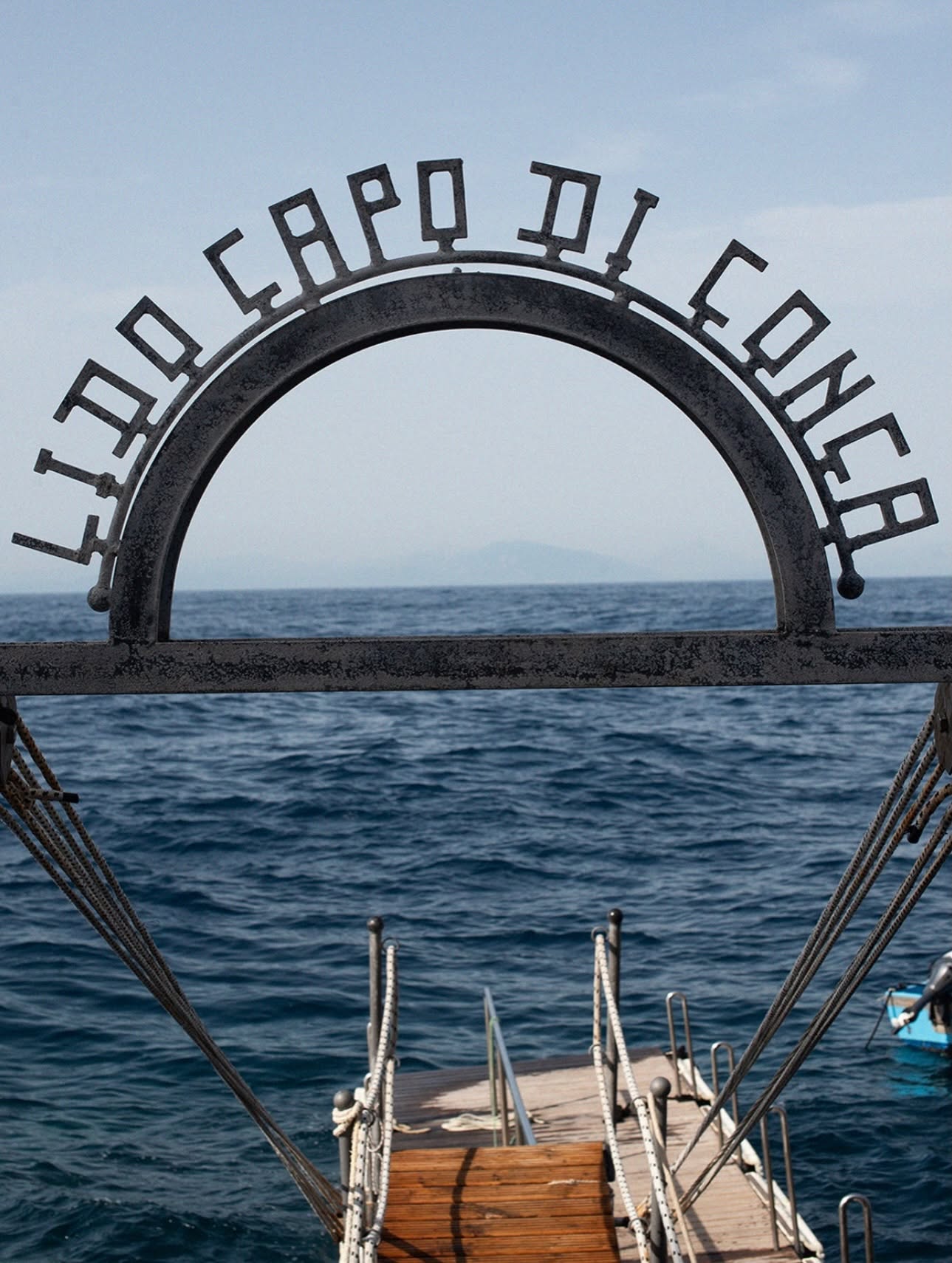
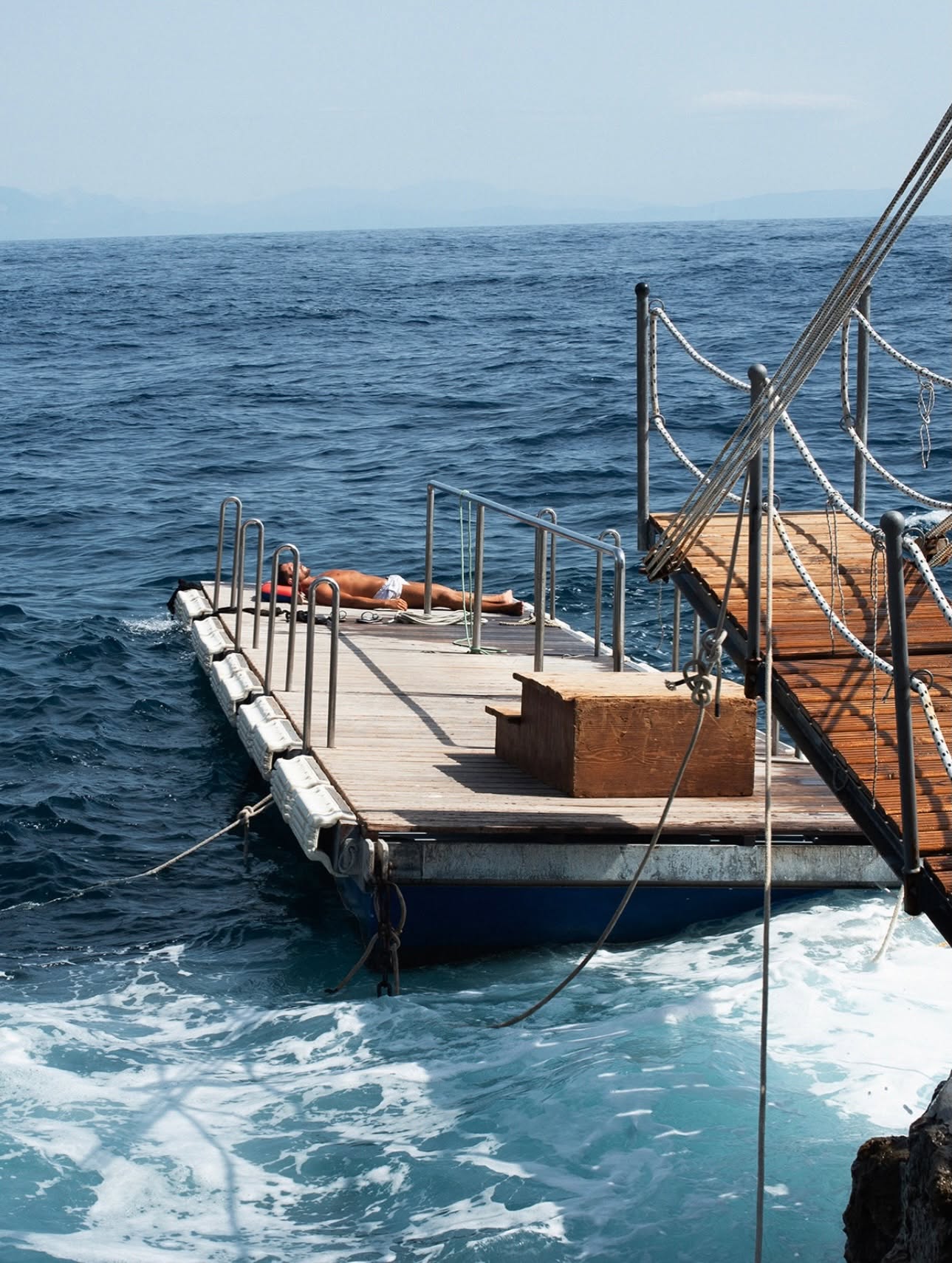
The iron arch over the floating dock reads LIDO CAPO DI CONCA. It is the kind of sign that belongs where it is, curved and heavy and not trying to be anything other than what it announces. Below the arch, the wooden platform floats on the surface, roped to the cliff, and from there you can descend the ladder into the sea. The water at this point is deep. It has never been shallow here.
The diving board is the most honest thing about Capo di Conca. It is a blue board extending over the sea from a flat rock platform, and it does not pretend to be anything other than what it is: the point at which you decide whether you are the kind of person who jumps or the kind who watches. Both are acceptable. The board has been there long enough that it has its own logic, its own rhythm, the small queue that forms on busy afternoons, the negotiation between the one waiting and the one gathering courage at the end.
I watched a man do a handstand on it and then dive, which is not the obvious approach but is, in retrospect, the correct one if you have the capacity for it. The water below was dark green where it was deep, which was immediately.
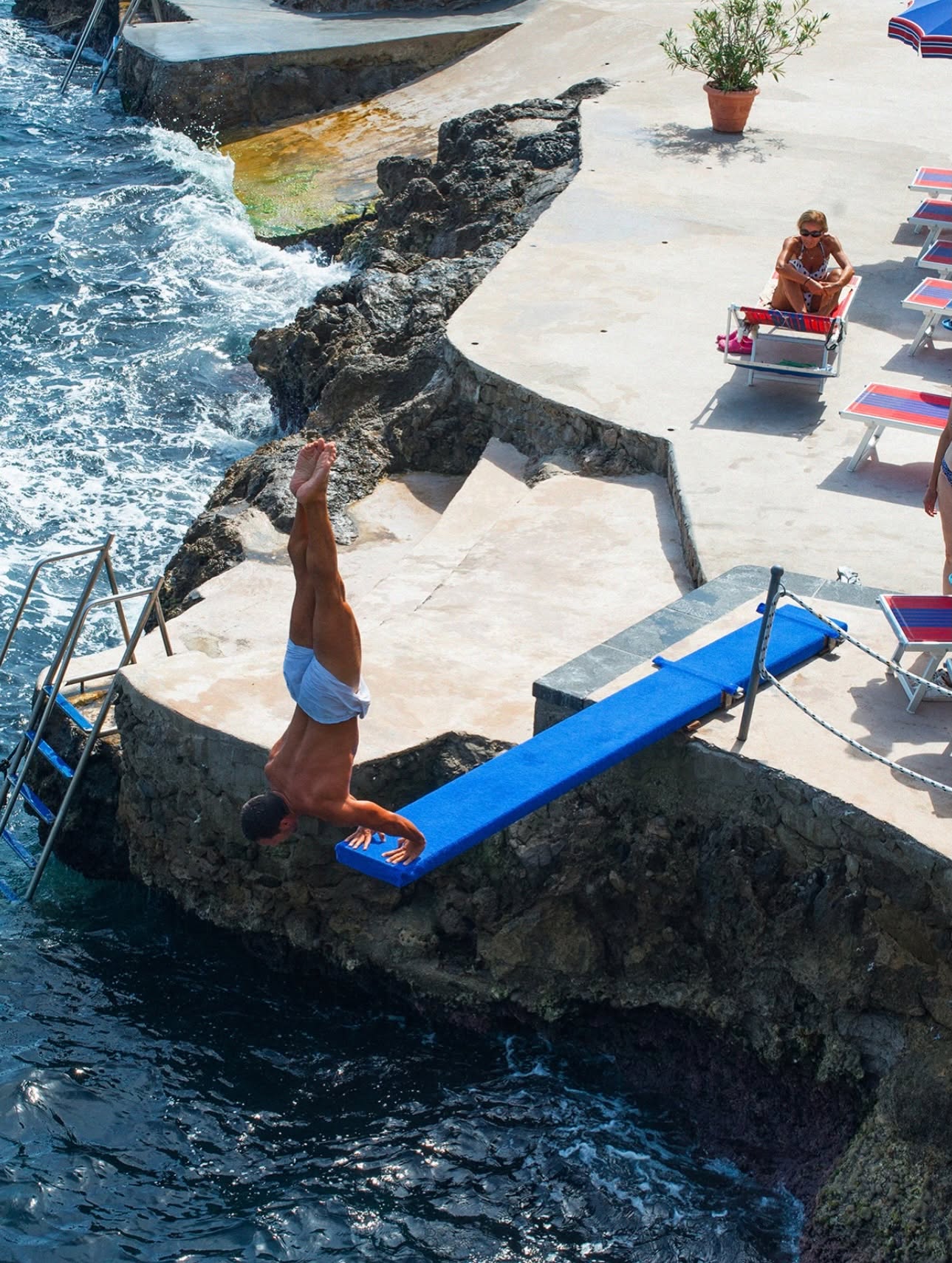
I jumped from the standard position. The sea at that point was cold in the way that deep, unshallowed water is cold: not dramatically, but absolutely. By the time I surfaced and swam back to the ladder, I had already revised my understanding of the morning.
The water here is exceptionally clear. This stretch of the Amalfi Coast was once a working ground for coral divers, men who dove to the bottom of the promontory’s waters to bring up coral for the craftsmen of Torre del Greco, where it was worked into the pieces that traveled through Naples and outward. The coral trade has been gone for generations. The water has kept its quality regardless.
There is a swimming pool set into the rock for children, a grotto with a natural rock pool, and the restaurant above, and boat and kayak rentals for those who want to go further out. Guided tours leave from the dock into the sea caves and along the coast toward Amalfi and toward Positano, depending on the direction you want to face. On a clear day, the water changes color at the cave entrances in a way that photographs are poor at capturing: the blue inside is a different blue from the blue outside, more specific, less general.
The restaurant is run by the Ferraro brothers, and the food arrives in the manner of good Campanian cooking: straightforwardly, with the understanding that the ingredients carry the argument. Seafood from the morning, pasta made with the concentration that this coast applies to it, desserts that involve lemon in the way that everything here involves lemon, because the lemons that grow on the terraces above the road are, objectively, the correct ingredient for nearly every dish this coast produces. I ate at the terrace table with the sea below me and the watchtower above and did not feel the need to consult a menu twice.

Conca dei Marini is four kilometers from Amalfi and thirteen kilometers from Positano. It is not a town that announces itself: there is no piazza of the kind that you would recognize as the center of things, no cathedral at the top of a staircase counting its steps in the tourist literature. What it has is this: a coastline that the sixteenth century thought worth defending, a promontory above water that was once worth diving into for what lived at the bottom, and a lido that has taken those facts seriously and built something specific from them.
The shuttle runs back up the cliff at intervals. There is no reason to take it early.
V.
More from Lido Capo di Conca:

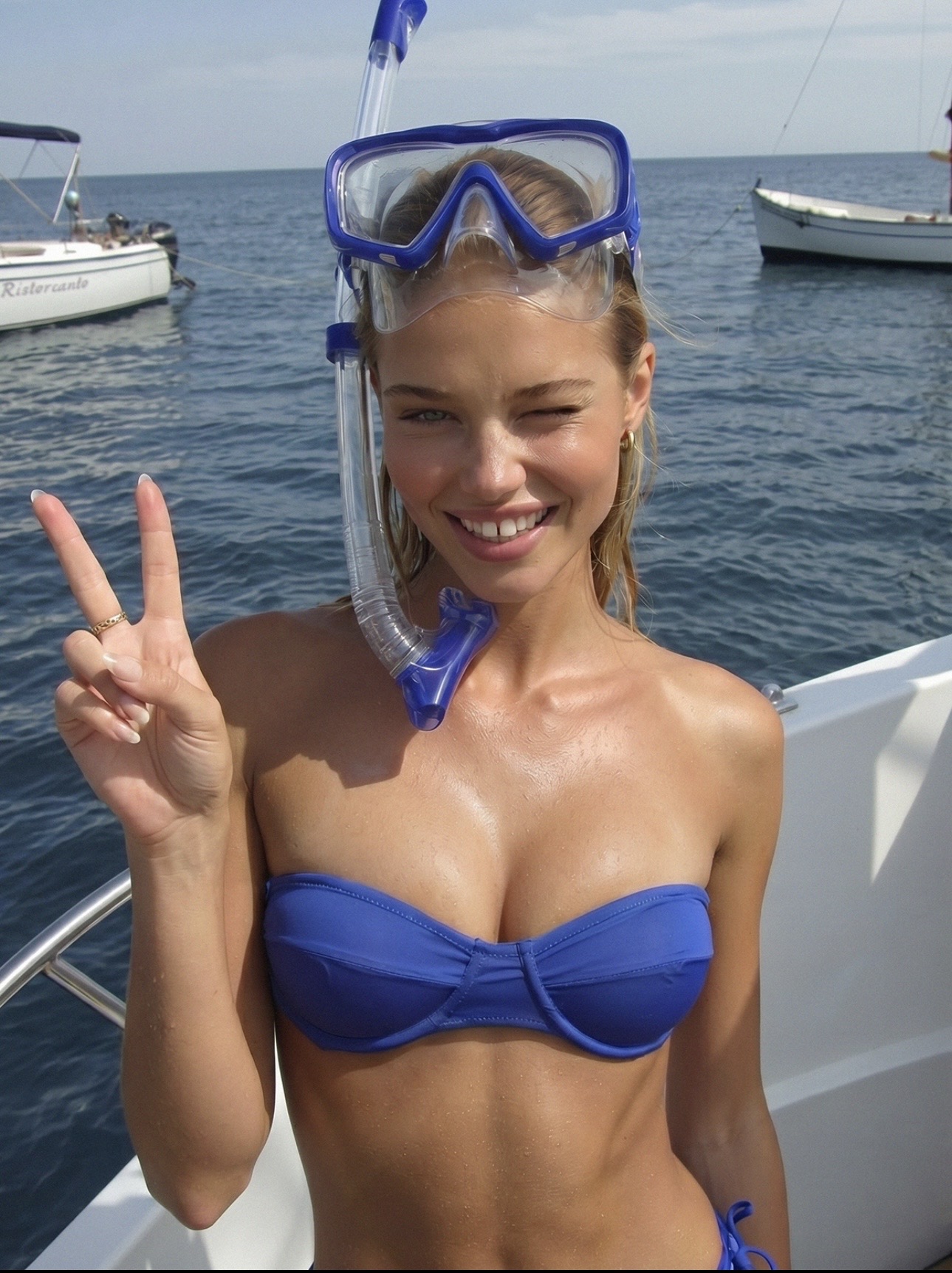
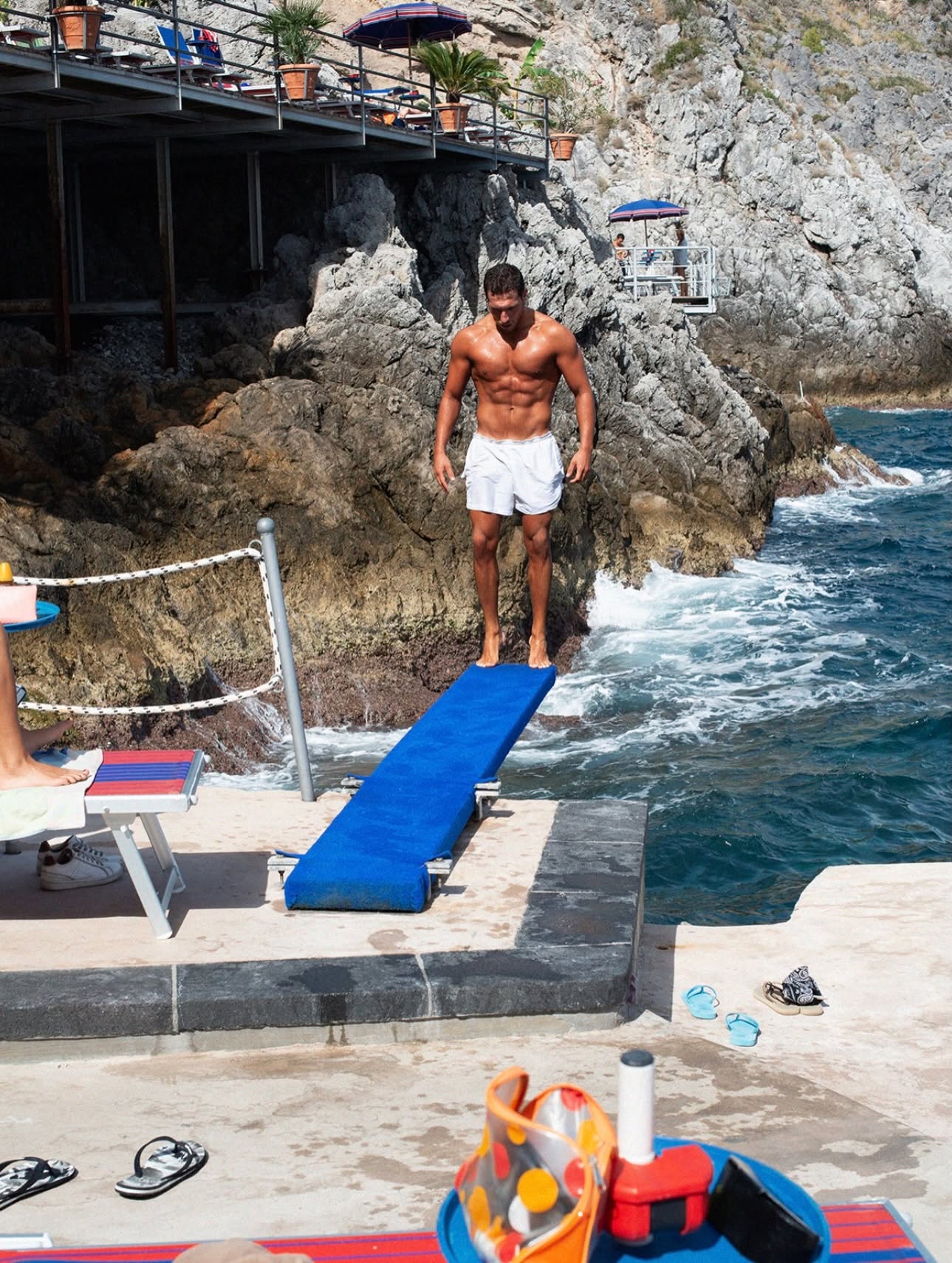
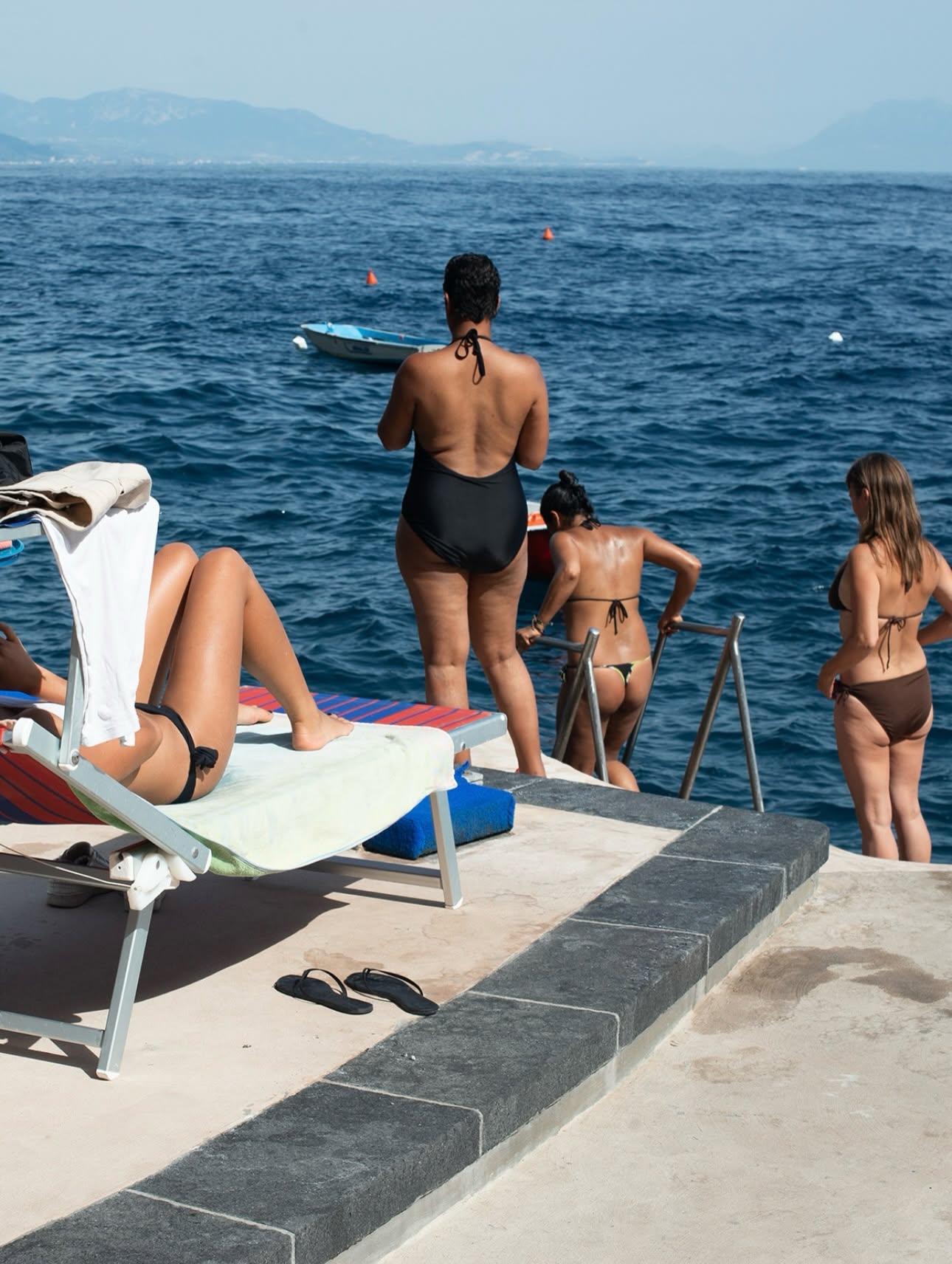
Conca dei Marini is one of the thirteen towns on the Amalfi Coast. For the complete guide to the region, including planning, beaches, food, and itineraries, see Victoria’s Guide to the Amalfi Coast.